
Introduction to hemostasis Us Mohammed Omballi MSc Hematology
Introduction to hemostasis Us / Mohammed Omballi MSc. Hematology & immunohematology
hemostasis The mechanism by which the blood kept in side the blood vessels in a fluid state, without clotting and stop bleeding

HEMOSTASIS Ø Haemostasis or Hemostasis (Greek: aimóstasis, from aíma "blood" + stásis "stagnation") is a complex process which continually ensures: § prevention of spontaneous blood loss and § stops hemorrhage caused by damage of vascular system Ø Most times this includes the changing of blood from a fluid to a solid state and then to fluid state. 3
Function of Haemostasis ¨ Arrests bleeding ¨ Keeps blood in fluid state ¨ Repair and reestablish the blood flow through the injured vessels ¨ Remove haemostatic plug n If any of the above functions is exaggerated or impaired it will cause either thrombosis or hemorrhage respectively; so hemostasis is a balance between thrombosis and hemorrhage 4

Without this balance, the individual may experience either excessive bleeding (poor clot formation or excessive Fibrinolysis) Vaso-occlusion (uncontrolled formation of thrombin in vascular system, occluding vessels and depriving organs of blood). asilmi

Component of hemostatic system Endothelial cells of blood vessels Platelet Fibrinolytic system Plasma Coagulation protein Inhibitor 6
Phases Three –phase process I. Primary hemostasis II. Coagulation (secondary hemostasis) III. Fibrinolysis (Tertiary hemostasis)
Primary Hemostasis � Primary hemostasis primarily involves vascular contraction , platelets and v. WF � results � in the formation of a platelet plug. If the endothelial injury is small, this may be adequate to stop bleeding � However, if the injury is greater, participation by the coagulation cascade is required

Secondary Hemostasis �Secondary hemostasis primarily involves the coagulation cascade proteins, which ultimately results in the conversion of fibrinogen to fibrin � fibrin polymerizes to form a clot. The fibrin clot is cross-linked and stabilized by factor XIIIa.
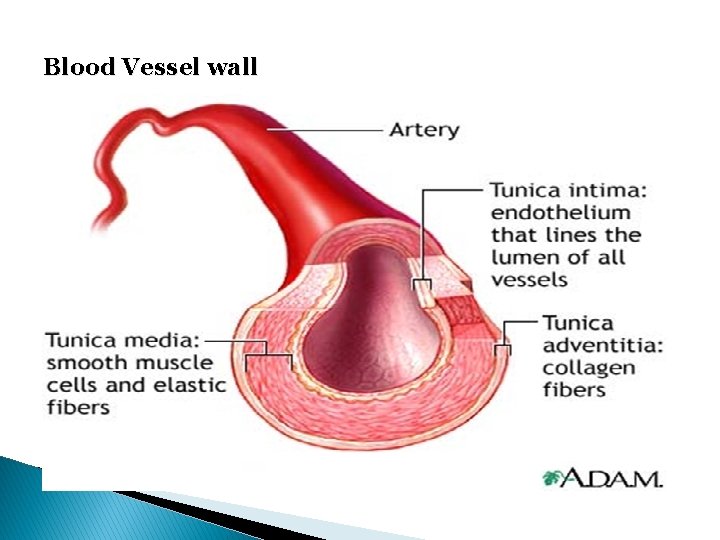
Blood Vessel wall
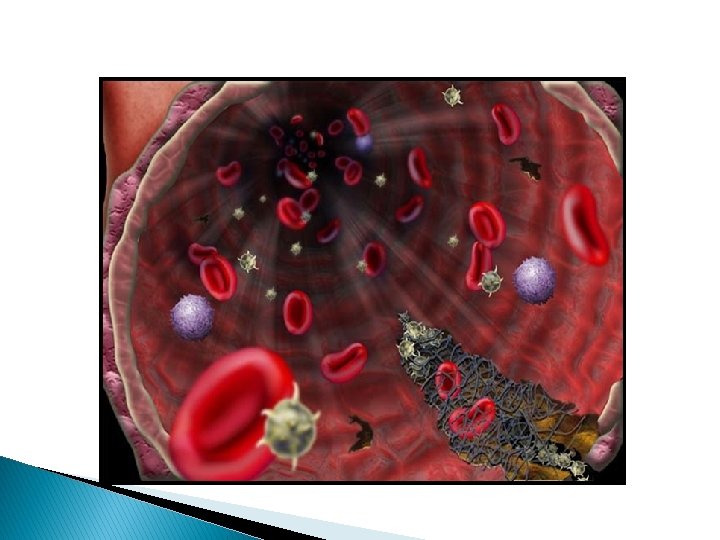
Blood vessels • Blood normally carried within vessels whose physical capabilities include Contraction (narrowing) and Dilation, which are controlled by the smooth muscle of the vessel media. • Vasoconstriction and Vasodilatation provide the means for control blood flow rate and blood pressure. • Substances released from the endothelial cells and sub- endothelial smooth muscles also contribute to normal blood flow and prevent abnormal formation of clot.
ENDOTHELIAL CELLS IN HEMOSTASIS • Endothelial cells are particularly important in the prevention of coagulation. • Endothelial cells express several molecules on their surface membranes that are important in regulation of coagulation. • Examples are heparin sulfate and thrombomodulin which activate anticoagulant system (antithrombin and the protein C , protein S system, respectively).
Endothelial cell metabolic products: • Expresses ADPase which degarade ADP & inhibits platelet aggregation • Secrets Von Willebrand factor which mediate platelet adhesion & aggregation • tissue factor pathway inhibitor (TFPI), which inhibits coagulation via the TF-VIIa - Xa complex
Endothelial cell metabolic products: • prostacyclin(PGI 2), a potent vasodilator and platelet antagonist. • Endothelial cells also produce nitric oxide (NO; originally called the endothelial-derived relaxing factor [EDRF]), which is a potent vasodilator and inhibits platelet activtion • Endothelin, which is a potent vasoconstrictor
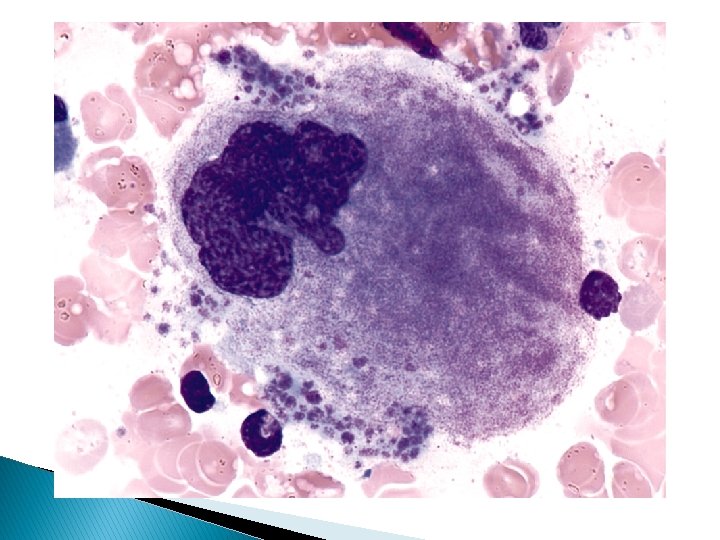
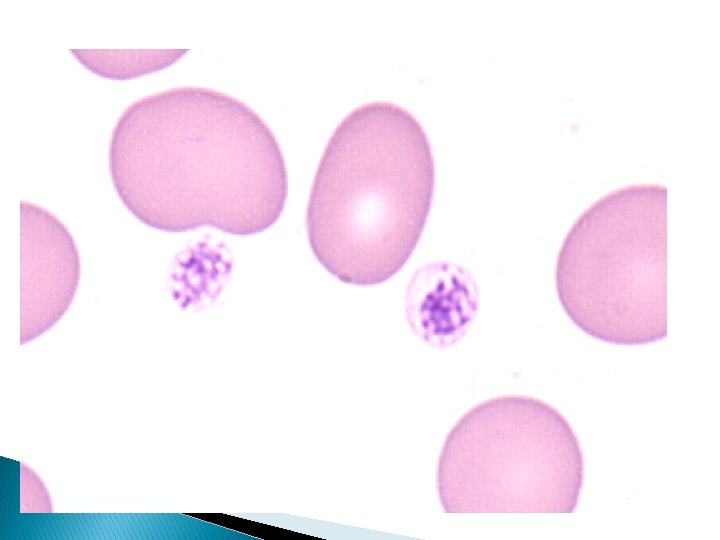
Platelets • Platelets are disc-shaped a nucleate cells approximately 2 - 3 μm in diameter. • which are derived from fragmentation of precursor megakaryocytes.
Platelet Receptors • • Platelets have a variety of surface glycoprotein's some of which act as receptors for v. WF, fibrinogen, or other adhesive proteins. • Many platelet receptors consist of complexes of two or more glycoprotein's.
Platelet alpha Granules • coagulation factors (fibrinogen, v. WF, and factor V) • B-Thromboglobulin : chemotactic for fibroblast , inhibit heparin • platelet factor 4 : promote aggregation & inhibit heparin • Thrombospondin: promote aggregation & inhibit heparin • platelet-derived growth factor which stimulate proliferation of smooth muscle & skin fibroblast & play a role in cut healing.
Platelet Dense bodies • contain small molecules and ions , such as • ADP : promote aggregation • Calcium : promote aggregation • Serotonin promote vasoconstriction • They are released when platelets are activated • providing an immediate source of clotting factors and platelet agonists • which recruit other platelets into the growing platelet plug.
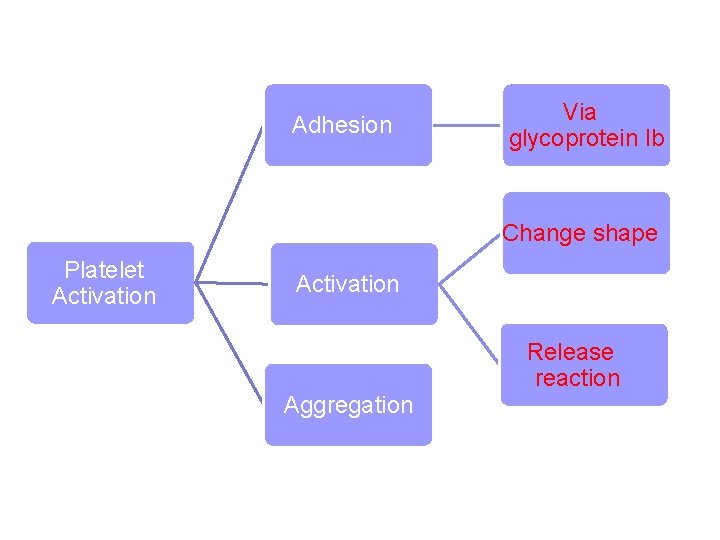
Adhesion Via glycoprotein Ib Change shape Platelet Activation Release reaction Aggregation
Activation � Platelet aggregation is stimulated by ADP, thromboxane � but inhibited by other inflammatory products. � Platelet aggregation is enhanced by exogenous administration of anabolic steroids.

Adhesion & aggregation
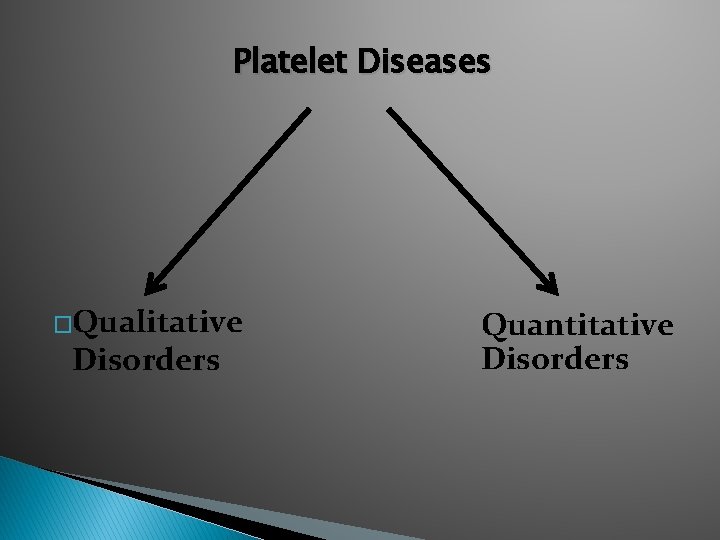
Platelet Diseases �Qualitative Disorders Quantitative Disorders
Quantitative Disorders � Disorders leading to a reduced platelet count: � Thrombocytopenia ◦ Idiopathic thrombocytopenic purpura – also known as immune thrombocytopenic purpura (ITP) ◦ Thrombotic thrombocytopenic purpura ◦ Drug-induced thrombocytopenic purpura (for example heparin-induced thrombocytopenia (HIT)) � Aplastic anemia
Quantitative Disorders Alloimmune disorders � Fetomaternal � Some alloimmune thrombocytopenia transfusion reactions Disorders leading to platelet dysfunction or reduced count: � Hemolytic-uremic � Chemotherapy syndrome
Qualitative Disorders of platelet adhesion or aggregation: � Bernard-Soulier � Glanzmann's � Scott's � von syndrome thrombasthenia syndrome Willebrand disease � Hermansky-Pudlak � Gray Syndrome platelet syndrome
Assessment of primary hemostatic mechanism � Bleeding � Clotting time � Platelet count � Platelet function test
- Slides: 29