
INTRODUCTION TO HEALTH AND SAFETY IN BIOLOGICAL PROCESS
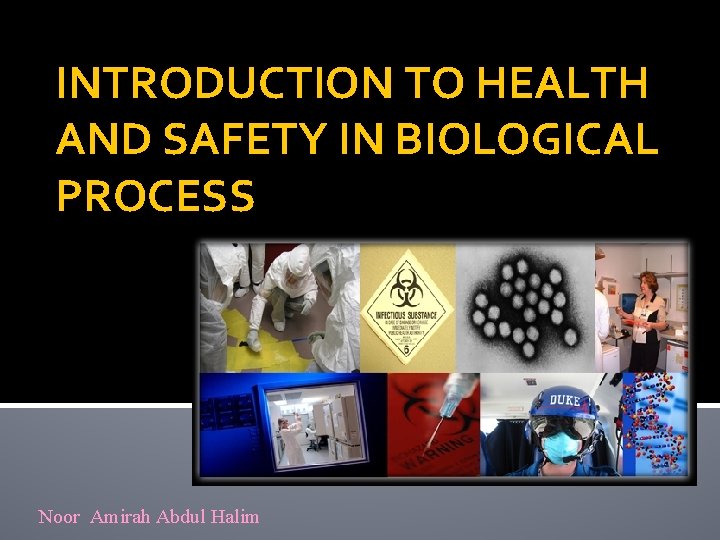
INTRODUCTION TO HEALTH AND SAFETY IN BIOLOGICAL PROCESS Noor Amirah Abdul Halim
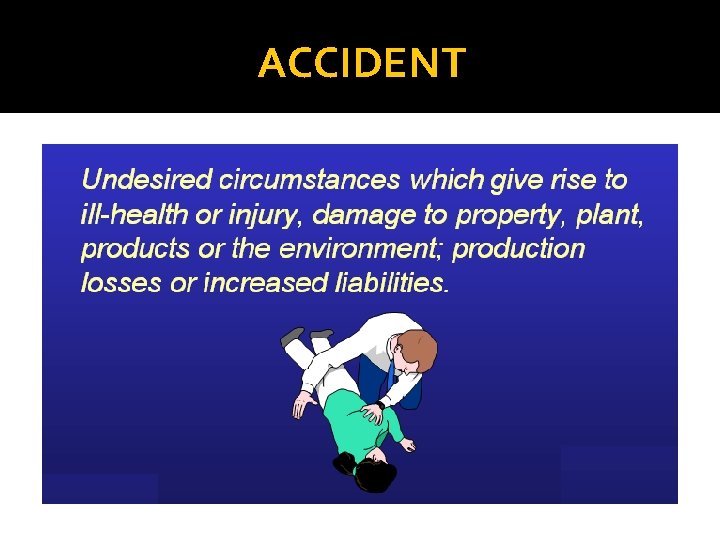
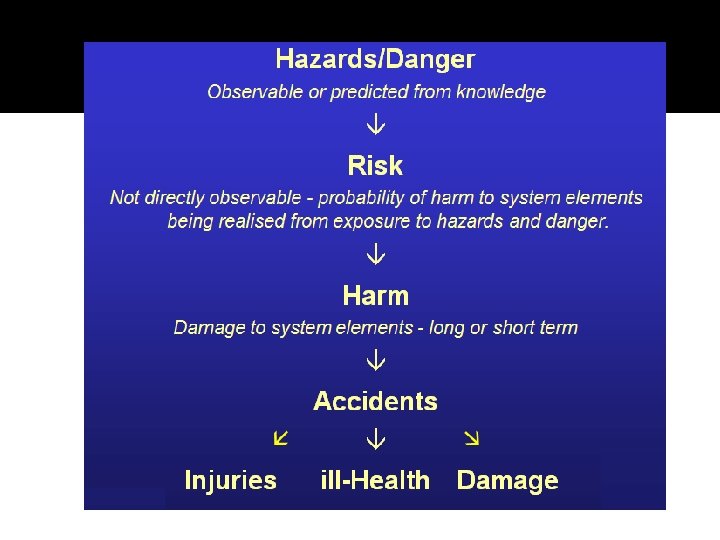
ACCIDENT
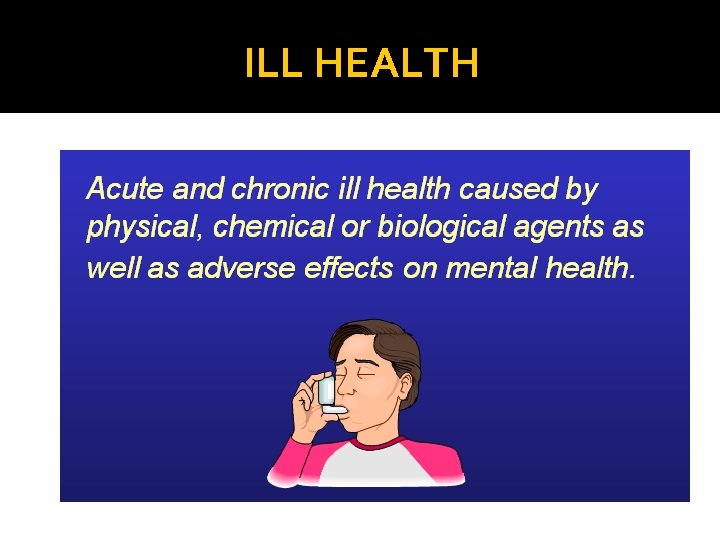
ILL HEALTH
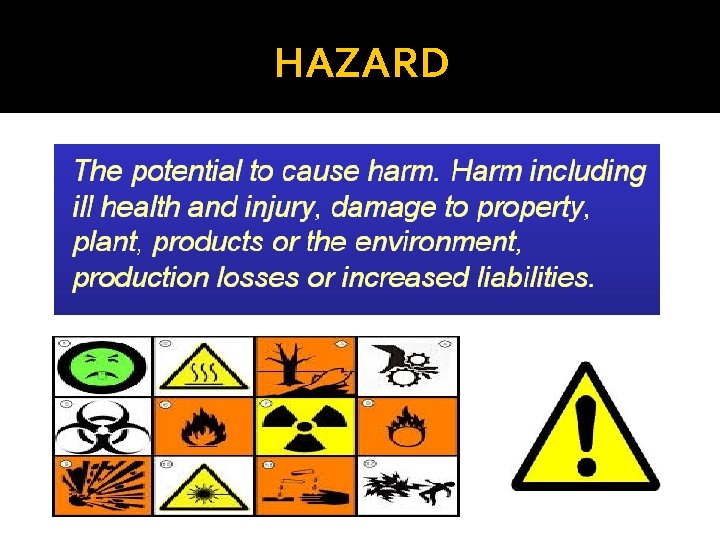
HAZARD
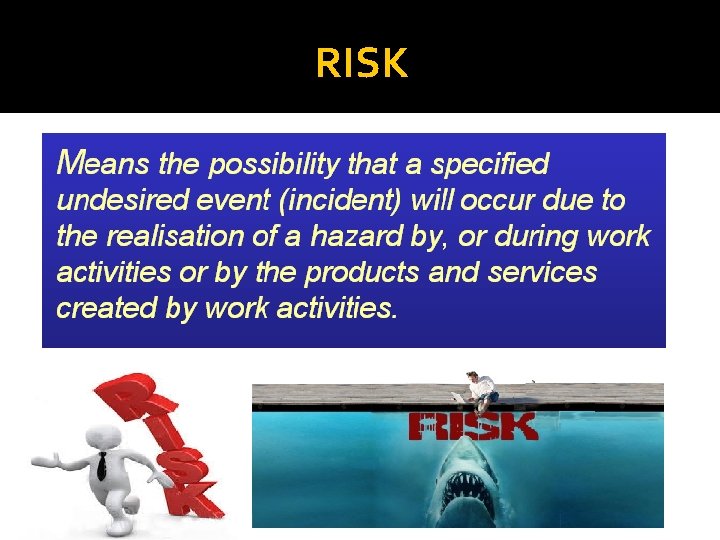
RISK
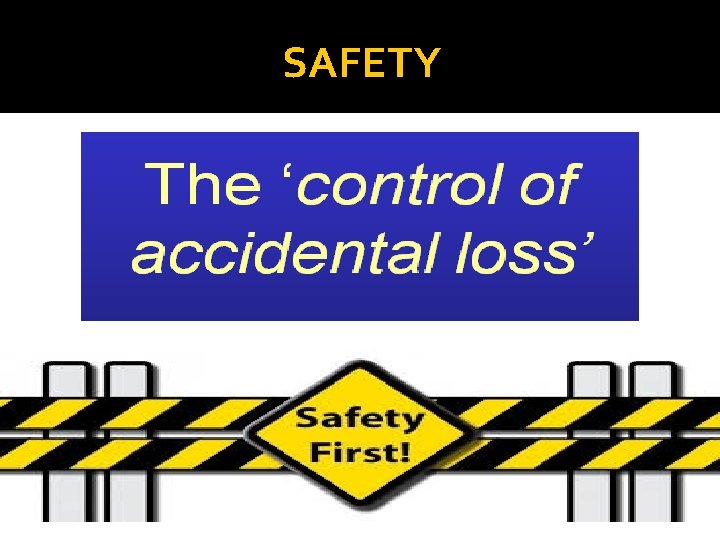
SAFETY
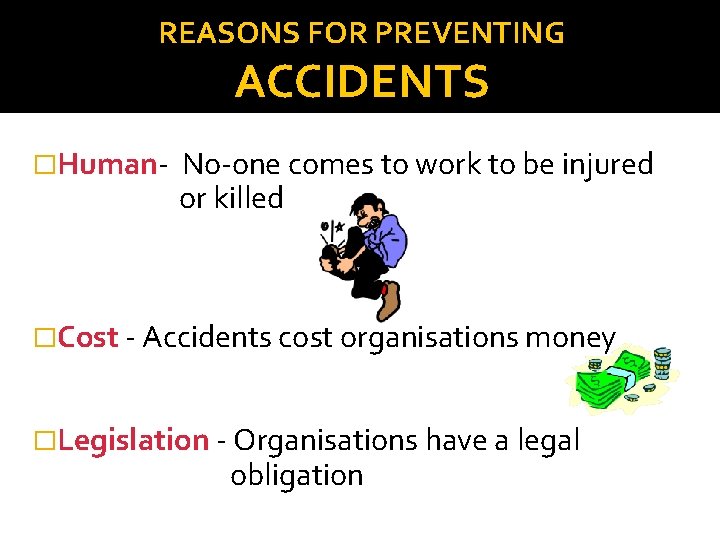
REASONS FOR PREVENTING ACCIDENTS �Human- No-one comes to work to be injured or killed �Cost - Accidents cost organisations money �Legislation - Organisations have a legal obligation
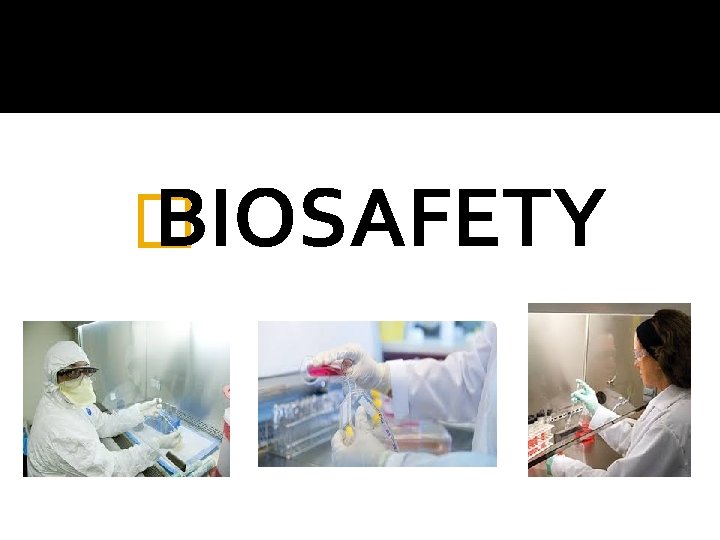
� BIOSAFETY
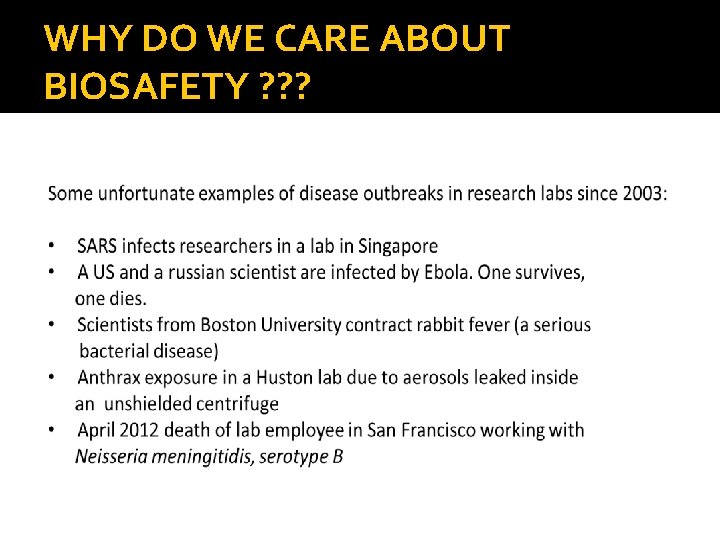
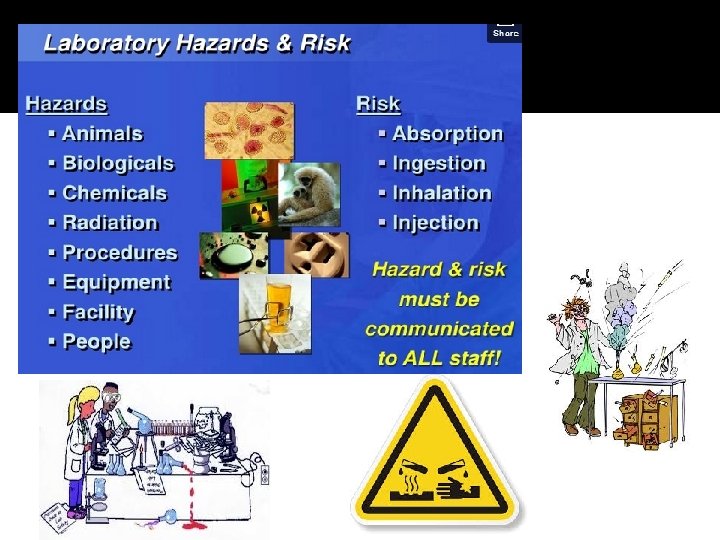
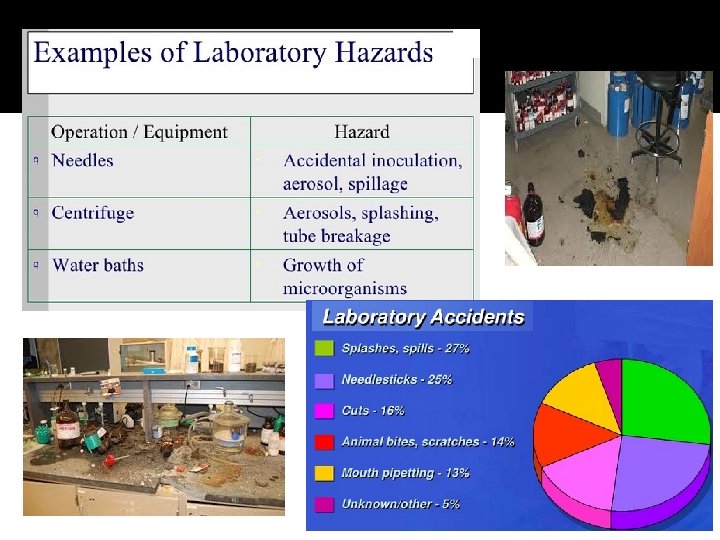
WHY DO WE CARE ABOUT BIOSAFETY ? ? ?
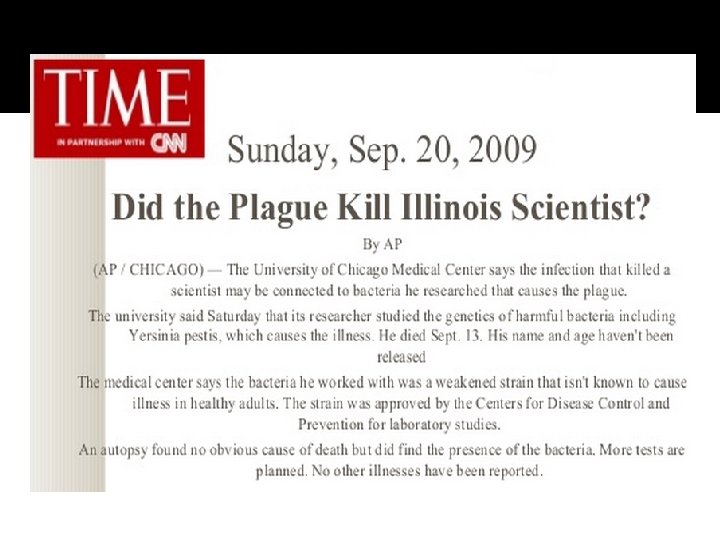
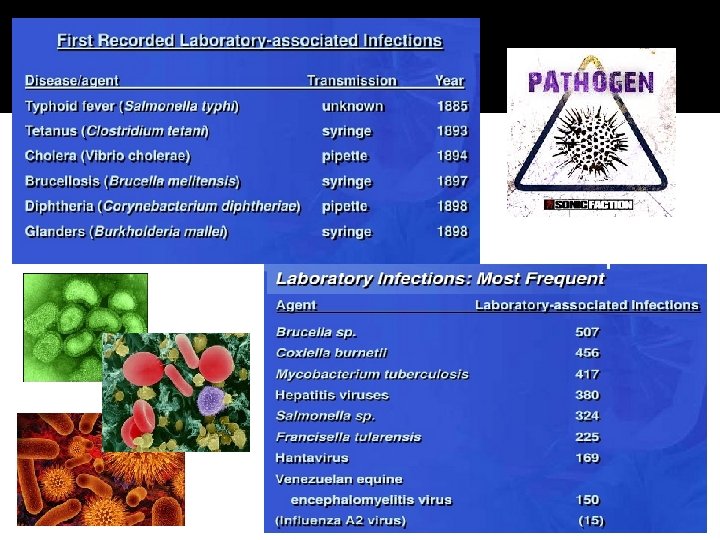
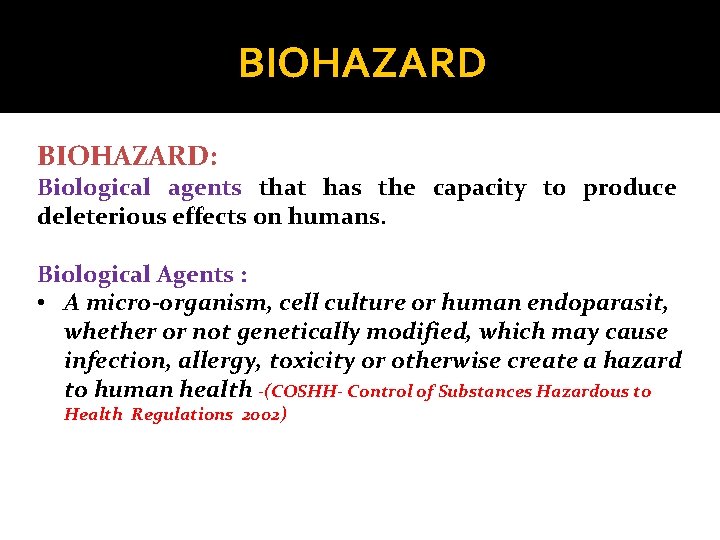
BIOHAZARD: Biological agents that has the capacity to produce deleterious effects on humans. Biological Agents : • A micro-organism, cell culture or human endoparasit, whether or not genetically modified, which may cause infection, allergy, toxicity or otherwise create a hazard to human health -(COSHH- Control of Substances Hazardous to Health Regulations 2002)
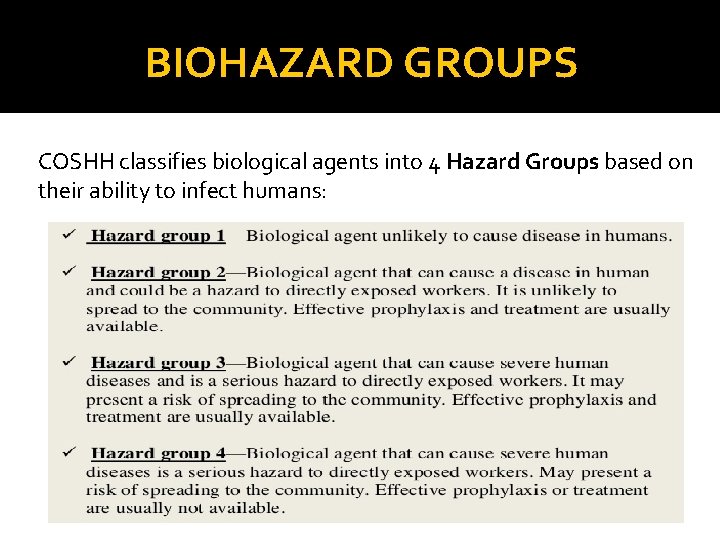
BIOHAZARD GROUPS COSHH classifies biological agents into 4 Hazard Groups based on their ability to infect humans:
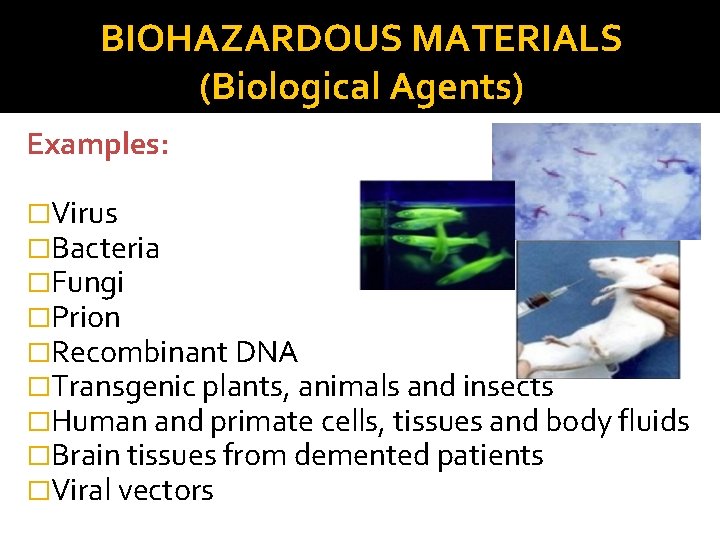
BIOHAZARDOUS MATERIALS (Biological Agents) Examples: �Virus �Bacteria �Fungi �Prion �Recombinant DNA �Transgenic plants, animals and insects �Human and primate cells, tissues and body fluids �Brain tissues from demented patients �Viral vectors
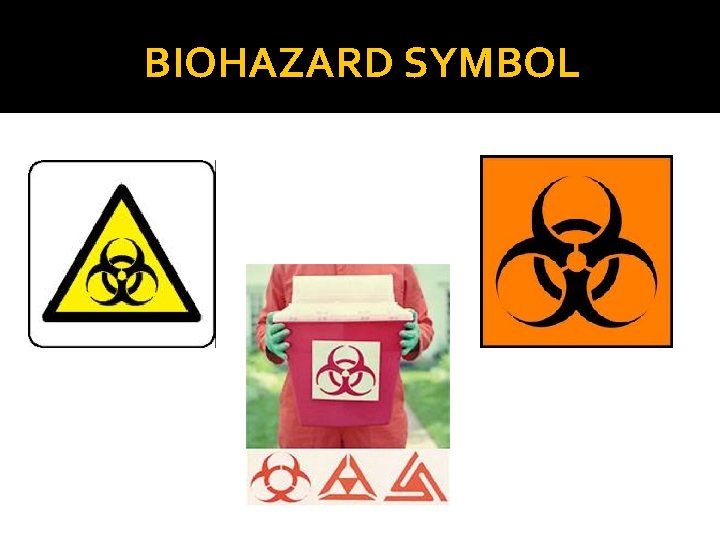
BIOHAZARD SYMBOL
BIOHAZARD POTENTIAL EXPOSURE There are 3 ways in which you might be exposed to biological agents at work: �Exposure as a result of working with biological agents. e. g. in a microbiology laboratory �Exposure which does not result from the work itself but is incidental to it mainly because biological agents are present as contaminants e. g. sewage treatment �Exposure which is not a result of the work that you do e. g. catching flu from a work colleague.
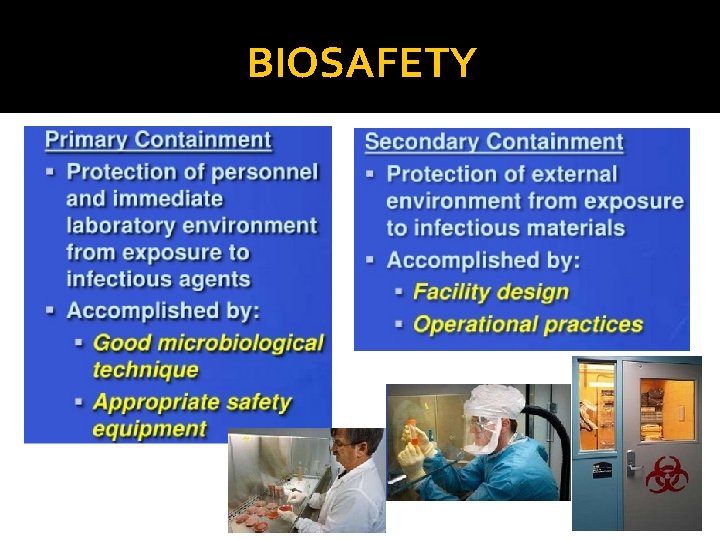
BIOSAFETY: Containment of potentially harmful biological agents to prevent the unintentional exposure to the humans and surrounding Containment: � Safe methods for managing infectious materials to reduce or eliminate exposure of laboratory workers, other persons and surrounding to potentially hazardous agents
BIOSAFETY
REGULATIONS
SAFETY RESOURCES

THANK YOU
- Slides: 24