
Introduction to Greek Theatre Watch this video https


- Slides: 22
Introduction to Greek Theatre
Watch this video: https: //www. youtube. com/watch? v=a. SRLK 7 Sogv. E
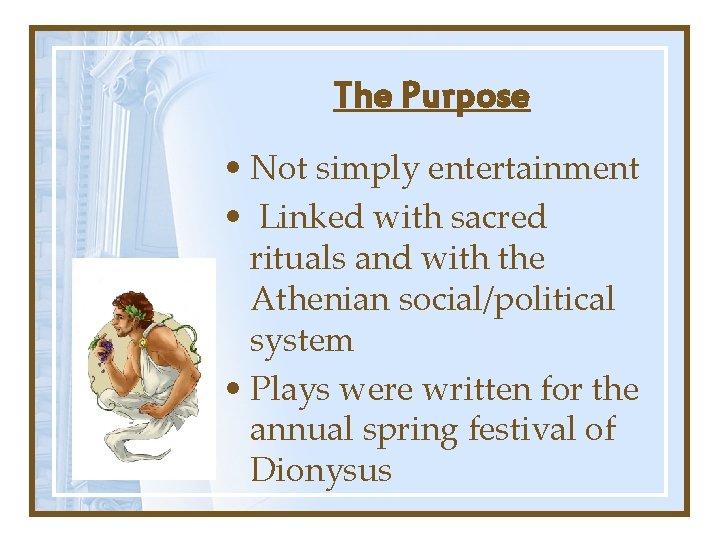
The Purpose • Not simply entertainment • Linked with sacred rituals and with the Athenian social/political system • Plays were written for the annual spring festival of Dionysus
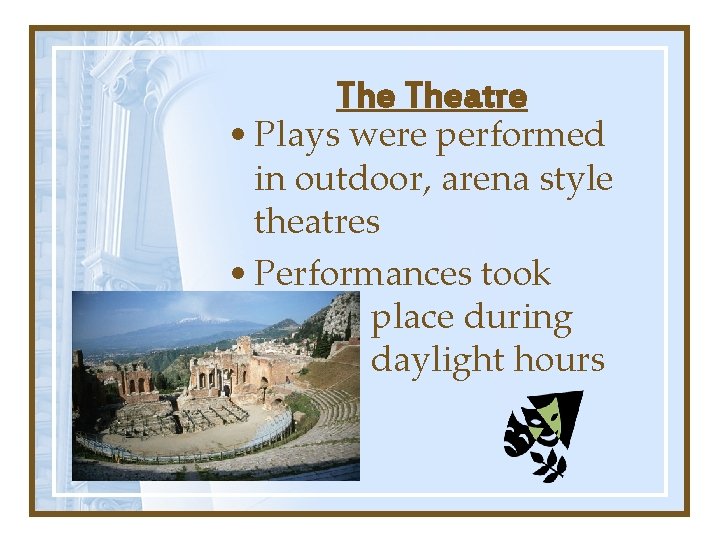
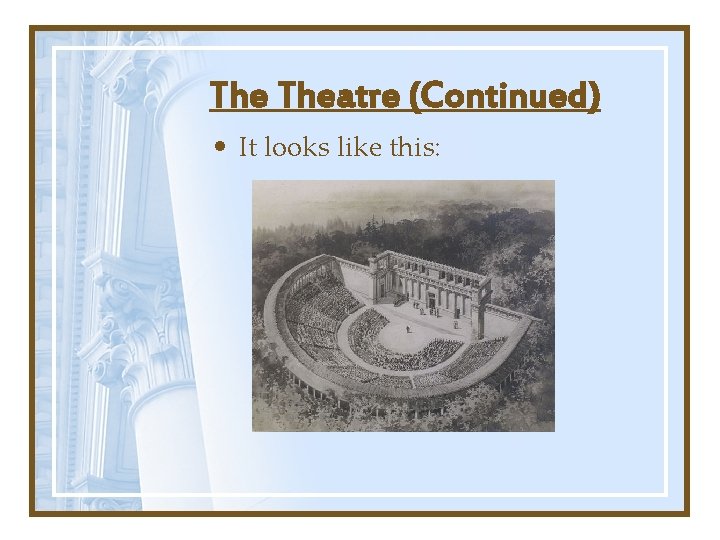
The Theatre • Plays were performed in outdoor, arena style theatres • Performances took place during daylight hours
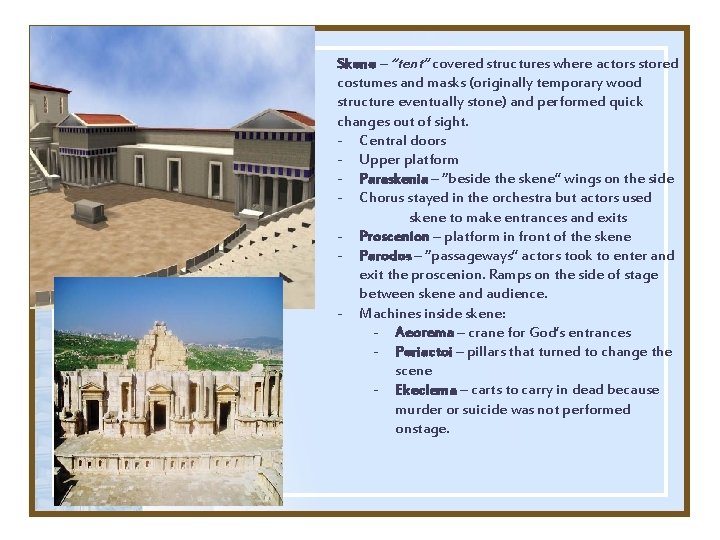
Skene – “tent” covered structures where actors stored costumes and masks (originally temporary wood structure eventually stone) and performed quick changes out of sight. - Central doors - Upper platform - Paraskenia – “beside the skene” wings on the side - Chorus stayed in the orchestra but actors used skene to make entrances and exits - Proscenion – platform in front of the skene - Parodos – “passageways” actors took to enter and exit the proscenion. Ramps on the side of stage between skene and audience. - Machines inside skene: - Aeorema – crane for God’s entrances - Periactoi – pillars that turned to change the scene - Ekeclema – carts to carry in dead because murder or suicide was not performed onstage.
The Theatre (Continued) • It looks like this:
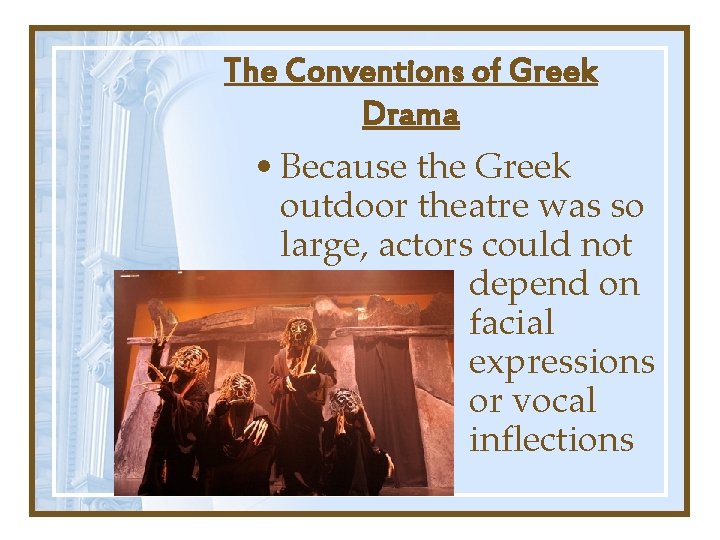
The Conventions of Greek Drama • Because the Greek outdoor theatre was so large, actors could not depend on facial expressions or vocal inflections to
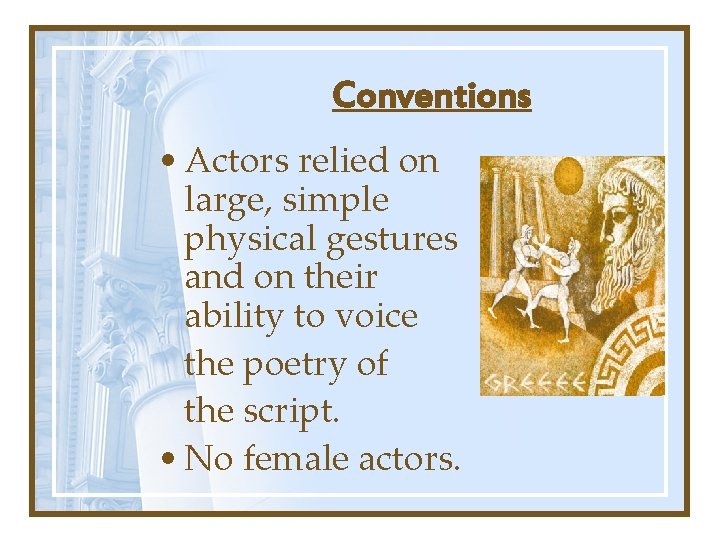
Conventions • Actors relied on large, simple physical gestures and on their ability to voice the poetry of the script. • No female actors.
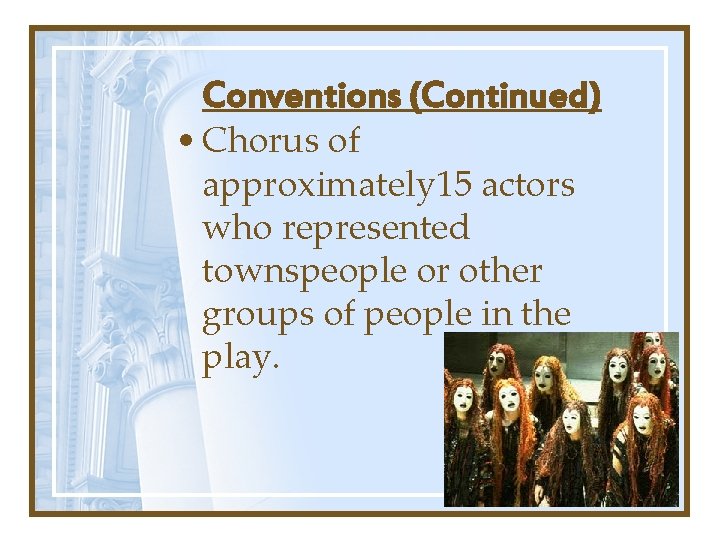
Conventions (Continued) • Chorus of approximately 15 actors who represented townspeople or other groups of people in the play.
Watch this video: https: //www. youtube. com/watch? v=b. P 7_XERqv-Y
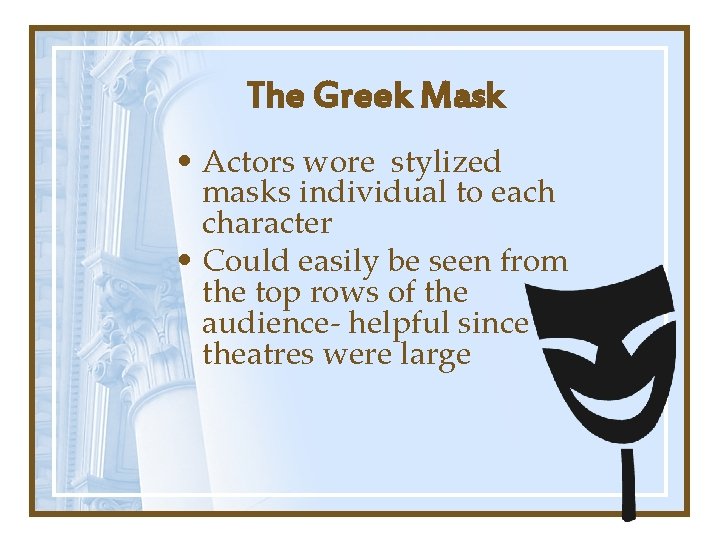
The Greek Mask • Actors wore stylized masks individual to each character • Could easily be seen from the top rows of the audience- helpful since theatres were large
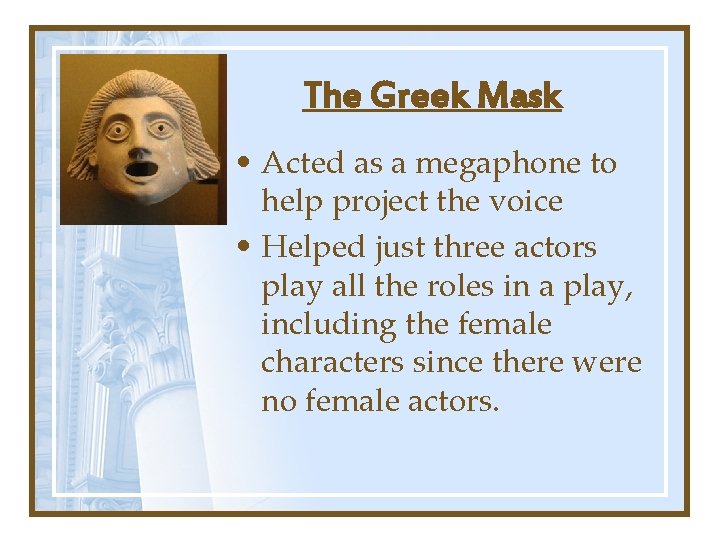
The Greek Mask • Acted as a megaphone to help project the voice • Helped just three actors play all the roles in a play, including the female characters since there were no female actors.
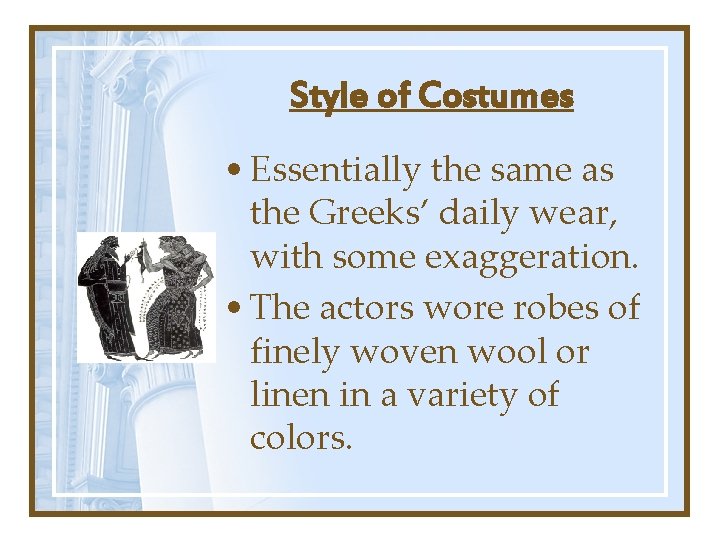
Style of Costumes • Essentially the same as the Greeks’ daily wear, with some exaggeration. • The actors wore robes of finely woven wool or linen in a variety of colors.
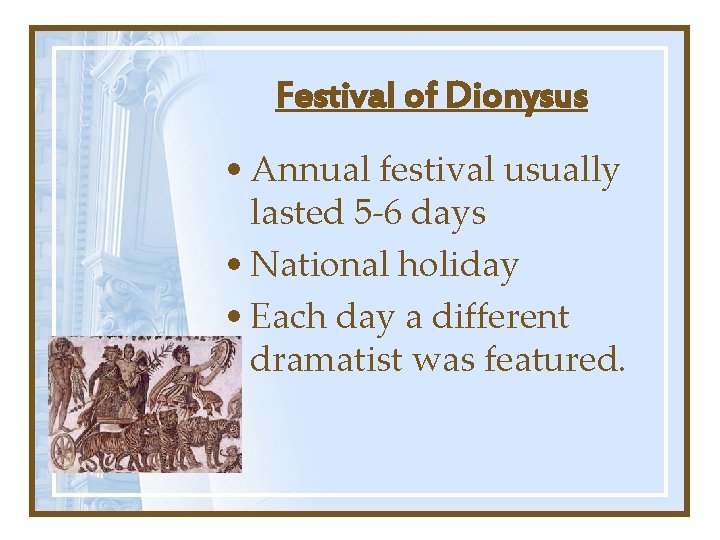
Festival of Dionysus • Annual festival usually lasted 5 -6 days • National holiday • Each day a different dramatist was featured.
The Festival Continued • The dramatist would offer four plays – a trilogy (or three tragedies centered around one theme) – a satire or farce, that made fun of the same tragic figures and provided the needed comic relief.
The Festival Continued • Comedies were sometimes given in the afternoon during the City Dionysia. • Most comedies performed at the Lenaea festival where prizes were awarded for best comic writer
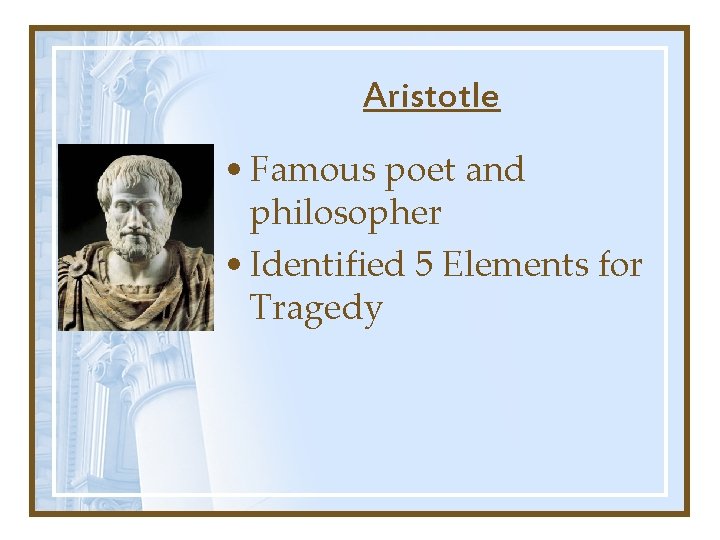
Aristotle • Famous poet and philosopher • Identified 5 Elements for Tragedy
Aristotelian Elements • Tragedy must provide catharsis (an emotional purge) • The hero must be someone of high social position and have a tragic flaw – Ex. “hubris: ” excessive pride
Elements Continued • There must be a change of fortune or discovery • Plays must be written in the highest form of poetry.
Elements Continued • Three Unities – Action (related events) – Time (within 24 hrs) – Place (one locale)
Violence • All violence happened off stage- Greeks found it distasteful to watch
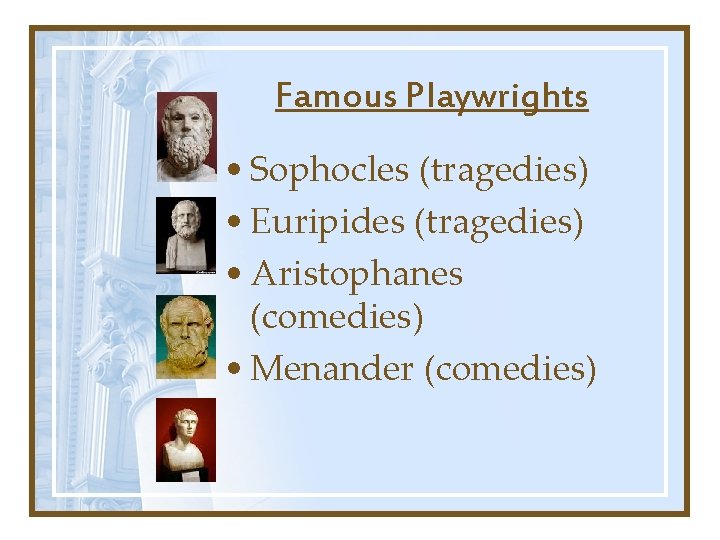
Famous Playwrights • Sophocles (tragedies) • Euripides (tragedies) • Aristophanes (comedies) • Menander (comedies)