
Introduction to Greek Drama Fun Facts About Greek
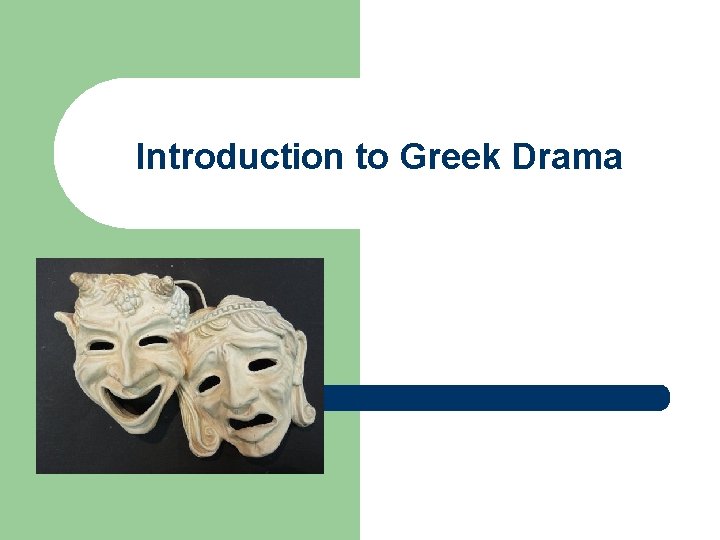
Introduction to Greek Drama

Fun Facts About Greek Drama l l l Greek drama includes surviving tragedies, satyr plays, and comedies from the fifth century (500 -400) B. C. The writers were all Athenians The dramatic festivals for which the plays were composed took place in the same single theater in Athens, dedicated to the god Dionysus
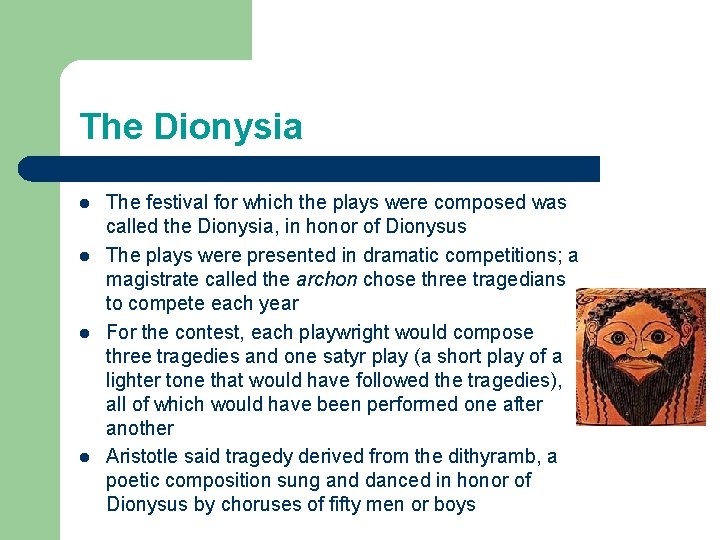
The Dionysia l l The festival for which the plays were composed was called the Dionysia, in honor of Dionysus The plays were presented in dramatic competitions; a magistrate called the archon chose three tragedians to compete each year For the contest, each playwright would compose three tragedies and one satyr play (a short play of a lighter tone that would have followed the tragedies), all of which would have been performed one after another Aristotle said tragedy derived from the dithyramb, a poetic composition sung and danced in honor of Dionysus by choruses of fifty men or boys
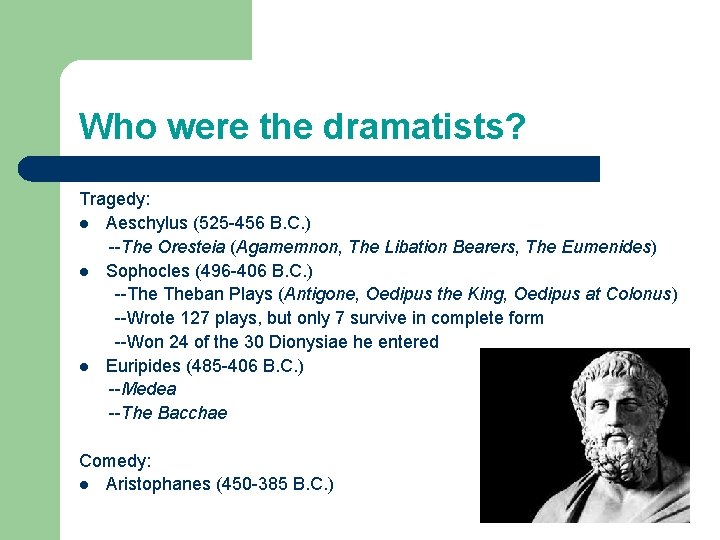
Who were the dramatists? Tragedy: l Aeschylus (525 -456 B. C. ) --The Oresteia (Agamemnon, The Libation Bearers, The Eumenides) l Sophocles (496 -406 B. C. ) --The Theban Plays (Antigone, Oedipus the King, Oedipus at Colonus) --Wrote 127 plays, but only 7 survive in complete form --Won 24 of the 30 Dionysiae he entered l Euripides (485 -406 B. C. ) --Medea --The Bacchae Comedy: l Aristophanes (450 -385 B. C. )

Parts of a Greek Theater l l Theatron: “watching place” for the audience Orchestra: circular dancing space for choral songs and dances Skene: slightly elevated stage behind the orchestra; for the actors Mechane: suspended crane from which deus ex machina might appear
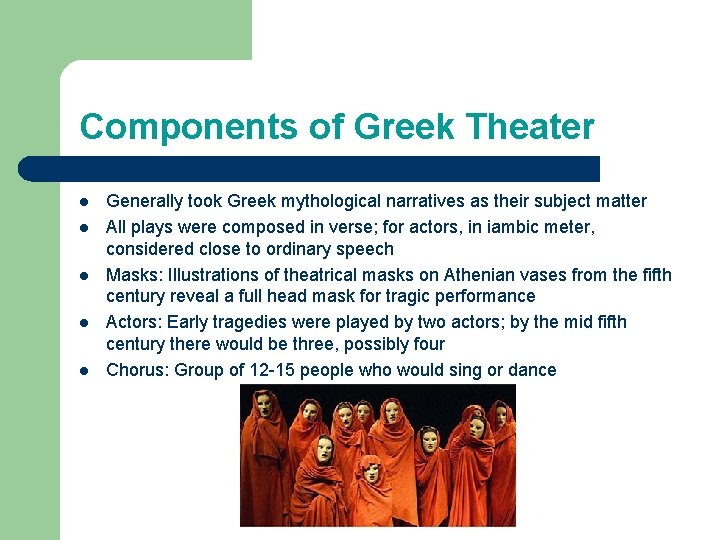
Components of Greek Theater l l l Generally took Greek mythological narratives as their subject matter All plays were composed in verse; for actors, in iambic meter, considered close to ordinary speech Masks: Illustrations of theatrical masks on Athenian vases from the fifth century reveal a full head mask for tragic performance Actors: Early tragedies were played by two actors; by the mid fifth century there would be three, possibly four Chorus: Group of 12 -15 people who would sing or dance
- Slides: 6