
Introduction to Graphic design Materials techniques and processes
- Slides: 9
Introduction to: Graphic design Materials, techniques and processes
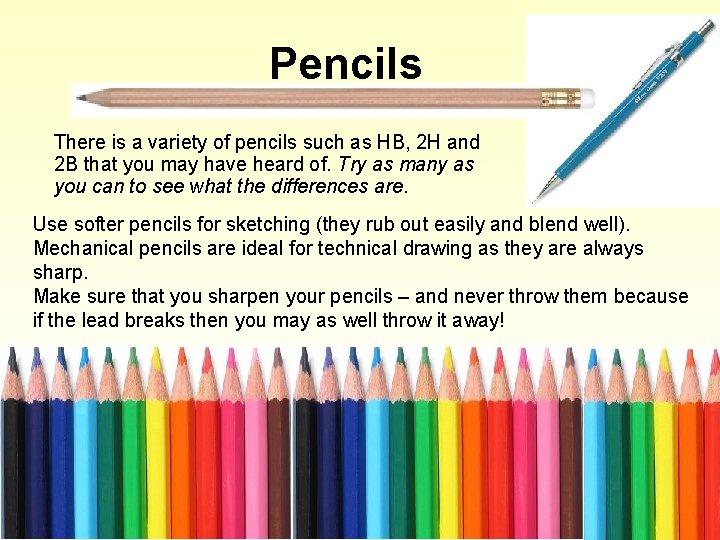
Pencils There is a variety of pencils such as HB, 2 H and 2 B that you may have heard of. Try as many as you can to see what the differences are. Use softer pencils for sketching (they rub out easily and blend well). Mechanical pencils are ideal for technical drawing as they are always sharp. Make sure that you sharpen your pencils – and never throw them because if the lead breaks then you may as well throw it away!
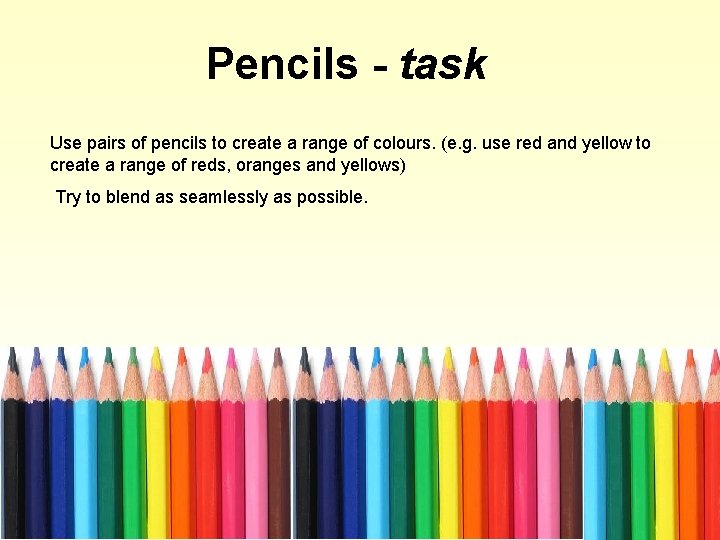
Pencils - task Use pairs of pencils to create a range of colours. (e. g. use red and yellow to create a range of reds, oranges and yellows) Try to blend as seamlessly as possible.
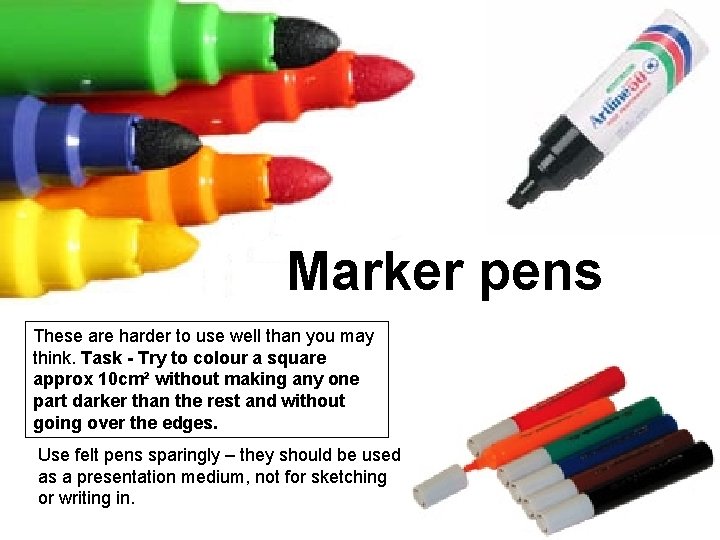
Marker pens These are harder to use well than you may think. Task - Try to colour a square approx 10 cm² without making any one part darker than the rest and without going over the edges. Use felt pens sparingly – they should be used as a presentation medium, not for sketching or writing in.
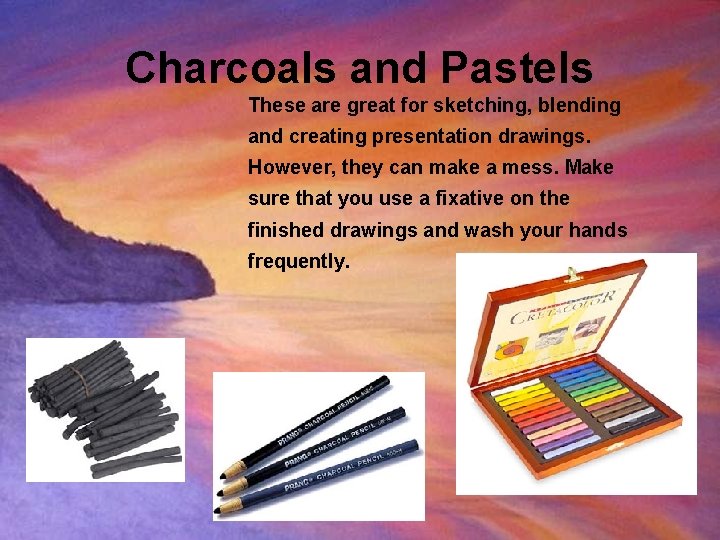
Charcoals and Pastels These are great for sketching, blending and creating presentation drawings. However, they can make a mess. Make sure that you use a fixative on the finished drawings and wash your hands frequently.
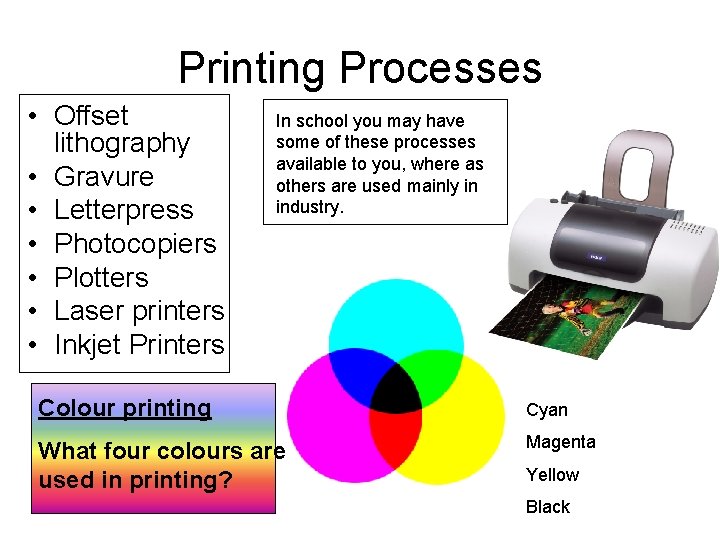
Printing Processes • Offset lithography • Gravure • Letterpress • Photocopiers • Plotters • Laser printers • Inkjet Printers In school you may have some of these processes available to you, where as others are used mainly in industry. Colour printing Cyan What four colours are used in printing? Magenta Yellow Black
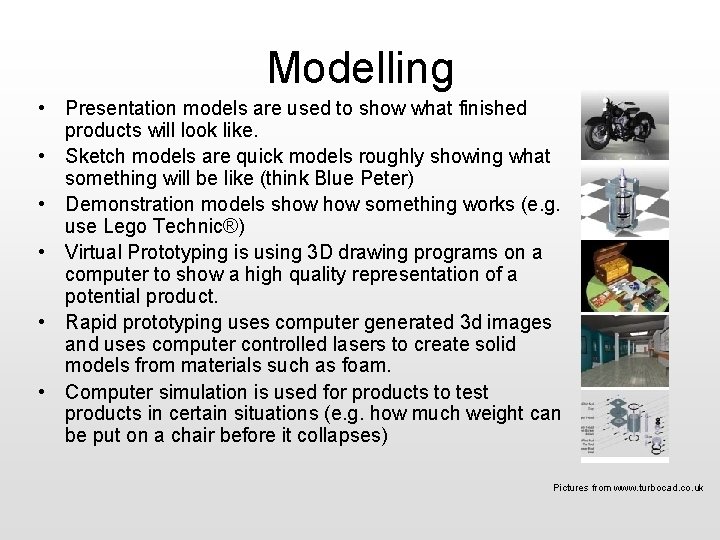
Modelling • Presentation models are used to show what finished products will look like. • Sketch models are quick models roughly showing what something will be like (think Blue Peter) • Demonstration models show something works (e. g. use Lego Technic®) • Virtual Prototyping is using 3 D drawing programs on a computer to show a high quality representation of a potential product. • Rapid prototyping uses computer generated 3 d images and uses computer controlled lasers to create solid models from materials such as foam. • Computer simulation is used for products to test products in certain situations (e. g. how much weight can be put on a chair before it collapses) Pictures from www. turbocad. co. uk
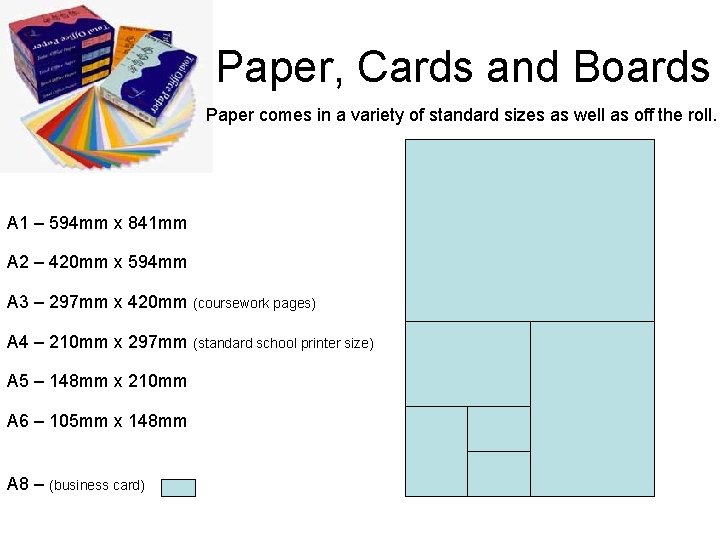
Paper, Cards and Boards Paper comes in a variety of standard sizes as well as off the roll. A 1 – 594 mm x 841 mm A 2 – 420 mm x 594 mm A 3 – 297 mm x 420 mm (coursework pages) A 4 – 210 mm x 297 mm (standard school printer size) A 5 – 148 mm x 210 mm A 6 – 105 mm x 148 mm A 8 – (business card)
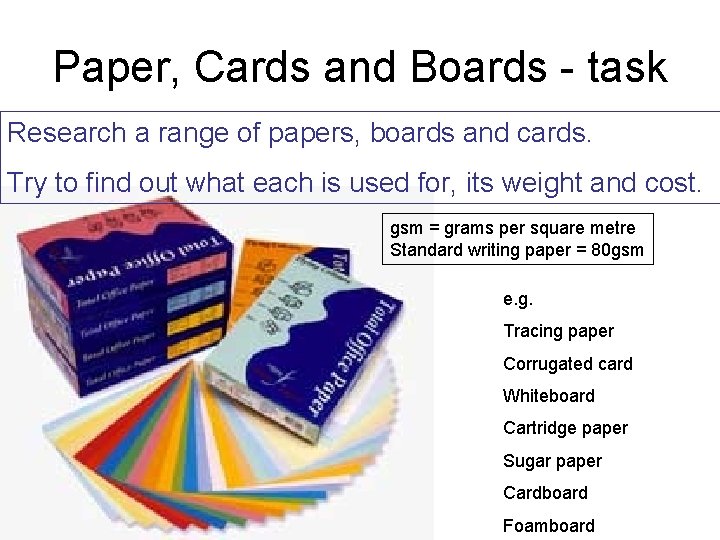
Paper, Cards and Boards - task Research a range of papers, boards and cards. Try to find out what each is used for, its weight and cost. gsm = grams per square metre Standard writing paper = 80 gsm e. g. Tracing paper Corrugated card Whiteboard Cartridge paper Sugar paper Cardboard Foamboard