
Introduction To GPS Earth Circumference 24 900 Miles
- Slides: 32
Introduction To GPS
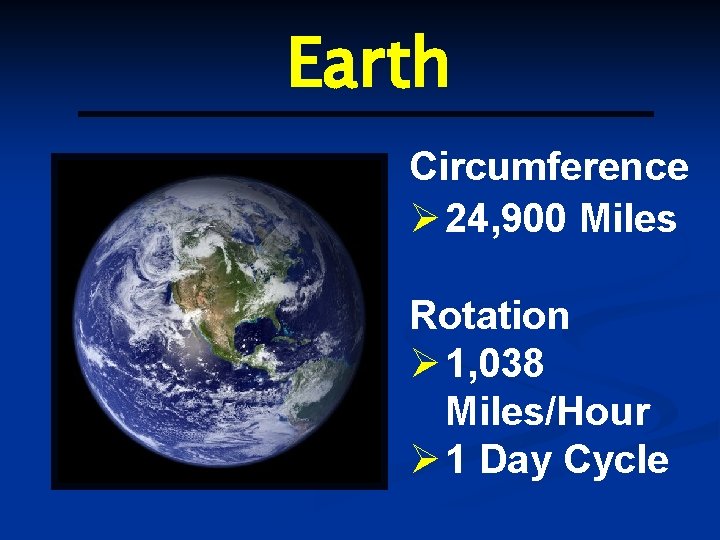
Earth Circumference Ø 24, 900 Miles Rotation Ø 1, 038 Miles/Hour Ø 1 Day Cycle
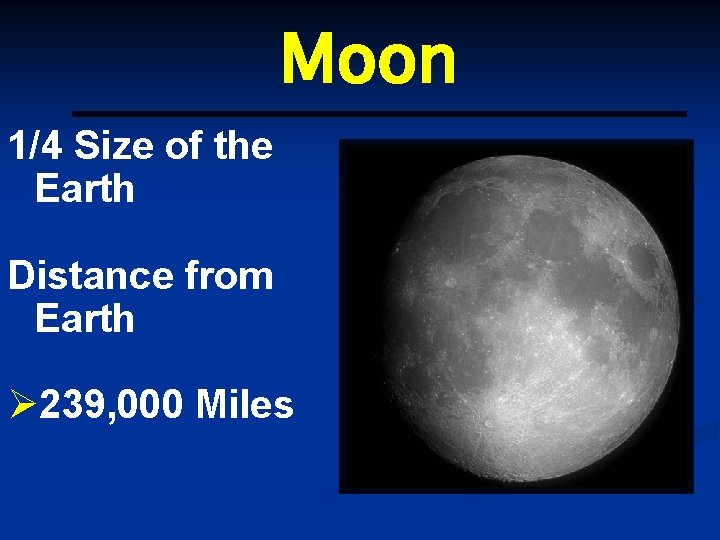
Moon 1/4 Size of the Earth Distance from Earth Ø 239, 000 Miles
The History of GPS Ø Feasibility studies begun in 1960’s. Ø Pentagon appropriates funding in 1973. Ø First satellite launched in 1978. Ø System declared fully operational in April, 1995. Ø Open to the public, 2000.
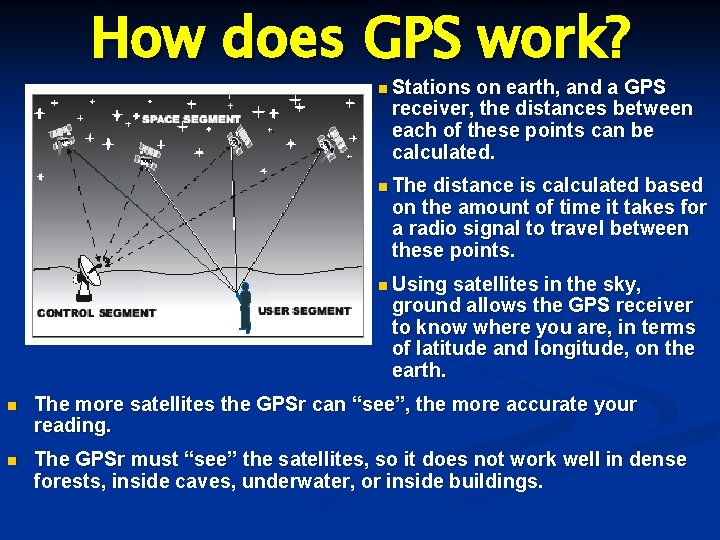
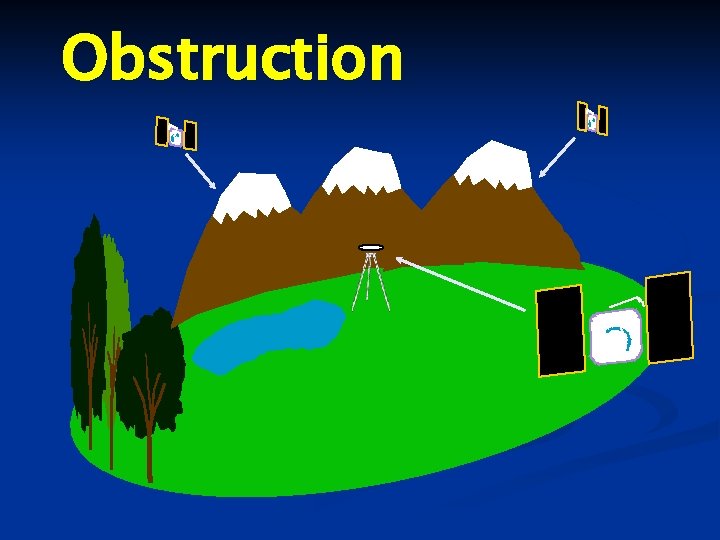
How does GPS work? n Stations on earth, and a GPS receiver, the distances between each of these points can be calculated. n The distance is calculated based on the amount of time it takes for a radio signal to travel between these points. n Using satellites in the sky, ground allows the GPS receiver to know where you are, in terms of latitude and longitude, on the earth. n The more satellites the GPSr can “see”, the more accurate your reading. n The GPSr must “see” the satellites, so it does not work well in dense forests, inside caves, underwater, or inside buildings.
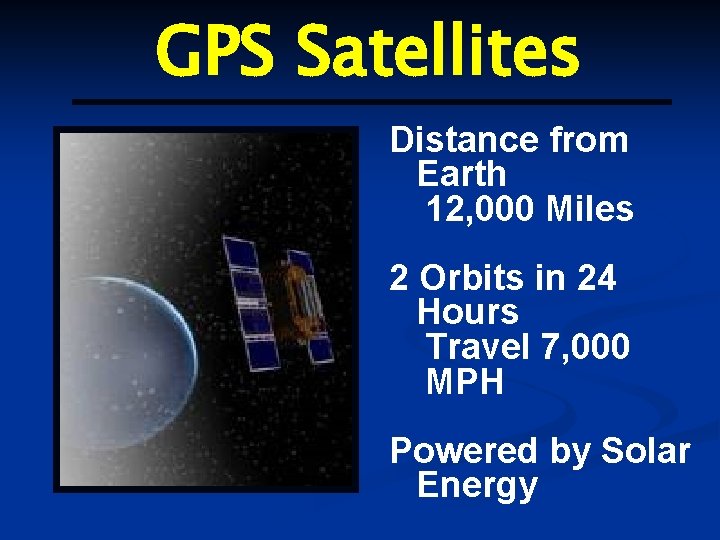
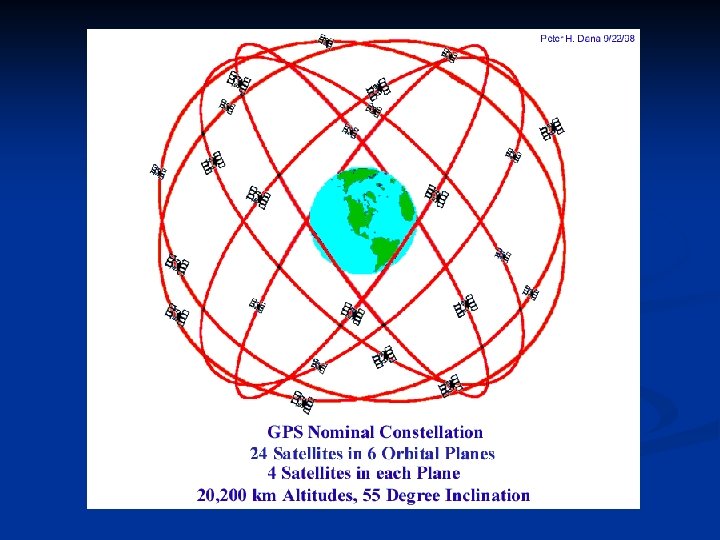
GPS Satellites Distance from Earth 12, 000 Miles 2 Orbits in 24 Hours Travel 7, 000 MPH Powered by Solar Energy
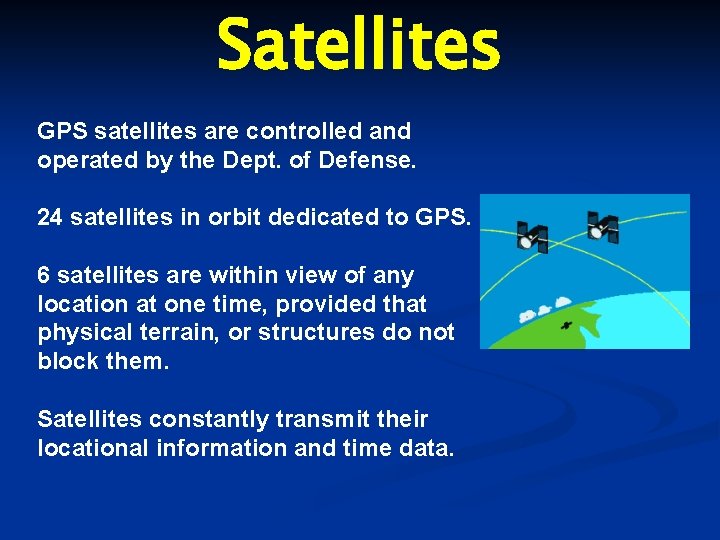
Satellites GPS satellites are controlled and operated by the Dept. of Defense. 24 satellites in orbit dedicated to GPS. 6 satellites are within view of any location at one time, provided that physical terrain, or structures do not block them. Satellites constantly transmit their locational information and time data.
Slide 28
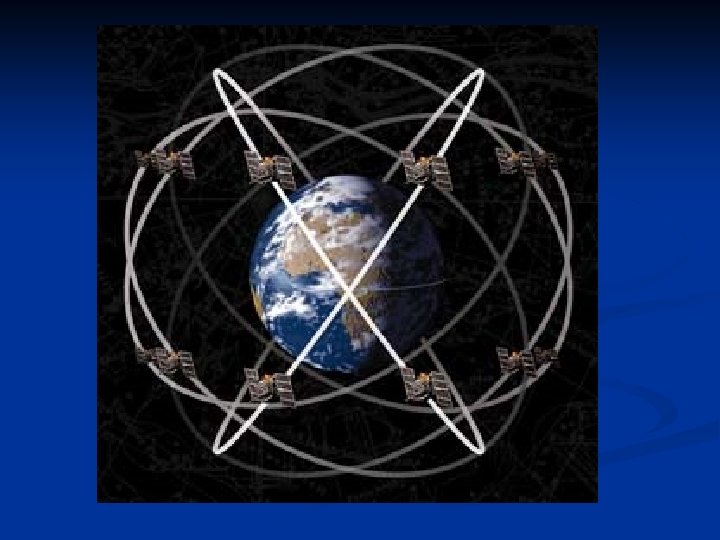
Space ü 24 satellites ü 12, 000 miles above Earth ü Orbit twice daily ü At least 4 satellites in view ü Distance from Earth to Moon - 256, 000 miles
Ø Ø Ø Ø Ø User Segment Military. Search and rescue. Disaster relief. Surveying. Marine, aeronautical and terrestrial navigation. Remote controlled vehicle and robot guidance. Satellite positioning and tracking. Shipping. Geographic Information Systems (GIS). Recreation.
What does a GPS receiver do? n GPS receiver allows you to pinpoint your location, anywhere in the world, based on latitude and longitude coordinates. n It can tell you in what direction you are heading. n It can show you: n how fast you are going n your altitude n a map to help you arrive at a destination
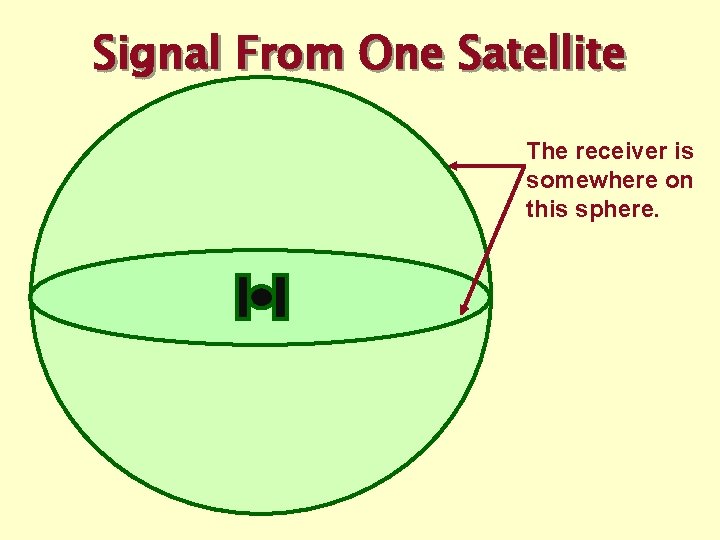
Signal From One Satellite The receiver is somewhere on this sphere.
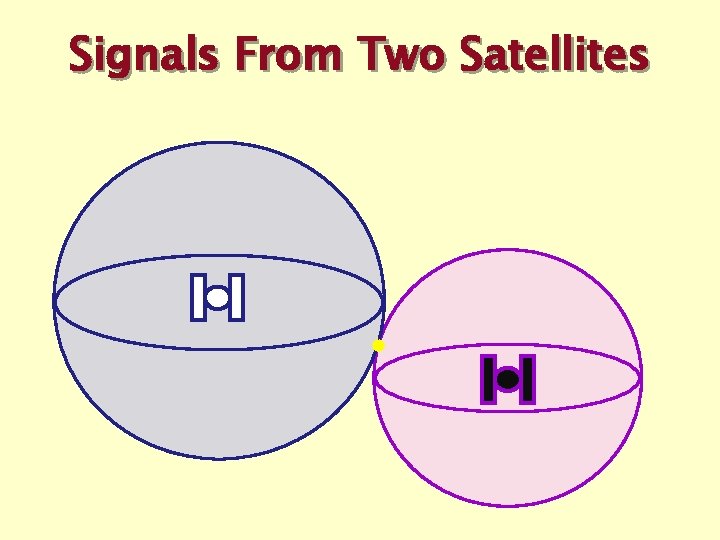
Signals From Two Satellites
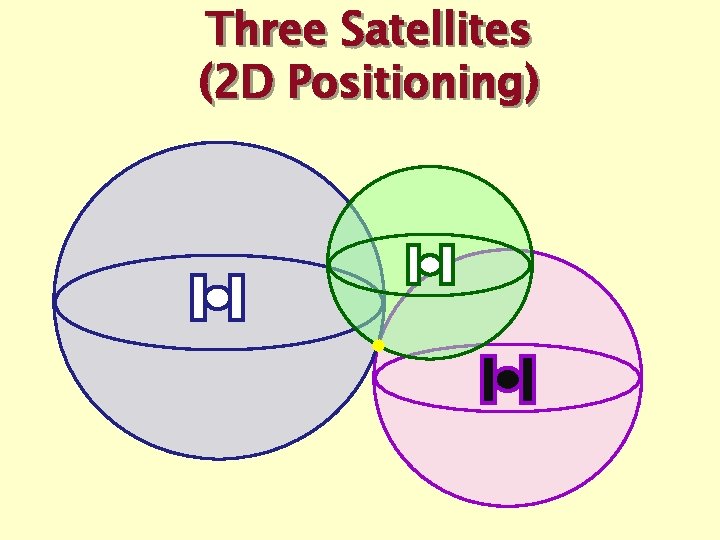
Three Satellites (2 D Positioning)
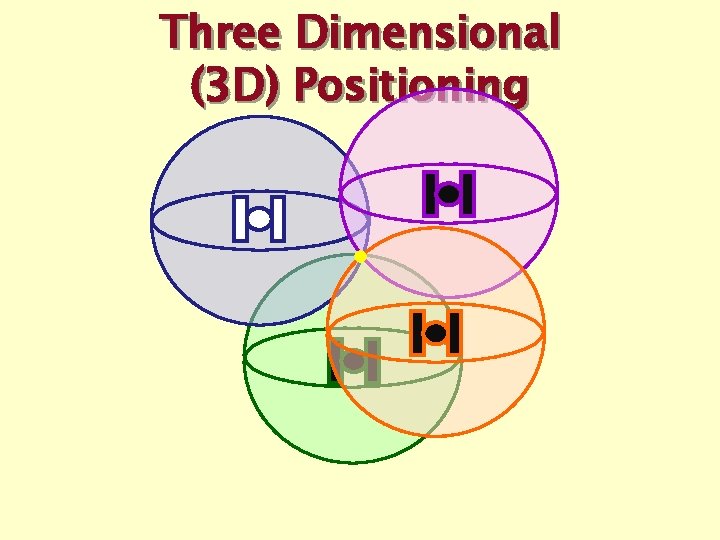
Three Dimensional (3 D) Positioning
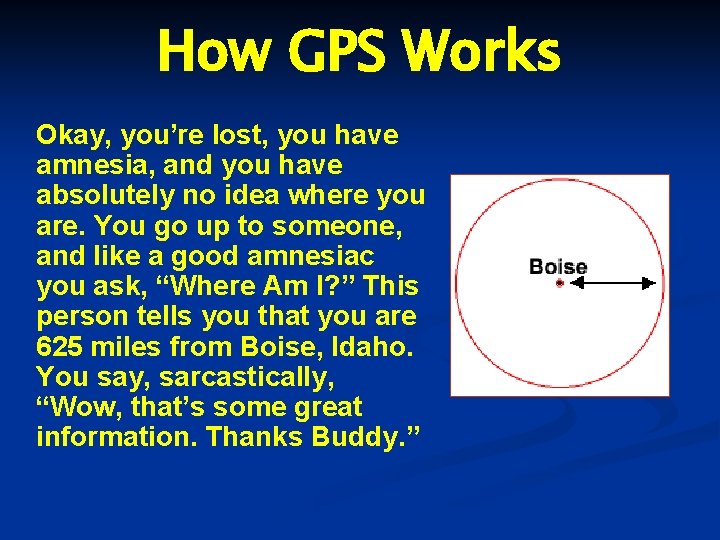
How GPS Works Okay, you’re lost, you have amnesia, and you have absolutely no idea where you are. You go up to someone, and like a good amnesiac you ask, “Where Am I? ” This person tells you that you are 625 miles from Boise, Idaho. You say, sarcastically, “Wow, that’s some great information. Thanks Buddy. ”
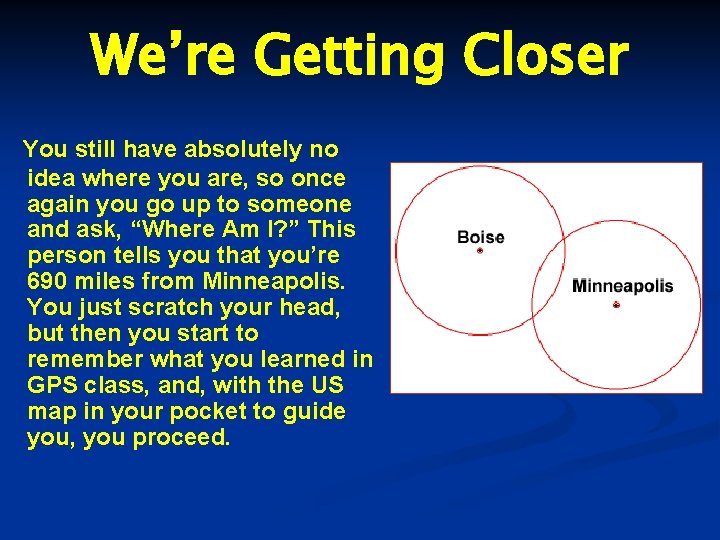
We’re Getting Closer You still have absolutely no idea where you are, so once again you go up to someone and ask, “Where Am I? ” This person tells you that you’re 690 miles from Minneapolis. You just scratch your head, but then you start to remember what you learned in GPS class, and, with the US map in your pocket to guide you, you proceed.
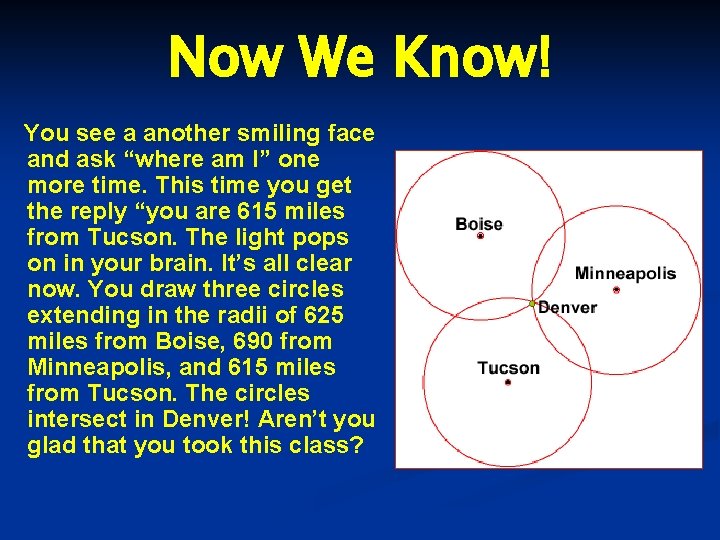
Now We Know! You see a another smiling face and ask “where am I” one more time. This time you get the reply “you are 615 miles from Tucson. The light pops on in your brain. It’s all clear now. You draw three circles extending in the radii of 625 miles from Boise, 690 from Minneapolis, and 615 miles from Tucson. The circles intersect in Denver! Aren’t you glad that you took this class?
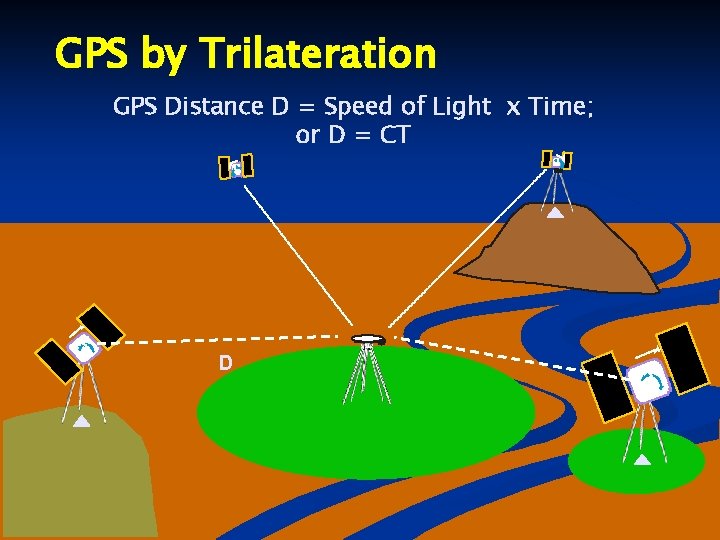
GPS by Trilateration GPS Distance D = Speed of Light x Time; or D = CT D
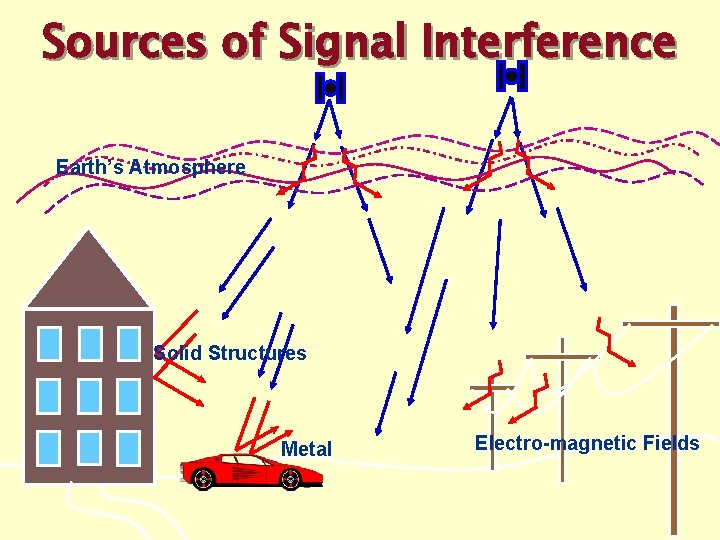
Sources of Signal Interference Earth’s Atmosphere Solid Structures Metal Electro-magnetic Fields
Obstruction
Waypoint Ø Ø Ø A waypoint is based on coordinates entered into a GPS receiver’s memory. It can be either a saved position fix, or user entered coordinates. It can be created for any remote point on earth. It must have a receiver designated code or number, or a user supplied name. Once entered and saved, a waypoint remains unchanged in the receiver’s memory until edited or deleted.
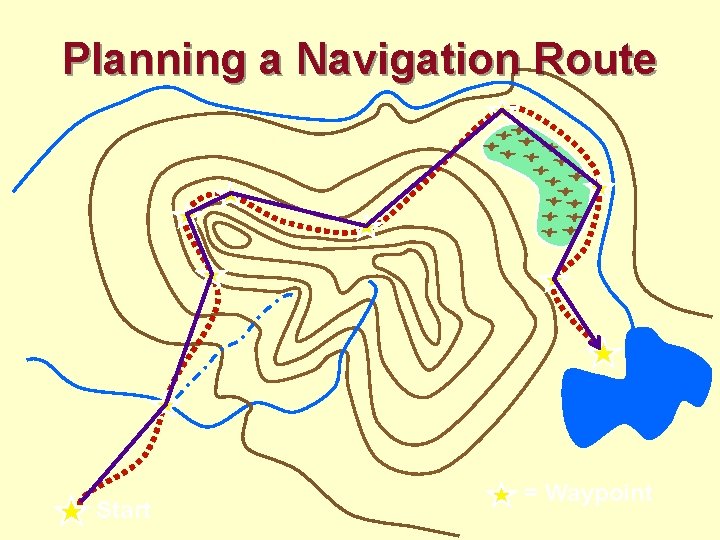
Planning a Navigation Route Start = Waypoint
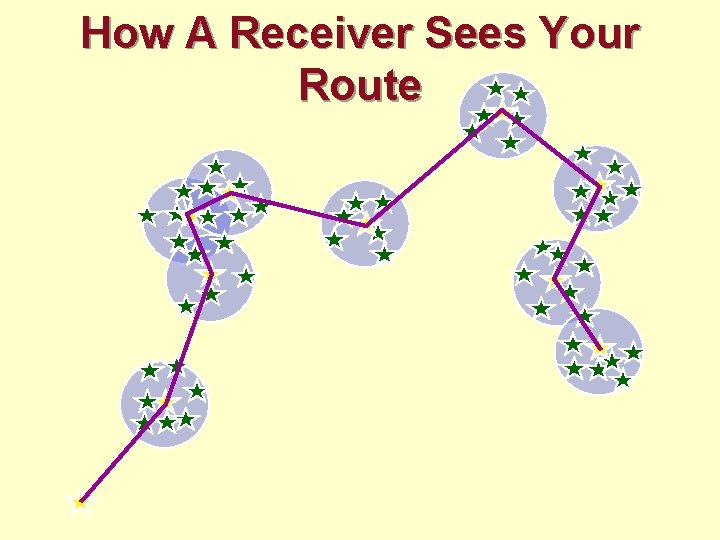
How A Receiver Sees Your Route
What is Geocaching? n All around the world, people have hidden “caches” and posted the coordinates on a website. n Anyone can go on the site and write down or download the coordinates of the cache to their GPS and go find it. n Once you have found a cache, you can go on the site and report your findings n This activity started in May of 2000, when the government lifted the “Selective Availability” of the GPS signals so that consumer GPS devices where as accurate at the military devices. n There are over 300, 00 active caches in 222 countries.
How do I start to Geocache? n Go to www. geocaching. com (or other geocache site) n Click on “Hide and Seek” n Enter a zip code, city and state or coordinates near where you want to hunt. n Note the level of difficulty, the type of cache and when it was last found. n Once you have selected a cache to hunt for, you can: n. Download your GPS n. Print logs or manually enter the “waypoint” to out the page with the coordinates, hint and
Types of Caches n Traditional caches- can be any size; n usually have a log book or paper and a pencil for you to sign n trinkets or items to trade with items you have brought n May contain a “Travel Bug” n Micro caches- small containers, such as film canisters or magnetic key cases; usually only have a log in them for you to sign n Virtual Caches- The spot is the cache itself. May be a historic site, a place with a unique activity, or scenic sights. n Multi-tier caches- have clues inside for you to follow to get to the next cache which may lead to another cache n Benchmarks- these are permanent markers placed around the US government for surveying purposes. Some people enjoy seeing how many of these markers they can find.
Geocaching Sites n Geocaching. com http: //www. geocaching. com - Number 1 site for geocaching; the one that started it all n Navicache. com http: //www. navicache. com - Number 2 web site for geocaching n Geocacher’s Creed http: //www. geocreed. info/ n Today’s Cacher http: //www. todayscacher. com - online magazine for geocachers n Geocacher University http: //www. geocacher-u. com n Markwell’s FAQ’s http: //members. aol. com/_ht_a/marklent 60544/myhomepage/Geocaching/markw ellgcfaq. htm n Buxley's Geocaching Waypoint http: //brillig. com/geocaching n Keen. People. com http: //www. keenpeople. com n The First 100 Geocaches http: //members. cox. net/pkpublic/index. html n Geocaching with Kids http: //www. eduscapes. com/geocaching/kids. htm
Educational Resources n From a Distance- NASA site with Information and Lesson Plans http: //wwwedu. ssc. nasa. gov/fad/default. asp n All About GPS (tutorial) http: //www. trimble. com/gps/index. html n GIS and GPS Lesson Plan Resources http: //www. gis 2 gps. com/GIS/lessons. html n What is Latitude and Longitude http: //www. rain. org/campinternet/gis-lat-long-whatis. html n How GPS Receivers Work http: //electronics. howstuffworks. com/gps. htm n GPS Guide for Beginners (PDF download) http: //www. garmin. com/about. GPS/manual. html
Sites of similar activities n Letterboxing http: //www. letterboxing. org/ n Bookcrossing n GPS http: //www. bookcrossing. com/ Drawing http: //www. gpsdrawing. com/info. htm n Benchmarking or Benchmark hunting http: //www. ngs. noaa. gov n Degree Confluence Project http: //www. confluence. org/index. php n GPS Games http: //www. gpsgames. org/
Citations n Dixon, Conrad. Using GPS. 2 nd ed. Dobbs Ferry: Sheridan House, 1999. n Letham, Lawrence. GPS Made Easy. Seattle: The Mountaineers, 1996. n Mc. Namara, Joel. Geocaching for Dummies. Hoboken: Wiley Publishing, 2004.