
INTRODUCTION TO GLOBAL HISTORY Primary Sources Social Sciences
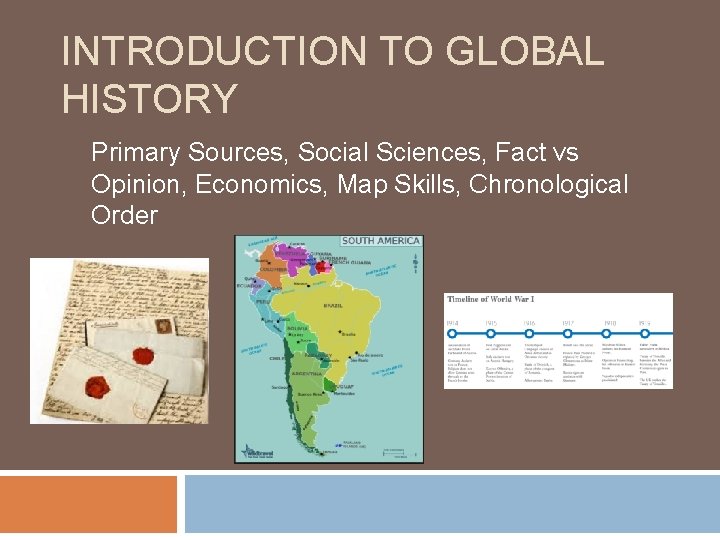
INTRODUCTION TO GLOBAL HISTORY Primary Sources, Social Sciences, Fact vs Opinion, Economics, Map Skills, Chronological Order
Primary Sources A primary source is original material from the past. (Journal entry, photograph, artifacts, oral histories, historical video footage) Examples: A diary entry from Napoleon Bonaparte, video footage from World War I, a tape recording of a speech by Joseph Stalin, writings by Ibn Battuta about his travels, Peter the Great’s diary, pottery from ancient India
Social Sciences Archaeologist – studies physical artifacts of a culture Anthropologist – studies different cultures and how they develop and interact with each other; studies early people Economist – studies how people change resources into goods and services; studies scarcity (how much of something is available) of resources Geographer – studies how location influences how people live, ie climate/topography/etc Cartographer – map maker
Fact vs Opinion An OPINION is what someone thinks. Your opinion is your personal view, belief, or attitude. �I think ice cream is the best food ever. � Global Studies is better than Biology. � Coming to school is awesome.
Fact vs. Opinion A FACT is a true statement or piece of information that has proven to be true. � The US and Soviet Union were two superpowers involved in the Cold War. � The French Revolution happened in France during the 1700 s.
Economics Traditional economy – based on custom and tradition. People farm for food and there is little growth. Market economy – People own their own businesses and property. Government does not interfere. Supply and demand control price. Command economy – State (government) controls what
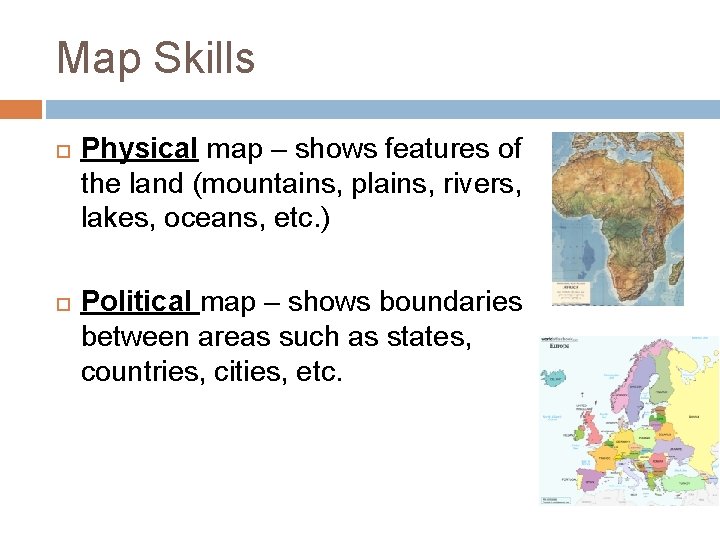
Map Skills Physical map – shows features of the land (mountains, plains, rivers, lakes, oceans, etc. ) Political map – shows boundaries between areas such as states, countries, cities, etc.
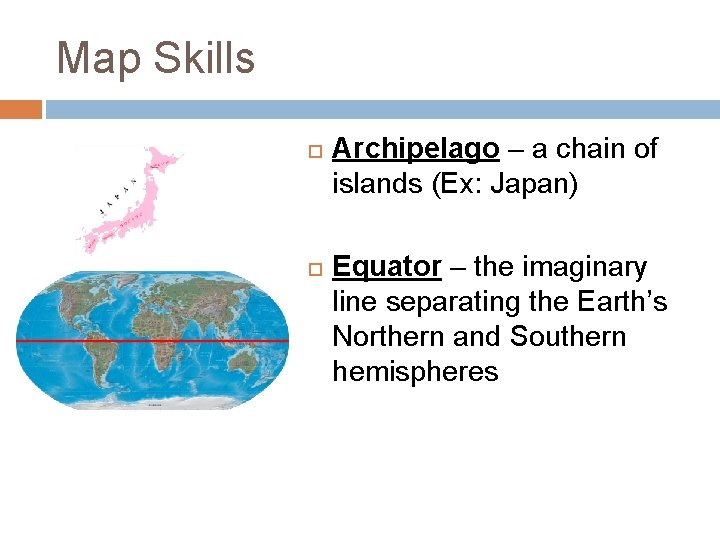
Map Skills Archipelago – a chain of islands (Ex: Japan) Equator – the imaginary line separating the Earth’s Northern and Southern hemispheres
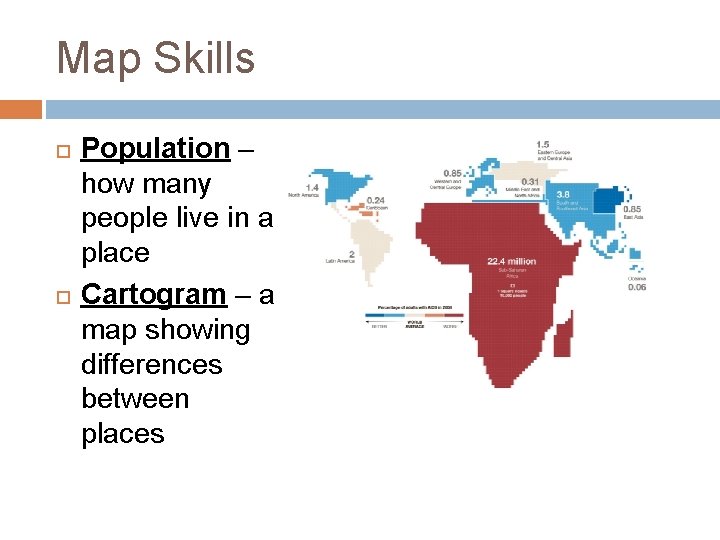
Map Skills Population – how many people live in a place Cartogram – a map showing differences between places
When reading a map – read the title and key first!!! A physical map of Japan A political map of Europe
Chronological Order In order by time (what happened first, next, last) Example: the following events are in chronological order: Neolithic Revolution WW 1 Persian Gulf War
Culture and Civilizations A civilization is an advanced society, elements are: Job specialization � Central government � Organized religion � Social classes � Art and architecture � Cities � Roads/bridges/other public works � System of writing � Culture is sometimes referred to as a “blueprint for living” because it includes everything that contributes to a society’s development (art, music, religion, clothing, etc)
- Slides: 12