
Introduction to GLAAS Module 1 GLAAS 20182019 cycle
- Slides: 14
Introduction to GLAAS Module 1 GLAAS 2018/2019 cycle
What is GLAAS? GLAAS: UN-Water Global Analysis and Assessment of Sanitation and Drinking-Water – Implemented by the World Health Organization on behalf of UN-Water – A global, biennial update on the policy frameworks, institutional arrangements, monitoring systems, human resources base and finance streams in support of sanitation, drinking-water, hygiene sector
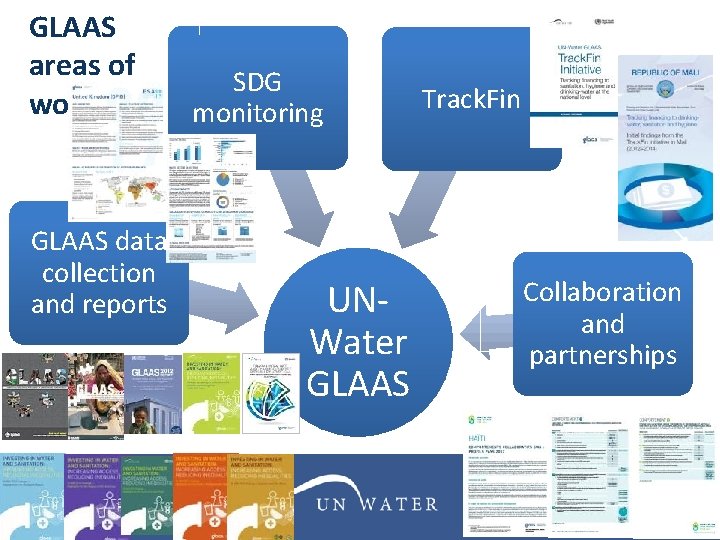
GLAAS areas of work GLAAS data collection and reports SDG monitoring UNWater GLAAS Track. Fin Collaboration and partnerships
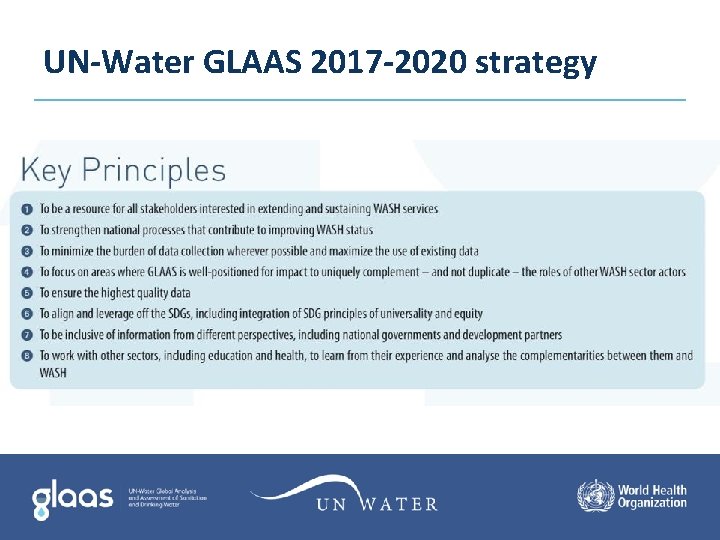
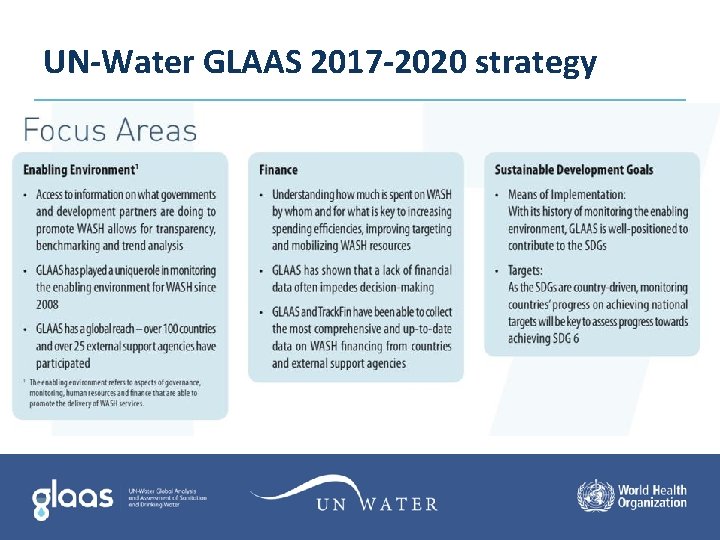
UN-Water GLAAS 2017 -2020 strategy
GLAAS data collection and reports: Purpose and objectives • Monitor the inputs required to extend and sustain WASH systems and services to all, especially the unserved and disadvantaged groups • Support country-led processes that bring together the many institutions and actors that are involved in delivering WASH services • Identify drivers and bottlenecks of progress, highlight knowledge gaps and assess strengths and challenges across countries • Collect data from countries and external support agencies
Benefits of GLAAS to Countries • Provides a useful situation analysis of the WASH sector • Identifies information gaps • Helps decision-makers define priorities and devise plans • Brings different stakeholders together • Contributes to SDG monitoring
GLAAS 2018/2019 cycle – What’s new? • Thematic focus: This cycle will focus on national WASH policies, plans and targets including: – More comprehensive questions on national WASH policies and plans – Focus on national targets to capture national target-setting processes and alignment with SDG 6. 1 and 6. 2 monitoring ladders • GLAAS and JMP are working together to ensure the work is complementary • Questions for SDG monitoring have been incorporated into the survey – Revised question on local participation (A 14) for SDG 6. b – Revised question on external funding (D 9) for SDG 6. a – The scope of these questions has been expanded to include integrated water resources management
GLAAS 2018/2019 Cycle – What’s New? cont. • A revised survey guidance document – Outlines the GLAAS process – Gives general survey instructions – Provides additional information for each question • GLAAS survey format is a fillable PDF – User friendly with fillable text boxes and tick boxes – To ensure functionality of the fillable PDF, please use an updated version of Adobe Acrobat Reader DC (https: //get. adobe. com/reader/) – Can save answers and return back to the PDF survey • GLAAS country survey annex is a separate word document for any text or tables that do not fit into the fillable PDF
UN-Water GLAAS 2019 Report • Information collected will be presented in the 2019 UN-Water GLAAS report • The GLAAS 2019 report will have a focus on national WASH policies, plans and targets • The GLAAS 2019 report is expected in Q 2 2019
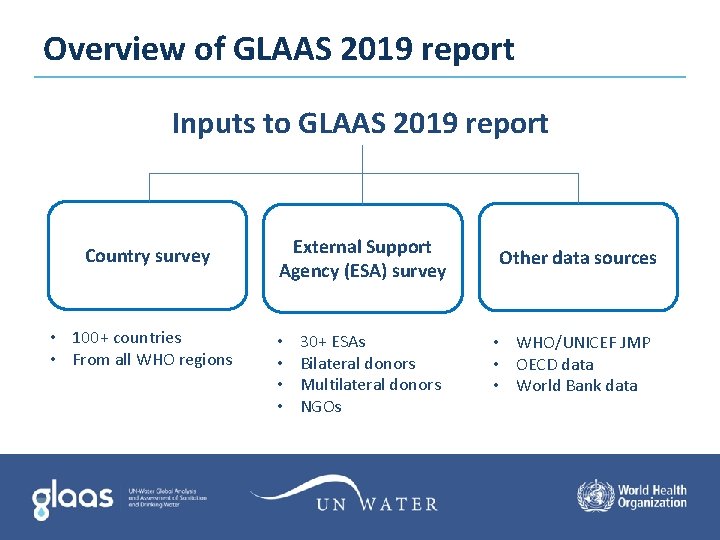
Overview of GLAAS 2019 report Inputs to GLAAS 2019 report Country survey • 100+ countries • From all WHO regions External Support Agency (ESA) survey • • 30+ ESAs Bilateral donors Multilateral donors NGOs Other data sources • WHO/UNICEF JMP • OECD data • World Bank data
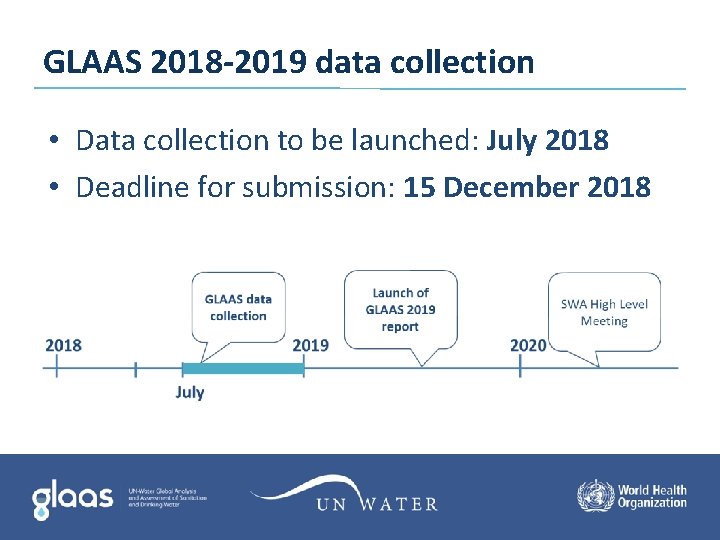
GLAAS 2018 -2019 data collection • Data collection to be launched: July 2018 • Deadline for submission: 15 December 2018
Thank you! For additional information or assistance please contact glaas@who. int
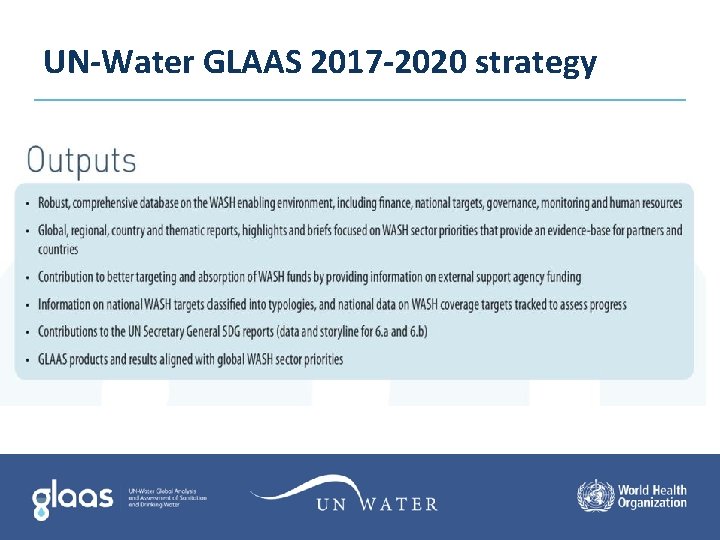
UN-Water GLAAS 2017 -2020 strategy
UN-Water GLAAS 2017 -2020 strategy