
INTRODUCTION TO GEOLOGY SCIENTIFIC METHOD What is Geology


- Slides: 44
INTRODUCTION TO GEOLOGY & SCIENTIFIC METHOD
What is Geology? Geology: The study of the Earth Geology is different from Physics or Chemistry because it is POSTdictive as opposed to PREdictive like chemistry Postdictive science is historical in nature � It’s science with a story
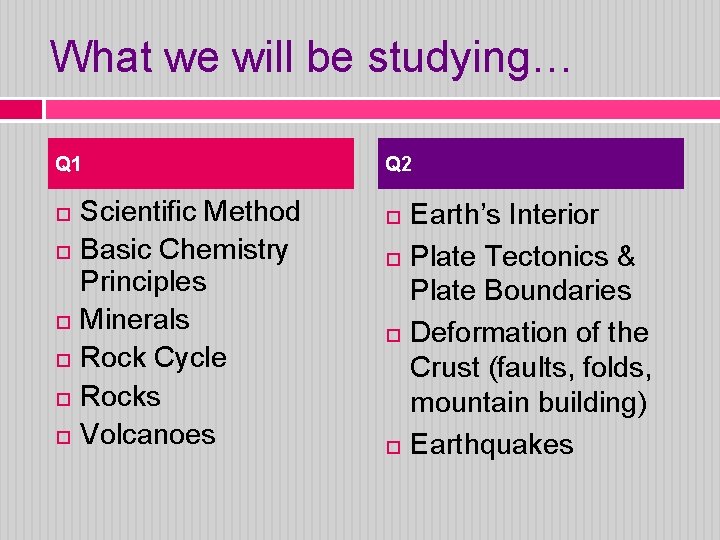
What we will be studying… Q 1 Scientific Method Basic Chemistry Principles Minerals Rock Cycle Rocks Volcanoes Q 2 Earth’s Interior Plate Tectonics & Plate Boundaries Deformation of the Crust (faults, folds, mountain building) Earthquakes
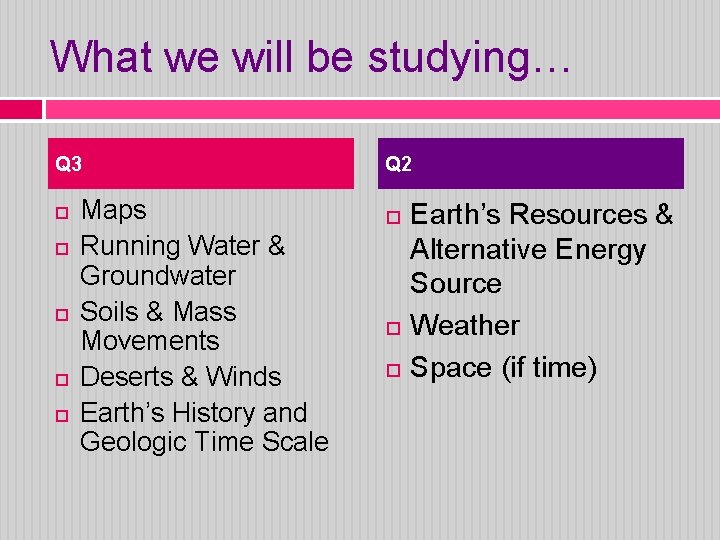
What we will be studying… Q 3 Maps Running Water & Groundwater Soils & Mass Movements Deserts & Winds Earth’s History and Geologic Time Scale Q 2 Earth’s Resources & Alternative Energy Source Weather Space (if time)
What we will be studying Other topics could include: � Forensic geology � Geology in space � Geochemical Principles � Mineralogy
What should you expect? This is an UPPER level science course. This means you will be held to a higher standard than your basic science classes from Physical Science and Biology In class: � Questions of the day, notes, practice, labs, papers Will perform approximately 20 labs for the year You will be writing at least 1 research paper and ~5 shorter writing assignments Out of class: � Homework Expect to have homework at least 3 days per week You should be studying each night for about 20 minutes
What you should expect Quizzes and Exams � There will NEVER be a pop up quiz in this class � Exams will usually be part multiple choice and part short answer Expect the majority to be short answer
What to expect Extra credit �I do not give special extra credit assignments. As long as you complete the required work, you should not be in danger of failing � There will be opportunities (I will let you know) for extra credit on regular assigned work � Usually there is 1 -2 extra credit questions on the test that require you to use all the information from that particular section
What to expect If you are expecting to take this course as an “easy A” then you should highly reconsider enrolling in the course You will be held to a high standard of learning and effort. As long as you put the effort required into this challenging class, you will excel.
What if I’m sick? You have as many days to get me your missing work to me as you were absent It is YOUR responsibility to get missing work from me If you miss a lab, you are not required to make it up, but are more than welcome to complete it if you want
Class website Or you can go to the classroom website: www. mrsellisscience. com Here you access ALL class notes, labs, assignments (there also links to Power. School & the BHS website There is also a calendar to help you keep track of what is for homework and big dates like tests Every assignment for the chapter should be up once it is assigned by the end of the day
What I need back from you Course Agreement signed Lab Safety Agreement signed Lab fee: $10 � Lab fees help us to have exciting labs for the year � All fees go directly to purchasing materials we will use
Questions? ? ?
NOW LET’S START!!
Geology Basic Principles
What is Geology? Geology: The study of the Earth Geology is different from Physics or Chemistry because it is POSTdictive as opposed to PREdictive like chemistry Postdictive science is historical in nature � It’s science with a story
Earth Facts Age of the Earth: 4. 6 billion years Age of the Universe: 14 billion years Time is measured by change � Deep time Millions and billions of years James Hutton (1726 -1797): considered the father of geologic science � Hypothesized a very old earth � Formulated the concept of Uniformitarianism
Uniformitarianism Laws of nature don’t change with time � Past events explained by modern processes � Assumes vast amounts of deep time � Basically-processes happening today have happened for a really long time and will continue to happen for a really long time
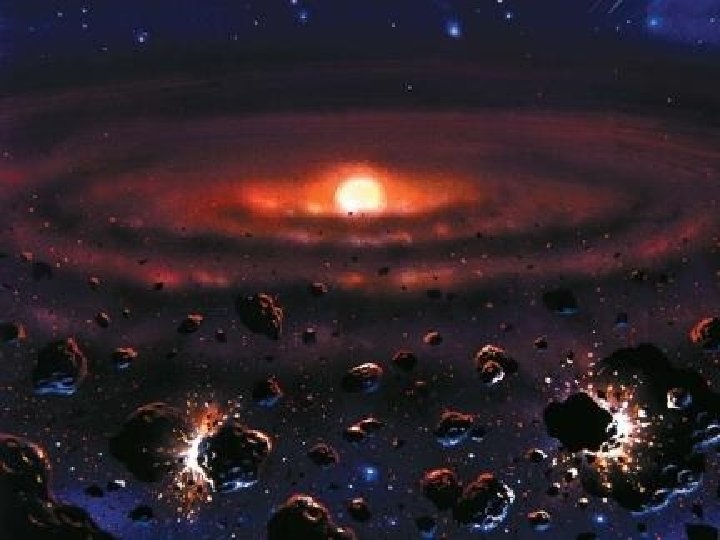
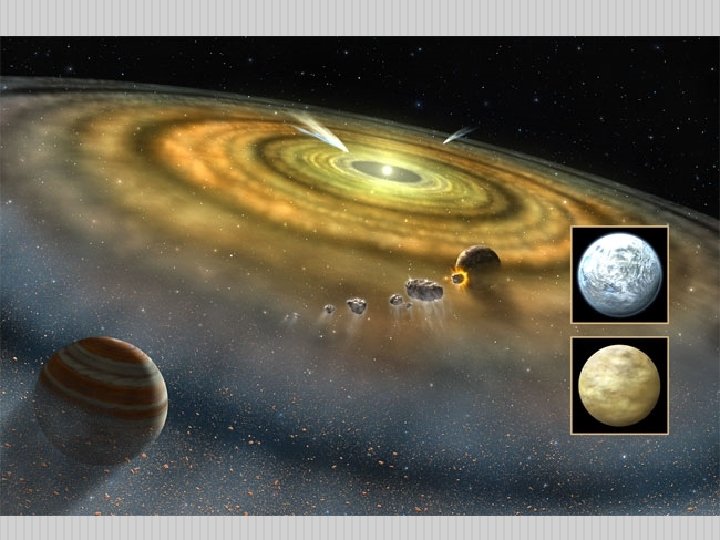
Origin of the Solar System Gravitational collapse of gas & dust cloud called a nebula �Rotation around a central mass �Disk shaped cloud �Made mostly of Hydrogen and Helium �Temperature variations segregated matter �Small particles accreted into larger planetesimals, planets
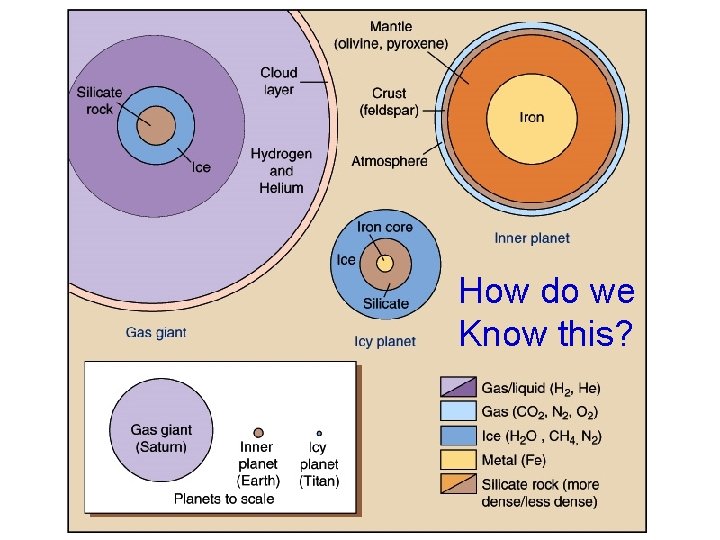
How do we Know this?
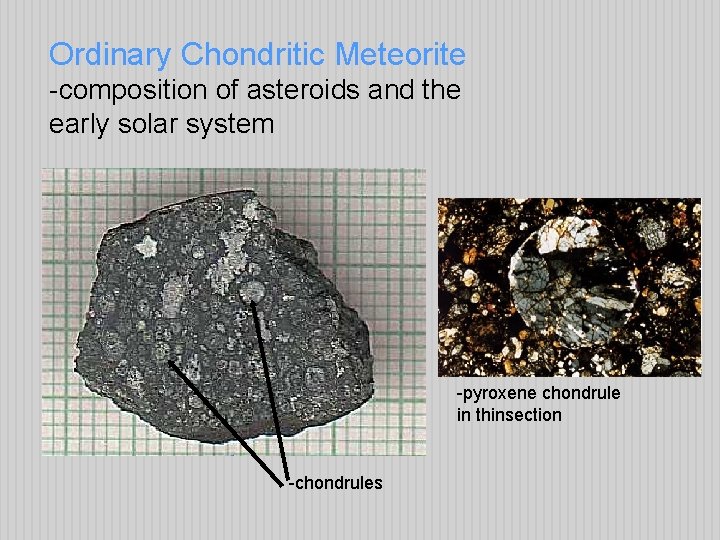
Ordinary Chondritic Meteorite -composition of asteroids and the early solar system -pyroxene chondrule in thinsection -chondrules
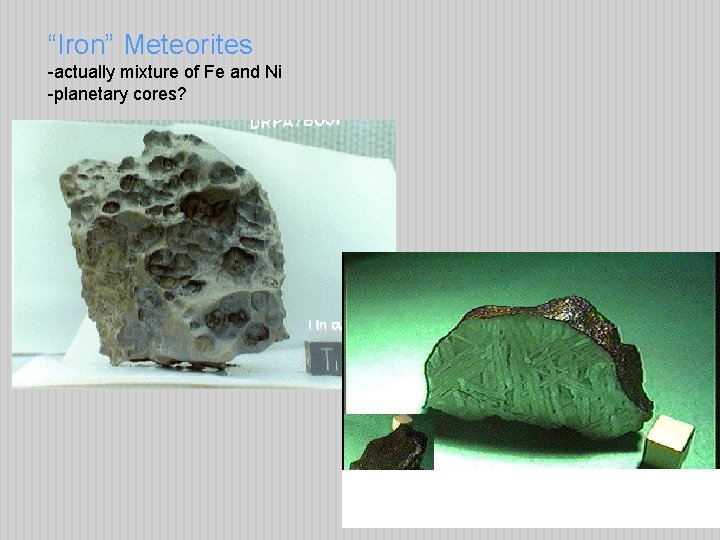
“Iron” Meteorites -actually mixture of Fe and Ni -planetary cores?
Earth Compared to Other Planets The Solar System �The inner planets Also known as Terrestrial Planets Rocky planets near the Sun Mercury, Venus, Earth & Mars �The outer planets Known as Jovian Planets Giant gaseous planets Jupiter, Saturn, Uranus, Neptune � Pluto, a small icy dwarf planet
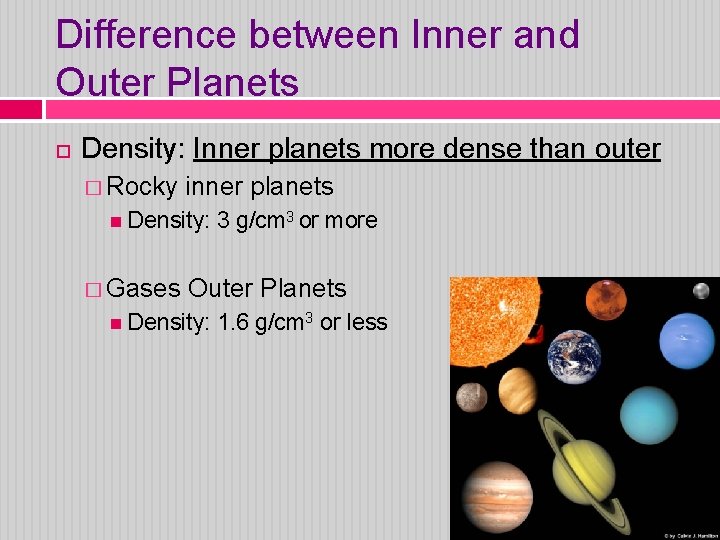
Difference between Inner and Outer Planets Density: Inner planets more dense than outer � Rocky inner planets Density: � Gases 3 g/cm 3 or more Outer Planets Density: 1. 6 g/cm 3 or less
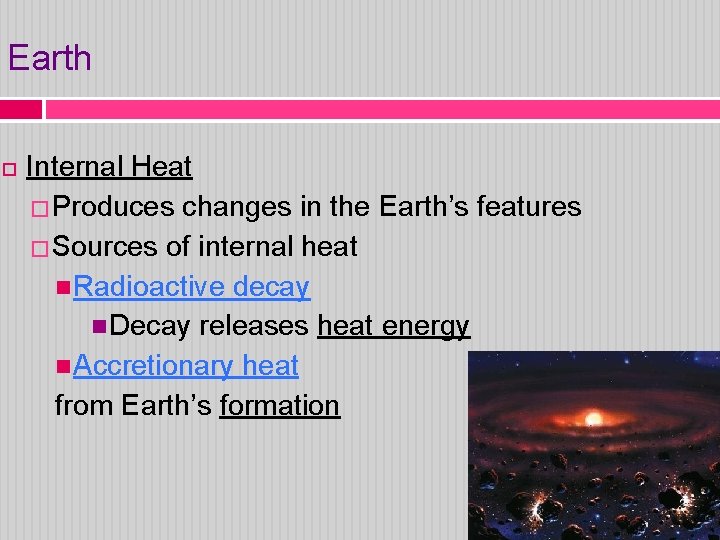
Earth Internal Heat � Produces changes in the Earth’s features � Sources of internal heat Radioactive decay Decay releases heat energy Accretionary heat from Earth’s formation
Formation of Earth Layers form on the earth � As earth formed, the decay of radioactive elements and heat from high-velocity impacts caused the temperature to increase � Lighter rock components floated outward, toward the surface � Gaseous material escaped from earth’s interior to produce the primitive atmosphere
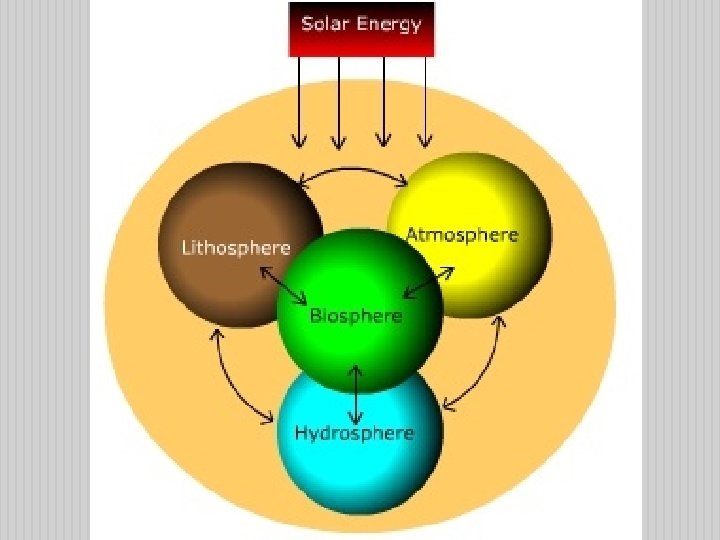
Earth’s Major Spheres Hydrosphere Atmosphere Biosphere Geosphere
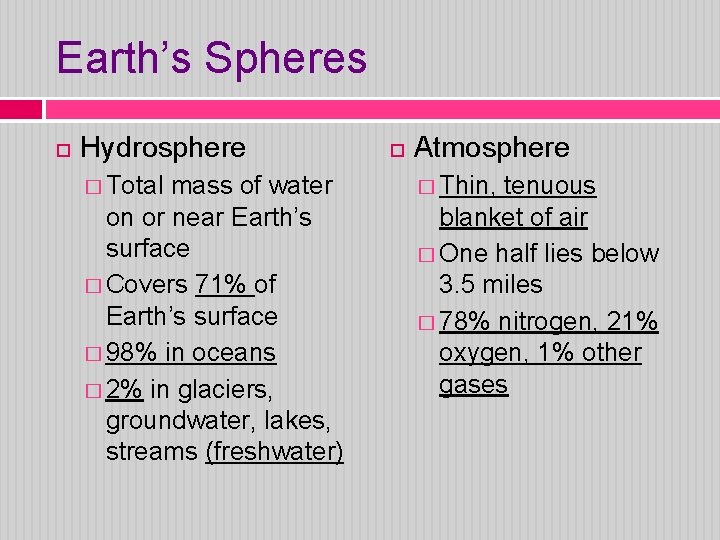
Earth’s Spheres Hydrosphere � Total mass of water on or near Earth’s surface � Covers 71% of Earth’s surface � 98% in oceans � 2% in glaciers, groundwater, lakes, streams (freshwater) Atmosphere � Thin, tenuous blanket of air � One half lies below 3. 5 miles � 78% nitrogen, 21% oxygen, 1% other gases
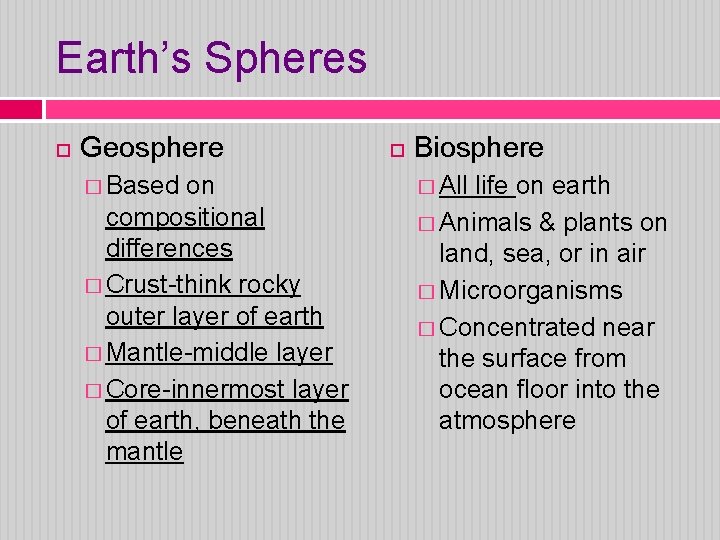
Earth’s Spheres Geosphere � Based on compositional differences � Crust-think rocky outer layer of earth � Mantle-middle layer � Core-innermost layer of earth, beneath the mantle Biosphere � All life on earth � Animals & plants on land, sea, or in air � Microorganisms � Concentrated near the surface from ocean floor into the atmosphere
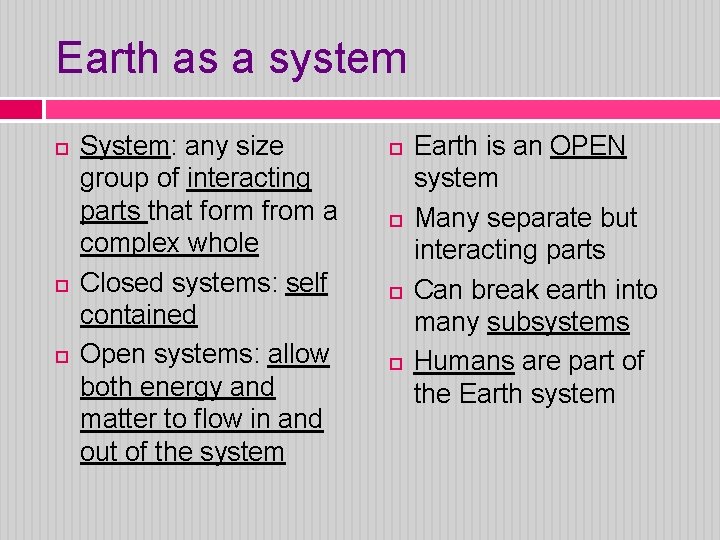
Earth as a system System: any size group of interacting parts that form from a complex whole Closed systems: self contained Open systems: allow both energy and matter to flow in and out of the system Earth is an OPEN system Many separate but interacting parts Can break earth into many subsystems Humans are part of the Earth system
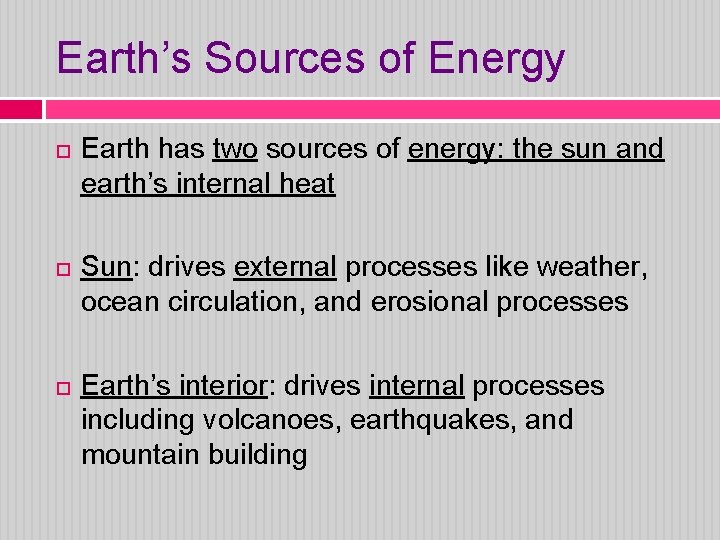
Earth’s Sources of Energy Earth has two sources of energy: the sun and earth’s internal heat Sun: drives external processes like weather, ocean circulation, and erosional processes Earth’s interior: drives internal processes including volcanoes, earthquakes, and mountain building
Scientific Method
Scientific Inquiry Science assumes the natural world is consistent & predictable Goals of science are � Discover patterns in nature � Use the knowledge for predictions Science does NOT have to be done in a specified method or order but does need certain parts
Scientific Method
Scientific Method
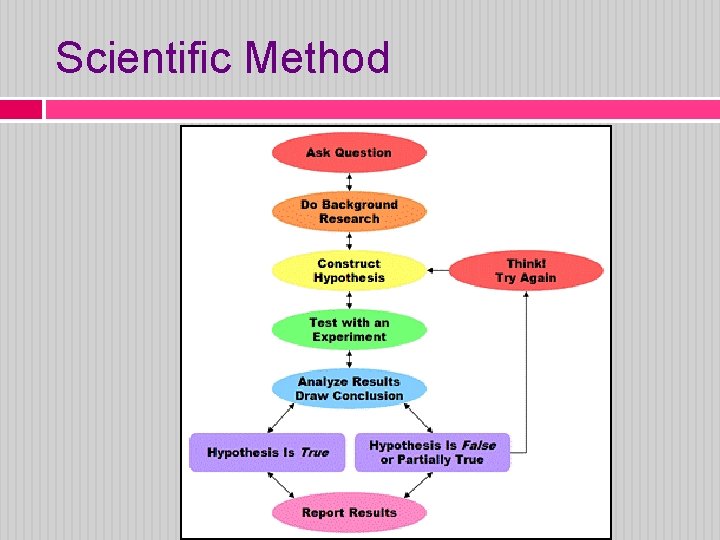
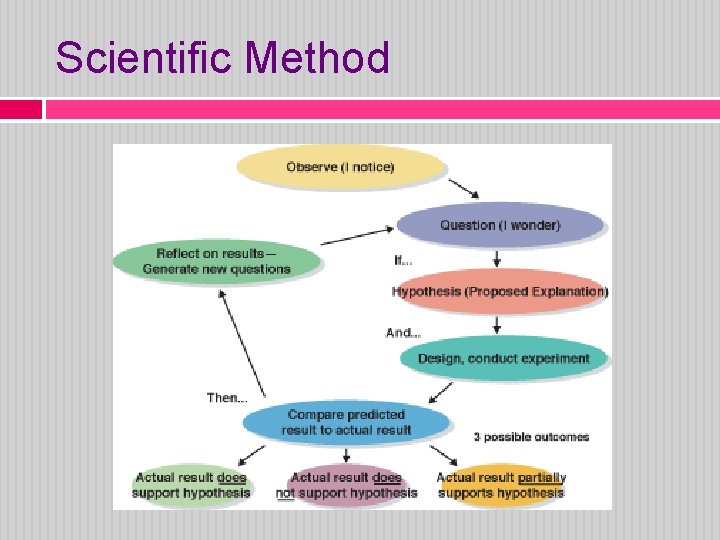
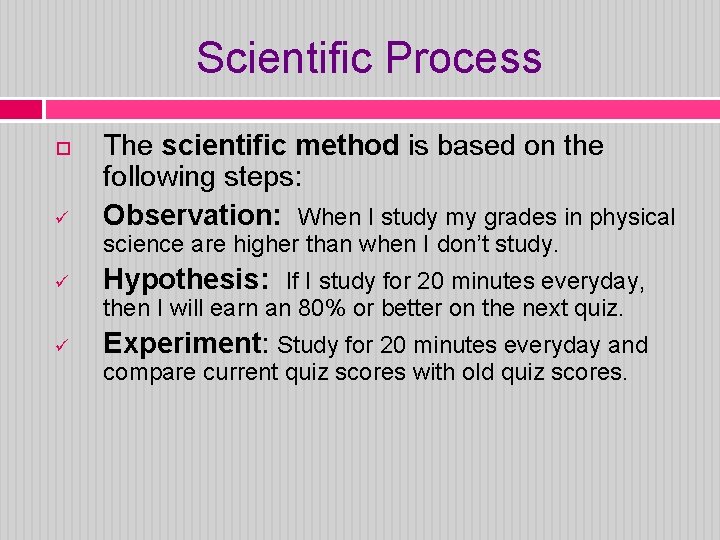
Scientific Process ü The scientific method is based on the following steps: Observation: When I study my grades in physical science are higher than when I don’t study. ü Hypothesis: If I study for 20 minutes everyday, then I will earn an 80% or better on the next quiz. ü Experiment: Study for 20 minutes everyday and compare current quiz scores with old quiz scores.
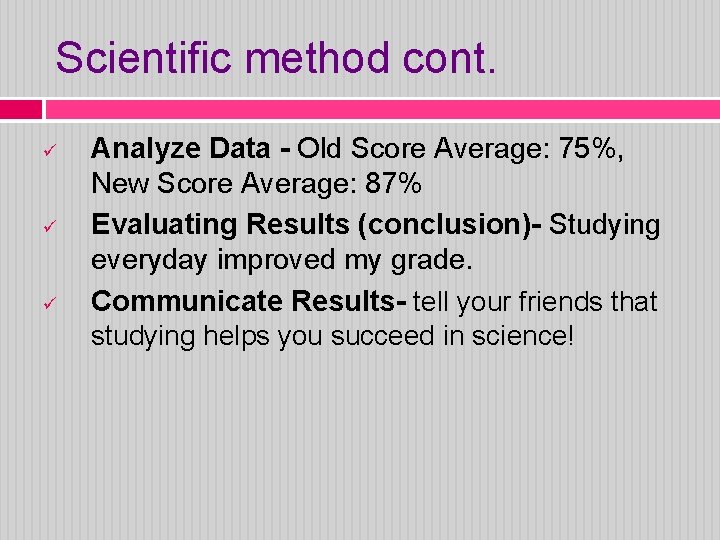
Scientific method cont. ü ü ü Analyze Data - Old Score Average: 75%, New Score Average: 87% Evaluating Results (conclusion)- Studying everyday improved my grade. Communicate Results- tell your friends that studying helps you succeed in science!
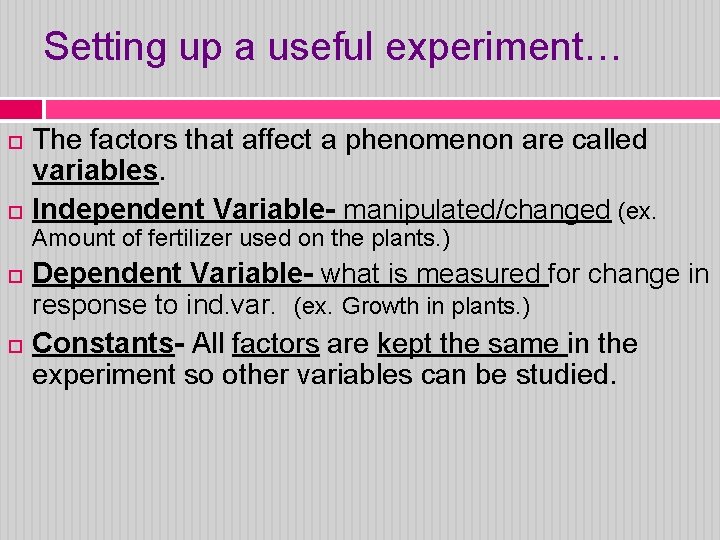
Setting up a useful experiment… The factors that affect a phenomenon are called variables. Independent Variable- manipulated/changed (ex. Amount of fertilizer used on the plants. ) Dependent Variable- what is measured for change in response to ind. var. (ex. Growth in plants. ) Constants- All factors are kept the same in the experiment so other variables can be studied.
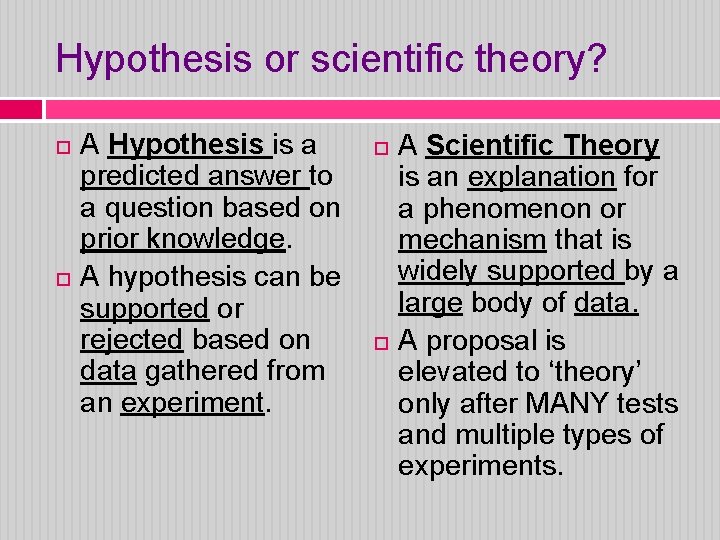
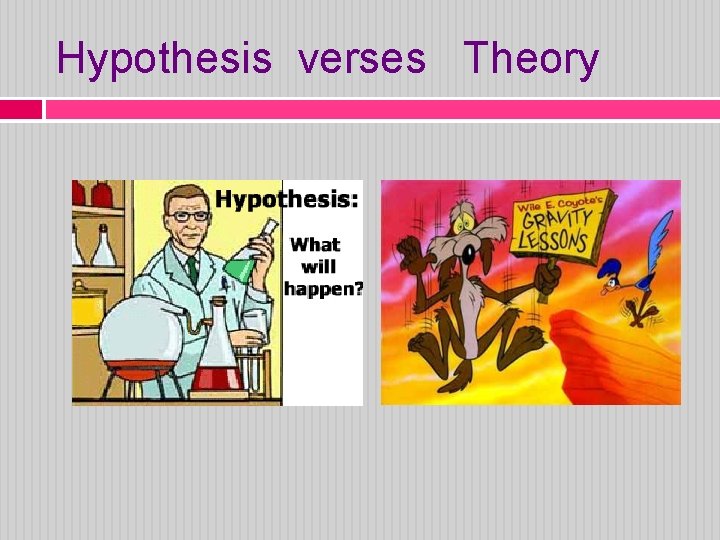
Hypothesis or scientific theory? A Hypothesis is a predicted answer to a question based on prior knowledge. A hypothesis can be supported or rejected based on data gathered from an experiment. A Scientific Theory is an explanation for a phenomenon or mechanism that is widely supported by a large body of data. A proposal is elevated to ‘theory’ only after MANY tests and multiple types of experiments.
Hypothesis verses Theory
Scientific Theory vs Law A scientific law is a summary of many experimental results and observations A law tells how things work(the what) � Tells you the actionyou know an apple will fall when you drop it A law does NOT tell you why it happens, theory tells you the why Examples � Law of gravity � Newton’s Laws of Motion � Law of Definite Proportions � Laws of Thermodynamics � Law of Reflection