
Introduction to Geology Quantitative Dating Plate Dynamics https




- Slides: 26
Introduction to Geology Quantitative Dating.
Plate Dynamics https: //www. learner. org/vod_window. html? pid=317 Geological time https: //www. learner. org/vod_window. html? pid=321
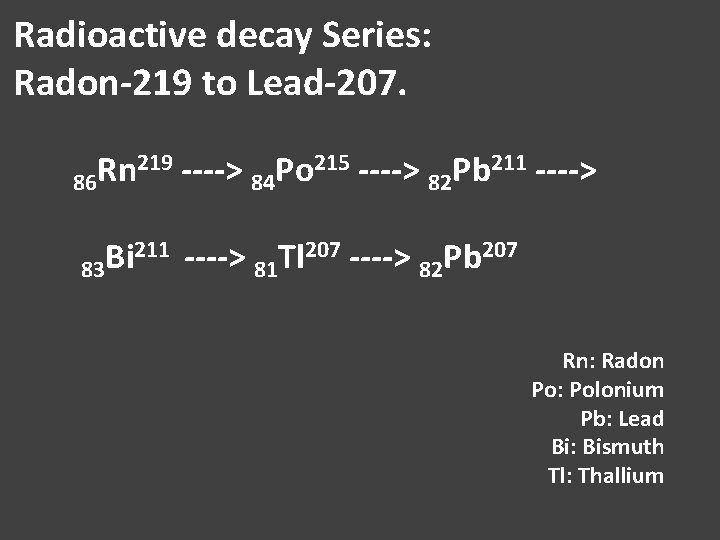
Radioactive decay Series: Radon-219 to Lead-207. 219 ----> Po 215 ----> Pb 211 ----> Rn 86 84 82 211 ----> Tl 207 ----> Pb 207 Bi 83 81 82 Rn: Radon Po: Polonium Pb: Lead Bi: Bismuth Tl: Thallium
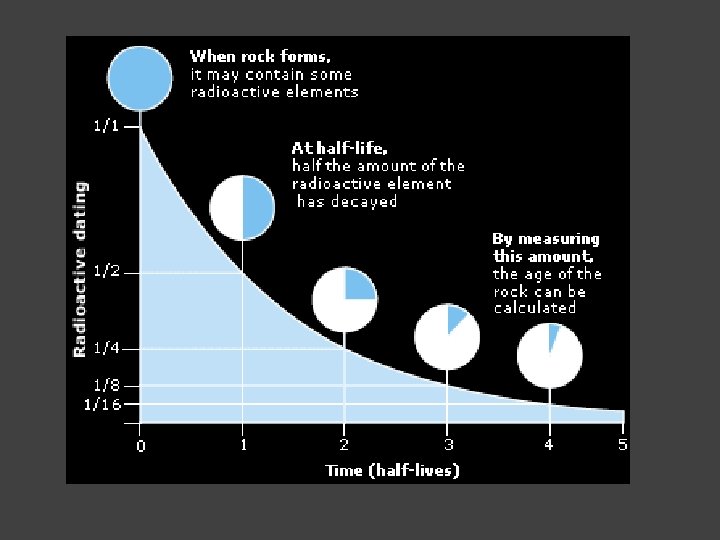
Radioactive elements decay at constant rate.
Radioactive elements decay at constant rate.
Radioactive elements decay at constant rate.
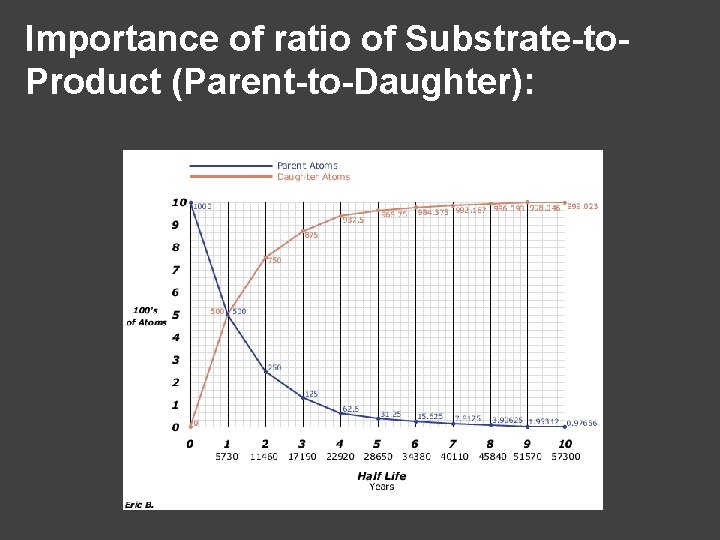
Importance of ratio of Substrate-to. Product (Parent-to-Daughter):
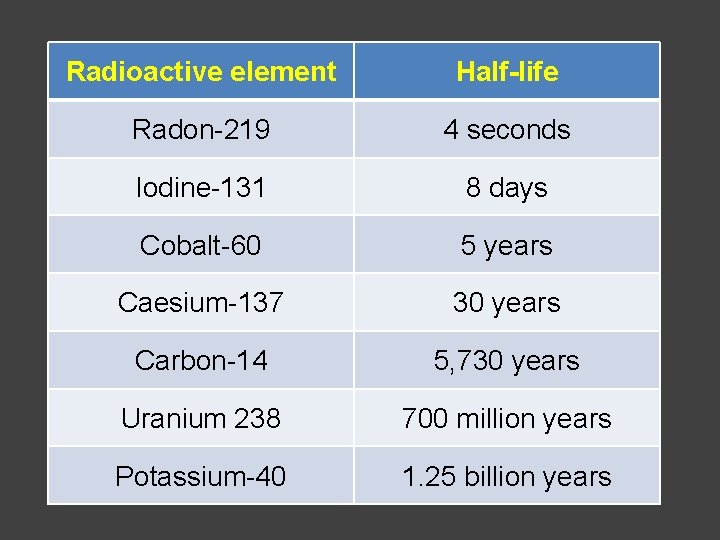
Radioactive element Half-life Radon-219 4 seconds Iodine-131 8 days Cobalt-60 5 years Caesium-137 30 years Carbon-14 5, 730 years Uranium 238 700 million years Potassium-40 1. 25 billion years
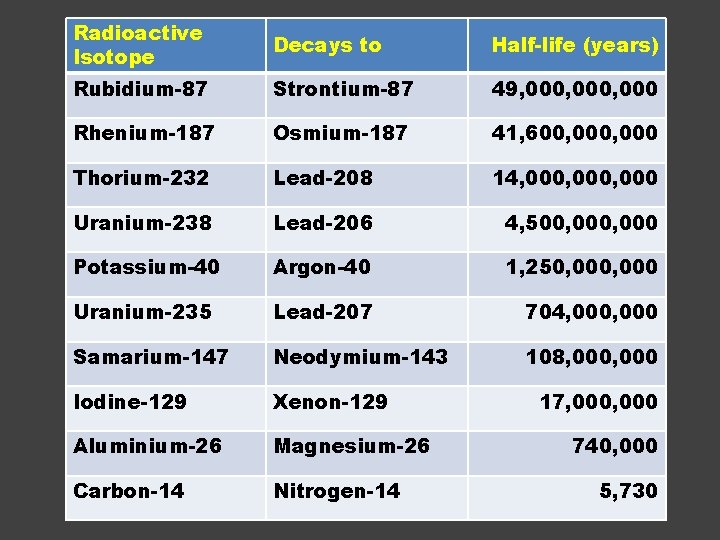
Radioactive Isotope Decays to Half-life (years) Rubidium-87 Strontium-87 49, 000, 000 Rhenium-187 Osmium-187 41, 600, 000 Thorium-232 Lead-208 14, 000, 000 Uranium-238 Lead-206 4, 500, 000 Potassium-40 Argon-40 1, 250, 000 Uranium-235 Lead-207 704, 000 Samarium-147 Neodymium-143 108, 000 Iodine-129 Xenon-129 Aluminium-26 Magnesium-26 Carbon-14 Nitrogen-14 17, 000 740, 000 5, 730
Quantitative dating:
We need a beginning: time, t = 0.
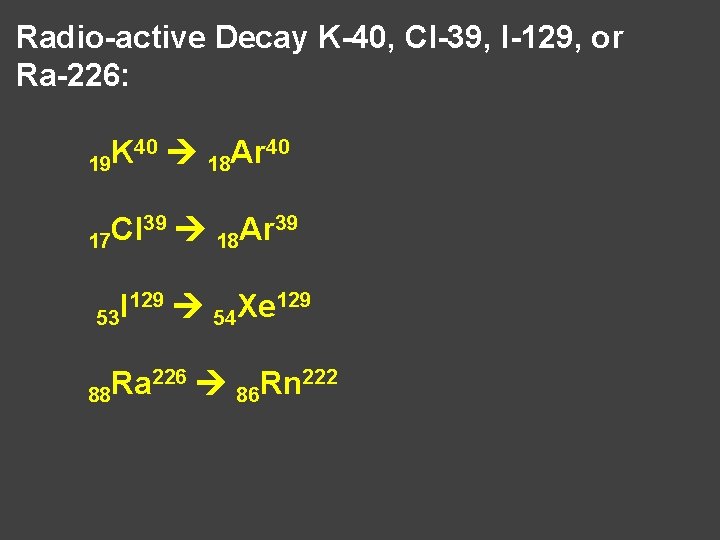
Radio-active Decay K-40, Cl-39, I-129, or Ra-226: 40 K Ar 19 18 39 Cl Ar 17 18 129 I Xe 53 54 226 222 Ra Rn 88 86
Accuracy of Radiometric Dating. 1. Several radioisotopes usually occur together in a rock and decay at different rates so the dates can be cross-checked. Nevertheless, invariably the dates agree.
Accuracy of Radiometric Dating. 2. The half-life of isotopes doesn’t change when scientists subject them to extreme temperatures and pressures or chemical environments.
Radiometric dating of meteorites: the earth and solar system are 4. 6 billion years old. (Oldest earth rocks - Northern Canada: 4. 3 billion years old)
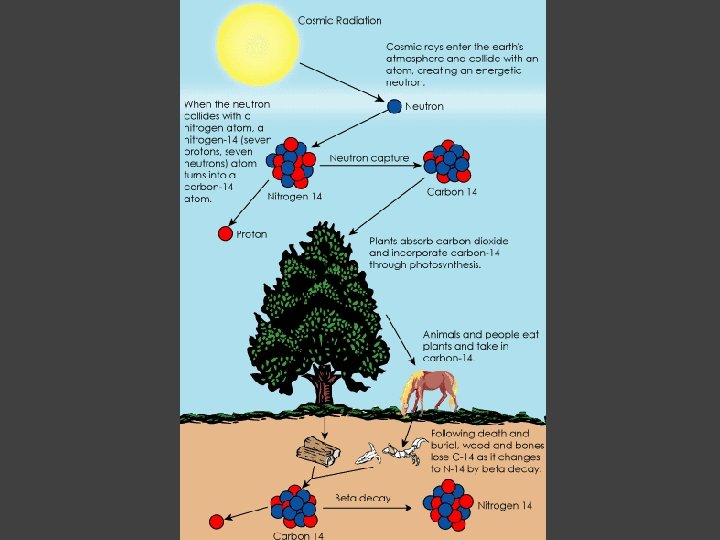
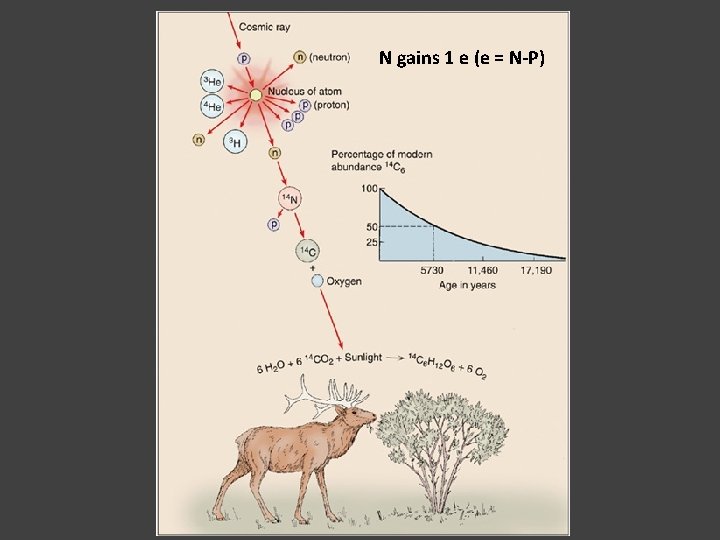
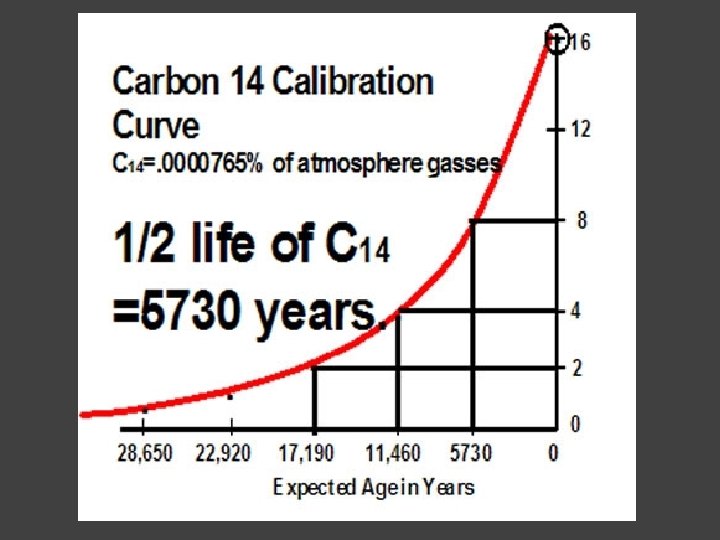
Radioactive Carbon: Carbon-14.
Radioactive Carbon: Carbon-14.
N gains 1 e (e = N-P)