
Introduction to Genetics Chapter 9 Genes Cell Division
- Slides: 24
Introduction to Genetics Chapter 9: Genes & Cell Division
DNA n Deoxyribonucleic acid n Identified in the 20 th century as the genetic material n n Chemical information storage Daily function, development, and reproduction of all living things
DNA as information n Sequence of 4 nucleotide bases: “letters” that spell amino acid sequence of proteins n One “word” = gene n DNA information is “read” and acted upon by other molecules (RNA, ribosomes)
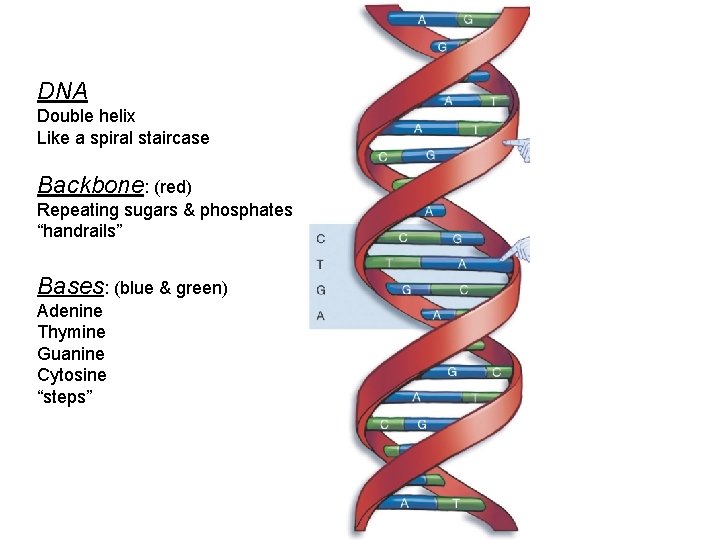
DNA Double helix Like a spiral staircase Backbone: (red) Repeating sugars & phosphates “handrails” Bases: (blue & green) Adenine Thymine Guanine Cytosine “steps”
Genome n Genome: All of an organism’s genetic information n Half comes from mom, half from dad n Made of DNA packaged into chromosomes
Genome is a “library” n Most cells carry the organism’s complete genome n Only some parts of it are in use n Different genes are expressed in different cells
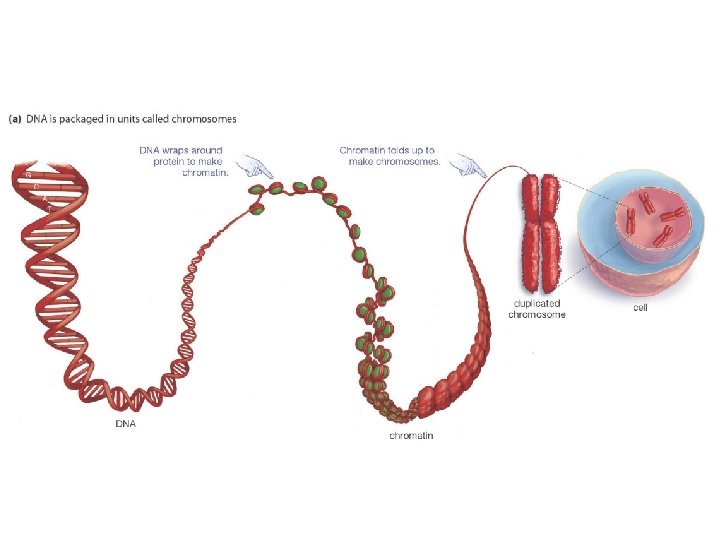
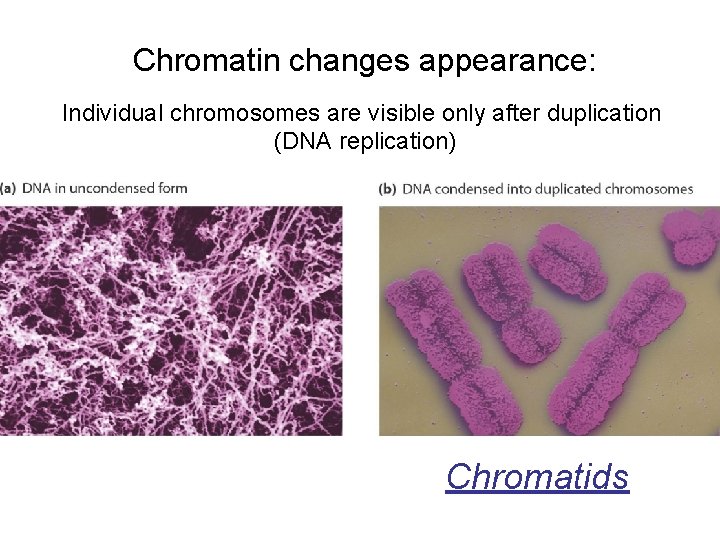
DNA is packaged n The “library” is packaged in volumes called chromosomes n Humans have 46 n Chromatin: DNA wrapped & folded around proteins
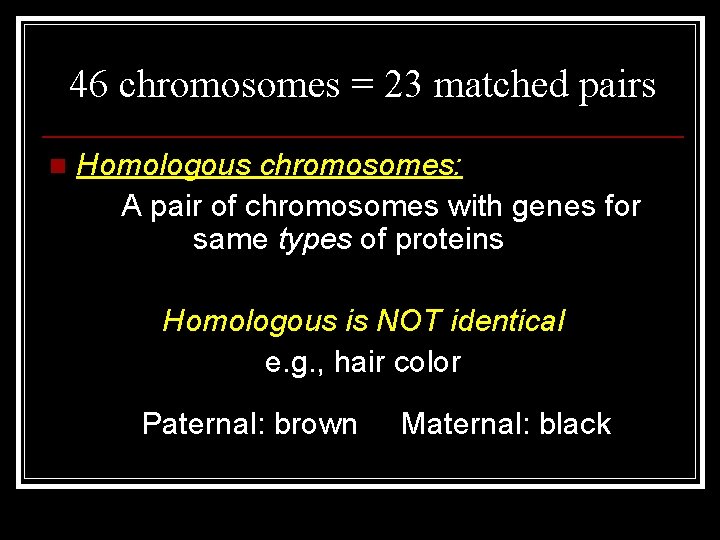
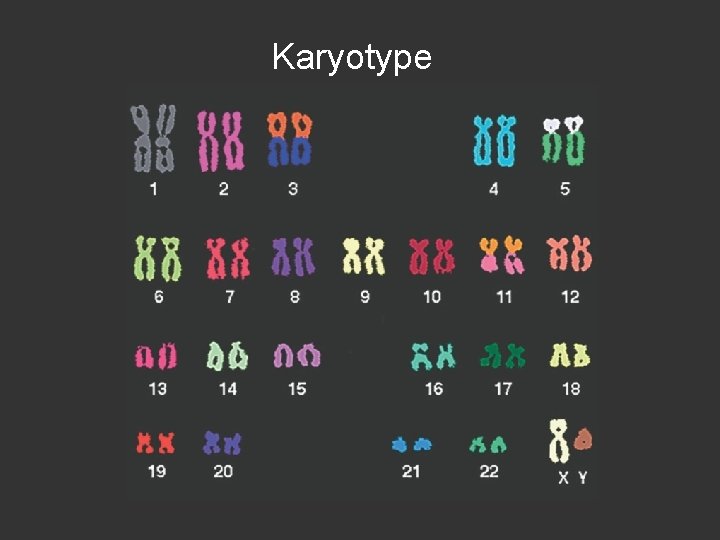
46 chromosomes = 23 matched pairs n Homologous chromosomes: A pair of chromosomes with genes for same types of proteins Homologous is NOT identical e. g. , hair color Paternal: brown Maternal: black
Karyotype
Cell Division to grow n to replace dying cells n to adapt to changing needs n n Uncontrolled cell division = CANCER
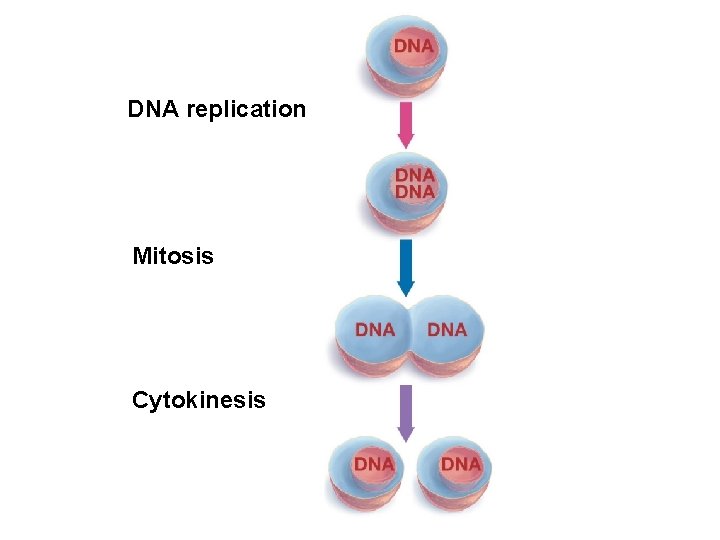
Cell Division n Cell can’t just break in half n Must replicate the genome and precisely distribute it so each daughter cell gets the whole “library”
DNA replication Mitosis Cytokinesis
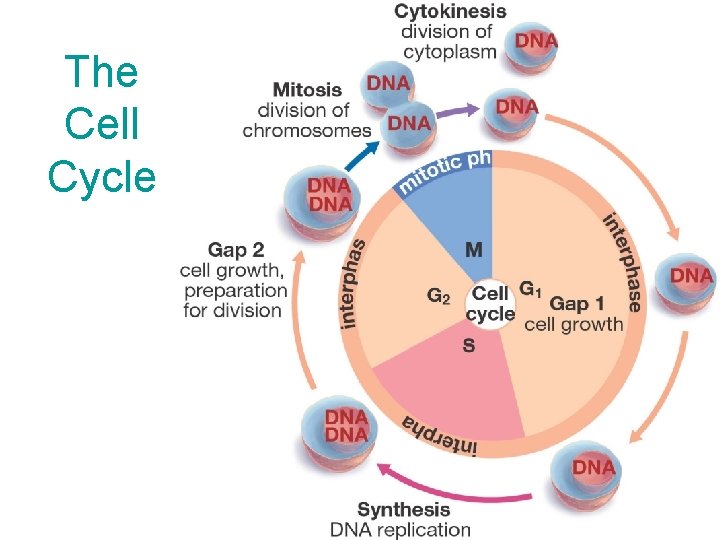
The Cell Cycle
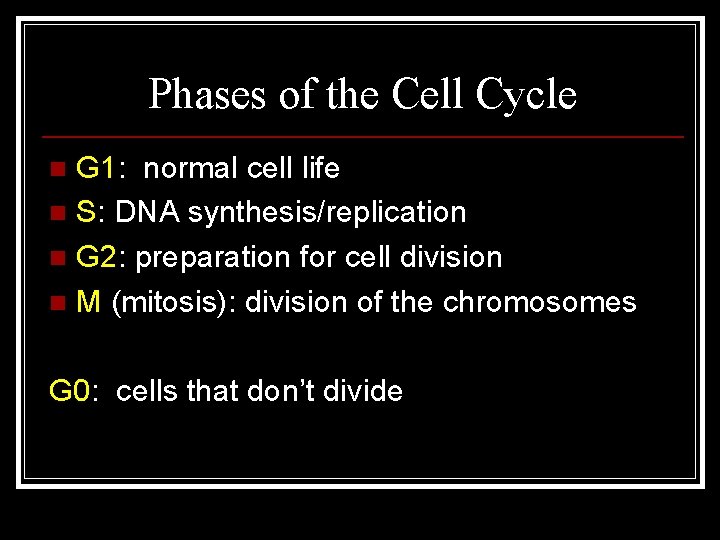
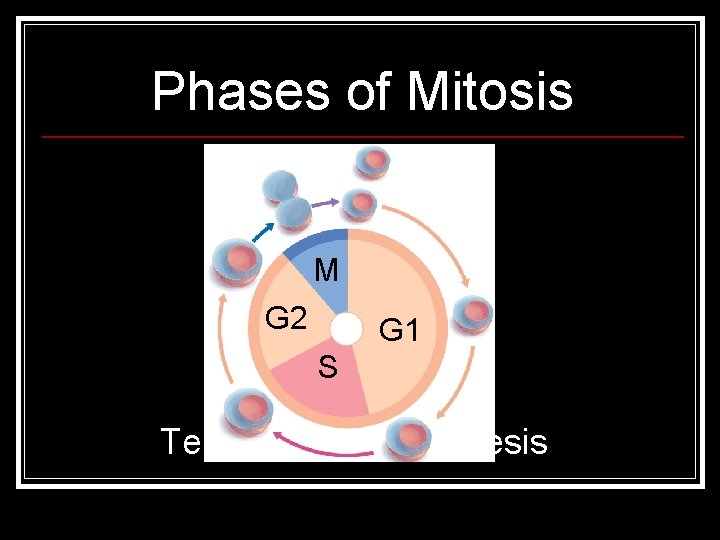
Phases of the Cell Cycle G 1: normal cell life n S: DNA synthesis/replication n G 2: preparation for cell division n M (mitosis): division of the chromosomes n G 0: cells that don’t divide
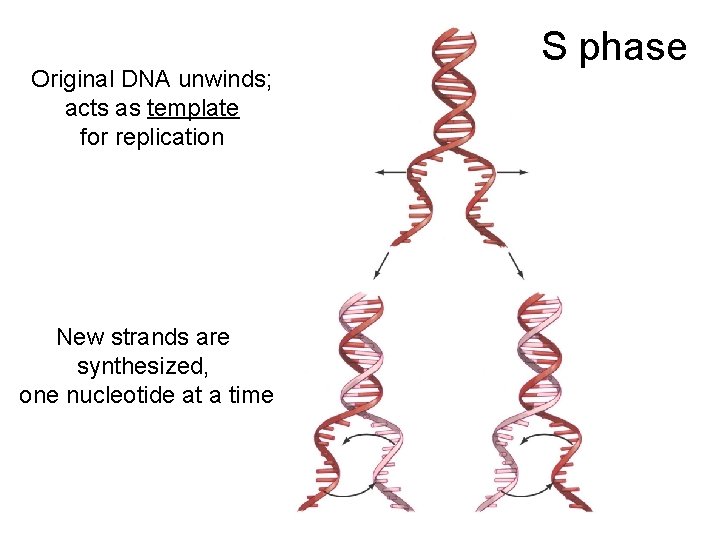
Original DNA unwinds; acts as template for replication New strands are synthesized, one nucleotide at a time S phase
Chromatin changes appearance: Individual chromosomes are visible only after duplication (DNA replication) Chromatids
Phases of Mitosis Prophase M Metaphase G 2 G 1 Anaphase S Telophase & cytokinesis
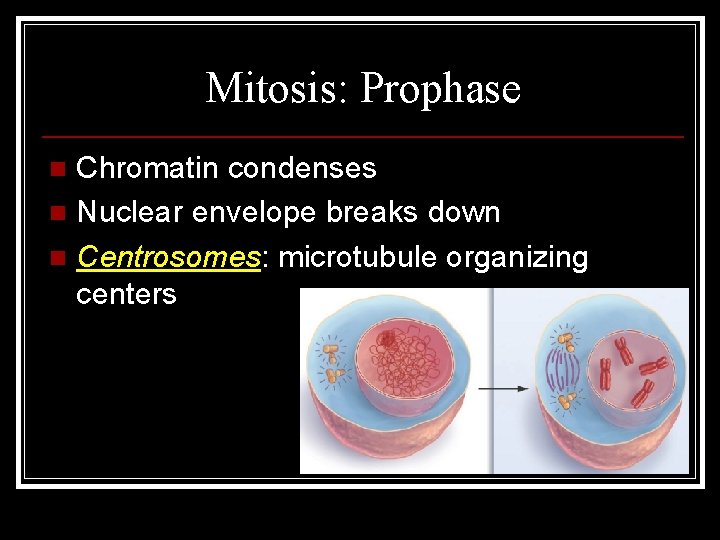
Mitosis: Prophase Chromatin condenses n Nuclear envelope breaks down n Centrosomes: microtubule organizing centers n
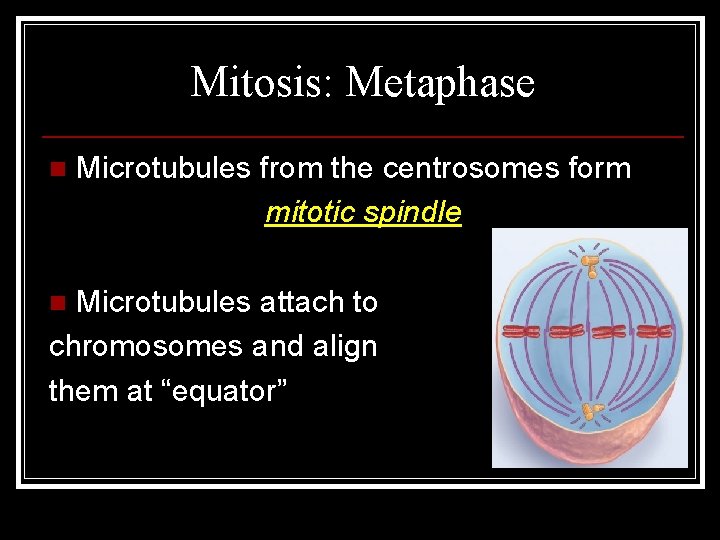
Mitosis: Metaphase n Microtubules from the centrosomes form mitotic spindle Microtubules attach to chromosomes and align them at “equator” n
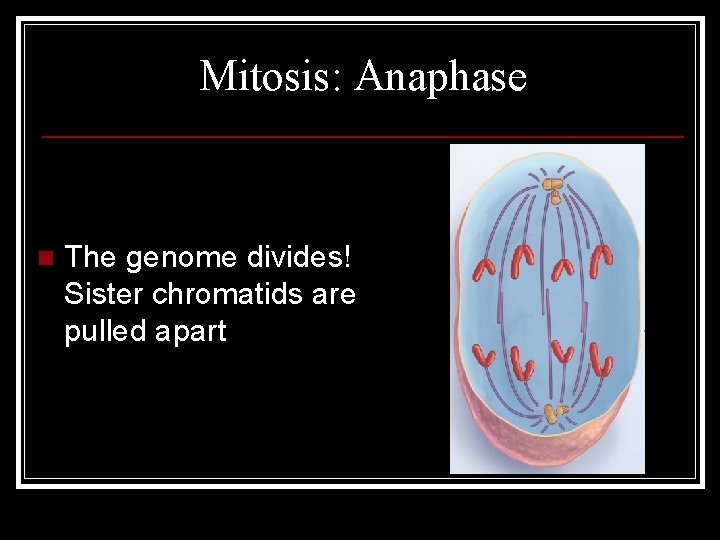
Mitosis: Anaphase n The genome divides! Sister chromatids are pulled apart
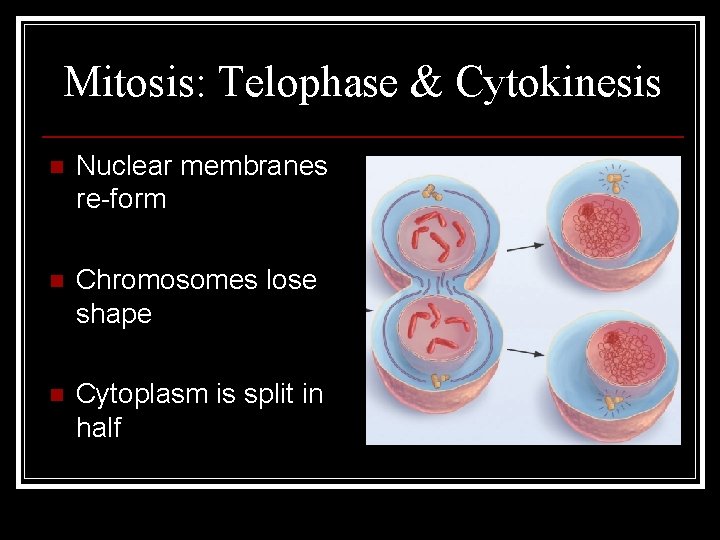
Mitosis: Telophase & Cytokinesis n Nuclear membranes re-form n Chromosomes lose shape n Cytoplasm is split in half
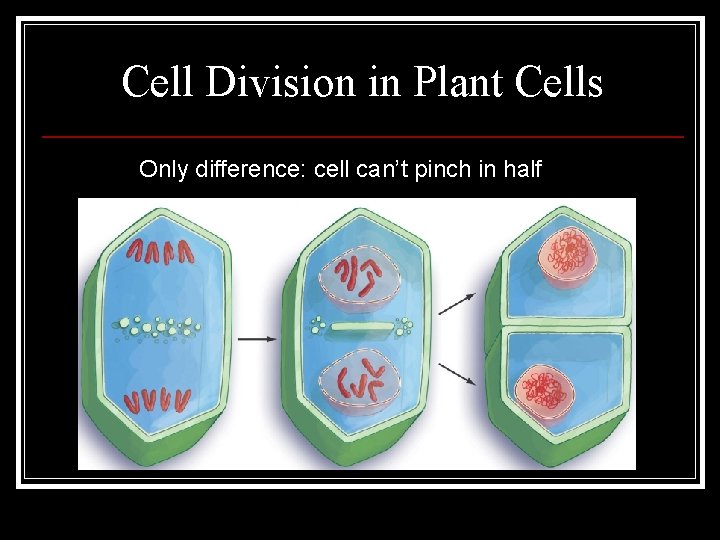
Cell Division in Plant Cells Only difference: cell can’t pinch in half
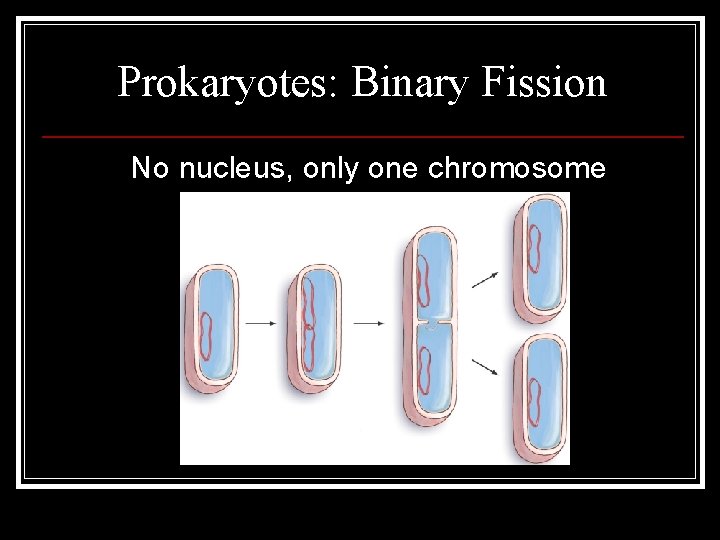
Prokaryotes: Binary Fission No nucleus, only one chromosome