
Introduction to Genetics Chapter 11 l How can
- Slides: 38
Introduction to Genetics Chapter 11
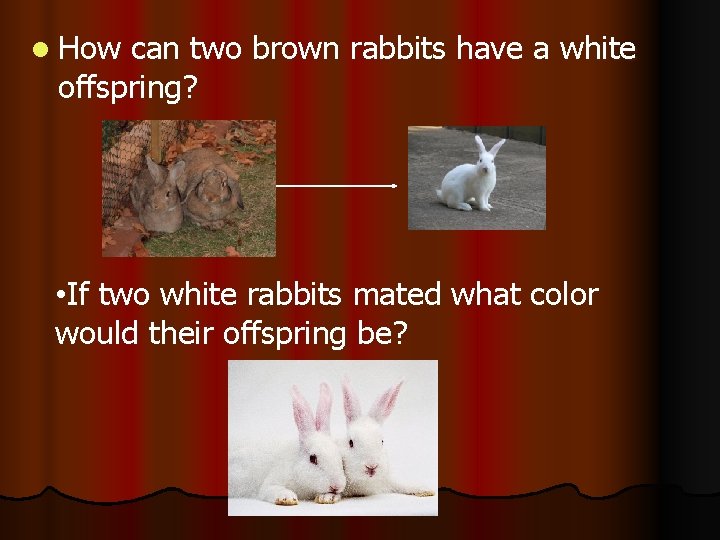
l How can two brown rabbits have a white offspring? • If two white rabbits mated what color would their offspring be?
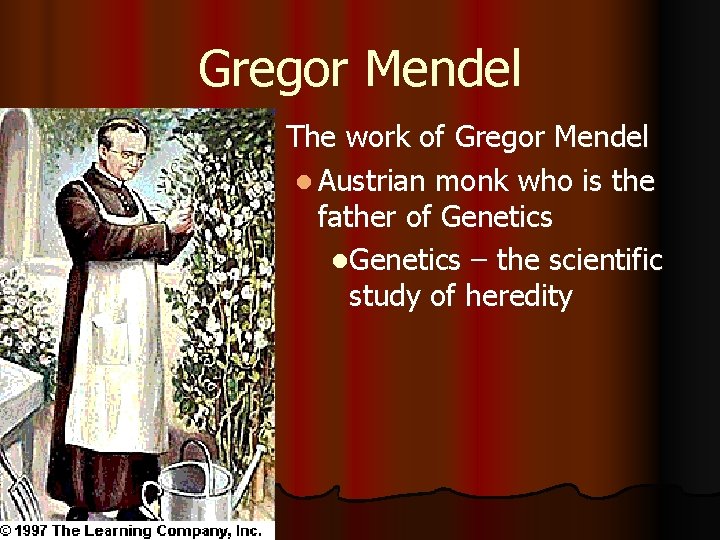
Gregor Mendel l The work of Gregor Mendel l Austrian monk who is the father of Genetics l. Genetics – the scientific study of heredity
http: //learn. genetics. utah. edu/co ntent/begin/traits/
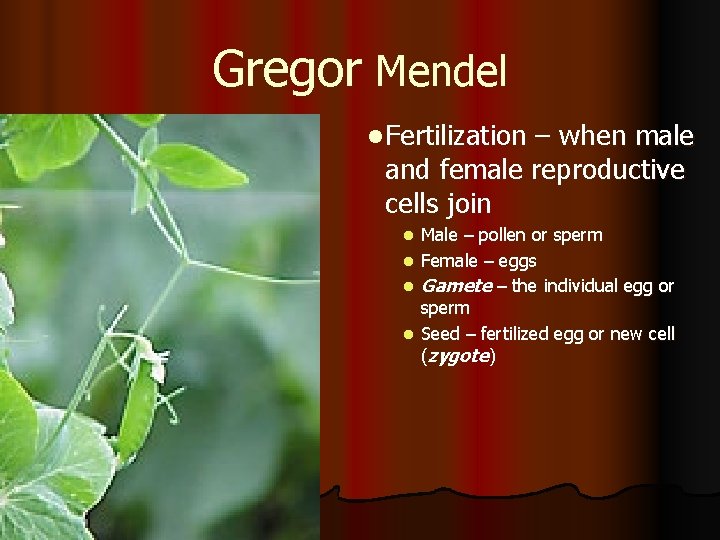
Gregor Mendel l Fertilization – when male and female reproductive cells join l l Male – pollen or sperm Female – eggs Gamete – the individual egg or sperm Seed – fertilized egg or new cell (zygote)
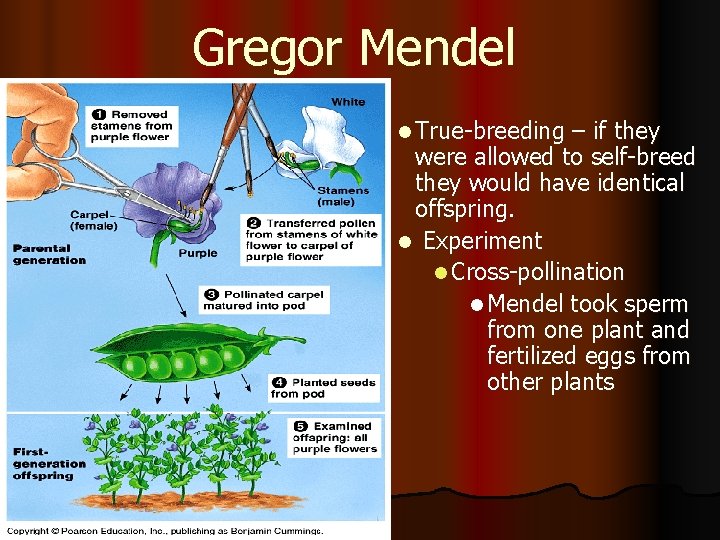
Gregor Mendel l True-breeding – if they were allowed to self-breed they would have identical offspring. l Experiment l Cross-pollination l Mendel took sperm from one plant and fertilized eggs from other plants
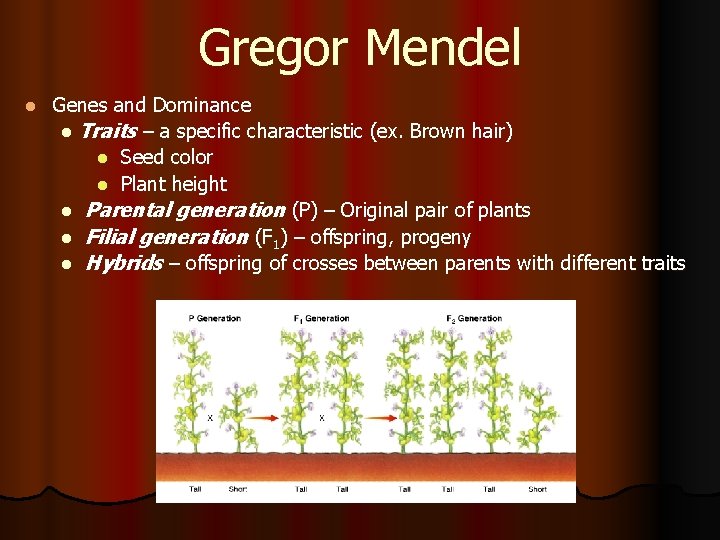
Gregor Mendel l Genes and Dominance l Traits – a specific characteristic (ex. Brown hair) l Seed color l Plant height l Parental generation (P) – Original pair of plants l Filial generation (F 1) – offspring, progeny l Hybrids – offspring of crosses between parents with different traits
Gregor Mendel l Genes – chemical factors that determine traits (Hair color) l Alleles – different forms of traits (Brown vs. blond hair, brown vs. blue eyes)
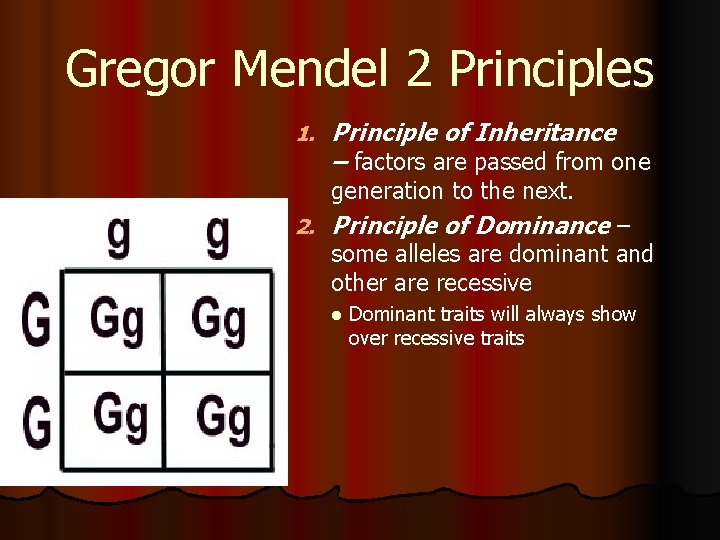
Gregor Mendel 2 Principles 1. Principle of Inheritance – factors are passed from one generation to the next. 2. Principle of Dominance – some alleles are dominant and other are recessive l Dominant traits will always show over recessive traits
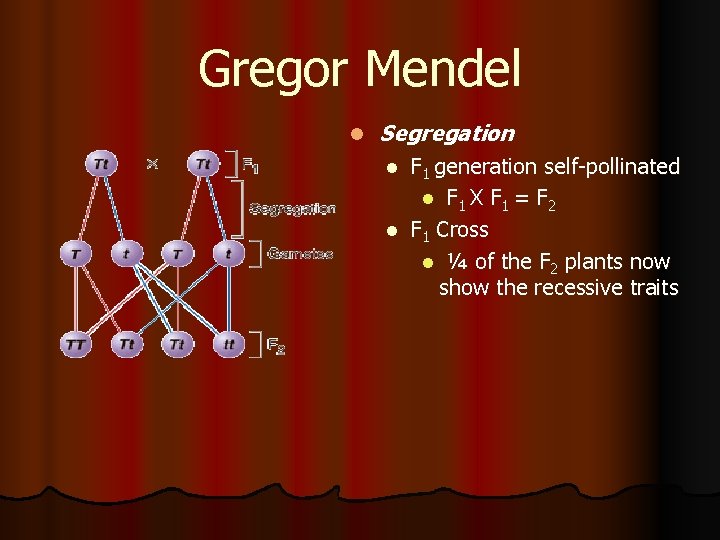
Gregor Mendel l Segregation F 1 generation self-pollinated l F 1 X F 1 = F 2 l F 1 Cross l ¼ of the F 2 plants now show the recessive traits l
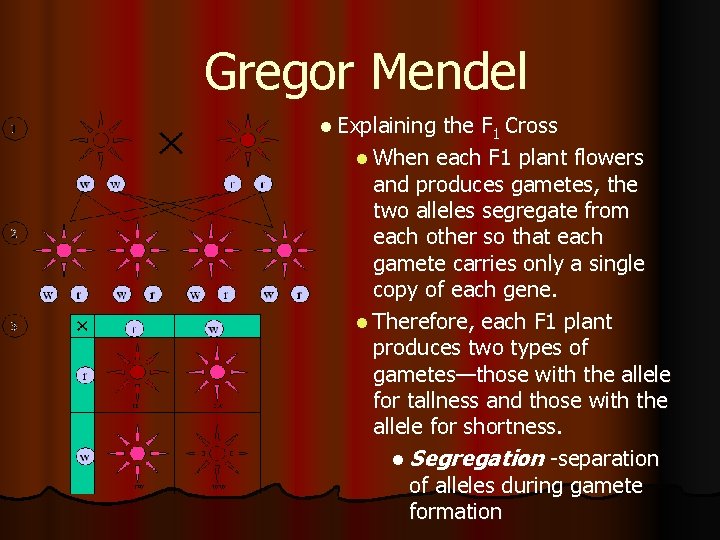
Gregor Mendel l Explaining the F 1 Cross l When each F 1 plant flowers and produces gametes, the two alleles segregate from each other so that each gamete carries only a single copy of each gene. l Therefore, each F 1 plant produces two types of gametes—those with the allele for tallness and those with the allele for shortness. l Segregation -separation of alleles during gamete formation
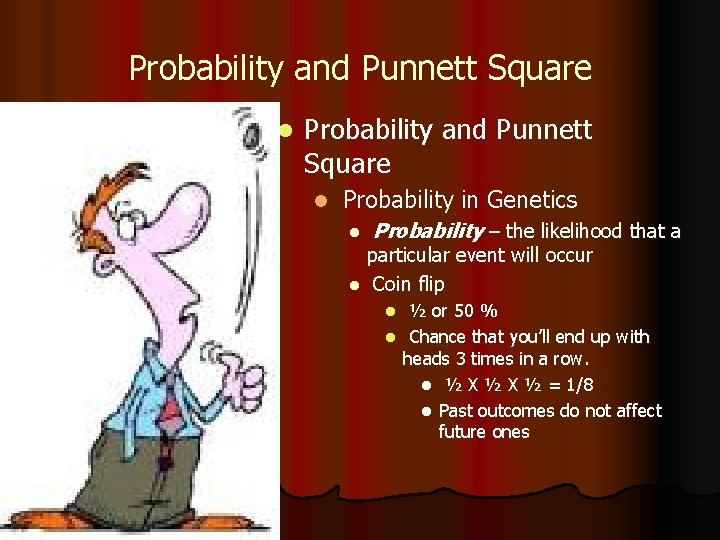
Probability and Punnett Square l Probability in Genetics l Probability – the likelihood that a particular event will occur l Coin flip ½ or 50 % l Chance that you’ll end up with heads 3 times in a row. l ½ X ½ = 1/8 l Past outcomes do not affect future ones l
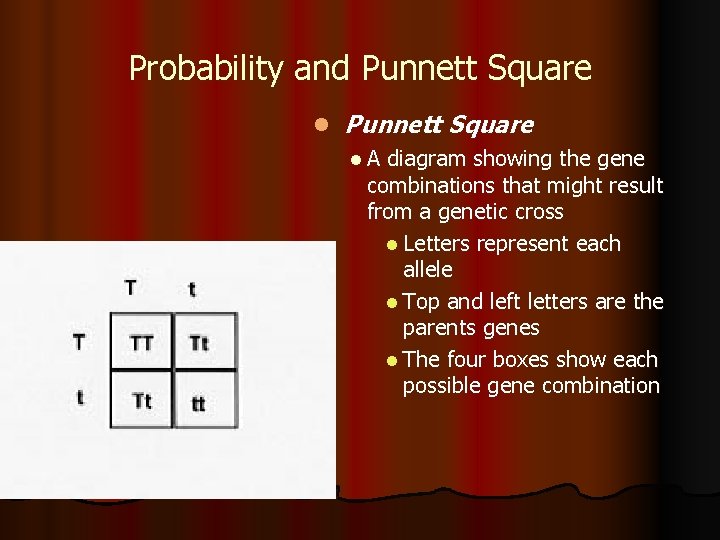
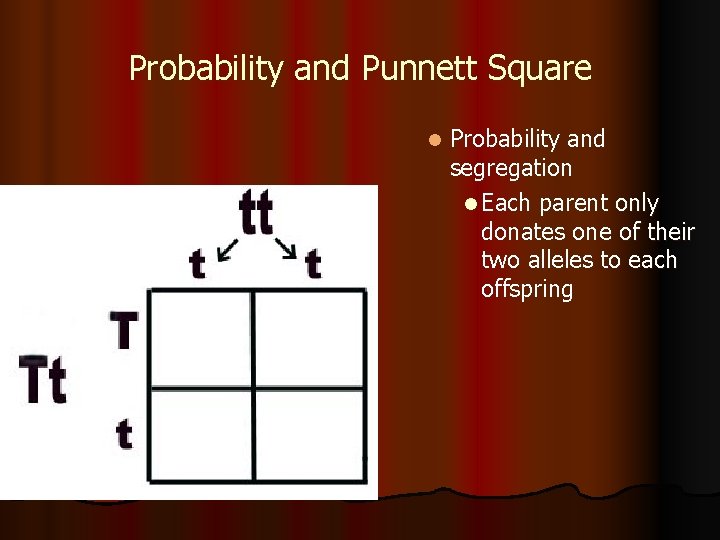
Probability and Punnett Square l A diagram showing the gene combinations that might result from a genetic cross l Letters represent each allele l Top and left letters are the parents genes l The four boxes show each possible gene combination
Probability and Punnett Square l Homozygous-- two identical alleles for a particular trait. l Heterozygous – two different alleles for a particular trait
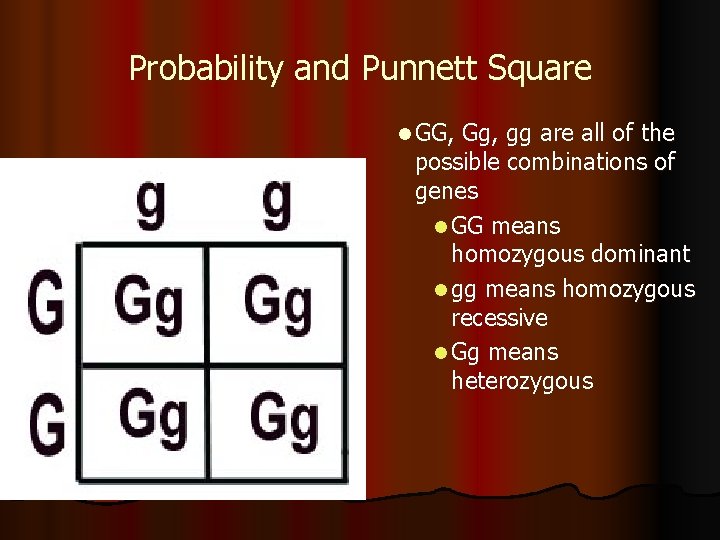
Probability and Punnett Square l GG, Gg, gg are all of the possible combinations of genes l GG means homozygous dominant l gg means homozygous recessive l Gg means heterozygous
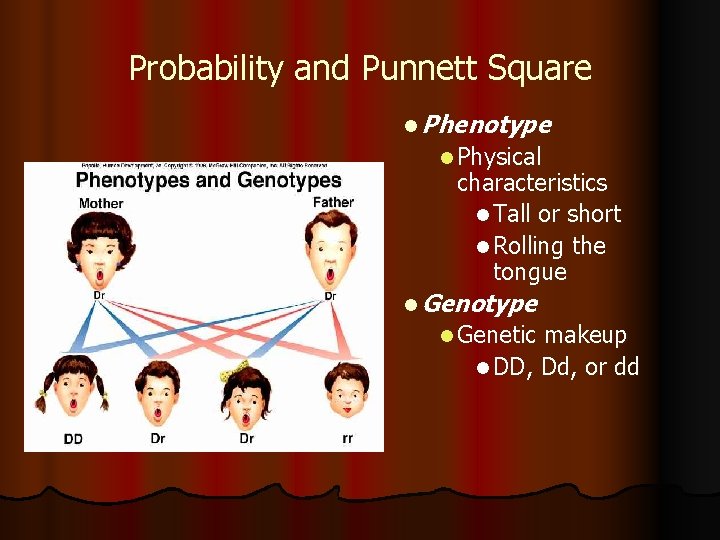
Probability and Punnett Square l Phenotype l Physical characteristics l Tall or short l Rolling the tongue l Genotype l Genetic makeup l DD, Dd, or dd
Probability and Punnett Square l Probability and segregation l Each parent only donates one of their two alleles to each offspring
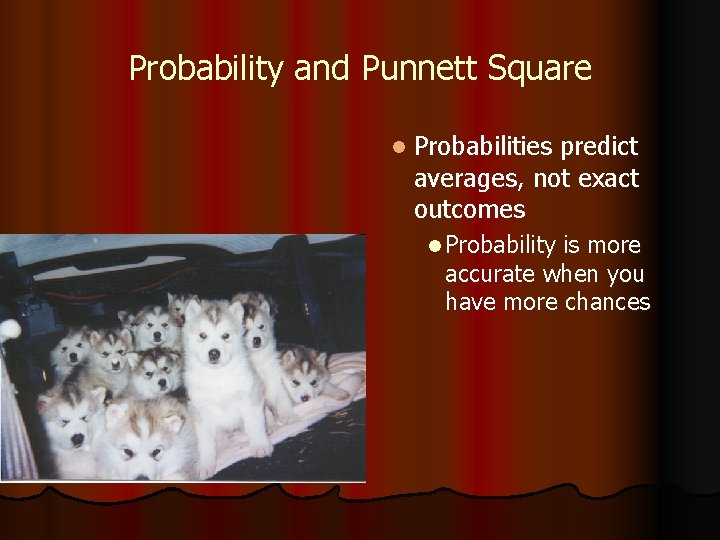
Probability and Punnett Square l Probabilities predict averages, not exact outcomes l Probability is more accurate when you have more chances
REVIEW l What is a gamete? l l What is a zygote? l l Trait that shows What is heterozygous? l l Genetic make-up What is the phenotype? l l Fertilized egg cell What is the genotype? l l Sperm or egg cell 2 different alleles What is homozygous? l 2 identical alleles
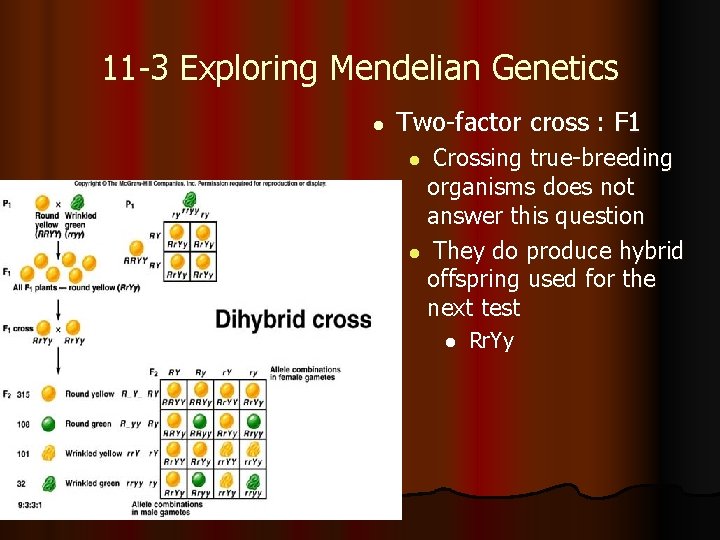
11 -3 Exploring Mendelian Genetics l Two-factor cross : F 1 Crossing true-breeding organisms does not answer this question l They do produce hybrid offspring used for the next test l l Rr. Yy
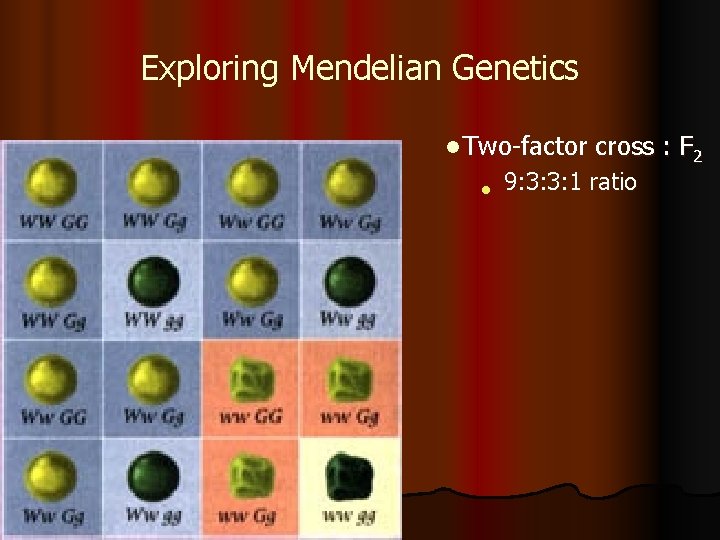
Exploring Mendelian Genetics l Two-factor l cross : F 2 9: 3: 3: 1 ratio
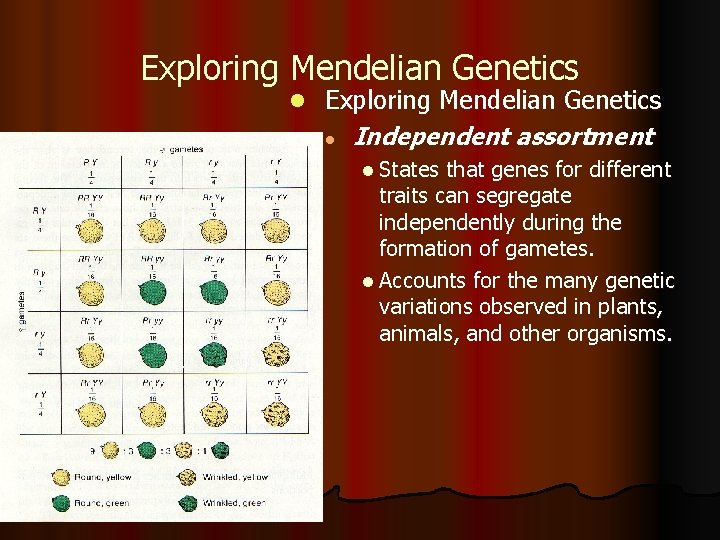
Exploring Mendelian Genetics l Independent assortment l States that genes for different traits can segregate independently during the formation of gametes. l Accounts for the many genetic variations observed in plants, animals, and other organisms.
Exploring Mendelian Genetics l Mendel’s Principles l The inheritance of biological characteristics is determined by individual units known as genes. Genes are passed from parents to their offspring. l In cases in which two or more forms (alleles) of the gene for a single trait exist, some forms of the gene may be dominant and others may be recessive. l In most sexually reproducing organisms, each adult has two copies of each gene—one from each parent. These genes are segregated from each other when gametes are formed. l The alleles for different genes usually segregate independently of one another.
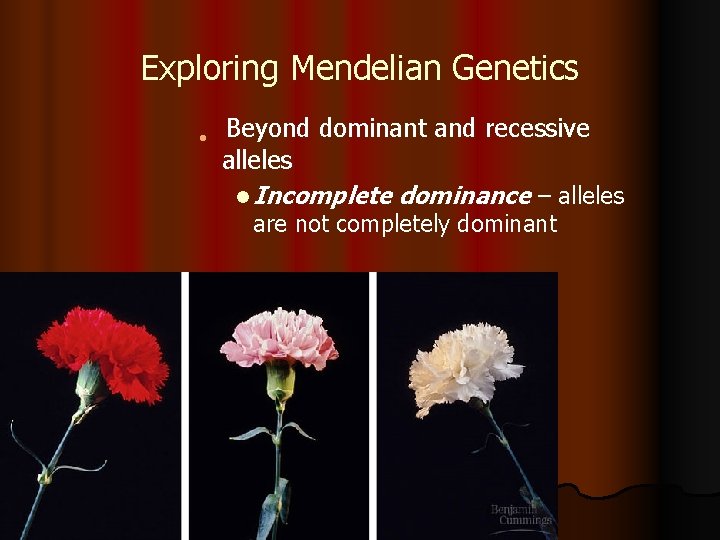
Exploring Mendelian Genetics l Beyond dominant and recessive alleles l Incomplete dominance – alleles are not completely dominant
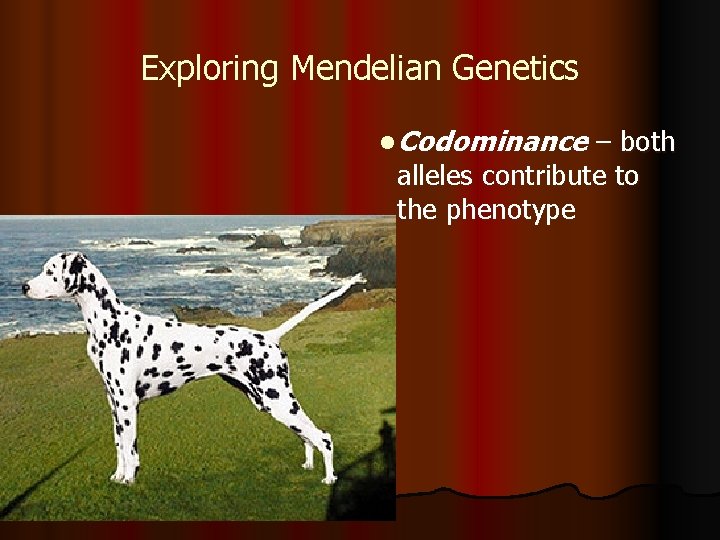
Exploring Mendelian Genetics l Codominance – both alleles contribute to the phenotype
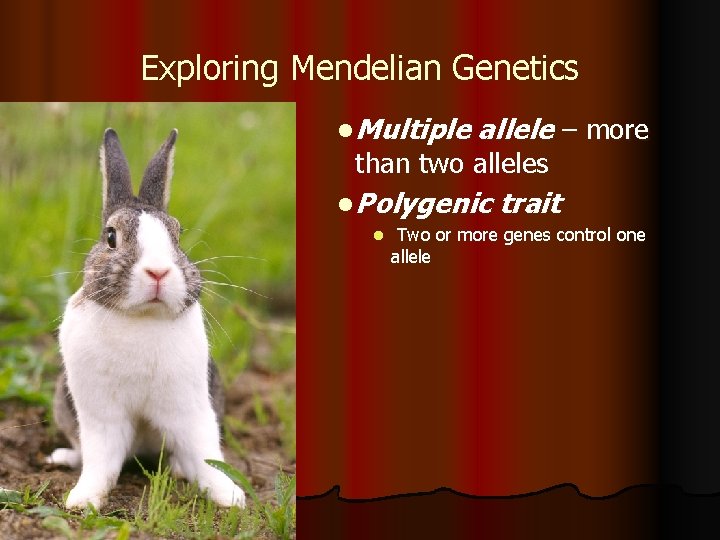
Exploring Mendelian Genetics l Multiple allele – more than two alleles l Polygenic l trait Two or more genes control one allele
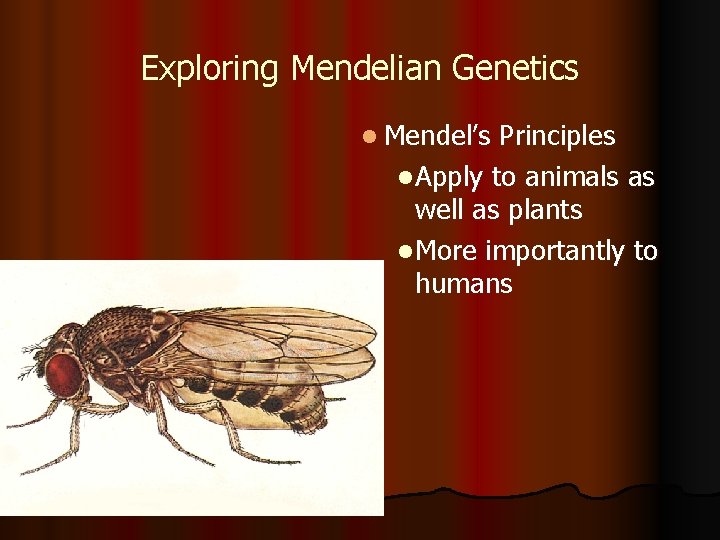
Exploring Mendelian Genetics l Mendel’s Principles l Apply to animals as well as plants l More importantly to humans
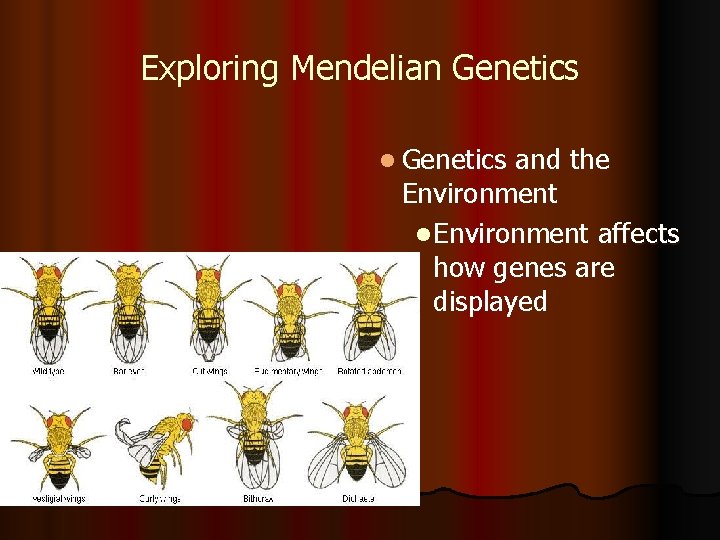
Exploring Mendelian Genetics l Genetics and the Environment l Environment affects how genes are displayed
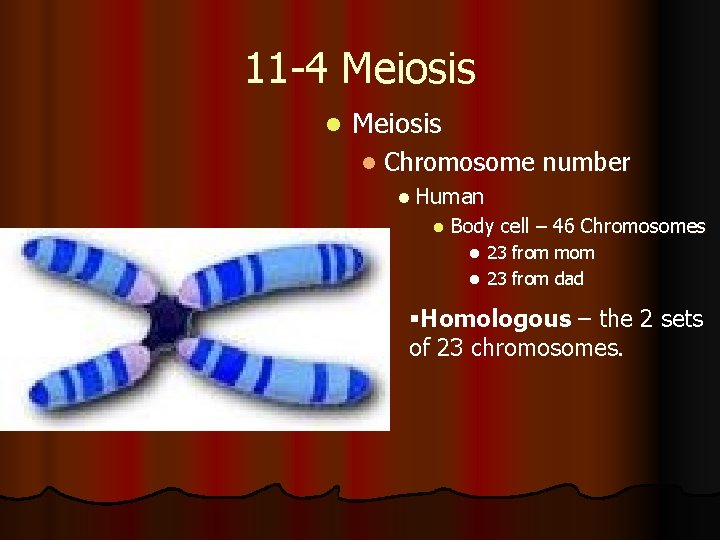
11 -4 Meiosis l Chromosome l Human l number Body cell – 46 Chromosomes 23 from mom l 23 from dad l §Homologous – the 2 sets of 23 chromosomes.
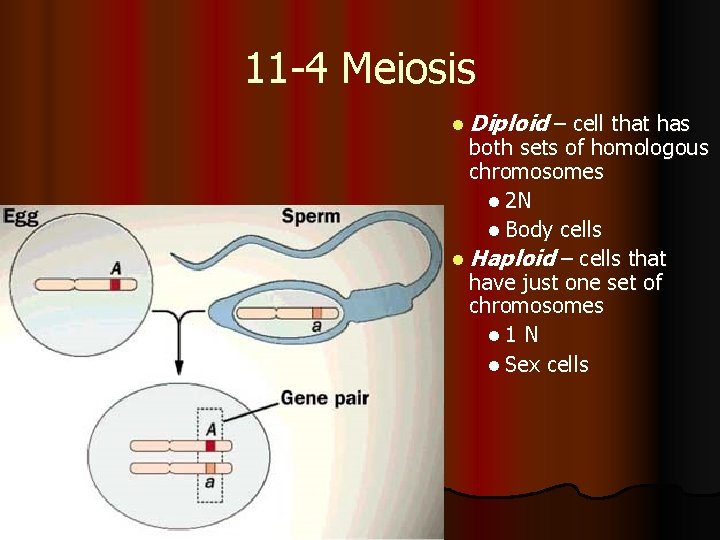
11 -4 Meiosis l Diploid – cell that has both sets of homologous chromosomes l 2 N l Body cells l Haploid – cells that have just one set of chromosomes l 1 N l Sex cells
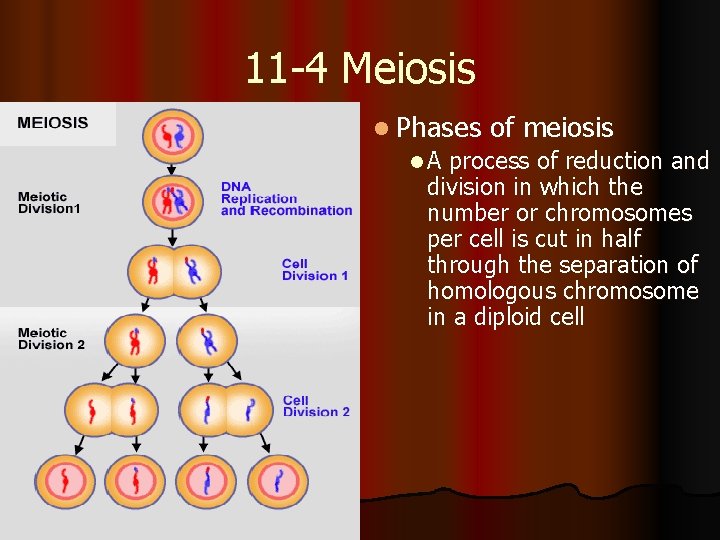
11 -4 Meiosis l Phases of meiosis l A process of reduction and division in which the number or chromosomes per cell is cut in half through the separation of homologous chromosome in a diploid cell
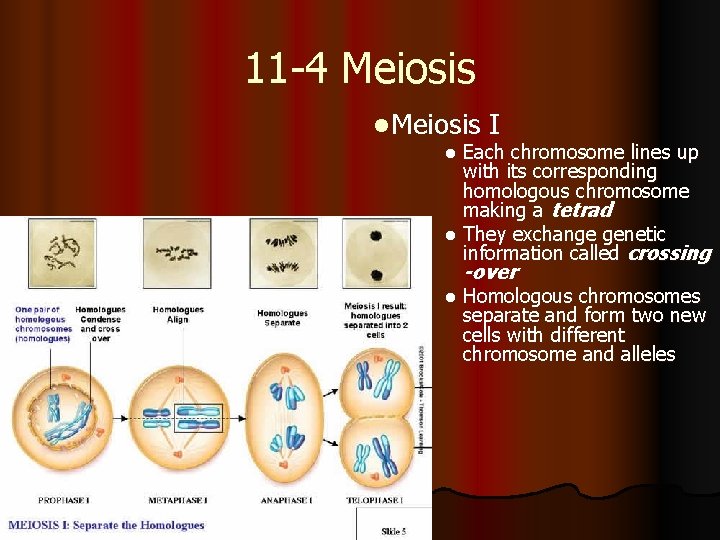
11 -4 Meiosis l Meiosis I Each chromosome lines up with its corresponding homologous chromosome making a tetrad l They exchange genetic information called crossing l -over l Homologous chromosomes separate and form two new cells with different chromosome and alleles
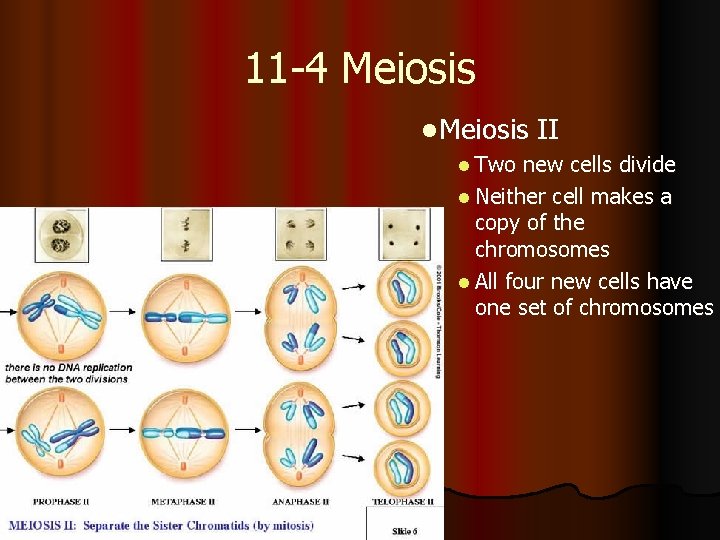
11 -4 Meiosis l Meiosis II l Two new cells divide l Neither cell makes a copy of the chromosomes l All four new cells have one set of chromosomes
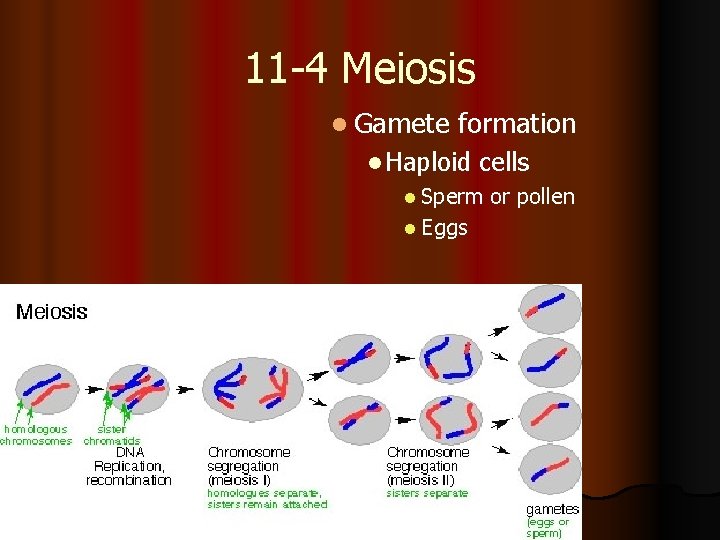
11 -4 Meiosis l Gamete formation l Haploid cells l Sperm or pollen l Eggs
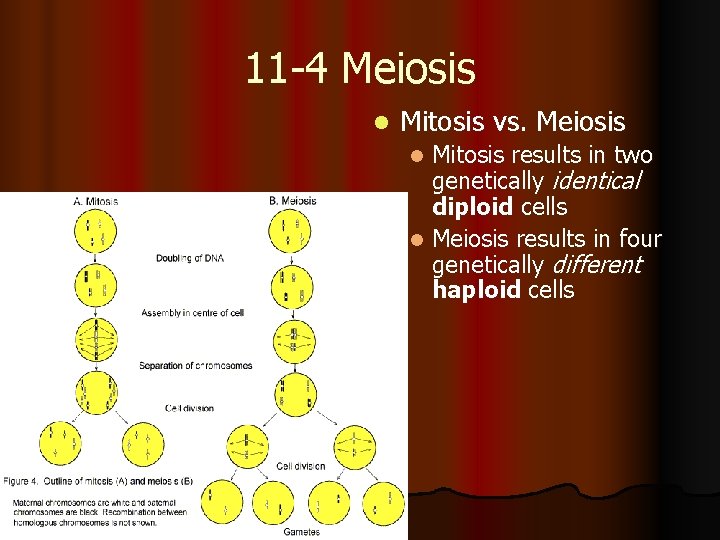
11 -4 Meiosis l Mitosis vs. Meiosis Mitosis results in two genetically identical diploid cells l Meiosis results in four genetically different haploid cells l
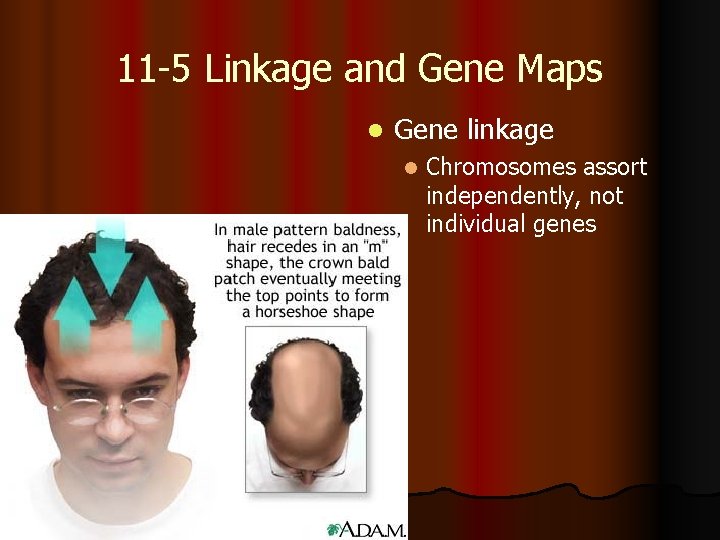
11 -5 Linkage and Gene Maps l Gene linkage l Chromosomes assort independently, not individual genes
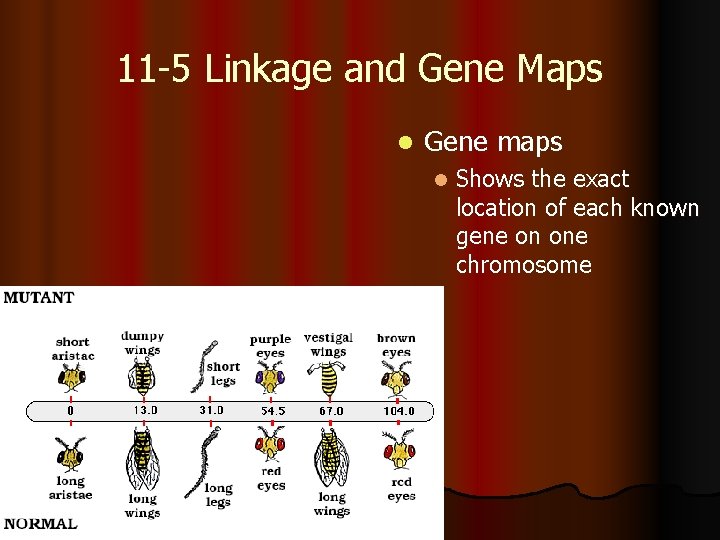
11 -5 Linkage and Gene Maps l Gene maps l Shows the exact location of each known gene on one chromosome