
Introduction to Genetics Biology 30 What is GENETICS
Introduction to Genetics Biology 30
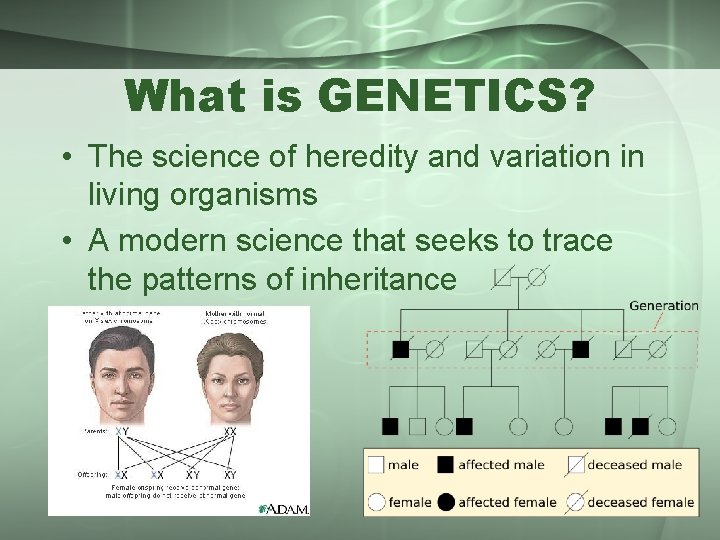
What is GENETICS? • The science of heredity and variation in living organisms • A modern science that seeks to trace the patterns of inheritance

Genetic Terminology • • • Genetics – study of the inheritance of biological traits Heredity – passing of traits from parents to offspring, through the use of genes. Acquired Characteristics – developed based on the environment you live in. (Environmental dependent)

Genetic Terminology • Chromosomes – – – • Produced from long strands of DNA Long string of genes Ex. Chromosomes 1 -22 and the X, Y Genes – – • Sections of a chromosome Represented by a pair of letters designating a particular spot (loci) on a homologous pair of chromosomes Units of instruction Ex. Eye color Alleles – – – Alternate forms of a particular gene Have the same position of a pair of homologous chromosomes Ex. Blue, Brown, or Green eye color

Genetic Terminology
• Dominant – the allele that is expressed when present with another • Recessive – the allele that is masked when present with a dominant gene; is expressed when individuals are homozygous for 2 recessive genes. • Genotype – the genetic make-up of an individual; TT, Tt, or tt • Phenotype – the physical expression or appearance of an individual; TT Tt tall, tt short tall,
• Homozygous – offspring inheriting identical alleles (TT – tall or tt – short) • Heterozygous – offspring inheriting different alleles (Tt – tall) • Hybrid – an individual which is heterozygous for one or more alleles • Monohybrid – studying a cross involving only one characteristic or allele • Dihybrid – studying a cross involving two characteristics or alleles

• Parent generation (P 1) – the parents involved in a cross • 1 st Filial Generation (F 1) – the offspring from the P 1 • 2 nd Filial Generation (F 2) – the second set of offspring extending from the P 1 – (ie, the children of F 1)
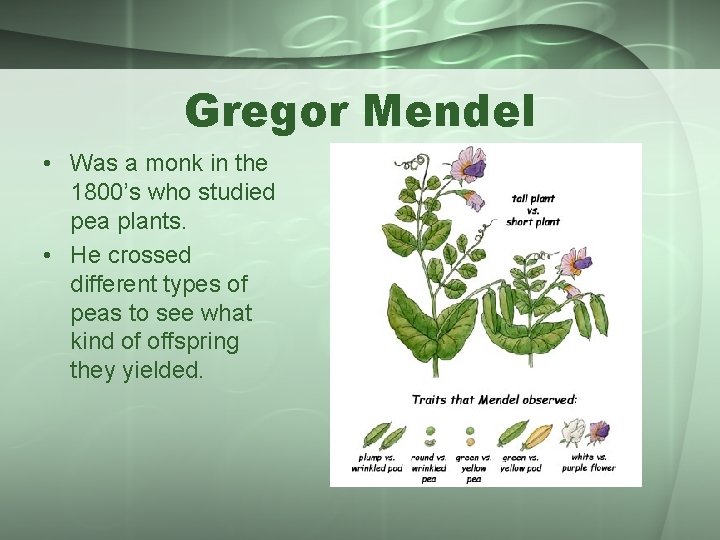
Gregor Mendel • Was a monk in the 1800’s who studied pea plants. • He crossed different types of peas to see what kind of offspring they yielded.
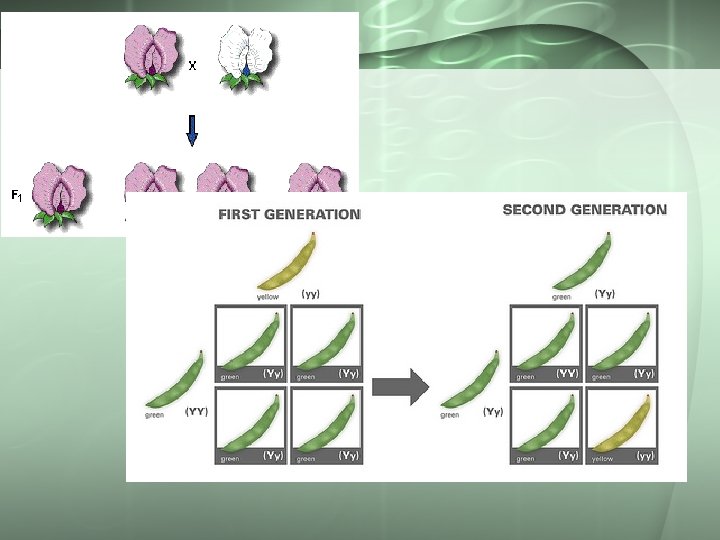
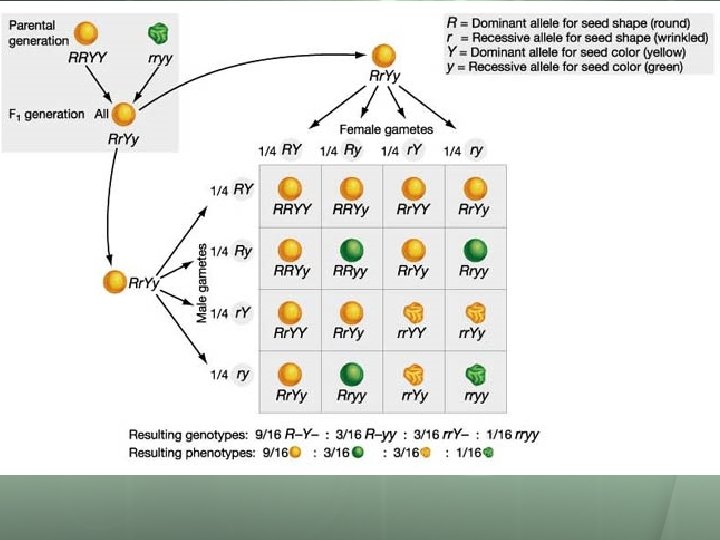
Review of Mendel’s Theories 1. Factors occur in pairs (genes) – As humans we have two “versions/alleles” of every gene 2. Dominant vs. Recessive – dominant gene masks recessive gene 3. Law of segregation – during sex cell formation these paired factors (genes) separate/segregate into separate sex cells

4. Pure Breeding vs. Hybrids – pure breeding contains two genes that are identical (homozygous TT or tt) hybrids are heterozygous (Tt) 5. Law of Independent Assortment – chromosomes separate independently of each other
Gamete Formation • Represent traits using the same letter – i. e. , earlobes • Free = E; attached = e • Gametes only contain one of each kind of gene – i. e. , Ee parent makes gametes with either E or e
Single Trait Inheritance (monohybrid Crosses) • Comparing a single trait in two reproducing organisms • Use a Punnett square – a chart that shows potential gametes and offspring frequencies (ratios, probabilities)
Problem: • A homozygous round seed is crossed with a homozygous wrinkled seed. What are the genotype and phenotype frequencies in the F 1? • b) cross 2 F 1’s
- Slides: 16