
Introduction to Fuzzy Logic Fuzzy Inference Shadi T


- Slides: 22
Introduction to Fuzzy Logic Fuzzy Inference Shadi T. Kalat 2/2 05/27/2016 1
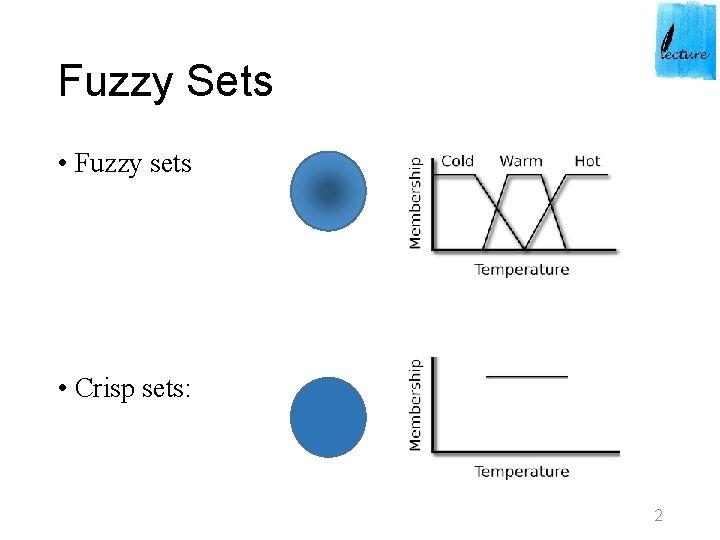
Fuzzy Sets • Fuzzy sets • Crisp sets: 2
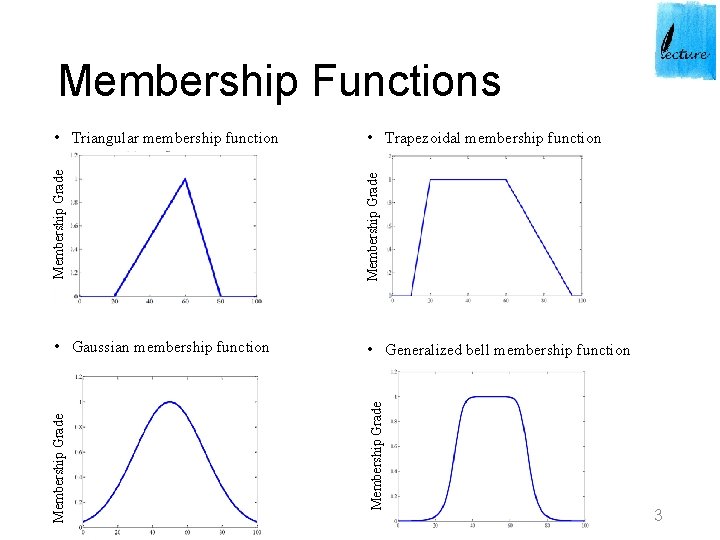
Membership Grade • Gaussian membership function • Generalized bell membership function Membership Grade • Trapezoidal membership function Membership Grade • Triangular membership function Membership Grade Membership Functions 3
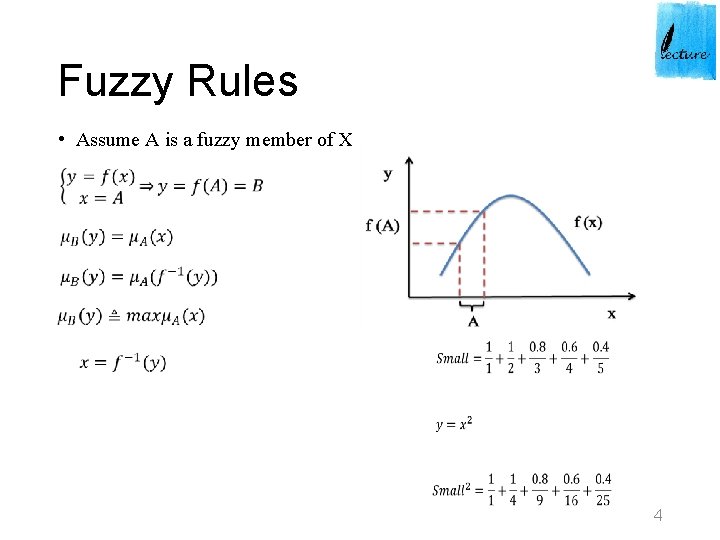
Fuzzy Rules • Assume A is a fuzzy member of X 4
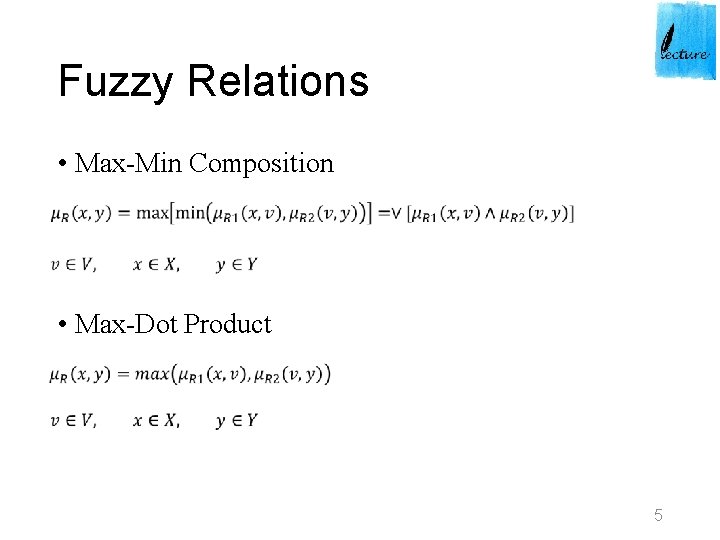
Fuzzy Relations • Max-Min Composition • Max-Dot Product 5
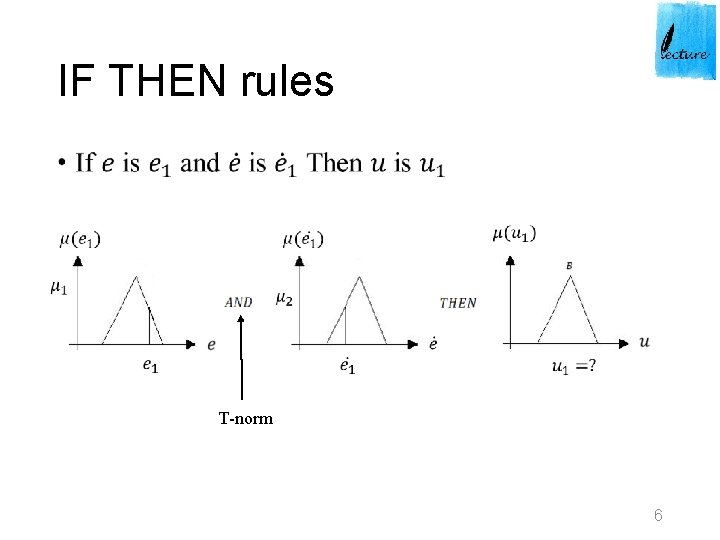
IF THEN rules • T-norm 6
Fuzzy and Approximate Reasoning • Inference of a (possible) conclusion from a set of premises Fuzzy Reasoning Approximate Reasoning • This tomato is red • This tomato is very red • If a tomato is red, then it is ripe • This tomato is very ripe 7
Fuzzy Inference • 8
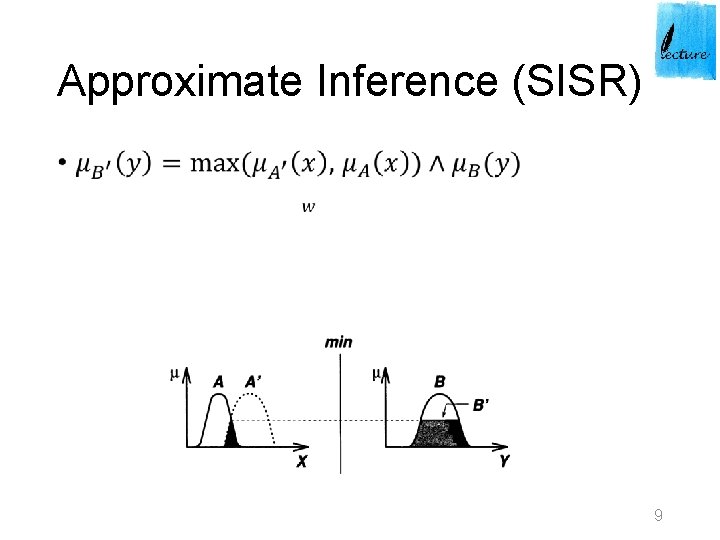
Approximate Inference (SISR) • 9
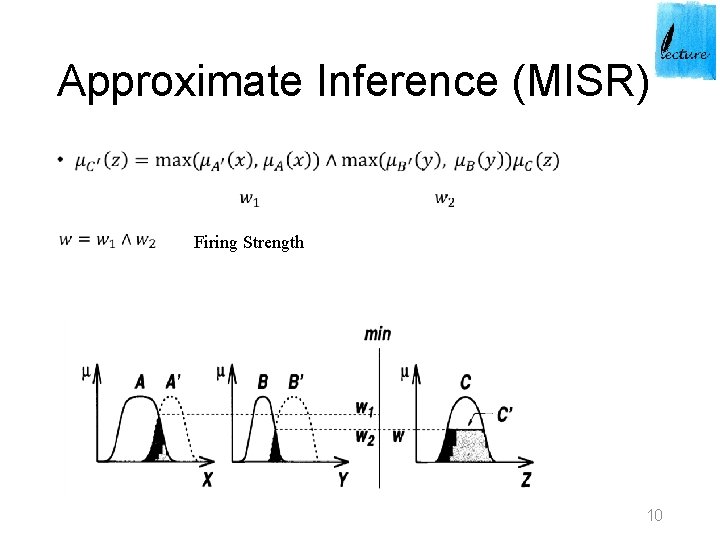
Approximate Inference (MISR) Firing Strength 10
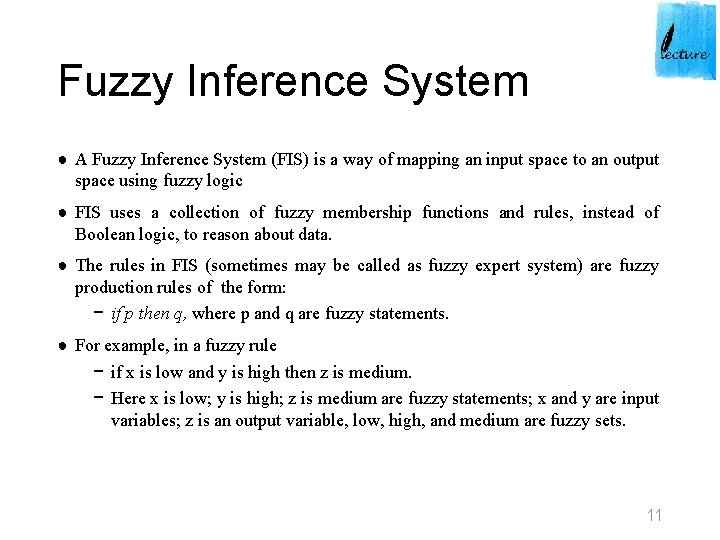
Fuzzy Inference System ● A Fuzzy Inference System (FIS) is a way of mapping an input space to an output space using fuzzy logic ● FIS uses a collection of fuzzy membership functions and rules, instead of Boolean logic, to reason about data. ● The rules in FIS (sometimes may be called as fuzzy expert system) are fuzzy production rules of the form: − if p then q, where p and q are fuzzy statements. ● For example, in a fuzzy rule − if x is low and y is high then z is medium. − Here x is low; y is high; z is medium are fuzzy statements; x and y are input variables; z is an output variable, low, high, and medium are fuzzy sets. 11
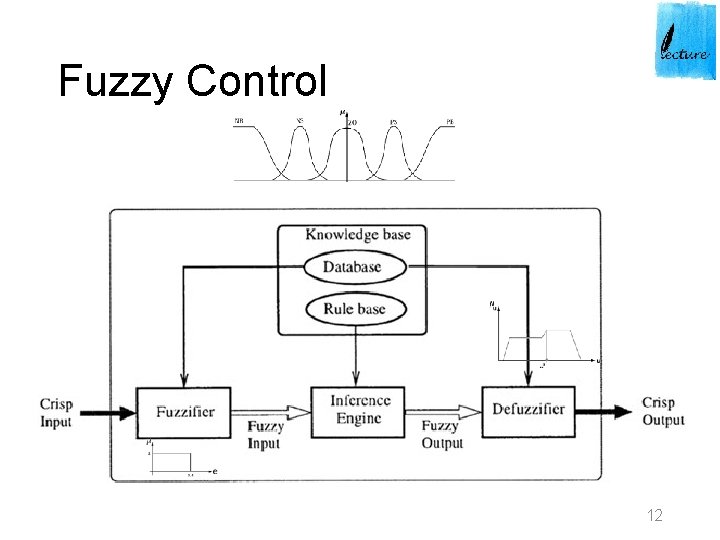
Fuzzy Control 12
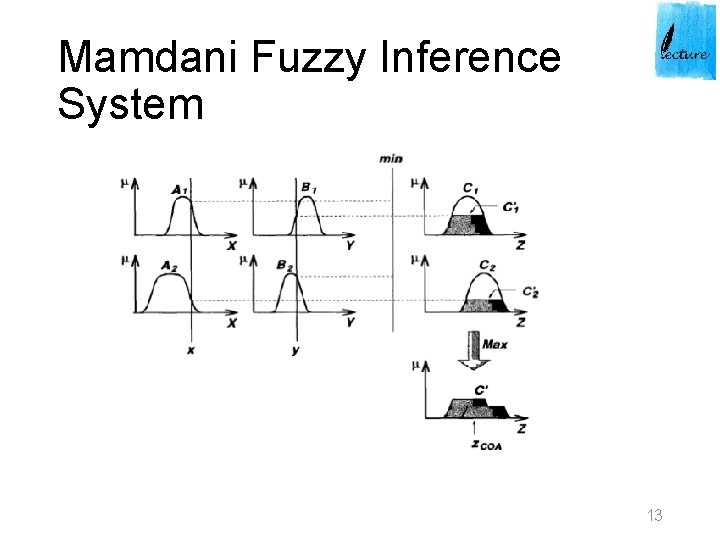
Mamdani Fuzzy Inference System 13
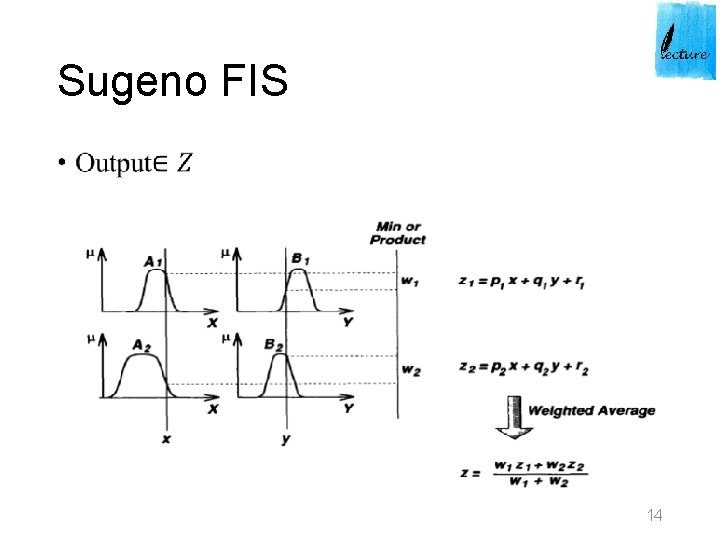
Sugeno FIS • 14
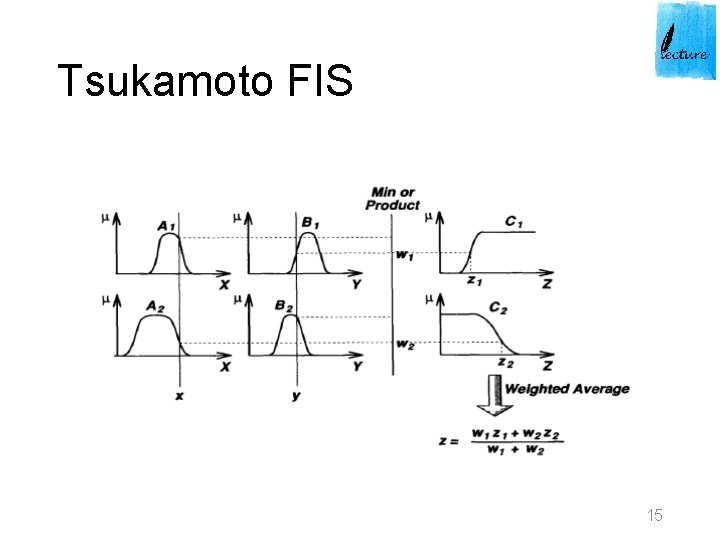
Tsukamoto FIS 15
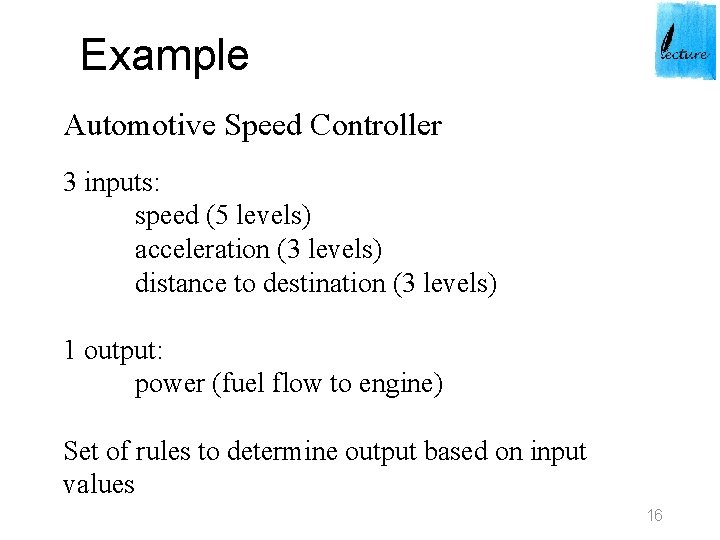
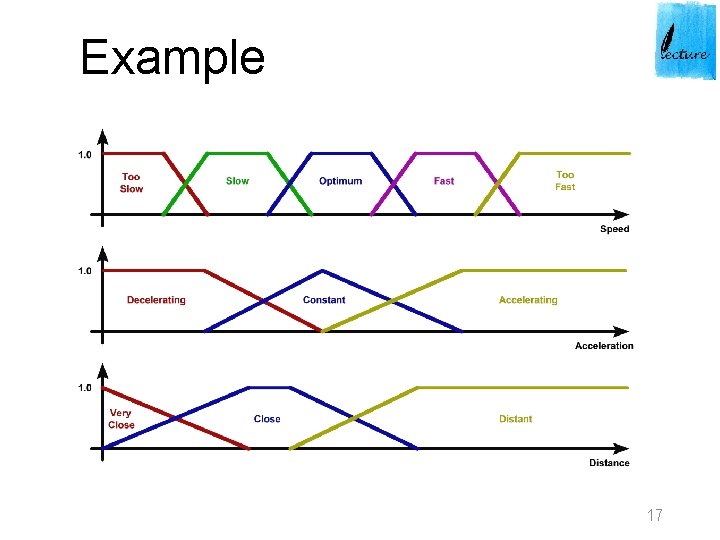
Example Automotive Speed Controller 3 inputs: speed (5 levels) acceleration (3 levels) distance to destination (3 levels) 1 output: power (fuel flow to engine) Set of rules to determine output based on input values 16
Example 17
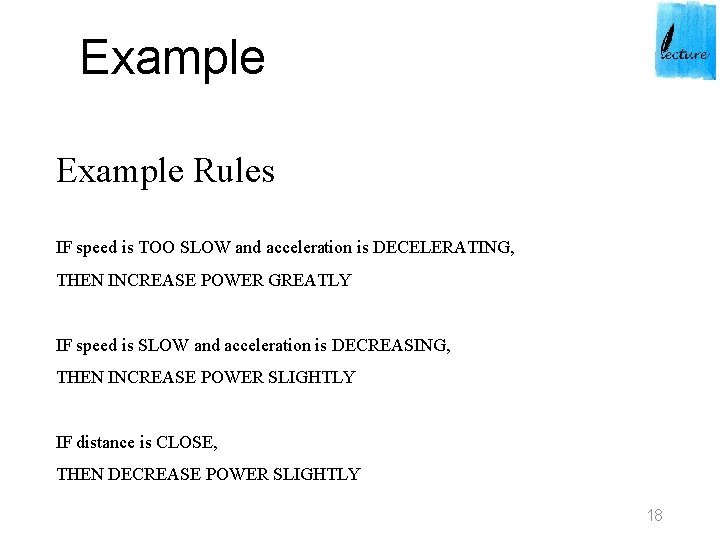
Example Rules IF speed is TOO SLOW and acceleration is DECELERATING, THEN INCREASE POWER GREATLY IF speed is SLOW and acceleration is DECREASING, THEN INCREASE POWER SLIGHTLY IF distance is CLOSE, THEN DECREASE POWER SLIGHTLY 18
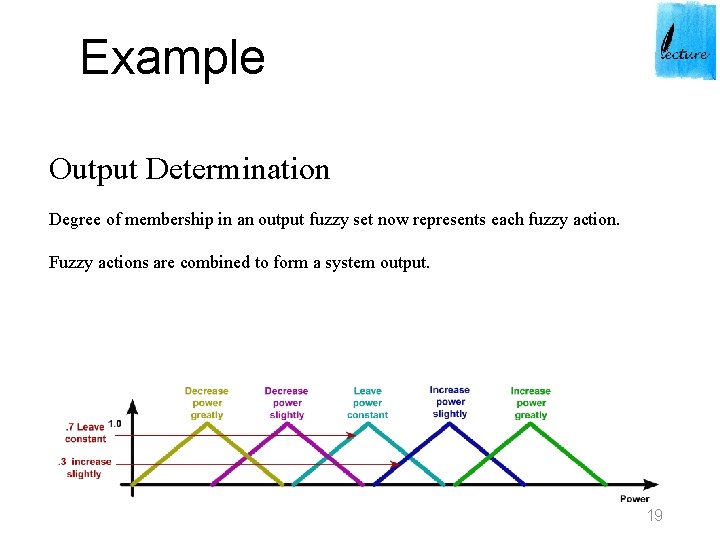
Example Output Determination Degree of membership in an output fuzzy set now represents each fuzzy action. Fuzzy actions are combined to form a system output. 19
Example Steps Fuzzification: determines an input's degree of membership in overlapping sets. Rules: determine outputs based on inputs and rules. Combination/Defuzzification: combine all fuzzy actions into a single fuzzy action and transform the single fuzzy action into a crisp, executable system output. May use centroid of weighted sets. 20
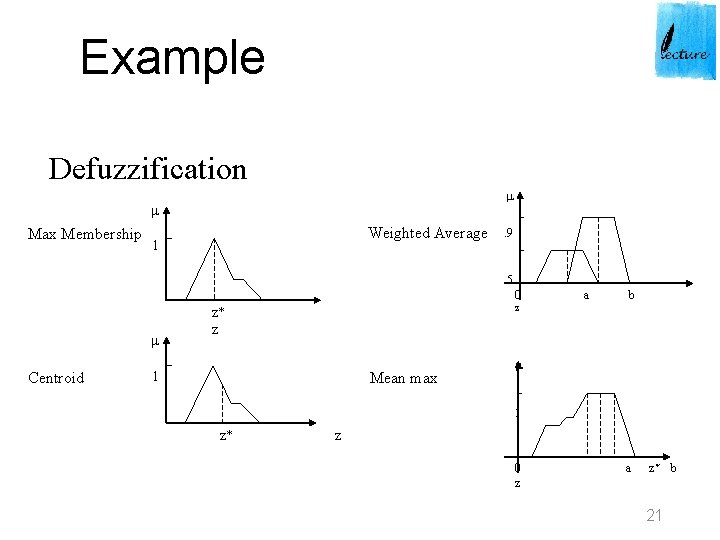
Example Defuzzification Max Membership Weighted Average 1 . 9 . 5 0 Centroid a b z z* z 1 Mean max 1 z* z 0 z a z* 21 b
Summary • Note there would be a total of 95 different rules for all combinations of inputs of 1, 2, or 3 at a time. • In practice, a system won't require all of the rules. • System could be improved by adding or changing rules and by adjusting set boundaries. • Doesn't require an understanding of process but any knowledge will help formulate rules. • Complicated systems may require several iterations to find a set of rules resulting in a stable system. 22