
Introduction to Fungal Biology In this workshop What
Introduction to Fungal Biology
In this workshop: What are fungi? Definitions Characteristics Why be Hyphal? Lifecycle Ecological roles types of fungi
WHAT ARE FUNGI? A separate kingdom from plants, they are more closely related to animals. Not all “fungi” are Fungi, but since they often appear similar, they are often lumped in with them. These include slime molds, water molds, and others that are now placed in Stramenopila or Protista. True fungi are called Eumycota. It is estimated that there at least 1. 5 million species of Eumycota in the world, and mycologists claim somewhere between 74, 000 -300, 000 of those have been described.
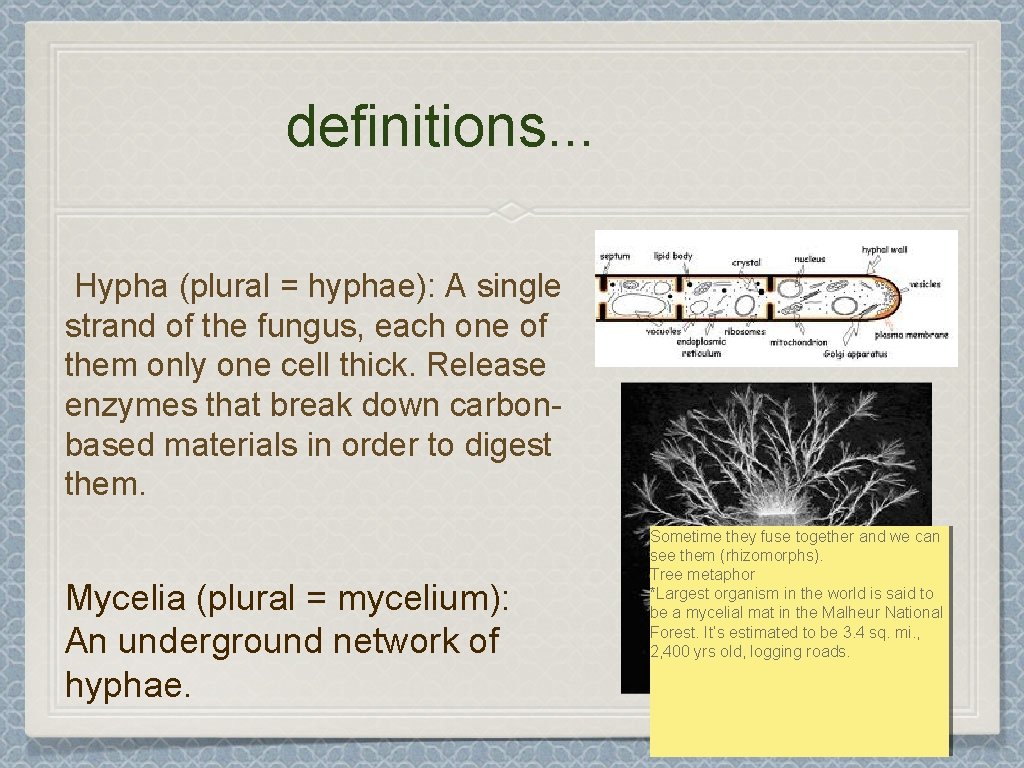
definitions. . . Hypha (plural = hyphae): A single strand of the fungus, each one of them only one cell thick. Release enzymes that break down carbonbased materials in order to digest them. Mycelia (plural = mycelium): An underground network of hyphae. Sometime they fuse together and we can see them (rhizomorphs). Tree metaphor *Largest organism in the world is said to be a mycelial mat in the Malheur National Forest. It’s estimated to be 3. 4 sq. mi. , 2, 400 yrs old, logging roads.
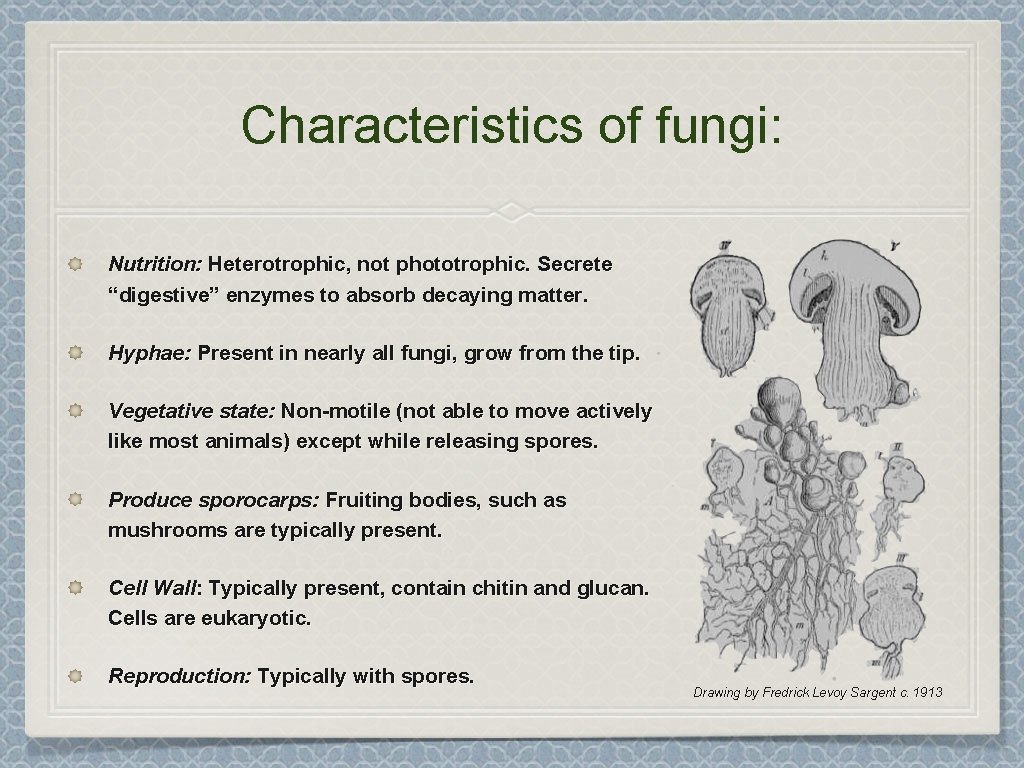
Characteristics of fungi: Nutrition: Heterotrophic, not phototrophic. Secrete “digestive” enzymes to absorb decaying matter. Hyphae: Present in nearly all fungi, grow from the tip. Vegetative state: Non-motile (not able to move actively like most animals) except while releasing spores. Produce sporocarps: Fruiting bodies, such as mushrooms are typically present. Cell Wall: Typically present, contain chitin and glucan. Cells are eukaryotic. Reproduction: Typically with spores. Drawing by Fredrick Levoy Sargent c. 1913
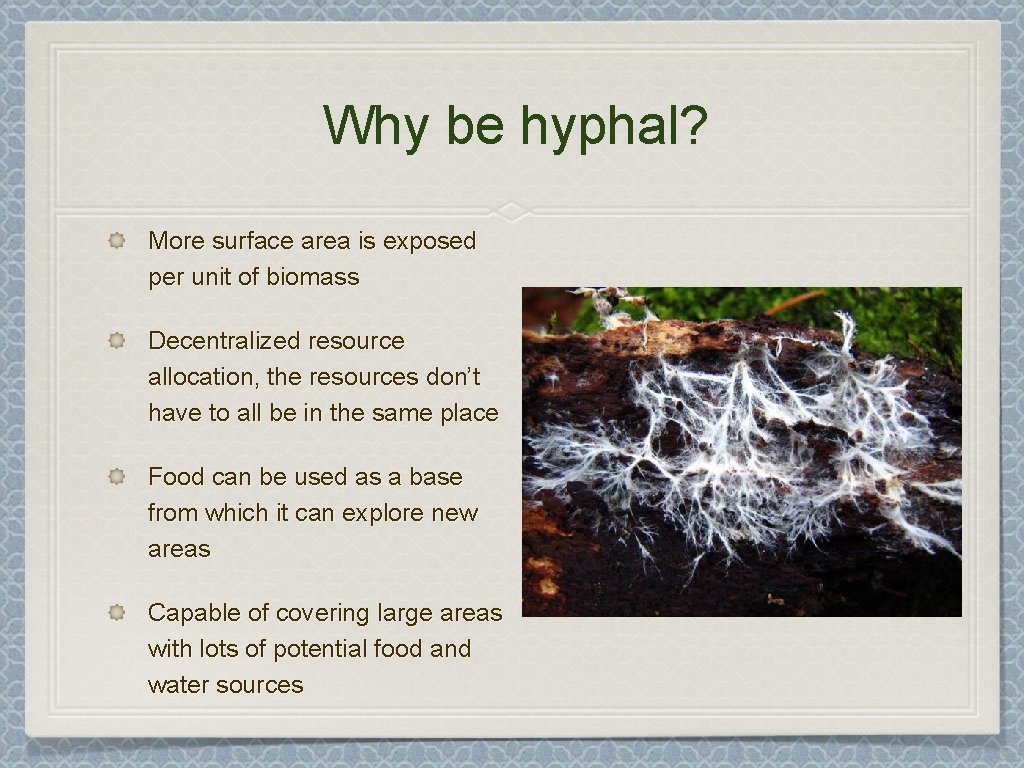
Why be hyphal? More surface area is exposed per unit of biomass Decentralized resource allocation, the resources don’t have to all be in the same place Food can be used as a base from which it can explore new areas Capable of covering large areas with lots of potential food and water sources
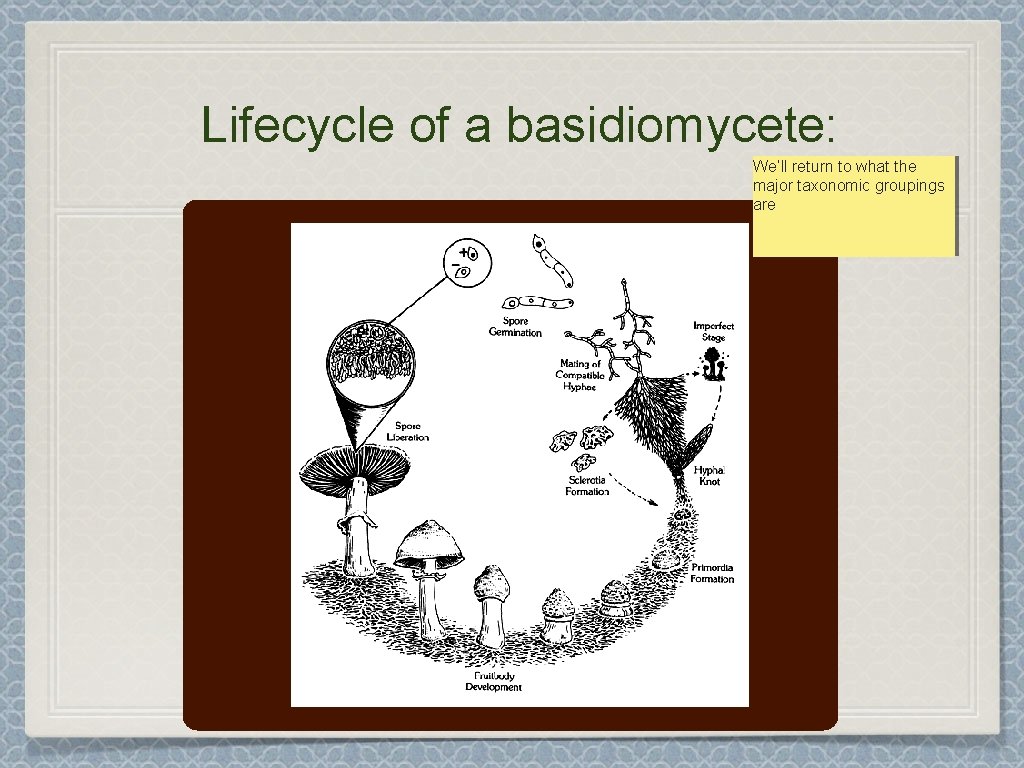
Lifecycle of a basidiomycete: We’ll return to what the major taxonomic groupings are
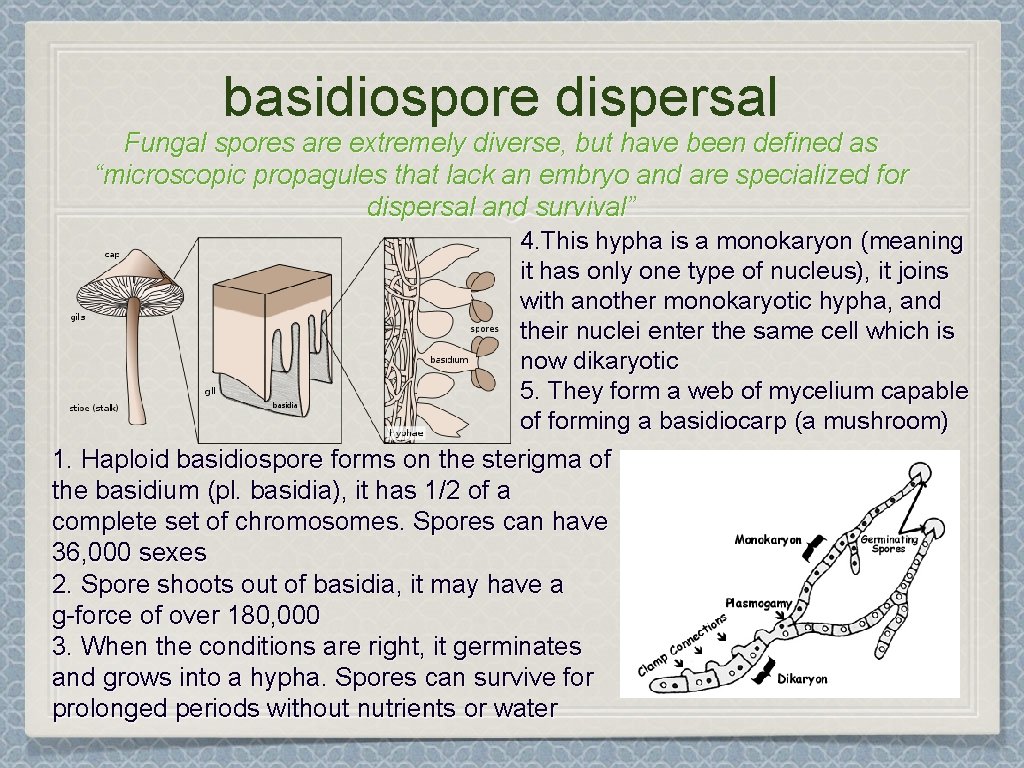
basidiospore dispersal Fungal spores are extremely diverse, but have been defined as “microscopic propagules that lack an embryo and are specialized for dispersal and survival” 4. This hypha is a monokaryon (meaning it has only one type of nucleus), it joins with another monokaryotic hypha, and their nuclei enter the same cell which is now dikaryotic 5. They form a web of mycelium capable of forming a basidiocarp (a mushroom) 1. Haploid basidiospore forms on the sterigma of the basidium (pl. basidia), it has 1/2 of a complete set of chromosomes. Spores can have 36, 000 sexes 2. Spore shoots out of basidia, it may have a g-force of over 180, 000 3. When the conditions are right, it germinates and grows into a hypha. Spores can survive for prolonged periods without nutrients or water
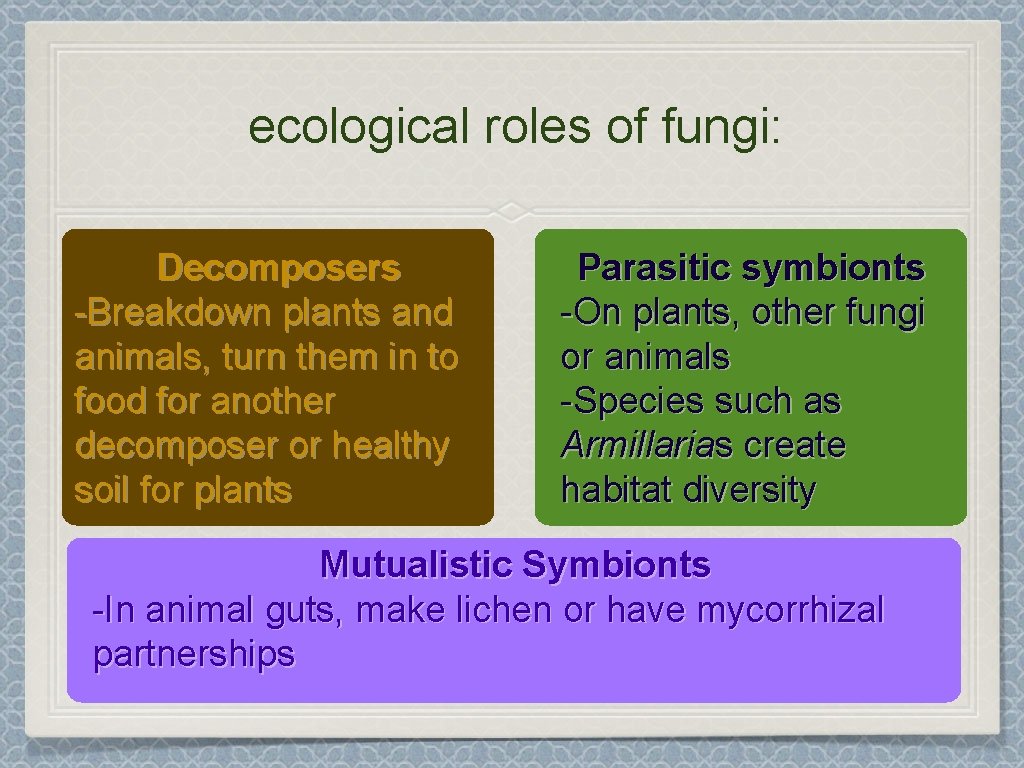
ecological roles of fungi: Decomposers -Breakdown plants and animals, turn them in to food for another decomposer or healthy soil for plants Parasitic symbionts -On plants, other fungi or animals -Species such as Armillarias create habitat diversity Mutualistic Symbionts -In animal guts, make lichen or have mycorrhizal partnerships
Also. . -They are an important food base for many animals -Create suitable habitat Text conditions for many animals (such as woodpeckers) -Help plants get CO 2 into soil -Contribute to rock weathering -Create soil aggregation, stabilizing soil and preventing erosion And help with: -Nitrogen cycling -Carbon storage -Soil development And more. . .
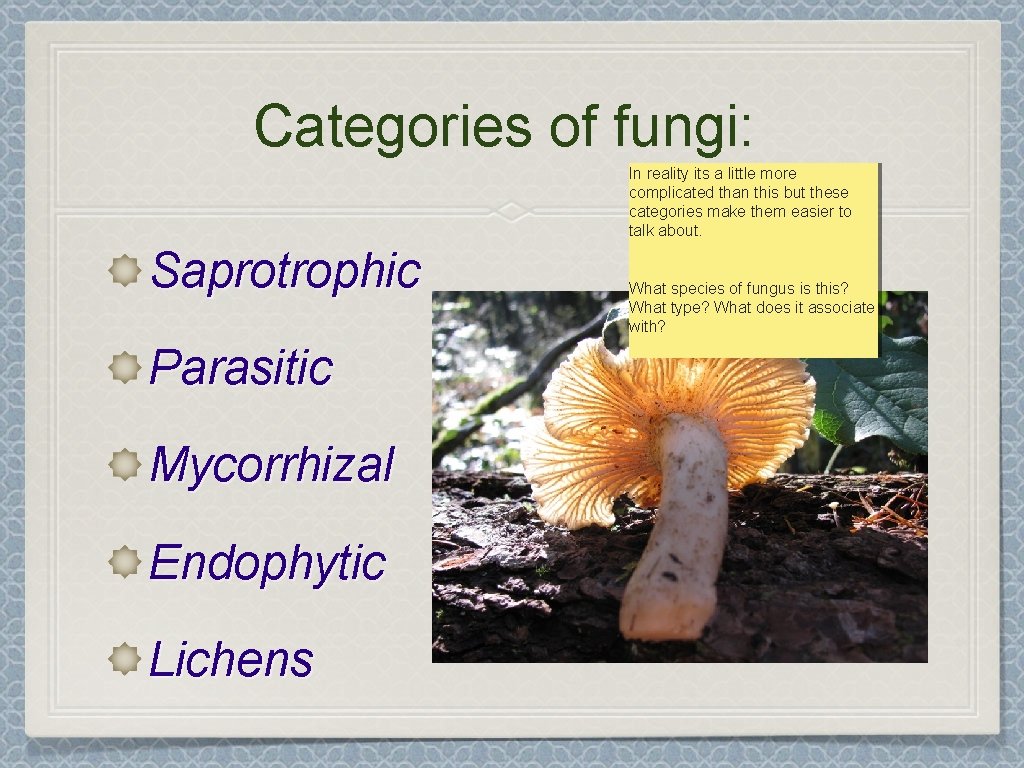
Categories of fungi: In reality its a little more complicated than this but these categories make them easier to talk about. Saprotrophic Parasitic Mycorrhizal Endophytic Lichens What species of fungus is this? What type? What does it associate with?
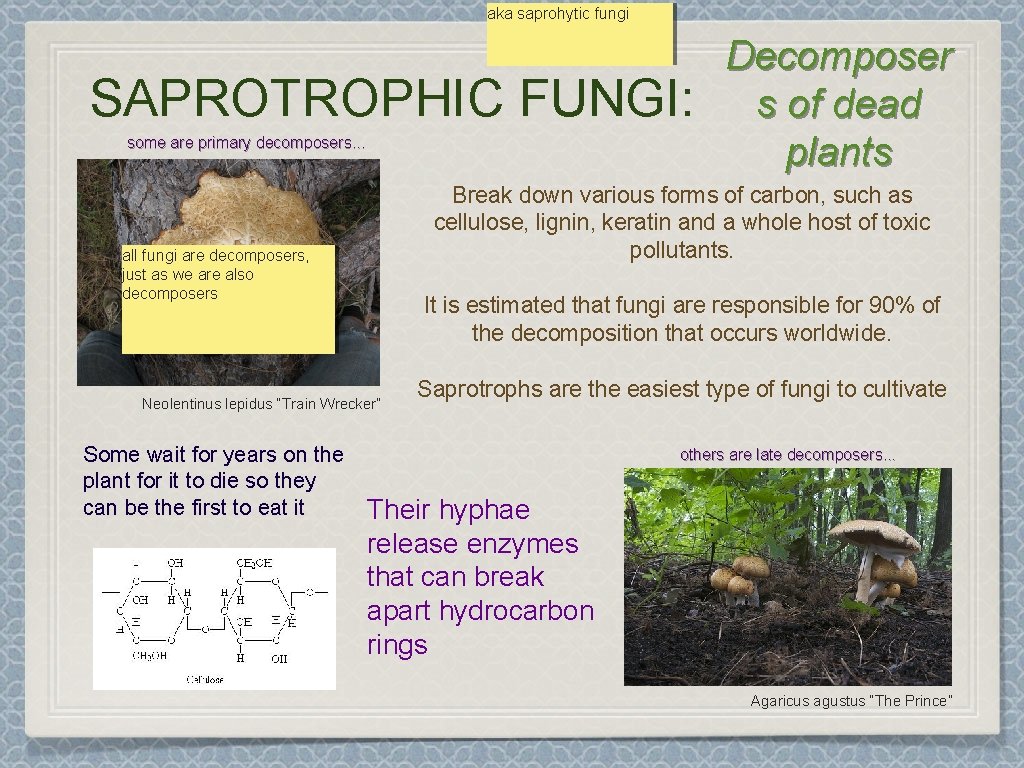
aka saprohytic fungi SAPROTROPHIC FUNGI: some are primary decomposers. . . Break down various forms of carbon, such as cellulose, lignin, keratin and a whole host of toxic pollutants. all fungi are decomposers, just as we are also decomposers It is estimated that fungi are responsible for 90% of the decomposition that occurs worldwide. Neolentinus lepidus “Train Wrecker” Some wait for years on the plant for it to die so they can be the first to eat it Decomposer s of dead plants Saprotrophs are the easiest type of fungi to cultivate others are late decomposers. . . Their hyphae release enzymes that can break apart hydrocarbon rings Agaricus agustus “The Prince”
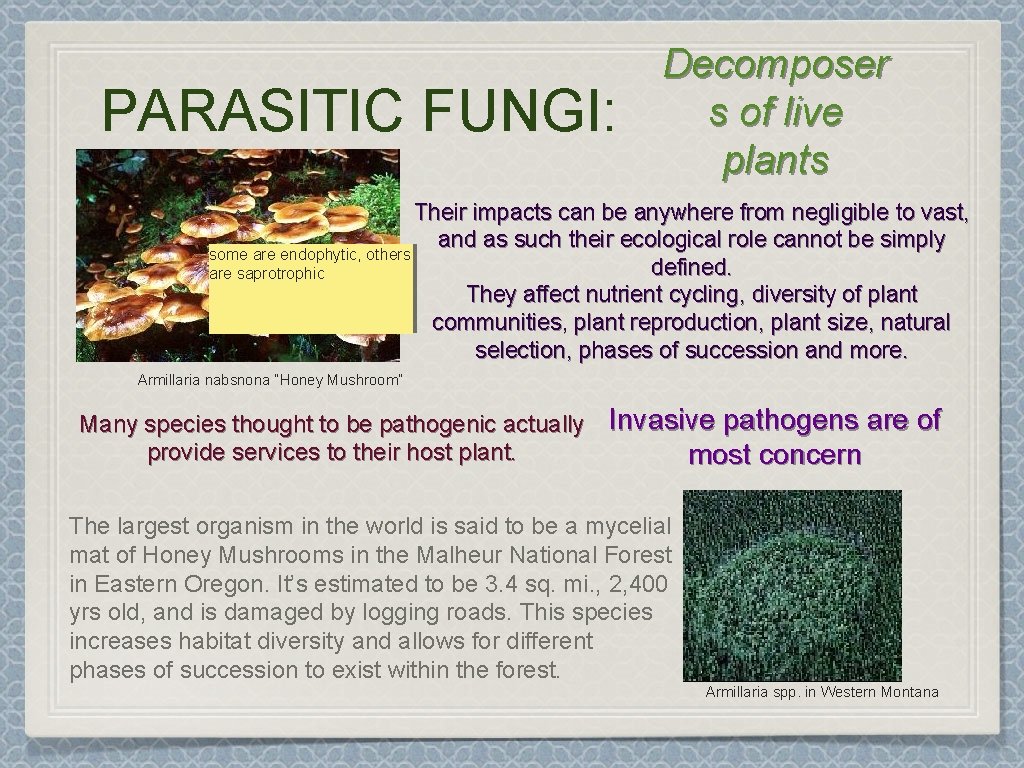
PARASITIC FUNGI: Decomposer s of live plants Their impacts can be anywhere from negligible to vast, and as such their ecological role cannot be simply some are endophytic, others defined. are saprotrophic They affect nutrient cycling, diversity of plant communities, plant reproduction, plant size, natural selection, phases of succession and more. Armillaria nabsnona “Honey Mushroom” Many species thought to be pathogenic actually provide services to their host plant. Invasive pathogens are of most concern The largest organism in the world is said to be a mycelial mat of Honey Mushrooms in the Malheur National Forest in Eastern Oregon. It’s estimated to be 3. 4 sq. mi. , 2, 400 yrs old, and is damaged by logging roads. This species increases habitat diversity and allows for different phases of succession to exist within the forest. Armillaria spp. in Western Montana
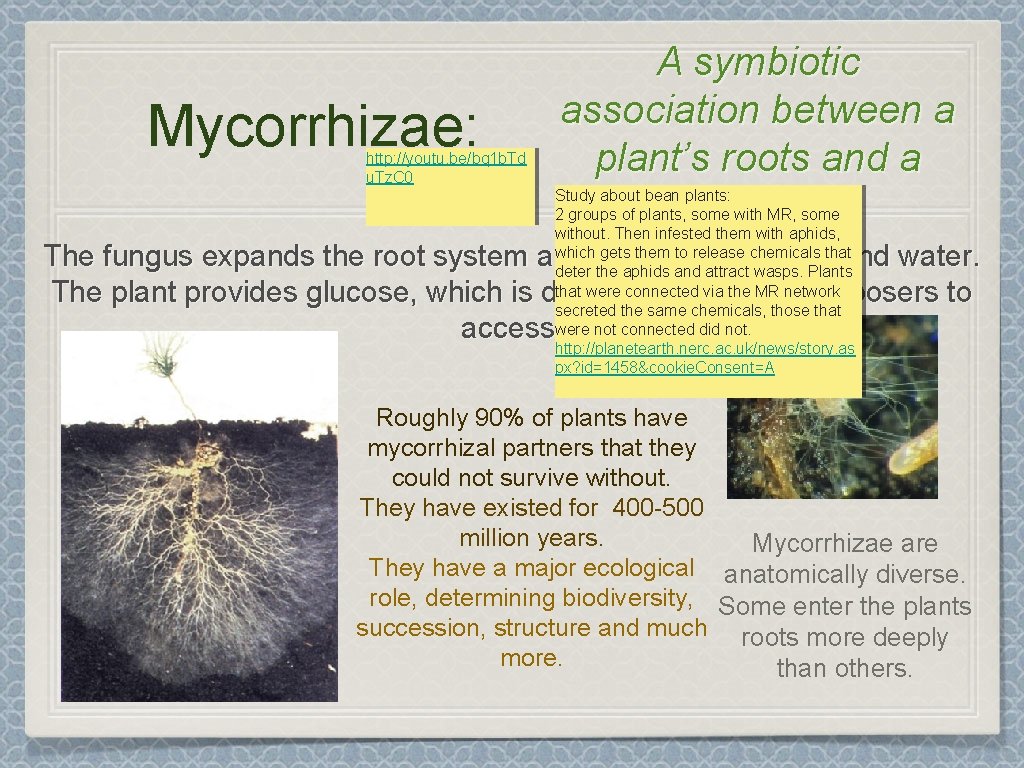
Mycorrhizae: http: //youtu. be/bq 1 b. Td u. Tz. C 0 A symbiotic association between a plant’s roots and a fungus Study about bean plants: 2 groups of plants, some with MR, some without. Then infested them with aphids, which gets them to release chemicals that deter the aphids and attract wasps. Plants that were connected via the MR network secreted the same chemicals, those that were not connected did not. http: //planetearth. nerc. ac. uk/news/story. as px? id=1458&cookie. Consent=A The fungus expands the root system and provides nutrients and water. The plant provides glucose, which is difficult for most decomposers to access. Roughly 90% of plants have mycorrhizal partners that they could not survive without. They have existed for 400 -500 million years. Mycorrhizae are They have a major ecological anatomically diverse. role, determining biodiversity, Some enter the plants succession, structure and much roots more deeply more. than others.
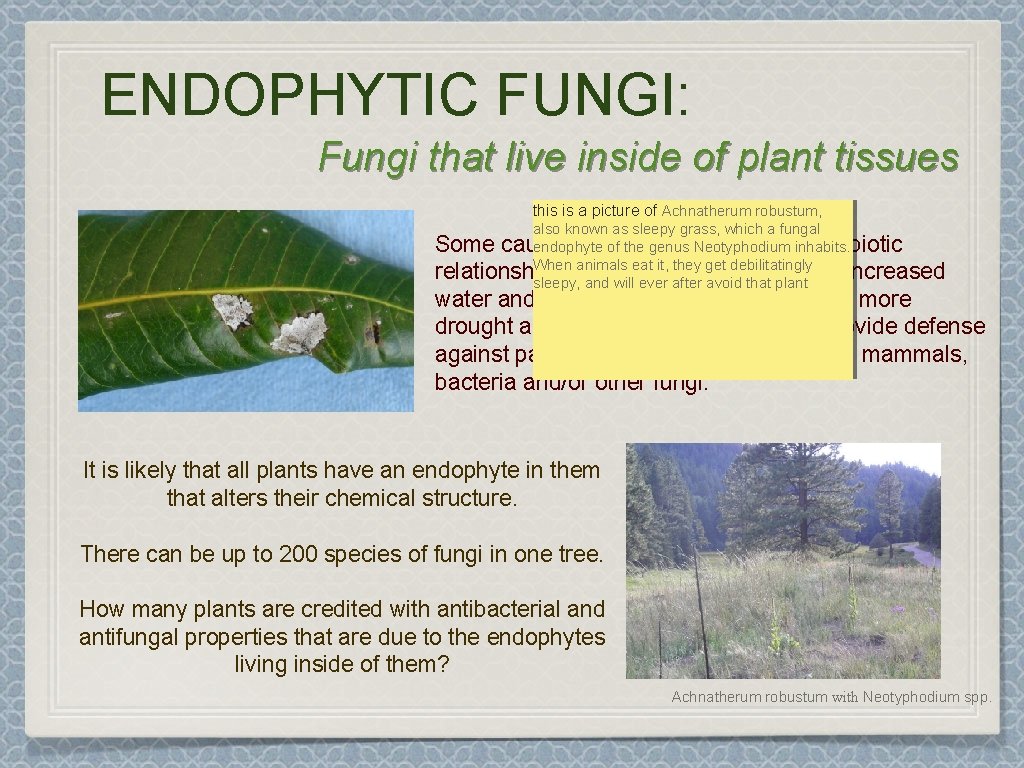
ENDOPHYTIC FUNGI: Fungi that live inside of plant tissues this is a picture of Achnatherum robustum, also known as sleepy grass, which a fungal Some cause disease, others have ainhabits. symbiotic endophyte of the genus Neotyphodium When animals eat it, they get debilitatingly relationship with the plant. They provide increased sleepy, and will ever after avoid that plant water and nutrient uptake, and/or make it more drought and heat resistant, as well as provide defense against pathogens such as birds, insects, mammals, bacteria and/or other fungi. It is likely that all plants have an endophyte in them that alters their chemical structure. There can be up to 200 species of fungi in one tree. How many plants are credited with antibacterial and antifungal properties that are due to the endophytes living inside of them? Achnatherum robustum with Neotyphodium spp.
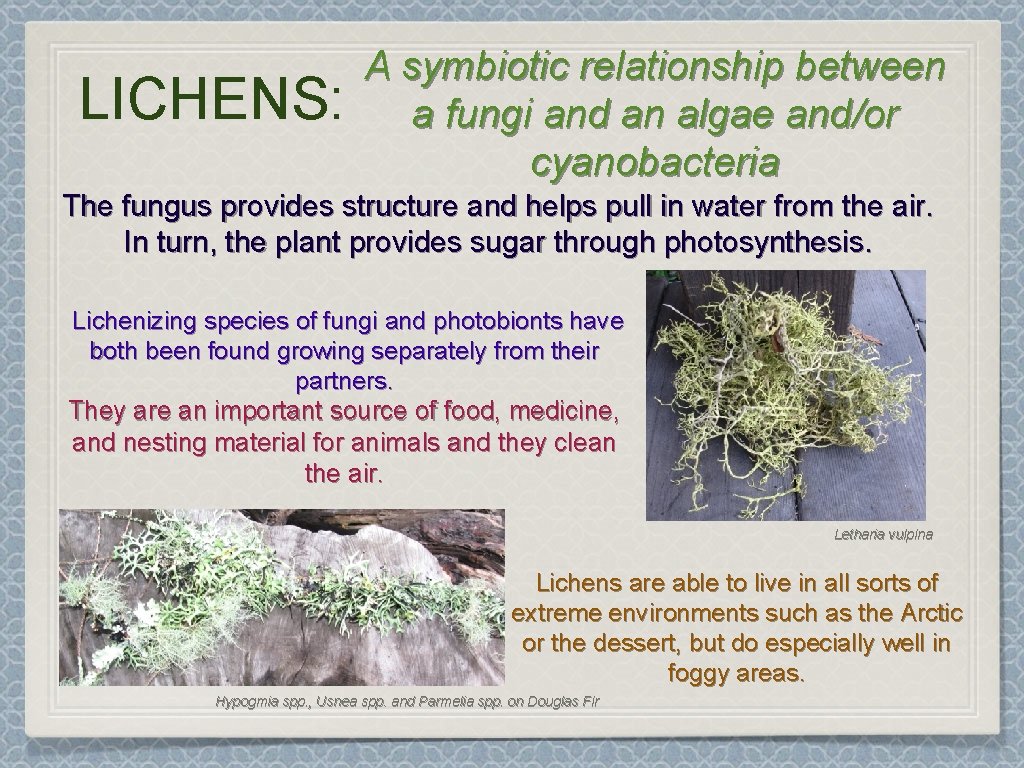
LICHENS: A symbiotic relationship between a fungi and an algae and/or cyanobacteria The fungus provides structure and helps pull in water from the air. In turn, the plant provides sugar through photosynthesis. Lichenizing species of fungi and photobionts have both been found growing separately from their partners. They are an important source of food, medicine, and nesting material for animals and they clean the air. Letharia vulpina Lichens are able to live in all sorts of extreme environments such as the Arctic or the dessert, but do especially well in foggy areas. Hypogmia spp. , Usnea spp. and Parmelia spp. on Douglas Fir
Questions. . . ?
- Slides: 17