
Introduction to Free Surfer surfer nmr mgh harvard



- Slides: 22
Introduction to Free. Surfer surfer. nmr. mgh. harvard. edu
Why Free. Surfer? 1. Anatomical analysis is not like functional analysis – it is completely stereotyped. 2. Registration to a template (e. g. MNI/Talairach) doesn’t account for individual anatomy. 3. Even if you don’t care about the anatomy, anatomical models allow functional analysis not otherwise possible.
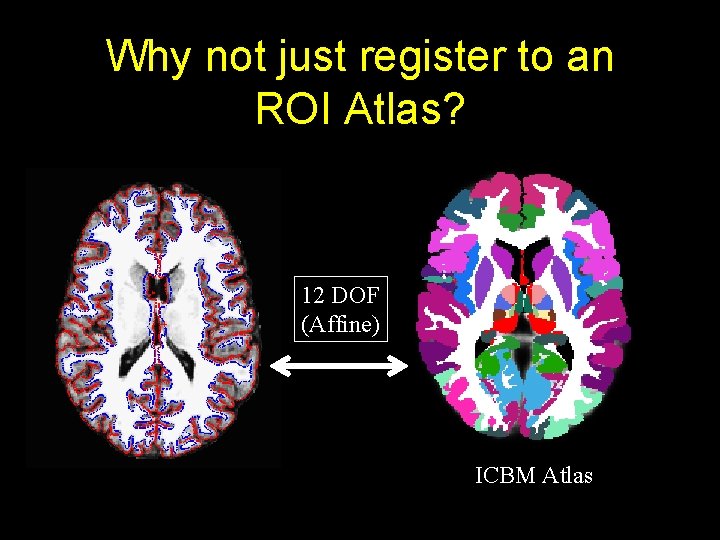
Why not just register to an ROI Atlas? 12 DOF (Affine) ICBM Atlas
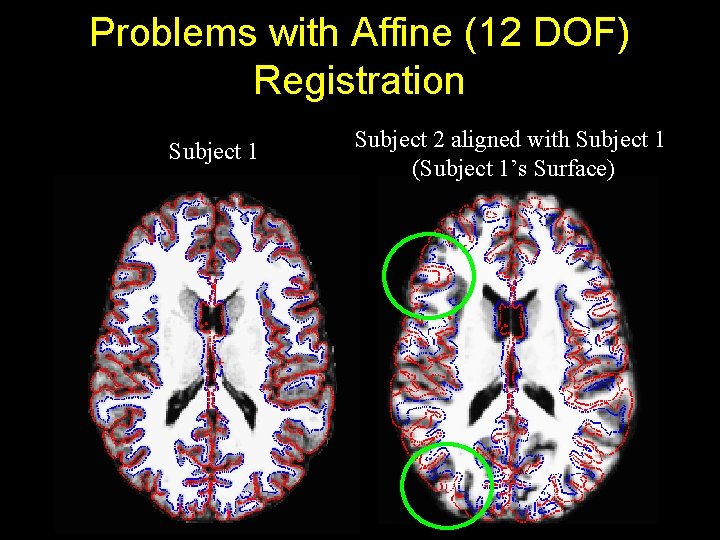
Problems with Affine (12 DOF) Registration Subject 1 Subject 2 aligned with Subject 1 (Subject 1’s Surface)
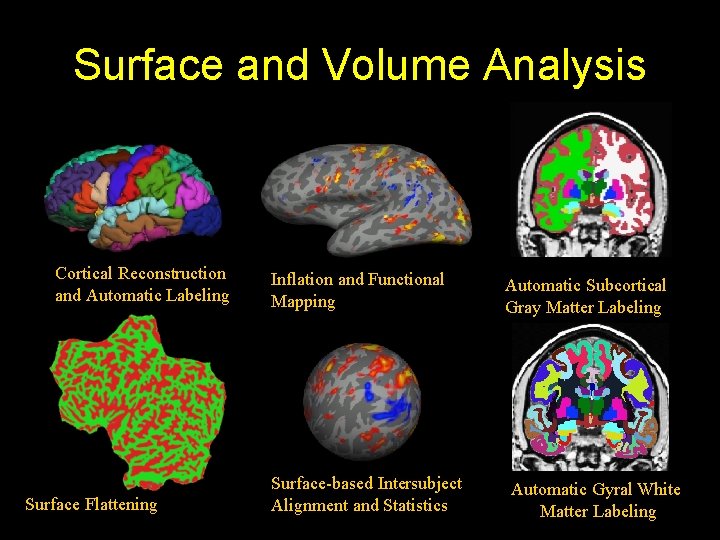
Surface and Volume Analysis Cortical Reconstruction and Automatic Labeling Surface Flattening Inflation and Functional Mapping Surface-based Intersubject Alignment and Statistics Automatic Subcortical Gray Matter Labeling Automatic Gyral White Matter Labeling
Talk Outline 1. Cortical (surface-based) Analysis. 2. Volume Analysis.
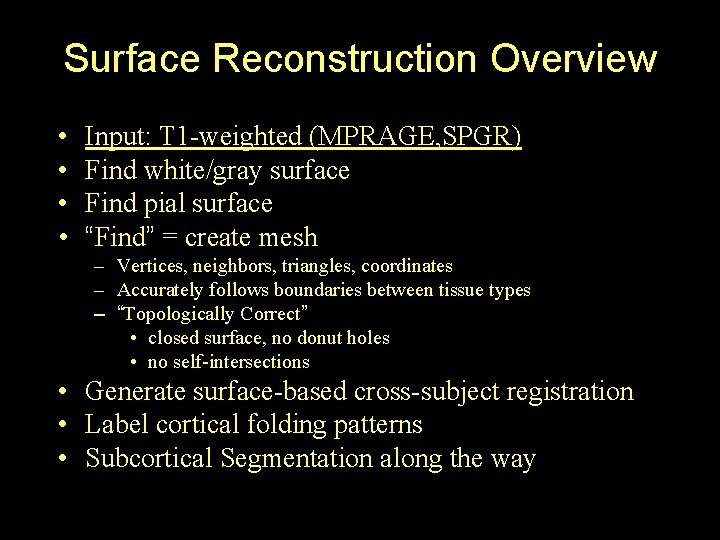
Surface Reconstruction Overview • • Input: T 1 -weighted (MPRAGE, SPGR) Find white/gray surface Find pial surface “Find” = create mesh – Vertices, neighbors, triangles, coordinates – Accurately follows boundaries between tissue types – “Topologically Correct” • closed surface, no donut holes • no self-intersections • Generate surface-based cross-subject registration • Label cortical folding patterns • Subcortical Segmentation along the way 7
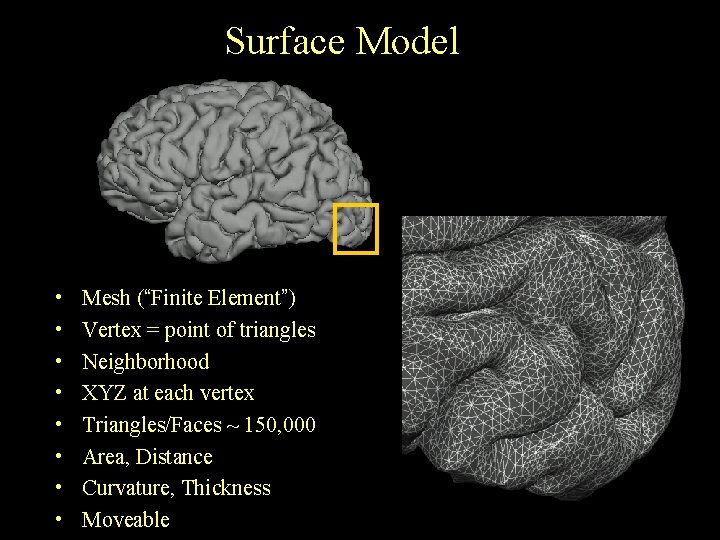
Surface Model • • Mesh (“Finite Element”) Vertex = point of triangles Neighborhood XYZ at each vertex Triangles/Faces ~ 150, 000 Area, Distance Curvature, Thickness Moveable 8
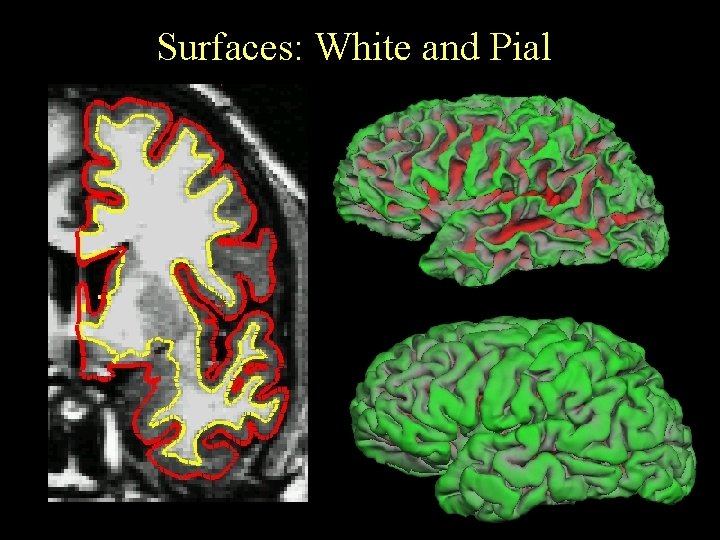
Surfaces: White and Pial
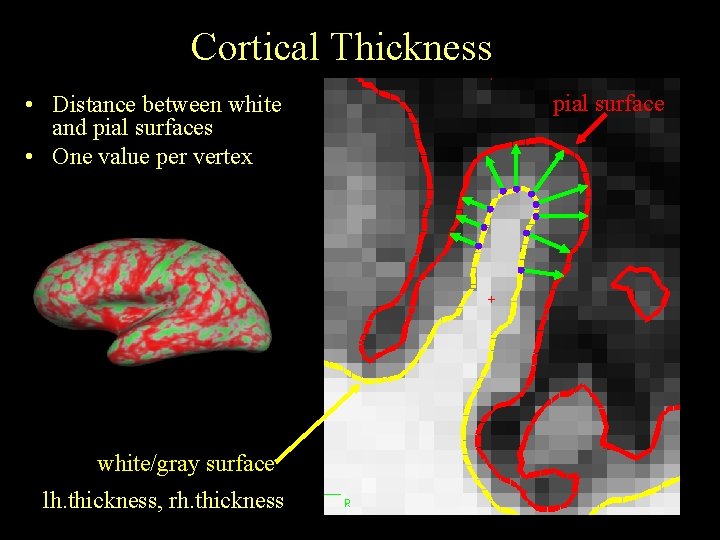
Cortical Thickness • Distance between white and pial surfaces • One value per vertex white/gray surface lh. thickness, rh. thickness pial surface
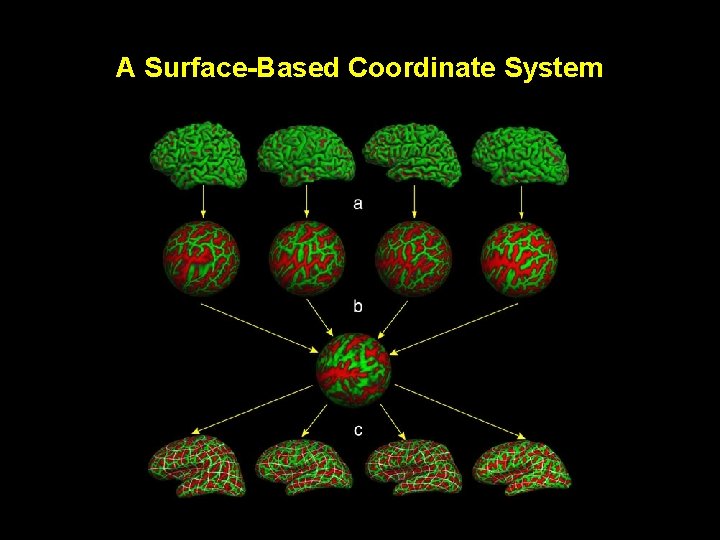
A Surface-Based Coordinate System
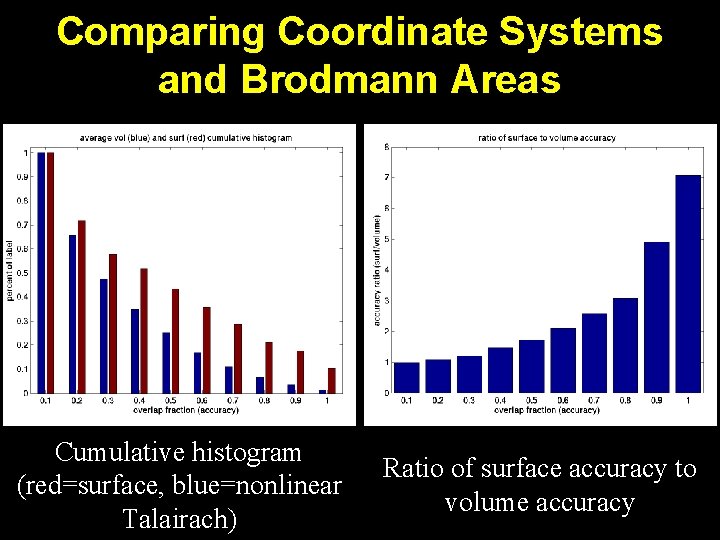
Comparing Coordinate Systems and Brodmann Areas Cumulative histogram (red=surface, blue=nonlinear Talairach) Ratio of surface accuracy to volume accuracy
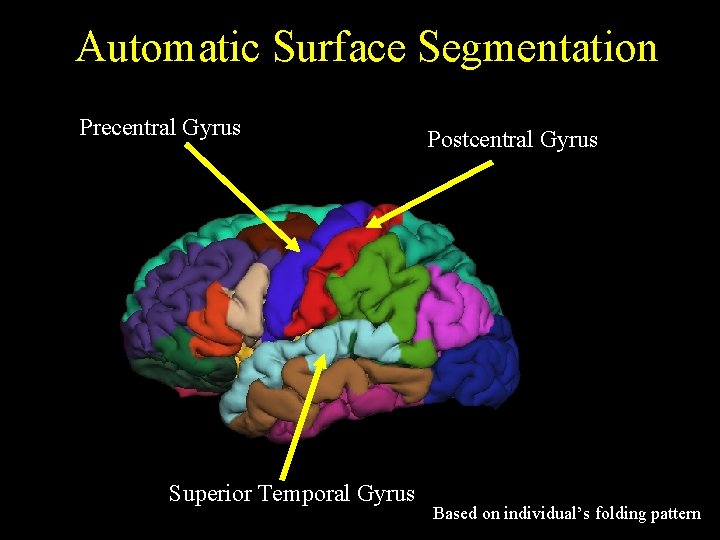
Automatic Surface Segmentation Precentral Gyrus Superior Temporal Gyrus Postcentral Gyrus Based on individual’s folding pattern
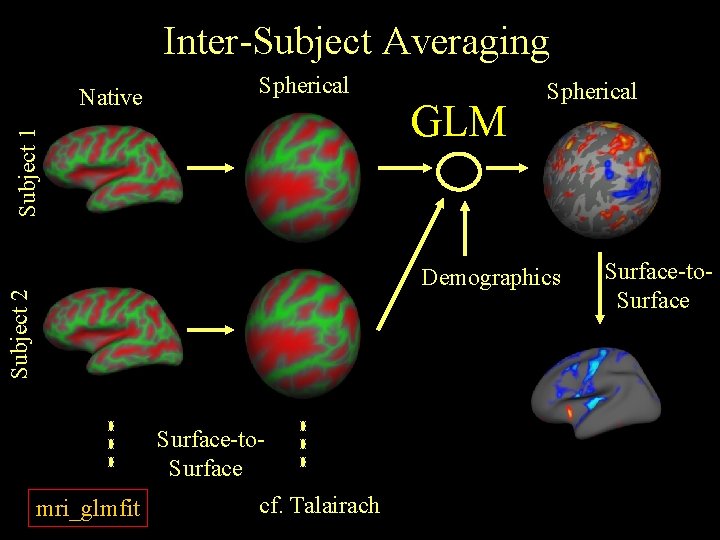
Inter-Subject Averaging Spherical Subject 1 Native GLM Spherical Subject 2 Demographics Surface-to. Surface mri_glmfit cf. Talairach Surface-to. Surface
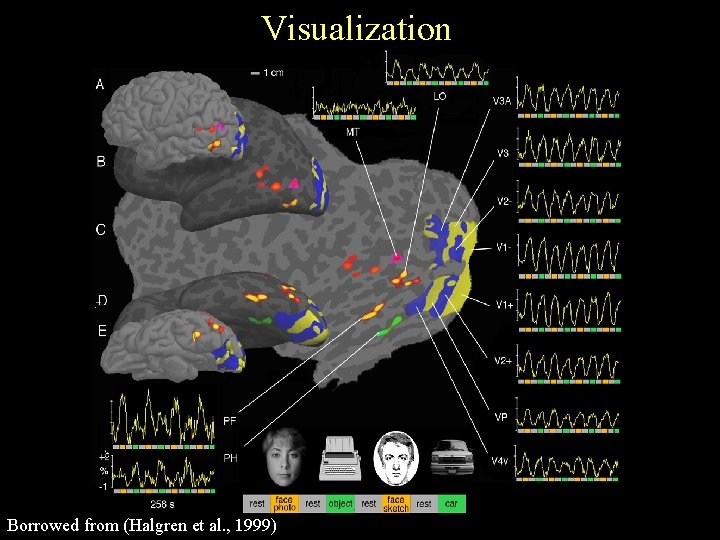
Visualization Borrowed from (Halgren et al. , 1999)
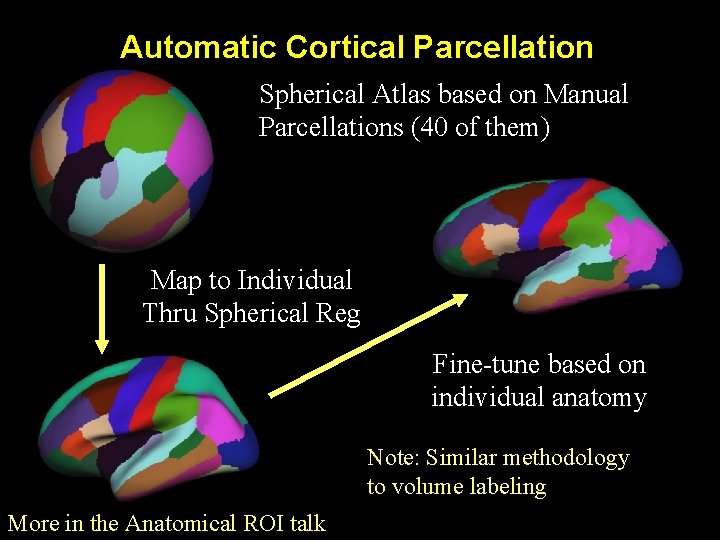
Automatic Cortical Parcellation Spherical Atlas based on Manual Parcellations (40 of them) Map to Individual Thru Spherical Reg Fine-tune based on individual anatomy Note: Similar methodology to volume labeling More in the Anatomical ROI talk 16
Talk Outline 1. Cortical (surface-based) Analysis. 2. Volume Analysis.
Volume Analysis: Automatic Individualized Segmentation Surface-based coordinate system/registration appropriate for cortex but not for thalamus, ventricular system, basal ganglia, etc… Anatomy is extremely variable – measuring the variance and accounting for it is critical (more in the individual subject talk)!
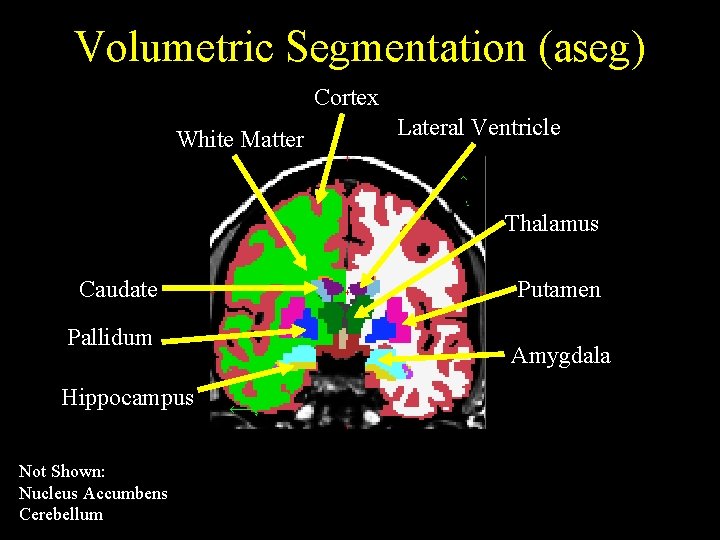
Volumetric Segmentation (aseg) Cortex White Matter Lateral Ventricle Thalamus Caudate Pallidum Hippocampus Not Shown: Nucleus Accumbens Cerebellum Putamen Amygdala
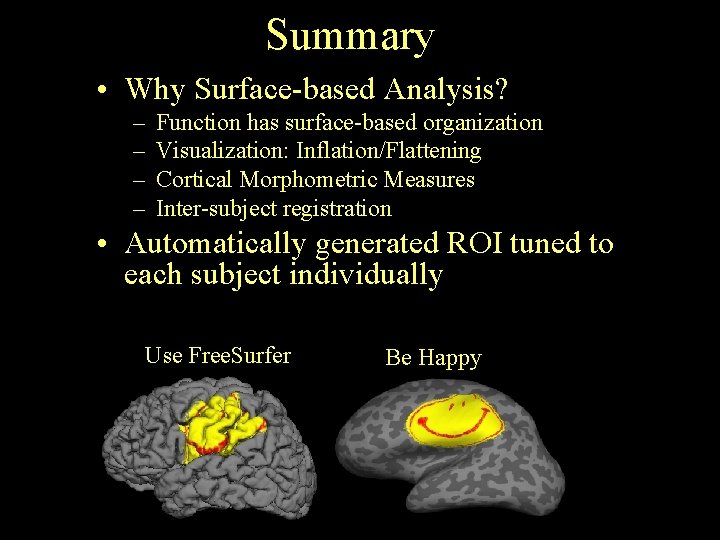
Summary • Why Surface-based Analysis? – – Function has surface-based organization Visualization: Inflation/Flattening Cortical Morphometric Measures Inter-subject registration • Automatically generated ROI tuned to each subject individually Use Free. Surfer Be Happy
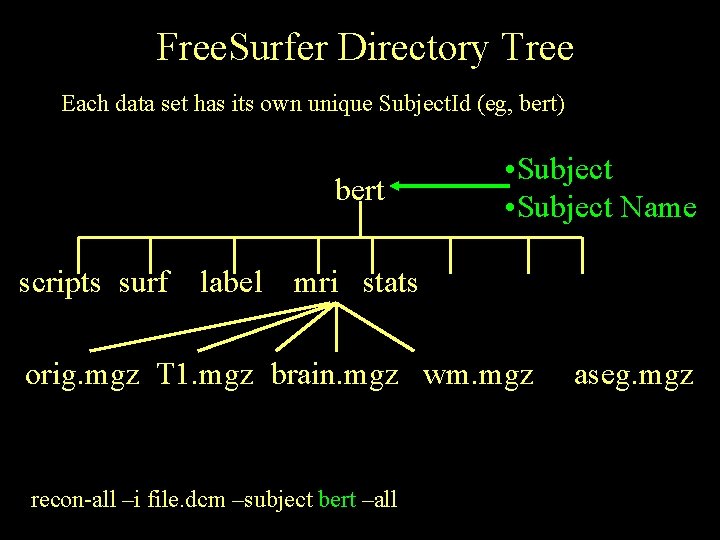
Free. Surfer Directory Tree Each data set has its own unique Subject. Id (eg, bert) bert scripts surf label • Subject Name mri stats orig. mgz T 1. mgz brain. mgz wm. mgz recon-all –i file. dcm –subject bert –all aseg. mgz 21
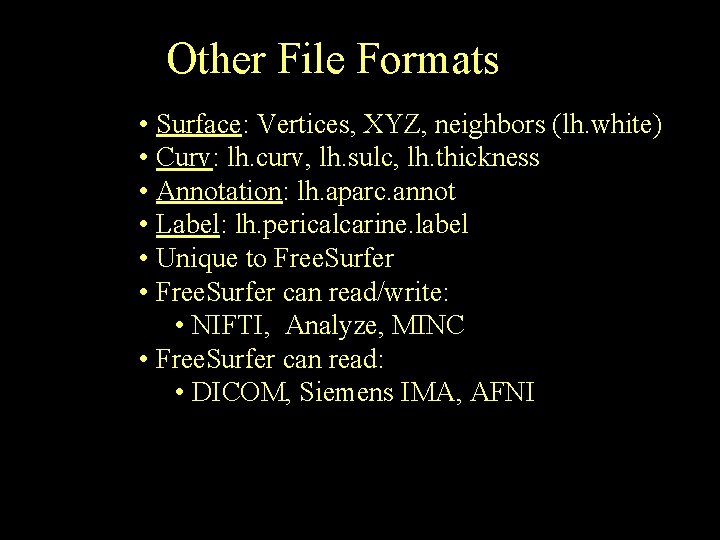
Other File Formats • Surface: Vertices, XYZ, neighbors (lh. white) • Curv: lh. curv, lh. sulc, lh. thickness • Annotation: lh. aparc. annot • Label: lh. pericalcarine. label • Unique to Free. Surfer • Free. Surfer can read/write: • NIFTI, Analyze, MINC • Free. Surfer can read: • DICOM, Siemens IMA, AFNI 22