
Introduction to Forensics What is Forensics Science in
- Slides: 17
Introduction to Forensics
What is Forensics? Science in service to the law The use of science or technology in the investigation and establishment of facts or evidence in a court of law
Arthur Conan Doyle Author of Sherlock Holmes Many believe he was the first to popularize forensic science with his novels The first, A Study in Scarlet was published in 1887
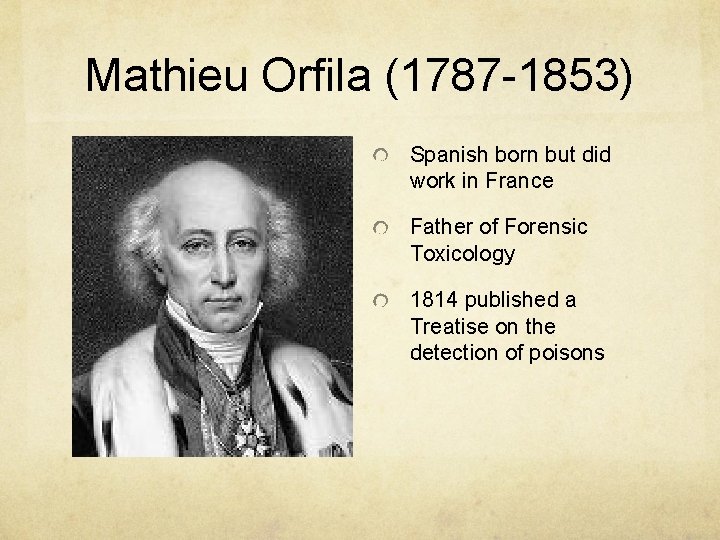
Mathieu Orfila (1787 -1853) Spanish born but did work in France Father of Forensic Toxicology 1814 published a Treatise on the detection of poisons
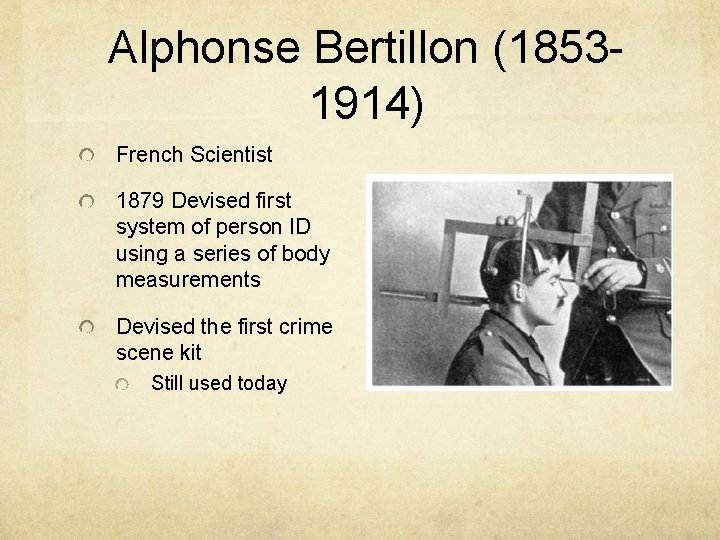
Alphonse Bertillon (18531914) French Scientist 1879 Devised first system of person ID using a series of body measurements Devised the first crime scene kit Still used today
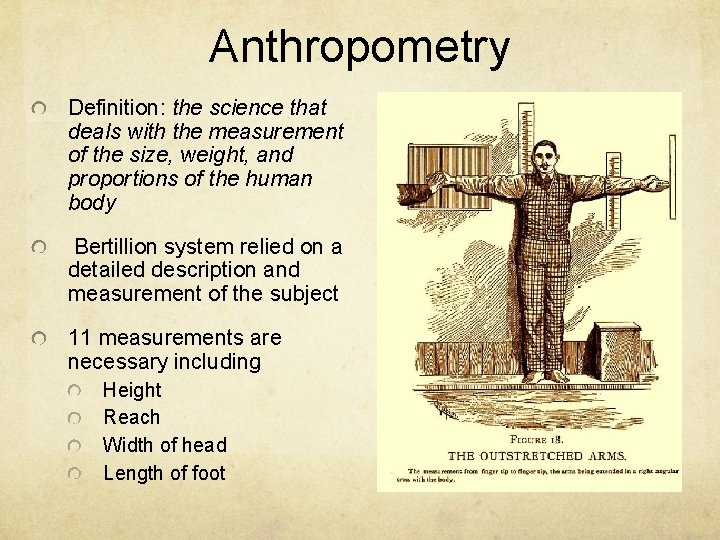
Anthropometry Definition: the science that deals with the measurement of the size, weight, and proportions of the human body Bertillion system relied on a detailed description and measurement of the subject 11 measurements are necessary including Height Reach Width of head Length of foot
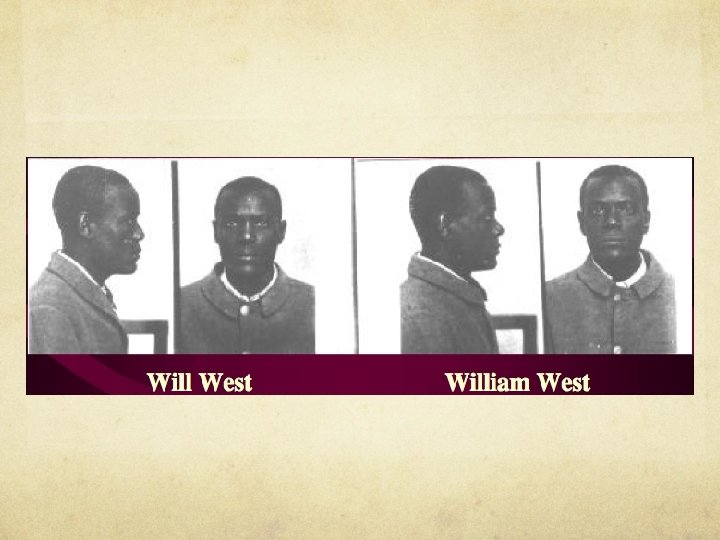
Anthropometry Downfall 1903 Leavenworth Federal Prison A prisoner named Will West was brought to the prison and had his measurements taken. His measurements matched a prisoner already in the prison named William West. Despite the system there was no way to tell the two apart. The only noticeable difference between the two men was their fingerprints. Anthropometry was abandoned and the fingerprint (Henry) system was adopted.
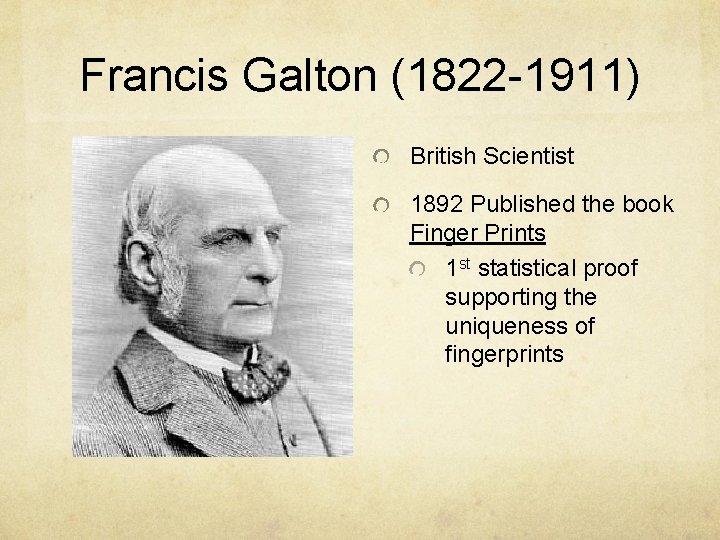
Francis Galton (1822 -1911) British Scientist 1892 Published the book Finger Prints 1 st statistical proof supporting the uniqueness of fingerprints
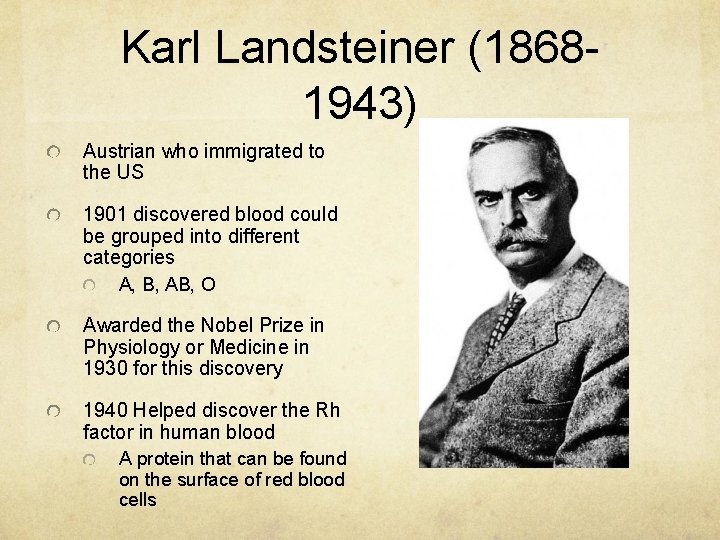
Karl Landsteiner (18681943) Austrian who immigrated to the US 1901 discovered blood could be grouped into different categories A, B, AB, O Awarded the Nobel Prize in Physiology or Medicine in 1930 for this discovery 1940 Helped discover the Rh factor in human blood A protein that can be found on the surface of red blood cells
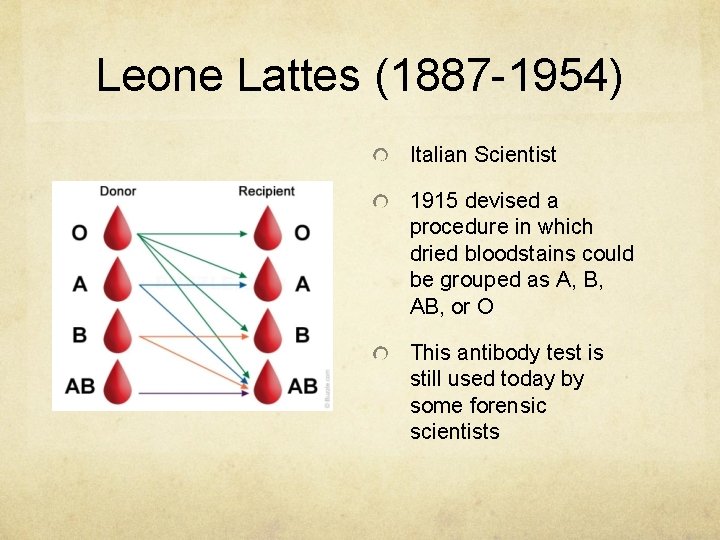
Leone Lattes (1887 -1954) Italian Scientist 1915 devised a procedure in which dried bloodstains could be grouped as A, B, AB, or O This antibody test is still used today by some forensic scientists
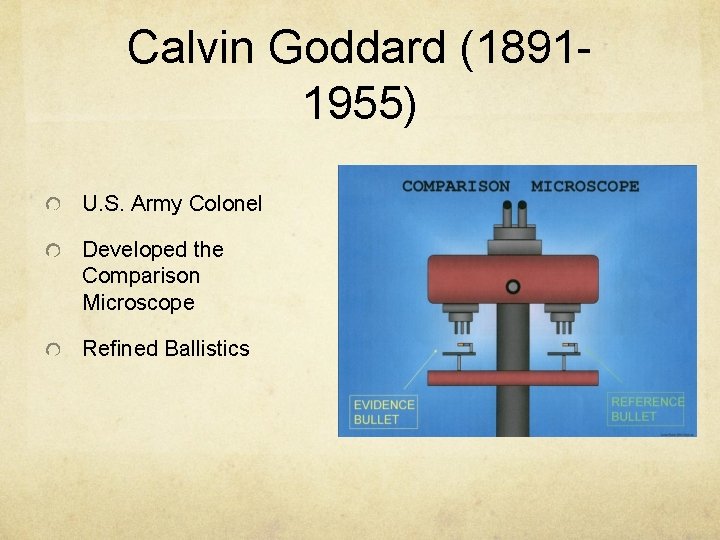
Calvin Goddard (18911955) U. S. Army Colonel Developed the Comparison Microscope Refined Ballistics
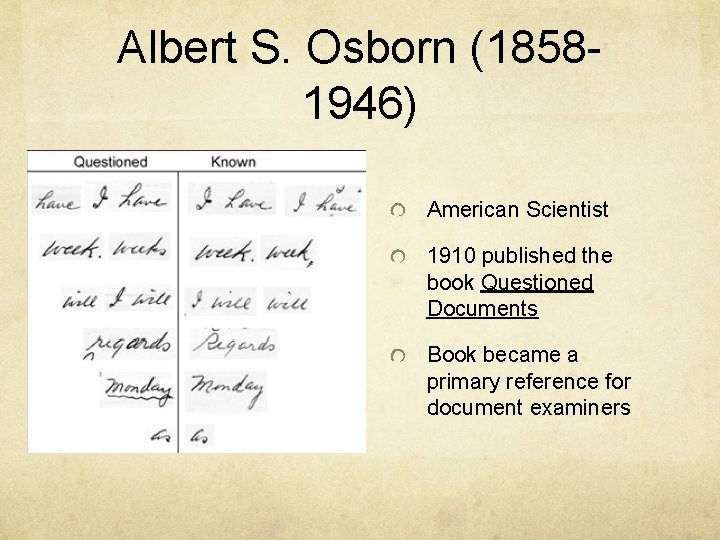
Albert S. Osborn (18581946) American Scientist 1910 published the book Questioned Documents Book became a primary reference for document examiners
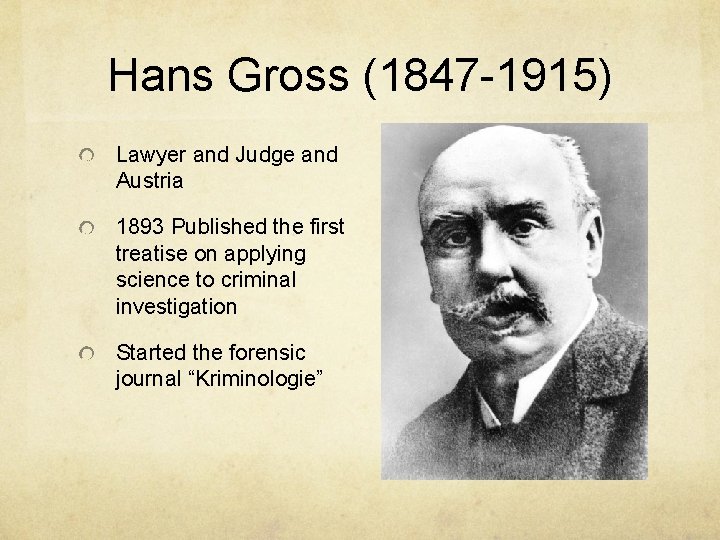
Hans Gross (1847 -1915) Lawyer and Judge and Austria 1893 Published the first treatise on applying science to criminal investigation Started the forensic journal “Kriminologie”
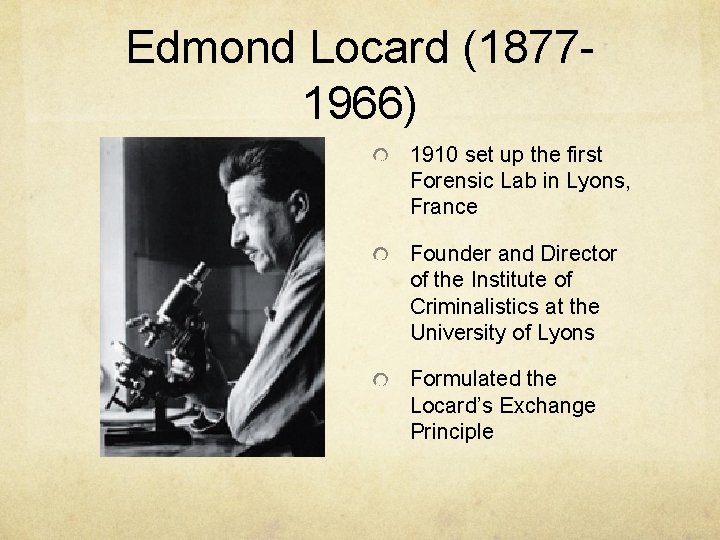
Edmond Locard (18771966) 1910 set up the first Forensic Lab in Lyons, France Founder and Director of the Institute of Criminalistics at the University of Lyons Formulated the Locard’s Exchange Principle
Locard’s Exchange Principle When a criminal comes in contact with an object or person, a cross-transfer of evidence occurs The criminal either removes something from the crime scene or leaves something behind Either way this exchange can link the criminal to the crime scene
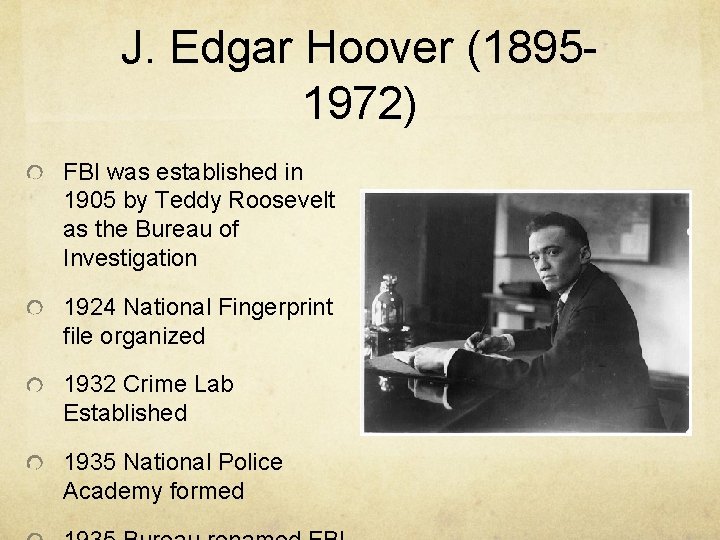
J. Edgar Hoover (18951972) FBI was established in 1905 by Teddy Roosevelt as the Bureau of Investigation 1924 National Fingerprint file organized 1932 Crime Lab Established 1935 National Police Academy formed