
Introduction to Forensic Science Crime Scene Protocol Kathy

- Slides: 10
Introduction to Forensic Science & Crime Scene Protocol Kathy Mirakovits ©Kathy Mirakovits, FSEC 1
‘Basics’ of Forensic Science n What does “forensic science” mean? The presentation of science or scientific evidence in a public forum (court of law) ©Kathy Mirakovits, FSEC 2
Edmond Locard’s Exchange Principle – whenever two objects come in contact, there is a mutual exchange of material. n Every criminal can be tied to crime. n Something is left behind. CS Investigators must find that material or materials: EVIDENCE. n ©Kathy Mirakovits, FSEC 3
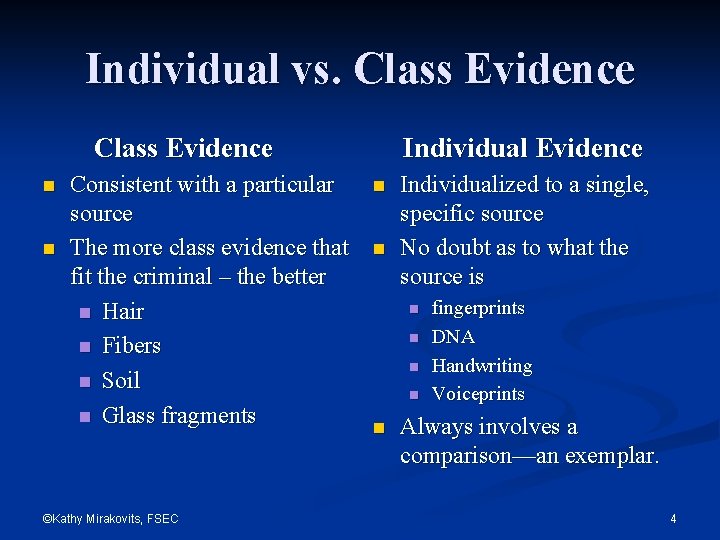
Individual vs. Class Evidence n n Consistent with a particular source The more class evidence that fit the criminal – the better n Hair n Fibers n Soil n Glass fragments ©Kathy Mirakovits, FSEC Individual Evidence n n Individualized to a single, specific source No doubt as to what the source is n n n fingerprints DNA Handwriting Voiceprints Always involves a comparison—an exemplar. 4
‘Basics’ of Crime Scene Protocol ©Kathy Mirakovits, FSEC 5
Search Methods ©Kathy Mirakovits, FSEC GRID LINE ZONE SPIRAL 6
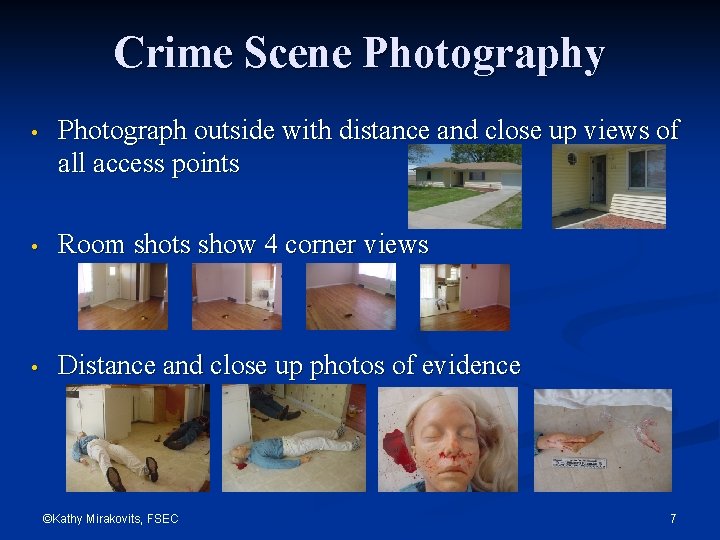
Crime Scene Photography • Photograph outside with distance and close up views of all access points • Room shots show 4 corner views • Distance and close up photos of evidence ©Kathy Mirakovits, FSEC 7
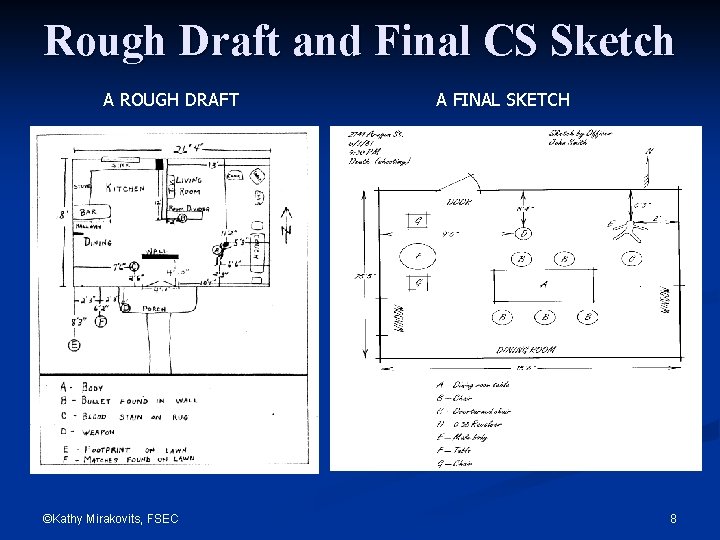
Rough Draft and Final CS Sketch A ROUGH DRAFT ©Kathy Mirakovits, FSEC A FINAL SKETCH 8
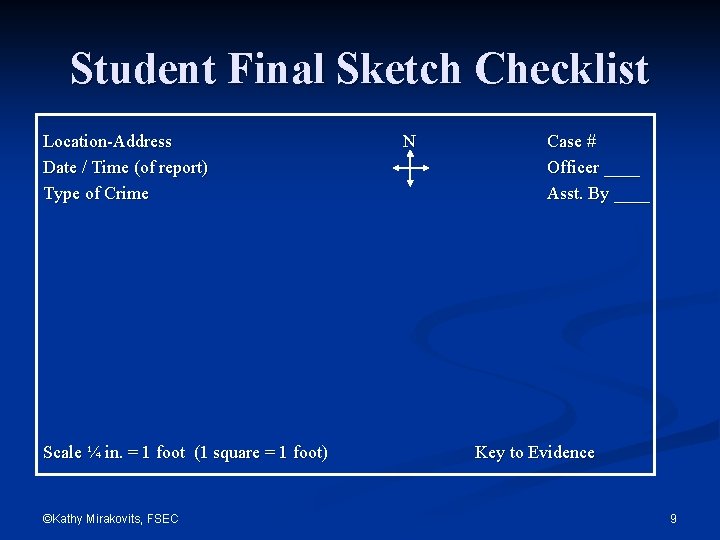
Student Final Sketch Checklist Location-Address Date / Time (of report) Type of Crime Scale ¼ in. = 1 foot (1 square = 1 foot) ©Kathy Mirakovits, FSEC N Case # Officer ____ Asst. By ____ Key to Evidence 9
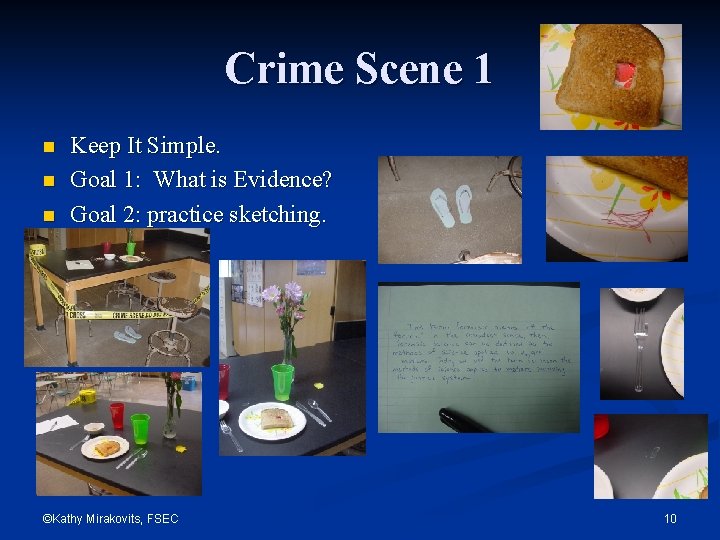
Crime Scene 1 n n n Keep It Simple. Goal 1: What is Evidence? Goal 2: practice sketching. ©Kathy Mirakovits, FSEC 10