
INTRODUCTION TO FOOD ENGINEERING Lecture 5 HEAT TRANSFER
- Slides: 31
INTRODUCTION TO FOOD ENGINEERING Lecture 5 HEAT TRANSFER IN FOOD PROCESSING
Objectives • Calculate convective heat transfer coefficient • Calculate overall heat transfer coefficient • Calculate heat transfer area in tubular heat exchanger
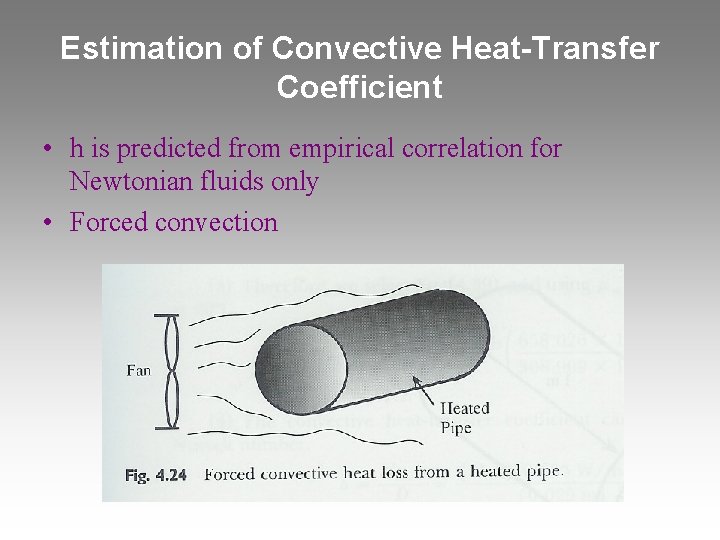
Estimation of Convective Heat-Transfer Coefficient • h is predicted from empirical correlation for Newtonian fluids only • Forced convection
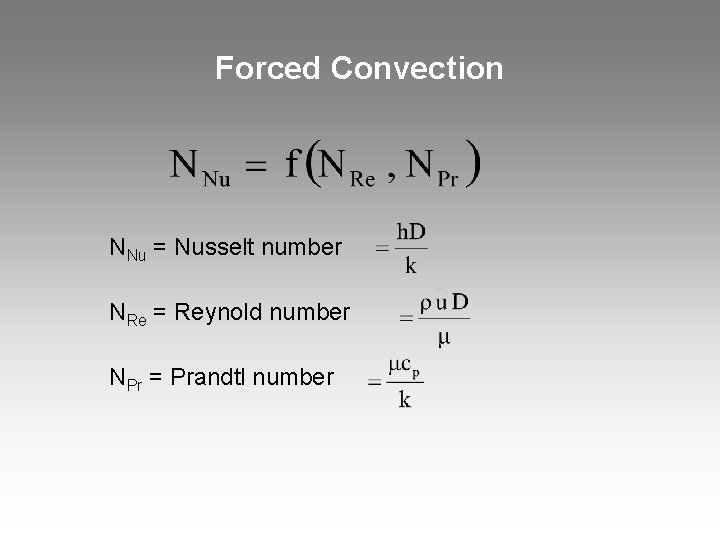
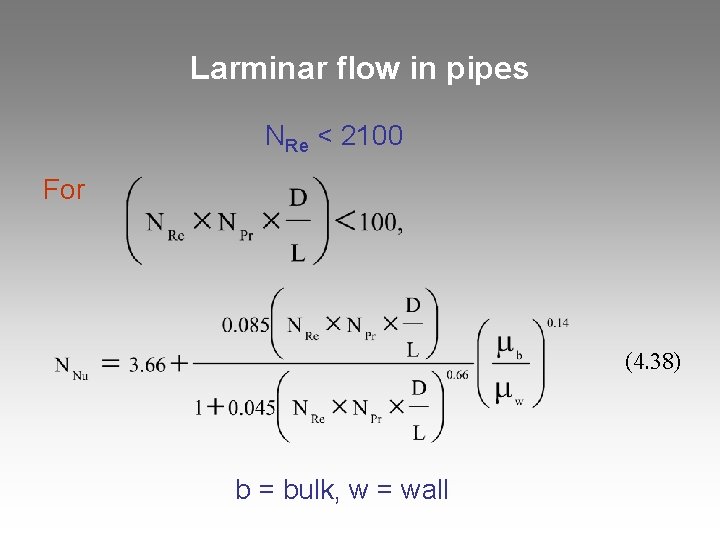
Forced Convection NNu = Nusselt number NRe = Reynold number NPr = Prandtl number
Larminar flow in pipes NRe < 2100 For (4. 38) b = bulk, w = wall
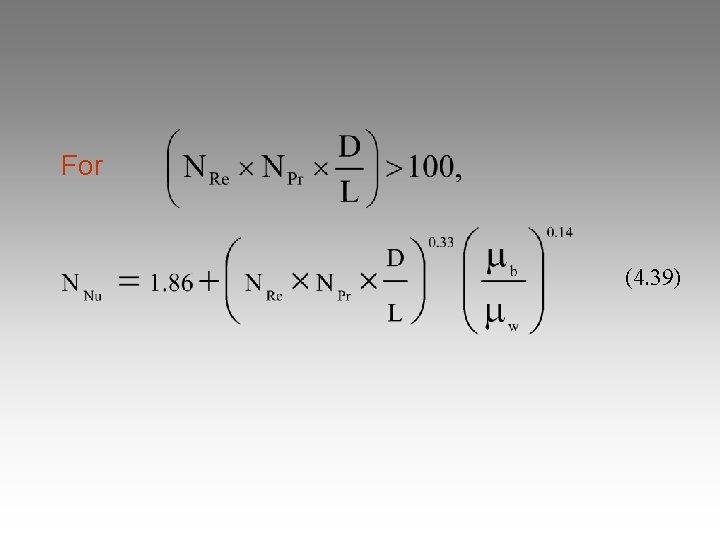
For (4. 39)
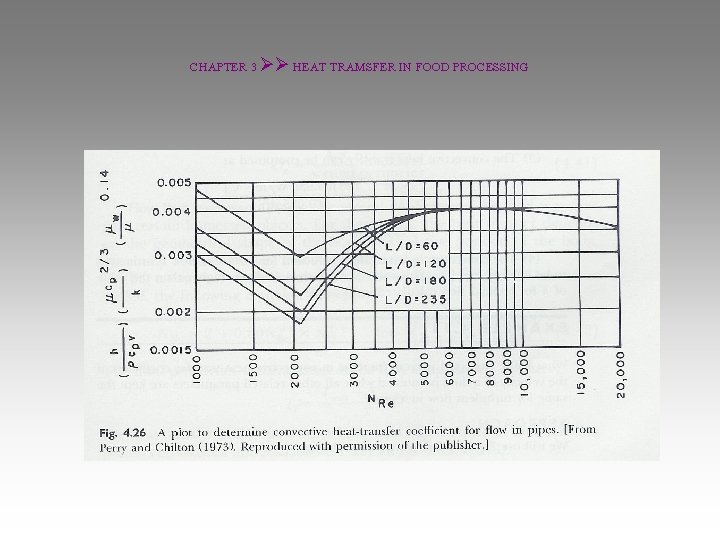
CHAPTER 3 HEAT TRAMSFER IN FOOD PROCESSING
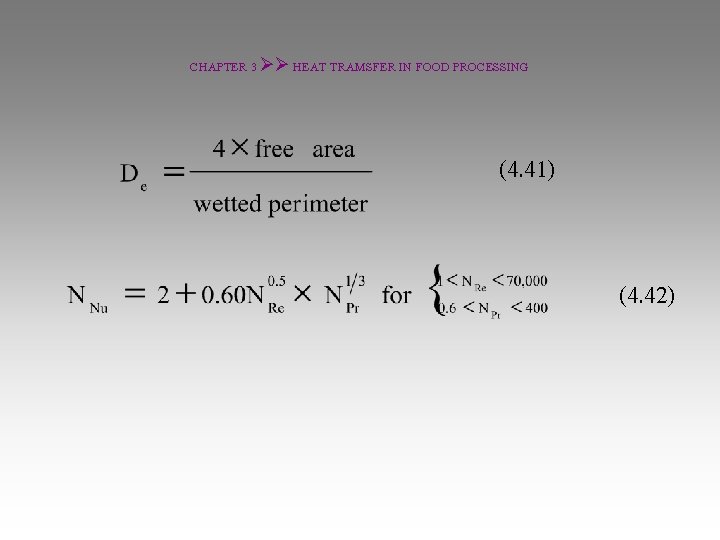
CHAPTER 3 HEAT TRAMSFER IN FOOD PROCESSING (4. 41) (4. 42)
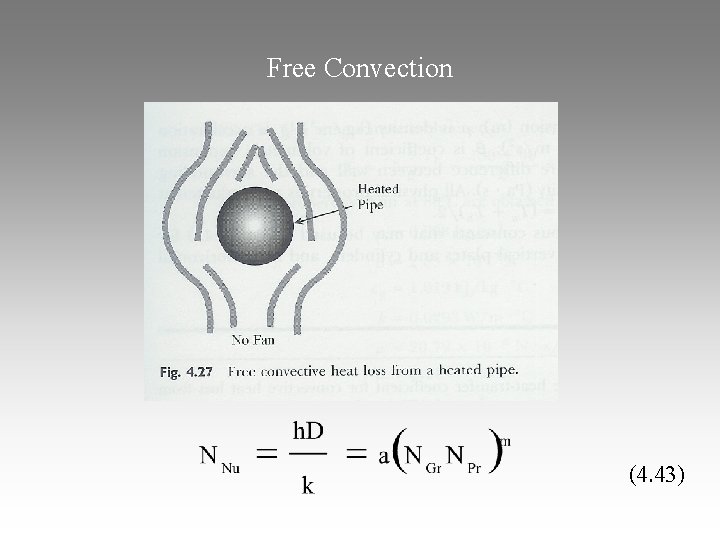
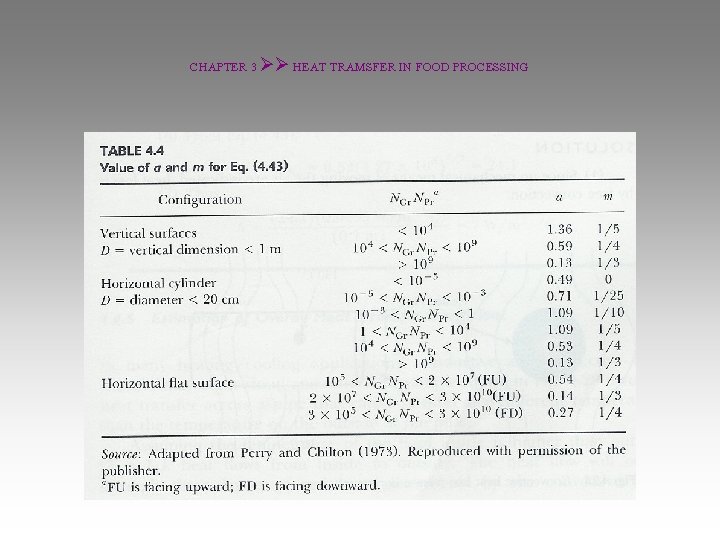
Free Convection (4. 43)
CHAPTER 3 HEAT TRAMSFER IN FOOD PROCESSING
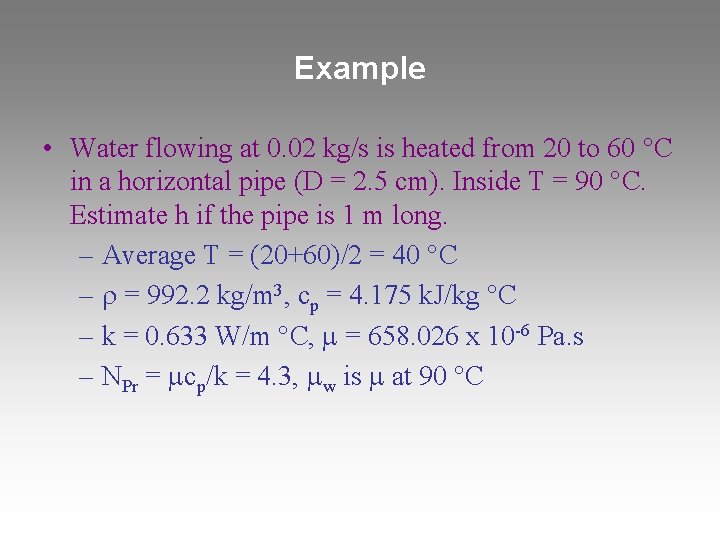
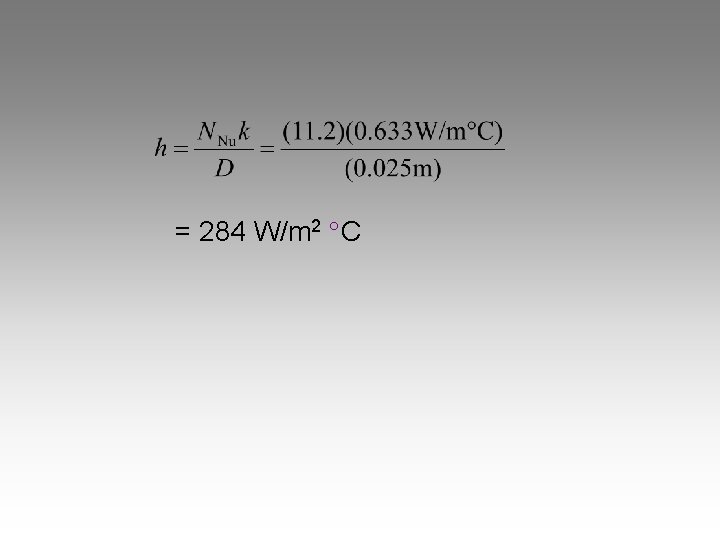
Example • Water flowing at 0. 02 kg/s is heated from 20 to 60 C in a horizontal pipe (D = 2. 5 cm). Inside T = 90 C. Estimate h if the pipe is 1 m long. – Average T = (20+60)/2 = 40 C – = 992. 2 kg/m 3, cp = 4. 175 k. J/kg C – k = 0. 633 W/m C, = 658. 026 x 10 -6 Pa. s – NPr = cp/k = 4. 3, w is at 90 C
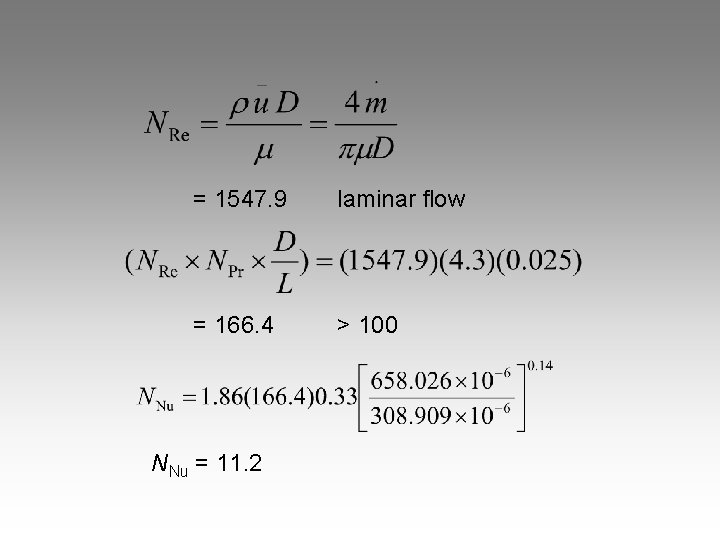
= 1547. 9 laminar flow = 166. 4 > 100 NNu = 11. 2
= 284 W/m 2 C
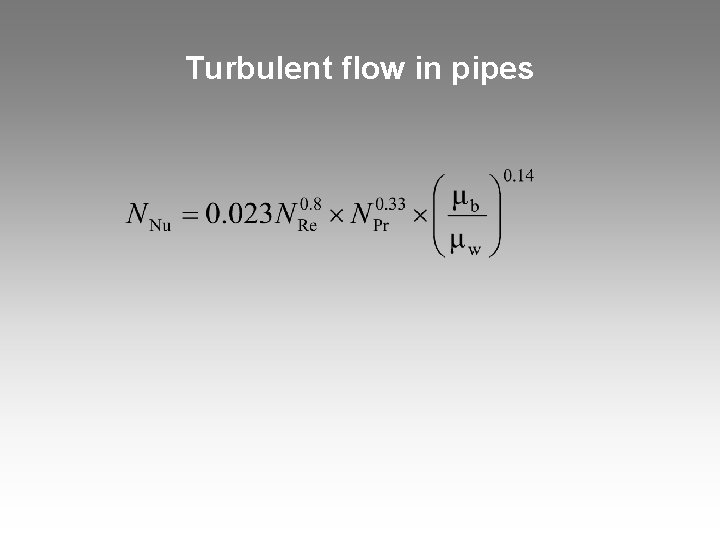
Turbulent flow in pipes
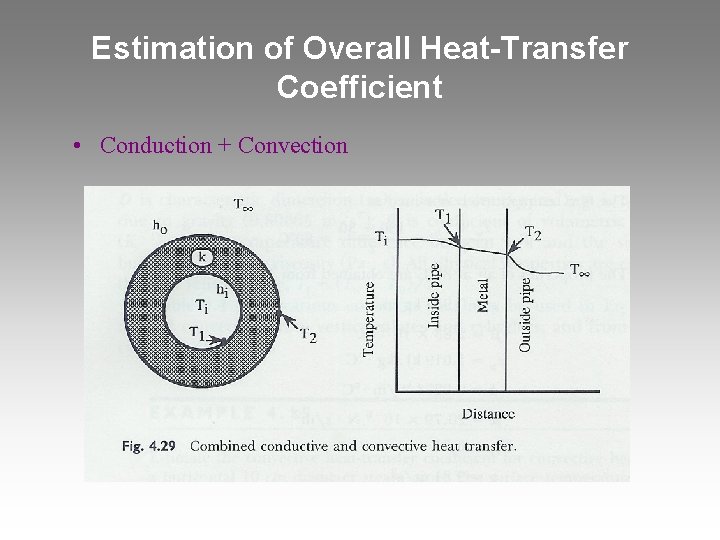
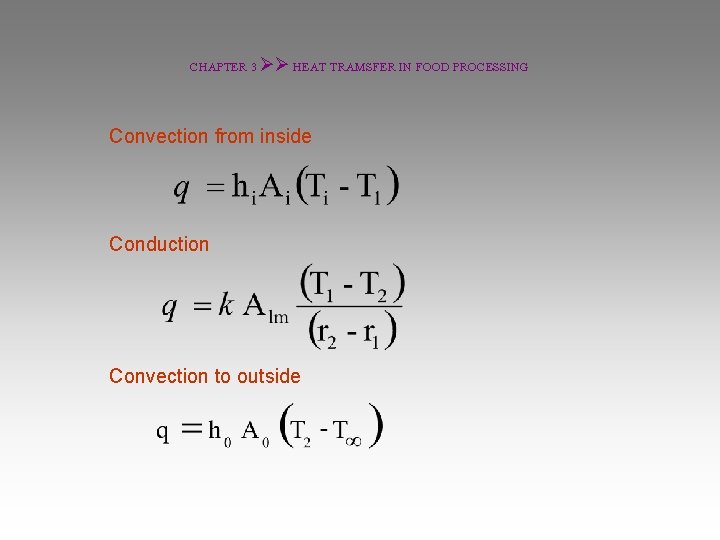
Estimation of Overall Heat-Transfer Coefficient • Conduction + Convection
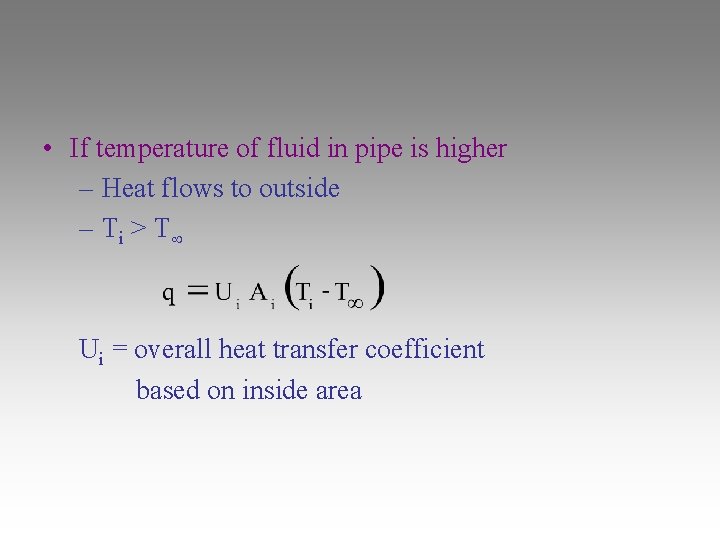
• If temperature of fluid in pipe is higher – Heat flows to outside – Ti > T Ui = overall heat transfer coefficient based on inside area
CHAPTER 3 HEAT TRAMSFER IN FOOD PROCESSING Convection from inside Conduction Convection to outside
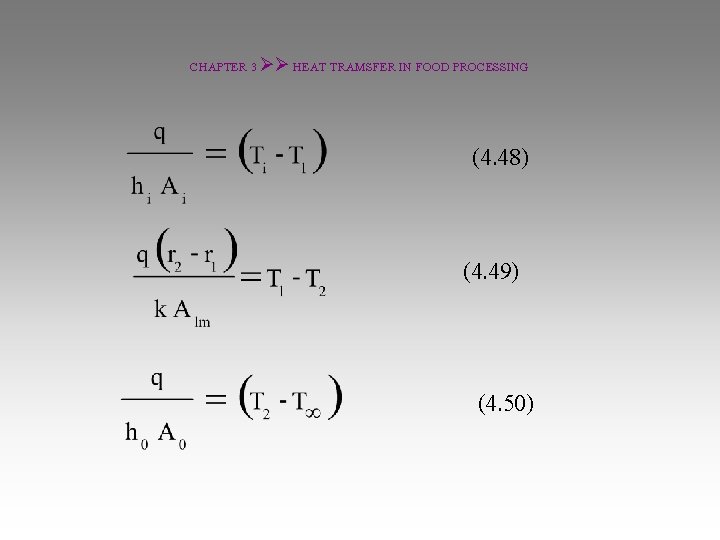
CHAPTER 3 HEAT TRAMSFER IN FOOD PROCESSING (4. 48) (4. 49) (4. 50)
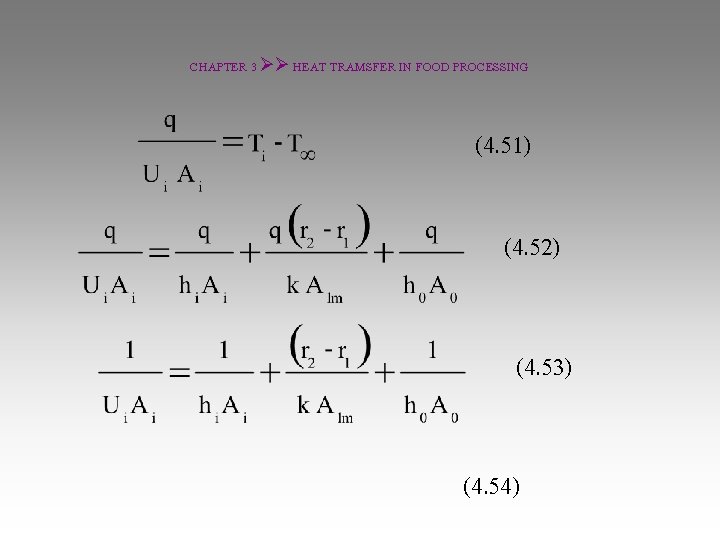
CHAPTER 3 HEAT TRAMSFER IN FOOD PROCESSING (4. 51) (4. 52) (4. 53) (4. 54)
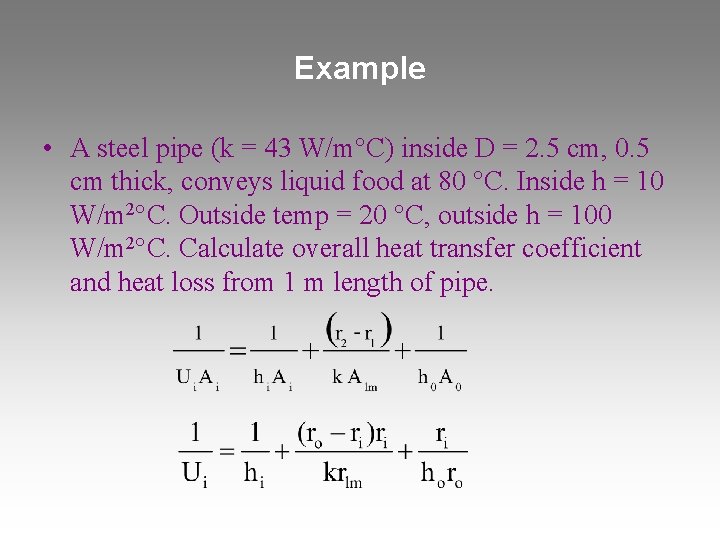
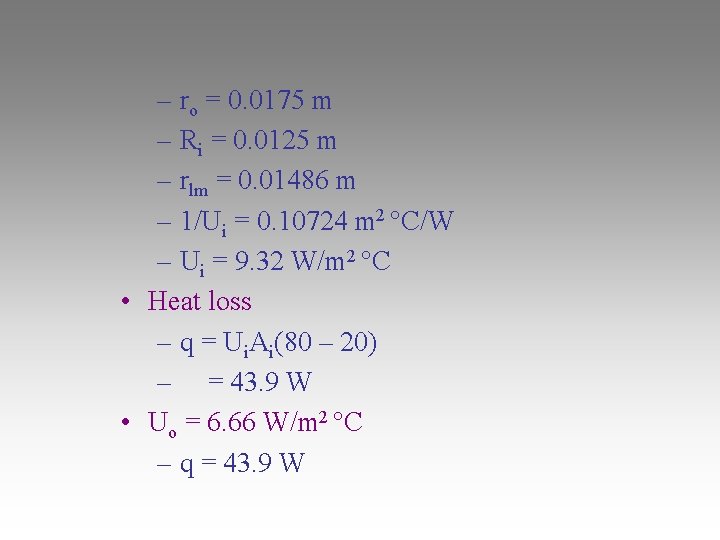
Example • A steel pipe (k = 43 W/m C) inside D = 2. 5 cm, 0. 5 cm thick, conveys liquid food at 80 C. Inside h = 10 W/m 2 C. Outside temp = 20 C, outside h = 100 W/m 2 C. Calculate overall heat transfer coefficient and heat loss from 1 m length of pipe.
– ro = 0. 0175 m – Ri = 0. 0125 m – rlm = 0. 01486 m – 1/Ui = 0. 10724 m 2 C/W – Ui = 9. 32 W/m 2 C • Heat loss – q = Ui. Ai(80 – 20) – = 43. 9 W • Uo = 6. 66 W/m 2 C – q = 43. 9 W
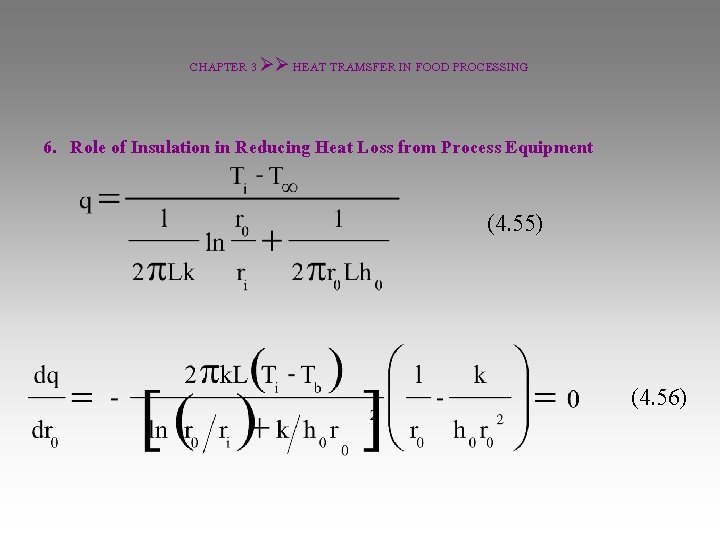
CHAPTER 3 HEAT TRAMSFER IN FOOD PROCESSING 6. Role of Insulation in Reducing Heat Loss from Process Equipment (4. 55) (4. 56)
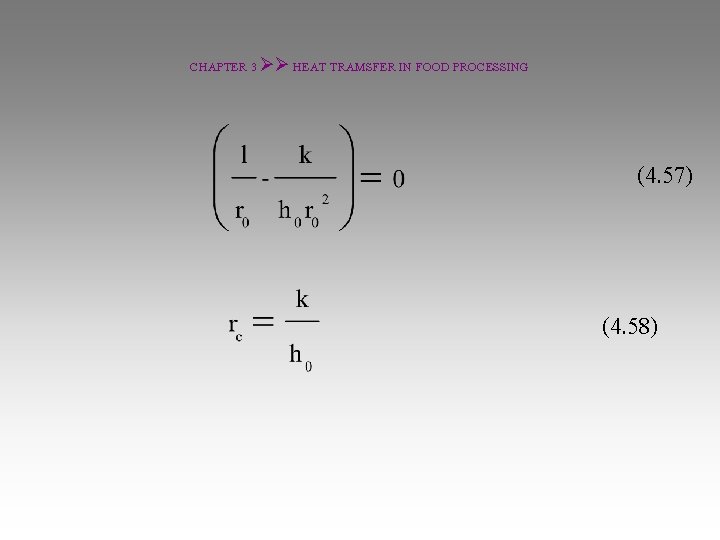
CHAPTER 3 HEAT TRAMSFER IN FOOD PROCESSING (4. 57) (4. 58)
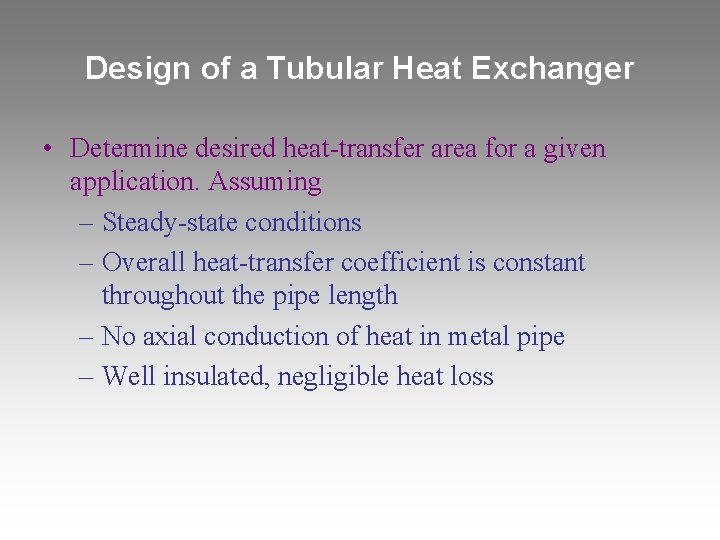
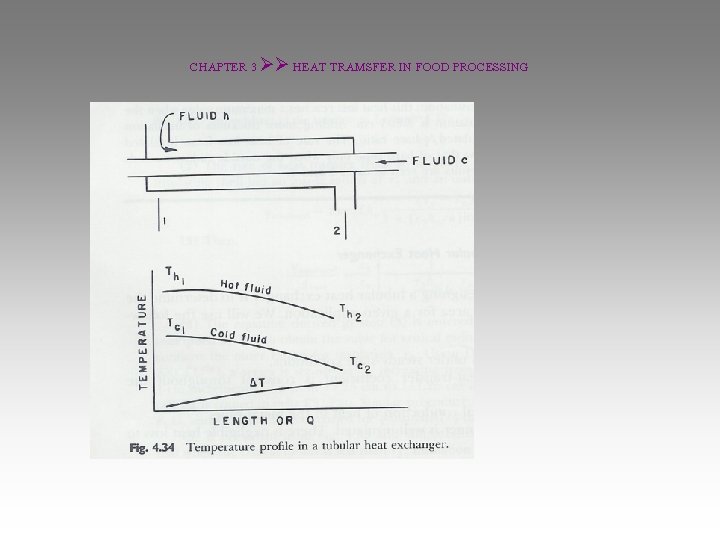
Design of a Tubular Heat Exchanger • Determine desired heat-transfer area for a given application. Assuming – Steady-state conditions – Overall heat-transfer coefficient is constant throughout the pipe length – No axial conduction of heat in metal pipe – Well insulated, negligible heat loss
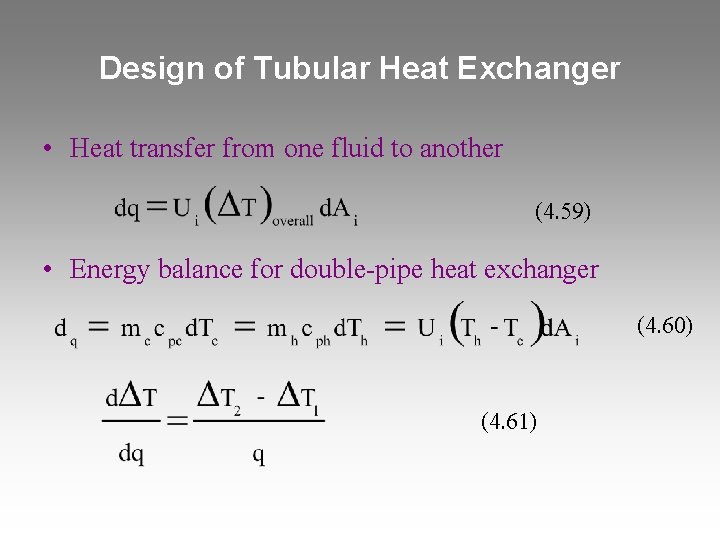
Design of Tubular Heat Exchanger • Heat transfer from one fluid to another (4. 59) • Energy balance for double-pipe heat exchanger (4. 60) (4. 61)
CHAPTER 3 HEAT TRAMSFER IN FOOD PROCESSING
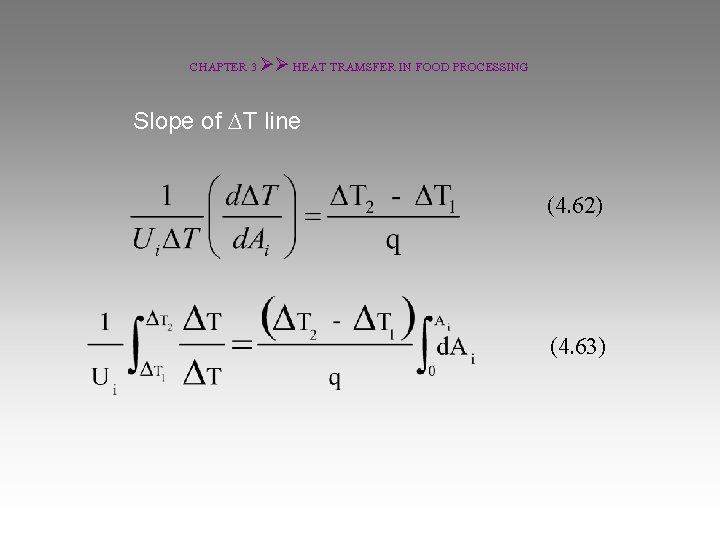
CHAPTER 3 HEAT TRAMSFER IN FOOD PROCESSING Slope of T line (4. 62) (4. 63)
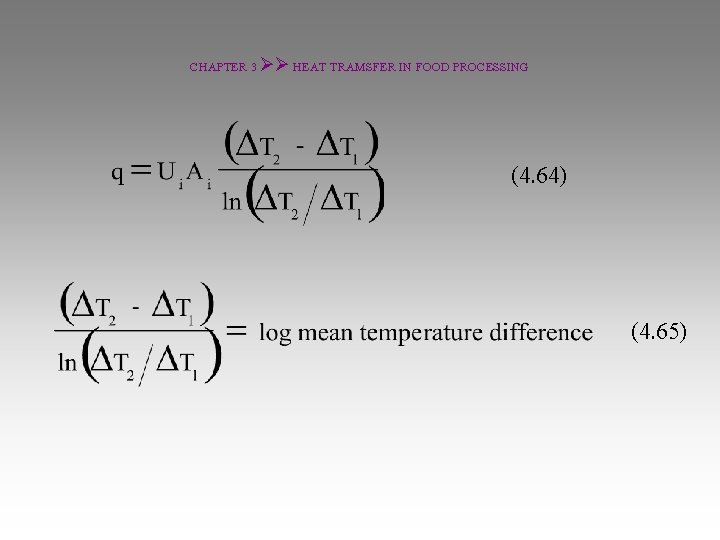
CHAPTER 3 HEAT TRAMSFER IN FOOD PROCESSING (4. 64) (4. 65)
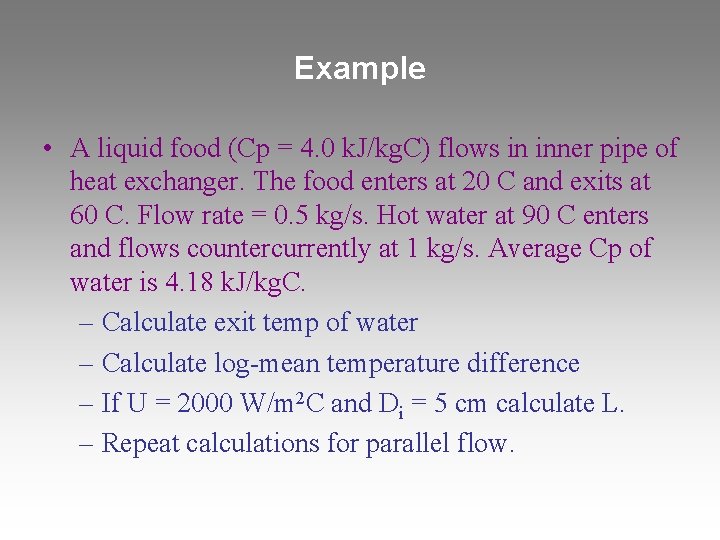
Example • A liquid food (Cp = 4. 0 k. J/kg. C) flows in inner pipe of heat exchanger. The food enters at 20 C and exits at 60 C. Flow rate = 0. 5 kg/s. Hot water at 90 C enters and flows countercurrently at 1 kg/s. Average Cp of water is 4. 18 k. J/kg. C. – Calculate exit temp of water – Calculate log-mean temperature difference – If U = 2000 W/m 2 C and Di = 5 cm calculate L. – Repeat calculations for parallel flow.
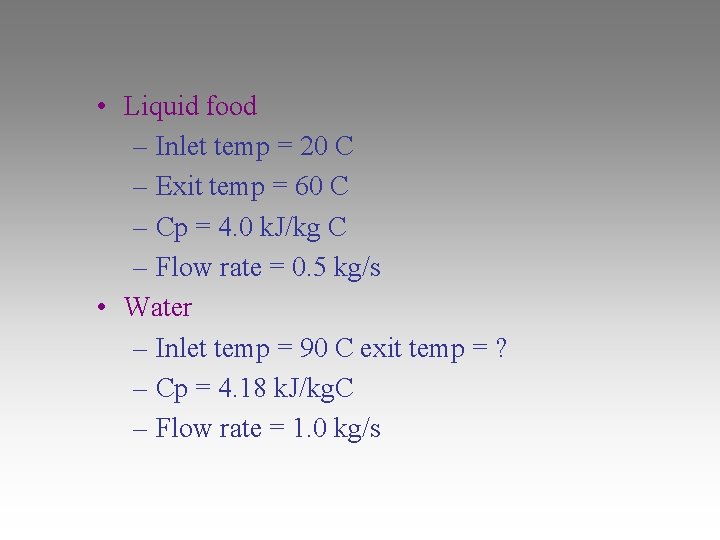
• Liquid food – Inlet temp = 20 C – Exit temp = 60 C – Cp = 4. 0 k. J/kg C – Flow rate = 0. 5 kg/s • Water – Inlet temp = 90 C exit temp = ? – Cp = 4. 18 k. J/kg. C – Flow rate = 1. 0 kg/s
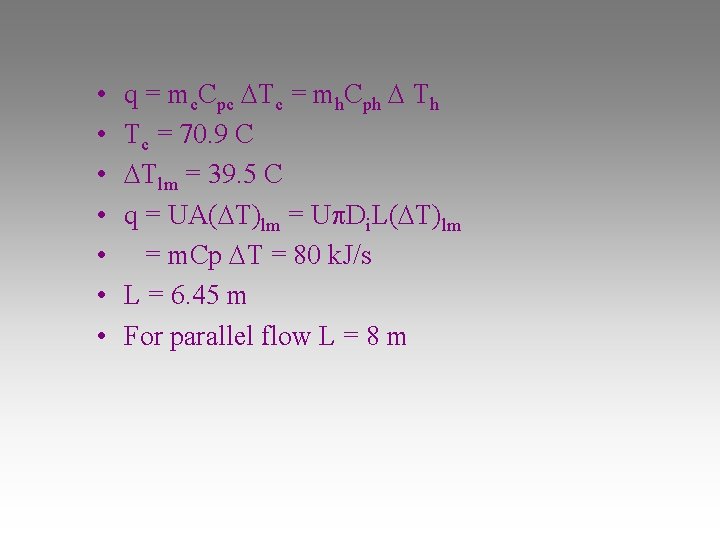
• • q = mc. Cpc Tc = mh. Cph Th Tc = 70. 9 C Tlm = 39. 5 C q = UA( T)lm = U Di. L( T)lm = m. Cp T = 80 k. J/s L = 6. 45 m For parallel flow L = 8 m