
Introduction to Federalism Take notes in order to

- Slides: 19
Introduction to Federalism
Take notes in order to…. • Build vocabulary for upcoming chapter 3 quiz (and beyond) • Answer the following guiding question: Would the founders approve of how our federal system is working today?
What is Federalism • Federalism: Two or more governments exercise power and authority over the same people in the same territory • Intergovernmental Relations: the workings of the federal system- the entire set of interactions among national, state and local governments
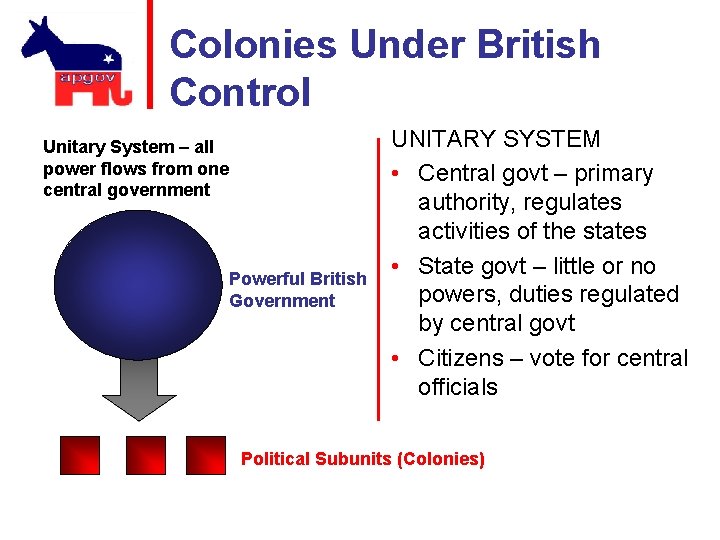
Colonies Under British Control Unitary System – all power flows from one central government Powerful British Government UNITARY SYSTEM • Central govt – primary authority, regulates activities of the states • State govt – little or no powers, duties regulated by central govt • Citizens – vote for central officials Political Subunits (Colonies)
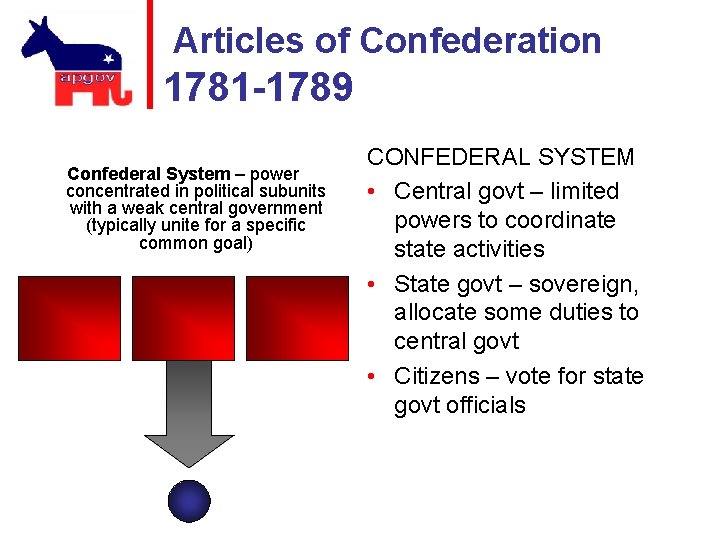
Articles of Confederation 1781 -1789 Confederal System – power concentrated in political subunits with a weak central government (typically unite for a specific common goal) CONFEDERAL SYSTEM • Central govt – limited powers to coordinate state activities • State govt – sovereign, allocate some duties to central govt • Citizens – vote for state govt officials
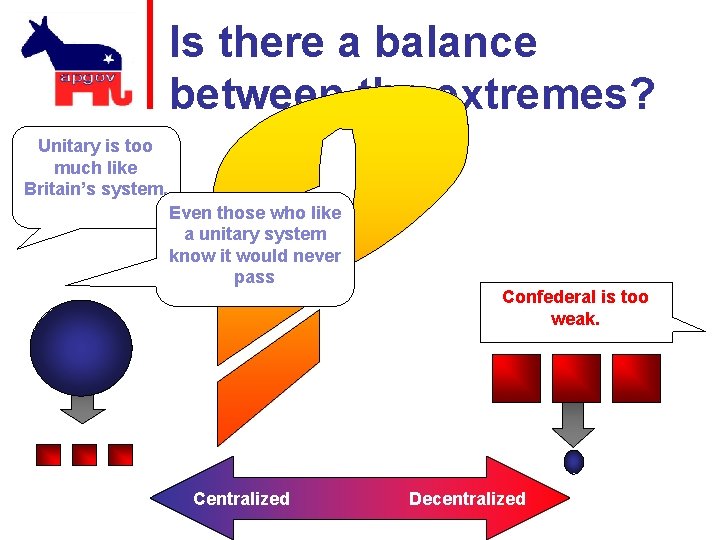
Is there a balance between the extremes? Unitary is too much like Britain’s system. Even those who like a unitary system know it would never pass Centralized Confederal is too weak. Decentralized
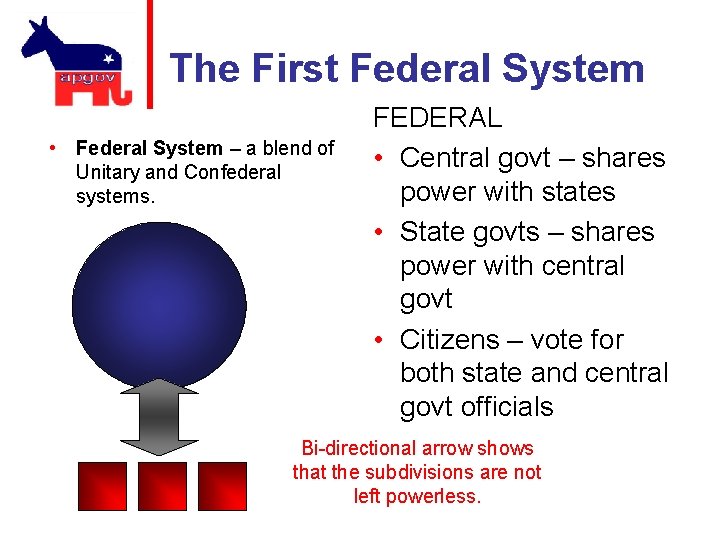
The First Federal System • Federal System – a blend of Unitary and Confederal systems. FEDERAL • Central govt – shares power with states • State govts – shares power with central govt • Citizens – vote for both state and central govt officials Bi-directional arrow shows that the subdivisions are not left powerless.
Federalism How the circle and the squares get along
What is Federalism • Federalism: Two or more governments exercise power and authority over the same people in the same territory – Constitutional division of power between the national government (circle) and state government (square). – Both get their powers from the Constitution, not each other.
Defining Federalism • Why is Federalism So Important? – Decentralizes our politics – Decentralizes our policies
The Constitutional Basis of Federalism • Supremacy Clause • 10 th Amendment – Reserved Powers • Establishing National Supremacy – Implied Powers – Commerce Powers • State’s Obligations to Each Other – Full Faith and Credit – Privileges and Immunities
Powers Federal Government • Coin money • Regulate the economy and foreign and interstate commerce • Declare war • Manage national military • Direct foreign relations • Establish Post Offices States (RESERVED) • Issue Licences • Create local level of govt • Regulate intrastate commerce • Hold elections • Ratify amendments • Conduct social policymaking • Establish local governments
Concurrent Powers • Granted to Congress but not denied by courts – Held by both state and federal gov’ts – How many can you name? ? • Questions of fed/state authority decided by courts
Shared (Concurrent) Powers • • Make and enforce laws Collect taxes Maintain courts Allocate money for public needs Build roads Law enforcement Charter banks and corporations
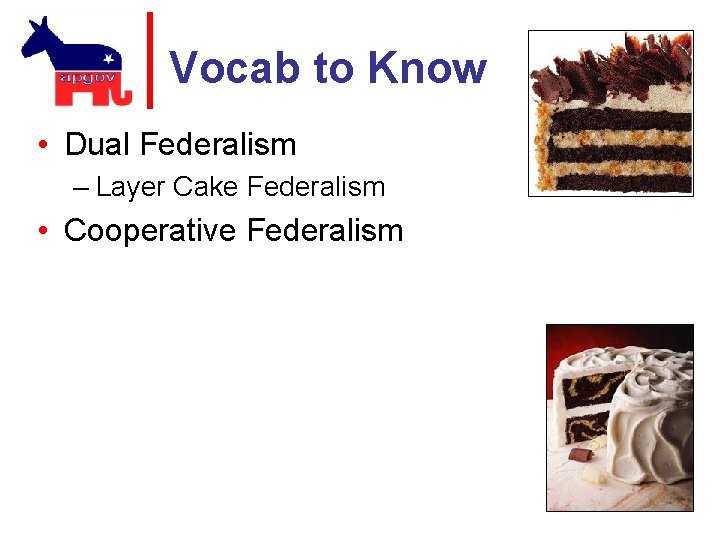
Evolution of federalism • Over time, system has moved from Dual (layer cake) Federalism to Cooperative (marble cake) Federalism.
Vocab to Know • Dual Federalism – Layer Cake Federalism • Cooperative Federalism
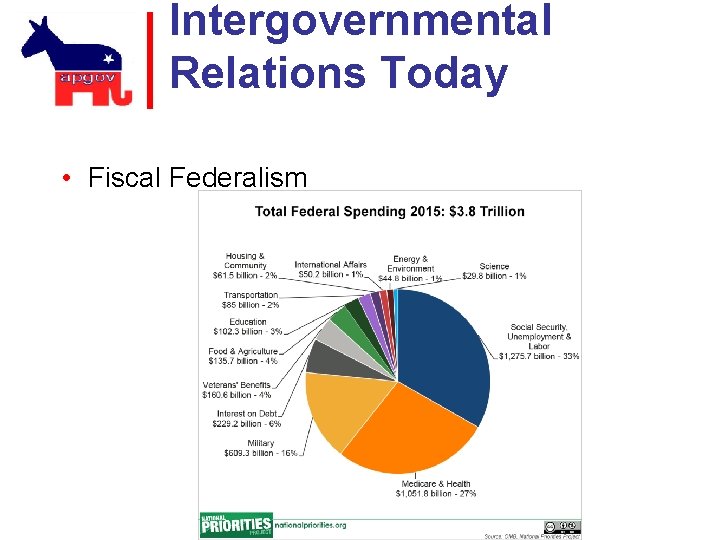
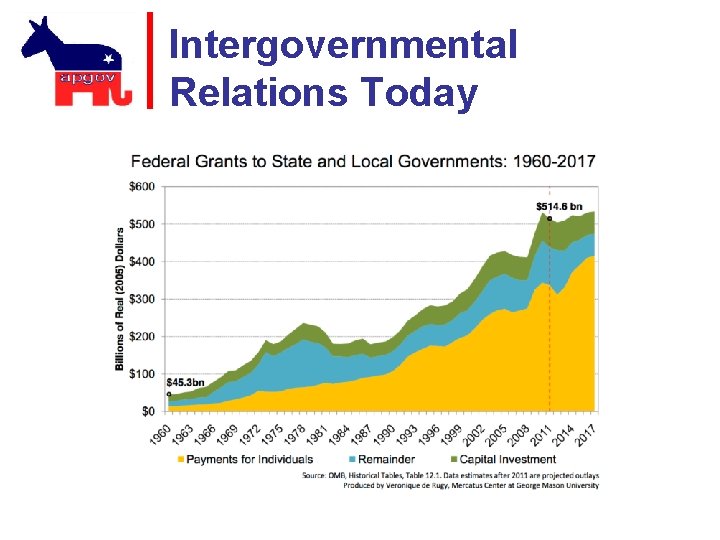
Intergovernmental Relations Today • Fiscal Federalism Figure 3. 2
Intergovernmental Relations Today
Intergovernmental Relations Today • Fiscal Federalism continued – The Grant System: Distributing the Federal Pie – Categorical – Block – Mandates