
Introduction to Exercises What are they and how


- Slides: 28
Introduction to Exercises What are they and how should I plan them? Chad Ostlund, CEM Emergency Preparedness & Response Health Partnerships Division
Agenda § What are exercises and why should they be conducted? § What types of exercises exist? § How does the planning process work? § How should partners be identified and involved? § Q&A
Learning Objectives By the end of this webinar you will be able to: 1. Discuss basics of exercise planning 2. Describe types of exercises 3. Determine potential members of exercise planning teams 4. Identify partners that may be involved in your exercises
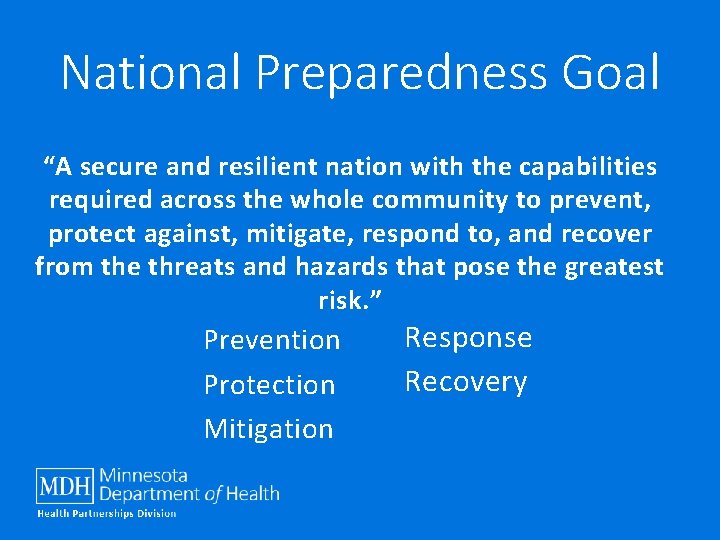
National Preparedness Goal “A secure and resilient nation with the capabilities required across the whole community to prevent, protect against, mitigate, respond to, and recover from the threats and hazards that pose the greatest risk. ” Prevention Protection Mitigation Response Recovery
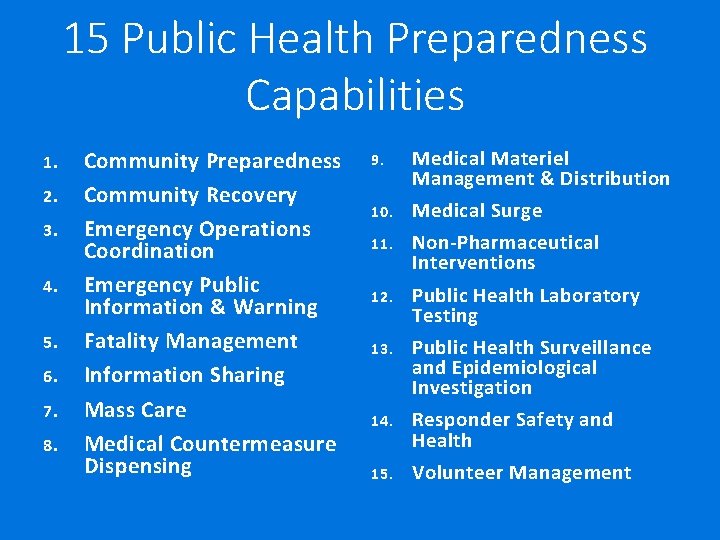
15 Public Health Preparedness Capabilities 1. 2. 3. 4. 5. 6. 7. 8. Community Preparedness Community Recovery Emergency Operations Coordination Emergency Public Information & Warning Fatality Management Information Sharing Mass Care Medical Countermeasure Dispensing 9. Medical Materiel Management & Distribution 10. Medical Surge 11. Non-Pharmaceutical Interventions 12. Public Health Laboratory Testing 13. Public Health Surveillance and Epidemiological Investigation 14. Responder Safety and Health 15. Volunteer Management
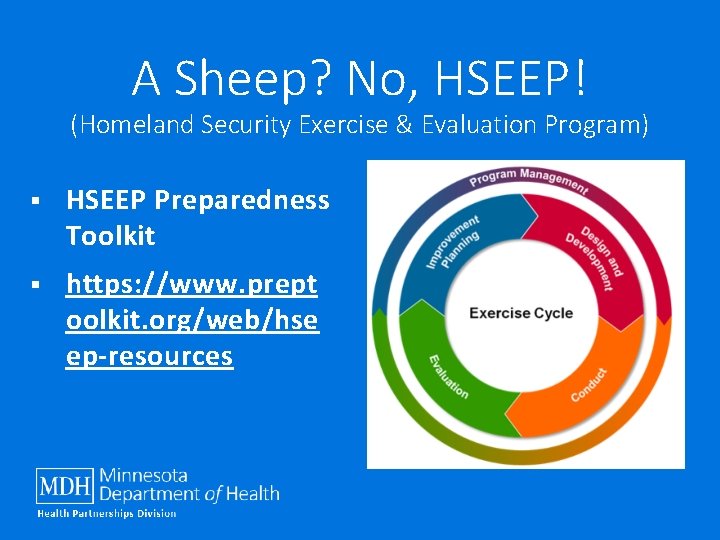
A Sheep? No, HSEEP! (Homeland Security Exercise & Evaluation Program) § HSEEP Preparedness Toolkit § https: //www. prept oolkit. org/web/hse ep-resources
Always Successful?
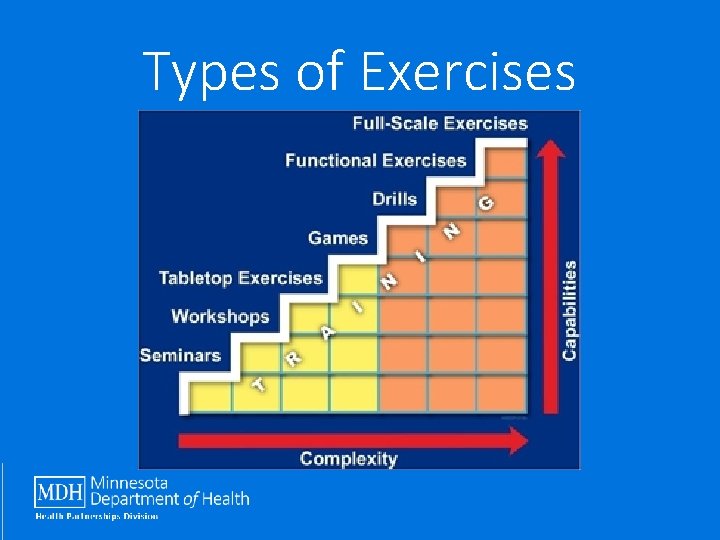
Types of Exercises
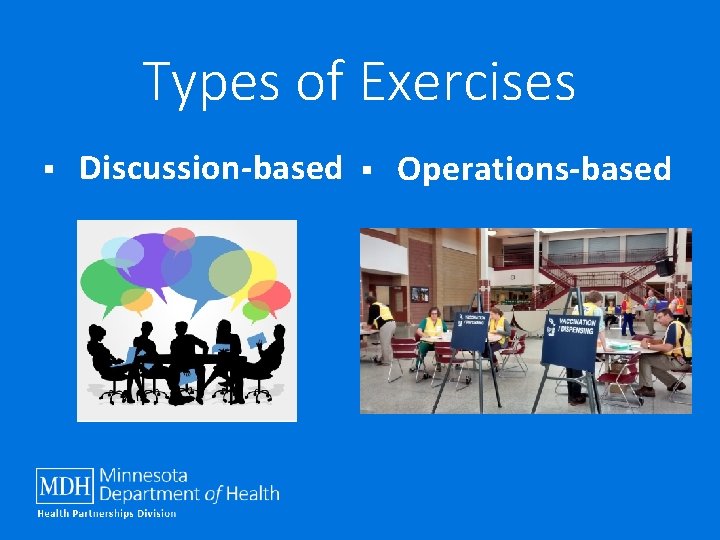
Types of Exercises § Discussion-based § Operations-based
Discussion-based Exercises § Seminars § Workshops § Tabletop Exercise (TTX) and § Games
Discussion-based Exercises § Seminars – orientation § § Department operations center Local emergency operations center Open house Workshop- produce something § § Develop a job action sheet Create a policy or protocol
Discussion-based Exercises § Tabletop Exercise § § Internal or with external partners Uses a scenario In-depth discussion Games § § § Allows practice Can involve teams Can be a simulation
Discussion-based Exercises § Audience examples
Operations-based Exercises § § § Drills Functional Exercises (FE) Full-scale Exercises (FSE)
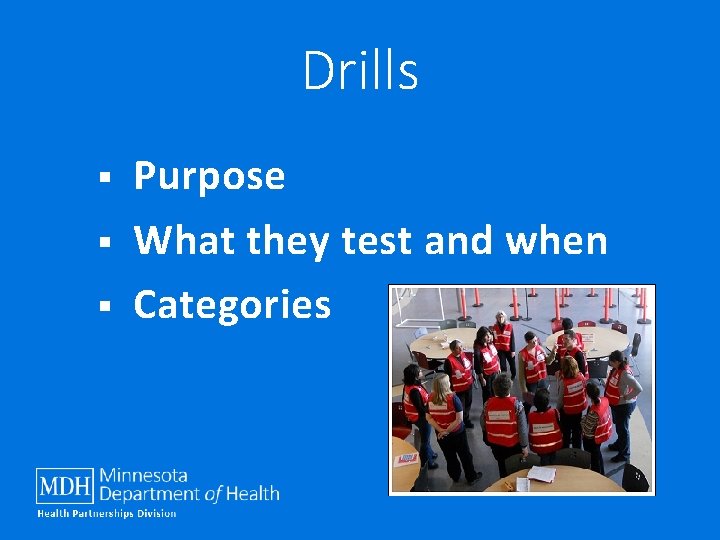
Drills § § § Purpose What they test and when Categories
Functional Exercises (FE) § Purpose § Time transitions Depend on reactions §
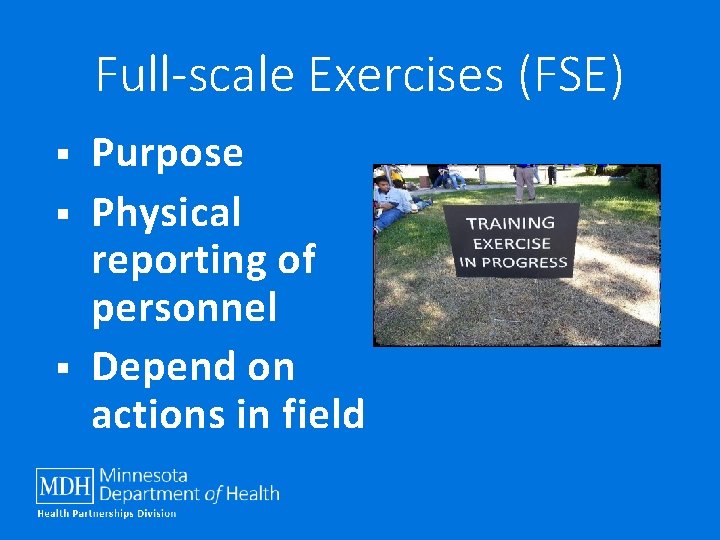
Full-scale Exercises (FSE) § § § Purpose Physical reporting of personnel Depend on actions in field
Examples § Group discussion on drill and exercise experience
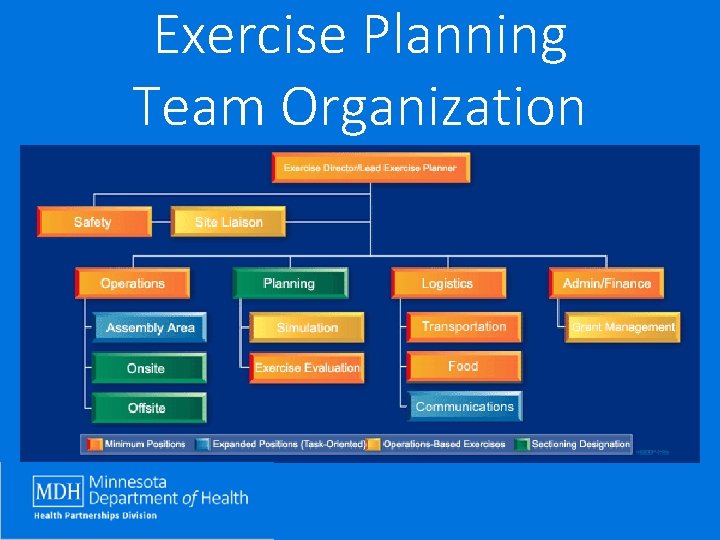
Exercise Planning Team § § § Neighboring jurisdictions Subject matter experts Internal agency members Health Care Coalition members MDH – Public Health Preparedness Consultants
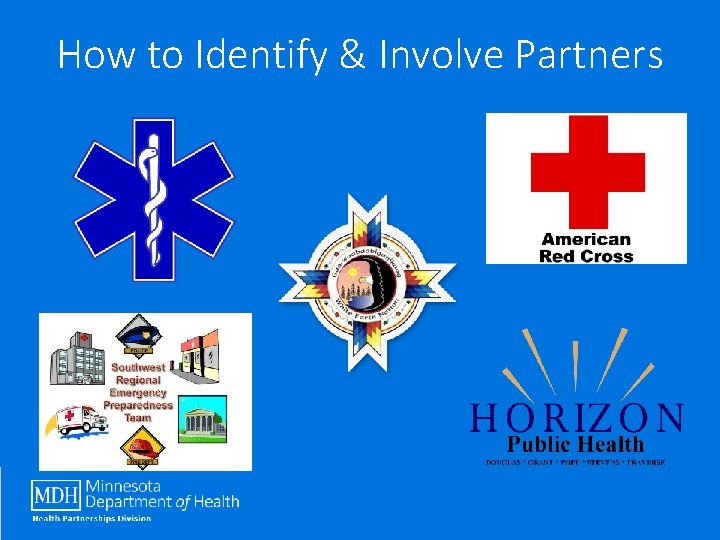
How to Identify & Involve Partners
Exercise Planning Team Organization
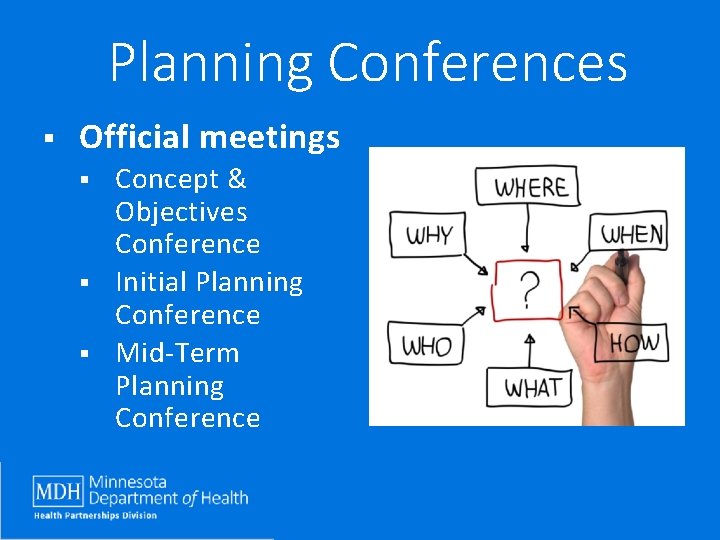
Planning Conferences § Official meetings § § § Concept & Objectives Conference Initial Planning Conference Mid-Term Planning Conference
Planning Conferences § Official meetings § MSEL- Master Scenario Events List Conference § Final Planning Conference
Planning the Exercise. Webinar #2 Exercise Planning Team Responsibilities § Objectives § Define exercise purpose & goal and set timeline § Create scenario § Prepare exercise documentation and communication § Training and pre-exercise briefing
Wrap Up – Review § HSEEP https: //www. preptoolkit. org/web/hseepresources § § Exercise types Exercise Planning Team
Upcoming Webinars § September 21: Identifying Goals and Developing a Scenario § October 4: Conducting the Exercise § October 19 or 20: Evaluating the Exercise and Creating an AAR/IP
Questions
Contact Information Chad Ostlund 651 -201 -5660 chad. ostlund@state. mn. us