
Introduction to Evolution What is evolution Monkeys to



- Slides: 41
Introduction to Evolution
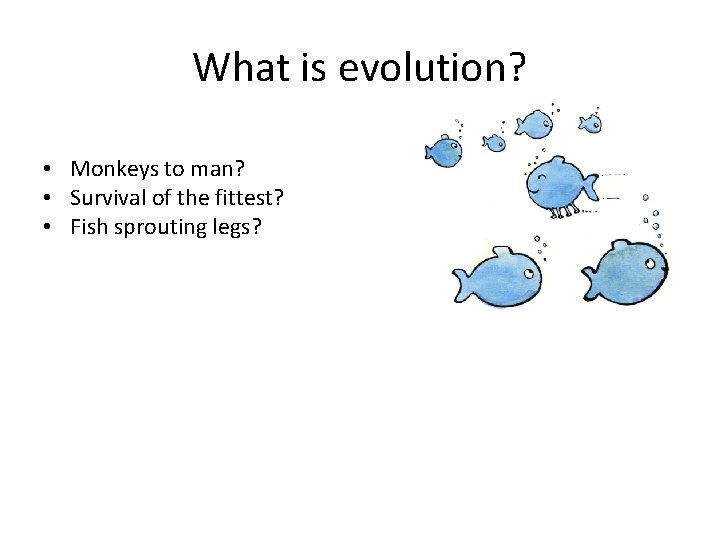
What is evolution? • Monkeys to man? • Survival of the fittest? • Fish sprouting legs?
– Evolution is not an “idea” that was made up by scientists!!!!!
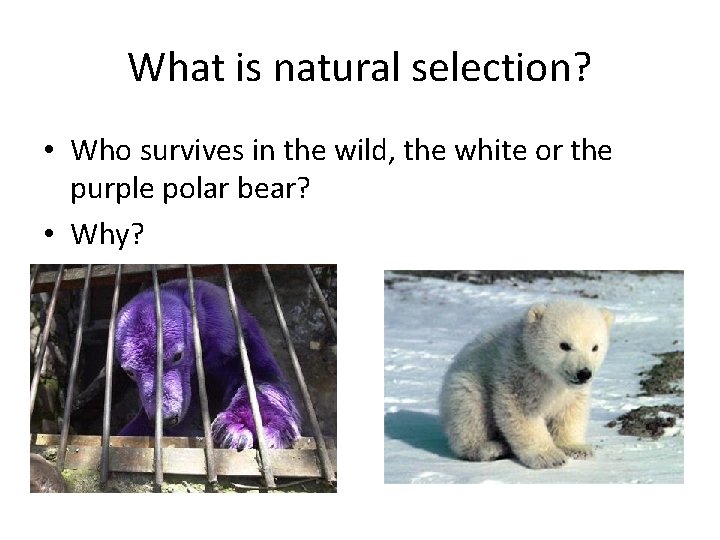
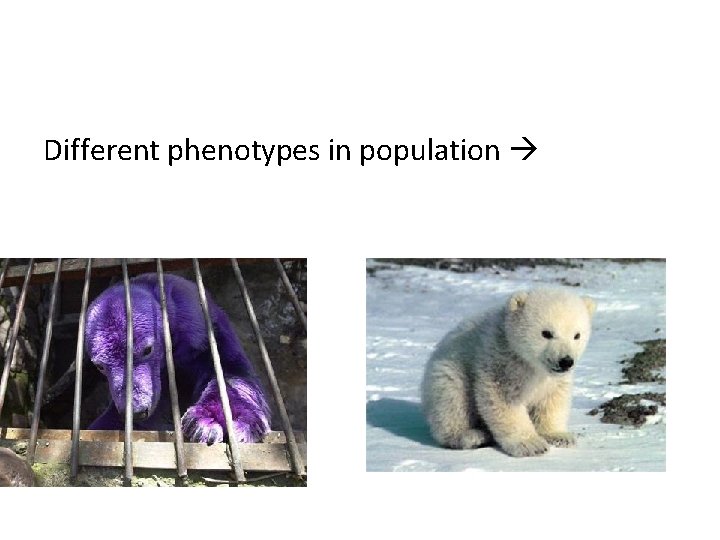
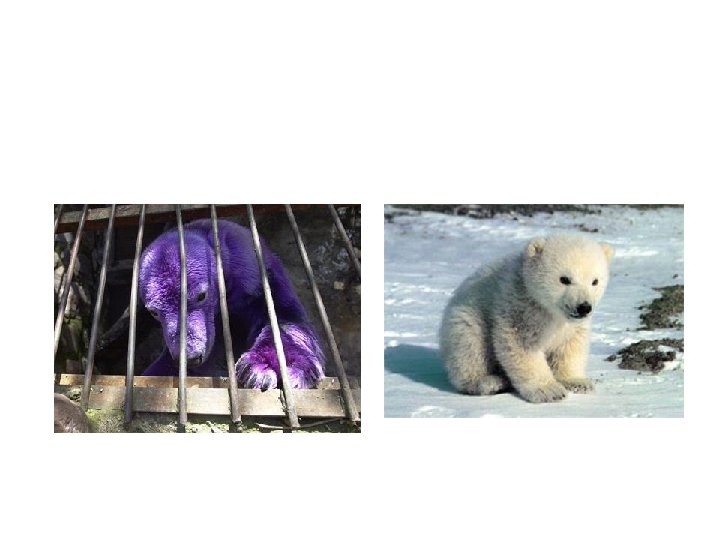
What is natural selection? • Who survives in the wild, the white or the purple polar bear? • Why?
What is evolution? • The basic definition: “A change in a population’s traits over time. ” – Genetic change can lead to phenotypic change
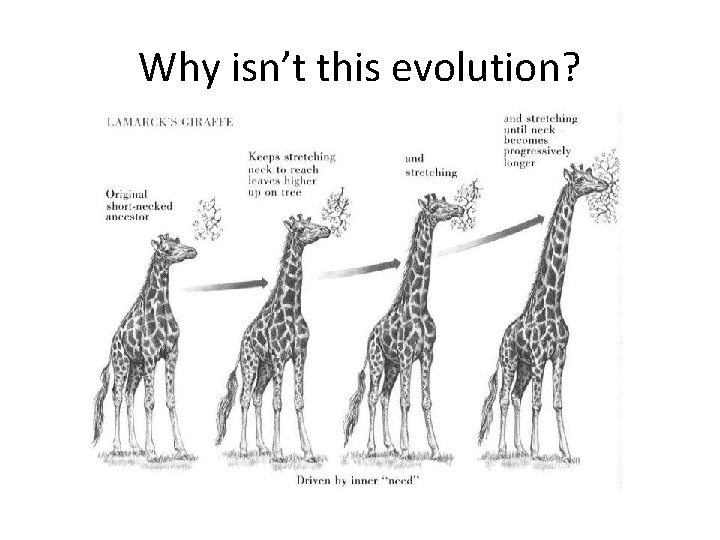
Why isn’t this evolution?
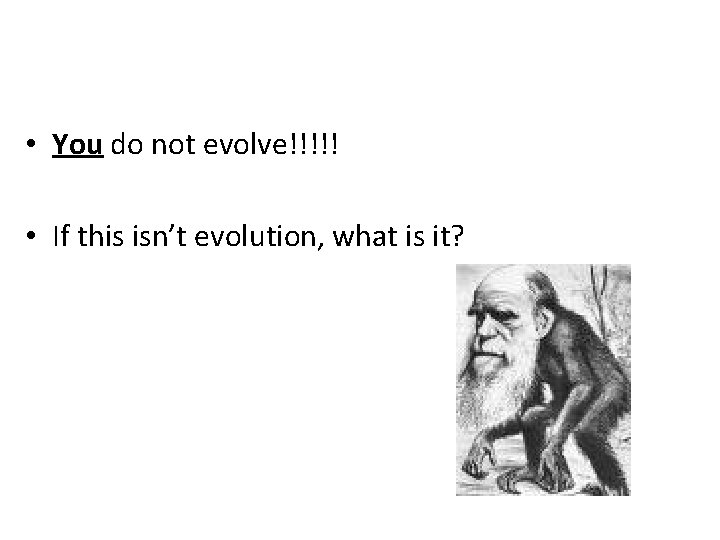
• You do not evolve!!!!! • If this isn’t evolution, what is it?
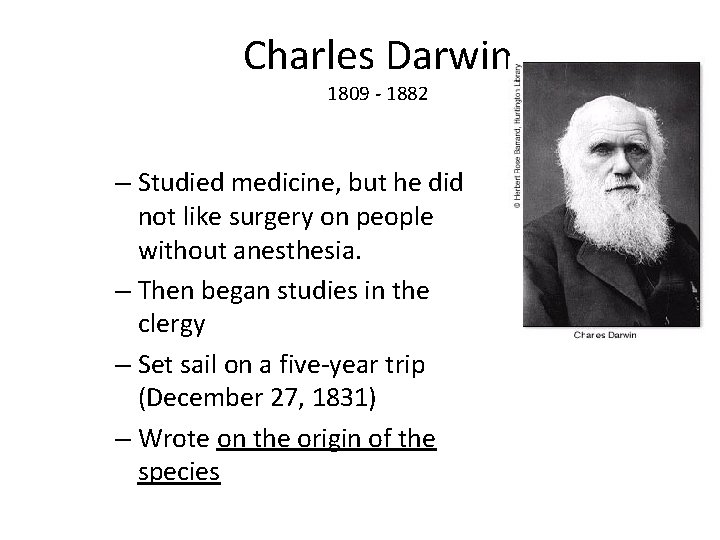
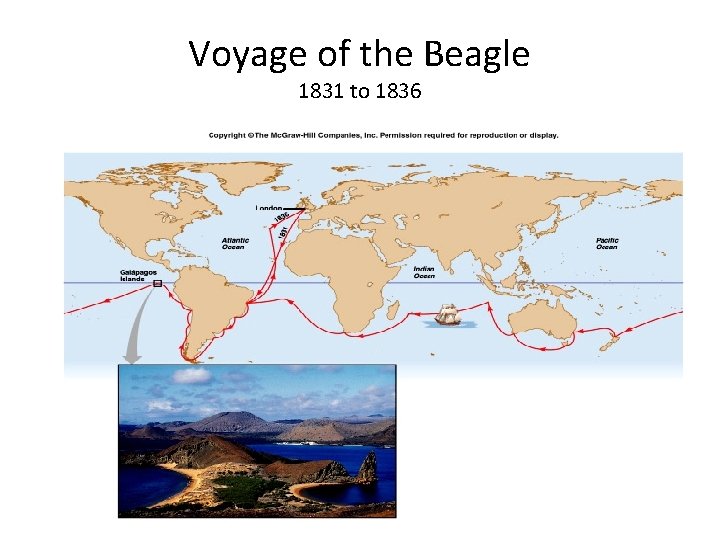
Charles Darwin 1809 - 1882 – Studied medicine, but he did not like surgery on people without anesthesia. – Then began studies in the clergy – Set sail on a five-year trip (December 27, 1831) – Wrote on the origin of the species
Voyage of the Beagle 1831 to 1836
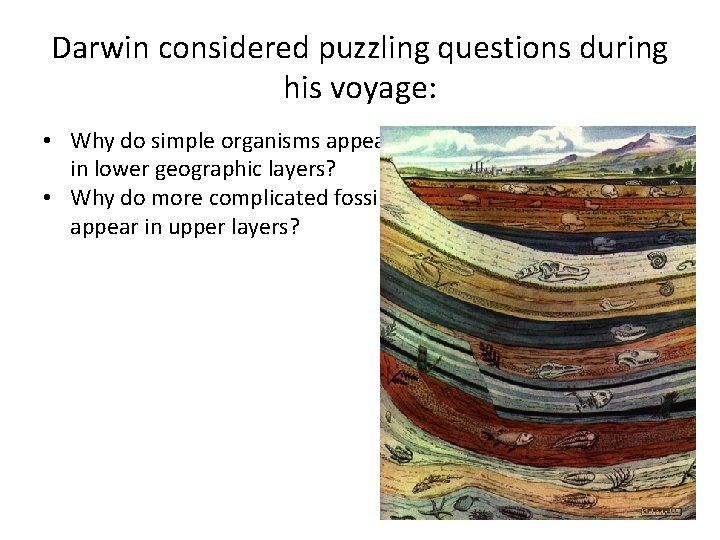
Darwin considered puzzling questions during his voyage: • Why do simple organisms appear in lower geographic layers? • Why do more complicated fossils appear in upper layers?
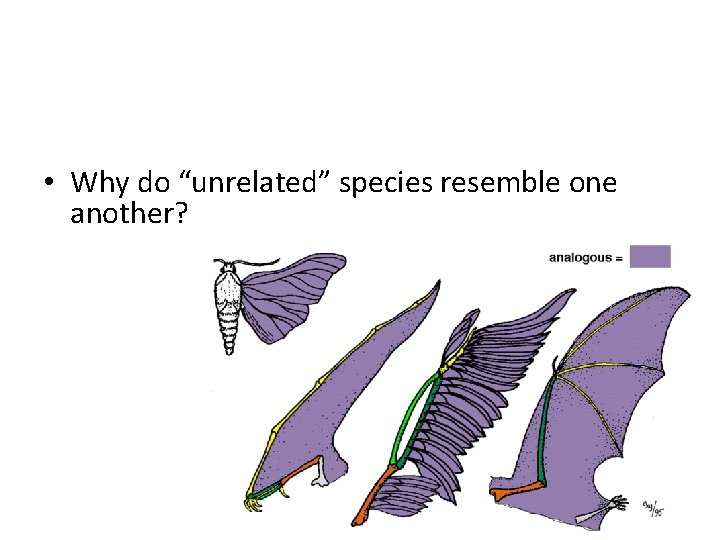
• Why do “unrelated” species resemble one another?
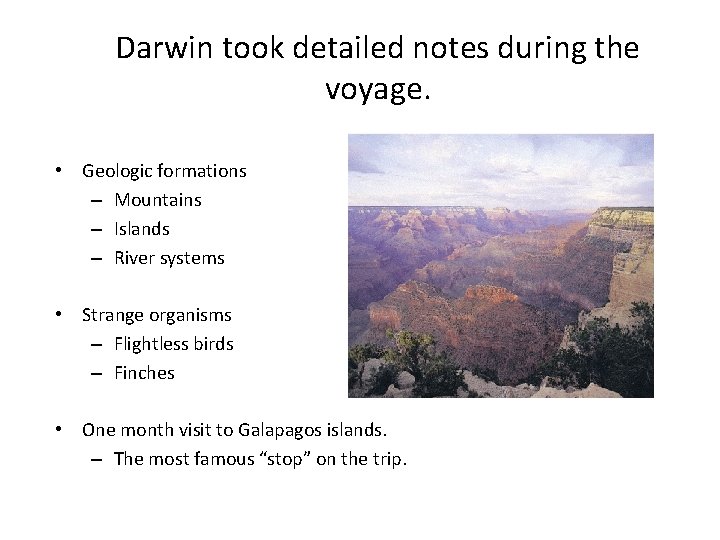
Darwin took detailed notes during the voyage. • Geologic formations – Mountains – Islands – River systems • Strange organisms – Flightless birds – Finches • One month visit to Galapagos islands. – The most famous “stop” on the trip.
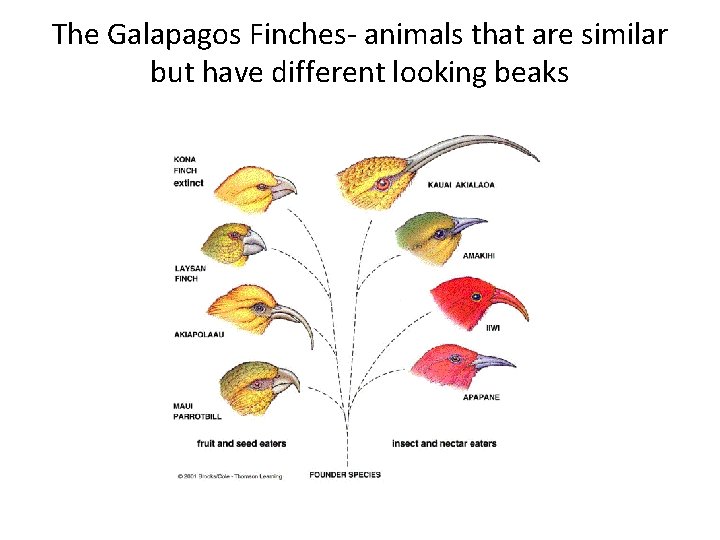
The Galapagos Finches- animals that are similar but have different looking beaks
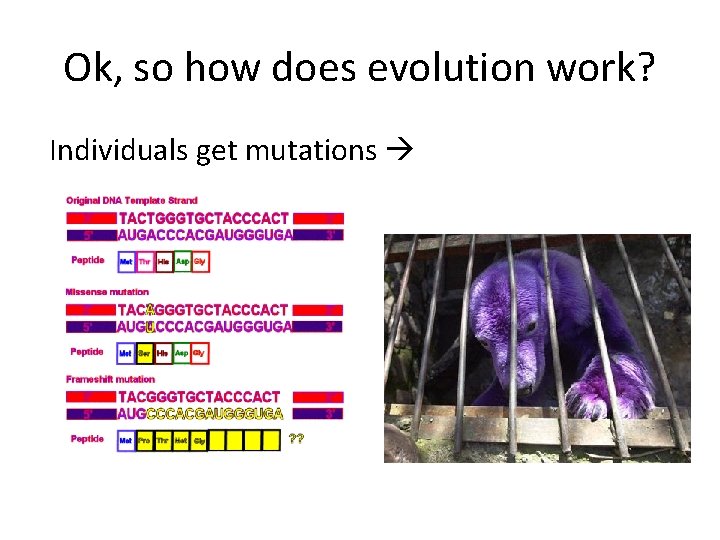
Ok, so how does evolution work? Individuals get mutations
Wait! How do you get mutations?
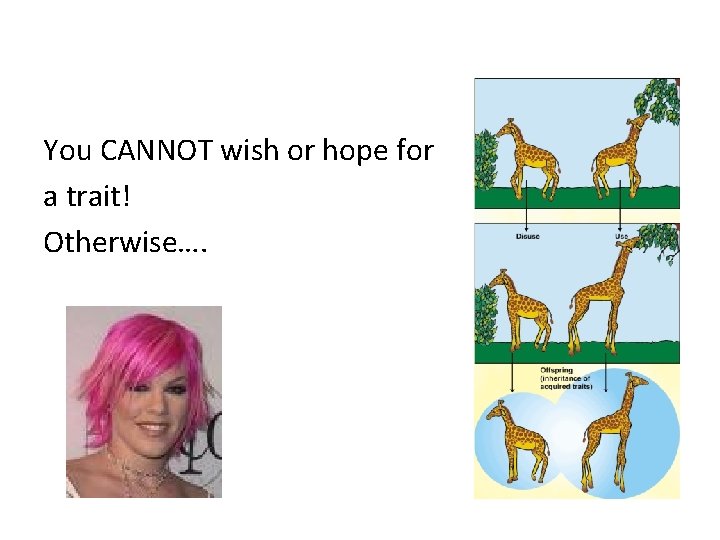
You CANNOT wish or hope for a trait! Otherwise….
Different phenotypes in population
Those with good phenotype more likely to survive (wait!!!! What is a ‘good phenotype? ’)
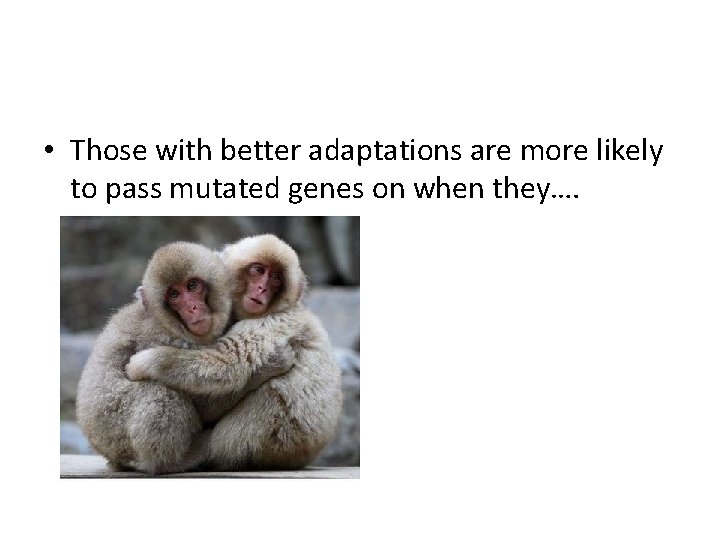
• Those with better adaptations are more likely to pass mutated genes on when they….
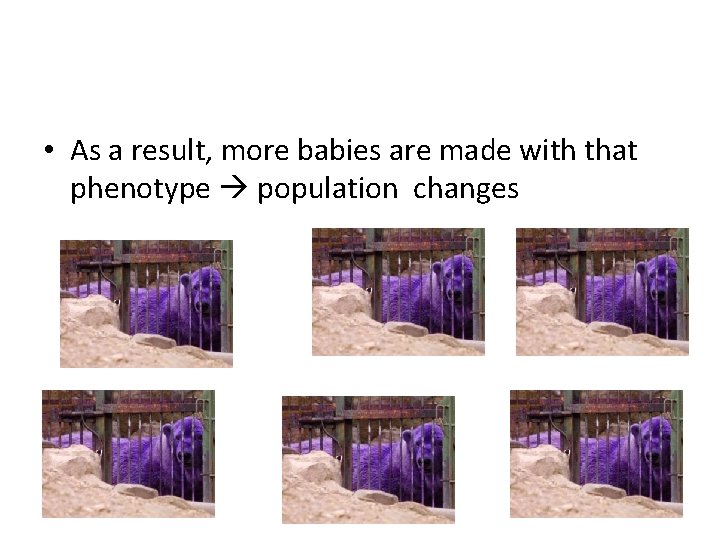
• As a result, more babies are made with that phenotype population changes
Evolution Part 2
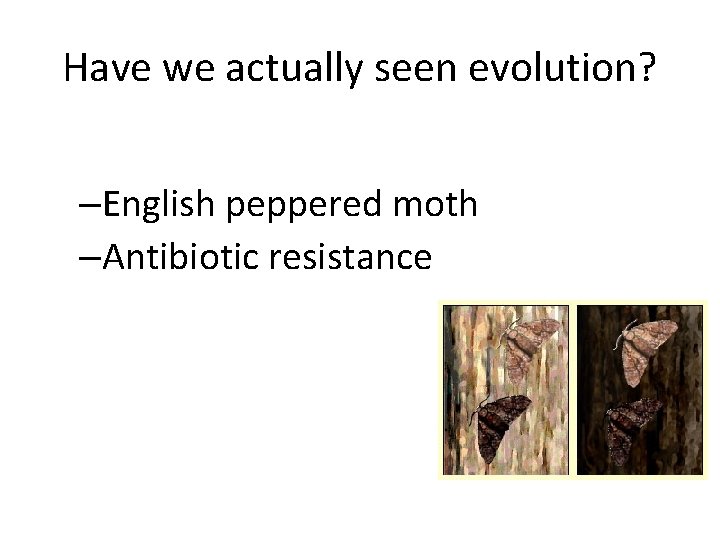
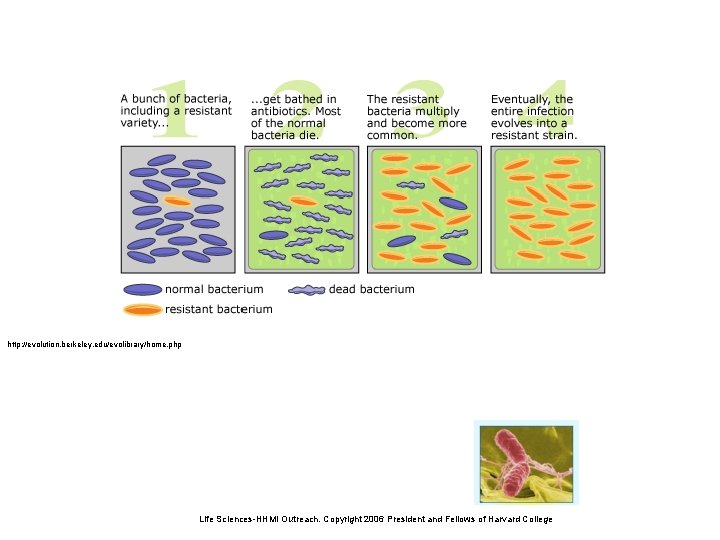
Have we actually seen evolution? –English peppered moth –Antibiotic resistance
There are two types of evolution: - Microevolution: change within a species - Macroevolution: change within a species that leads to formation of a new species
What examples do we have of microevolution?
http: //evolution. berkeley. edu/evolibrary/home. php Life Sciences-HHMI Outreach. Copyright 2006 President and Fellows of Harvard College.
What is some evidence for evolution? There are 5 big pieces of evidence…
1. Fossil Record
How it supports • For the most part, the older the fossil, the less they are like the organisms today.
Extra Knowledge • There are huge gaps in the fossil records
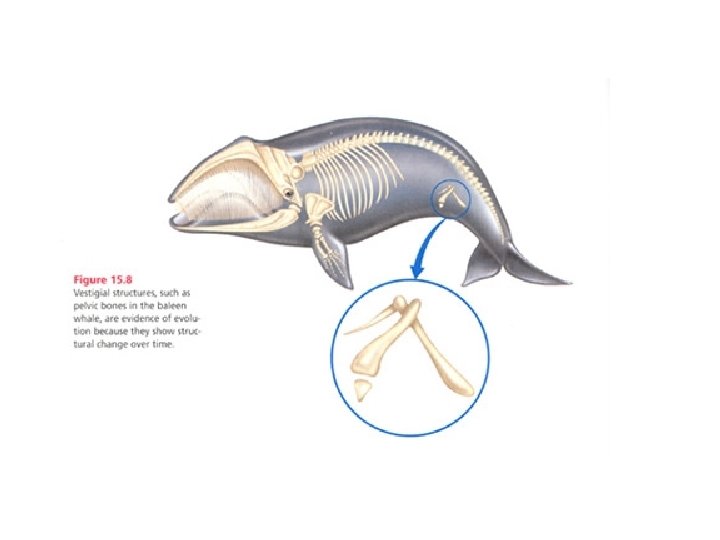
2. Vestigial Structures • Sometimes organisms have structures that they do not use • This shows us the structures may be left from a previous ancestor
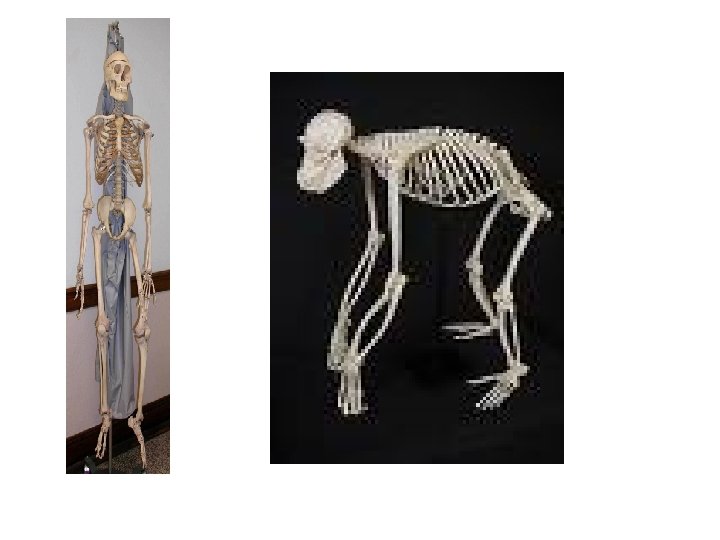
3. Similar Skeleton • Similar organisms have a similar skeleton, which shows they may have come from a common ancestor.
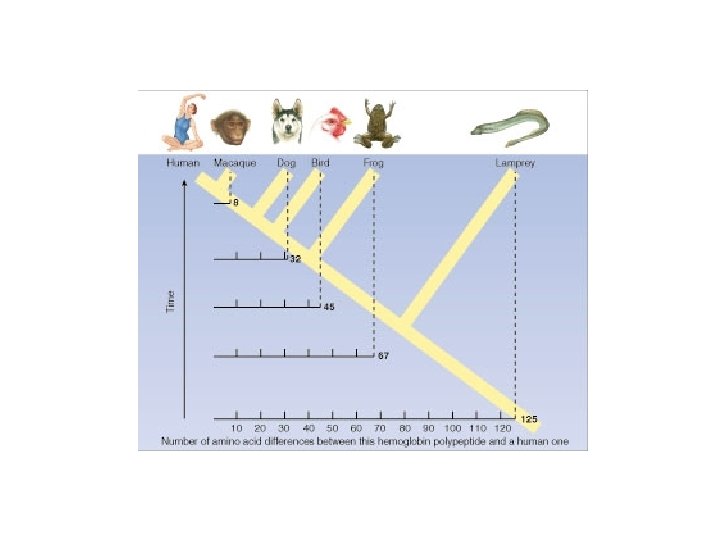
4. Similar DNA • Similar organisms have similar DNA which shows they may have come from a similar organism
Extra Knowledge • If organisms need to perform similar functions, then they will need to have similar DNA. • Similar DNA will cause similar development of similar structures.
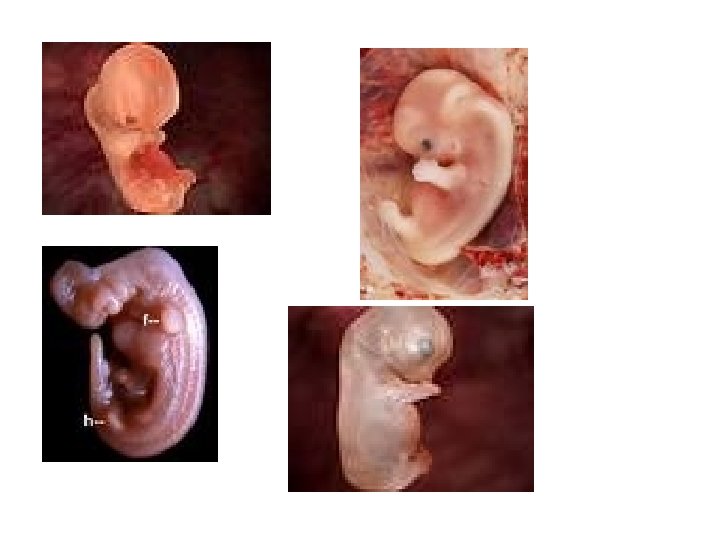
5. Embryology • Similar organisms have similar development which shows they may have come from a common ancestor.