
INTRODUCTION TO ETHICS Week One Essential Points Guidelines




- Slides: 12
INTRODUCTION TO ETHICS Week One Essential Points Guidelines and Introduction
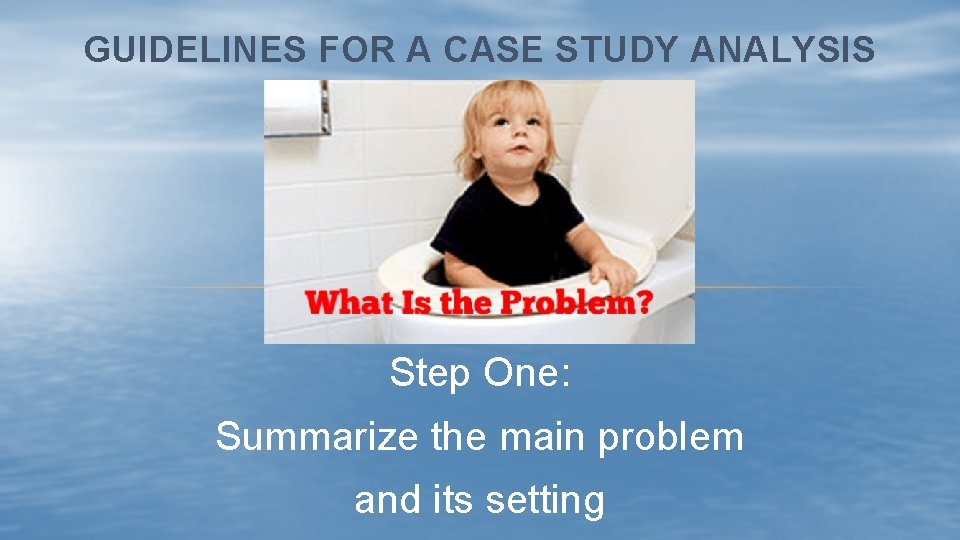
GUIDELINES FOR A CASE STUDY ANALYSIS Step One: Summarize the main problem and its setting
GUIDELINES FOR A CASE STUDY ANALYSIS Step Two: List the possible ways of responding to the problem
GUIDELINES FOR A CASE STUDY ANALYSIS Step Three: Identify those moral principles and theories that are most applicable to the case
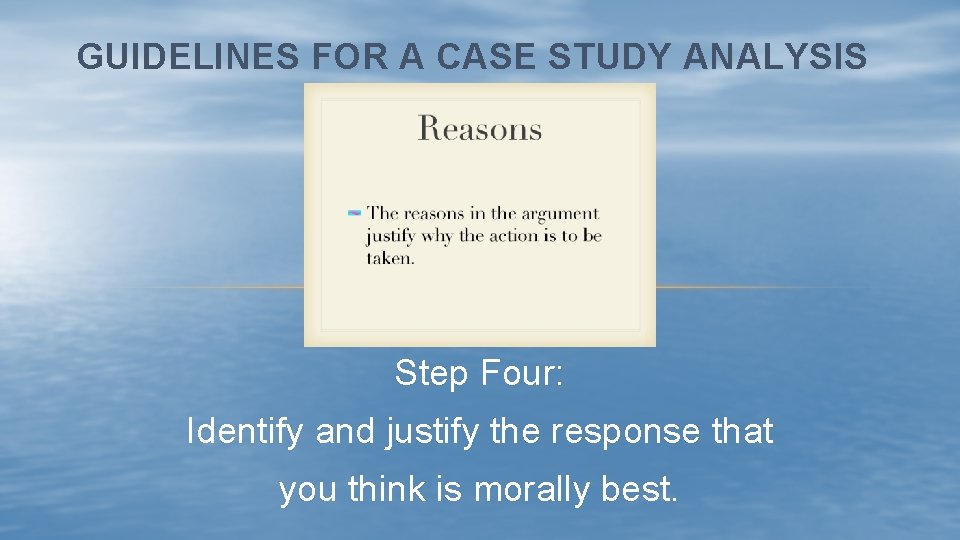
GUIDELINES FOR A CASE STUDY ANALYSIS Step Four: Identify and justify the response that you think is morally best.
GUIDELINES FOR A CASE STUDY ANALYSIS Step Five: Explain why the other possible responses are not acceptable.
For a more in-depth explanation of the case study format, please see pages xxiii and xxiv of our text Ethical Choices: An Introduction to Moral Philosophy with Cases, by Richard Burnor and Yvonne Raley
“The test of a first-rate intelligence is the ability to hold two opposed ideas in the mind at the same time, and still retain the ability to function. ” F. Scott Fitzgerald From his book The Crack Up 1936
“Every belief system has its own lunatic fringe. ” Steven Pinker
Crucial Conversations: Those conversations where an important outcome will result from this exchange. How much of our conversation is crucial? The fight or flight irony.
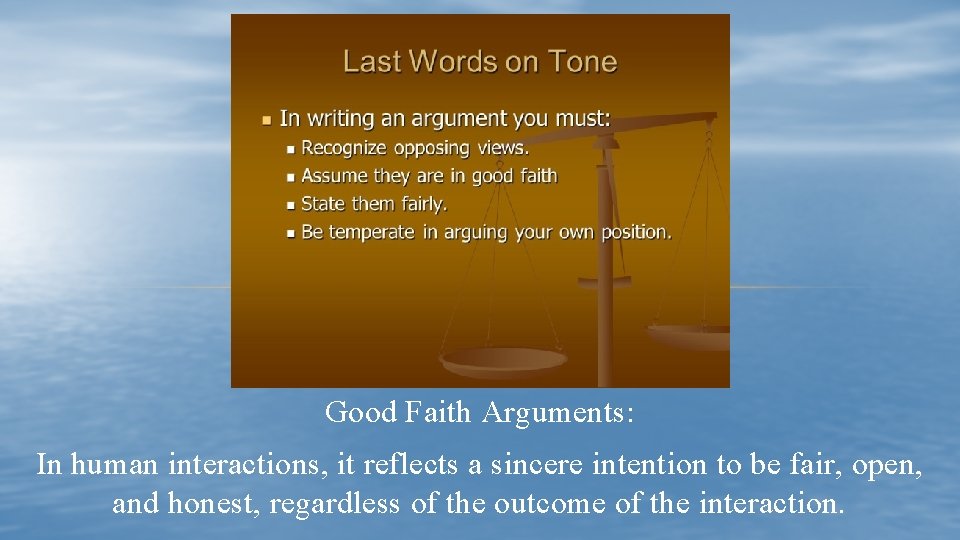
Good Faith Arguments: In human interactions, it reflects a sincere intention to be fair, open, and honest, regardless of the outcome of the interaction.
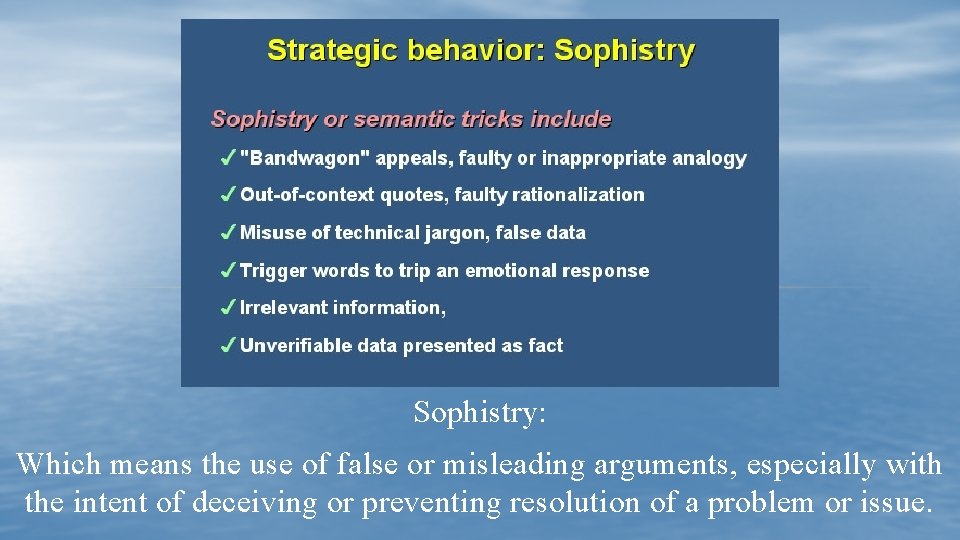
Sophistry: Which means the use of false or misleading arguments, especially with the intent of deceiving or preventing resolution of a problem or issue.