
Introduction to Environmental Sociology ENS 216 Mgr Benjamin
Introduction to Environmental Sociology (ENS 216) Mgr. Benjamin Vail, M. Sc. Autumn 2007
Environmental Studies Department e-learning program • Cooperation with Lillehammer University College (Hi. L) in Norway • Started in 2005 • First e-learning course in Autumn 2007
THANKS TO: • • Ing. Zbyněk Ulčák, Ph. D. Jana Kačurová Lukáš Krempaský Ing. Pavlína Večeřová Very helpful and responsive support from FSS staff
Purpose • To make course available to MU and Hi. L students • To make the course content interesting and educational by use of multimedia
This semester • 14 students registered • All MU students • 9 participate regularly
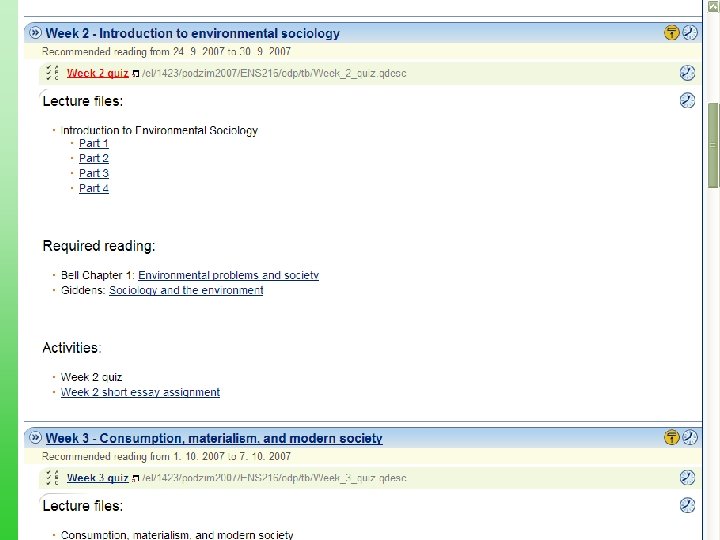
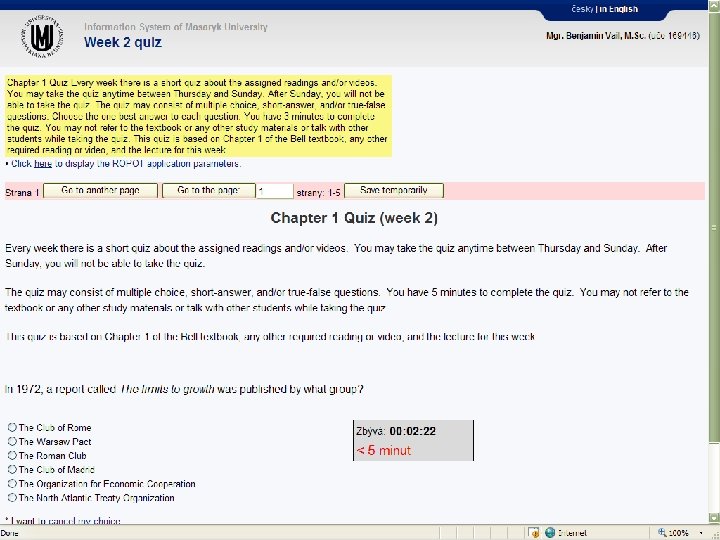
Course content • • Interactive syllabus Multimedia lectures (Power. Point) Written literature Videos – Online – Streaming • Weekly quiz • Weekly essay
Multimedia lectures • Present themes of environmental sociology • Based on course textbook • Based on existing lecture materials
Multimedia lectures • Process: – Started with existing lecture notes – Created Power. Point slides – Recorded lecture over the slides – Saved as “Power. Point show” and uploaded
Multimedia lectures Use of text, graphics, animation: Examples
In Part 1 • What is environmental sociology? Goal of class – to introduce: • Topics • Theories • Methods of research
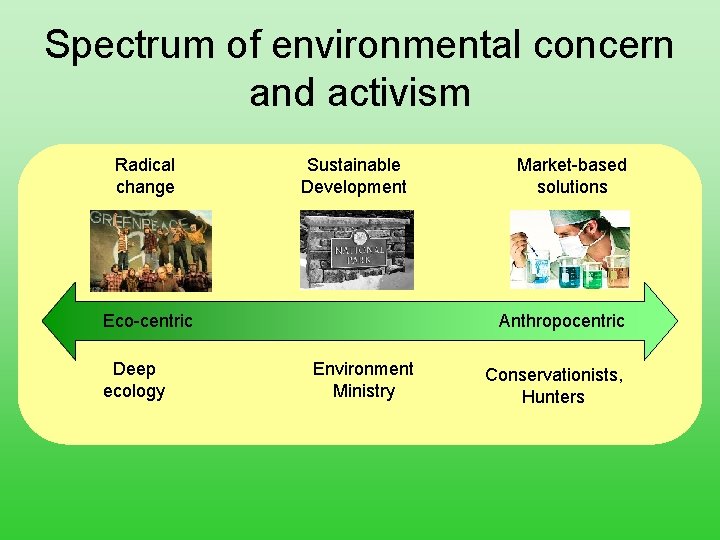
Spectrum of environmental concern and activism Radical change Sustainable Development Eco-centric Deep ecology Market-based solutions Anthropocentric Environment Ministry Conservationists, Hunters
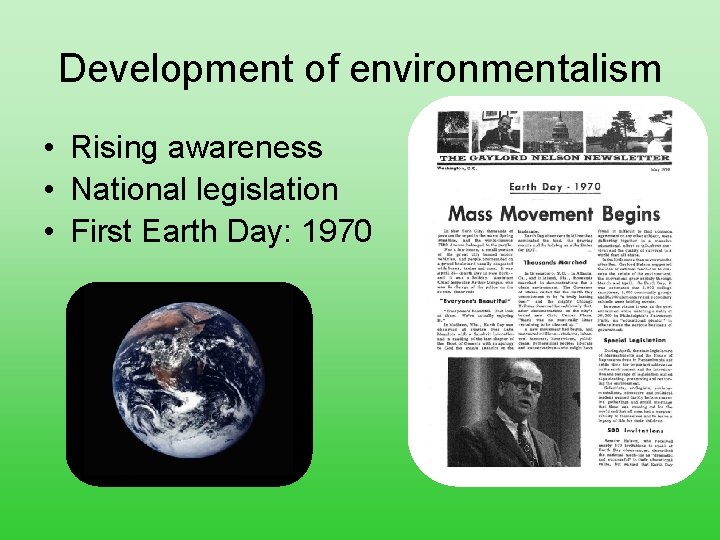
Development of environmentalism • Rising awareness • National legislation • First Earth Day: 1970
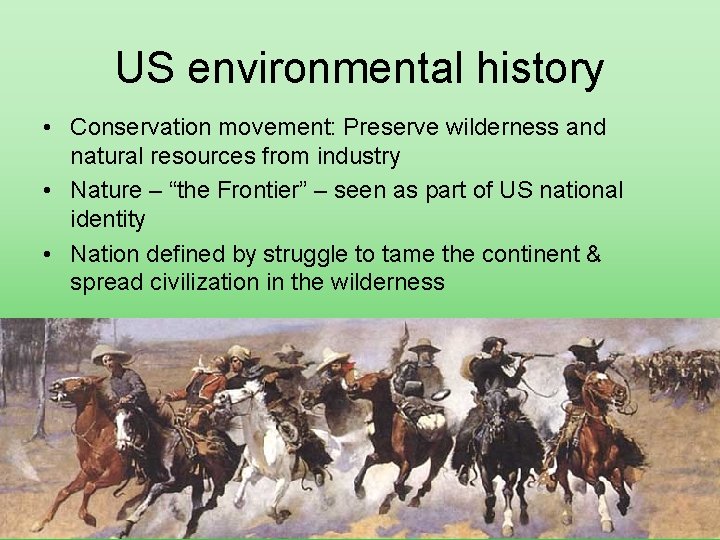
US environmental history • Conservation movement: Preserve wilderness and natural resources from industry • Nature – “the Frontier” – seen as part of US national identity • Nation defined by struggle to tame the continent & spread civilization in the wilderness
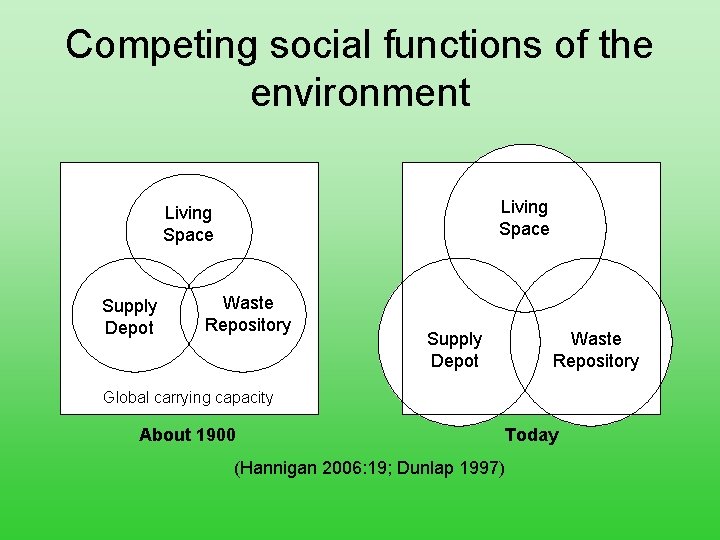
Competing social functions of the environment Living Space Supply Depot Waste Repository Global carrying capacity About 1900 (Hannigan 2006: 19; Dunlap 1997) Today
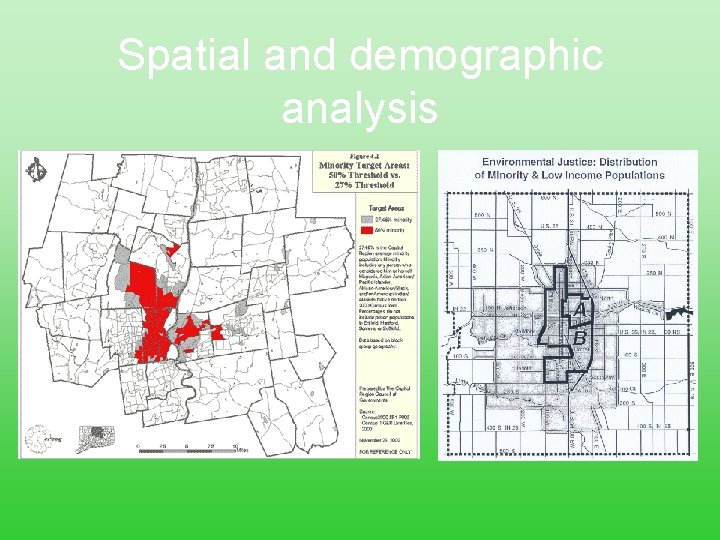
Spatial and demographic analysis
Multimedia lectures Example of a narrated slide show: Environmental health risks and pesticides
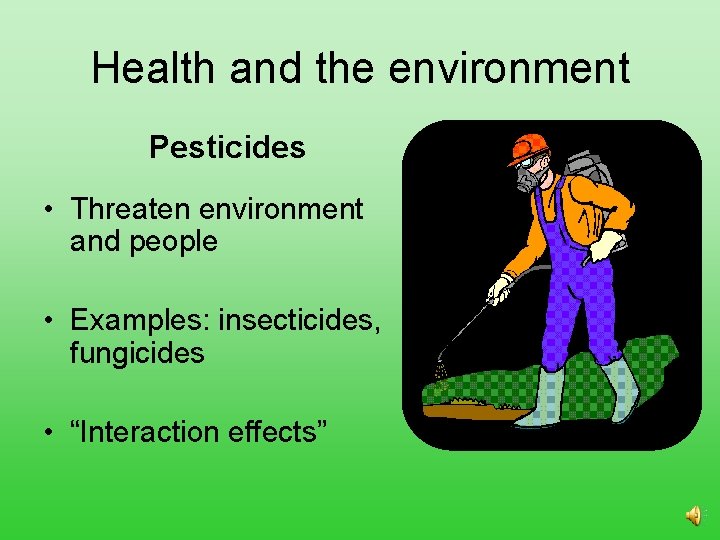
Health and the environment Pesticides • Threaten environment and people • Examples: insecticides, fungicides • “Interaction effects”
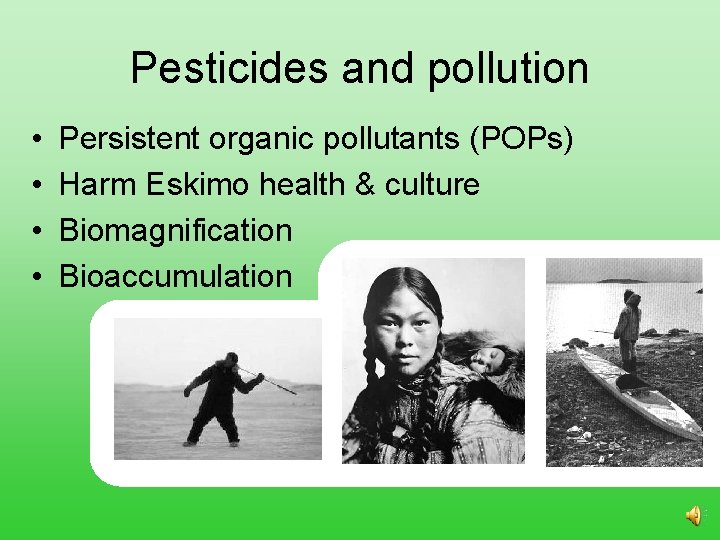
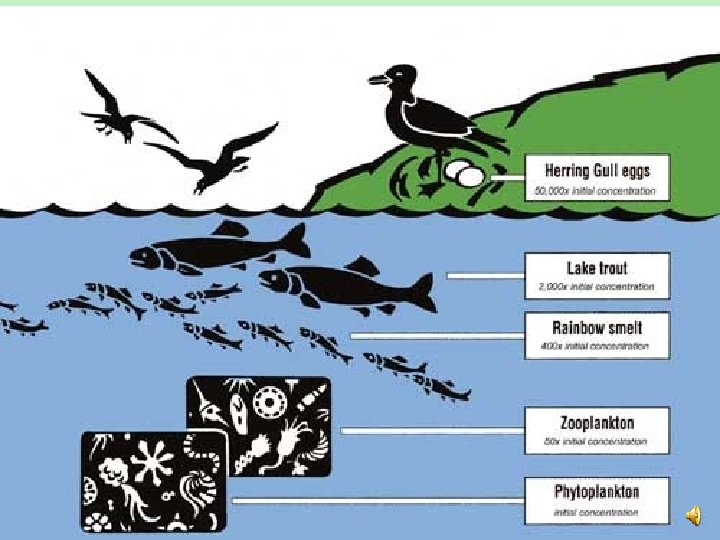
Pesticides and pollution • • Persistent organic pollutants (POPs) Harm Eskimo health & culture Biomagnification Bioaccumulation
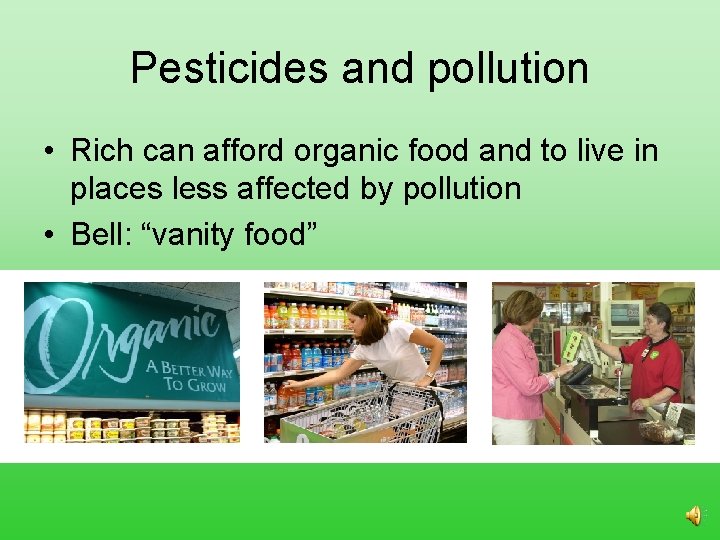
Pesticides and pollution • Rich can afford organic food and to live in places less affected by pollution • Bell: “vanity food”
Evaluation of students • Weekly quiz – Online • Weekly essay – 500 -750 words • Final essay – At end of semester
Student feedback November mid-term survey: • Satisfied with course • Technology not hard to use • Mixed reviews of lectures
Practical advice Pedagogy: • It takes a long time to prepare Power. Point lectures • Use a template • Don’t put too much information on one slide • Survey students to ask what works
Practical advice Technology: • Keep it simple • Translate all ISMU pages to English

Thank you for your attention! Any questions?
- Slides: 27