
Introduction to Environmental Science What is Environmental Science
- Slides: 18
Introduction to Environmental Science
What is Environmental Science? • Environmental Science – the study of the impact of humans on the environment.
Many Fields of Study • The foundation of Environmental Science is ecology. • Ecology the study of how living things interact with each other and with their nonliving environment. • Some other major fields of study in environmental science include zoology, botany, geology, climatology, hydrology, geochemistry, sociology and many others.
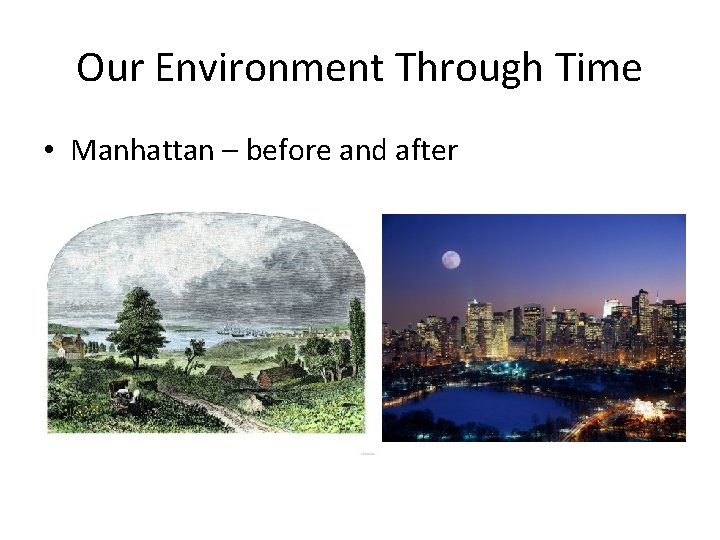
Our Environment Through Time • Manhattan – before and after
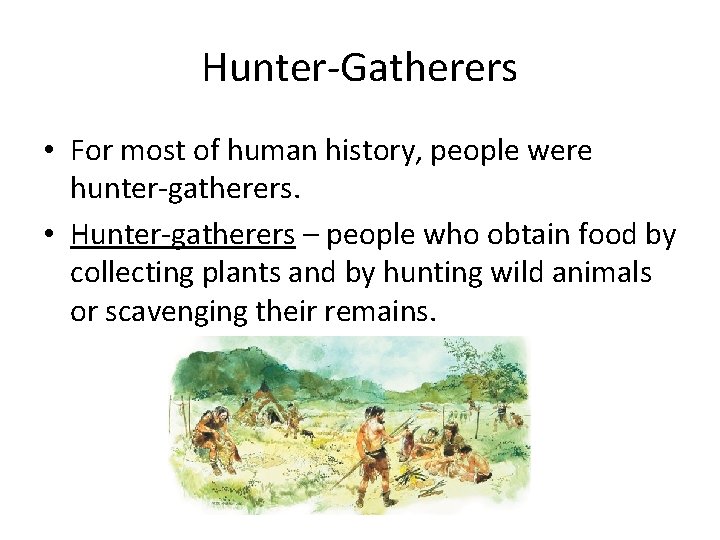
Hunter-Gatherers • For most of human history, people were hunter-gatherers. • Hunter-gatherers – people who obtain food by collecting plants and by hunting wild animals or scavenging their remains.
The Agricultural Revolution • Hunter-gatherers began to collect seeds and domesticate animals. This change to how human societies behaved is known as the agricultural revolution. • Agriculture- the practice of growing, breeding, and caring for plants and animals that are used for food, clothing, housing, transportation, and other purposes.
The Industrial Revolution • The change during the 1700’s that occurred as humans moved from animal and running water power to fossil fuels is known as the industrial revolution. • This included large-scale factory production of goods and machinery to reduce human labor. Motorized vehicles meant food and goods could be moved great distances more easily.
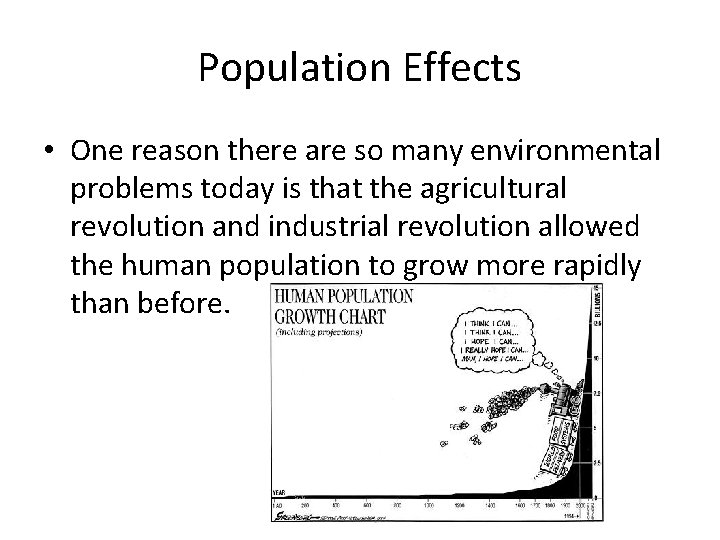
Population Effects • One reason there are so many environmental problems today is that the agricultural revolution and industrial revolution allowed the human population to grow more rapidly than before.
Environmental Problems • There are three general categories of environmental problems: 1. Resource Depletion 2. Pollution 3. Loss of Biodiversity
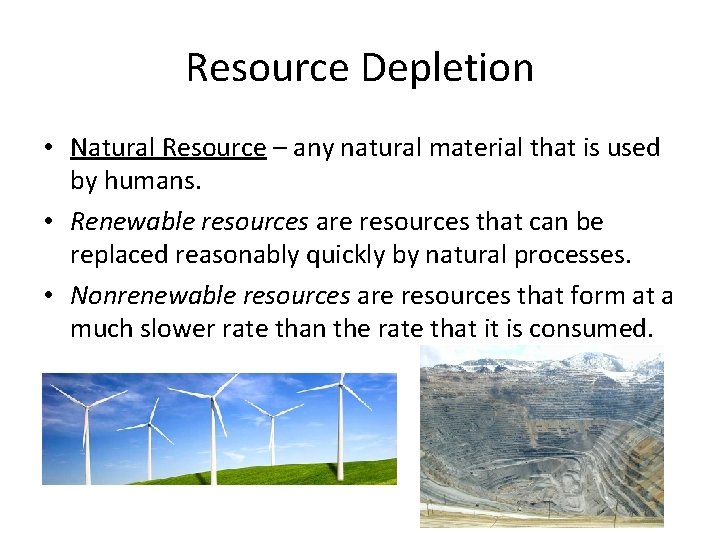
Resource Depletion • Natural Resource – any natural material that is used by humans. • Renewable resources are resources that can be replaced reasonably quickly by natural processes. • Nonrenewable resources are resources that form at a much slower rate than the rate that it is consumed.
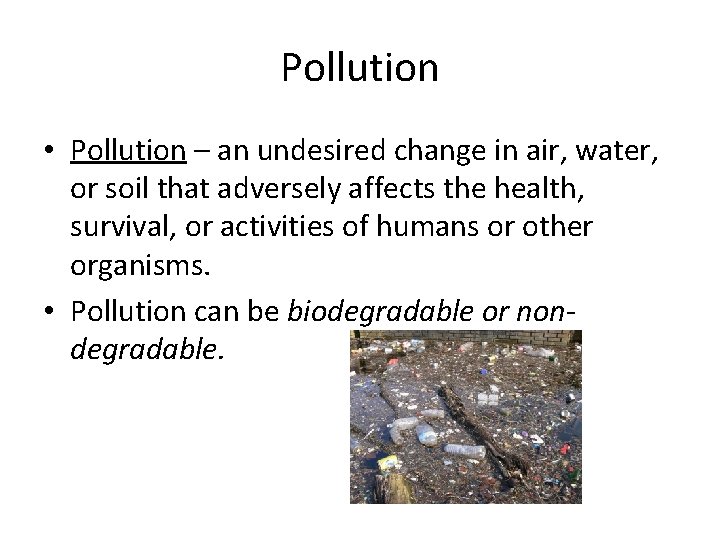
Pollution • Pollution – an undesired change in air, water, or soil that adversely affects the health, survival, or activities of humans or other organisms. • Pollution can be biodegradable or nondegradable.
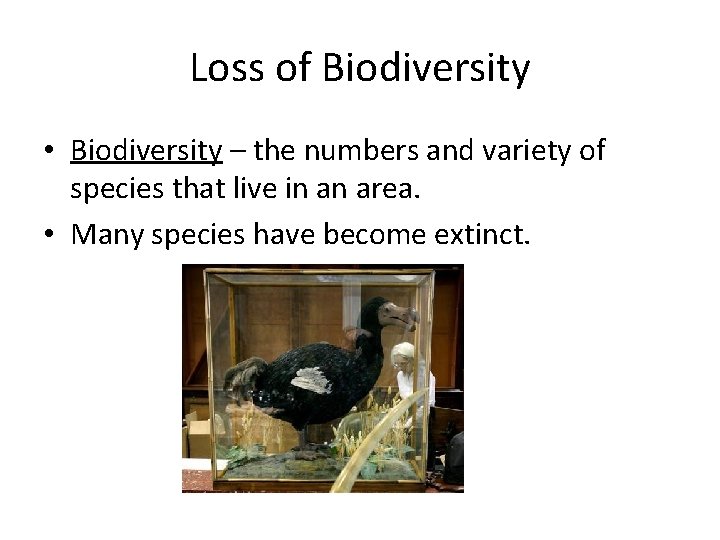
Loss of Biodiversity • Biodiversity – the numbers and variety of species that live in an area. • Many species have become extinct.
“The Tragedy of the Commons” • In 1968, ecologist Garrett Hardin published an essay titled “The Tragedy of the Commons”. This essay addressed the problem of sharing common resources. • Commons were areas of land that belonged to a whole village. These were often overgrazed until individuals owned their own land.
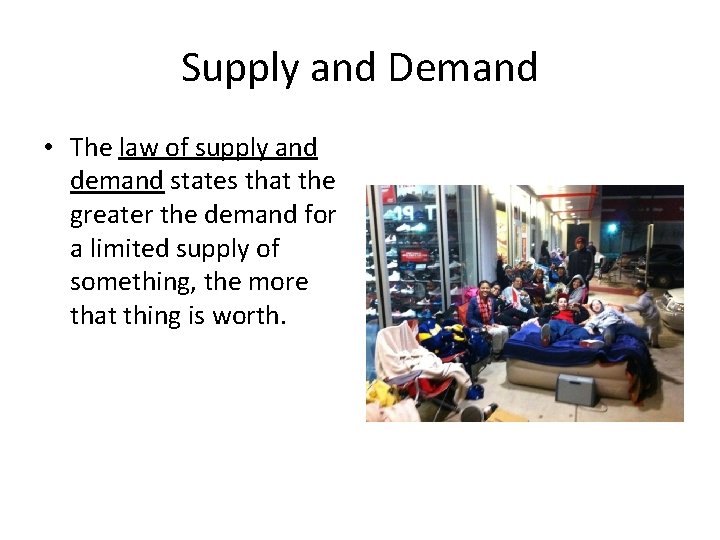
Supply and Demand • The law of supply and demand states that the greater the demand for a limited supply of something, the more that thing is worth.
Developed vs. Developing • Developed countries have higher average incomes, slower population growth, diverse industrial economies, and stronger social support systems. • Developing countries have lower average incomes, simple and agriculture-based economies, and rapid population growth.
Population and Consumption • Most environmental problems can be traced back to two root causes. 1. Population growth – in some areas the human population is growing too quickly for the local environment to support it (#Gro 2 Fast 2 support) 2. Consumption – people are using up, wasting, or polluting many natural resources faster than they can be replaced or cleaned up (#Use^2 qwik)
Ecological Footprints • An ecological footprint shows the productive area of Earth needed to support one person in a particular country. • It includes the land used for crops, grazing, forest products, and housing. Also includes the ocean area used for harvesting seafood and forest needed to absorb air pollution.
A Sustainable World • Sustainability – the condition in which human needs are met in such a way that a human population can survive indefinitely. • (#Needsmetwelive 4 eva)