
Introduction to English pronunciation and phonetics Lecture 3


- Slides: 18
Introduction to English pronunciation and phonetics Lecture 3
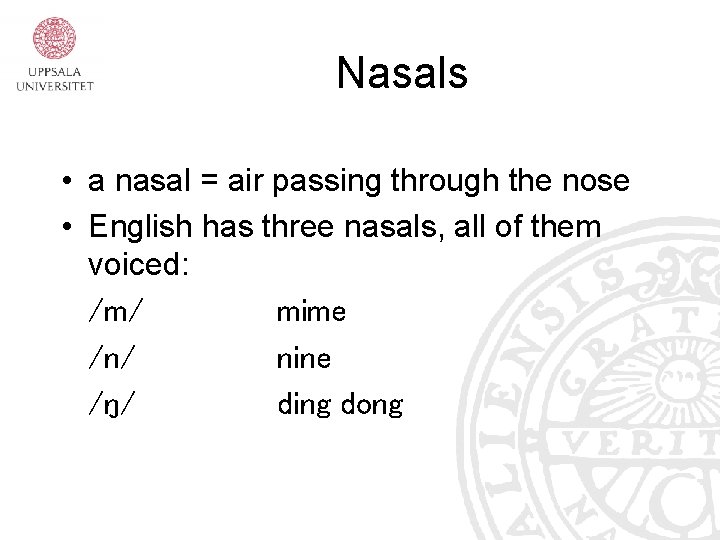
Nasals • a nasal = air passing through the nose • English has three nasals, all of them voiced: /m/ mime /n/ nine /ŋ/ ding dong
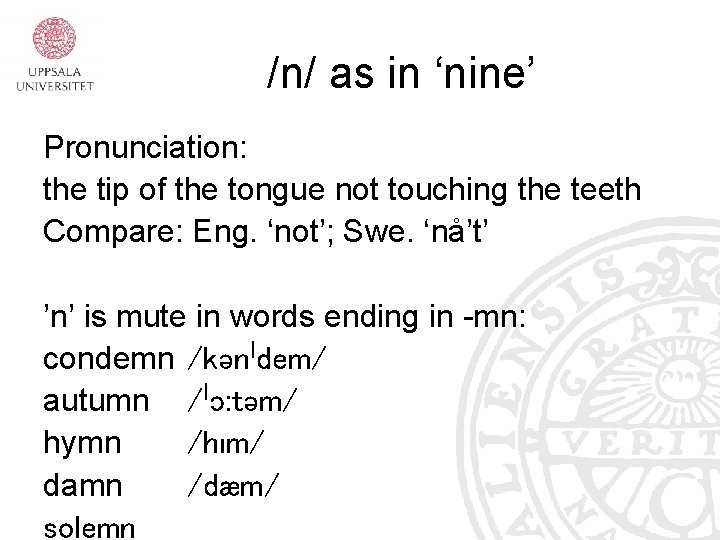
/n/ as in ‘nine’ Pronunciation: the tip of the tongue not touching the teeth Compare: Eng. ‘not’; Swe. ‘nå’t’ ’n’ is mute in words ending in -mn: condemn /kənˈdem/ autumn /ˈɔ: təm/ hymn /hım/ damn /dæm/ solemn
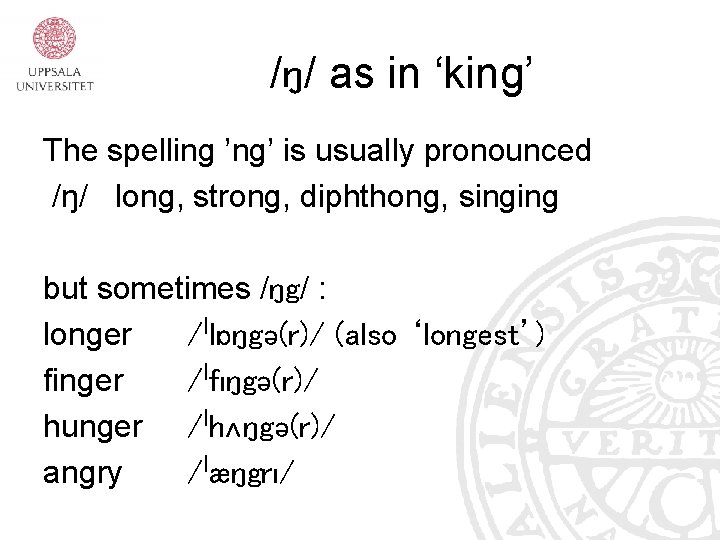
/ŋ/ as in ‘king’ The spelling ’ng’ is usually pronounced /ŋ/ long, strong, diphthong, singing but sometimes /ŋg/ : longer /ˈlɒŋgə(r)/ (also ‘longest’) finger /ˈfıŋgə(r)/ hunger /ˈhʌŋgə(r)/ angry /ˈæŋgrı/
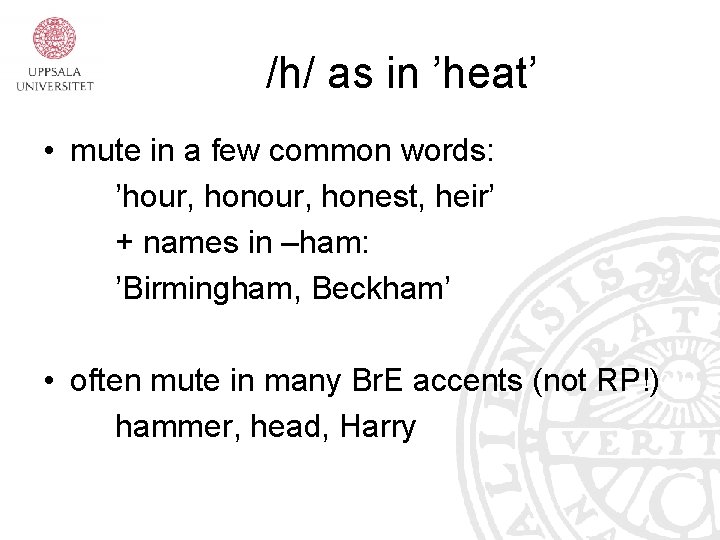
/h/ as in ’heat’ • mute in a few common words: ’hour, honest, heir’ + names in –ham: ’Birmingham, Beckham’ • often mute in many Br. E accents (not RP!) hammer, head, Harry
Affricates • consist of a plosive followed by a fricative • English has two affricates: voiceless /tʃ/ chain voiced /dʒ/ Jane
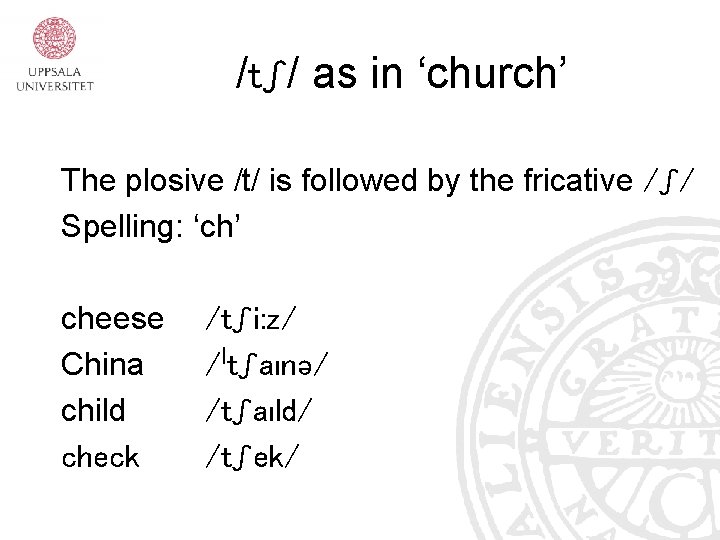
/tʃ/ as in ‘church’ The plosive /t/ is followed by the fricative /ʃ/ Spelling: ‘ch’ cheese China child check /tʃi: z/ /ˈtʃaınə/ /tʃaıld/ /tʃek/
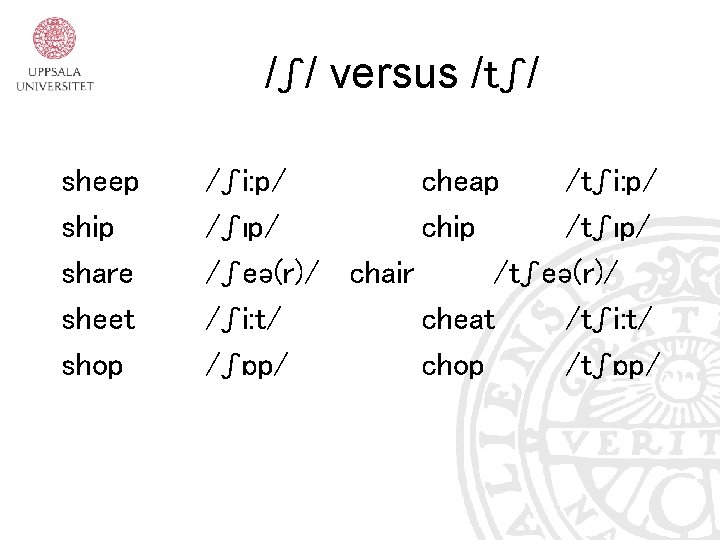
/ʃ/ versus /tʃ/ sheep ship share sheet shop /ʃi: p/ cheap /tʃi: p/ /ʃıp/ chip /tʃıp/ /ʃeə(r)/ chair /tʃeə(r)/ /ʃi: t/ cheat /tʃi: t/ /ʃɒp/ chop /tʃɒp/
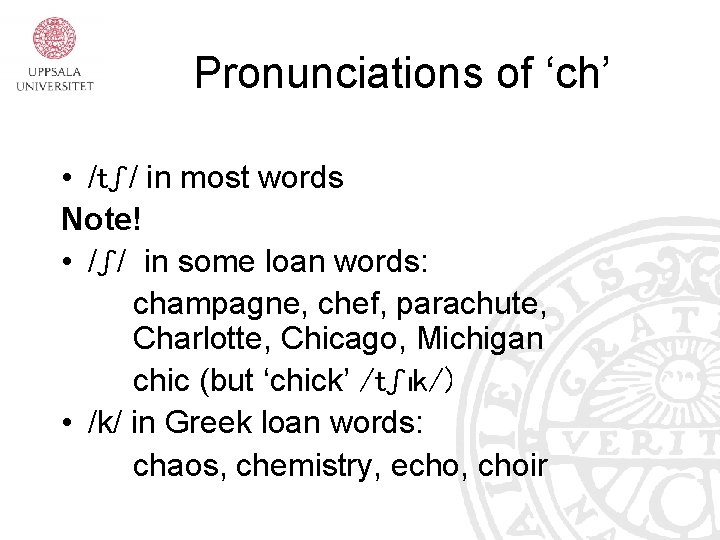
Pronunciations of ‘ch’ • /tʃ/ in most words Note! • /ʃ/ in some loan words: champagne, chef, parachute, Charlotte, Chicago, Michigan chic (but ‘chick’ /tʃık/) • /k/ in Greek loan words: chaos, chemistry, echo, choir
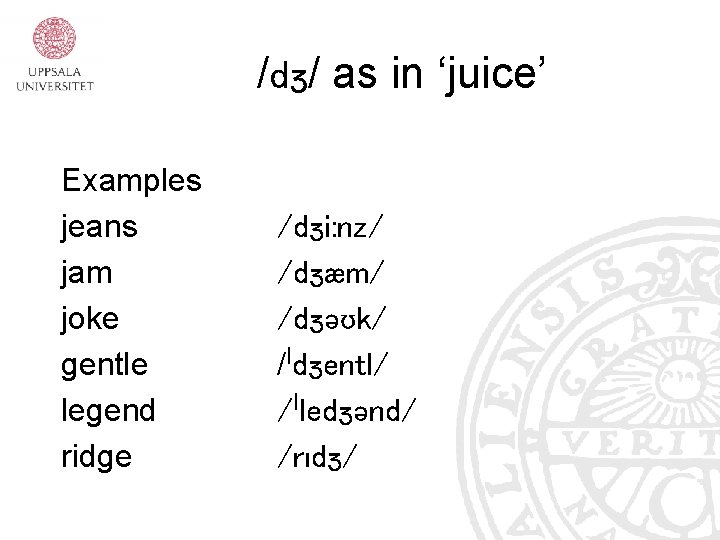
/dʒ/ as in ‘juice’ Examples jeans jam joke gentle legend ridge /dʒi: nz/ /dʒæm/ /dʒəʊk/ /ˈdʒentl/ /ˈledʒənd/ /rıdʒ/
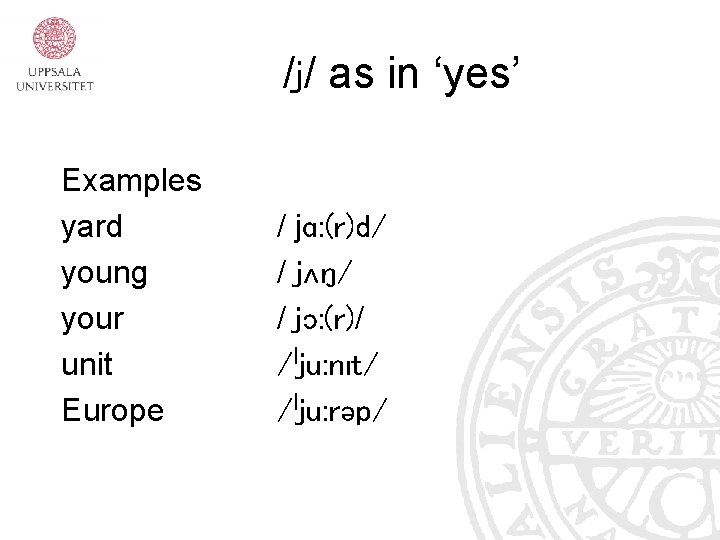
/j/ as in ‘yes’ Examples yard young your unit Europe / jɑ: (r)d/ / jʌŋ/ / jɔ: (r)/ /ˈju: nıt/ /ˈju: rəp/
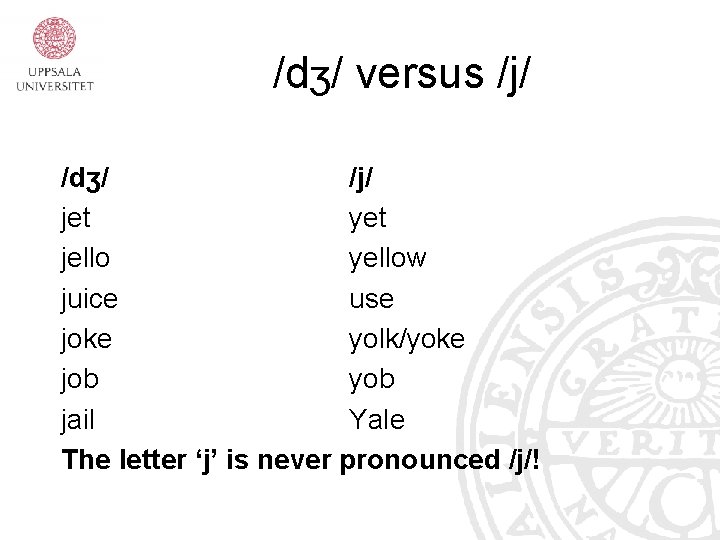
/dʒ/ versus /j/ /dʒ/ /j/ jet yet jello yellow juice use joke yolk/yoke job yob jail Yale The letter ‘j’ is never pronounced /j/!
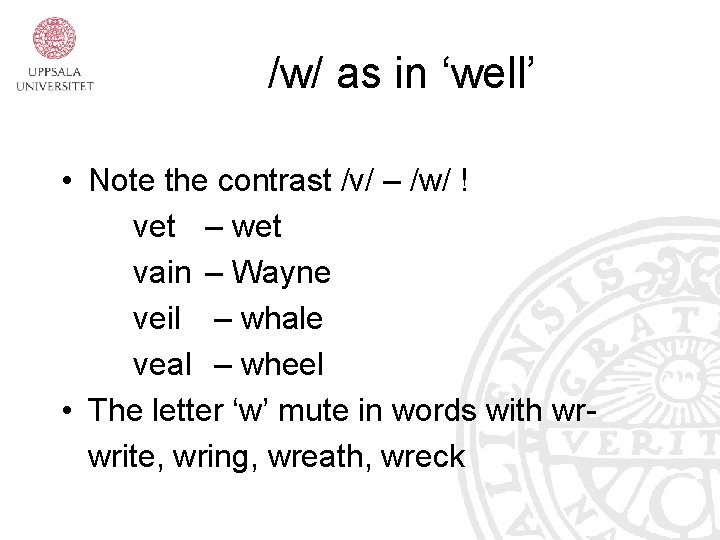
/w/ as in ‘well’ • Note the contrast /v/ – /w/ ! vet – wet vain – Wayne veil – whale veal – wheel • The letter ‘w’ mute in words with wrwrite, wring, wreath, wreck
/l/ as in ‘ball’ • Two variants (allophones): clear and dark • In RP, /l/ is clear before vowels and /j/; dark in other positions clear /l/: let, love, live, million dark /l/: tall, world, people, humble • In GA, /l/ is always (more or less) dark • In Estuary English dark /l/ often /w/
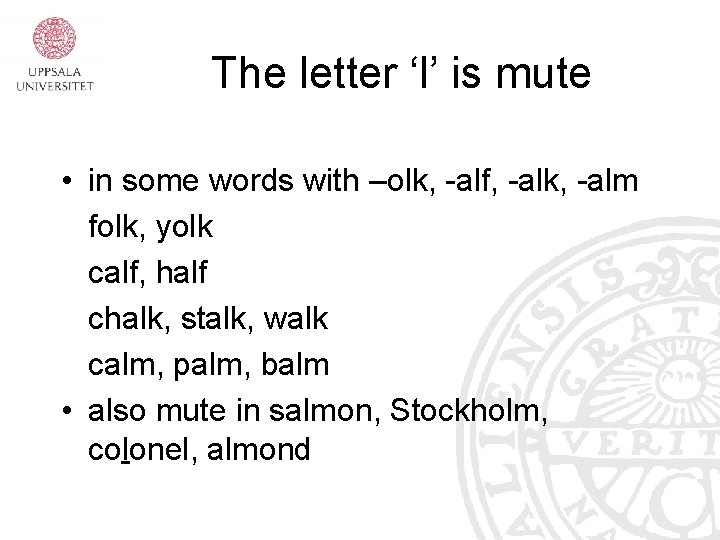
The letter ‘l’ is mute • in some words with –olk, -alf, -alk, -alm folk, yolk calf, half chalk, stalk, walk calm, palm, balm • also mute in salmon, Stockholm, colonel, almond
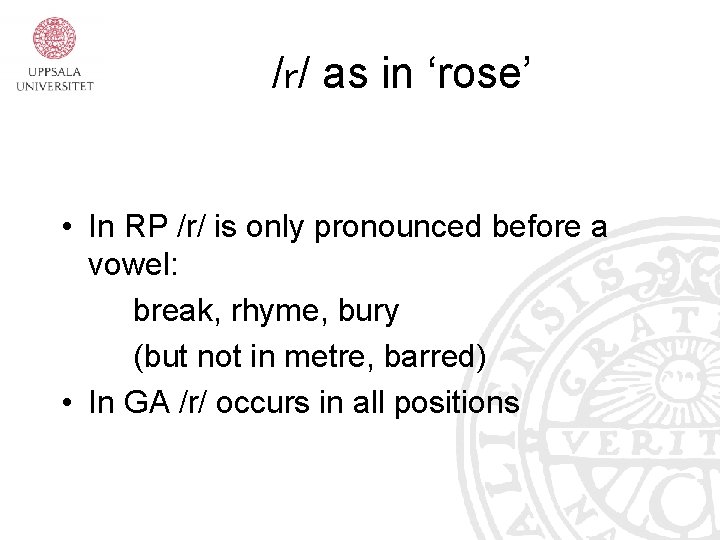
/r/ as in ‘rose’ • In RP /r/ is only pronounced before a vowel: break, rhyme, bury (but not in metre, barred) • In GA /r/ occurs in all positions
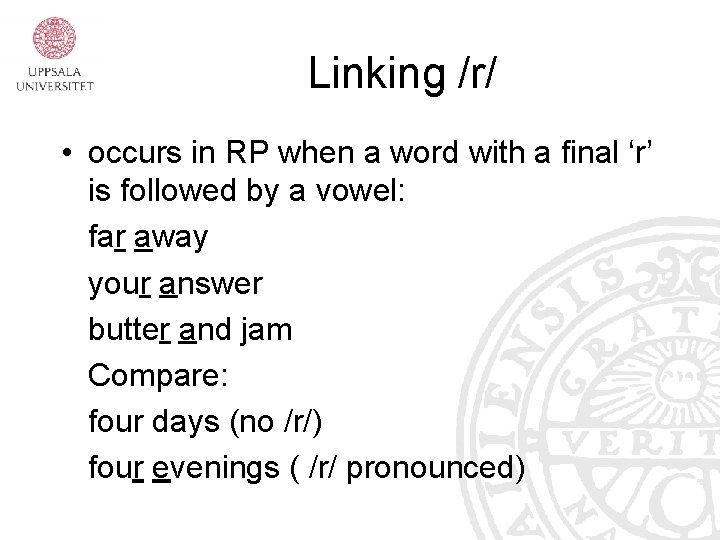
Linking /r/ • occurs in RP when a word with a final ‘r’ is followed by a vowel: far away your answer butter and jam Compare: four days (no /r/) four evenings ( /r/ pronounced)
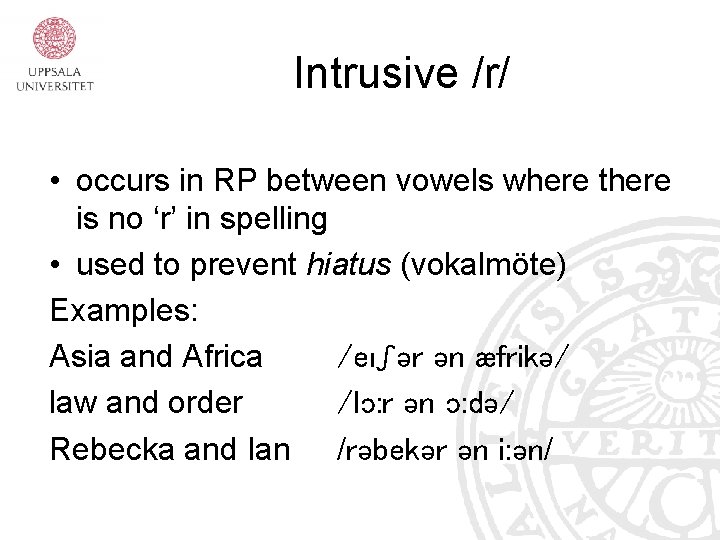
Intrusive /r/ • occurs in RP between vowels where there is no ‘r’ in spelling • used to prevent hiatus (vokalmöte) Examples: Asia and Africa /eıʃər ən æfrikə/ law and order /lɔ: r ən ɔ: də/ Rebecka and Ian /rəbekər ən i: ən/