
INTRODUCTION TO ENERGY MANAGEMENT Unit 4 Energy as
- Slides: 23
INTRODUCTION TO ENERGY MANAGEMENT Unit #4: Energy as a System Part 3 – Energy Demand 1
Energy § Energy Consumption the quantity of energy used by a load. § Energy Demand the rate at which energy is converted. § Energy End Use Application of energy for a specific purpose such as ventilation, lighting, cooling, heating, transportation, industrial processes. 2
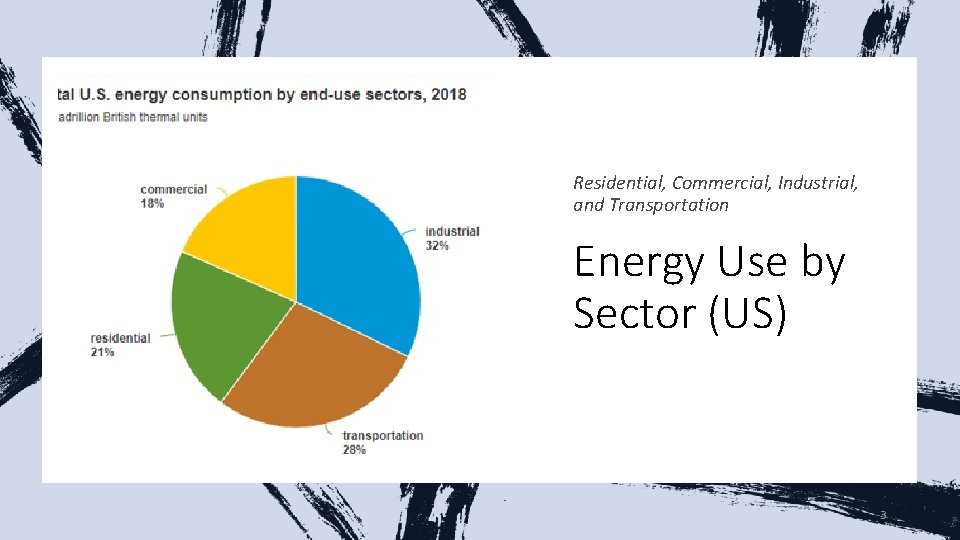
Residential, Commercial, Industrial, and Transportation Energy Use by Sector (US) 3
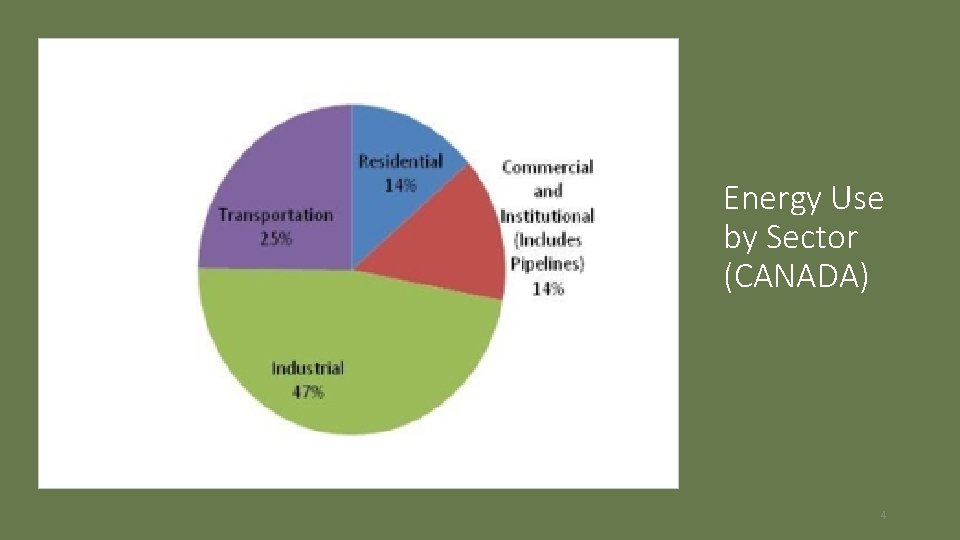
Energy Use by Sector (CANADA) 4
INCREASED CONSUMPTION There are many reasons for this increased consumption: greater use of natural gas for extraction and refining of petroleum from Alberta's oil sands and for transformation into electricity, substitution at the industrial level of natural gas as a source for cogeneration of power and residential development. Canada obtained 16. 3% of its energy supply from renewable sources. 5
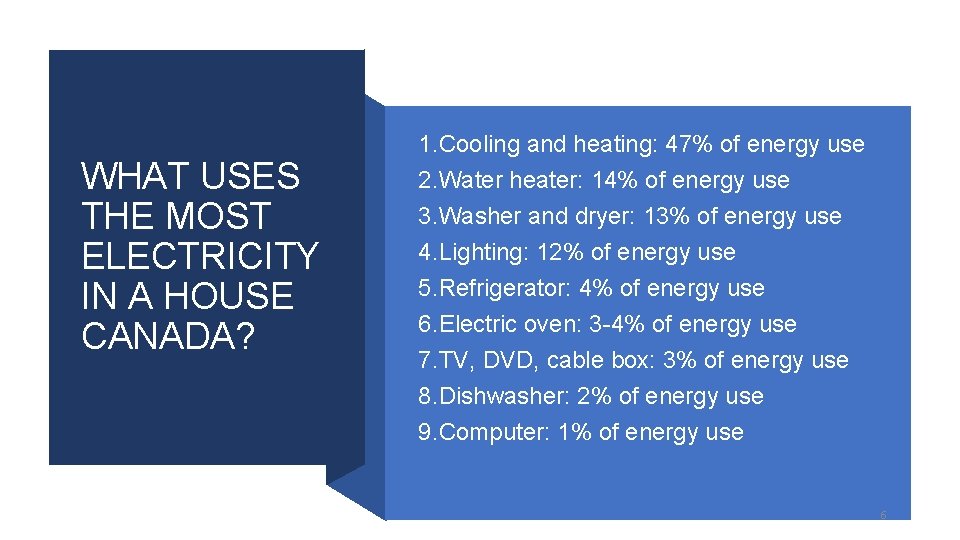
WHAT USES THE MOST ELECTRICITY IN A HOUSE CANADA? 1. Cooling and heating: 47% of energy use 2. Water heater: 14% of energy use 3. Washer and dryer: 13% of energy use 4. Lighting: 12% of energy use 5. Refrigerator: 4% of energy use 6. Electric oven: 3 -4% of energy use 7. TV, DVD, cable box: 3% of energy use 8. Dishwasher: 2% of energy use 9. Computer: 1% of energy use 6
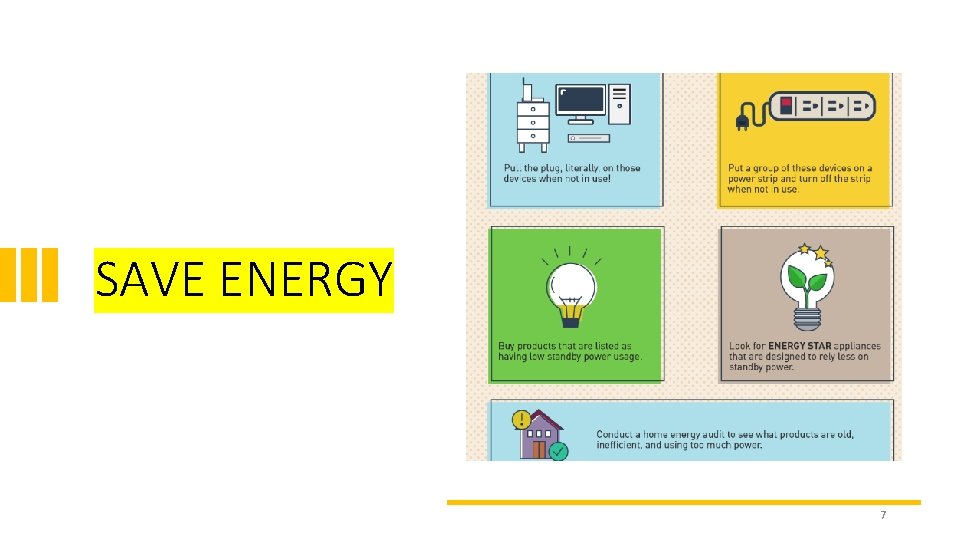
SAVE ENERGY 7
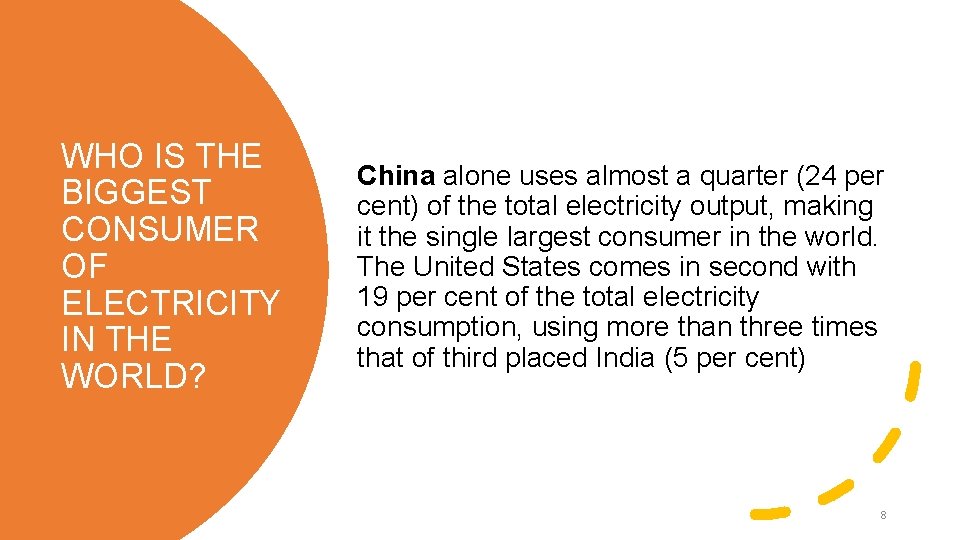
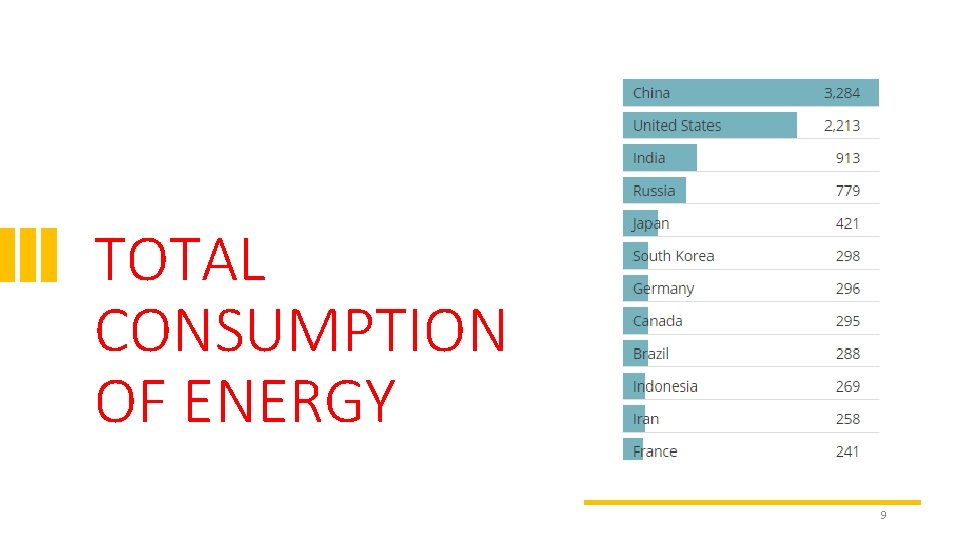
WHO IS THE BIGGEST CONSUMER OF ELECTRICITY IN THE WORLD? China alone uses almost a quarter (24 per cent) of the total electricity output, making it the single largest consumer in the world. The United States comes in second with 19 per cent of the total electricity consumption, using more than three times that of third placed India (5 per cent) 8
TOTAL CONSUMPTION OF ENERGY 9
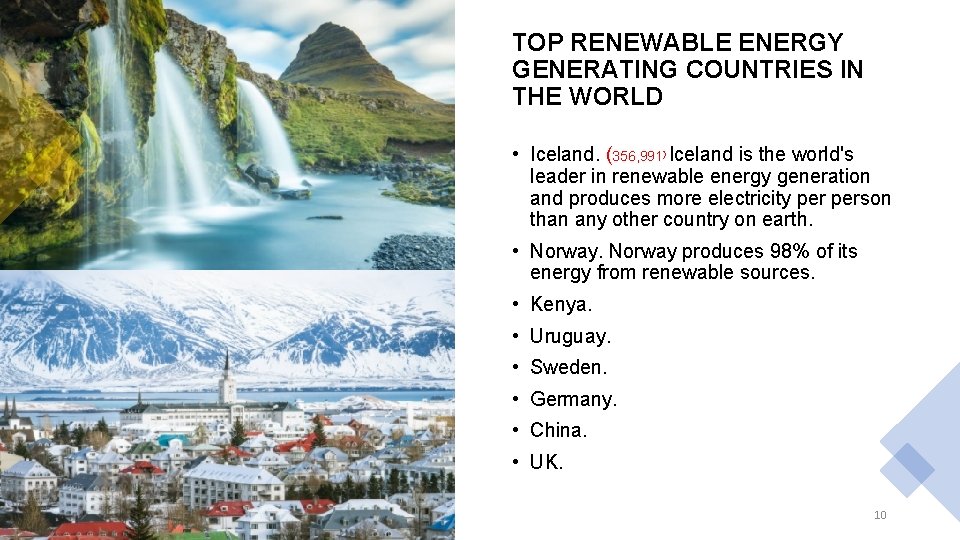
TOP RENEWABLE ENERGY GENERATING COUNTRIES IN THE WORLD • Iceland. (356, 991) Iceland is the world's leader in renewable energy generation and produces more electricity person than any other country on earth. • Norway produces 98% of its energy from renewable sources. • Kenya. • Uruguay. • Sweden. • Germany. • China. • UK. 10
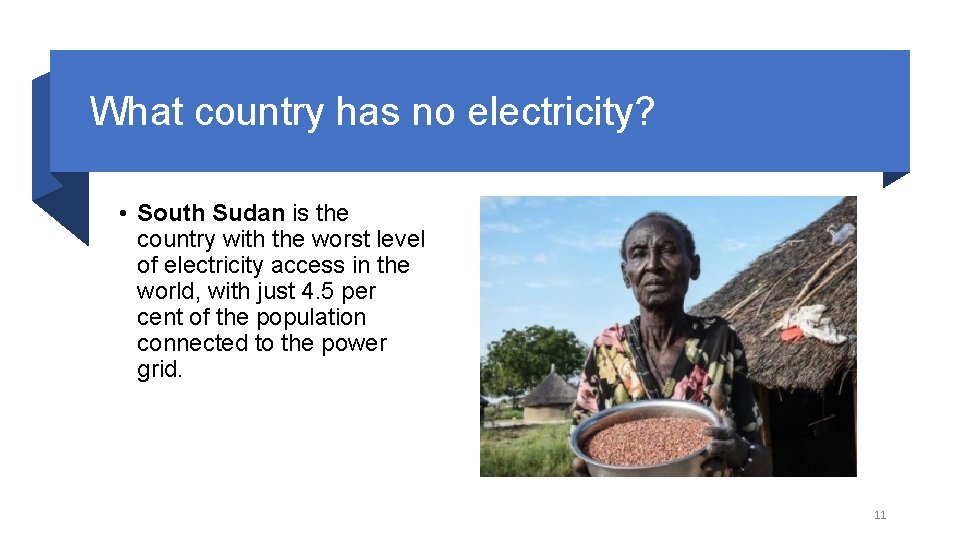
What country has no electricity? • South Sudan is the country with the worst level of electricity access in the world, with just 4. 5 per cent of the population connected to the power grid. 11
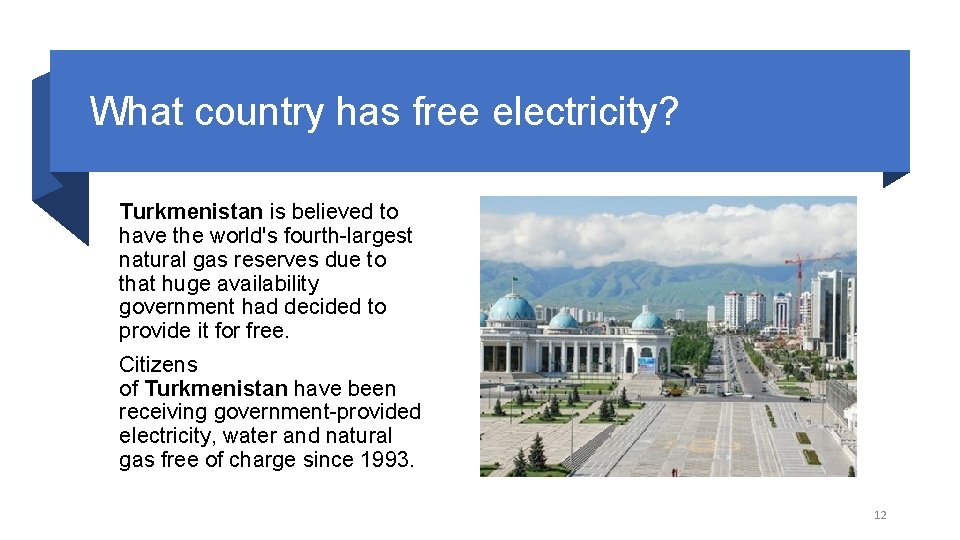
What country has free electricity? Turkmenistan is believed to have the world's fourth-largest natural gas reserves due to that huge availability government had decided to provide it for free. Citizens of Turkmenistan have been receiving government-provided electricity, water and natural gas free of charge since 1993. 12
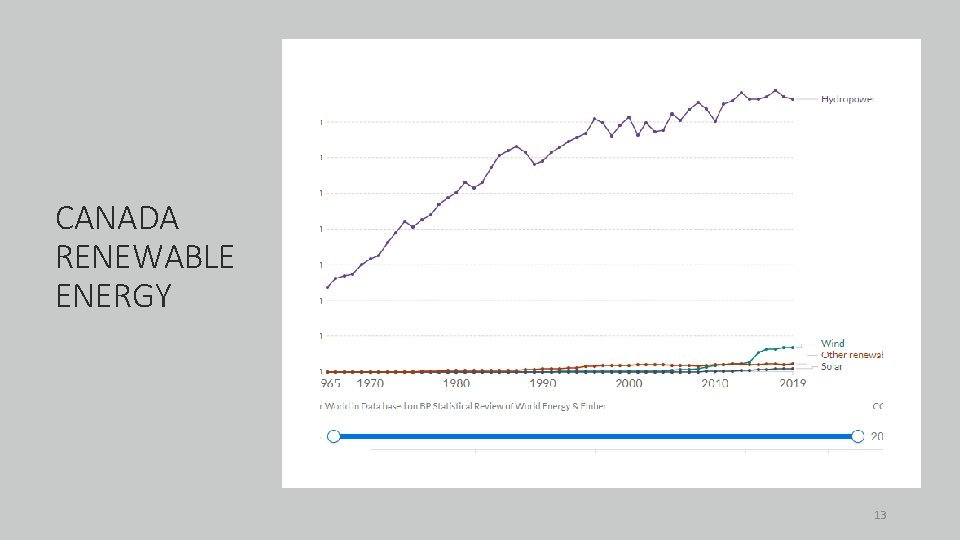
CANADA RENEWABLE ENERGY 13
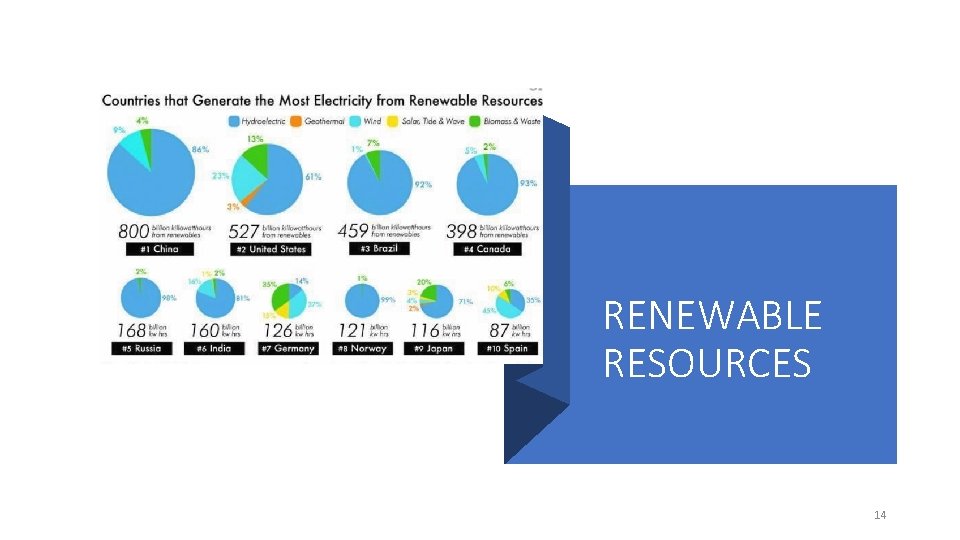
RENEWABLE RESOURCES 14
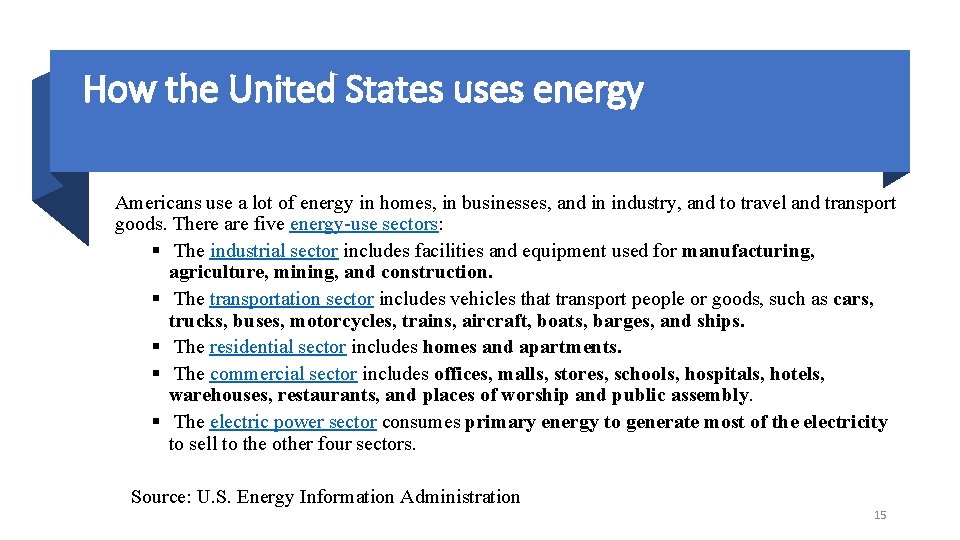
How the United States uses energy Americans use a lot of energy in homes, in businesses, and in industry, and to travel and transport goods. There are five energy-use sectors: § The industrial sector includes facilities and equipment used for manufacturing, agriculture, mining, and construction. § The transportation sector includes vehicles that transport people or goods, such as cars, trucks, buses, motorcycles, trains, aircraft, boats, barges, and ships. § The residential sector includes homes and apartments. § The commercial sector includes offices, malls, stores, schools, hospitals, hotels, warehouses, restaurants, and places of worship and public assembly. § The electric power sector consumes primary energy to generate most of the electricity to sell to the other four sectors. Source: U. S. Energy Information Administration 15
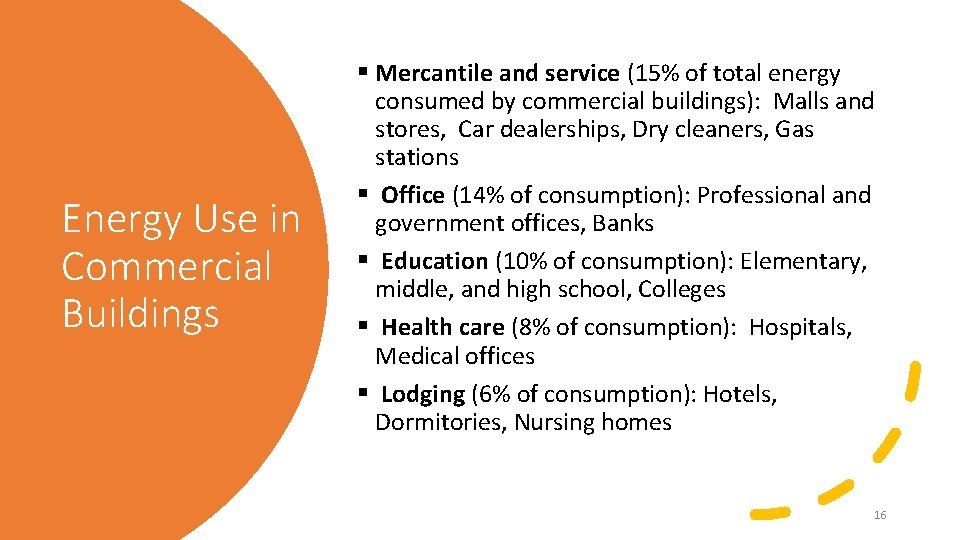
Energy Use in Commercial Buildings § Mercantile and service (15% of total energy consumed by commercial buildings): Malls and stores, Car dealerships, Dry cleaners, Gas stations § Office (14% of consumption): Professional and government offices, Banks § Education (10% of consumption): Elementary, middle, and high school, Colleges § Health care (8% of consumption): Hospitals, Medical offices § Lodging (6% of consumption): Hotels, Dormitories, Nursing homes 16
17
18
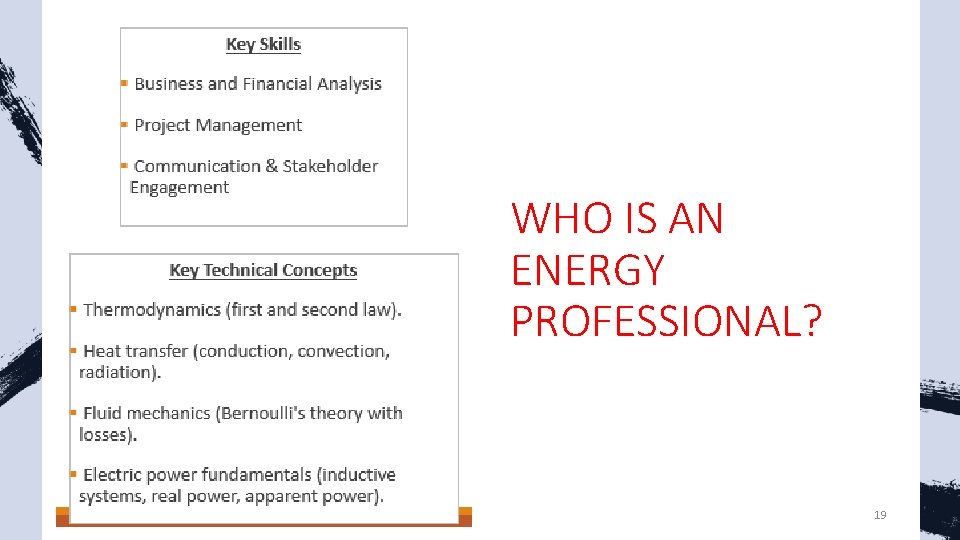
WHO IS AN ENERGY PROFESSIONAL? 19
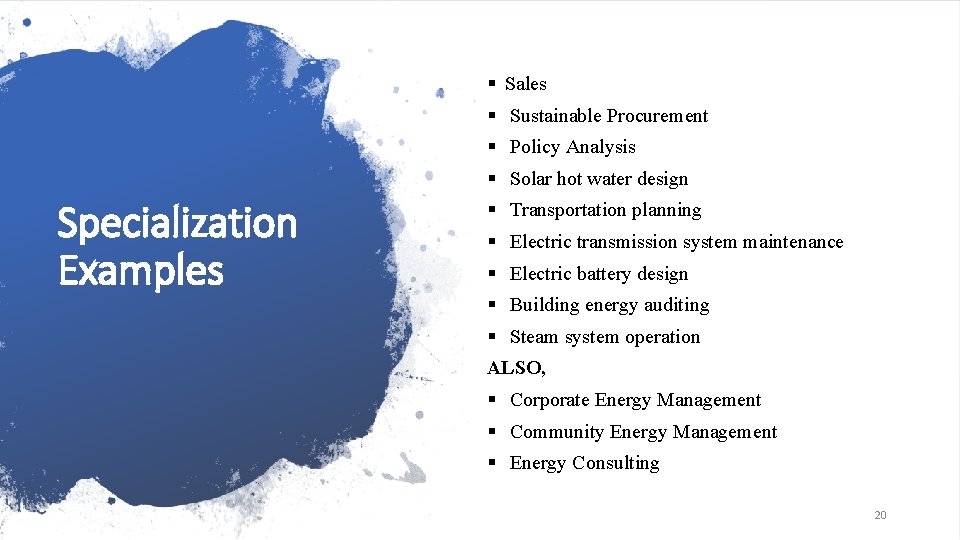
§ Sales § Sustainable Procurement § Policy Analysis § Solar hot water design Specialization Examples § Transportation planning § Electric transmission system maintenance § Electric battery design § Building energy auditing § Steam system operation ALSO, § Corporate Energy Management § Community Energy Management § Energy Consulting 20
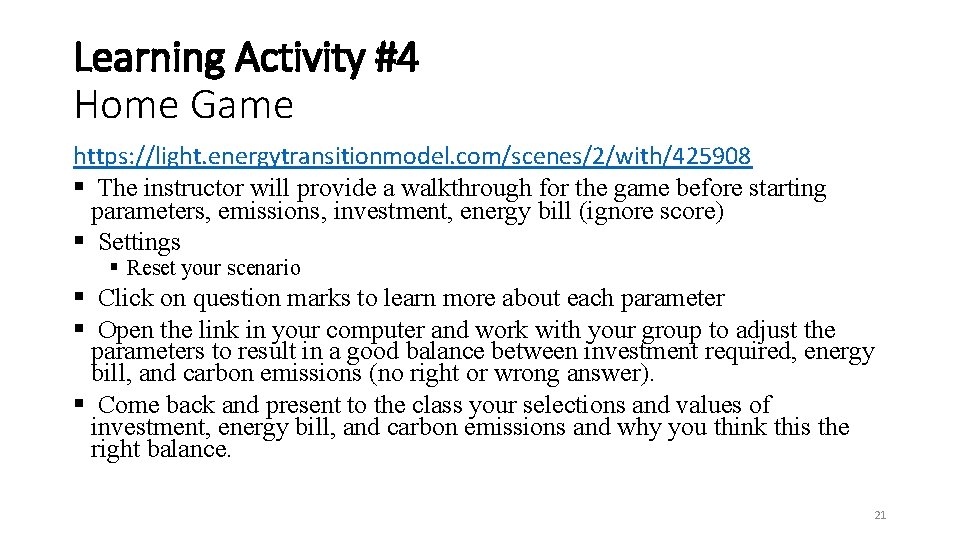
Learning Activity #4 Home Game https: //light. energytransitionmodel. com/scenes/2/with/425908 § The instructor will provide a walkthrough for the game before starting parameters, emissions, investment, energy bill (ignore score) § Settings § Reset your scenario § Click on question marks to learn more about each parameter § Open the link in your computer and work with your group to adjust the parameters to result in a good balance between investment required, energy bill, and carbon emissions (no right or wrong answer). § Come back and present to the class your selections and values of investment, energy bill, and carbon emissions and why you think this the right balance. 21
Videos § https: //www. youtube. com/watch? time_continue=130&v=Ld 5 S 4 q. TEY 8 g&feature=emb_logo § https: //www. youtube. com/watch? time_continue=161&v=5 VMXL 3 l. E YTI&feature=emb_logo § https: //www. youtube. com/watch? v=l. P_Kcs. Vtng 0&feature=emb_log o 22
THANK YOU 23