
Introduction to Emotional development LO to explore how

- Slides: 17
Introduction to Emotional development LO: to explore how emotional development changes through the life stages.
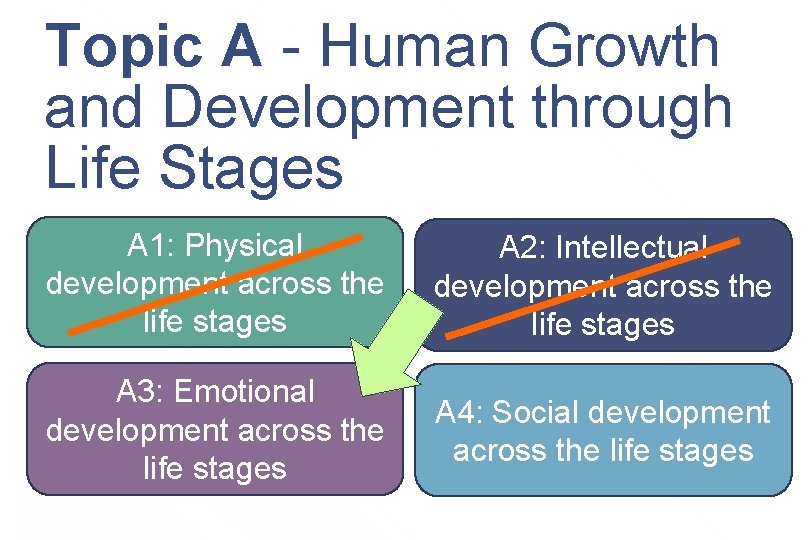
Topic A - Human Growth and Development through Life Stages A 1: Physical development across the life stages A 2: Intellectual development across the life stages A 3: Emotional development across the life stages A 4: Social development across the life stages
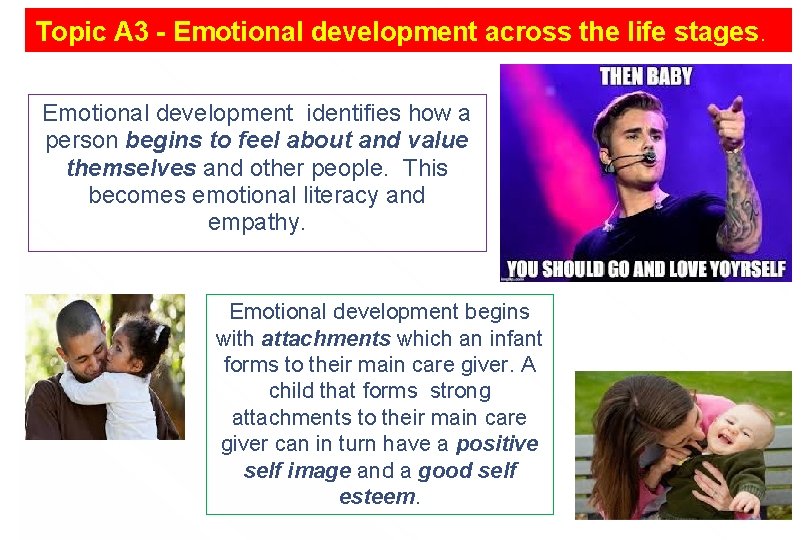
Topic A 3 - Emotional development across the life stages. Emotional development identifies how a person begins to feel about and value themselves and other people. This becomes emotional literacy and empathy. Emotional development begins with attachments which an infant forms to their main care giver. A child that forms strong attachments to their main care giver can in turn have a positive self image and a good self esteem.
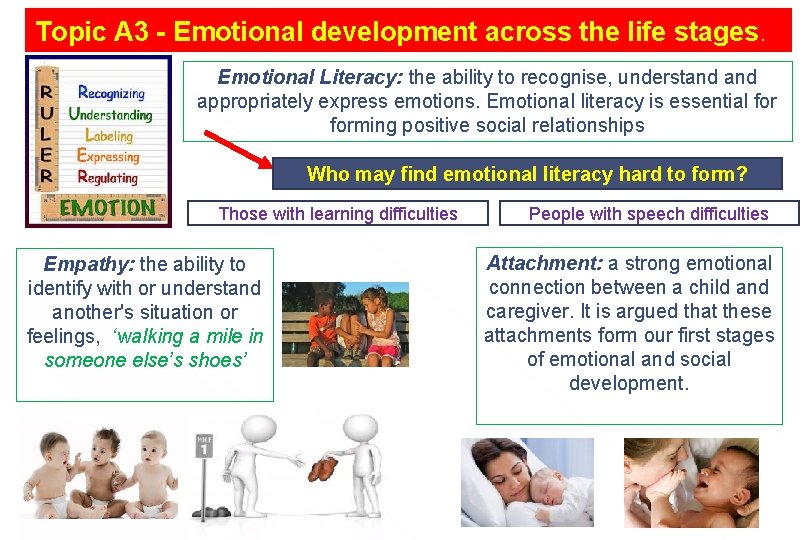
Topic A 3 - Emotional development across the life stages. Emotional Literacy: the ability to recognise, understand appropriately express emotions. Emotional literacy is essential forming positive social relationships Who may find emotional literacy hard to form? Those with learning difficulties Empathy: the ability to identify with or understand another's situation or feelings, ‘walking a mile in someone else’s shoes’ People with speech difficulties Attachment: a strong emotional connection between a child and caregiver. It is argued that these attachments form our first stages of emotional and social development.
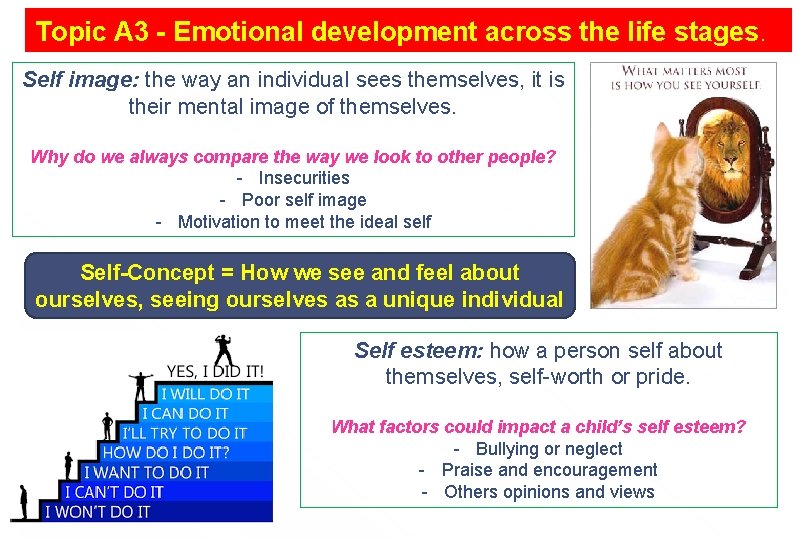
Topic A 3 - Emotional development across the life stages. Self image: the way an individual sees themselves, it is their mental image of themselves. Why do we always compare the way we look to other people? - Insecurities - Poor self image - Motivation to meet the ideal self Self-Concept = How we see and feel about ourselves, seeing ourselves as a unique individual Self esteem: how a person self about themselves, self-worth or pride. What factors could impact a child’s self esteem? - Bullying or neglect - Praise and encouragement - Others opinions and views
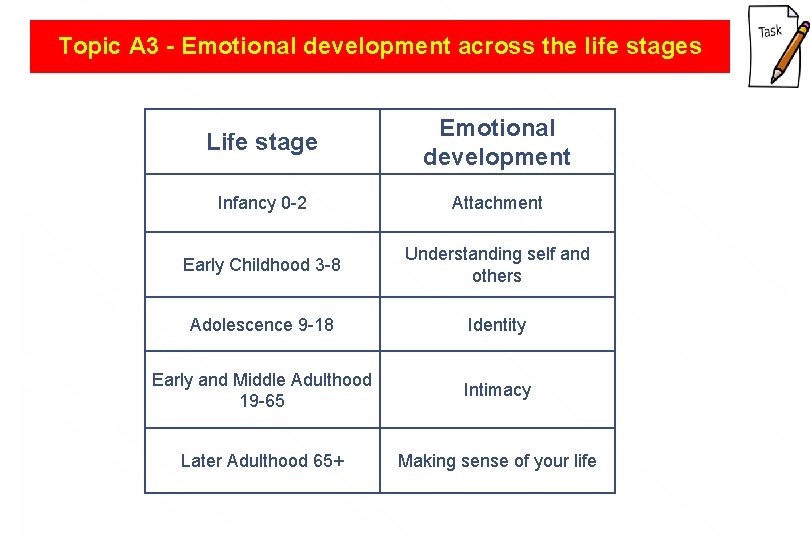
Topic A 3 - Emotional development across the life stages Life stage Emotional development Infancy 0 -2 Attachment Early Childhood 3 -8 Understanding self and others Adolescence 9 -18 Identity Early and Middle Adulthood 19 -65 Intimacy Later Adulthood 65+ Making sense of your life
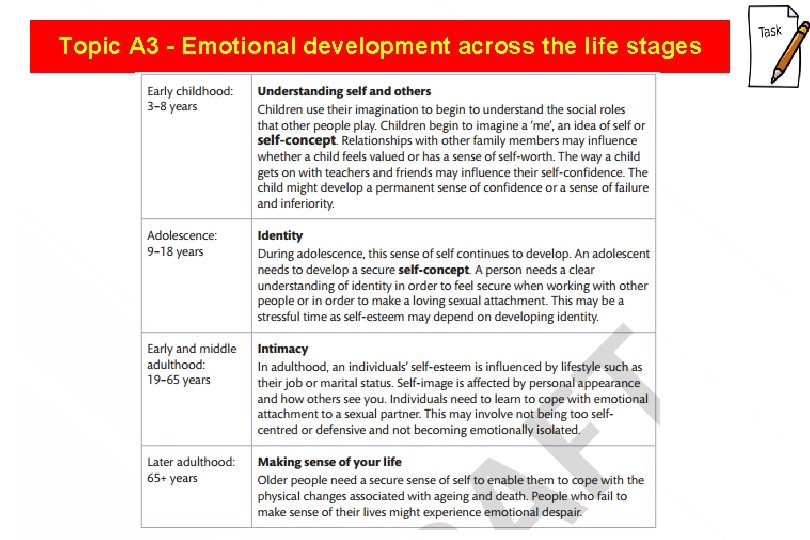
Topic A 3 - Emotional development across the life stages
Topic A 3 - Emotional development across the life stages
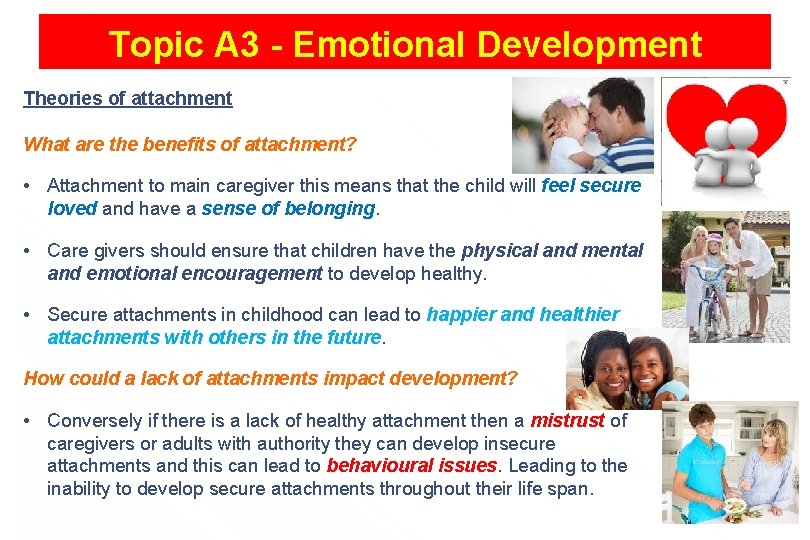
Topic A 3 - Emotional Development Theories of attachment What are the benefits of attachment? • Attachment to main caregiver this means that the child will feel secure loved and have a sense of belonging. • Care givers should ensure that children have the physical and mental and emotional encouragement to develop healthy. • Secure attachments in childhood can lead to happier and healthier attachments with others in the future. How could a lack of attachments impact development? • Conversely if there is a lack of healthy attachment then a mistrust of caregivers or adults with authority they can develop insecure attachments and this can lead to behavioural issues. Leading to the inability to develop secure attachments throughout their life span.
Theories of Attachment LO: to examine the process of attachment as defined by Bowlby Starter: give 3 facts you already know about the attachment between carer and child Task Sheet 1
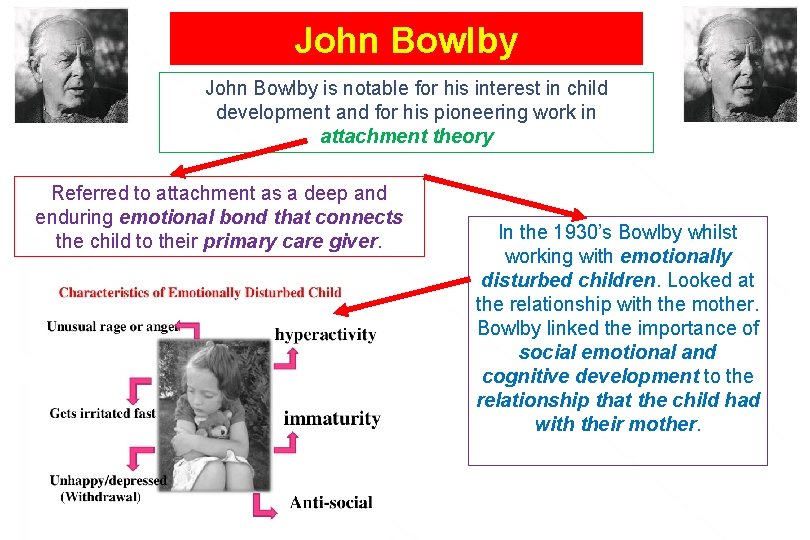
John Bowlby is notable for his interest in child development and for his pioneering work in attachment theory Referred to attachment as a deep and enduring emotional bond that connects the child to their primary care giver. In the 1930’s Bowlby whilst working with emotionally disturbed children. Looked at the relationship with the mother. Bowlby linked the importance of social emotional and cognitive development to the relationship that the child had with their mother.
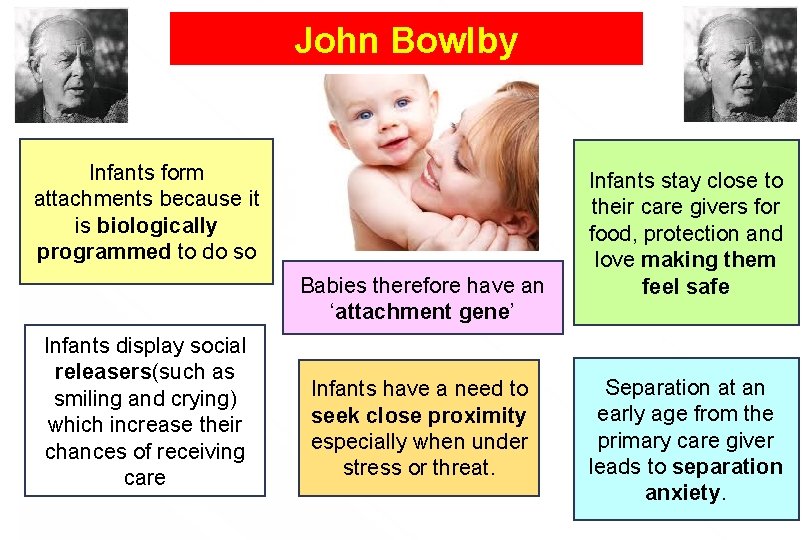
John Bowlby Infants form attachments because it is biologically programmed to do so Babies therefore have an ‘attachment gene’ Infants display social releasers(such as smiling and crying) which increase their chances of receiving care Infants have a need to seek close proximity especially when under stress or threat. Infants stay close to their care givers for food, protection and love making them feel safe Separation at an early age from the primary care giver leads to separation anxiety.
John Bowlby - Critics • Rutter states that Bowlby oversimplified theory of attachment and argued that maternal deprivation in itself may not lead to long term issues. • Rutter suggests that privation is more damaging. Privation happens when children do not have the opportunity to form attachments or have poor attachments cause by a lack of social or intellectual stimulation. • Bowlby believed attachment is a natural biological process, whilst others suggest that it is learned behaviour influenced by external factors such as; environment, culture or the baby's temperament.
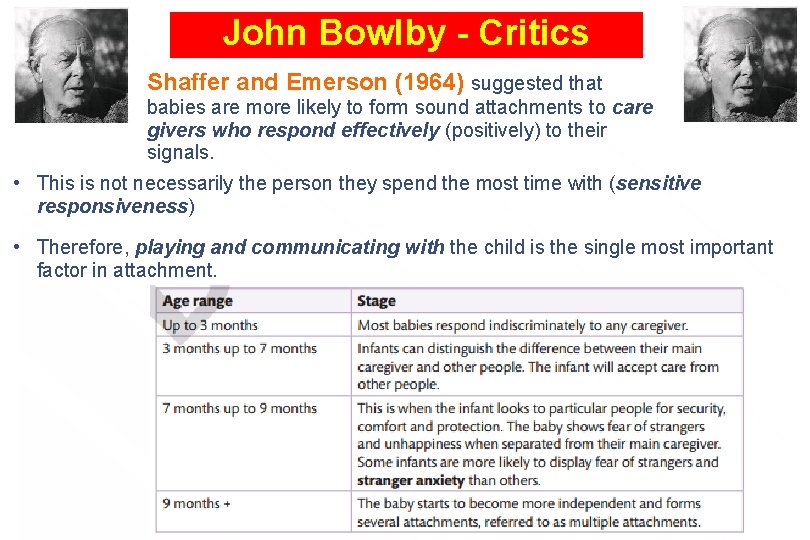
John Bowlby - Critics Shaffer and Emerson (1964) suggested that babies are more likely to form sound attachments to care givers who respond effectively (positively) to their signals. • This is not necessarily the person they spend the most time with (sensitive responsiveness) • Therefore, playing and communicating with the child is the single most important factor in attachment.
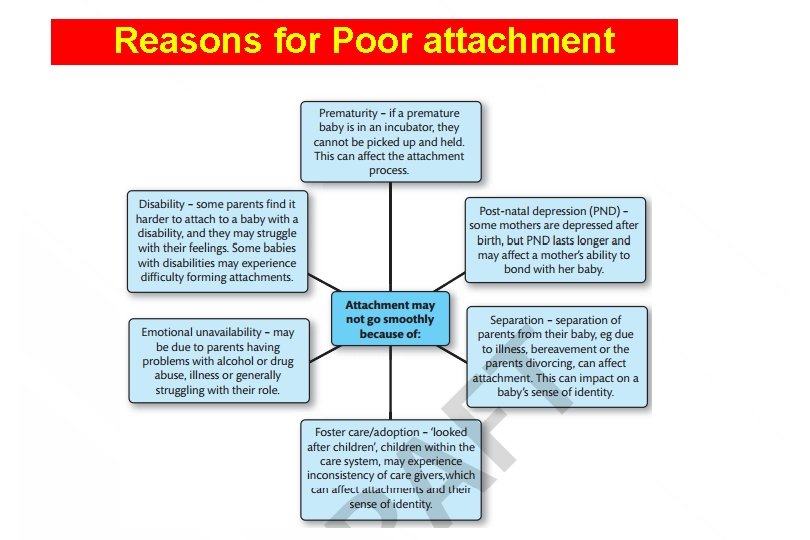
Reasons for Poor attachment
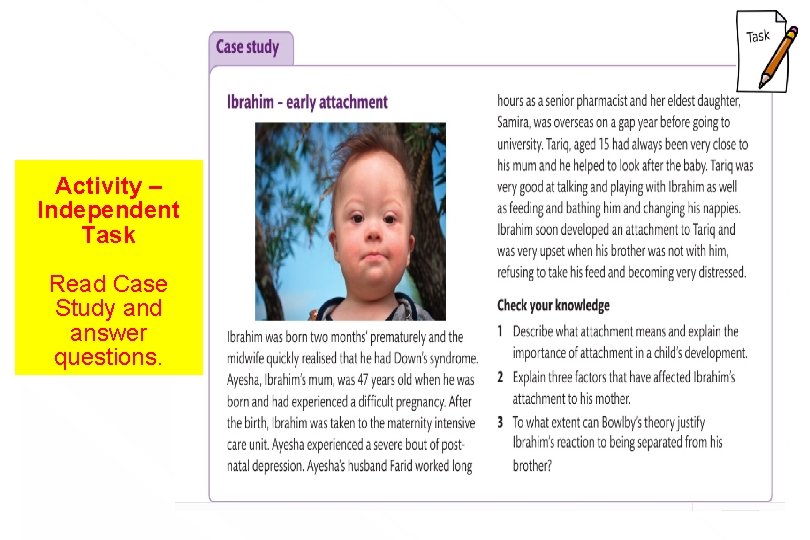
Activity – Independent Task Read Case Study and answer questions.
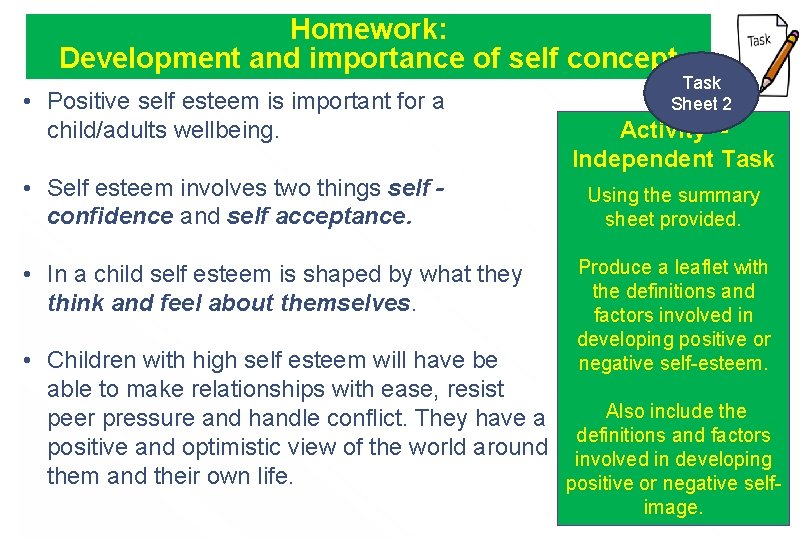
Homework: Development and importance of self concept • Positive self esteem is important for a child/adults wellbeing. • Self esteem involves two things self confidence and self acceptance. • In a child self esteem is shaped by what they think and feel about themselves. Task Sheet 2 Activity Independent Task Using the summary sheet provided. Produce a leaflet with the definitions and factors involved in developing positive or negative self-esteem. • Children with high self esteem will have be able to make relationships with ease, resist Also include the peer pressure and handle conflict. They have a definitions and factors positive and optimistic view of the world around involved in developing them and their own life. positive or negative selfimage.