
Introduction to element based computing finite volume and

Introduction to element based computing --finite volume and finite element methods. Mesh generation Joanna Szmelter Loughborough University, UK
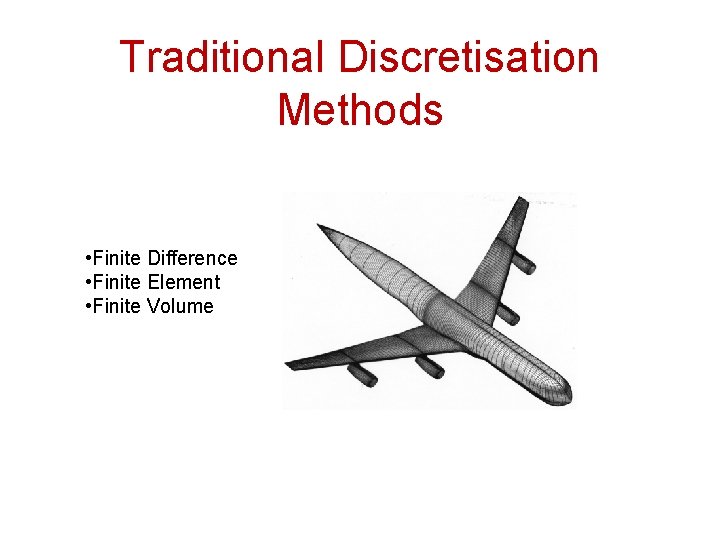
Traditional Discretisation Methods • Finite Difference • Finite Element • Finite Volume
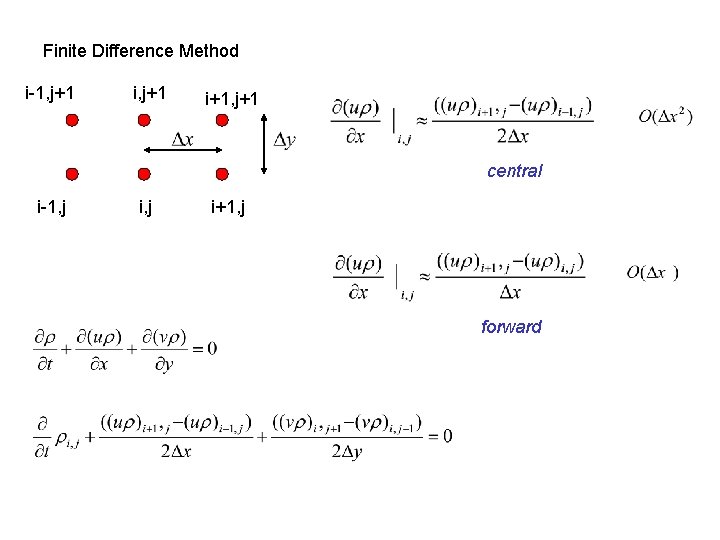
Finite Difference Method i-1, j+1 i+1, j+1 central i-1, j i+1, j forward
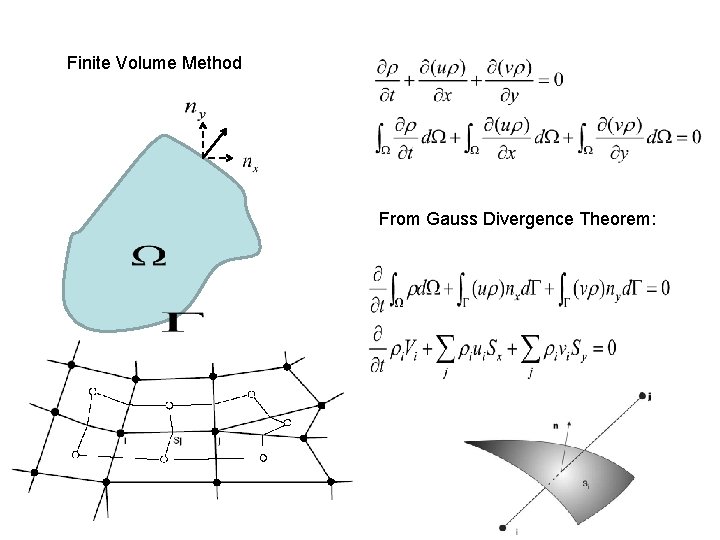
Finite Volume Method From Gauss Divergence Theorem:
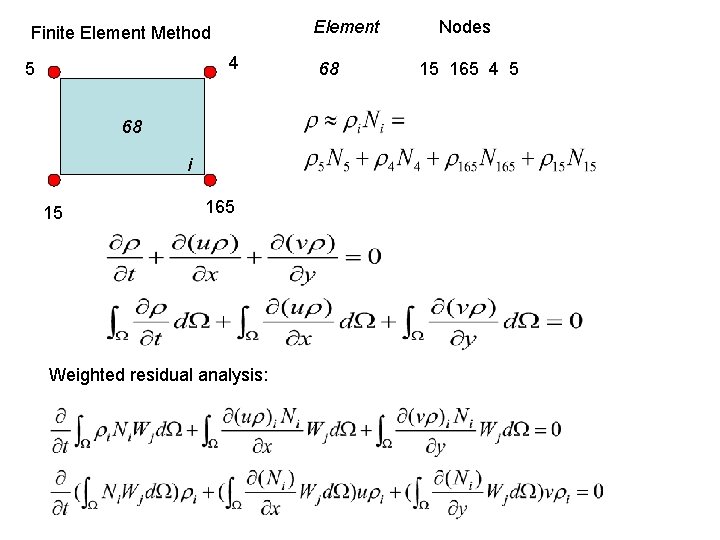
Element Finite Element Method 4 5 68 i 15 165 Weighted residual analysis: 68 Nodes 15 165 4 5
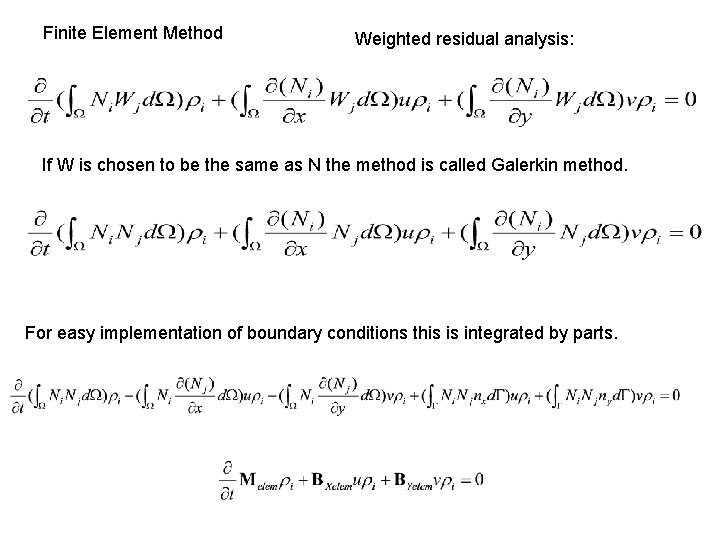
Finite Element Method Weighted residual analysis: If W is chosen to be the same as N the method is called Galerkin method. For easy implementation of boundary conditions this is integrated by parts.
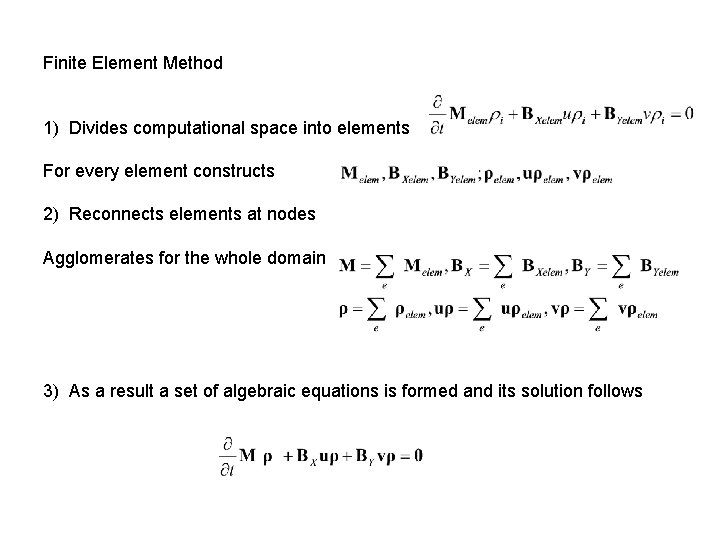
Finite Element Method 1) Divides computational space into elements For every element constructs 2) Reconnects elements at nodes Agglomerates for the whole domain 3) As a result a set of algebraic equations is formed and its solution follows
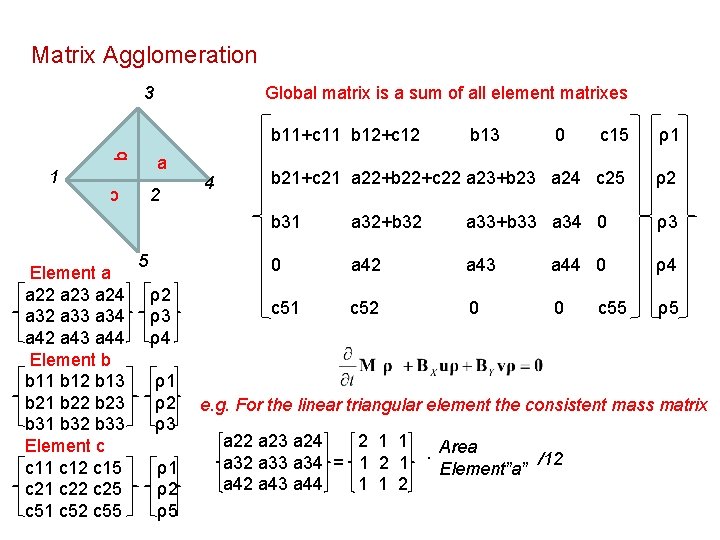
Matrix Agglomeration 3 Global matrix is a sum of all element matrixes b 11+c 11 b 12+c 12 b 1 1 a 2 c Element a a 22 a 23 a 24 a 32 a 33 a 34 a 42 a 43 a 44 Element b b 11 b 12 b 13 b 21 b 22 b 23 b 31 b 32 b 33 Element c c 11 c 12 c 15 c 21 c 22 c 25 c 51 c 52 c 55 5 ρ2 ρ3 ρ4 ρ1 ρ2 ρ3 ρ1 ρ2 ρ5 4 b 13 0 c 15 ρ1 b 21+c 21 a 22+b 22+c 22 a 23+b 23 a 24 c 25 ρ2 b 31 a 32+b 32 a 33+b 33 a 34 0 ρ3 0 a 42 a 43 a 44 0 ρ4 c 51 c 52 0 0 ρ5 c 55 e. g. For the linear triangular element the consistent mass matrix a 22 a 23 a 24 2 1 1 a 32 a 33 a 34 = 1 2 1 a 42 a 43 a 44 1 1 2 . Area /12 Element”a”
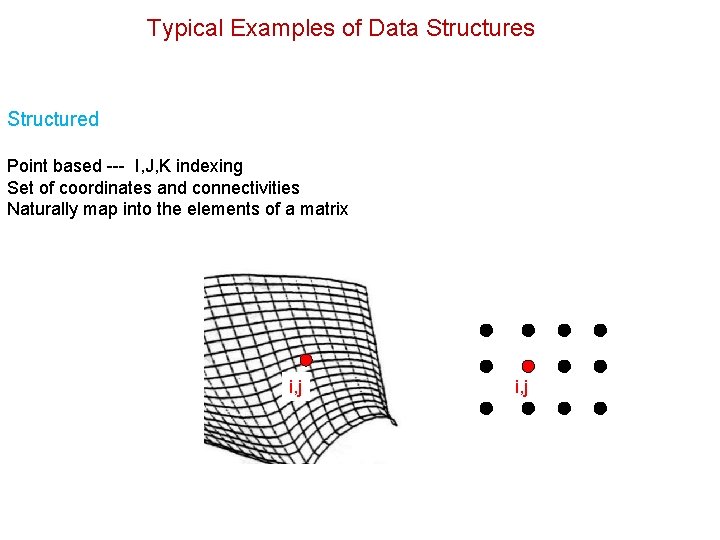
Typical Examples of Data Structures Structured Point based --- I, J, K indexing Set of coordinates and connectivities Naturally map into the elements of a matrix i, j
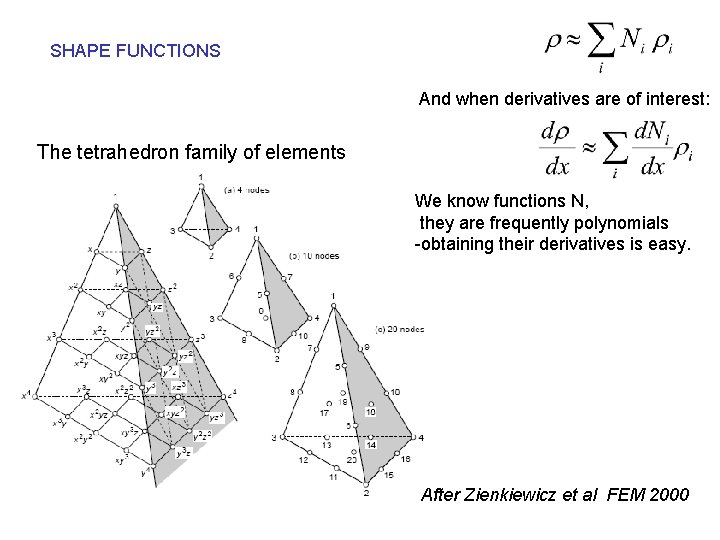
SHAPE FUNCTIONS And when derivatives are of interest: The tetrahedron family of elements We know functions N, they are frequently polynomials -obtaining their derivatives is easy. After Zienkiewicz et al FEM 2000
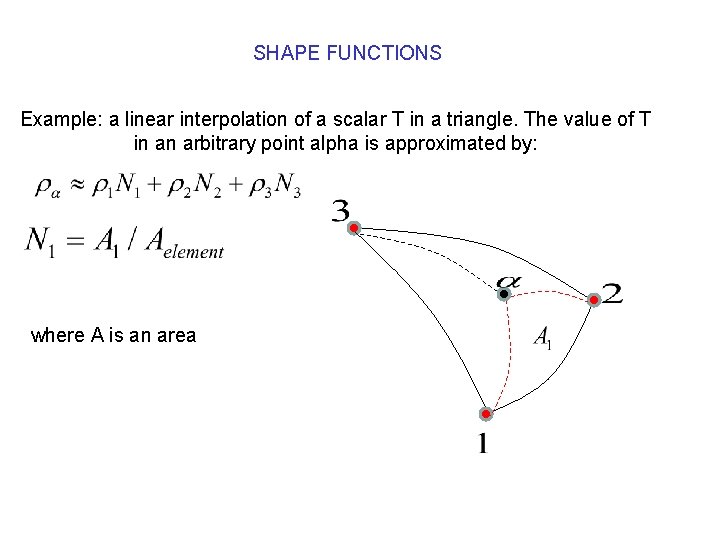
SHAPE FUNCTIONS Example: a linear interpolation of a scalar T in a triangle. The value of T in an arbitrary point alpha is approximated by: where A is an area
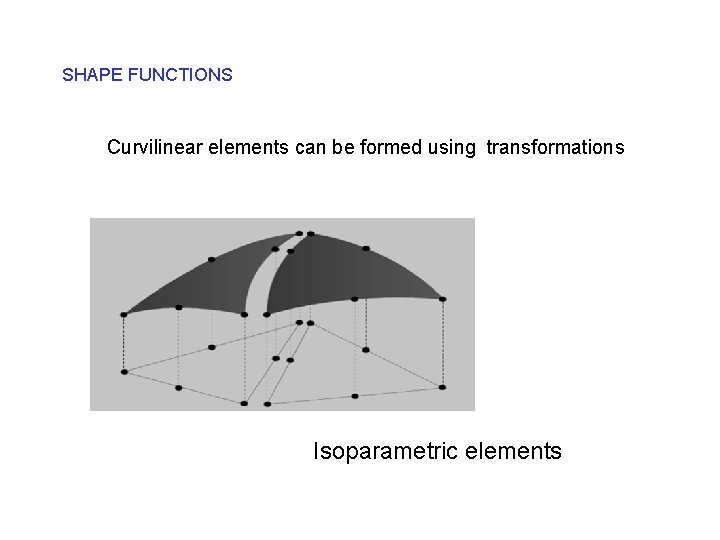
SHAPE FUNCTIONS Curvilinear elements can be formed using transformations Isoparametric elements
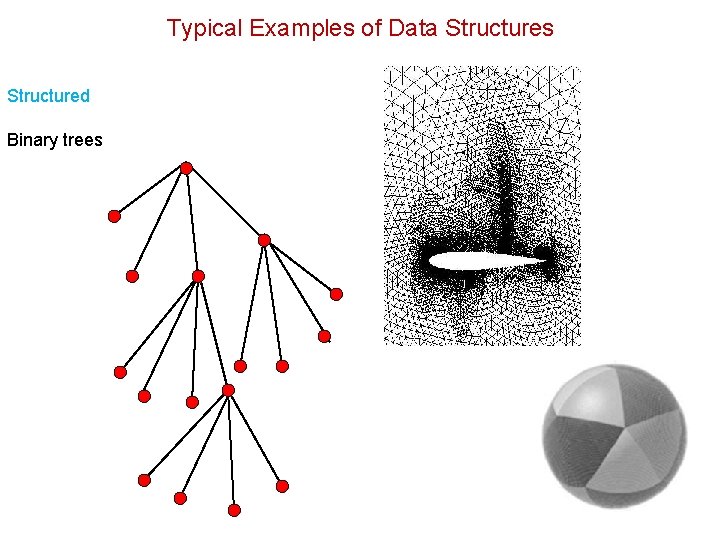
Typical Examples of Data Structures Structured Binary trees
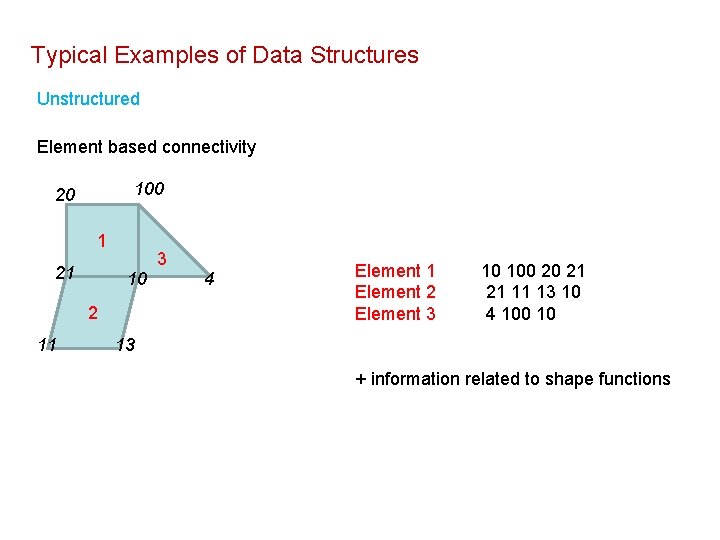
Typical Examples of Data Structures Unstructured Element based connectivity 100 20 1 21 3 10 2 11 4 Element 1 Element 2 Element 3 10 100 20 21 21 11 13 10 4 100 10 13 + information related to shape functions
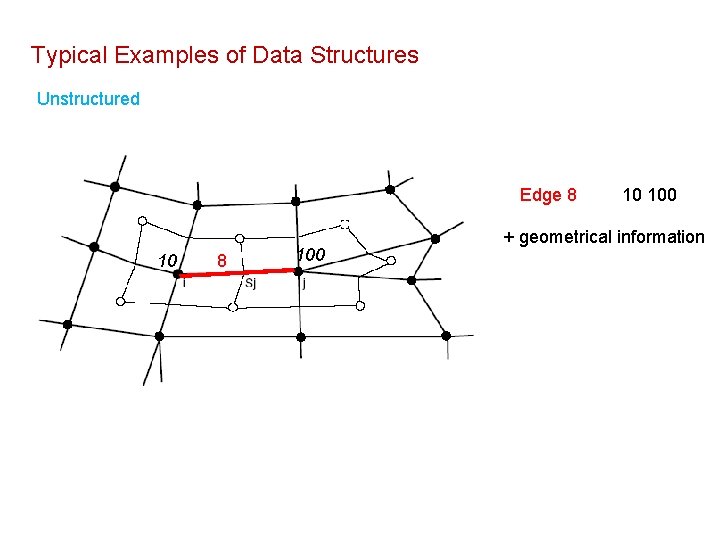
Typical Examples of Data Structures Unstructured Edge 8 100 10 100 + geometrical information
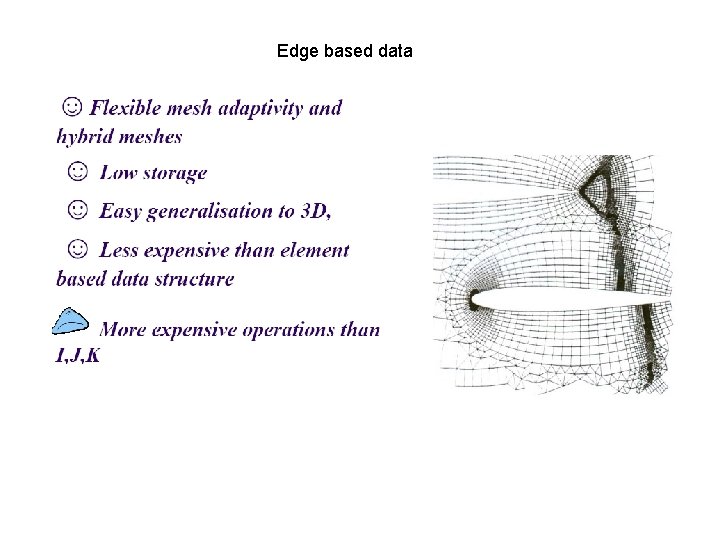
Edge based data
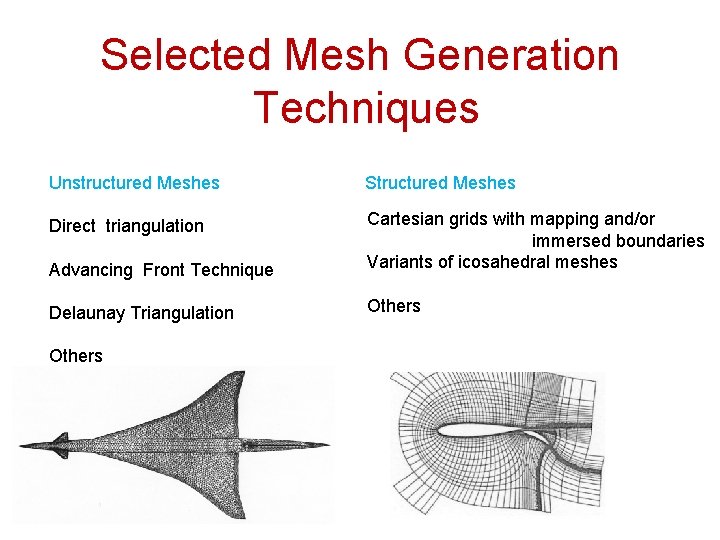
Selected Mesh Generation Techniques Unstructured Meshes Structured Meshes Direct triangulation Advancing Front Technique Cartesian grids with mapping and/or immersed boundaries Variants of icosahedral meshes Delaunay Triangulation Others
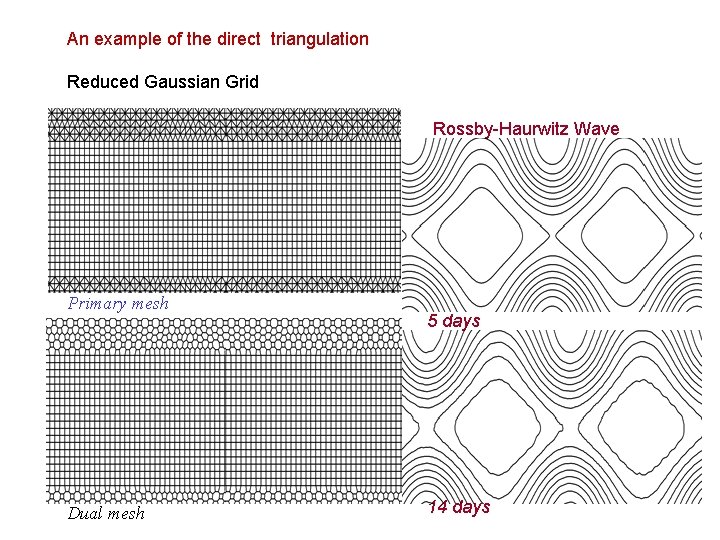
An example of the direct triangulation Reduced Gaussian Grid Rossby-Haurwitz Wave Primary mesh Dual mesh 5 days 14 days
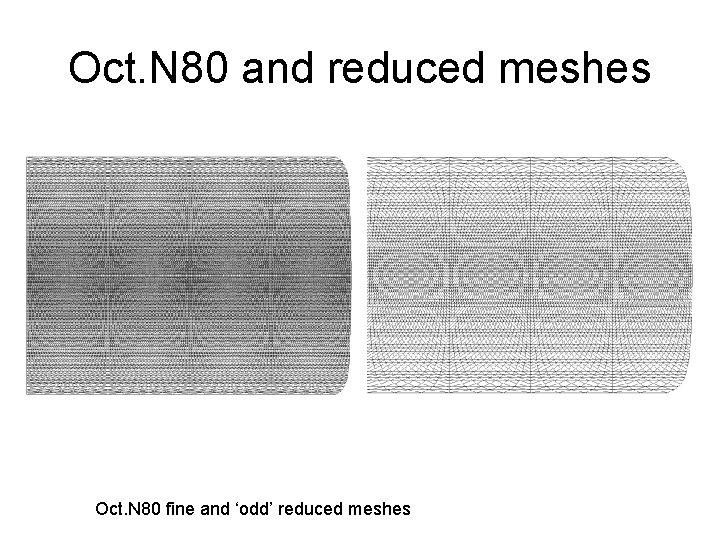
Oct. N 80 and reduced meshes Oct. N 80 fine and ‘odd’ reduced meshes
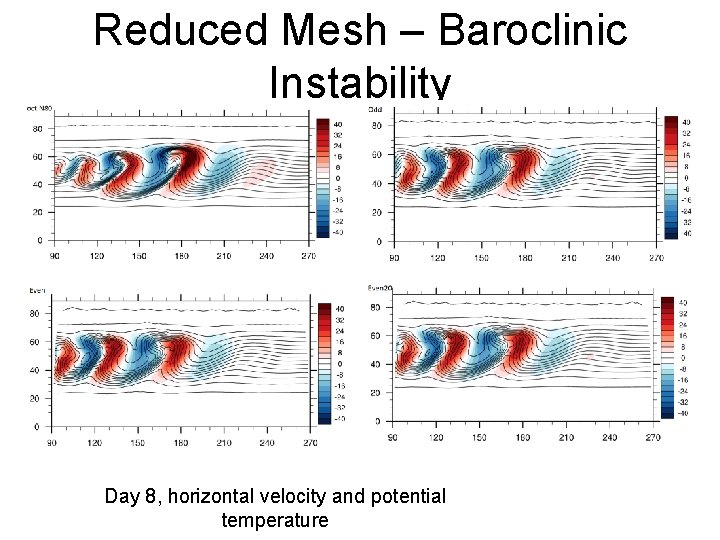
Reduced Mesh – Baroclinic Instability Day 8, horizontal velocity and potential temperature
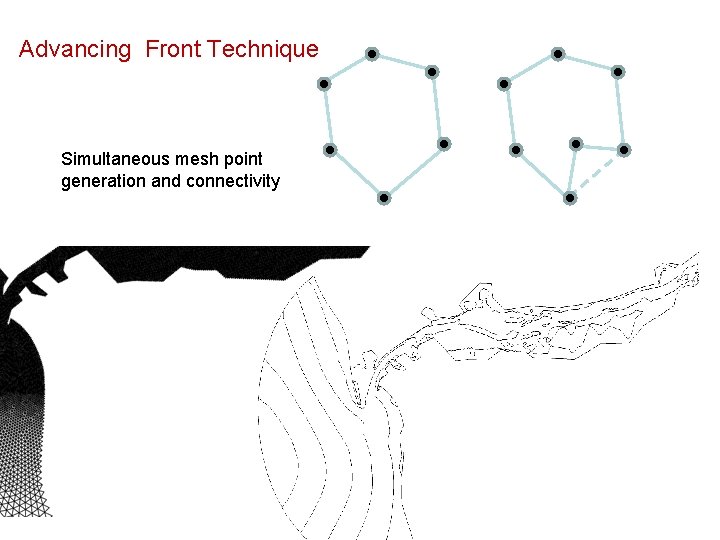
Advancing Front Technique Simultaneous mesh point generation and connectivity
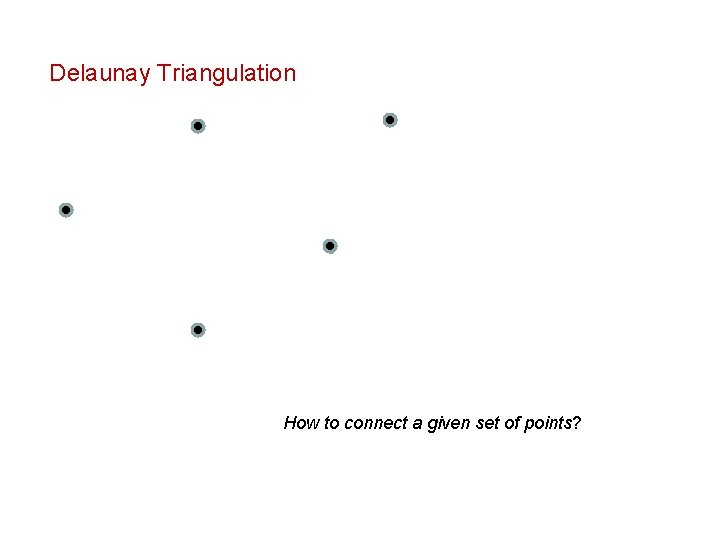
Delaunay Triangulation How to connect a given set of points?
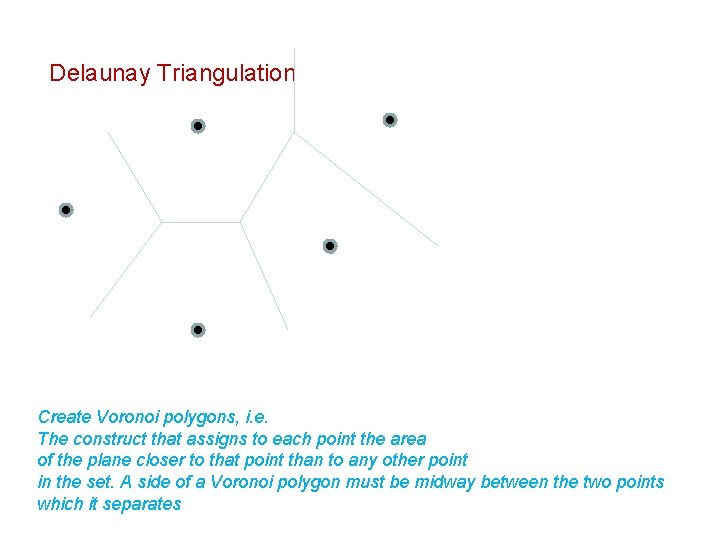
Delaunay Triangulation Create Voronoi polygons, i. e. The construct that assigns to each point the area of the plane closer to that point than to any other point in the set. A side of a Voronoi polygon must be midway between the two points which it separates
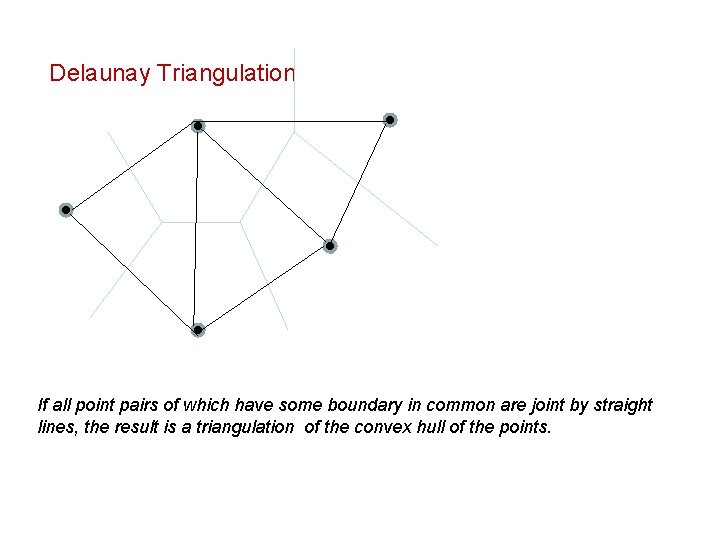
Delaunay Triangulation If all point pairs of which have some boundary in common are joint by straight lines, the result is a triangulation of the convex hull of the points.
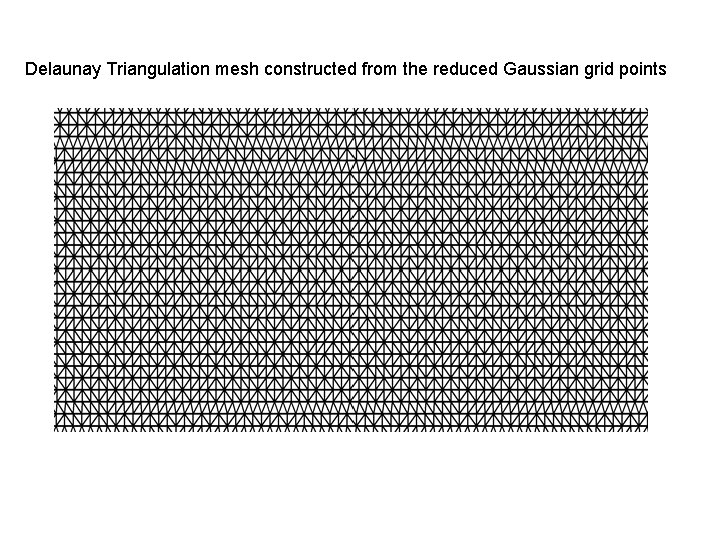
Delaunay Triangulation mesh constructed from the reduced Gaussian grid points
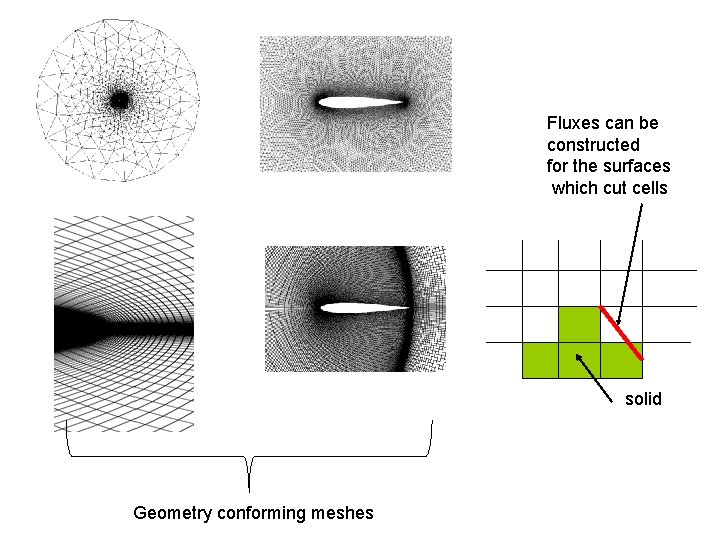
Fluxes can be constructed for the surfaces which cut cells solid Geometry conforming meshes
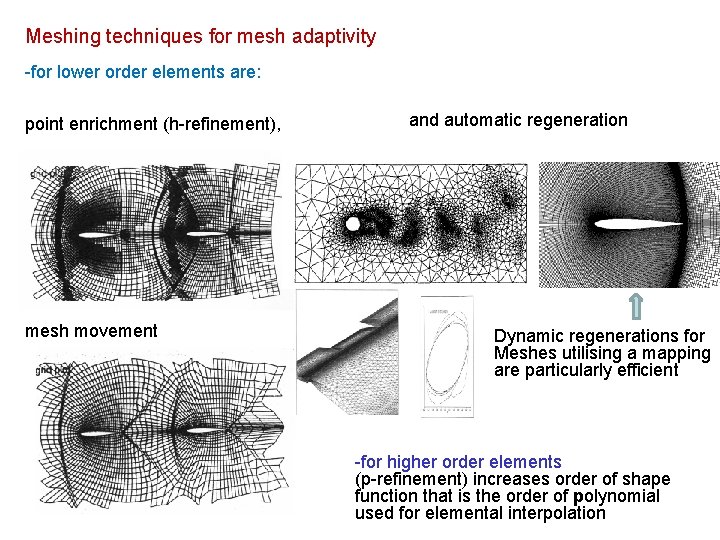
Meshing techniques for mesh adaptivity -for lower order elements are: point enrichment (h-refinement), mesh movement and automatic regeneration Dynamic regenerations for Meshes utilising a mapping are particularly efficient -for higher order elements (p-refinement) increases order of shape function that is the order of polynomial used for elemental interpolation
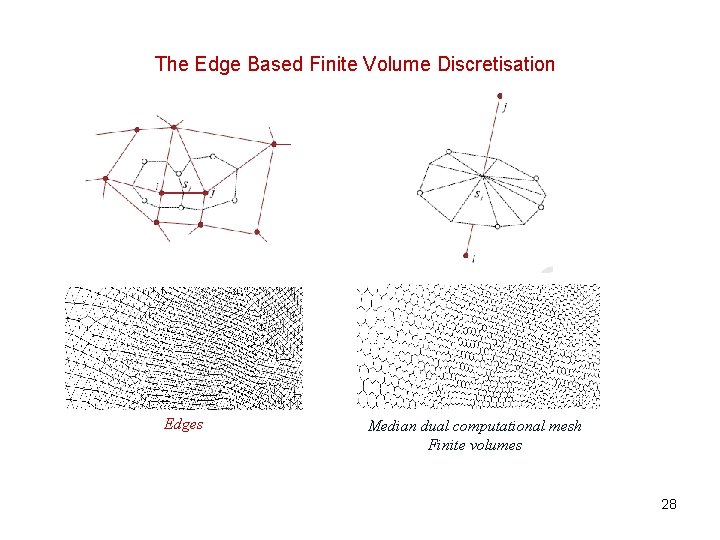
The Edge Based Finite Volume Discretisation Edges Median dual computational mesh Finite volumes 28
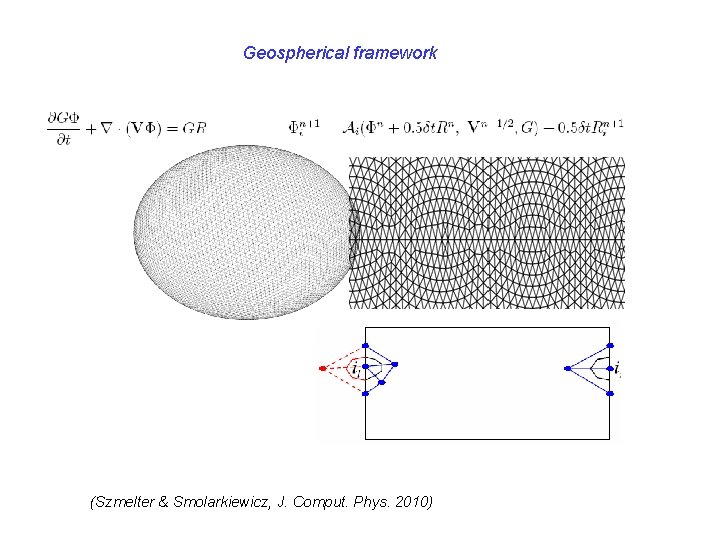
Geospherical framework (Szmelter & Smolarkiewicz, J. Comput. Phys. 2010)
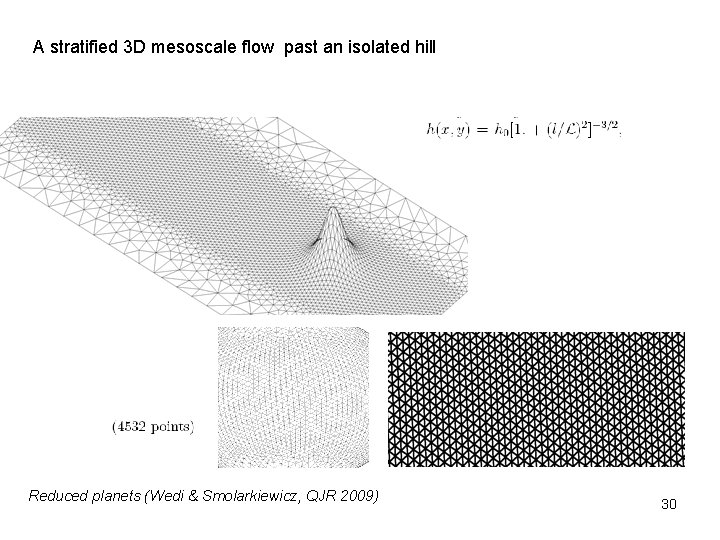
A stratified 3 D mesoscale flow past an isolated hill Reduced planets (Wedi & Smolarkiewicz, QJR 2009) 30
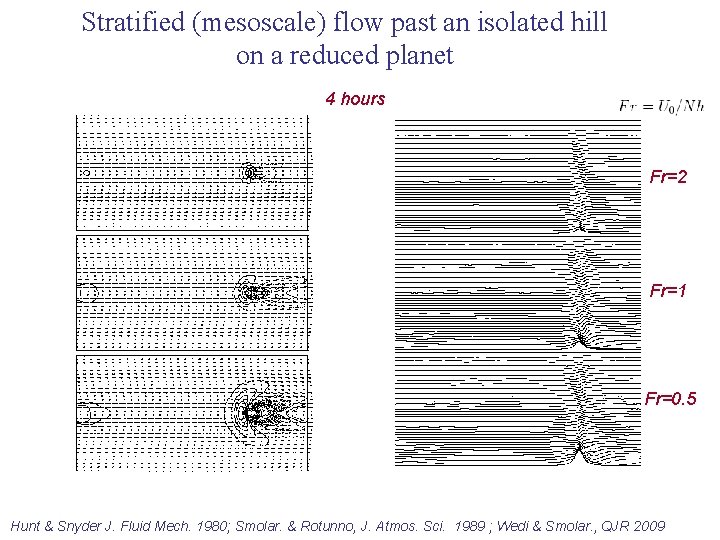
Stratified (mesoscale) flow past an isolated hill on a reduced planet 4 hours Fr=2 Fr=1 Fr=0. 5 Hunt & Snyder J. Fluid Mech. 1980; Smolar. & Rotunno, J. Atmos. Sci. 1989 ; Wedi & Smolar. , QJR 2009
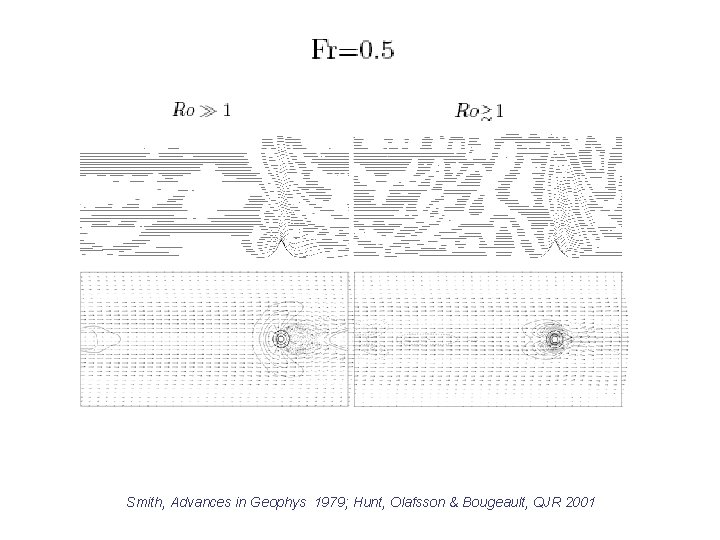
Smith, Advances in Geophys 1979; Hunt, Olafsson & Bougeault, QJR 2001
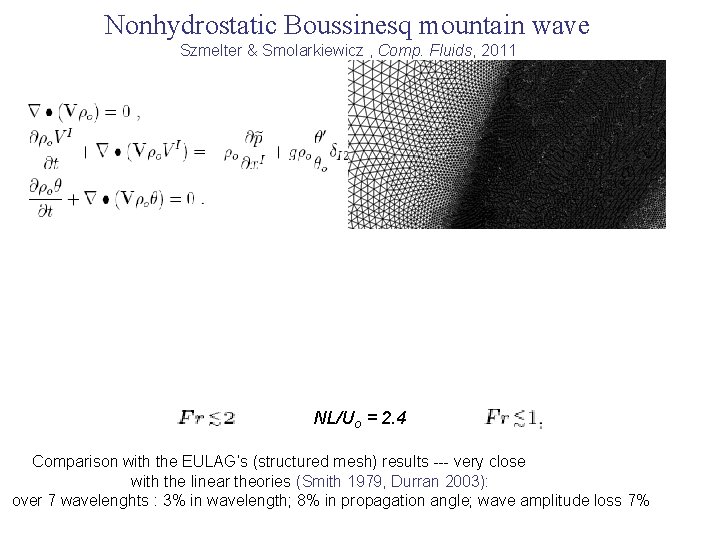
Nonhydrostatic Boussinesq mountain wave Szmelter & Smolarkiewicz , Comp. Fluids, 2011 NL/Uo = 2. 4 Comparison with the EULAG’s (structured mesh) results --- very close with the linear theories (Smith 1979, Durran 2003): over 7 wavelenghts : 3% in wavelength; 8% in propagation angle; wave amplitude loss 7%
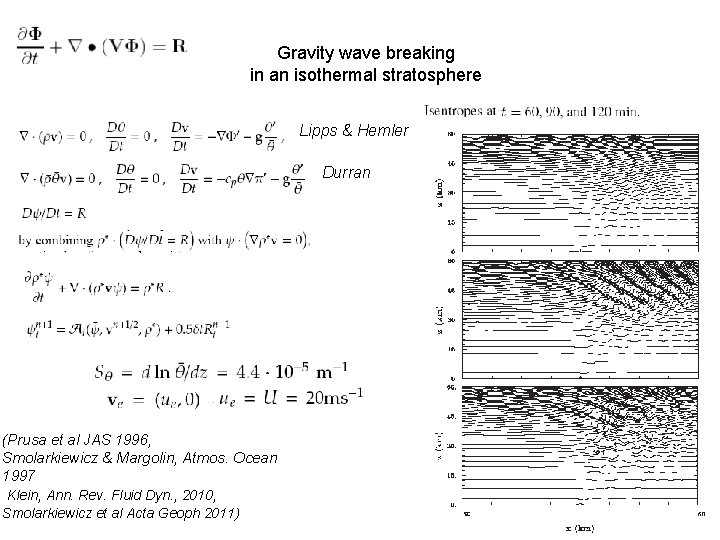
Gravity wave breaking in an isothermal stratosphere Lipps & Hemler Durran (Prusa et al JAS 1996, Smolarkiewicz & Margolin, Atmos. Ocean 1997 Klein, Ann. Rev. Fluid Dyn. , 2010, Smolarkiewicz et al Acta Geoph 2011) 34
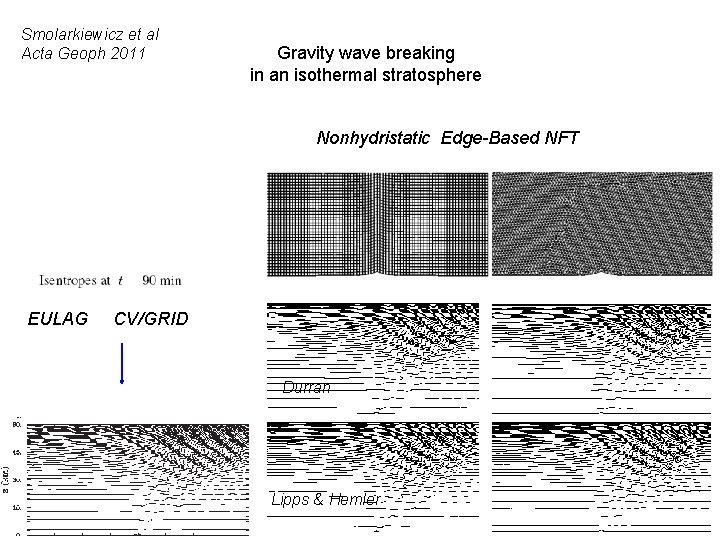
Smolarkiewicz et al Acta Geoph 2011 Gravity wave breaking in an isothermal stratosphere Nonhydristatic Edge-Based NFT EULAG CV/GRID Durran Lipps & Hemler 35
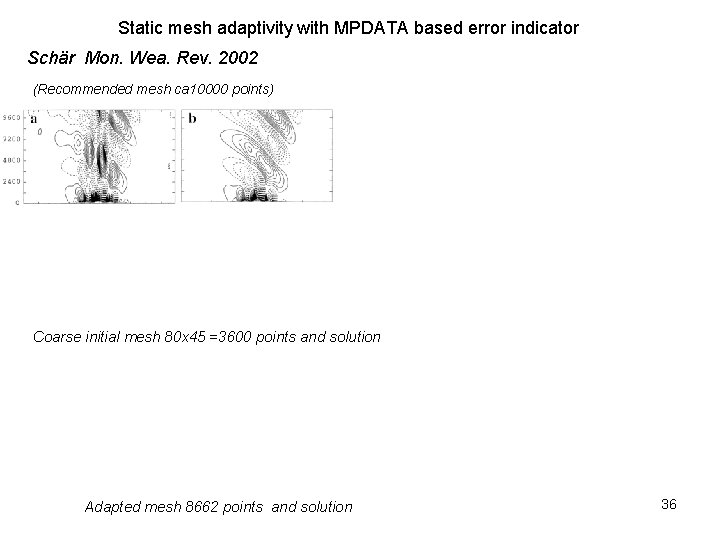
Static mesh adaptivity with MPDATA based error indicator Schär Mon. Wea. Rev. 2002 (Recommended mesh ca 10000 points) Coarse initial mesh 80 x 45 =3600 points and solution Adapted mesh 8662 points and solution 36
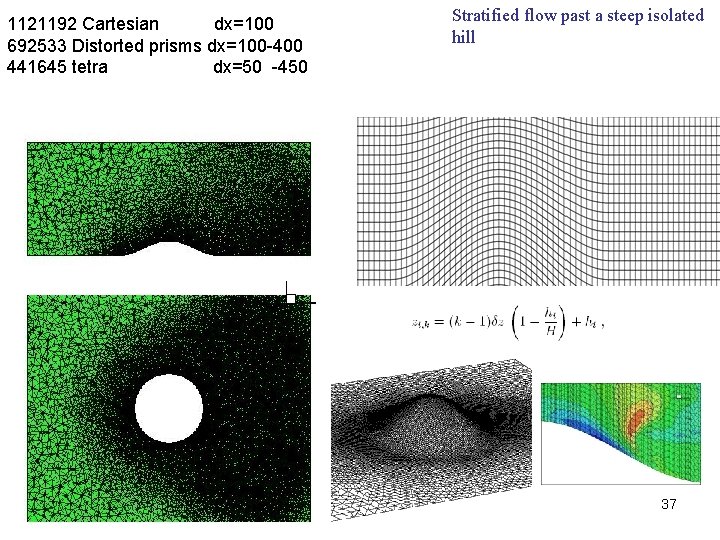
1121192 Cartesian dx=100 692533 Distorted prisms dx=100 -400 441645 tetra dx=50 -450 Stratified flow past a steep isolated hill 37
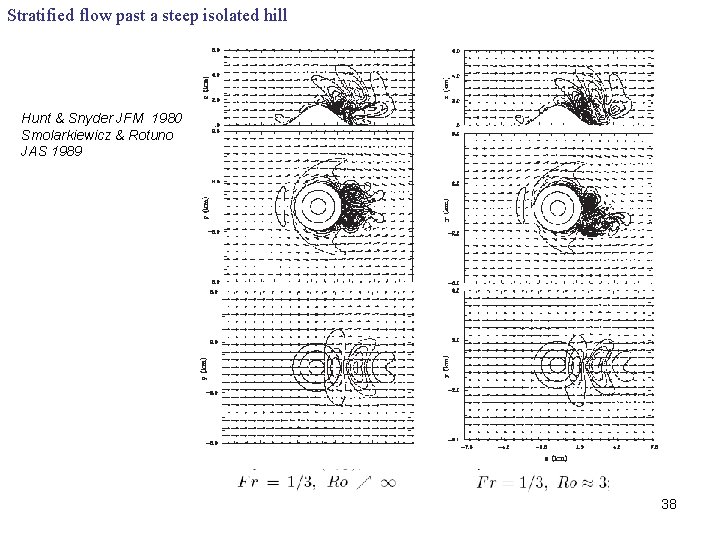
Stratified flow past a steep isolated hill Hunt & Snyder JFM 1980 Smolarkiewicz & Rotuno JAS 1989 38
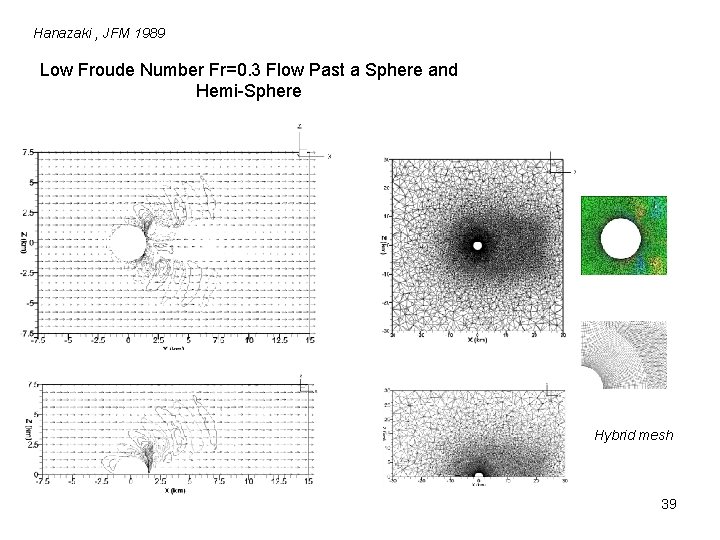
Hanazaki , JFM 1989 Low Froude Number Fr=0. 3 Flow Past a Sphere and Hemi-Sphere Hybrid mesh 39
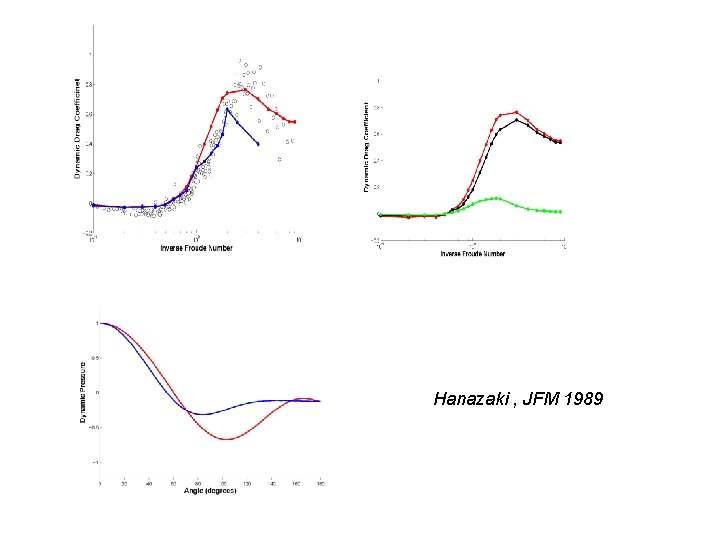
Hanazaki , JFM 1989
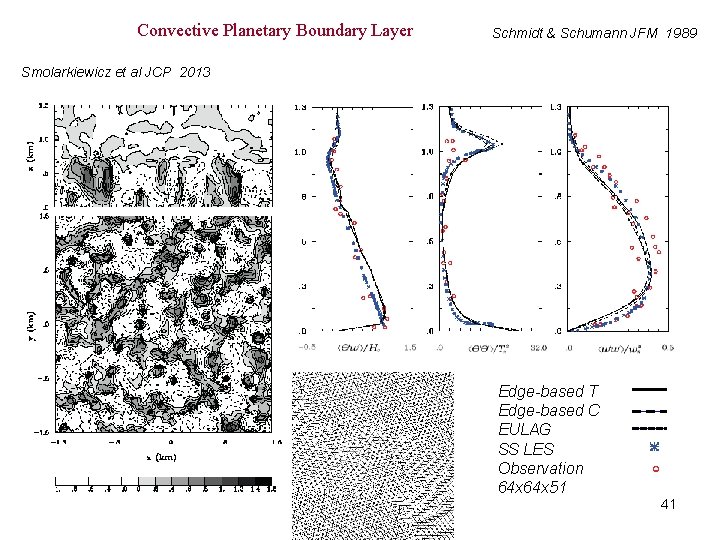
Convective Planetary Boundary Layer Schmidt & Schumann JFM 1989 Smolarkiewicz et al JCP 2013 Edge-based T Edge-based C EULAG SS LES Observation 64 x 51 41
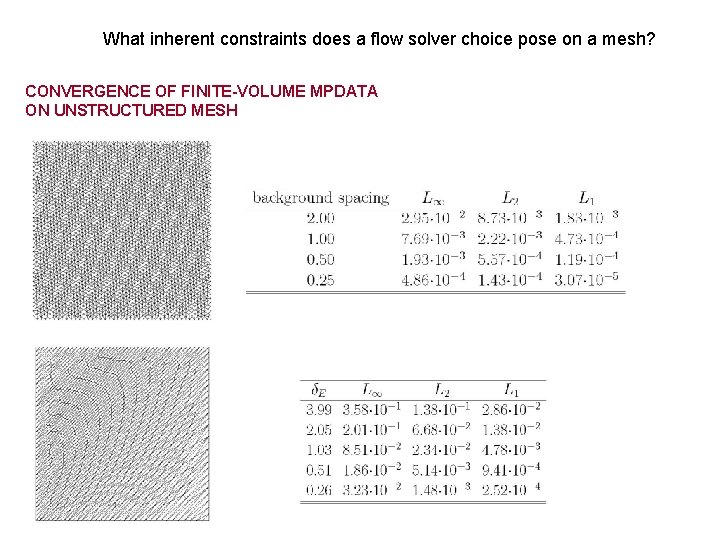
What inherent constraints does a flow solver choice pose on a mesh? CONVERGENCE OF FINITE-VOLUME MPDATA ON UNSTRUCTURED MESH
Selected references for further details Smolarkiewicz, PK, Szmelter, J, Wyszogrodzki, AA (2013) An unstructured-mesh atmospheric model for nonhydrostatic dynamics, Journal of Computational Physics, 254, pp. 184 -199 Smolarkiewicz, PK and Szmelter, J (2011) A Nonhydrostatic Unstructured-Mesh Soundproof Model for Simulation of Internal Gravity Waves, Acta Geophysica, 59(6), pp. 1109 -1134 Szmelter, J and Smolarkiewicz, PK (2011) An edge-based unstructured mesh framework for atmospheric flows, Computers and Fluids, 46(1), pp. 455 -460. Szmelter, J and Smolarkiewicz, PK (2010) An edge-based unstructured mesh discretisation in geospherical framework, Journal of Computational Physics, 229, pp. 4980 -4995. Smolarkiewicz, PK and Szmelter, J (2009) Iterated upwind schemes for gas dynamics, Journal of Computational Physics, 228(1), pp. 33 -54 Smolarkiewicz, PK and Szmelter, J (2008) An MPDATA-based solver for compressible flows, International Journal for Numerical Methods in Fluids, 56(8), pp. 1529 -1534 Szmelter, J and Smolarkiewicz, PK (2006) MPDATA error estimator for mesh adaptivity, International Journal for Numerical Methods in Fluids, 50(10), pp. 1269 -1293 Smolarkiewicz, PK and Szmelter, J (2005) MPDATA: An Edge-Based Unstructured-Grid Formulation, Journal of Computational Physics, 206(2), pp. 624 -649 Zienkiewicz OC, Taylor RL, The Finite Element Method, 5 th Ed, Butterworth-Heineman, (2000) Szmelter, J and Pagano, A (1995) Viscous flow modelling using unstructured meshes for aeronautical applications, Lecture Notes in Physics, Springer (453), pp. 292 -298 Evans, A, Marchant, MJ, Weatherill, NP, Szmelter, J, Natukusumah, DK (1992) A Point Enrichment Strategy for Polygonal Finite Volume Meshes, Applied Mathematical Modelling, 16, pp. 562 -575. Szmelter, J, Marchant, MJ, Evans, A, Weatherill, NP (1992) Two-dimensional Navier-Stokes Equations Adaptivity on Structured Meshes, Comp. Meth. Appl. Mech. Eng, 101, pp. 355 -368. Evans, A, Marchant, MJ, Szmelter, J, Weatherill, NP (1991) Adaptivity for Compressible Flow Computations Using Point Embedding on 2 -D Structured Multiblock Meshes, International Journal for Numerical Methods in Engineering, 32, pp. 896 -919 Zienkiewicz, OC, Szmelter, J, Peraire, J (1990) Compressible and Incompressible Flow: An Algorithm for All Seasons, Comp. Meth. Appl. Mech. Eng, 78, pp. 105 -121. Wu, J, Zhu, JZ, Szmelter, J, Zienkiewicz, OC (1990) Error Estimation and Adaptivity in Navier-Stokes Incompressible Flows, Computational Mechanics, 6, pp. 259 -270.
- Slides: 43