
INTRODUCTION TO ELECTRONIC INSTRUMENTATION Chapter 9 INTC 1305
- Slides: 22
INTRODUCTION TO ELECTRONIC INSTRUMENTATION Chapter 9 INTC 1305 – 01 LOOP PROCESSES Vern Wilson
Review of Chapter 8 �Learn Process control – Regulate a variable �Determine Set Point – Defined by process �Understand Control Loops – Open / Closed �Identify � Sensor � Transmitter - transducers � Controller - computer � Final Control Element �Signals – Pneumatic, electronic, digital, mechanical
PREVIEW �Describe the role of the sensors �Describe the role of the transmitters �Discuss differential pressures �Compare signals for input and output �Describe the function of current to pneumatic �Describe the relationship between 3 – 15 psi and 4 – 20 m. A �Explain the loop functions
Introduction �Transmitter - Most transmitters house sensing and measuring functions and transducers that produce a signal that is sent to the next stage �Controller �Recorder �Indicator �Programmable Logic Controller (PLC) �Digital Control System (DCS)
SENSORS �Mechanical �Electronic �Primary job – detect a PV (Process Variable) �Must be accurate and quick �Discrete = wired together �Integrally mounted = physical contact
TRANSMITTERS �Provides a measured input to a control loop �After sensing and measuring the PV is transduced (converted) into a signal �The signal is either �Electronic 4 -20 m. A, or �Pneumatic 3 -15 psig � Standardized signals only
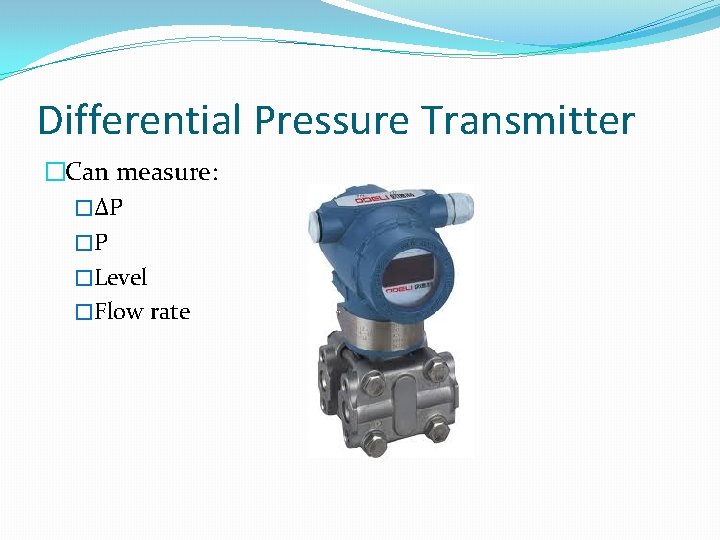
Differential Pressure Transmitter �Can measure: �ΔP �P �Level �Flow rate
TRANSMITTER SIGNALS �Signals are the same from analog or digital sensors – 4 to 20 m. A �All converted from 0 – 100 percent �The PV’s are different but the output signals are the same � 12 m. A = 50% �Instrument Scale – relates PV to percent
INSTRUMENT SCALE �Relate two scales – the input and the output �Scaling relates one scale to its mathematically proportional value �Eg – pressure is converted to m. A �Three ranges: Upper, Lower and Operating �Span = difference between URV and LRV
TRANSDUCERS �Converts one energy form to another �Eg. converts temp or pres to electronic form �I/P – Current to Pneumatic transducer takes an electronic signal and converts it to pneumatic – page 185
PNEUMATIC AND ELECTRICAL �Pneumatic language is simply 3 - 15 psig �Electronic signal language is 4 – 20 m. A �Transmitters produce 4 – 20 m. A �Live zero usually 3 psig because zero is too difficult to measure
FINAL CONTROL ELEMENT �Commonly an actuated valve �The Final Control Element have I/P (Current to Pneumatic) transducer, a positioner, an actuator and a valve.
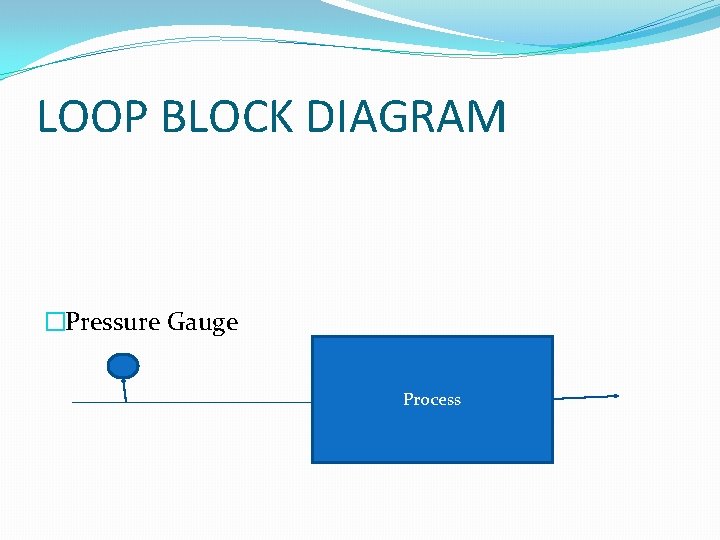
LOOP BLOCK DIAGRAM �Pressure Gauge Process
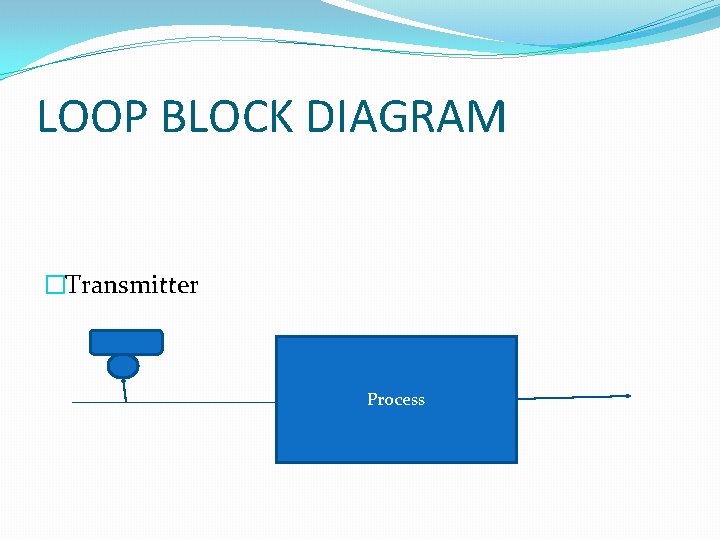
LOOP BLOCK DIAGRAM �Transmitter Process
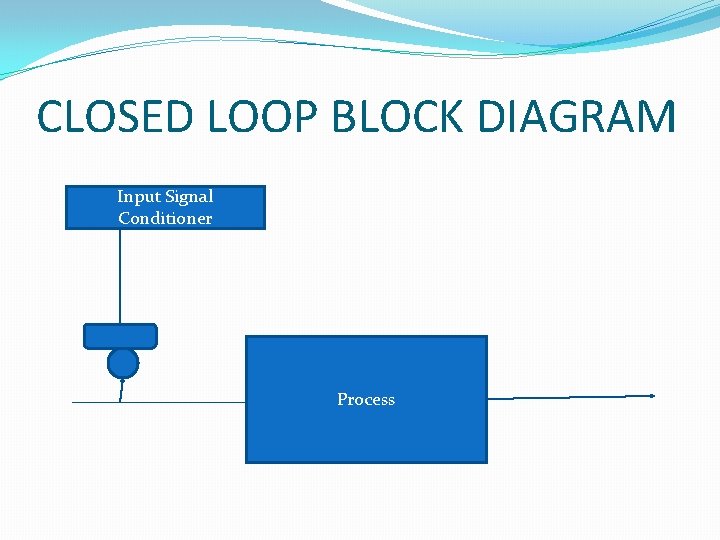
CLOSED LOOP BLOCK DIAGRAM Input Signal Conditioner Process
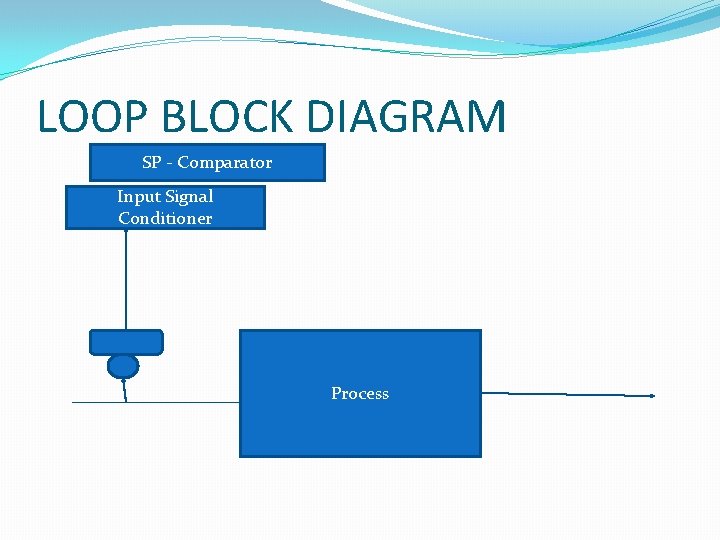
LOOP BLOCK DIAGRAM SP - Comparator Input Signal Conditioner Process
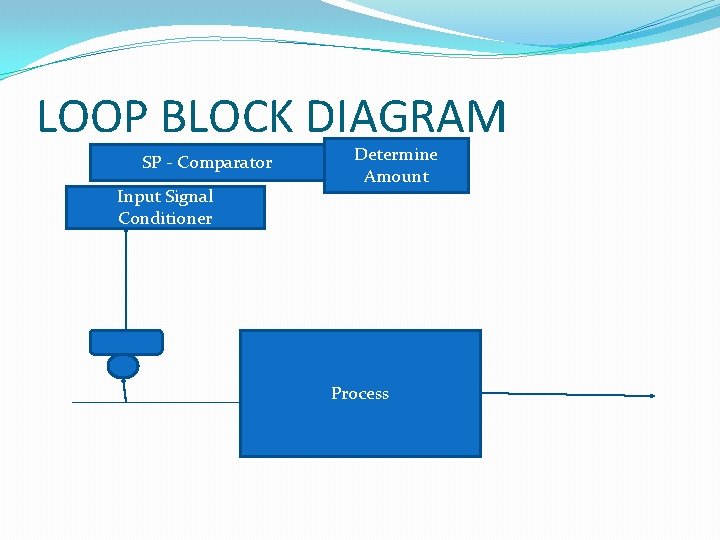
LOOP BLOCK DIAGRAM SP - Comparator Input Signal Conditioner Determine Amount Process
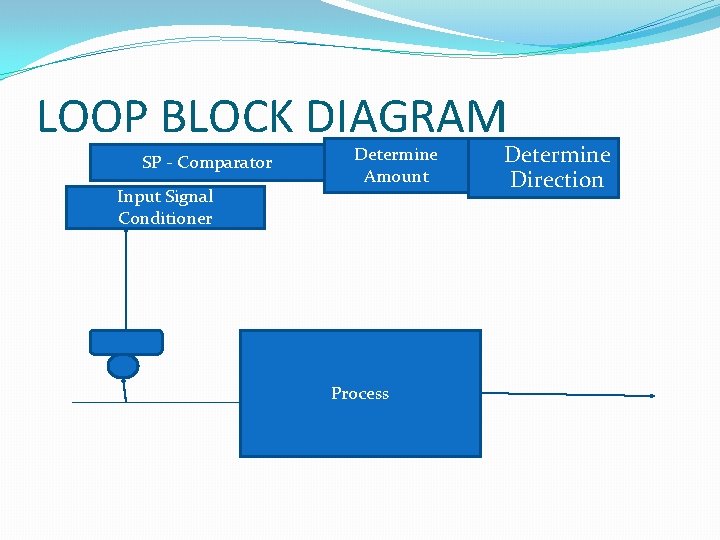
LOOP BLOCK DIAGRAM SP - Comparator Input Signal Conditioner Determine Amount Process � Determine Direction
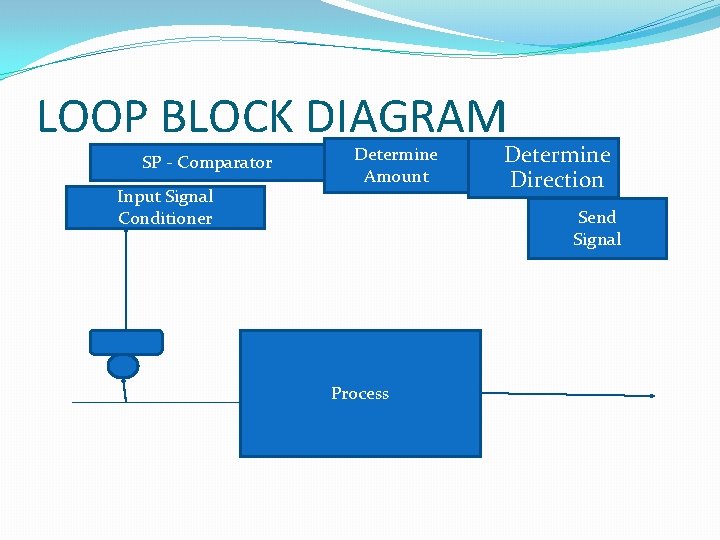
LOOP BLOCK DIAGRAM SP - Comparator Input Signal Conditioner Determine Amount � Determine Direction Send Signal Process
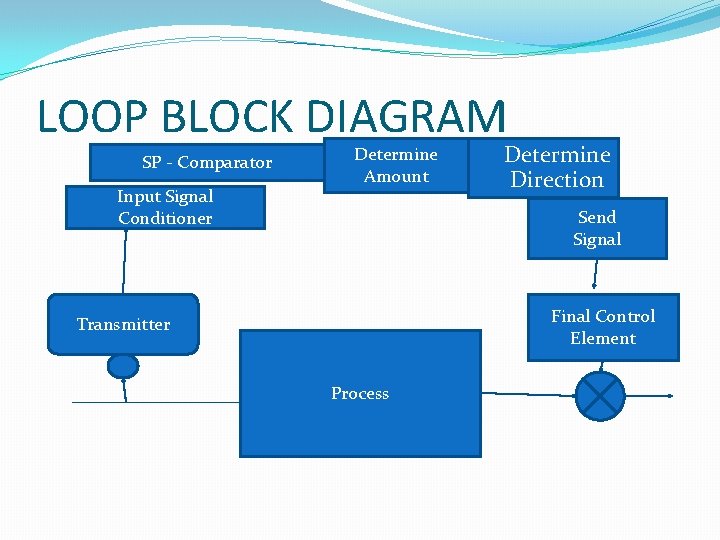
LOOP BLOCK DIAGRAM SP - Comparator Input Signal Conditioner Determine Amount � Determine Direction Send Signal Final Control Element Transmitter Process
Signal Transmission �FOUR TYPES: �Pneumatic (Analog) �Electronic (Analog) – current is preferable to voltage because current has a higher immunity to electrical and electromagnetic interference. Current can be compared with water: water in = water out �Digital – Binary numbers �Mechanical – Link or linkage – must be close
Your Turn – Process = Tank level �Draw a loop where a tank level is controlled �The top control is at 12. 7’ – and bottom at 3. 3’ �Design whatever type of controller you like �Show the set points �Show the final control element �Show an inlet and outlet on the tank