
Introduction to Ecology study of interactions between organisms
Introduction to Ecology – study of interactions between organisms and environment. Ecology is The study of interactions between living (biotic) and non-living (abiotic) components in ecosystems
Origin of the word…”ecology” • Greek origin • OIKOS = household • LOGOS = study of… • Study of the “house/environment” in which we live.
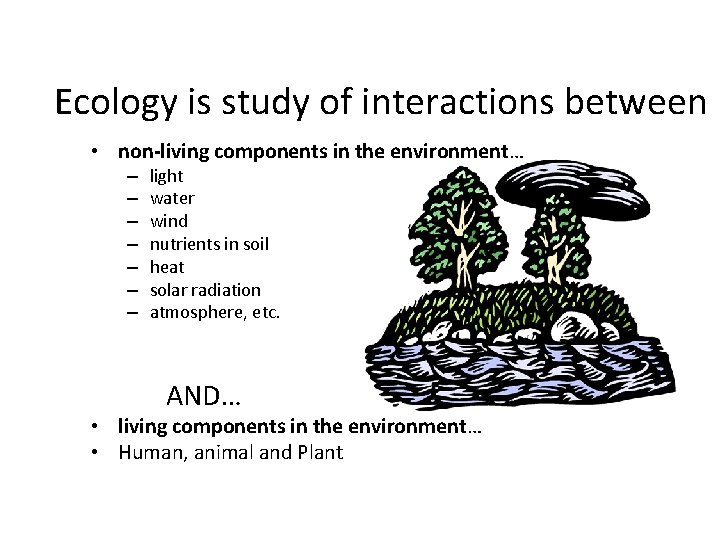
Ecology is study of interactions between • non-living components in the environment… – – – – light water wind nutrients in soil heat solar radiation atmosphere, etc. AND… • living components in the environment… • Human, animal and Plant
To study Ecology involves… § For non-living (abiotic) – Climatology – Hydrology – Oceanography – Physics – Chemistry – Geology – soil analysis, etc. § For living (biotic) § § § animal behavior Taxonomy Physiology mathematics (population studies) etc.
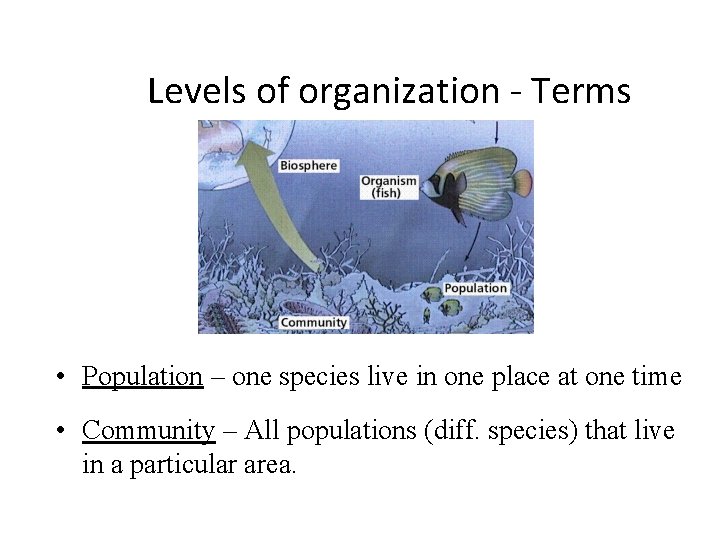
Levels of organization - Terms • Population – one species live in one place at one time • Community – All populations (diff. species) that live in a particular area.
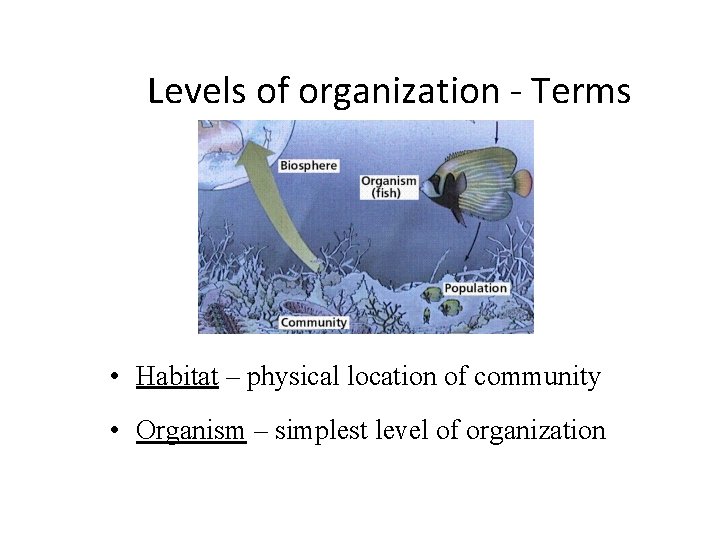
Levels of organization - Terms • Habitat – physical location of community • Organism – simplest level of organization
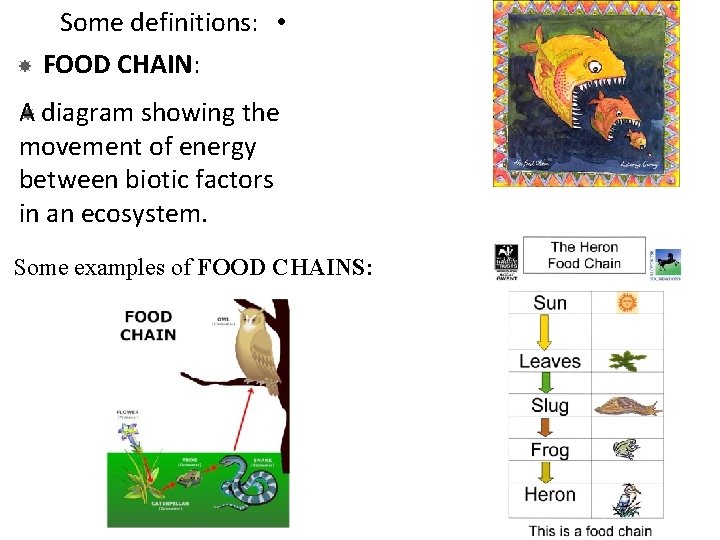
Some definitions: • FOOD CHAIN: A diagram showing the movement of energy between biotic factors in an ecosystem. Some examples of FOOD CHAINS:
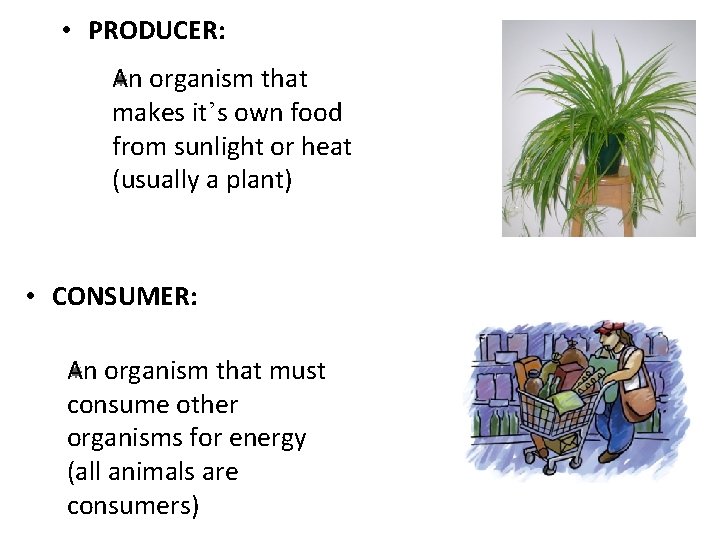
• PRODUCER: An organism that makes it’s own food from sunlight or heat (usually a plant) • CONSUMER: An organism that must consume other organisms for energy (all animals are consumers)
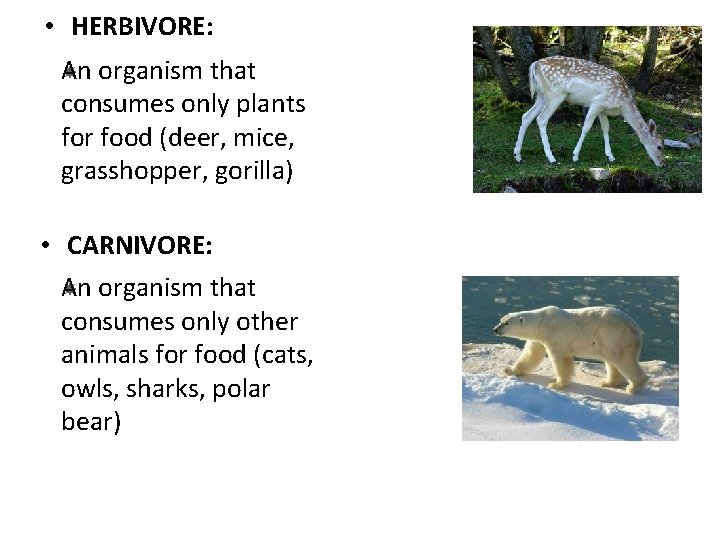
• HERBIVORE: An organism that consumes only plants for food (deer, mice, grasshopper, gorilla) • CARNIVORE: An organism that consumes only other animals for food (cats, owls, sharks, polar bear)
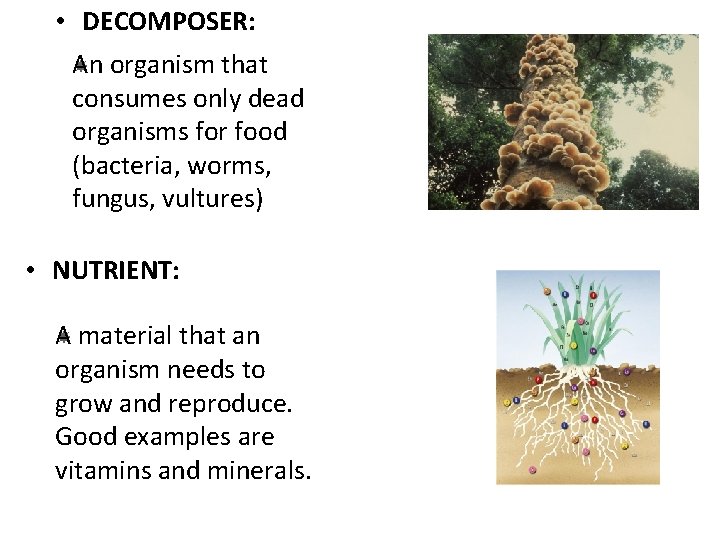
• DECOMPOSER: An organism that consumes only dead organisms for food (bacteria, worms, fungus, vultures) • NUTRIENT: A material that an organism needs to grow and reproduce. Good examples are vitamins and minerals.
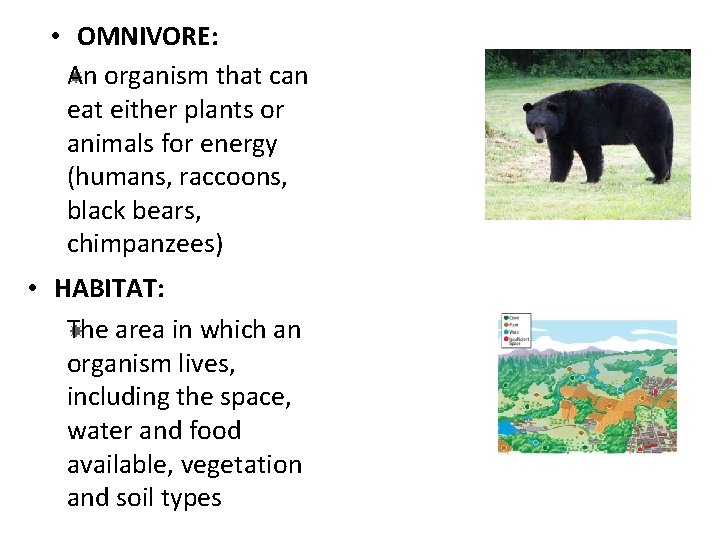
• OMNIVORE: An organism that can eat either plants or animals for energy (humans, raccoons, black bears, chimpanzees) • HABITAT: The area in which an organism lives, including the space, water and food available, vegetation and soil types
Biosphere § The part of Earth that supports life § Top portion of Earth's crust § All the waters that cover Earth's surface § Atmosphere that surrounds Earth.
- Slides: 12