
Introduction to Ecology Organisms and their environment Ch

- Slides: 29
Introduction to Ecology
Organisms and their environment Ch 2. 1
What is ecology? The study of the interactions of organisms with one another and their environments
Parts of the Environment Abiotic Factors Non-living parts of environment Air Current Water Temperature Light Soil These things have a great effect on organisms
Parts of the environment Biotic Factors All living parts of an environment Animals Plants Microorganisms Fungi Bacteria These organisms interact with each other mostly in competition or as food
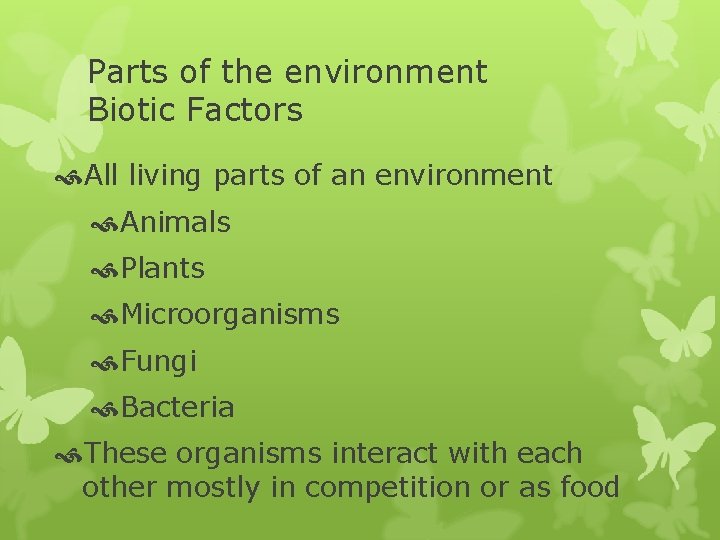
Abiotic or Biotic? 6 Biotic
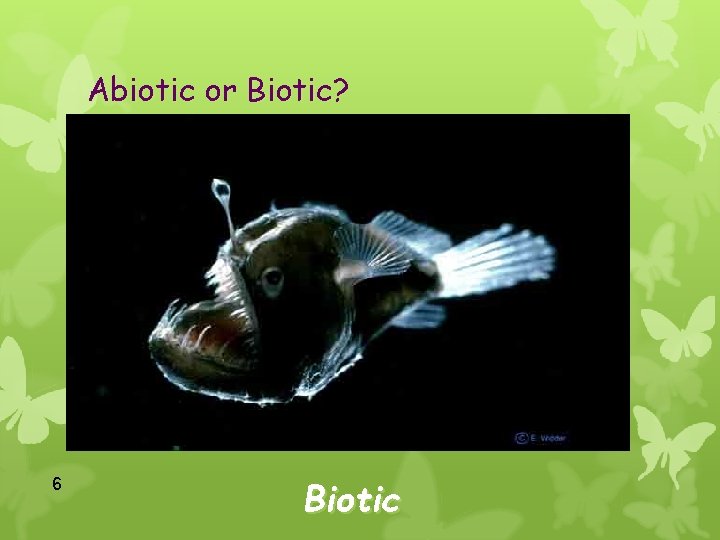
Abiotic or Biotic? 7 Abiotic
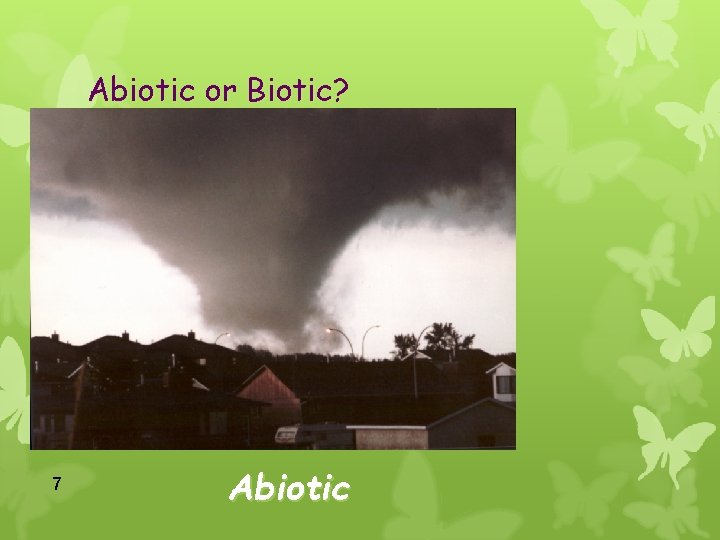
Abiotic or Biotic? 8 Abiotic
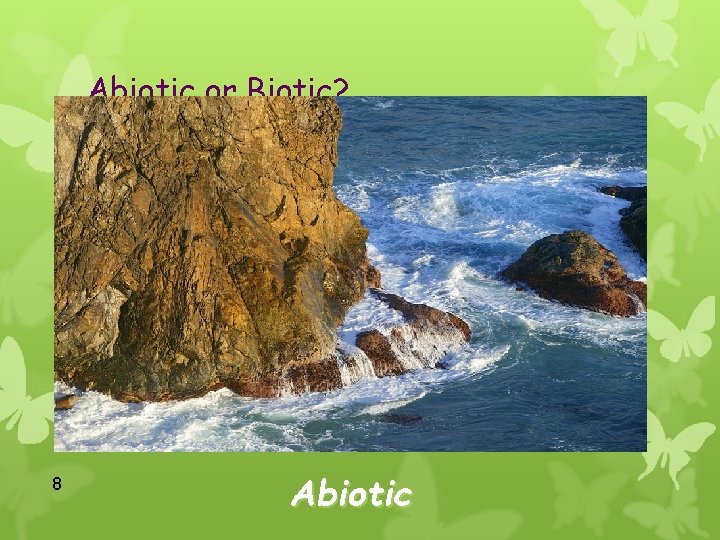
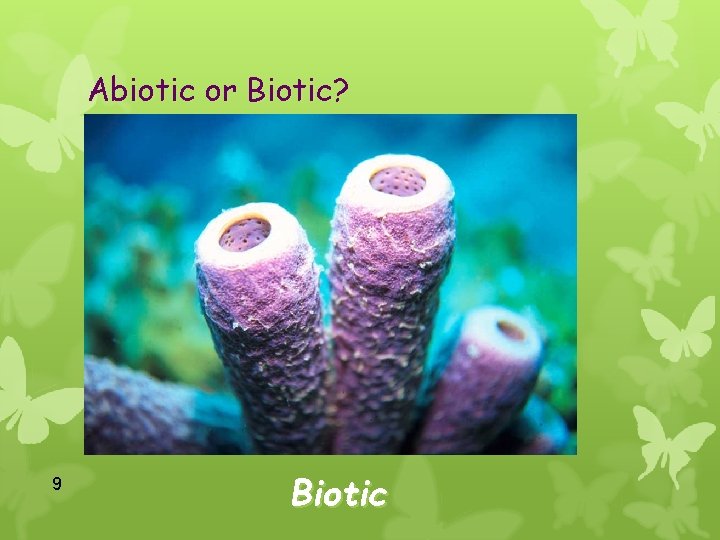
Abiotic or Biotic? 9 Biotic
Levels of Organization 10
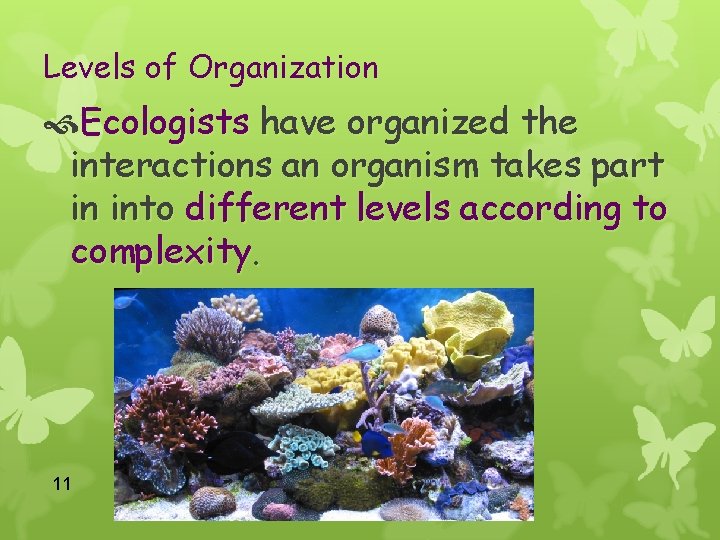
Levels of Organization Ecologists have organized the interactions an organism takes part in into different levels according to complexity. 11
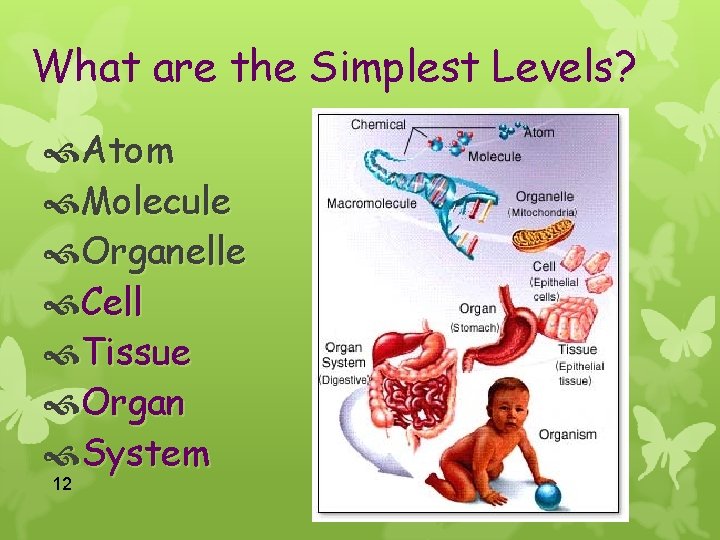
What are the Simplest Levels? Atom Molecule Organelle Cell Tissue Organ System 12
Ecological levels of Organization BBECPO
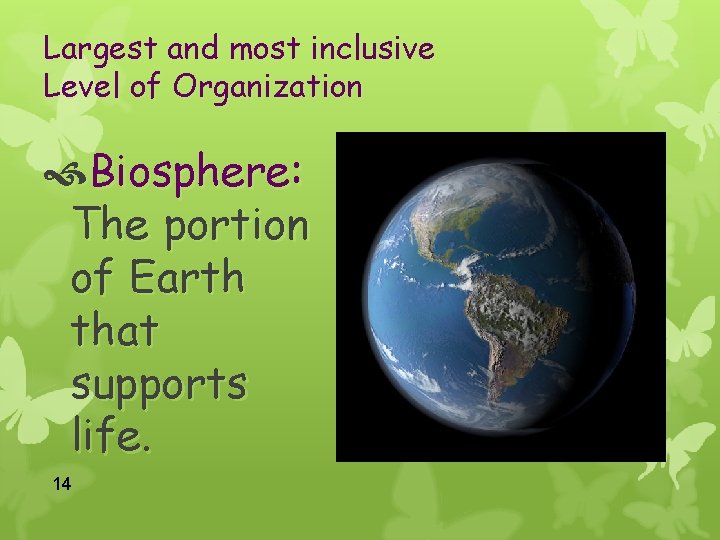
Largest and most inclusive Level of Organization Biosphere: The portion of Earth that supports life. 14
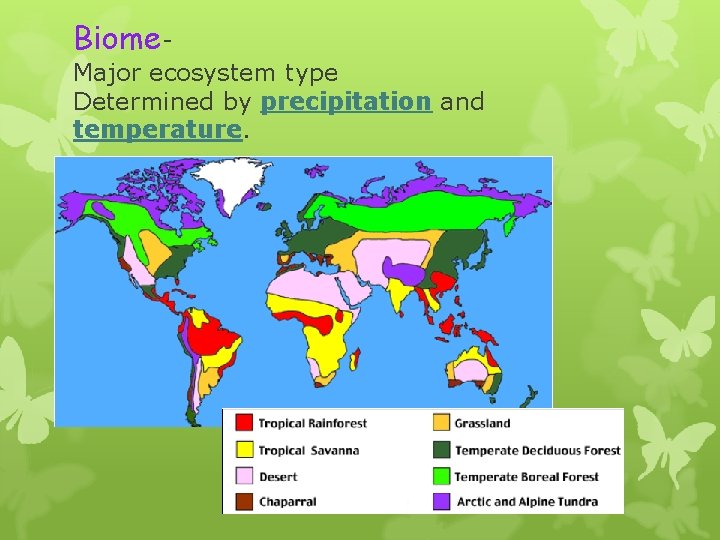
Biome- Major ecosystem type Determined by precipitation and temperature.
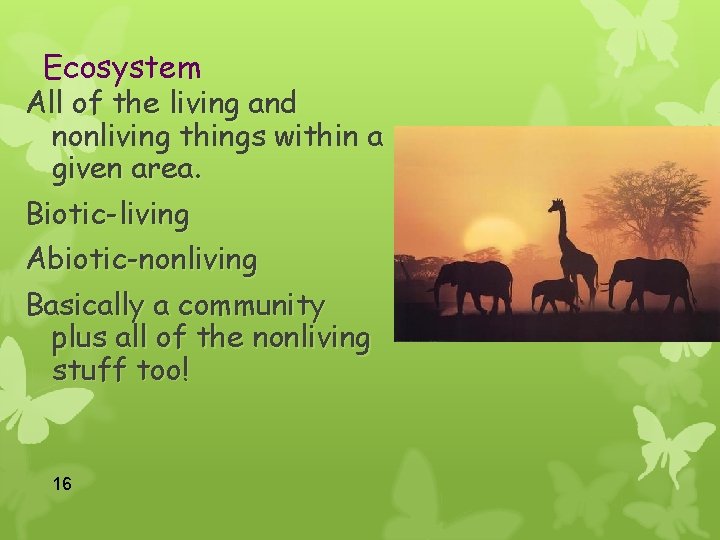
Ecosystem All of the living and nonliving things within a given area. Biotic-living Abiotic-nonliving Basically a community plus all of the nonliving stuff too! 16
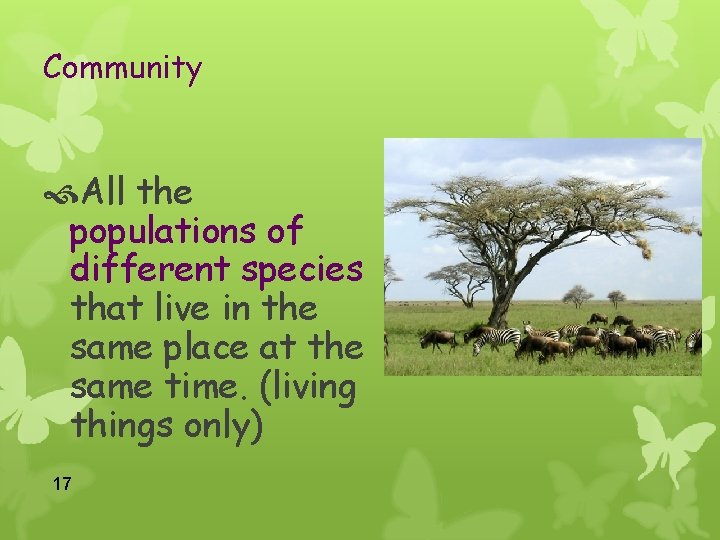
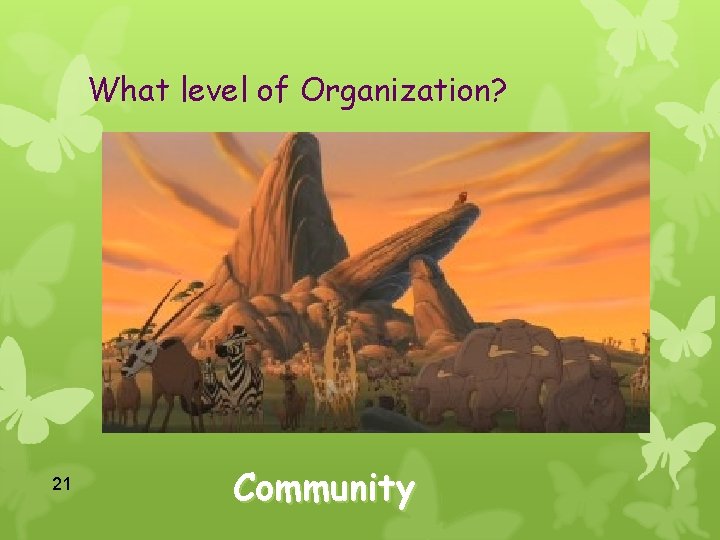
Community All the populations of different species that live in the same place at the same time. (living things only) 17
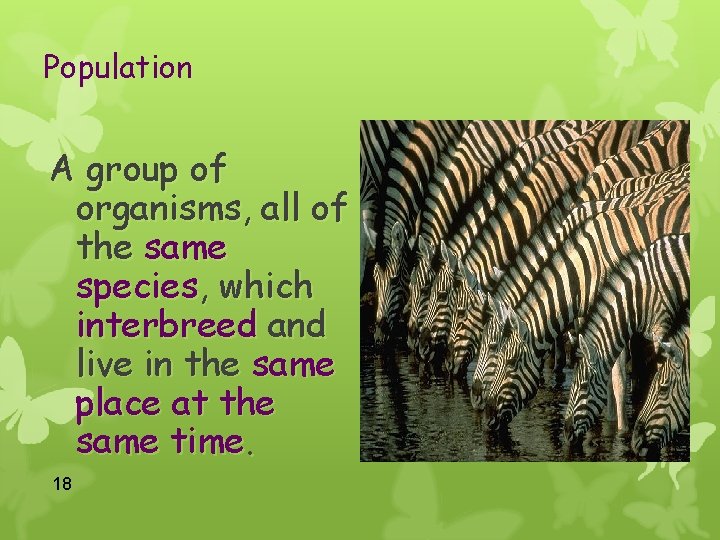
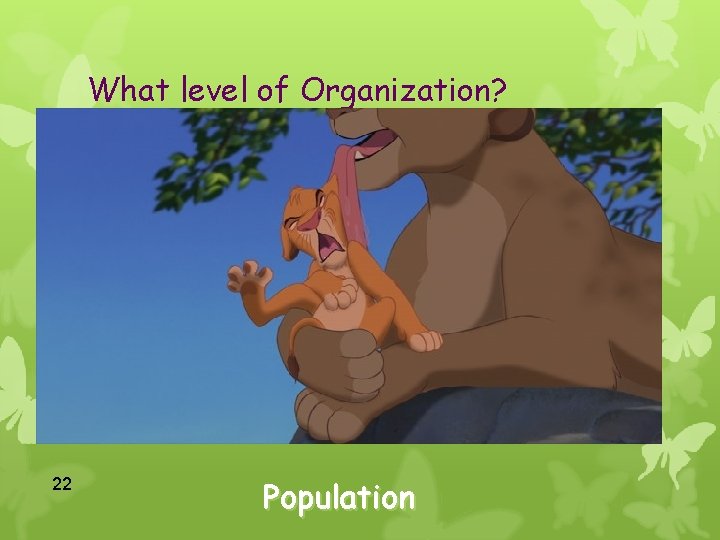
Population A group of organisms, all of the same species, which interbreed and live in the same place at the same time. 18
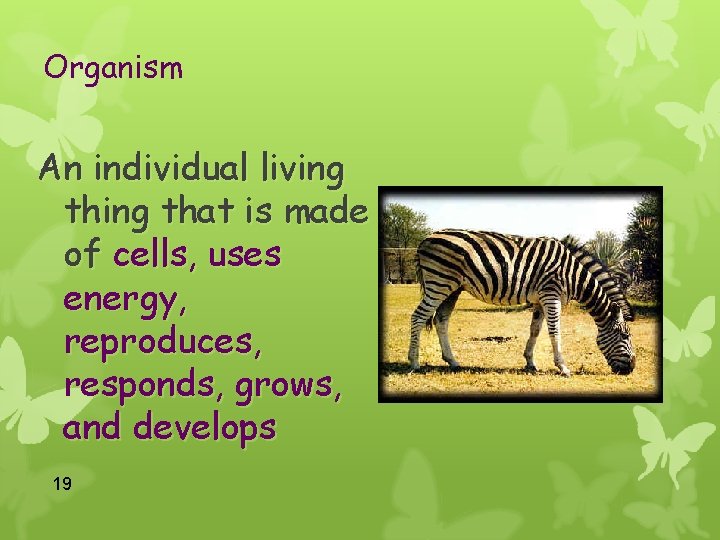
Organism An individual living that is made of cells, uses energy, reproduces, responds, grows, and develops 19
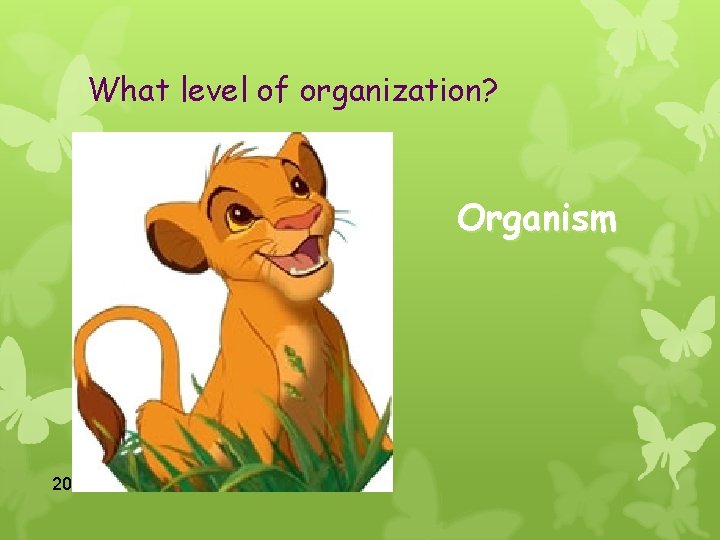
What level of organization? Organism 20
What level of Organization? 21 Community
What level of Organization? 22 Population
Organisms in Ecosystems Habitat (location) Place were organism lives out its life Ex: a stream, a field, your lawn Humans have high influences on habitats
Niche (job) Not all habitats are used in the same way All strategies and adaptations a species uses in its environment Need for food Where and how it survives Reproduction interactions
Sometimes organisms are classified by their job Producers-Autotrophs Use photosynthesis to make food from sunlight, carbon dioxide and water Plants and algae
Consumers-Heterotrophs Eat plants or animals to meet their energy requirements Name some consumers
Decomposers. Saprotroph These organisms breakdown dead organisms Fungus and bacteria are examples of saprophytes
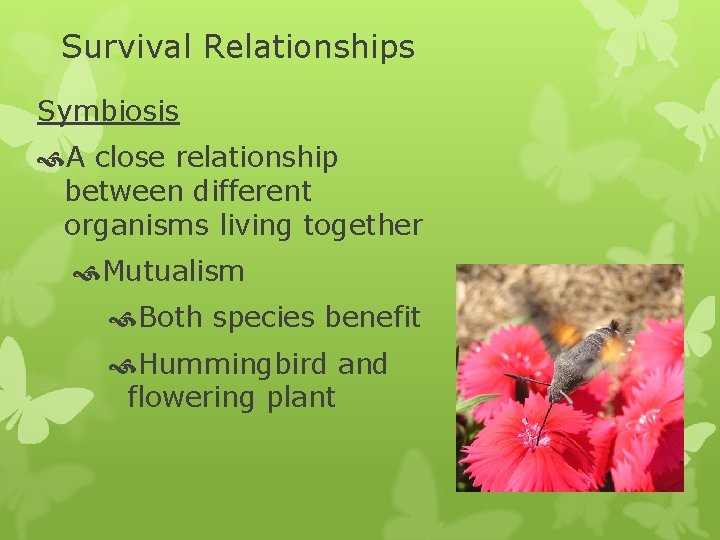
Survival Relationships Symbiosis A close relationship between different organisms living together Mutualism Both species benefit Hummingbird and flowering plant
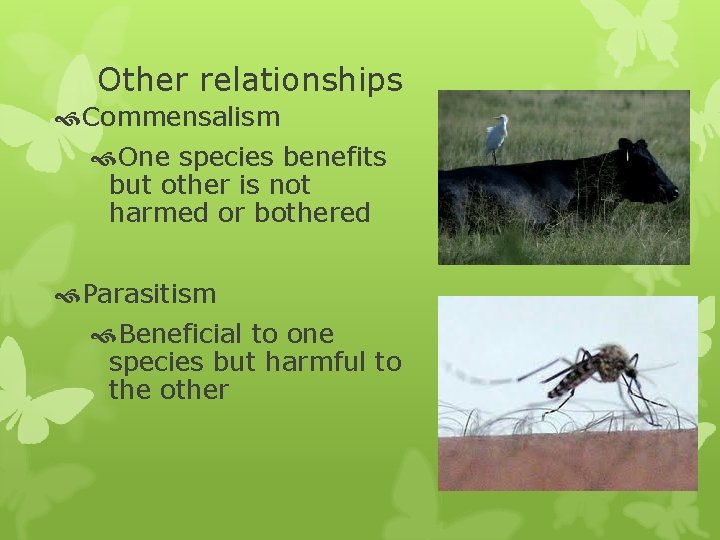
Other relationships Commensalism One species benefits but other is not harmed or bothered Parasitism Beneficial to one species but harmful to the other