
Introduction to Ecology Notes 1 What is Ecology
- Slides: 15
Introduction to Ecology Notes #1
What is Ecology? ANS: Study of the living and nonliving things in an environment.
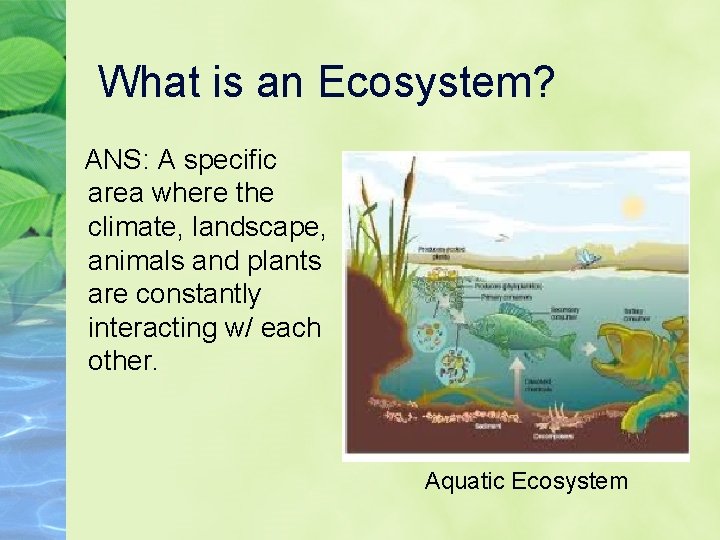
What is an Ecosystem? ANS: A specific area where the climate, landscape, animals and plants are constantly interacting w/ each other. Aquatic Ecosystem
Factors Affecting an Ecosystem Abiotic Factors: Non-living things affecting the environment Ex. Tempt. , rainfall, wind, soil, sunlight Biotic Factors: Living things that affect the environment Ex. Bacteria, Animal and Plant life
How do living things get their energy? (2 ways) sunlight chemicals 1. By absorbing _______ or _____ Ex. Plants go through photosynthesis to get energy and food. consuming other living things. 2. By _____ Ex. Animals eat other animals for food to get energy.
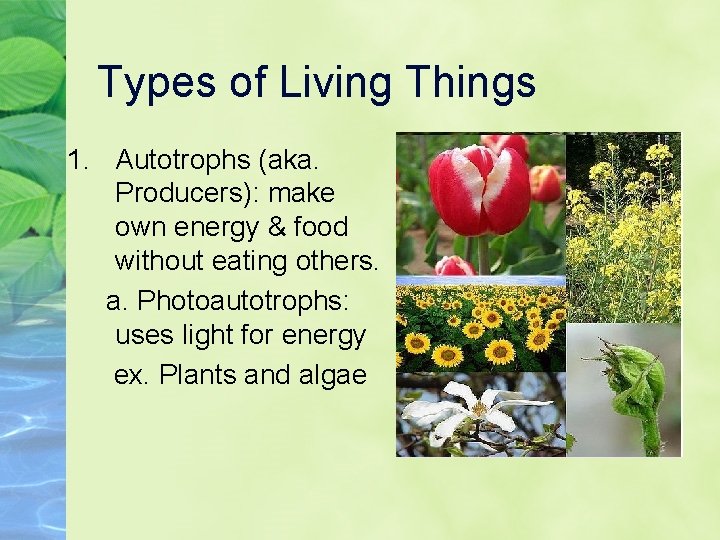
Types of Living Things 1. Autotrophs (aka. Producers): make own energy & food without eating others. a. Photoautotrophs: uses light for energy ex. Plants and algae
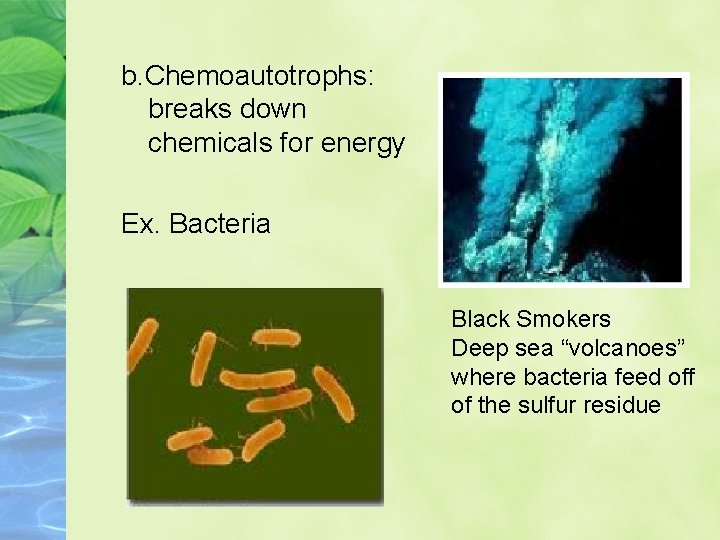
b. Chemoautotrophs: breaks down chemicals for energy Ex. Bacteria Black Smokers Deep sea “volcanoes” where bacteria feed off of the sulfur residue
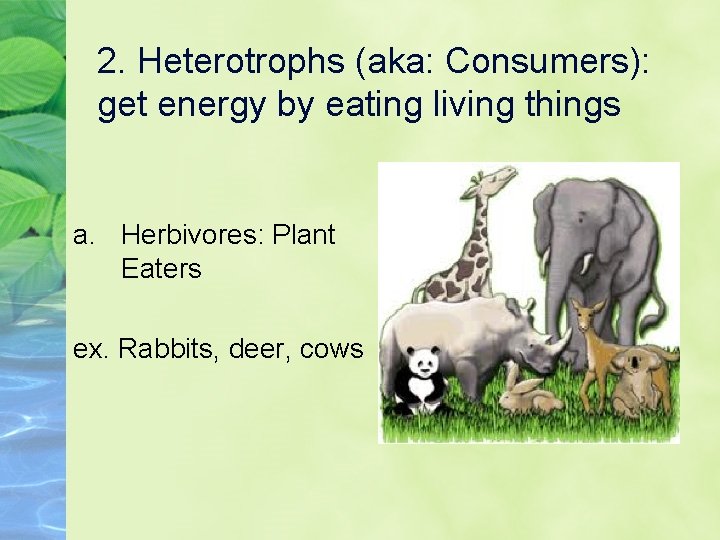
2. Heterotrophs (aka: Consumers): get energy by eating living things a. Herbivores: Plant Eaters ex. Rabbits, deer, cows
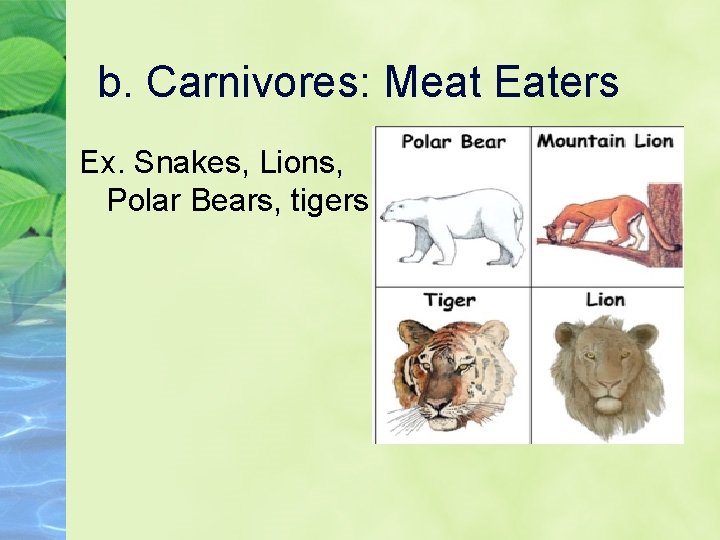
b. Carnivores: Meat Eaters Ex. Snakes, Lions, Polar Bears, tigers
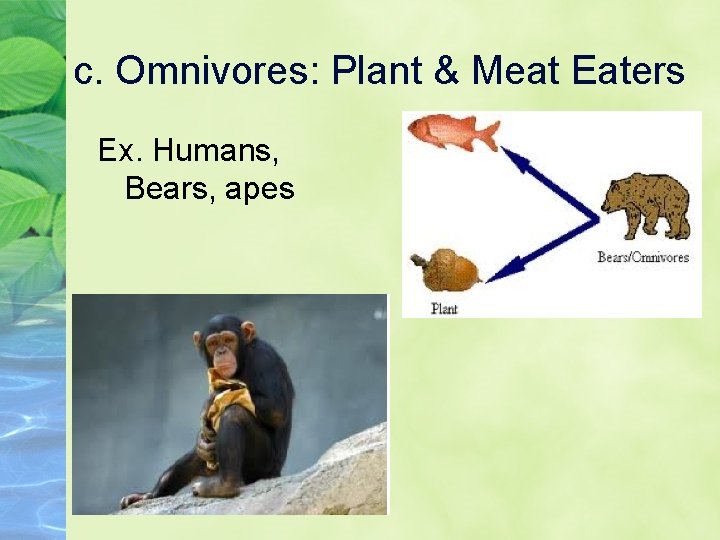
c. Omnivores: Plant & Meat Eaters Ex. Humans, Bears, apes
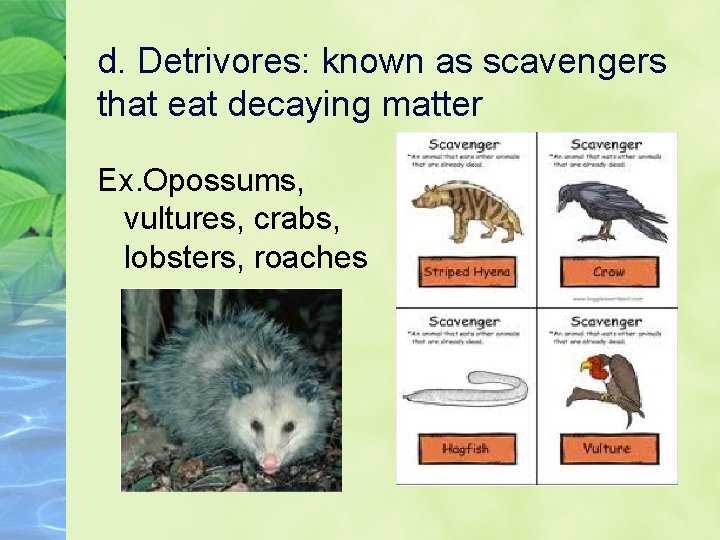
d. Detrivores: known as scavengers that eat decaying matter Ex. Opossums, vultures, crabs, lobsters, roaches
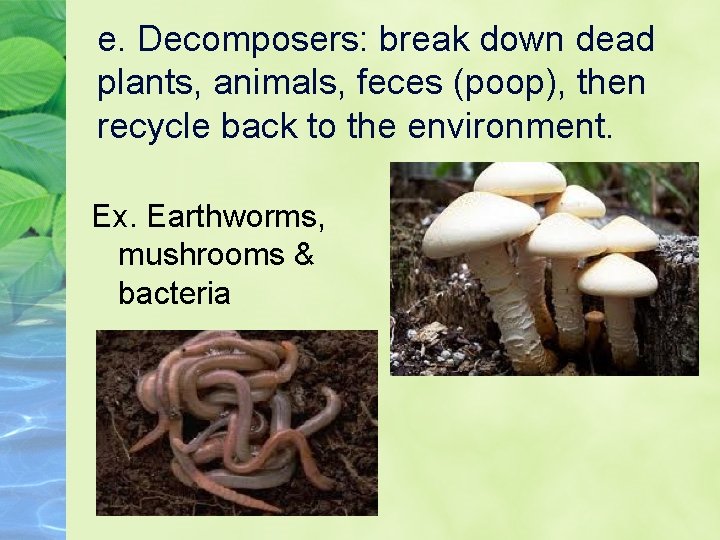
e. Decomposers: break down dead plants, animals, feces (poop), then recycle back to the environment. Ex. Earthworms, mushrooms & bacteria
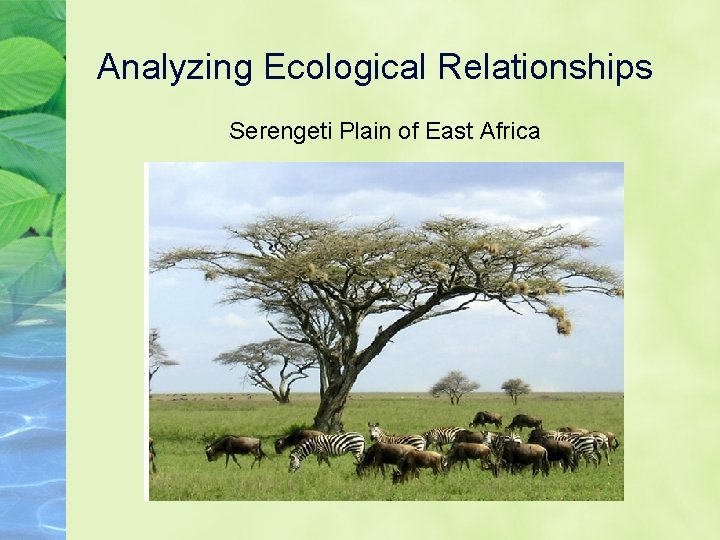
Analyzing Ecological Relationships Serengeti Plain of East Africa
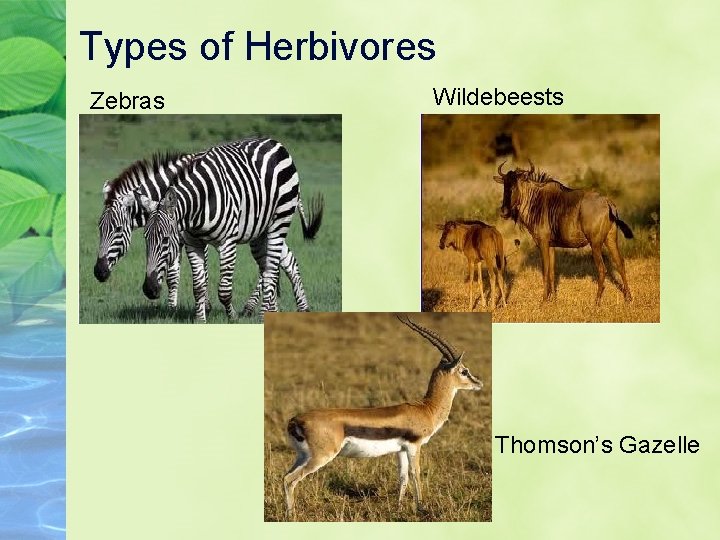
Types of Herbivores Zebras Wildebeests Thomson’s Gazelle
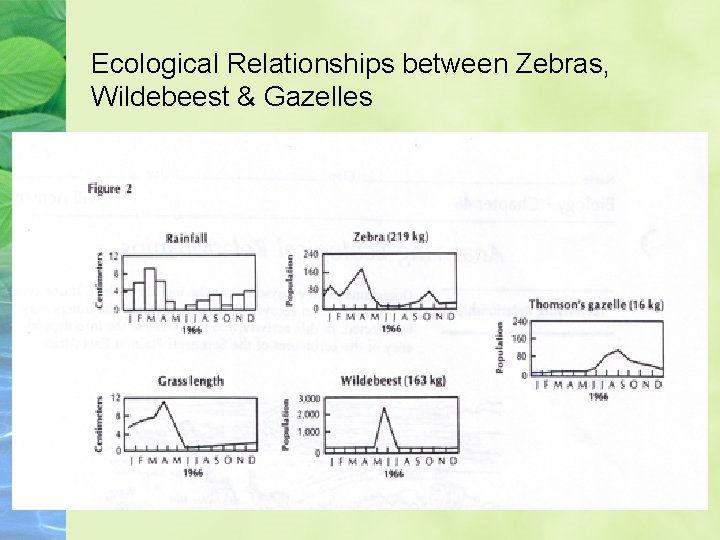
Ecological Relationships between Zebras, Wildebeest & Gazelles