
Introduction to Early Help in Doncaster Course Outcomes

- Slides: 20
Introduction to Early Help in Doncaster
Course Outcomes • To have of understanding of what Early Help is and when it is required, including the application of threshold guidance. • To have an understanding of the Early Help Pathway. • To develop knowledge and understanding of signs of safety. • To understand that CAF is now replaced with EHA.
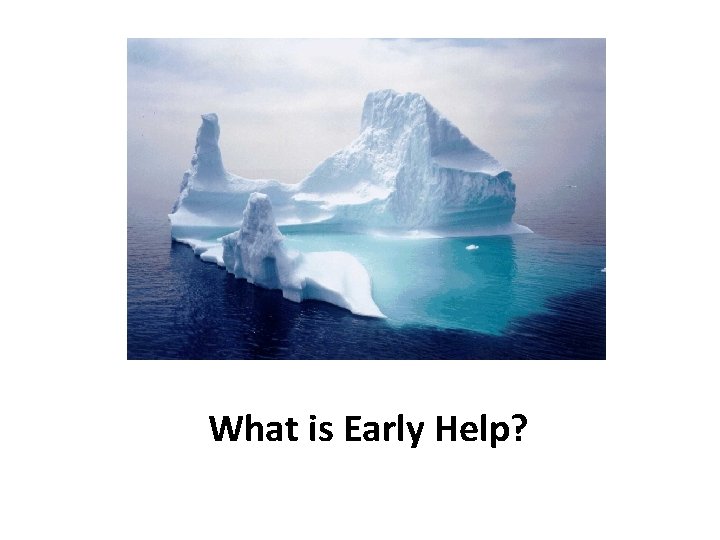
What is Early Help?
Background – Doncaster Serious Case Reviews Children J Child K Child A Child B and Child C
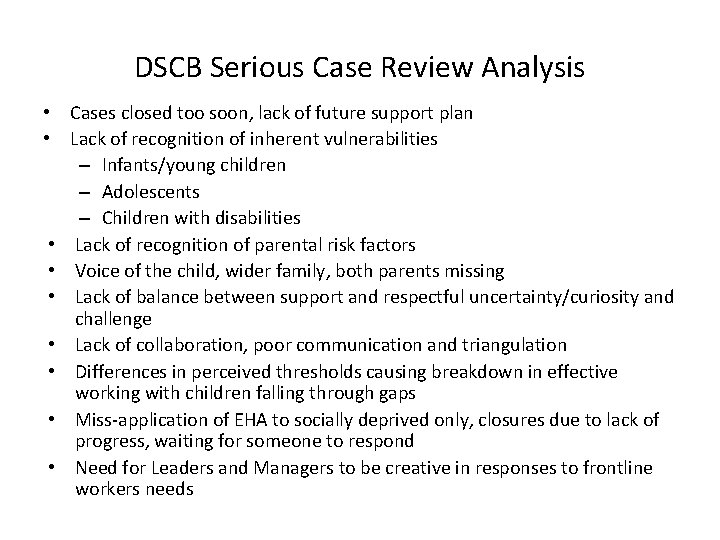
DSCB Serious Case Review Analysis • Cases closed too soon, lack of future support plan • Lack of recognition of inherent vulnerabilities – Infants/young children – Adolescents – Children with disabilities • Lack of recognition of parental risk factors • Voice of the child, wider family, both parents missing • Lack of balance between support and respectful uncertainty/curiosity and challenge • Lack of collaboration, poor communication and triangulation • Differences in perceived thresholds causing breakdown in effective working with children falling through gaps • Miss-application of EHA to socially deprived only, closures due to lack of progress, waiting for someone to respond • Need for Leaders and Managers to be creative in responses to frontline workers needs
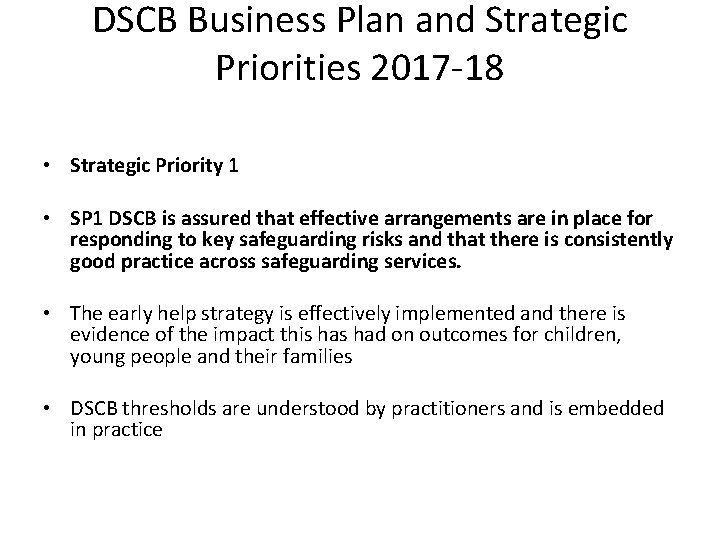
DSCB Business Plan and Strategic Priorities 2017 -18 • Strategic Priority 1 • SP 1 DSCB is assured that effective arrangements are in place for responding to key safeguarding risks and that there is consistently good practice across safeguarding services. • The early help strategy is effectively implemented and there is evidence of the impact this had on outcomes for children, young people and their families • DSCB thresholds are understood by practitioners and is embedded in practice
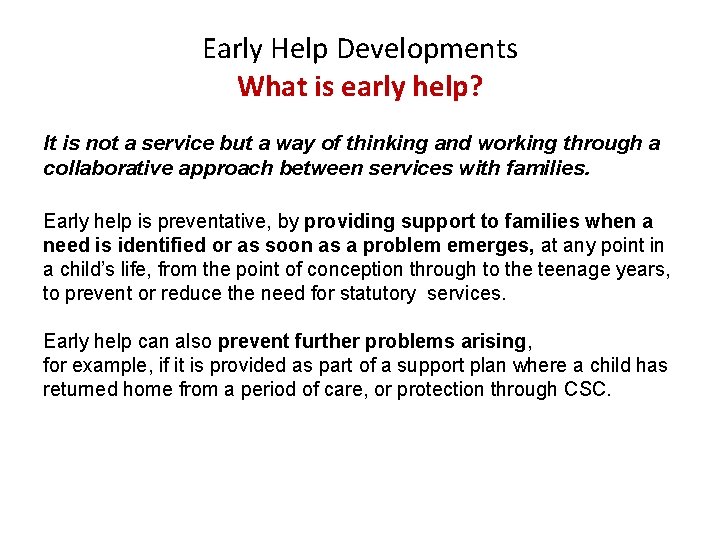
Early Help Developments What is early help? It is not a service but a way of thinking and working through a collaborative approach between services with families. Early help is preventative, by providing support to families when a need is identified or as soon as a problem emerges, at any point in a child’s life, from the point of conception through to the teenage years, to prevent or reduce the need for statutory services. Early help can also prevent further problems arising, for example, if it is provided as part of a support plan where a child has returned home from a period of care, or protection through CSC.
Yes…. But what does that actually mean?
Key Documents • Multi Agency Early Help Strategy • Early Help Practice Handbook • Threshold Guidance • www. doncastersafeguardingchildren. co. uk
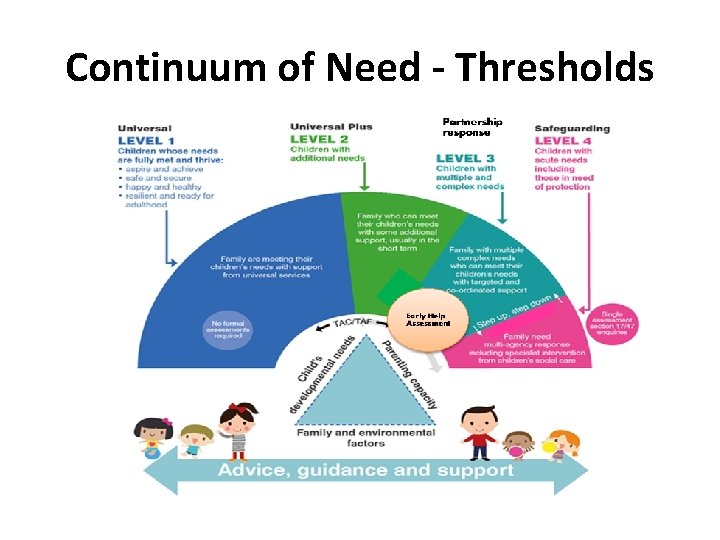
Continuum of Need - Thresholds
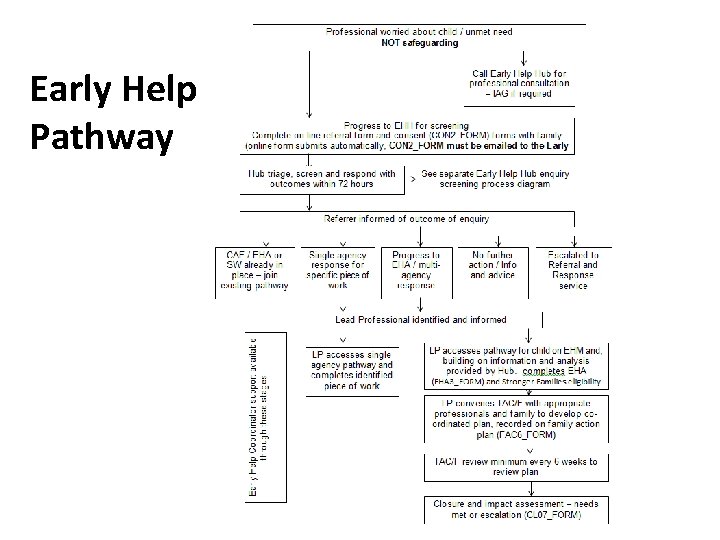
Early Help Pathway
Thresholds
Early Help Assessment - EHA 1. Information gathering 2. Analysing the information to identify what needs to change and how
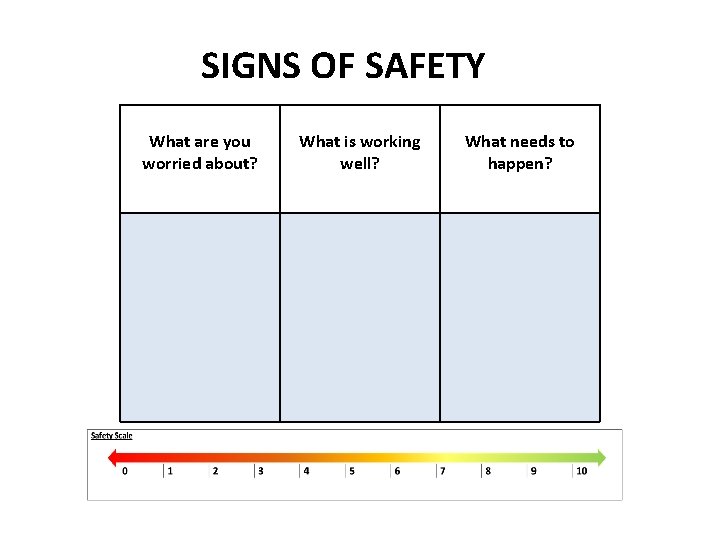
SIGNS OF SAFETY What are you worried about? What is working well? What needs to happen?
Stronger Families How is a family a Stronger Family? The criteria for families to be eligible for the programme has been widened by the Government to: 1. Parents and children involved in crime or anti-social behaviour. 2. Children who have not been attending school regularly. 3. Children who need help. 4. Adults out of work or at risk of financial exclusion and young people at risk of worklessness. (NEET) 5. Families affected by domestic violence and abuse. 6. Parents and children with a range of health problems.
Help on hand Early Help Coordinators Telephone: 01302 736250 Email: earlyhelpcoordinator@doncaster. gov. uk Esystems Email: esystems. cyps@dcstrust. co. uk
Evaluation Link to online evaluation will be sent out, please reflect on today and be honest, so we can improve.
What next? • Enrol for the Delivering Early Help – the Role of the Lead Practitioner • Feedback your learning here to your colleagues • Enrol your colleagues in a future Introduction course • Or all three or something else!