
Introduction to Dynamical Decoupling Daniel Lidar USC 44



- Slides: 49
Introduction to Dynamical Decoupling Daniel Lidar, USC 44 th Symposium on Mathematical Physics School on New Developments in the Theory of Quantum Systems Torun, Poland June 21, 2012
For an early DD tutorial see Lorenza Viola’s talk in http: //qserver. usc. edu/qec 07/program. html Slides & movie For various DD talks see QEC 11 slides & movies http: //qserver. usc. edu/qec 11/program. html This introduction to DD: • What is the problem? • What is dynamical decoupling? • High order decoupling • Decoupling along with computation
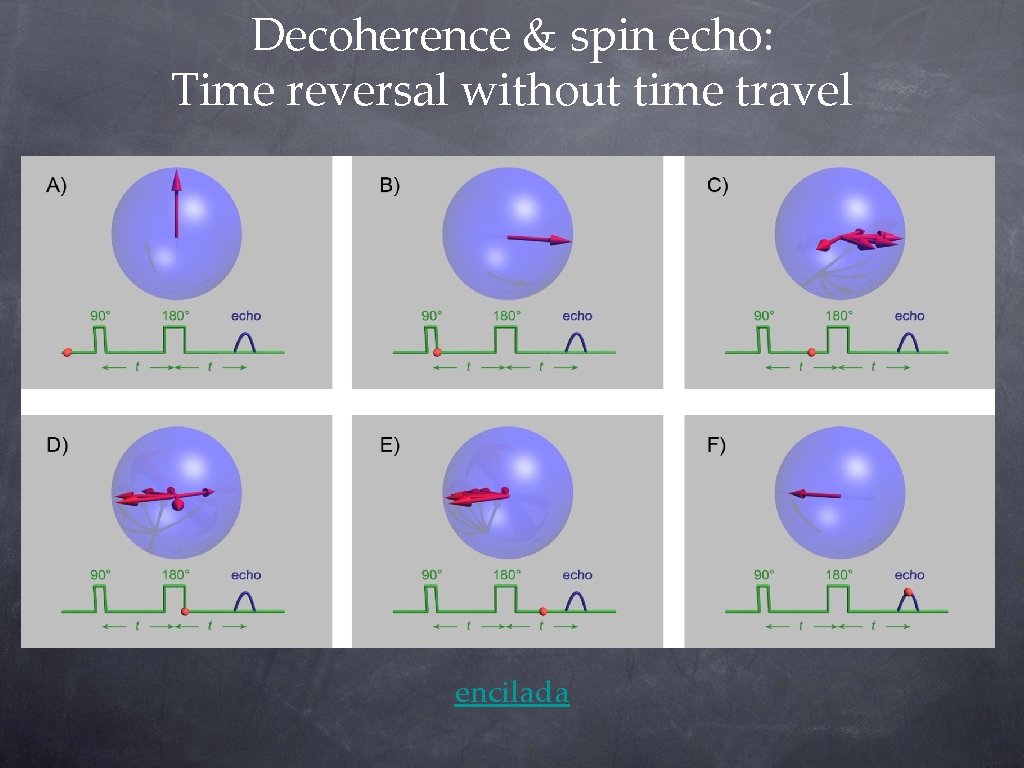
Decoherence & spin echo: Time reversal without time travel encilada
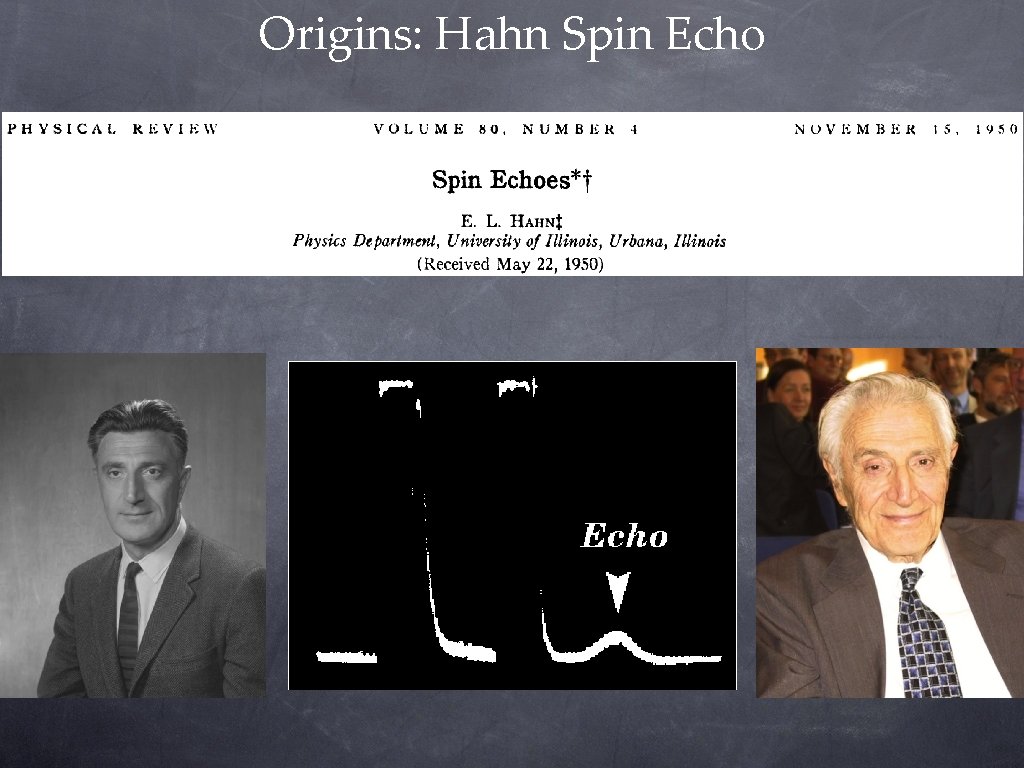
Origins: Hahn Spin Echo
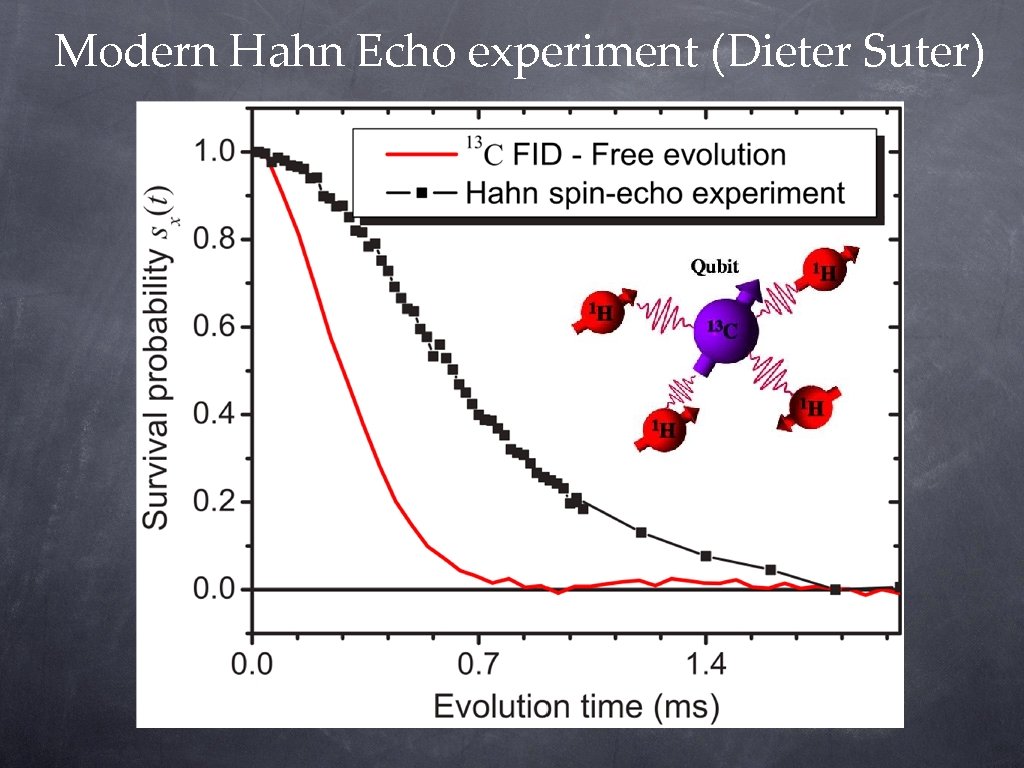
Modern Hahn Echo experiment (Dieter Suter)
The recoherence race Usain Bolt Lidar
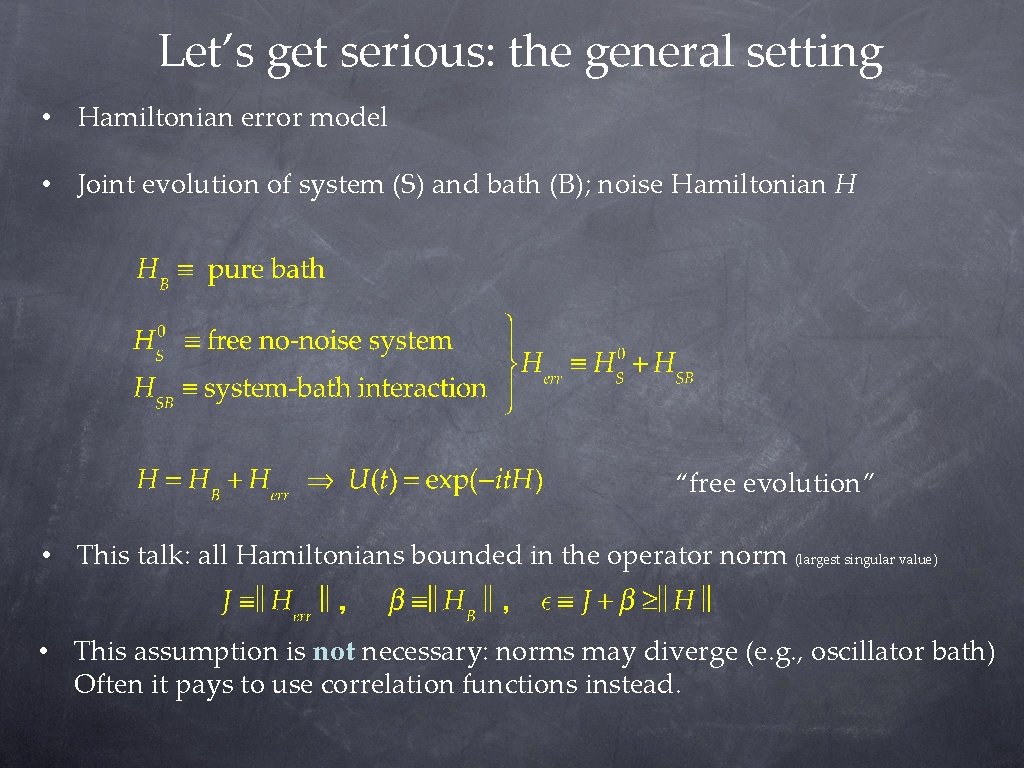
Let’s get serious: the general setting • Hamiltonian error model • Joint evolution of system (S) and bath (B); noise Hamiltonian H “free evolution” • This talk: all Hamiltonians bounded in the operator norm (largest singular value) • This assumption is not necessary: norms may diverge (e. g. , oscillator bath) Often it pays to use correlation functions instead.
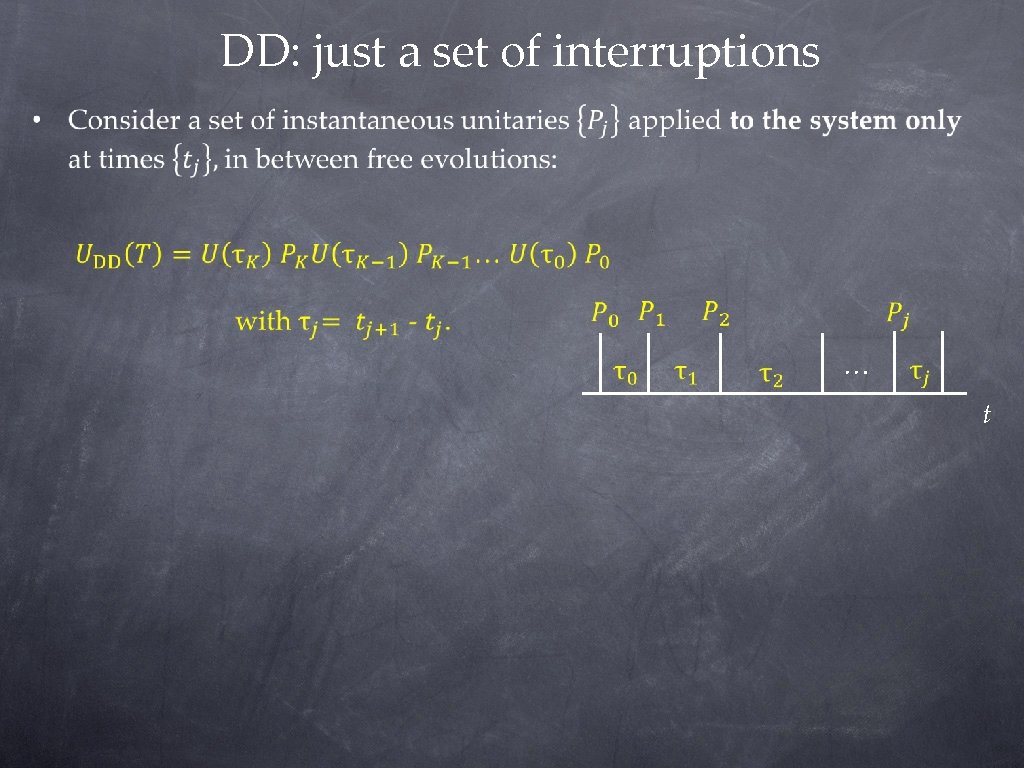
DD: just a set of interruptions … t
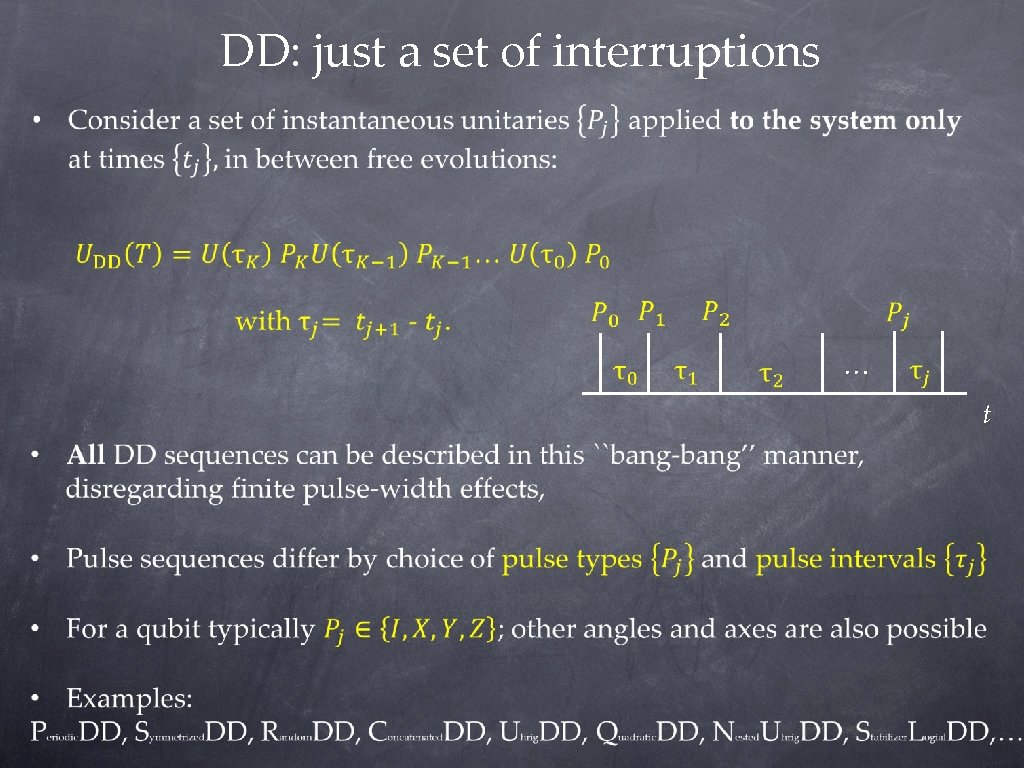
DD: just a set of interruptions … t
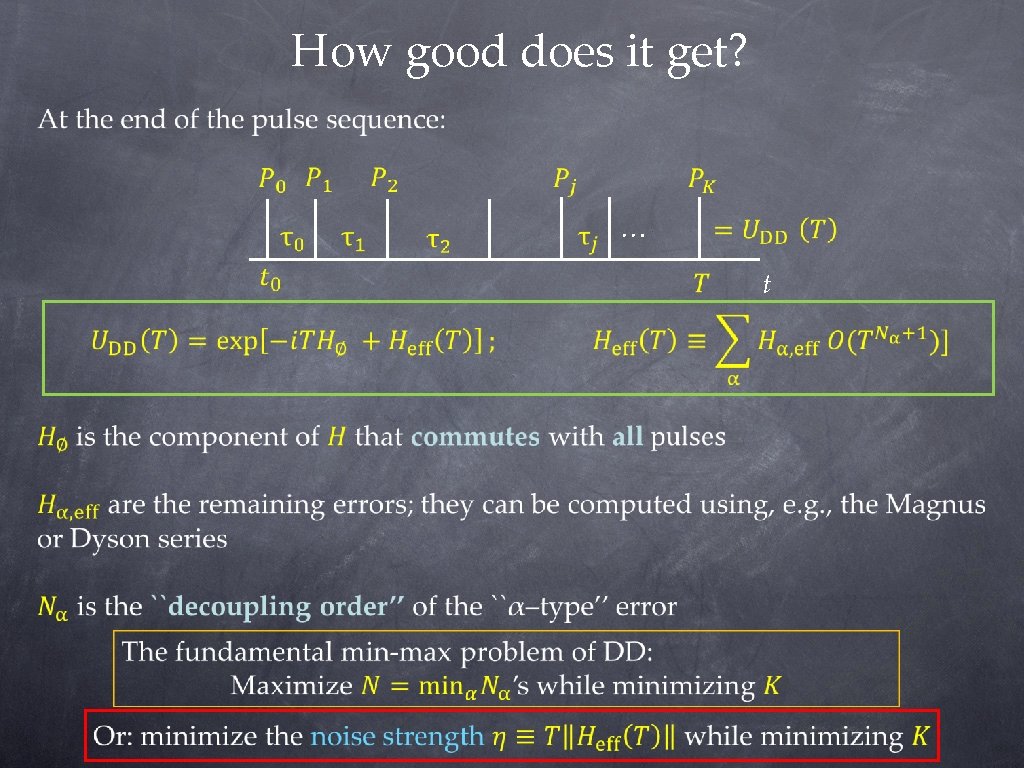
How good does it get? … t
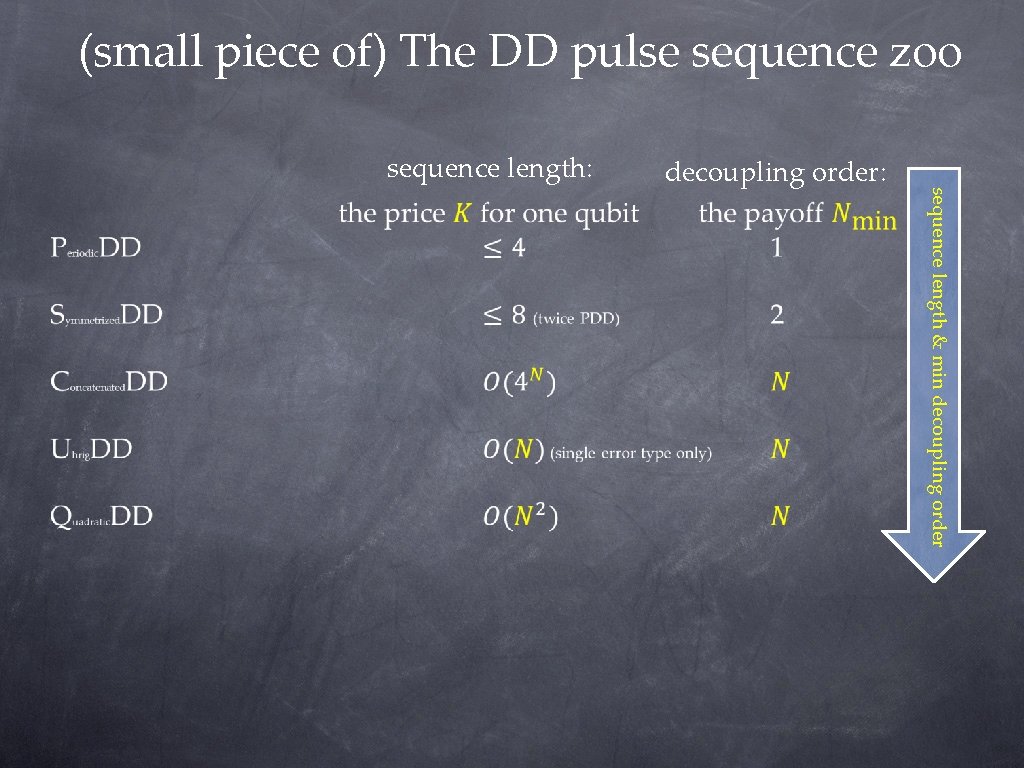
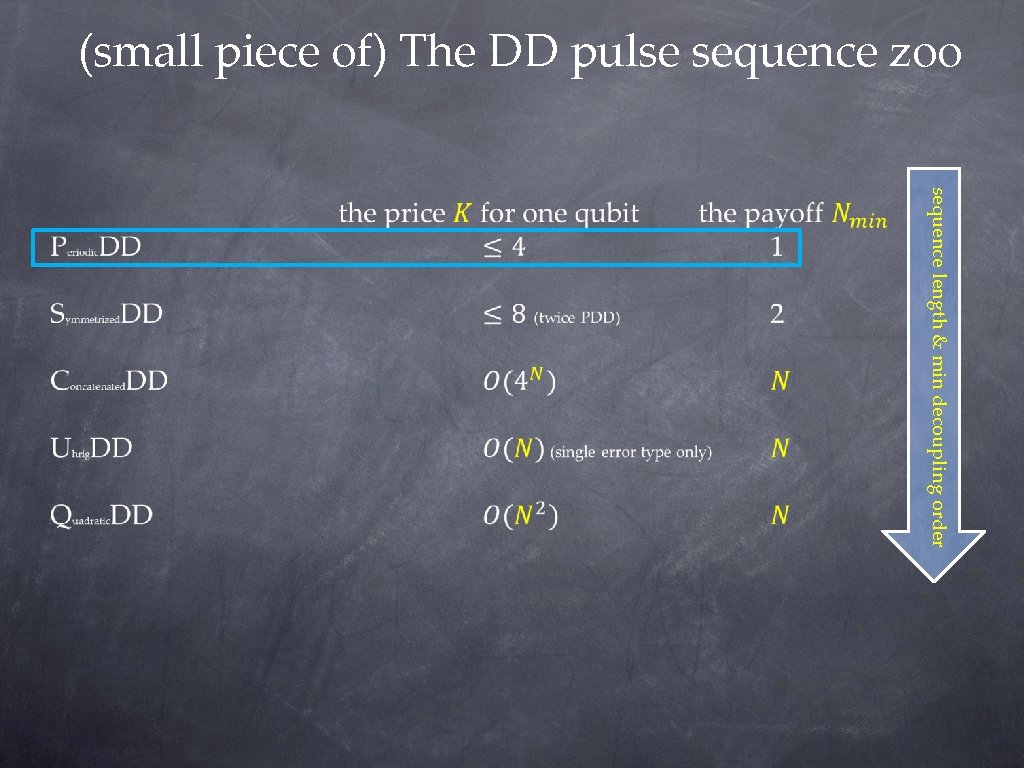
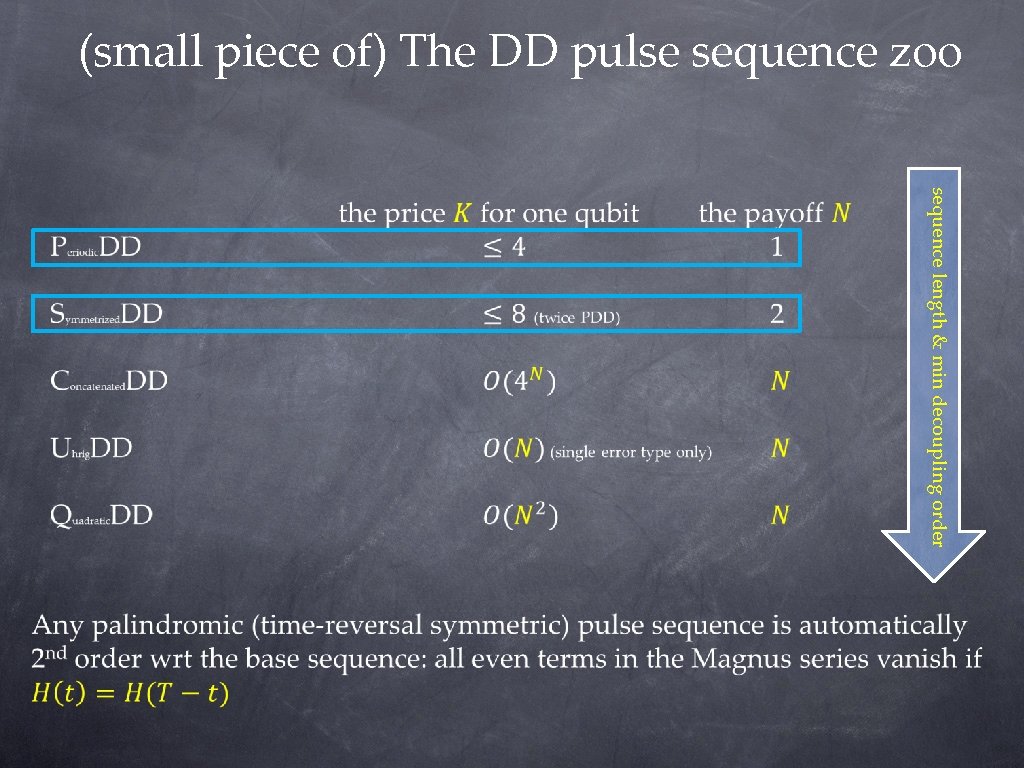
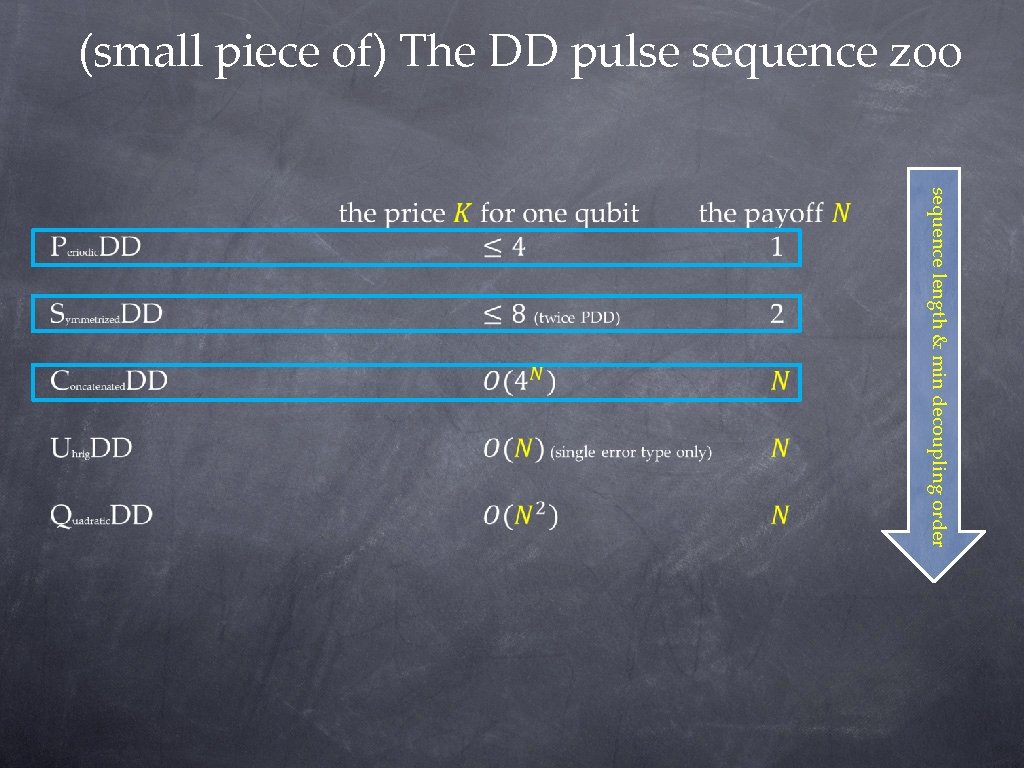
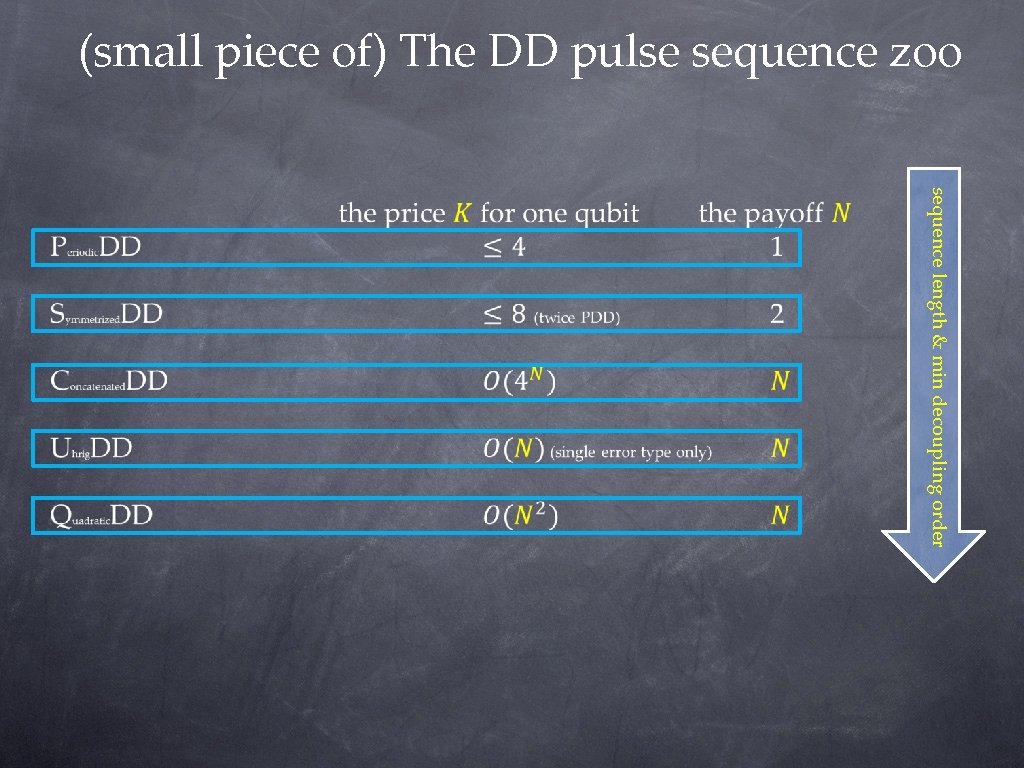
(small piece of) The DD pulse sequence zoo sequence length: sequence length & min decoupling order:
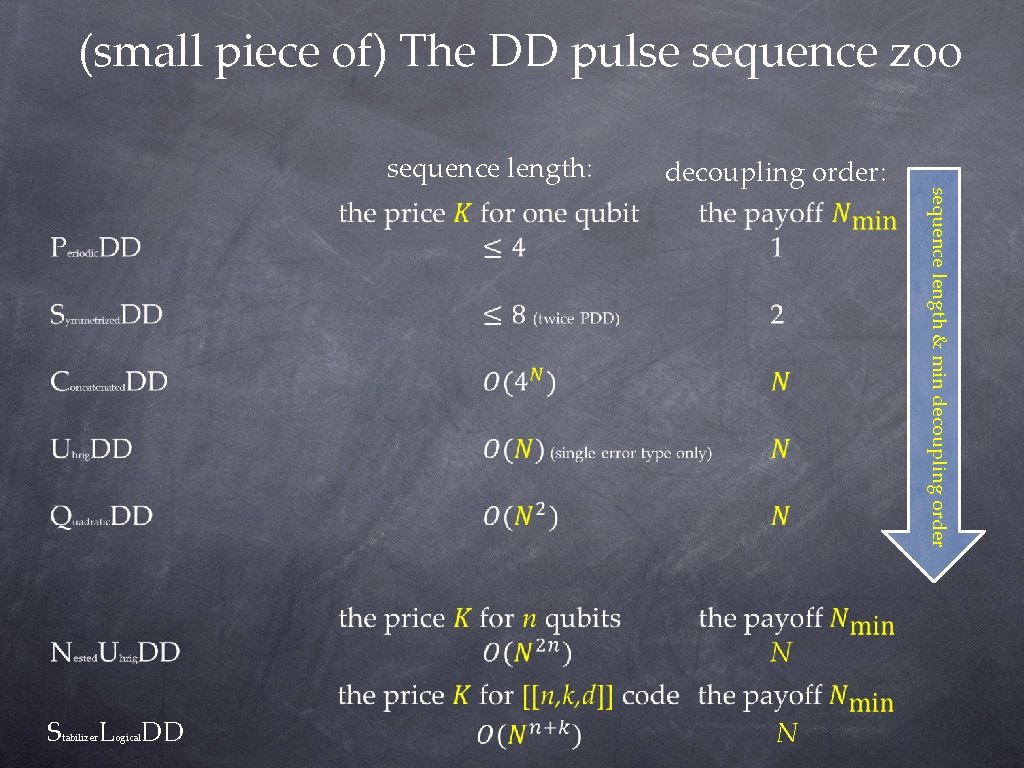
(small piece of) The DD pulse sequence zoo sequence length: S L DD tabilizer ogical N sequence length & min decoupling order:
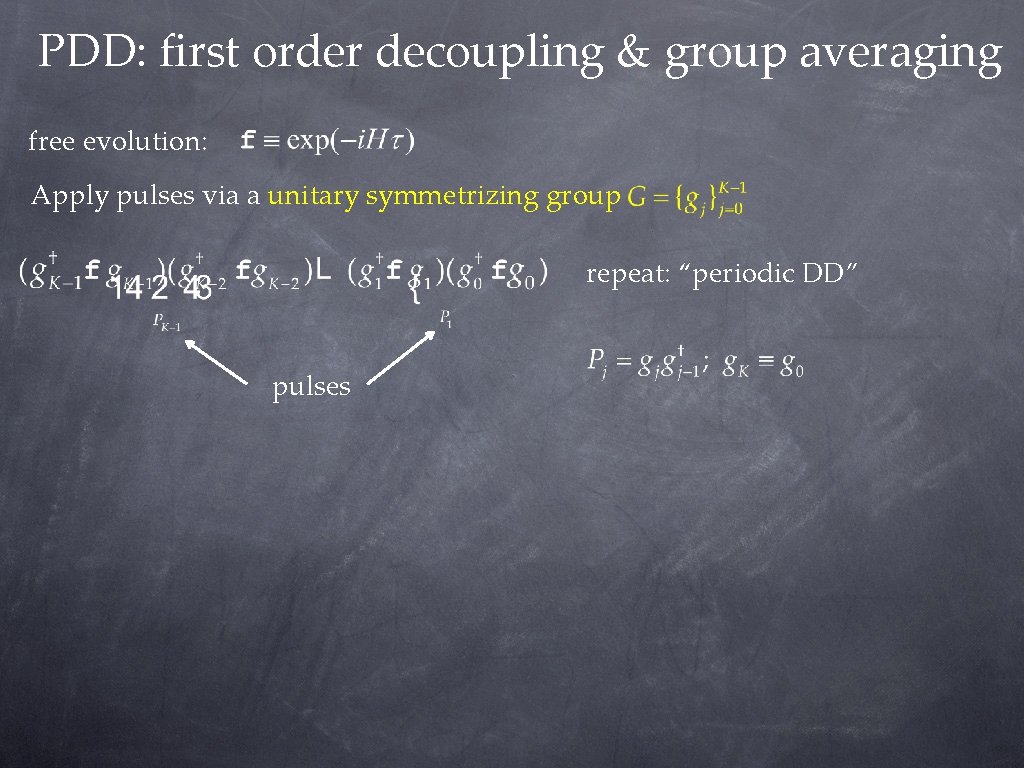
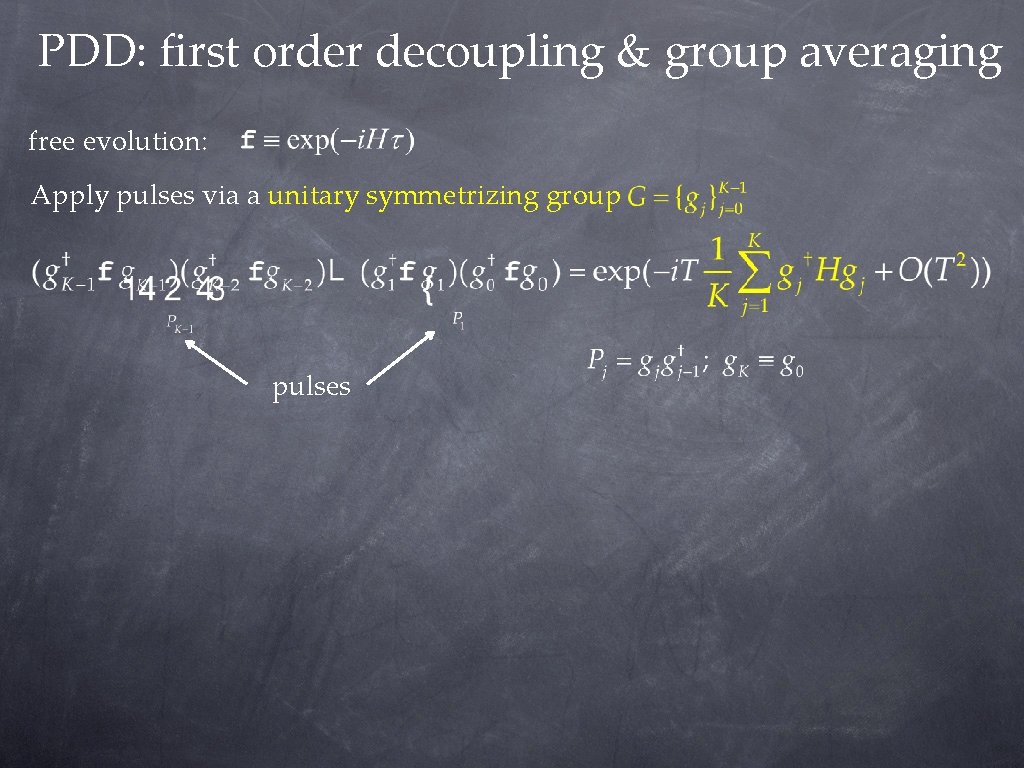
PDD: first order decoupling & group averaging free evolution: Apply pulses via a unitary symmetrizing group repeat: “periodic DD” pulses
PDD: first order decoupling & group averaging free evolution: Apply pulses via a unitary symmetrizing group pulses
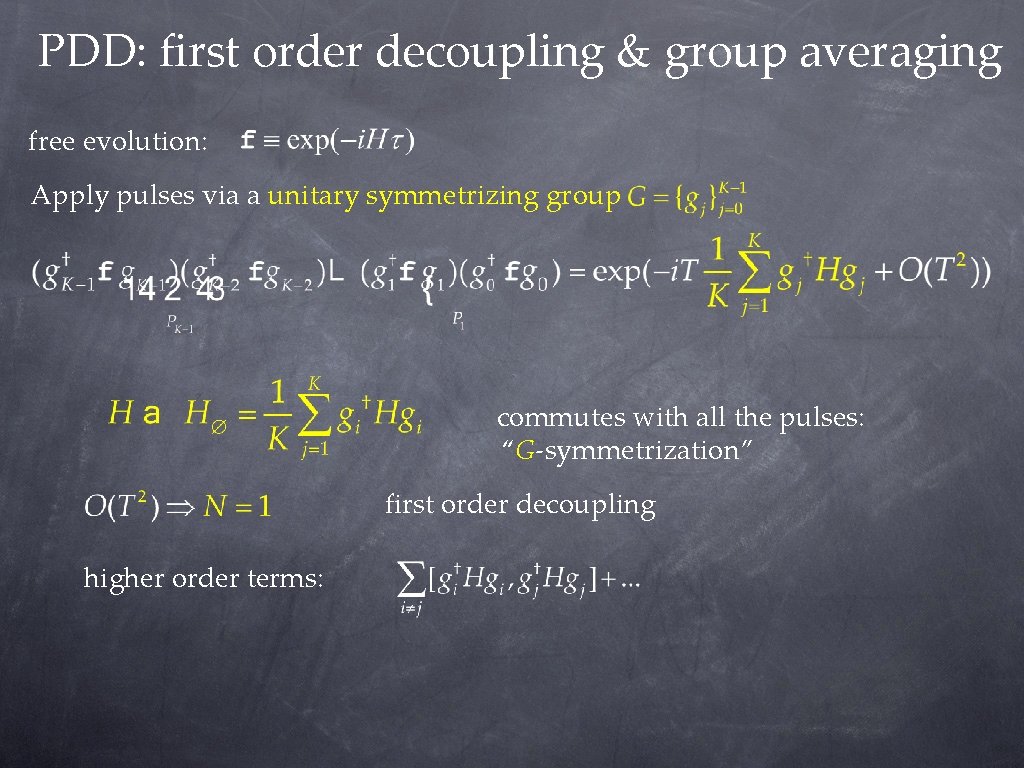
PDD: first order decoupling & group averaging free evolution: Apply pulses via a unitary symmetrizing group commutes with all the pulses: “G-symmetrization” first order decoupling higher order terms:
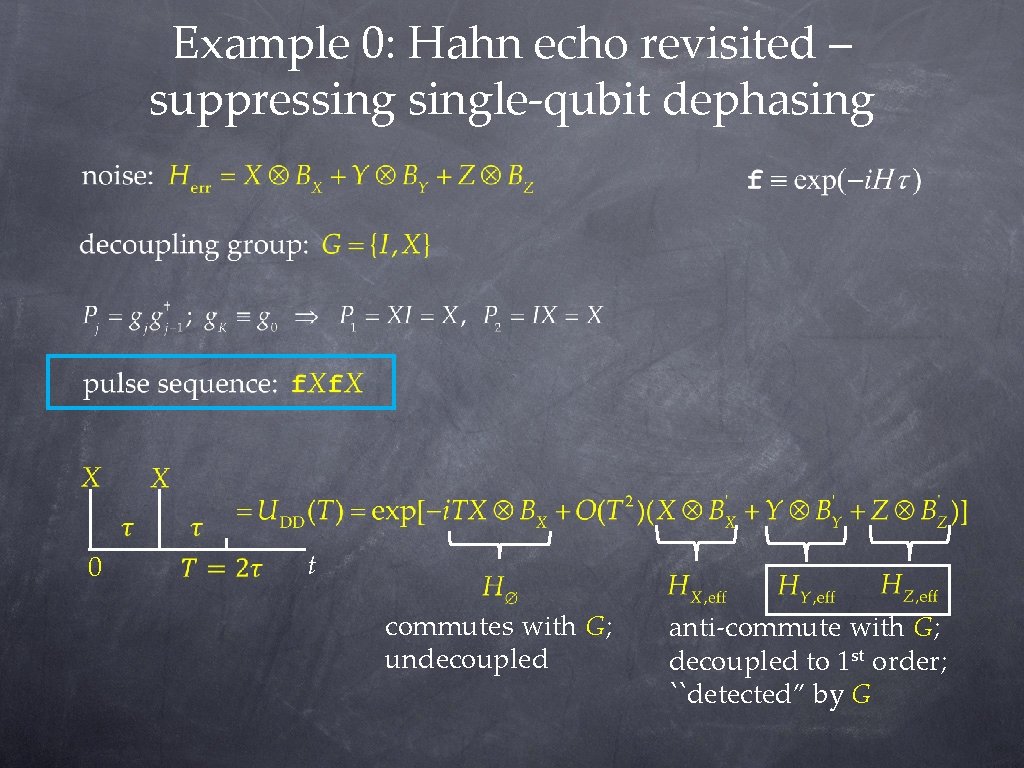
Example 0: Hahn echo revisited – suppressingle-qubit dephasing 0 t commutes with G; undecoupled anti-commute with G; decoupled to 1 st order; ``detected” by G
Example 1: ``Universal decoupling group” – suppressing general single-qubit decoherence 0 t decoupled to 1 st order; ``detected” by G
(small piece of) The DD pulse sequence zoo sequence length & min decoupling order
(small piece of) The DD pulse sequence zoo sequence length & min decoupling order
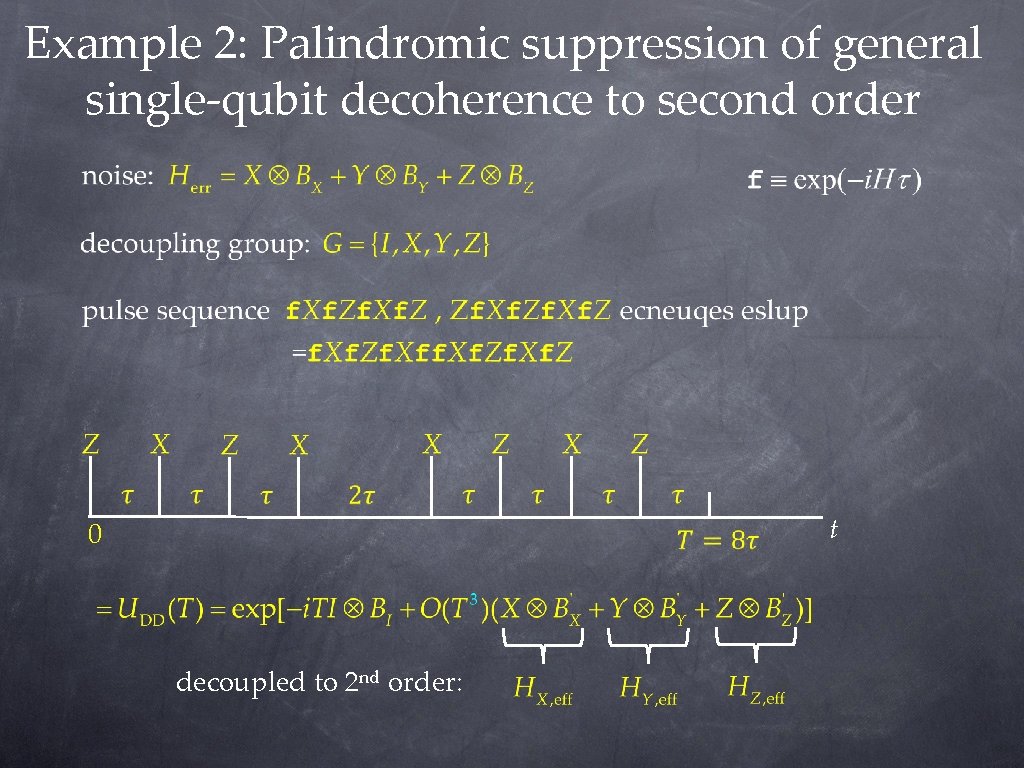
Example 2: Palindromic suppression of general single-qubit decoherence to second order 0 decoupled to 2 nd order: t
The quest for high order How do we go systematically beyond second order decoupling? Two general techniques: • Concatenation (CDD) • Pulse interval optimization (UDD, QDD, NUDD)
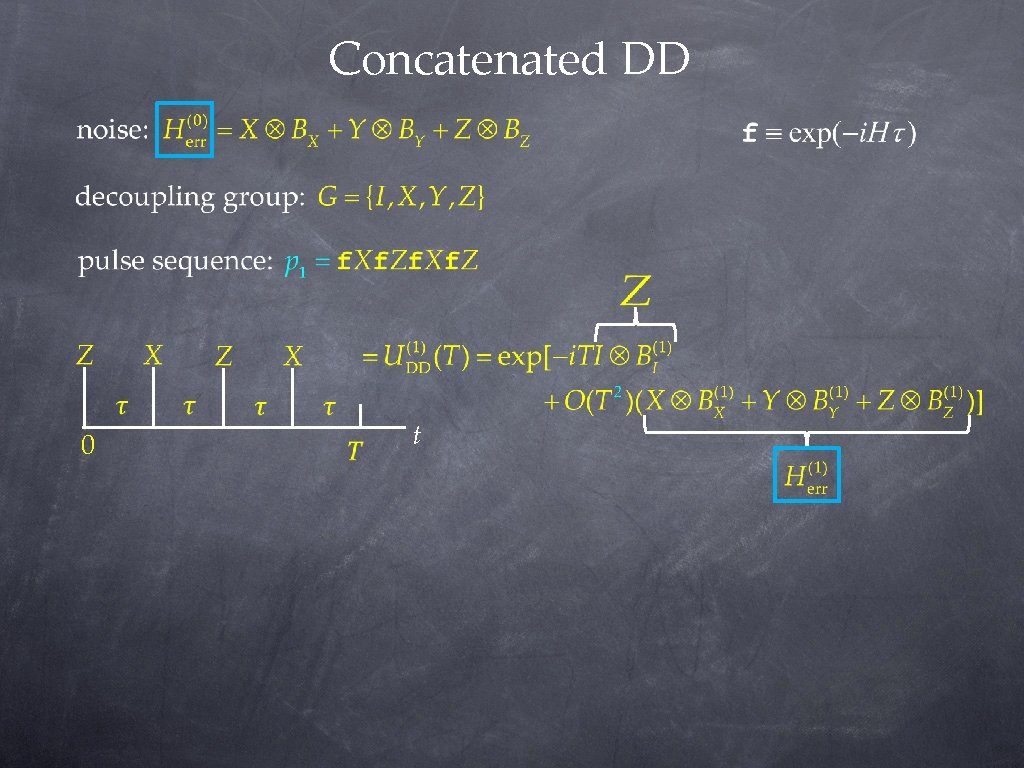
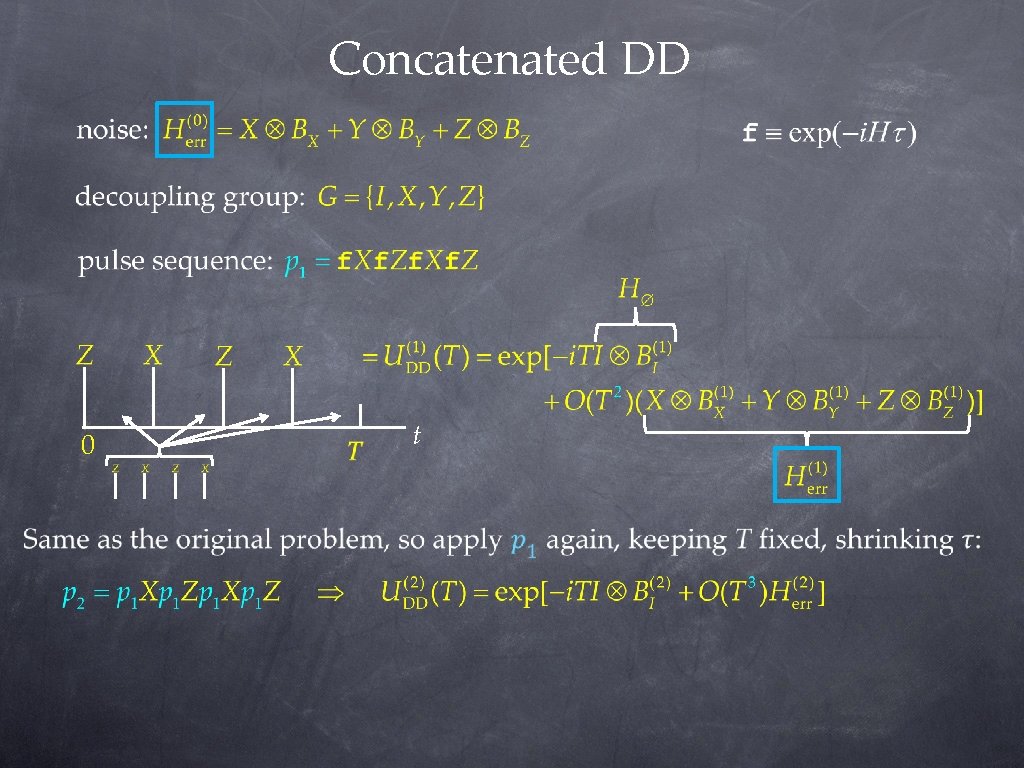
Concatenated DD 0 t
Concatenated DD 0 t
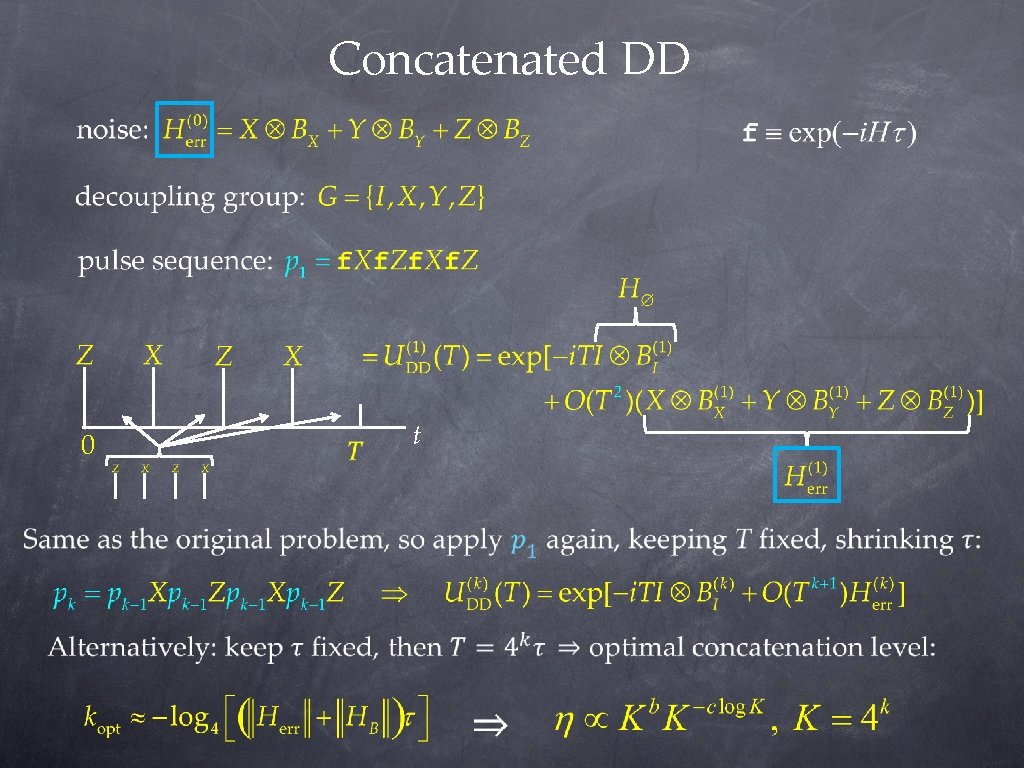
Concatenated DD 0 t …
Concatenated DD 0 t
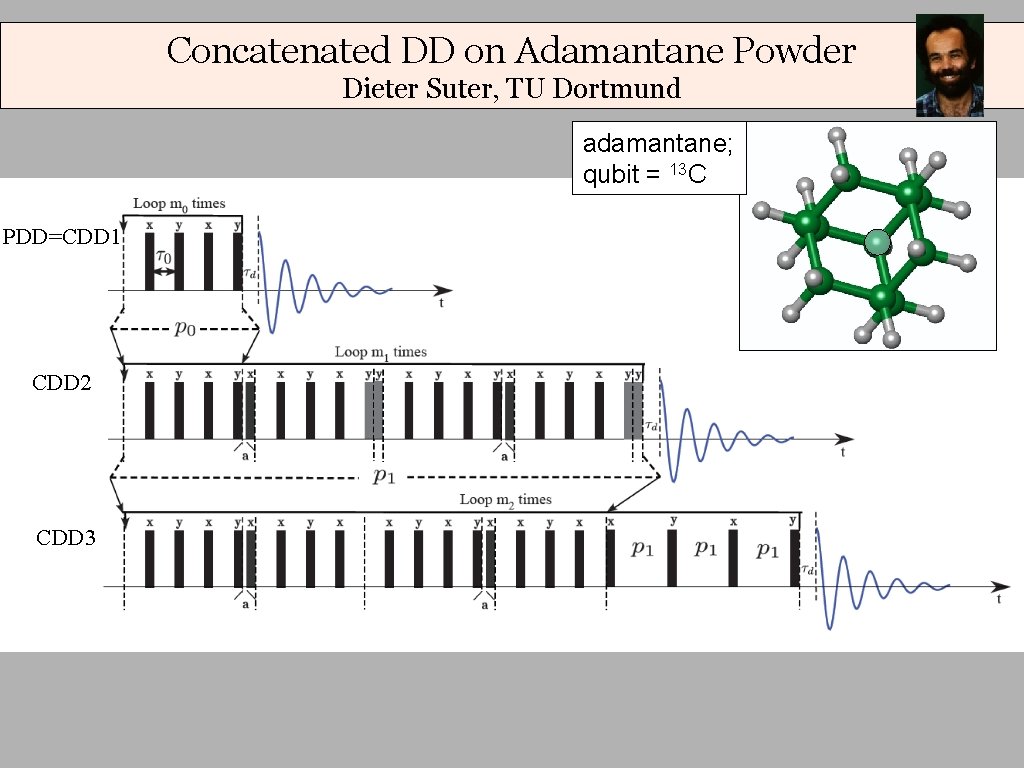
Concatenated DD on Adamantane Powder Dieter Suter, TU Dortmund adamantane; qubit = 13 C PDD=CDD 1 CDD 2 CDD 3
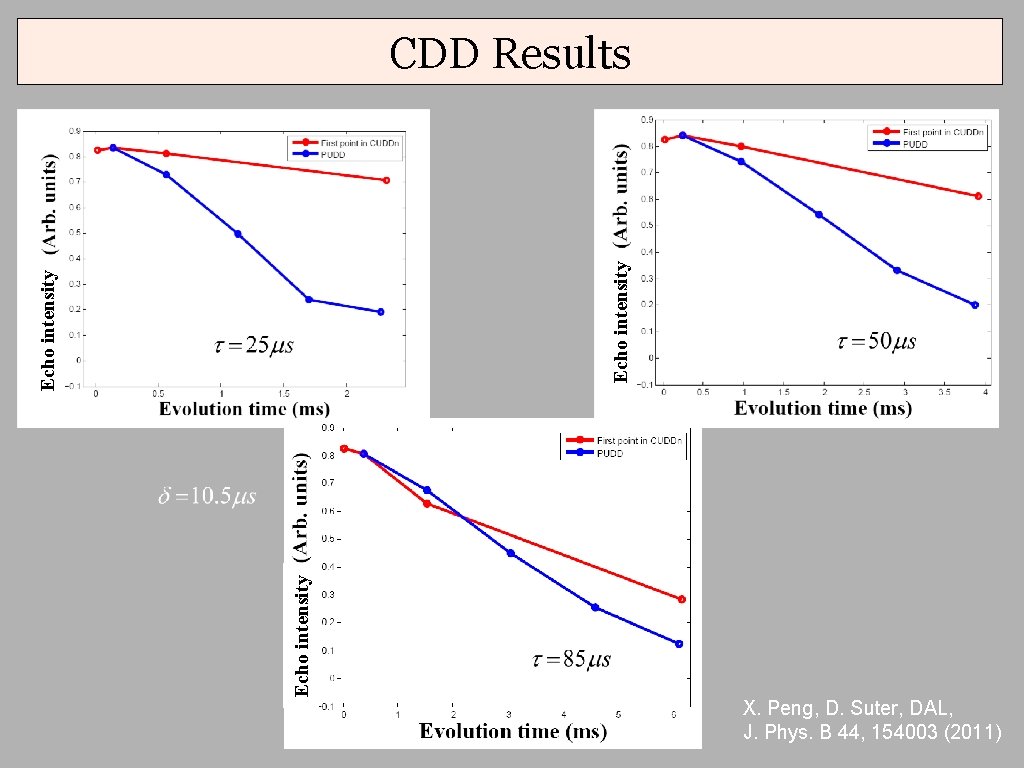
Echo intensity CDD Results X. Peng, D. Suter, DAL, J. Phys. B 44, 154003 (2011)
(small piece of) The DD pulse sequence zoo sequence length & min decoupling order
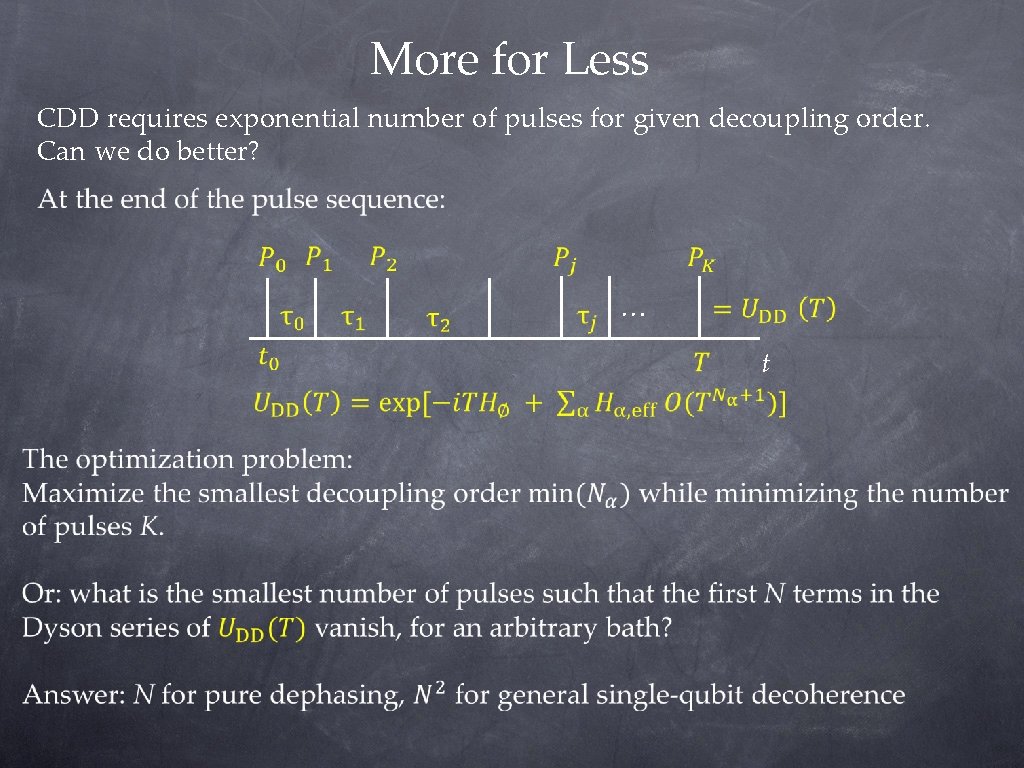
More for Less CDD requires exponential number of pulses for given decoupling order. Can we do better? … t
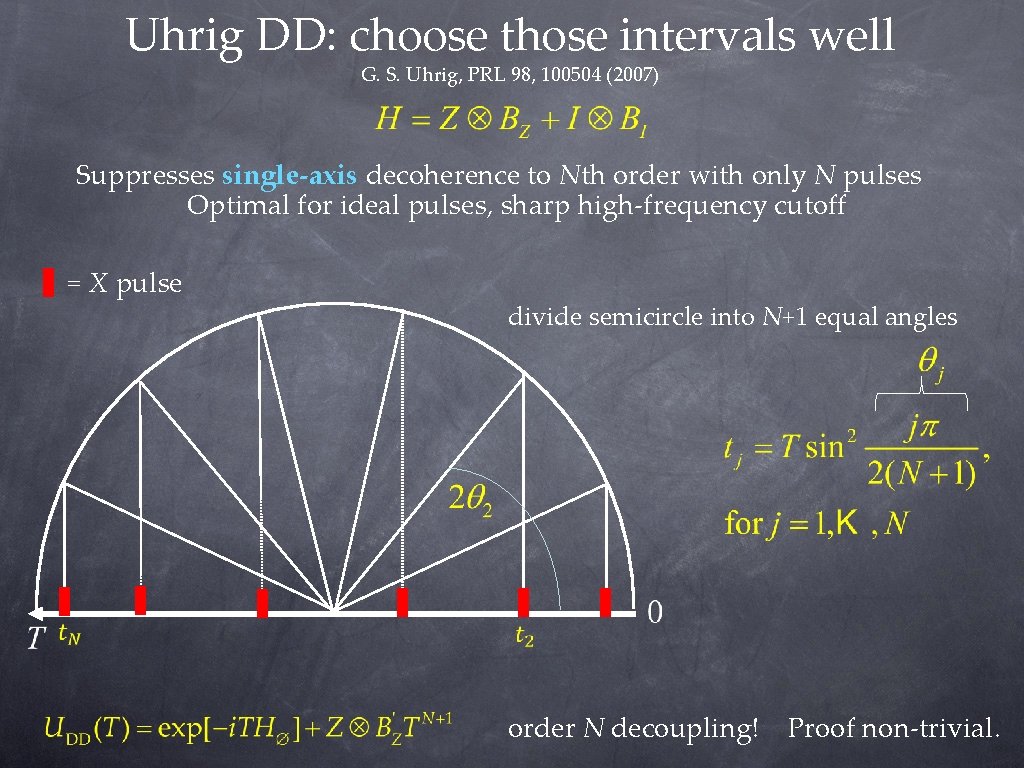
Uhrig DD: choose those intervals well G. S. Uhrig, PRL 98, 100504 (2007) Suppresses single-axis decoherence to Nth order with only N pulses Optimal for ideal pulses, sharp high-frequency cutoff = X pulse divide semicircle into N+1 equal angles order N decoupling! Proof non-trivial.
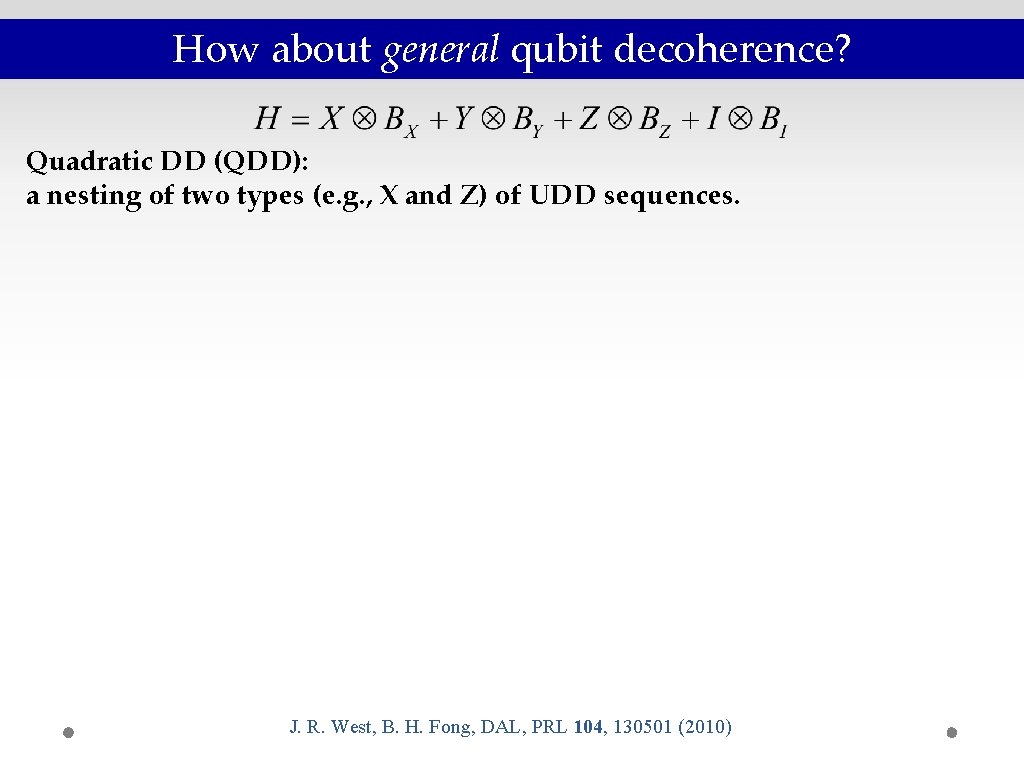
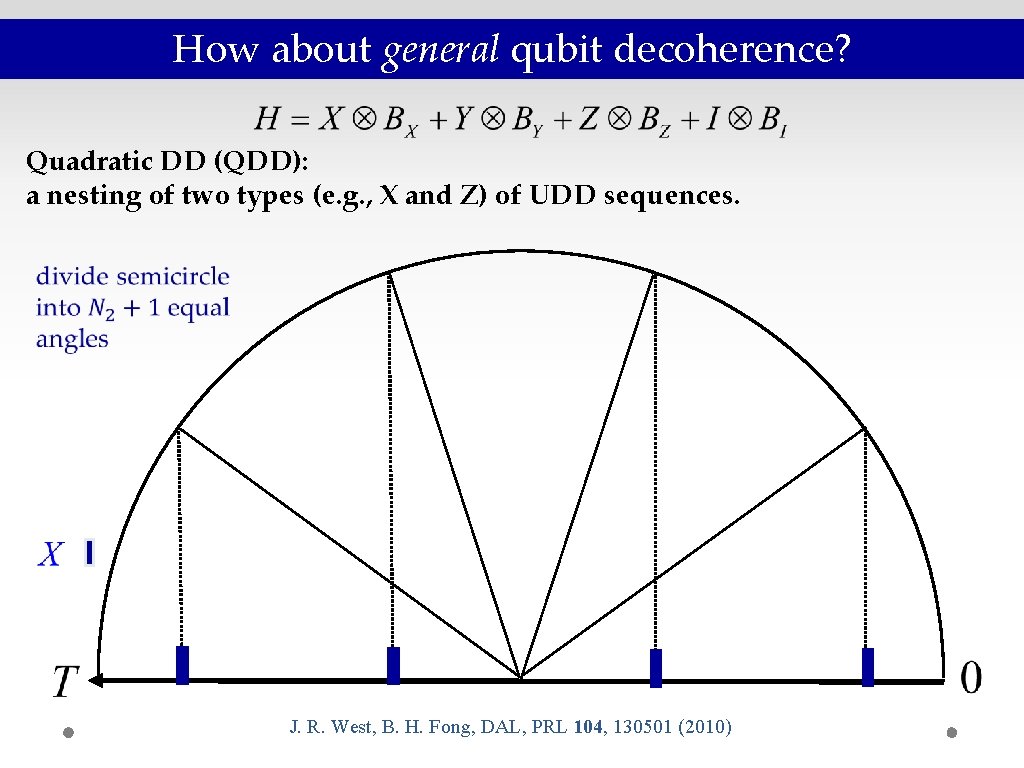
How about general qubit decoherence? Quadratic DD (QDD): a nesting of two types (e. g. , X and Z) of UDD sequences. J. R. West, B. H. Fong, DAL, PRL 104, 130501 (2010)
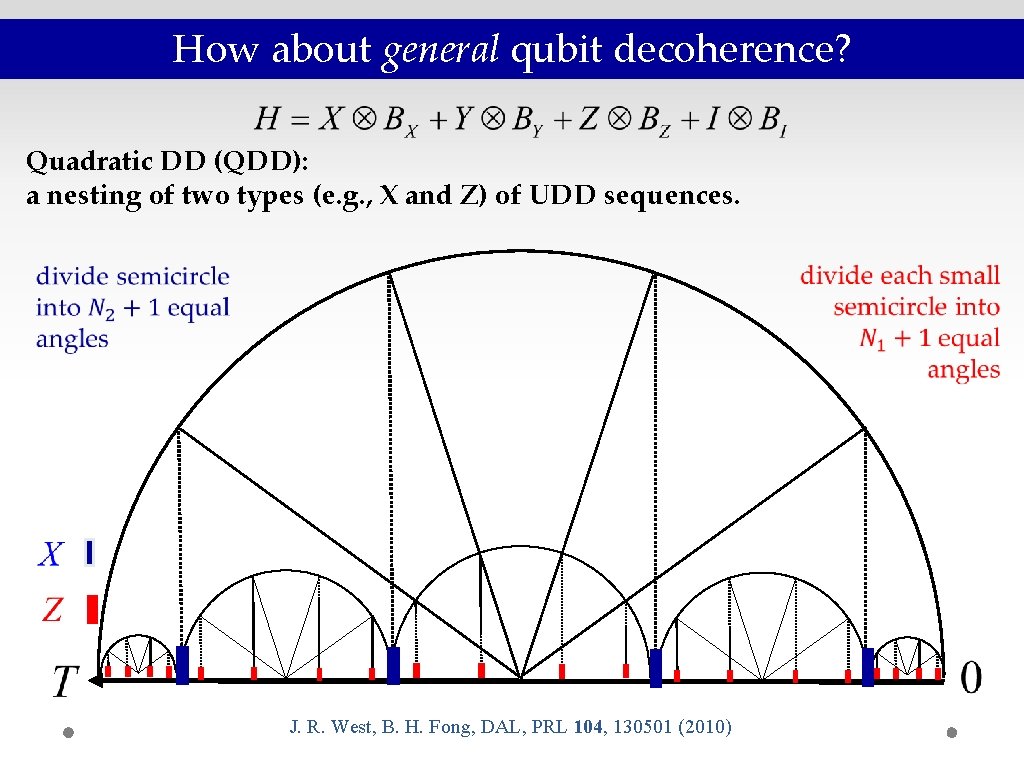
How about general qubit decoherence? Quadratic DD (QDD): a nesting of two types (e. g. , X and Z) of UDD sequences. J. R. West, B. H. Fong, DAL, PRL 104, 130501 (2010)
How about general qubit decoherence? Quadratic DD (QDD): a nesting of two types (e. g. , X and Z) of UDD sequences. J. R. West, B. H. Fong, DAL, PRL 104, 130501 (2010)
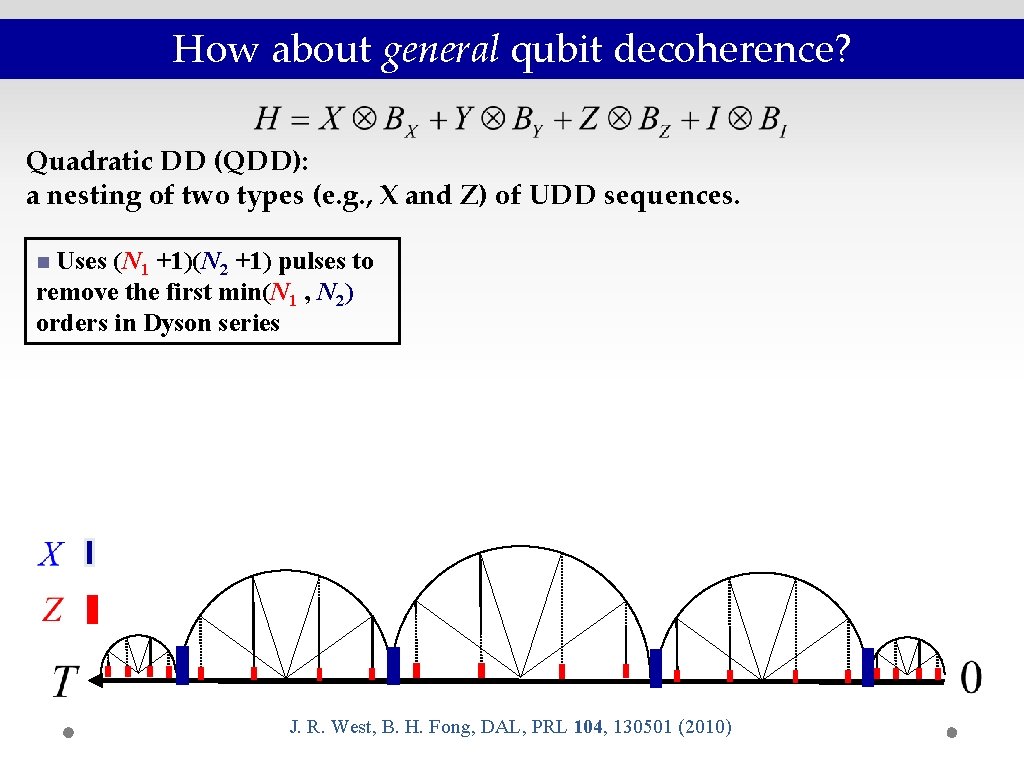
How about general qubit decoherence? Quadratic DD (QDD): a nesting of two types (e. g. , X and Z) of UDD sequences. Uses (N 1 +1)(N 2 +1) pulses to remove the first min(N 1 , N 2) orders in Dyson series n J. R. West, B. H. Fong, DAL, PRL 104, 130501 (2010)
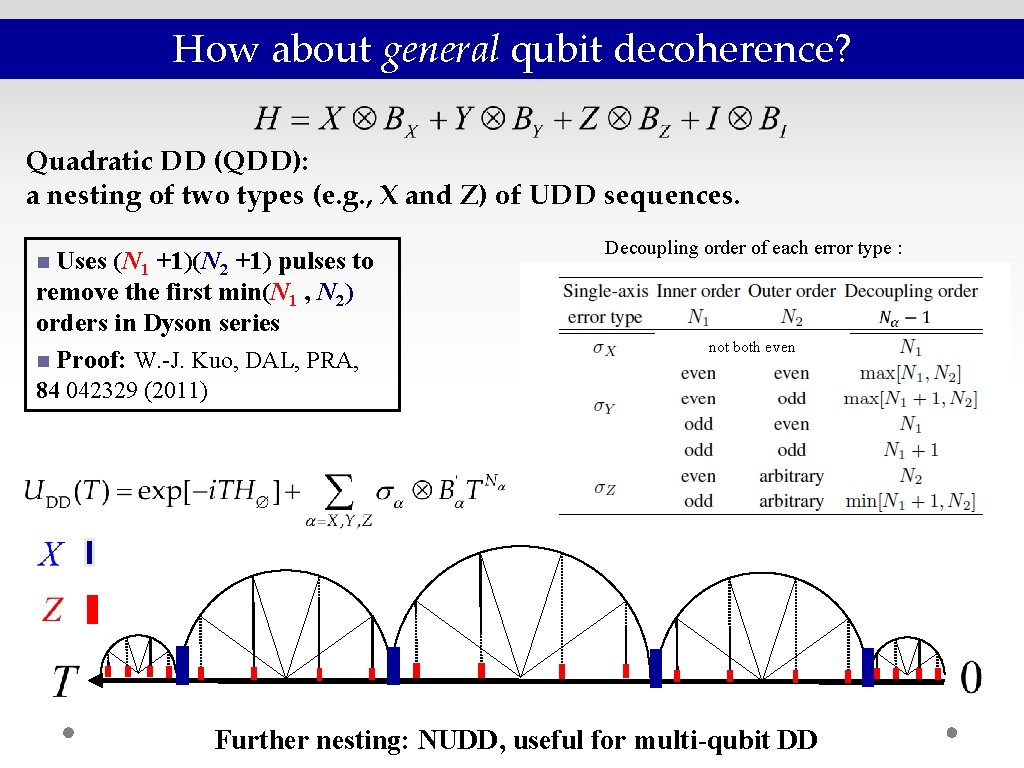
How about general qubit decoherence? Quadratic DD (QDD): a nesting of two types (e. g. , X and Z) of UDD sequences. Uses (N 1 +1)(N 2 +1) pulses to remove the first min(N 1 , N 2) orders in Dyson series n Proof: W. -J. Kuo, DAL, PRA, n Decoupling order of each error type : not both even 84 042329 (2011) Further nesting: NUDD, useful for multi-qubit DD
(small piece of) The DD pulse sequence zoo sequence length & min decoupling order
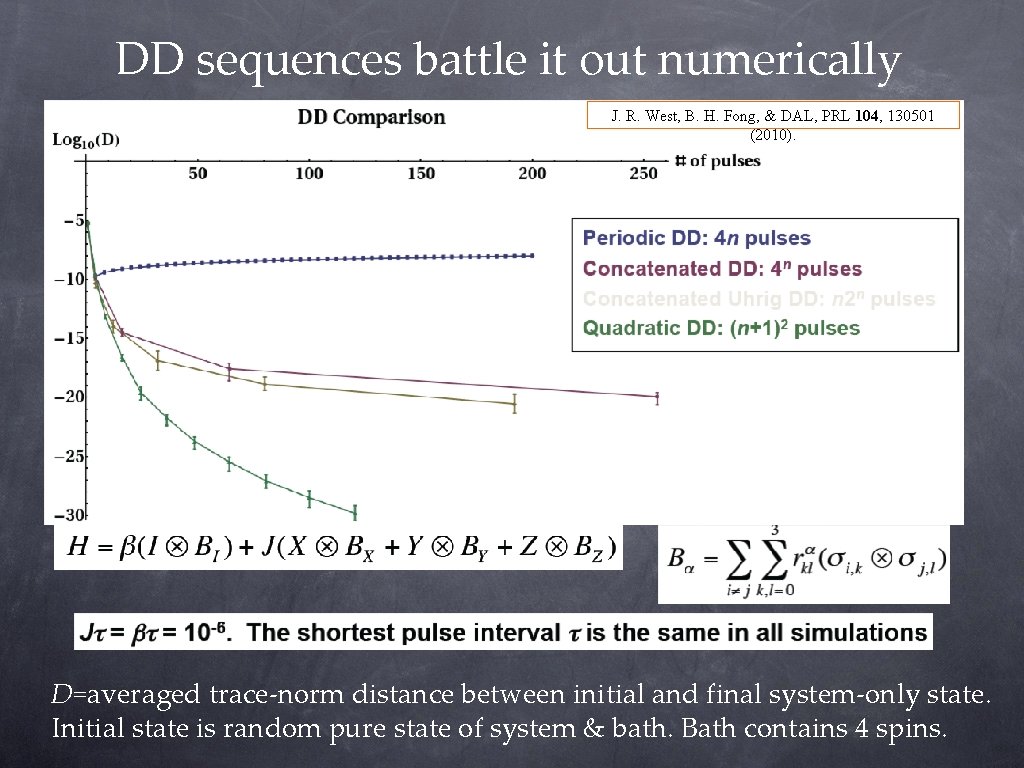
DD sequences battle it out numerically J. R. West, B. H. Fong, & DAL, PRL 104, 130501 (2010). D=averaged trace-norm distance between initial and final system-only state. Initial state is random pure state of system & bath. Bath contains 4 spins.
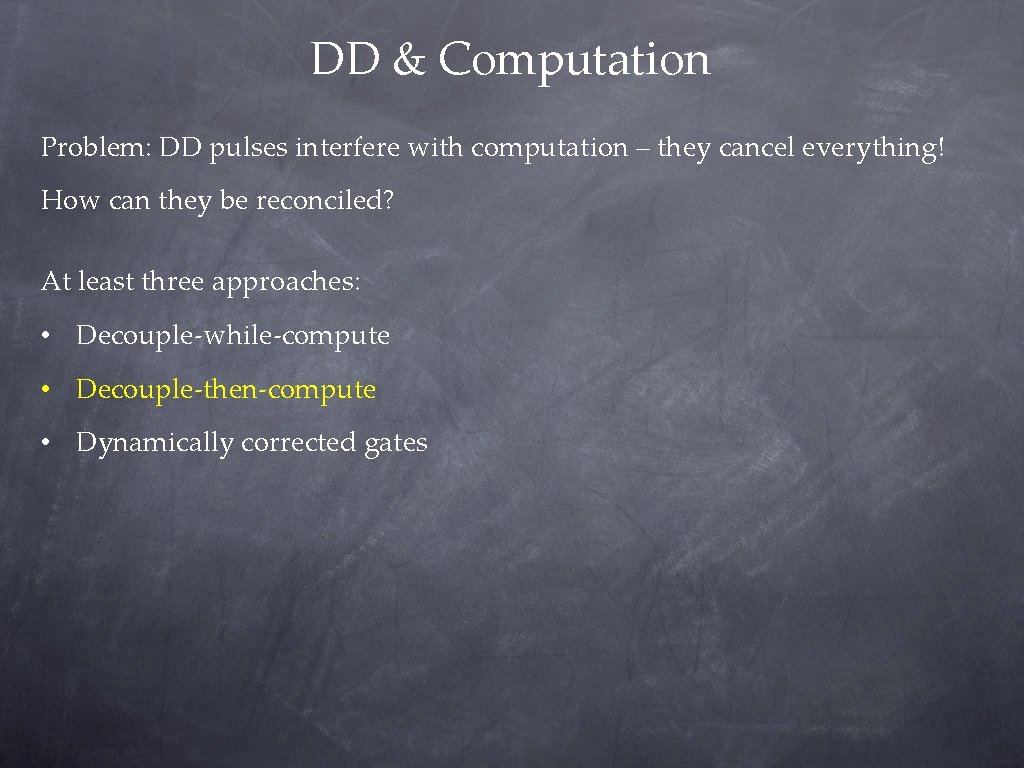
DD & Computation Problem: DD pulses interfere with computation – they cancel everything! How can they be reconciled? At least three approaches: • Decouple-while-compute • Decouple-then-compute • Dynamically corrected gates
DD & Computation Problem: DD pulses interfere with computation – they cancel everything! How can they be reconciled? At least three approaches: • Decouple-while-compute • Decouple-then-compute • Dynamically corrected gates
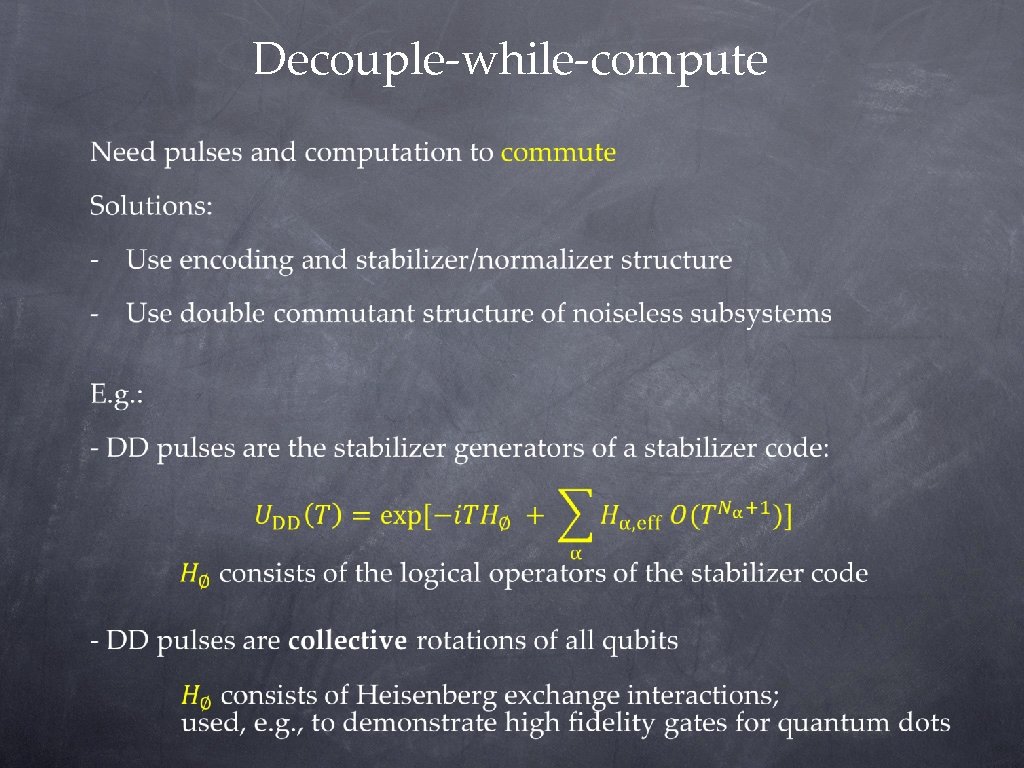
Decouple-while-compute
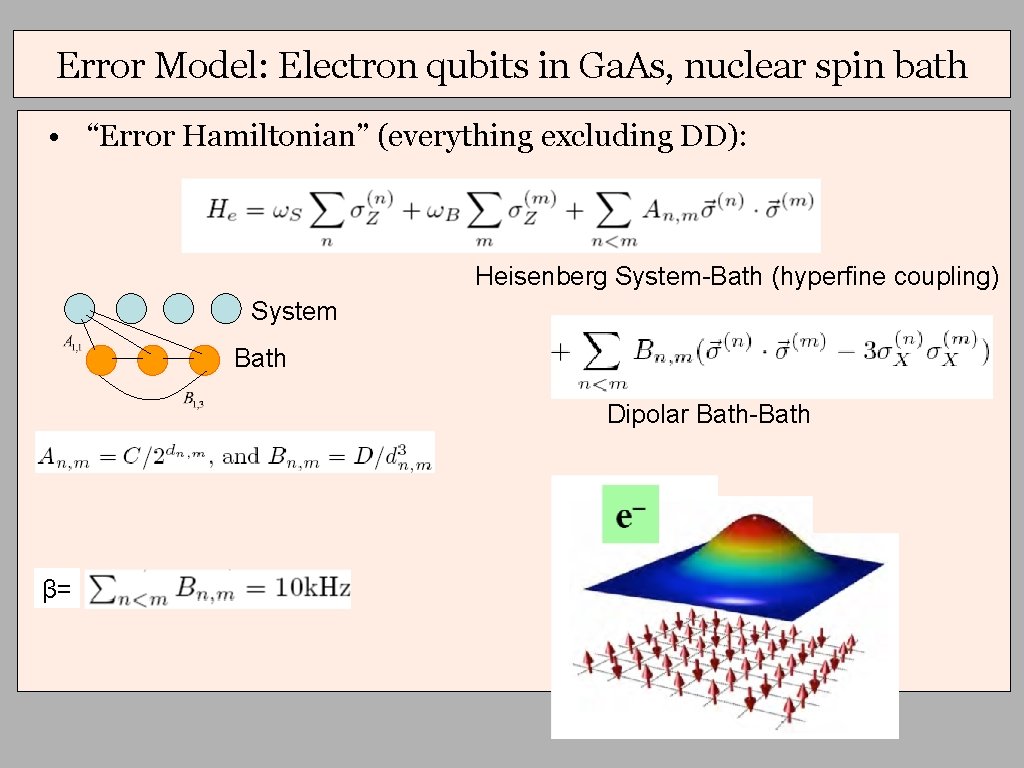
Error Model: Electron qubits in Ga. As, nuclear spin bath • “Error Hamiltonian” (everything excluding DD): Heisenberg System-Bath (hyperfine coupling) System Bath Dipolar Bath-Bath β=
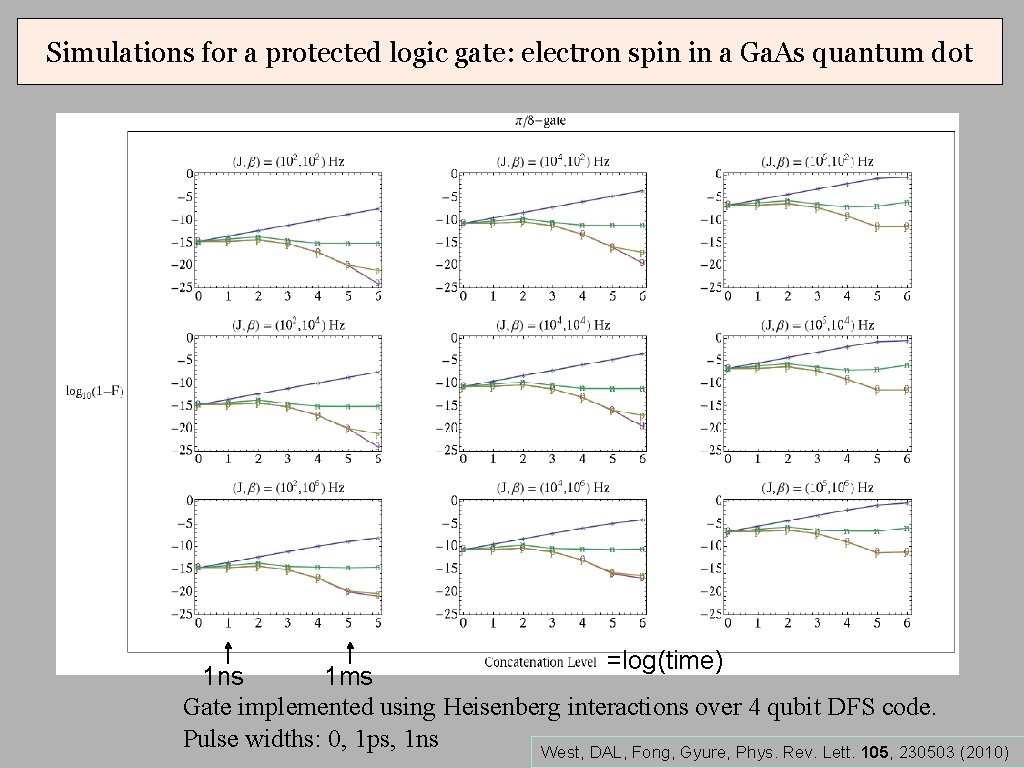
Simulations for a protected logic gate: electron spin in a Ga. As quantum dot =log(time) 1 ns 1 ms Gate implemented using Heisenberg interactions over 4 qubit DFS code. Pulse widths: 0, 1 ps, 1 ns West, DAL, Fong, Gyure, Phys. Rev. Lett. 105, 230503 (2010)
DD & Computation Problem: DD pulses interfere with computation – they cancel everything! How can they be reconciled? At least three approaches: • Decouple-while-compute • Decouple-then-compute • Dynamically corrected gates
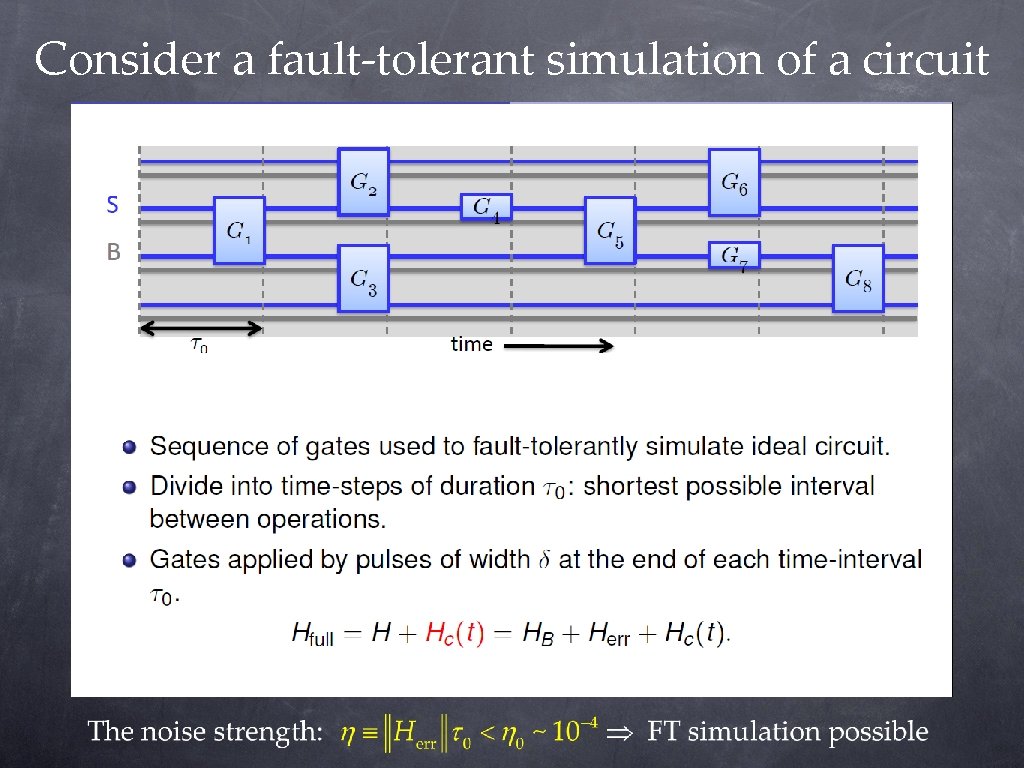
Consider a fault-tolerant simulation of a circuit
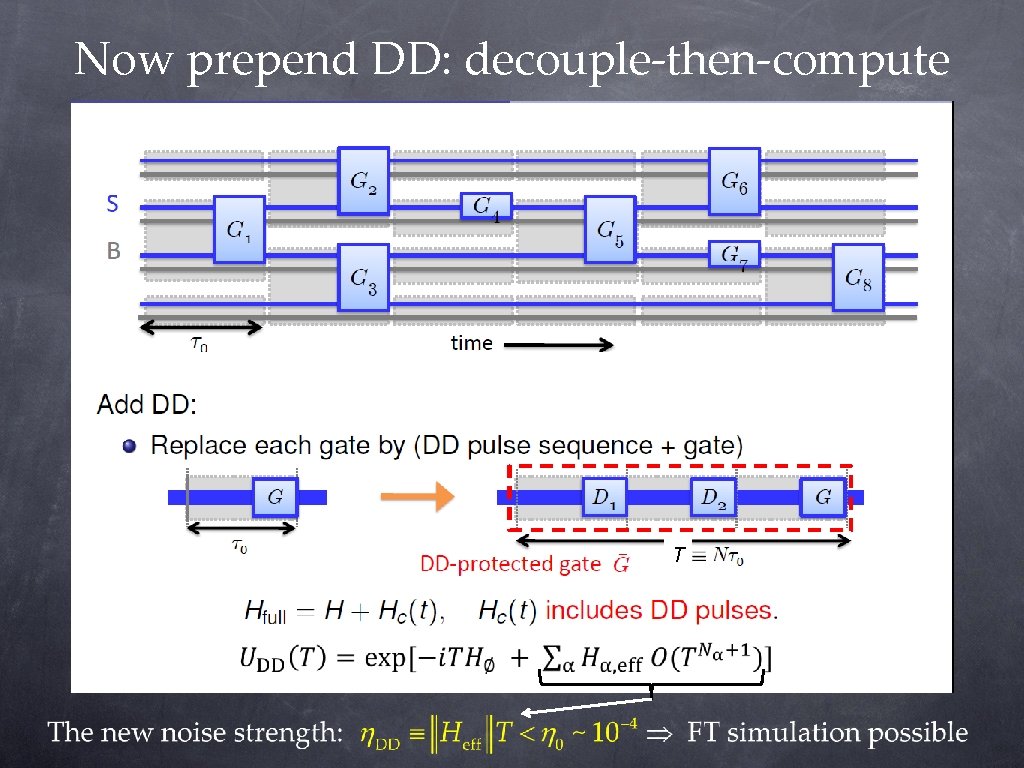
Now prepend DD: decouple-then-compute T
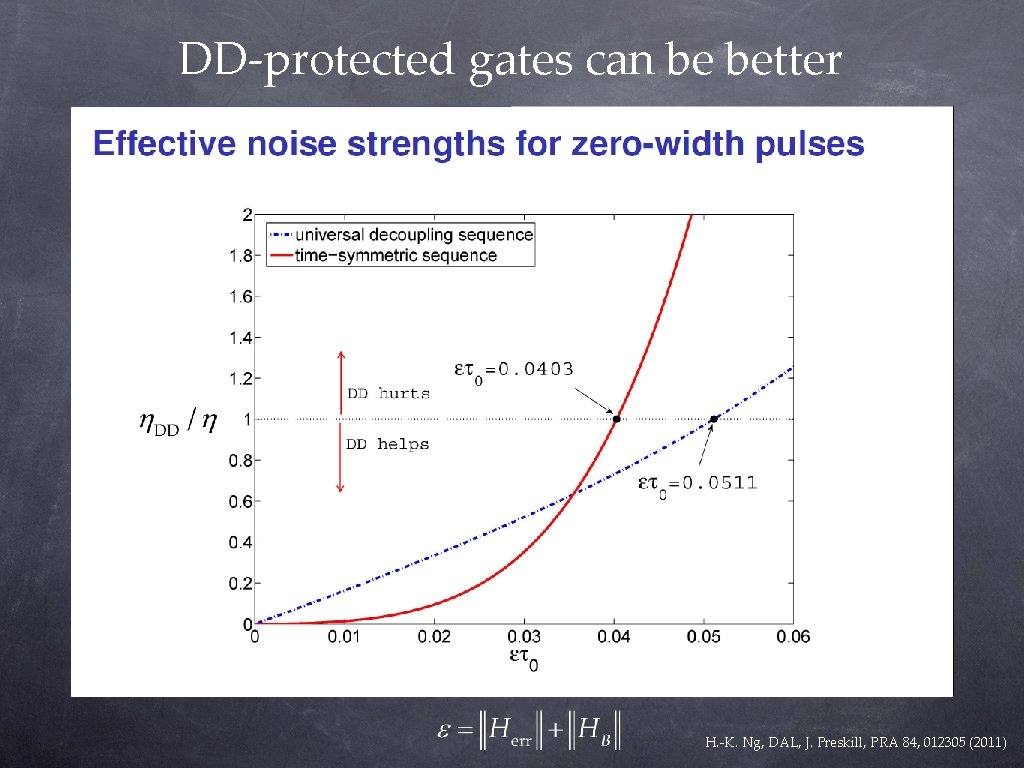
DD-protected gates can be better H. -K. Ng, DAL, J. Preskill, PRA 84, 012305 (2011)
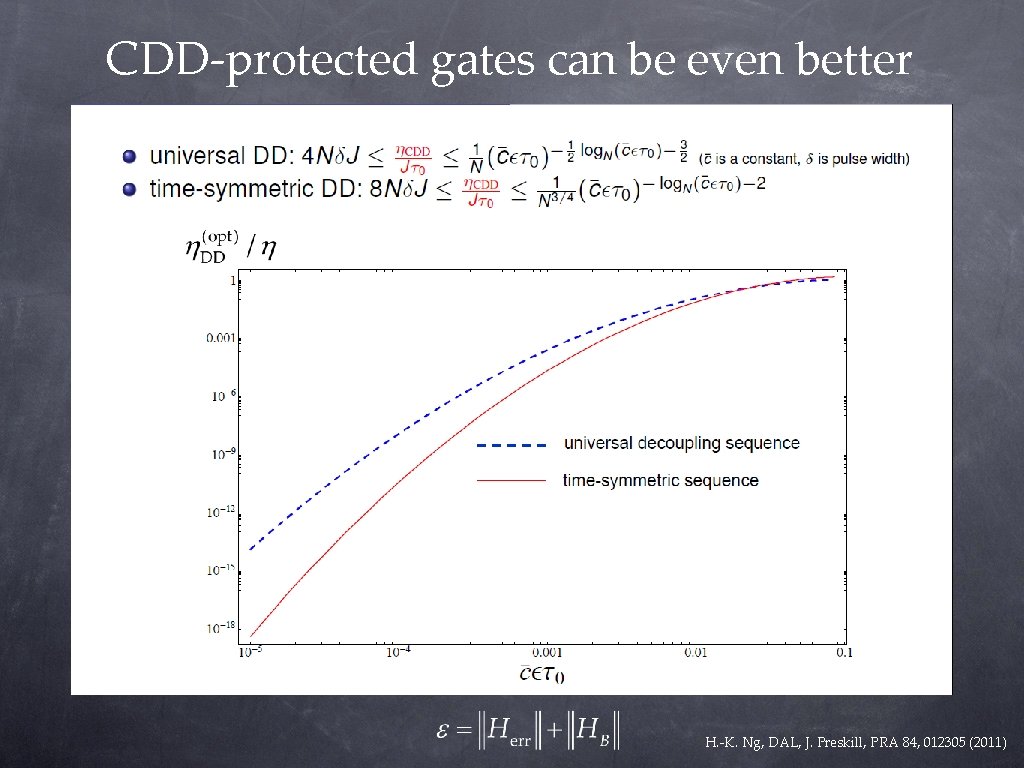
CDD-protected gates can be even better H. -K. Ng, DAL, J. Preskill, PRA 84, 012305 (2011)
To DD or not to DD Dynamical decoupling is • A method where one applies fast & strong control pulses to the system • Open-loop, feedback- and measurement-free Dynamical decoupling is not • A stand-alone solution It cannot, by itself, be made fault-tolerant So, why DD? • Open-loop is technically easier than closed-loop methods used to fight decoherence • DD can be used at the lowest (physical) level to improve performance and reduce overhead of fault tolerant quantum error correction • DD has been widely experimentally tested, with encouraging results • Many interesting open questions regarding optimality remain!
Essential references for this talk • L. Viola, S. Lloyd PRA 58, 2733 (1998): first DD paper • L. Viola, E. Knill, S. Lloyd, PRL 82, 2417 (1999): General theory of DD • P. Zanardi Phys. Lett. A 258, 77 (1999): General theory of DD, DD as symmetrization • K. Khodjasteh, D. A. Lidar, PRL 95, 180501 (2005): first CDD paper • F. Casas, J. Phys. A 40, 15001 (2007): convergence of Magnus expansion • G. S. Uhrig, PRL 98, 100504 (2007): first UDD paper • W. Yang, R. -B. Liu, PRL 101, 180403 (2008): first proof of universality of UDD • J. R. West, B. H. Fong, D. A. Lidar, PRL 104, 130501 (2010): first QDD paper • Z. Wang, R. -B. Liu, PRA 83, 022306 (2011): first NUDD paper • H. -K. Ng, D. A. Lidar, J. Preskill, PRA 84, 012305 (2011): DD and fault tolerance, derivation of Magnus series; proof of vanishing even orders of Magnus for palindromic sequences • W. -J. Kuo, D. A. Lidar, PRA 84 042329 (2011): first complete proof of universality of QDD • K. Khodjasteh, D. A. Lidar, L. Viola, PRL 104, 090501 (2010): concatenated dynamically corrected gates • G. A. Paz-Silva, D. A. Lidar, ar. Xiv: 1206. 3606: optimally combining DD & QEC