
Introduction to Drug Misuse Les Goldman Objectives Gain
Introduction to Drug Misuse Les Goldman
Objectives • Gain basic knowledge of • Common current patterns of drug misuse • Local referral pathways • Available treatments
Commonly misused drugs • • Cannabis - “draw” “weed” Ecstasy, LSD Solvents Amphetamines - “whizz” Opiates - “gear” “brown” Cocaine - “crack” “rock” “stone” Benzodiazepines - “blues”
Common patterns of drug misuse • Primary heroin IV or inhaled plus • • Methadone, DHC etc when supplies low Benzodiazepines for “depression” Cocaine occasionally as “treat” Cannabis daily • Primary cocaine use - intense binges plus • Heroin and/or benzos afterwards • Cannabis
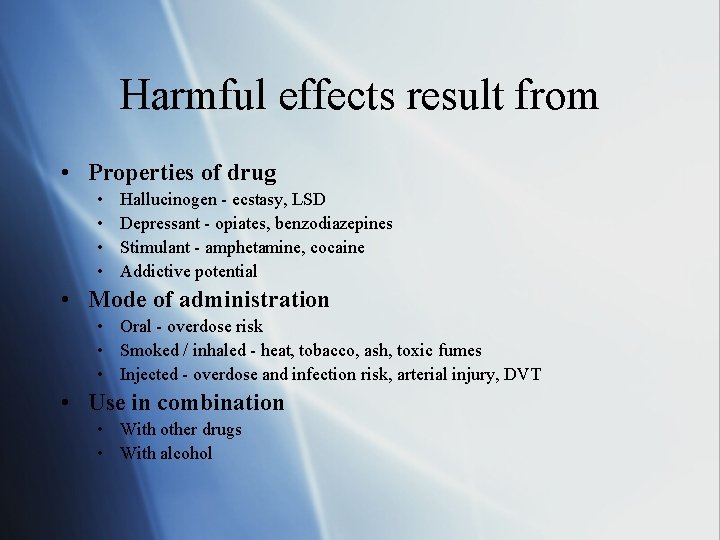
Harmful effects result from • Properties of drug • • Hallucinogen - ecstasy, LSD Depressant - opiates, benzodiazepines Stimulant - amphetamine, cocaine Addictive potential • Mode of administration • Oral - overdose risk • Smoked / inhaled - heat, tobacco, ash, toxic fumes • Injected - overdose and infection risk, arterial injury, DVT • Use in combination • With other drugs • With alcohol
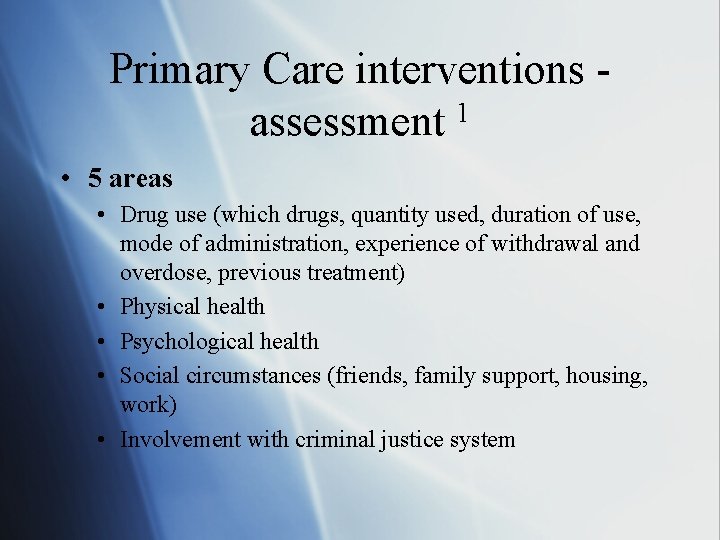
Primary Care interventions assessment 1 • 5 areas • Drug use (which drugs, quantity used, duration of use, mode of administration, experience of withdrawal and overdose, previous treatment) • Physical health • Psychological health • Social circumstances (friends, family support, housing, work) • Involvement with criminal justice system
Primary Care interventions assessment 2 • Objective confirmation • History • Examination • Investigation
Primary Care interventions motivation • Cycle of change - something to offer at each stage • • • Precontemplation Contemplation Action Maintenance Relapse
Primary Care interventions harm reduction • Accurate information about drug effects and risks • Verbal • Written • Encourage safer pattern of use • Care with combinations of drugs / alcohol • Smoke rather than inject • Safer smoking / injecting techniques • Manage physical health problems • Preventive health care • Overdose prevention (don’t inject alone, learn basic CPR) • Vaccination (hep A, hep B, tetanus)
Appropriate referral 1 • Bridge Project (non-statutory) • Counselling, harm reduction, needle exchange • Activities (music, IT, gym, complementary therapies) • Treatment • Women’s Service • Young People’s Service • Stimulant Service
Appropriate referral 2 • PCT level primary care based services • NBPCT Drug Service • Ripple Project • City SMS • Personnel - GPw. SI, CPN, physical health nurse, drugs worker, vocational advice, social support, carer support, community development • Principally opiate dependence services • Main exclusions • Complex poly - substance misuse • Serious mental health problems • Young people
Appropriate referral • Specialist Services • • • CDAT (Horton Park Centre) One Stop Maternity Service Young People’s Service Day Care Detoxification programmes • Other services • Carers • Self help (Narcotics Anonymous) 3
Criminal Justice and Drugs • Drug Intervention Programme (DIP) • Restriction on Bail (ROB) • Drug Treatment & Testing Order (DTTO) • Support workers • Structured activities
Principles of treatment 1 choice of intervention • Substitute prescribing • Appropriate for e. g. opiate and benzodiazepine misuse • Harm reduction • Physical • Psychological • Social • Maintenance / detoxification • Symptomatic relief • Appropriate for e. g. cocaine misuse • Relapse prevention • Medical - naltrexone • Non medical - supportive counselling
Principles of treatment 2 choice of opiate substitute • Methadone • • Long acting Can’t inject mixture Sedating Withdrawal sometimes difficult • Buprenorphine (Subutex) • • Long acting Blocking effect (safer but risk of precipitate withdrawal on starting treatment) Less sedating Easier withdrawal • Dihydrocodeine • Easily diverted • Easier withdrawal, useful for quick detox • Less potent
More information • Drug Misuse and Dependence - Guidelines on Clinical Management Do. H 1999 • www. smmgp. co. uk • Guidelines and info • www. drugscope. org. uk • Easy to use source of information • www. nta. nhs. uk • Do. H agency commissioning drug misuse services
- Slides: 16