
Introduction To Drinking Water Policy J Alan Roberson
Introduction To Drinking Water Policy J. Alan Roberson, P. E. ASDWA Executive Director Association of State Drinking Water Administrators 1401 Wilson Blvd. - Suite 1225 - Arlington, VA 22209 - (703) 812 -9505 - www. ASDWA. org
Presentation Outline • Why we need more drinking water policy research now • Alan’s limited policy research • Interns’ policy research • Recommendations Association of State Drinking Water Administrators 1401 Wilson Blvd. - Suite 1225 - Arlington, VA 22209 - (703) 812 -9505 - www. ASDWA. org
Drinking Water Policy Research Needed • Limited research to answer critical questions – How effective are the regulations? – Are the right things being regulated? – How are regulatory decisions being made? – What might be the impacts of future regulations and/or revised regulations? • Current regulatory slowdown provides an opportunity to conduct policy research – Target opportunities for future regulations • Maximize future risk reduction – Future regulations will be reducing smaller risks
Alan’s Limited Policy Research • First policy paper published in Journal-AWWA in 1995 – Compilation of numbers from DBP negotiated rulemaking • Policy topics began to broaden but were used to feed into EPA’s regulatory development process – – Compliance statistics Contaminant Candidate List(s): example on next slide Uncertainties with microbial methods and the data Others • Brainstorm-summer interns could do the analysis – Full of ideas but didn’t have the bandwidth to collect the data & conduct the analysis
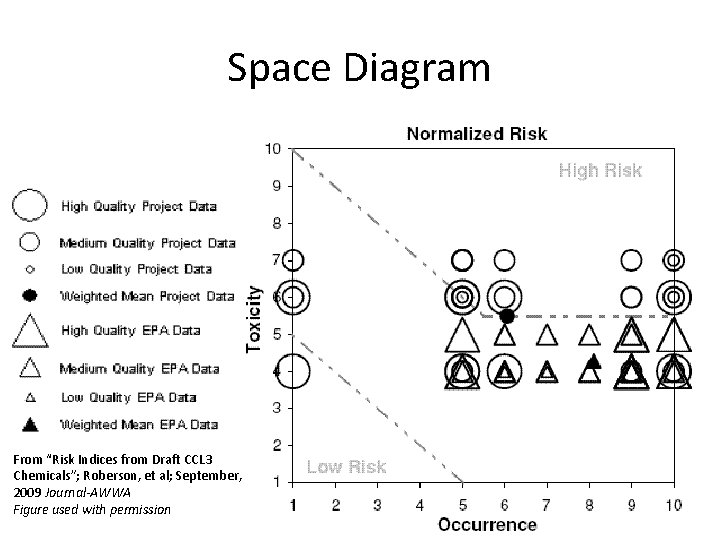
Space Diagram From “Risk Indices from Draft CCL 3 Chemicals”; Roberson, et al; September, 2009 Journal-AWWA Figure used with permission
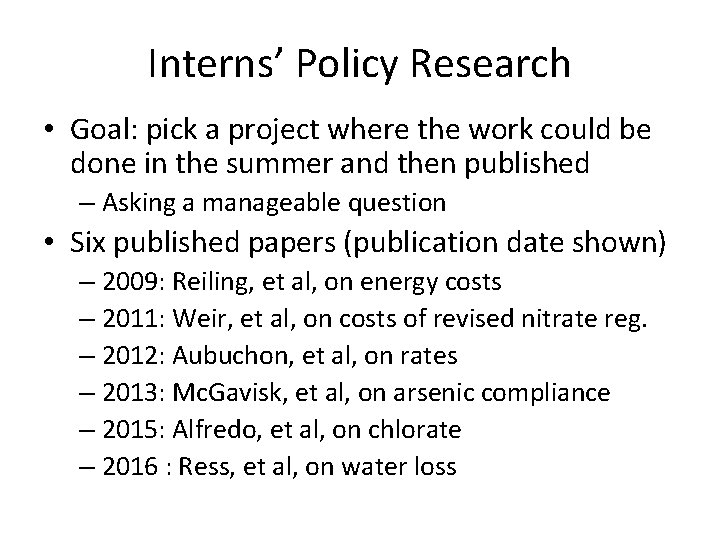
Interns’ Policy Research • Goal: pick a project where the work could be done in the summer and then published – Asking a manageable question • Six published papers (publication date shown) – 2009: Reiling, et al, on energy costs – 2011: Weir, et al, on costs of revised nitrate reg. – 2012: Aubuchon, et al, on rates – 2013: Mc. Gavisk, et al, on arsenic compliance – 2015: Alfredo, et al, on chlorate – 2016 : Ress, et al, on water loss
Recommendations • Time is ripe for more drinking water policy research • Funding is a big issue –Project development & oversight • Collaborations with universities? – Capstone projects? ?
Interested in Working on Drinking Water Policy? • For more information, contact – arorberson@asdwa. org – Direct line: (703) 812 -9507 Association of State Drinking Water Administrators 1401 Wilson Blvd. - Suite 1225 - Arlington, VA 22209 - (703) 812 -9505 - www. ASDWA. org
Research Priorities to Help Reduce Drinking Water Violations. Maura Allaire Assistant Professor of Water Economics and Policy University of California, Irvine ASDWA Webinar March 26, 2018
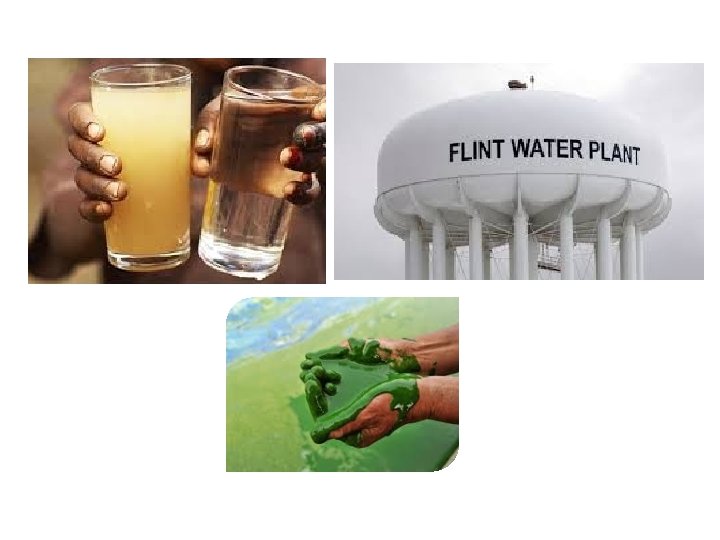
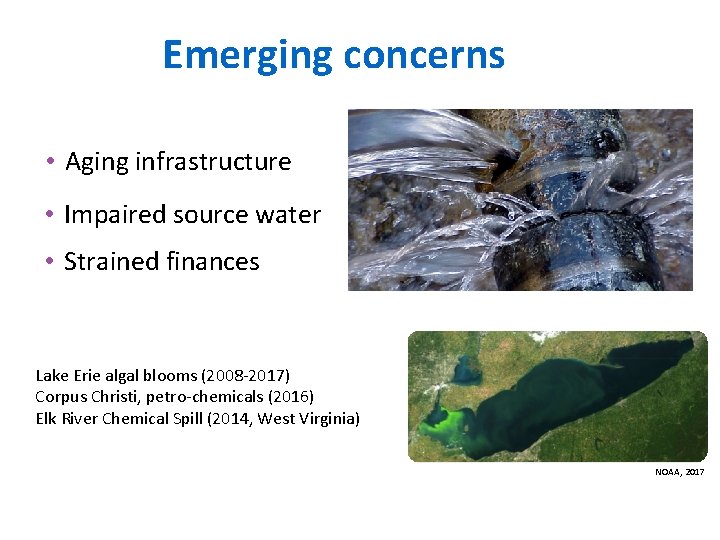
Emerging concerns • Aging infrastructure • Impaired source water • Strained finances Lake Erie algal blooms (2008 -2017) Corpus Christi, petro-chemicals (2016) Elk River Chemical Spill (2014, West Virginia) NOAA, 2017
Questions 1. How widespread are violations? 2. Spatial and temporal patterns? 3. Which types of communities are most vulnerable?
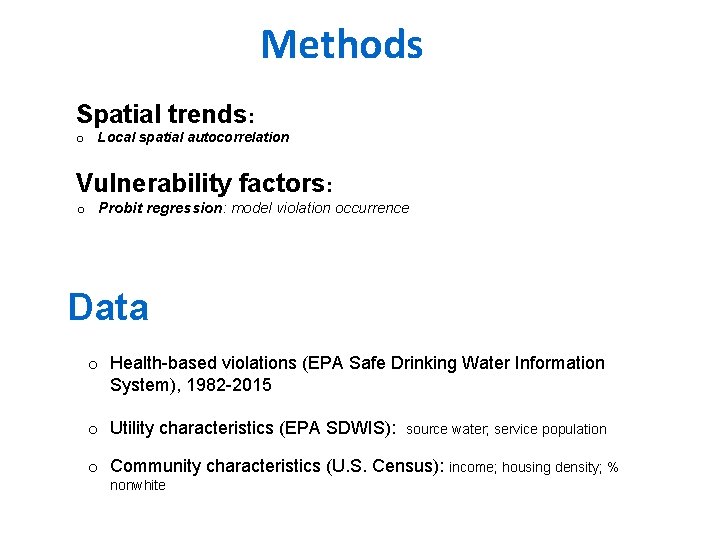
Methods Spatial trends: o Local spatial autocorrelation Vulnerability factors: o Probit regression: model violation occurrence Data o Health-based violations (EPA Safe Drinking Water Information System), 1982 -2015 o Utility characteristics (EPA SDWIS): source water; service population o Community characteristics (U. S. Census): income; housing density; % nonwhite
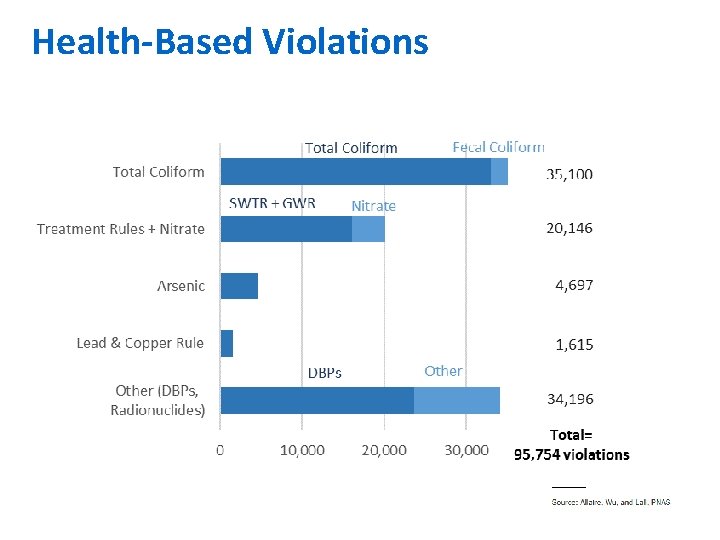
Health-Based Violations
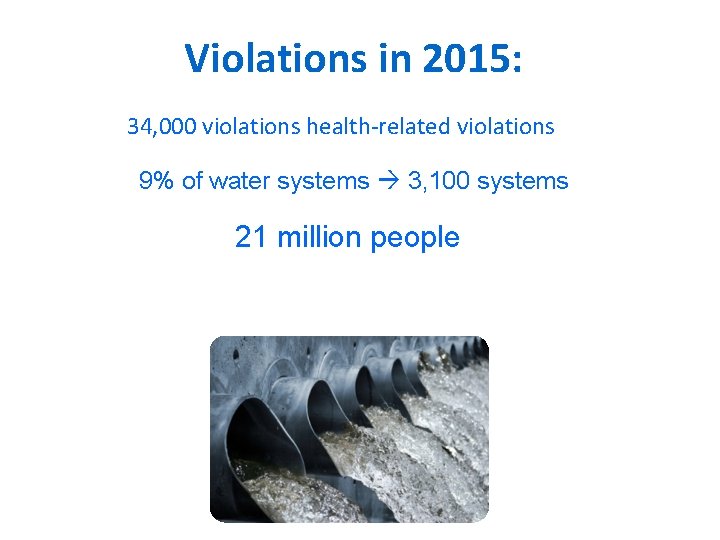
Violations in 2015: 34, 000 violations health-related violations 9% of water systems 3, 100 systems 21 million people
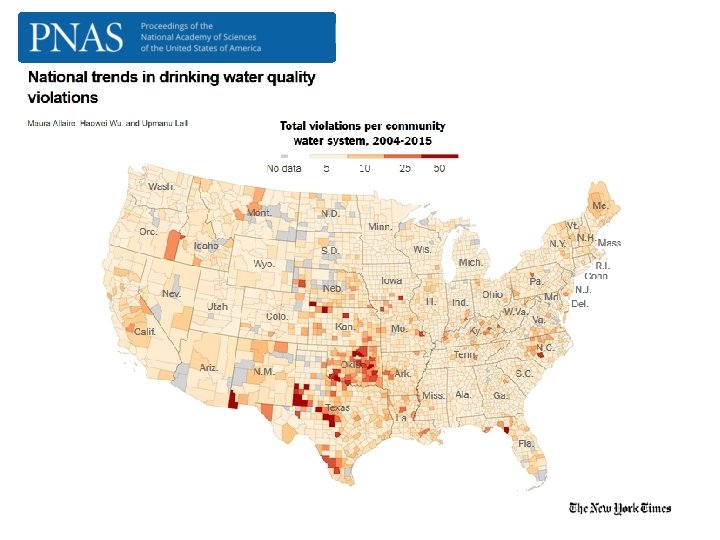
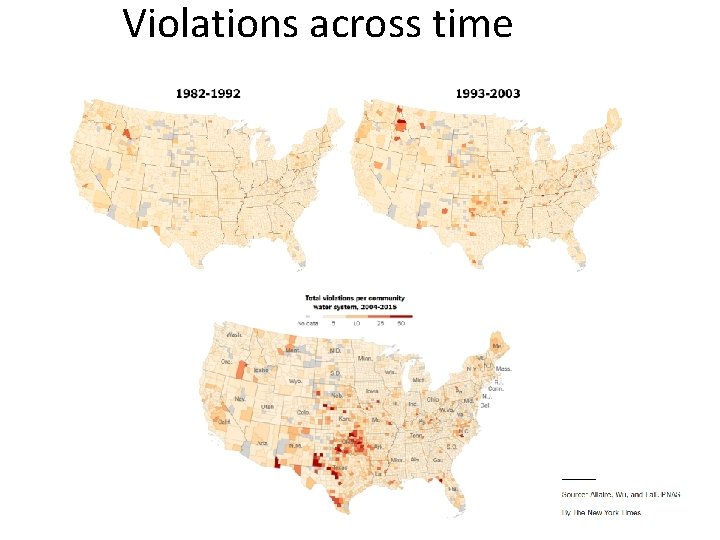
Violations across time
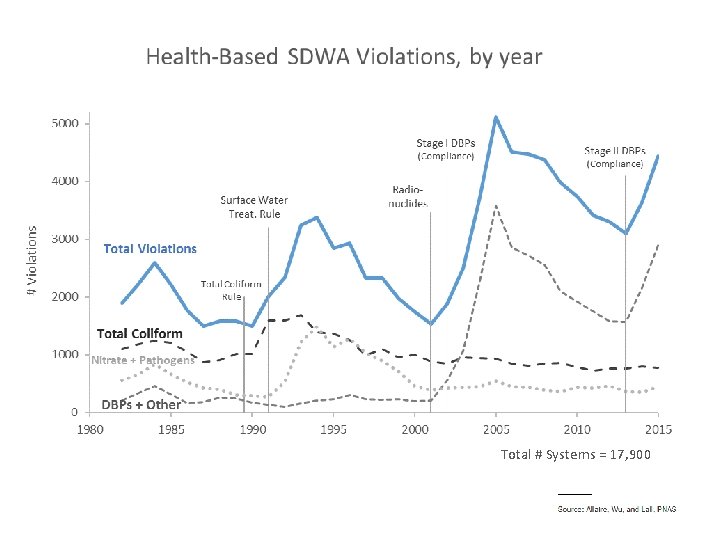
Total # Systems = 17, 900
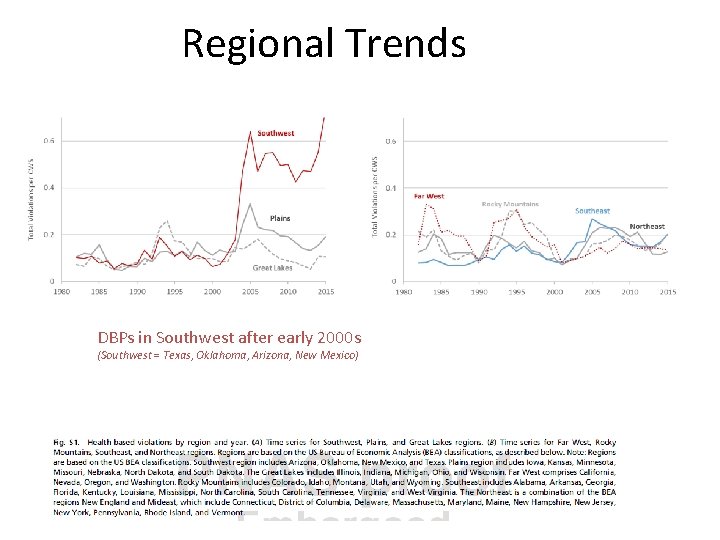
Regional Trends DBPs in Southwest after early 2000 s (Southwest = Texas, Oklahoma, Arizona, New Mexico)
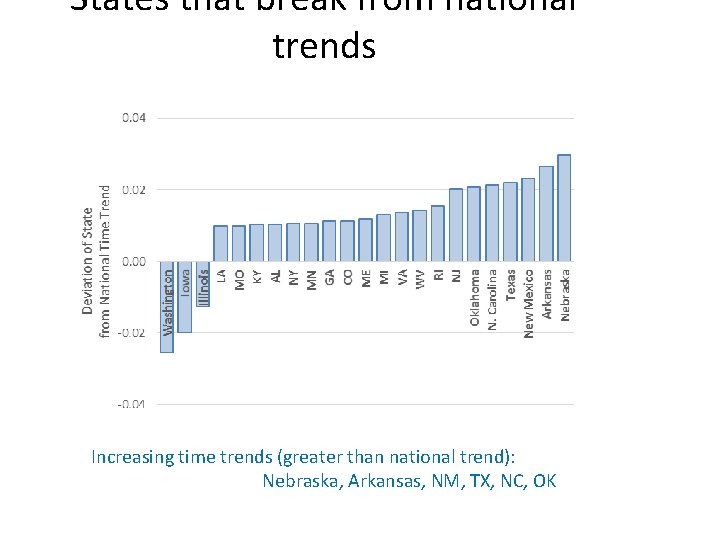
States that break from national trends Increasing time trends (greater than national trend): Nebraska, Arkansas, NM, TX, NC, OK
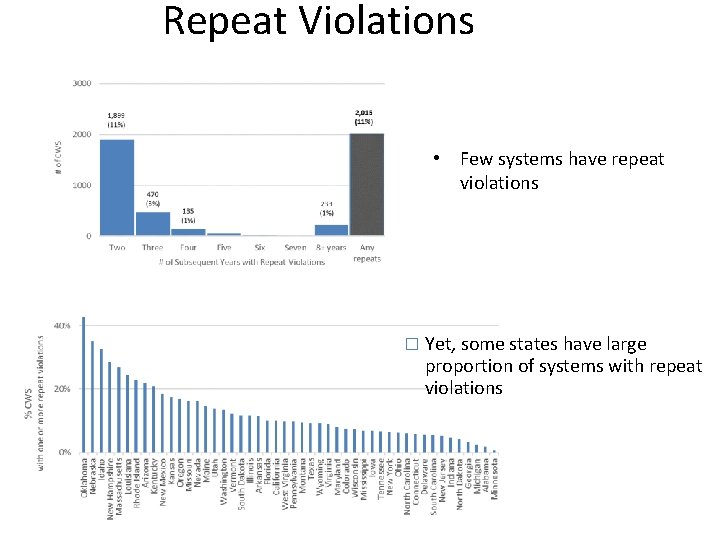
Repeat Violations • Few systems have repeat violations � Yet, some states have large proportion of systems with repeat violations
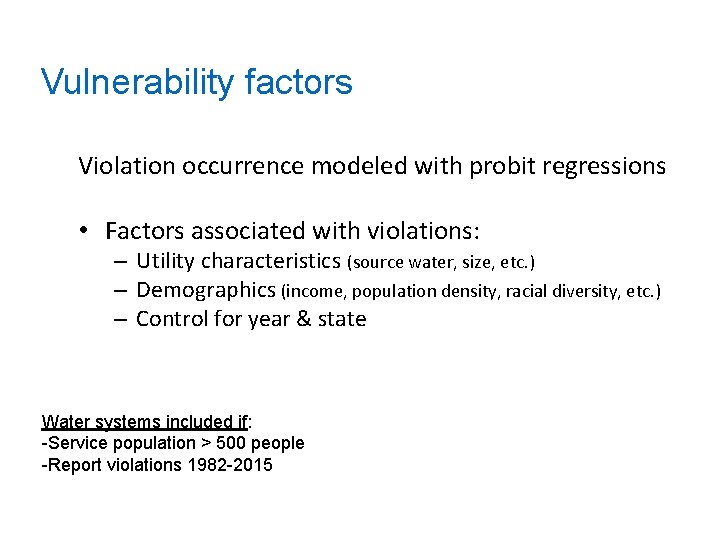
Vulnerability factors Violation occurrence modeled with probit regressions • Factors associated with violations: – Utility characteristics (source water, size, etc. ) – Demographics (income, population density, racial diversity, etc. ) – Control for year & state Water systems included if: -Service population > 500 people -Report violations 1982 -2015
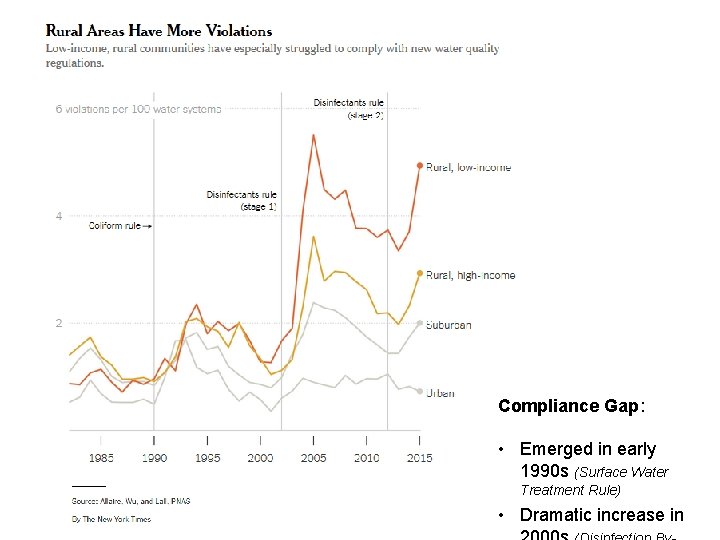
Compliance Gap: • Emerged in early 1990 s (Surface Water Treatment Rule) • Dramatic increase in
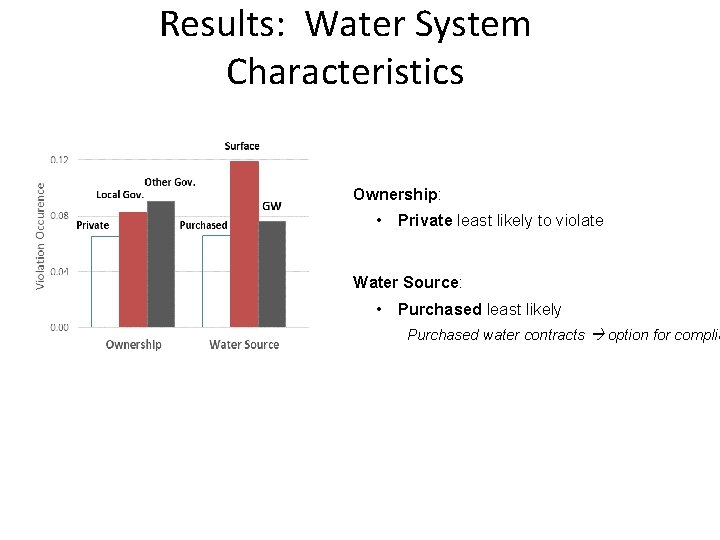
Results: Water System Characteristics Ownership: • Private least likely to violate Water Source: • Purchased least likely Purchased water contracts option for complia
Possible Ways Forward – Advanced reporting (SDWIS Prime) & Monitoring – Linkages between Clean Water Act and SDWA – Sub-national SDWA rules: regulate location-specific contaminants
Research Priorities What is the full-scale of the problem? Detect unreported violations through: �Consumer purchasing behavior �Develop a tool to rapidly detect quality concerns How can we reduce violations? Link between violations and: – Utility finance – Source water quality – Extreme events (heavy rainfall, drought, wildfires)
Questions, Comments, & Interest in Working on Drinking Water Policy: Maura Allaire Assistant Professor of Water Economics and Policy University of California, Irvine maura. allaire@uci. edu 949 -824 -5797
- Slides: 27