
Introduction to Disease Disease Significant disturbance in homeostasis
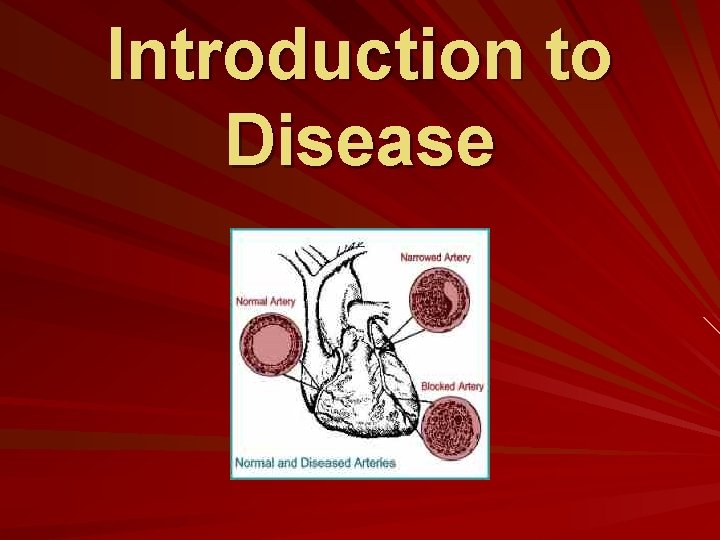
Introduction to Disease
Disease Significant disturbance in homeostasis triggering a variety of responses State of functional dis-equilibrium resolved by recovery or death Produces signs (observable by physical exam or symptoms (indications of disease perceived by patient)
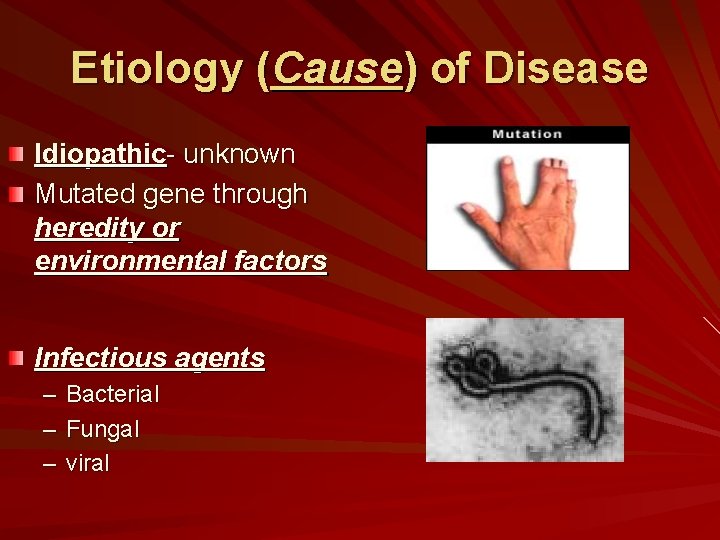
Etiology (Cause) of Disease Idiopathic- unknown Mutated gene through heredity or environmental factors Infectious agents – – – Bacterial Fungal viral
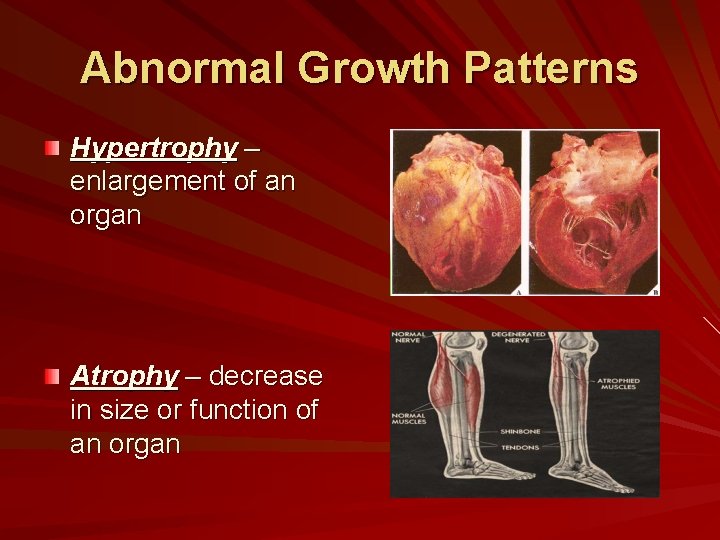
Abnormal Growth Patterns Hypertrophy – enlargement of an organ Atrophy – decrease in size or function of an organ
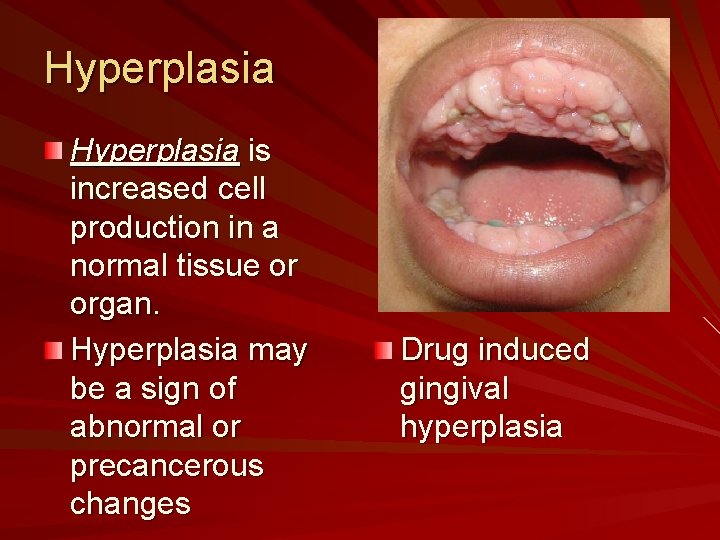
Hyperplasia is increased cell production in a normal tissue or organ. Hyperplasia may be a sign of abnormal or precancerous changes Drug induced gingival hyperplasia
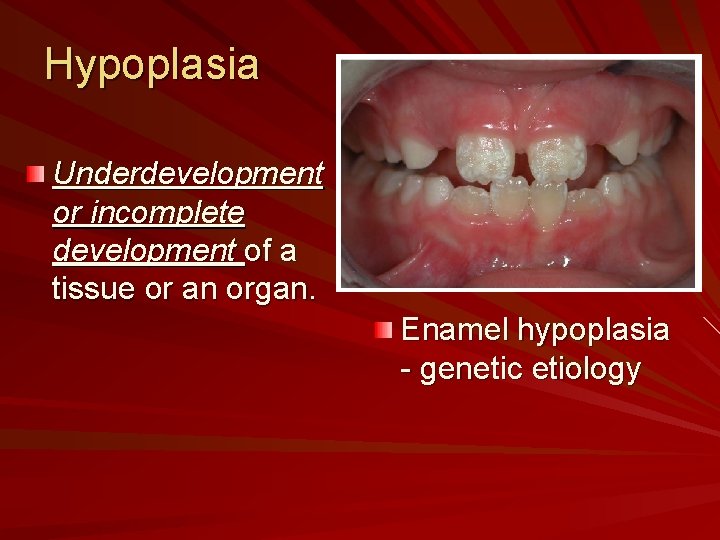
Hypoplasia Underdevelopment or incomplete development of a tissue or an organ. Enamel hypoplasia - genetic etiology
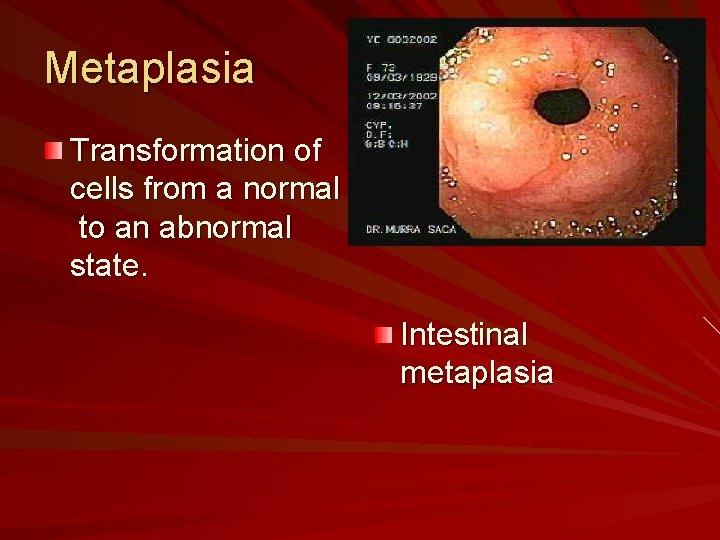
Metaplasia Transformation of cells from a normal to an abnormal state. Intestinal metaplasia
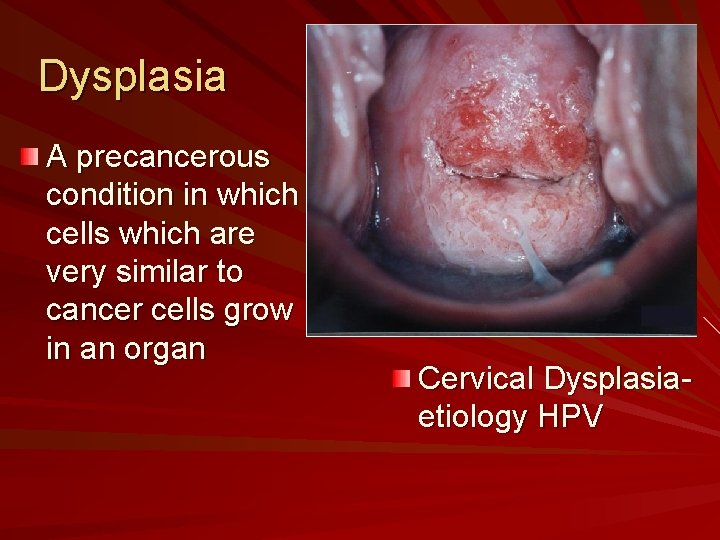
Dysplasia A precancerous condition in which cells which are very similar to cancer cells grow in an organ Cervical Dysplasiaetiology HPV
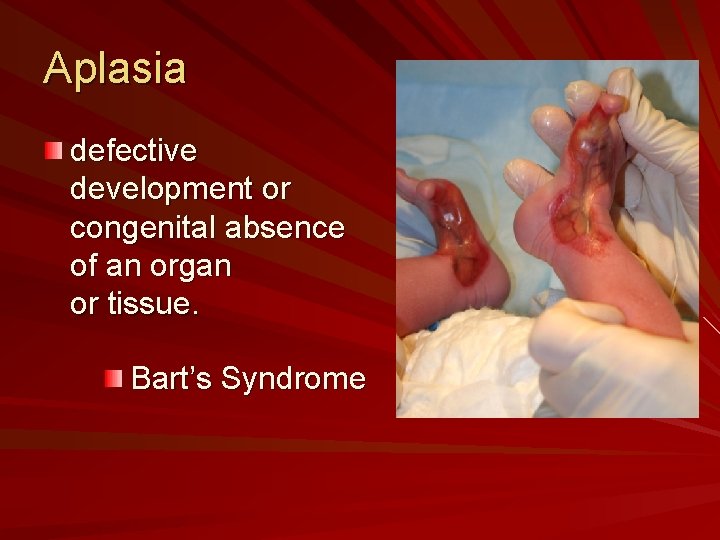
Aplasia defective development or congenital absence of an organ or tissue. Bart’s Syndrome
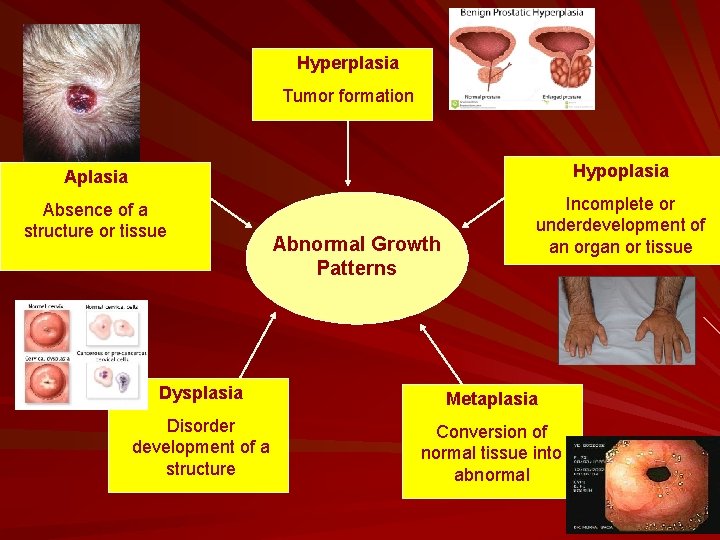
Hyperplasia Tumor formation Aplasia Hypoplasia Absence of a structure or tissue Incomplete or underdevelopment of an organ or tissue Abnormal Growth Patterns Dysplasia Metaplasia Disorder development of a structure Conversion of normal tissue into abnormal
Diagnosis Determination of a disease based on many factors including: – signs & symptoms – & lab results.
Terminology Acute Chronic Complications Prognosis Relapse Remission Sequela Terminal 1. Predicted course of outcome of disease 2. Disease ending in death 3. Signs & symptoms of chronic disease 4. 5. 6. 7. 8. subside Disease returns weeks or months after its apparent cessation Sudden onset and short term course of disease Long lived disease another disease develops in patient already suffering from a disease aftermath of a particular disease
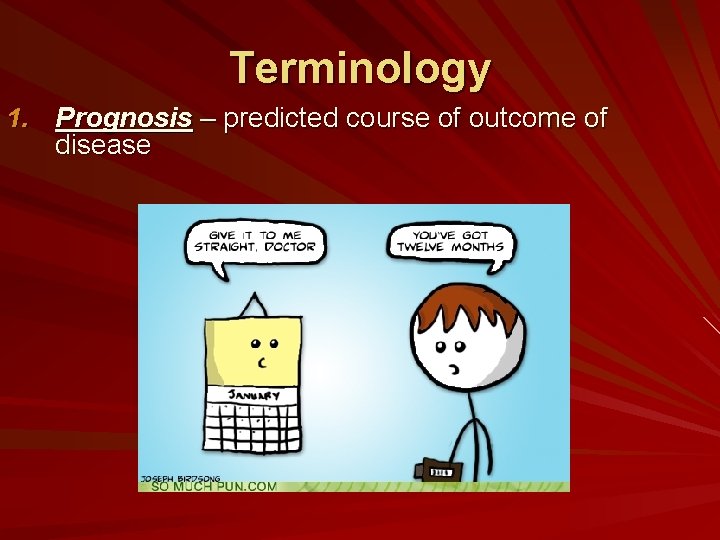
Terminology 1. Prognosis – predicted course of outcome of disease
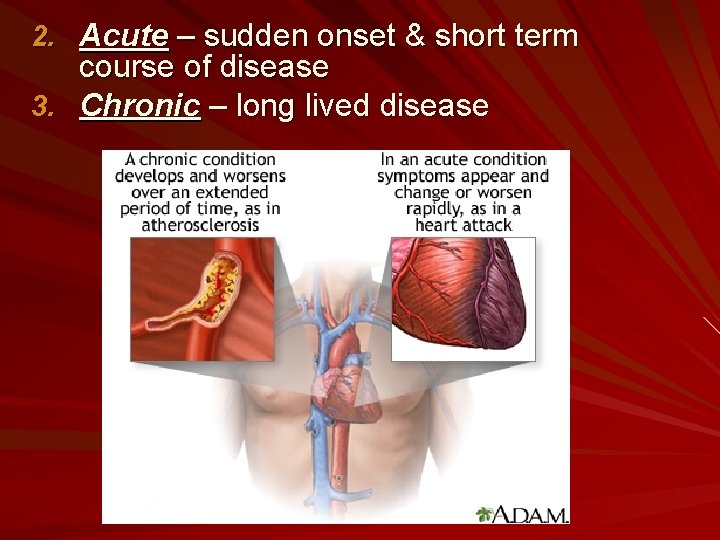
2. Acute – sudden onset & short term course of disease 3. Chronic – long lived disease
4. Terminal – disease ending in death 5. Remission – signs & symptoms of chronic disease subside 6. Relapse – disease returns weeks or months after its apparent cessation
7. Complications – another disease develops in patient already suffering from a disease 8. Sequela – aftermath of a particular disease (example: damage after rheumatic fever or STD)
- Slides: 16