
Introduction to Disaster Risk Reduction as a Foundation
![56 Publications that Promote Resilience and DRR for All [click to view publications]](https://slidetodoc.com/presentation_image_h2/dbc6af08b1c534a084592e928d3261df/image-56.jpg "56 Publications that Promote Resilience and DRR for All [click to view publications]")
- Slides: 60
Introduction to Disaster Risk Reduction as a Foundation of Community Resilience Natural Hazard Mitigation Association
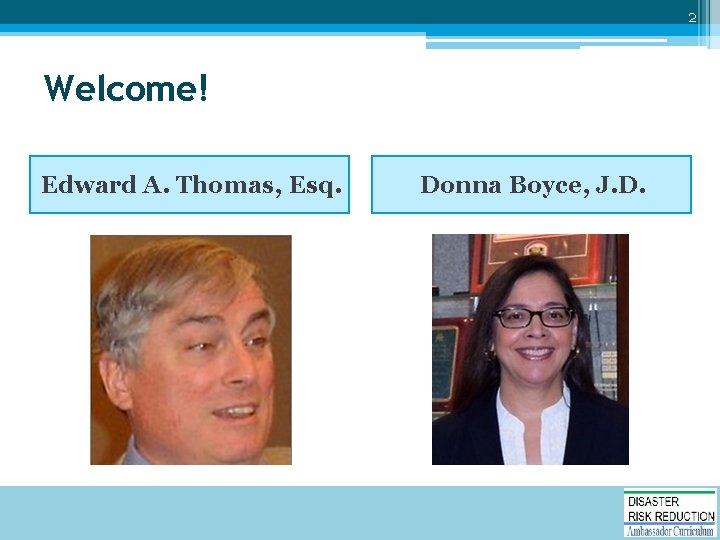
2 Welcome! Edward A. Thomas, Esq. Donna Boyce, J. D.
3 Community Resilience and Disaster Risk Reduction Photo courtesy of Elisa T. Harrison; Elliott Bay, Seattle WA
4 Learning Objectives 1. Define community resilience and disaster risk reduction 2. Define mitigation and climate adaptation from a community perspective 3. Explain the role of disaster risk reduction as a foundation of community resilience
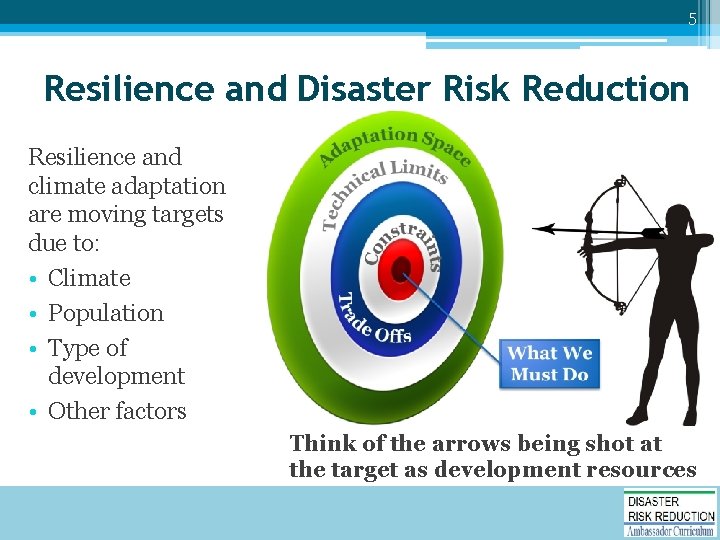
5 Resilience and Disaster Risk Reduction Resilience and climate adaptation are moving targets due to: • Climate • Population • Type of development • Other factors Think of the arrows being shot at the target as development resources
6 What is Community Resilience? Richard G. Wilkinson and Kate Pickett, The Spirit Level: Why More Equal Societies Almost Always Do Better, (New York: Bloomsbury Press, 2009)
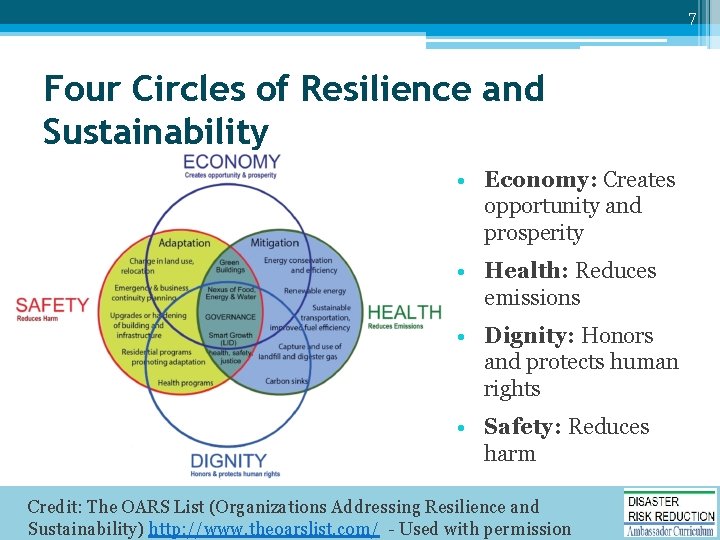
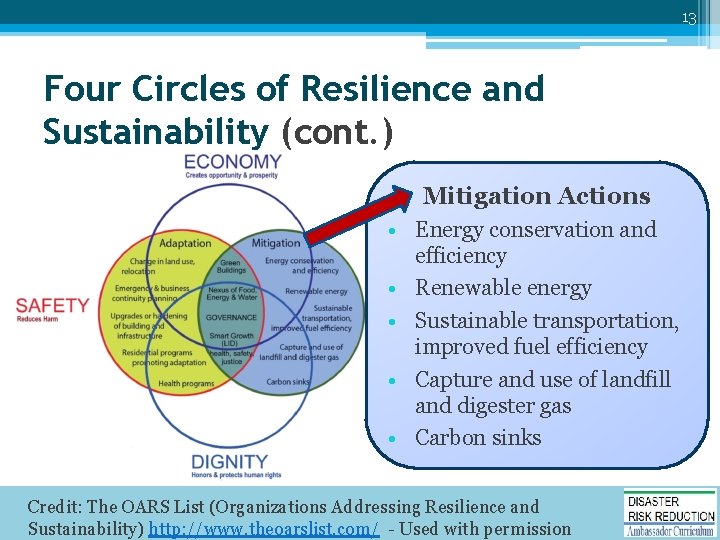
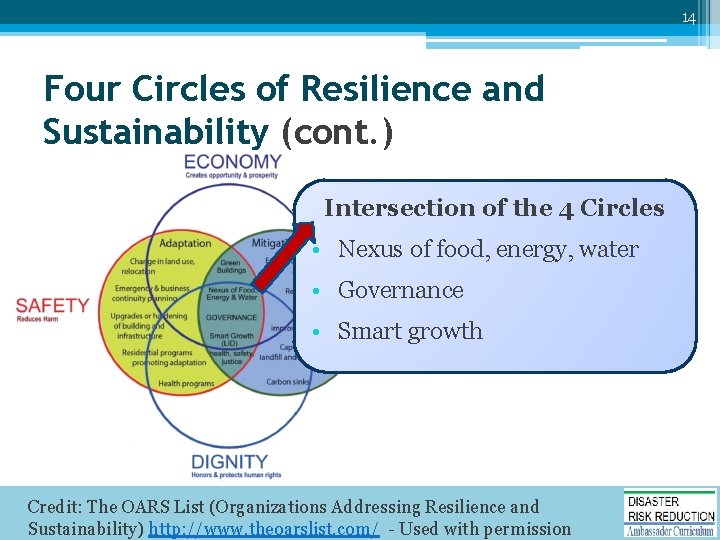
7 Four Circles of Resilience and Sustainability • Economy: Creates opportunity and prosperity • Health: Reduces emissions • Dignity: Honors and protects human rights • Safety: Reduces harm Credit: The OARS List (Organizations Addressing Resilience and Sustainability) http: //www. theoarslist. com/ - Used with permission
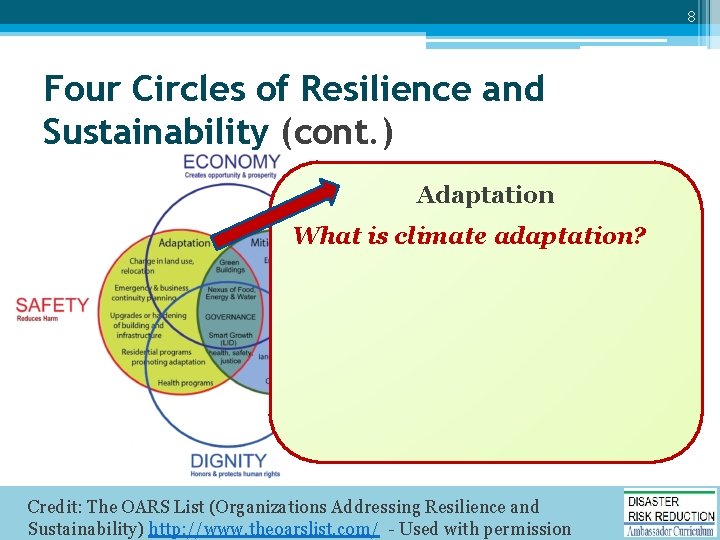
8 Four Circles of Resilience and Sustainability (cont. ) Adaptation What is climate adaptation? Credit: The OARS List (Organizations Addressing Resilience and Sustainability) http: //www. theoarslist. com/ - Used with permission
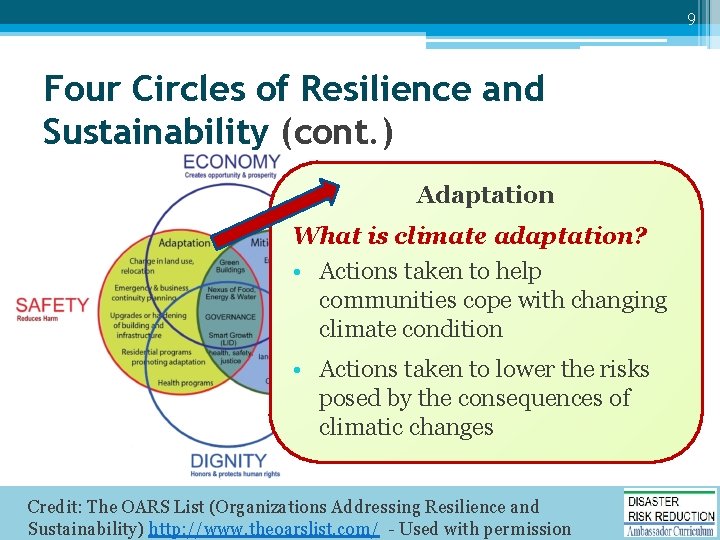
9 Four Circles of Resilience and Sustainability (cont. ) Adaptation What is climate adaptation? • Actions taken to help communities cope with changing climate condition • Actions taken to lower the risks posed by the consequences of climatic changes Credit: The OARS List (Organizations Addressing Resilience and Sustainability) http: //www. theoarslist. com/ - Used with permission
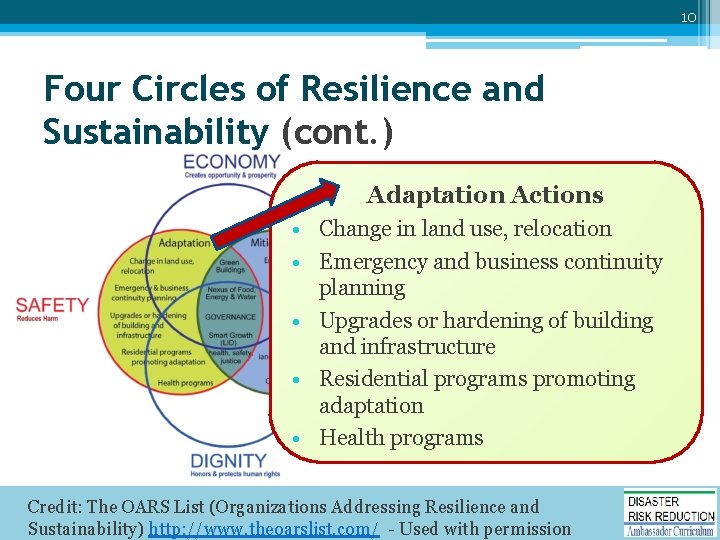
10 Four Circles of Resilience and Sustainability (cont. ) Adaptation Actions • Change in land use, relocation • Emergency and business continuity planning • Upgrades or hardening of building and infrastructure • Residential programs promoting adaptation • Health programs Credit: The OARS List (Organizations Addressing Resilience and Sustainability) http: //www. theoarslist. com/ - Used with permission
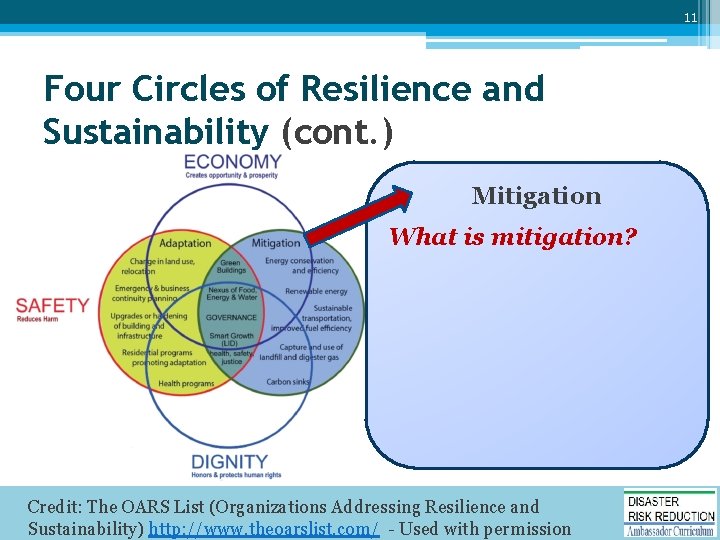
11 Four Circles of Resilience and Sustainability (cont. ) Mitigation What is mitigation? Credit: The OARS List (Organizations Addressing Resilience and Sustainability) http: //www. theoarslist. com/ - Used with permission
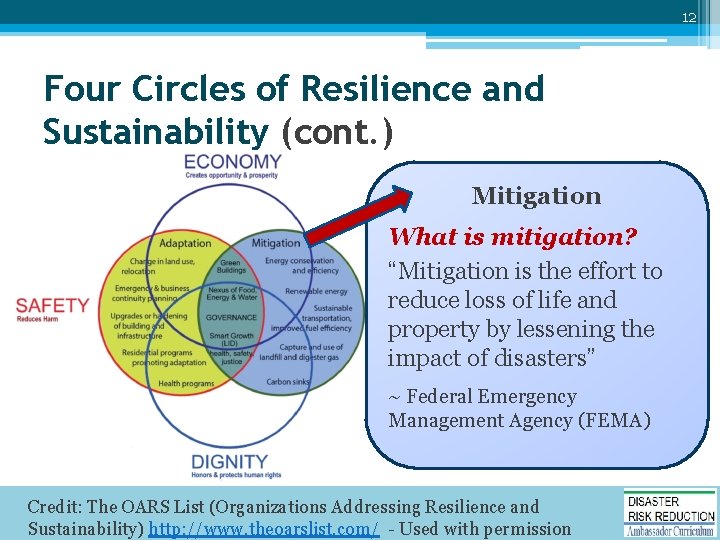
12 Four Circles of Resilience and Sustainability (cont. ) Mitigation What is mitigation? “Mitigation is the effort to reduce loss of life and property by lessening the impact of disasters” ~ Federal Emergency Management Agency (FEMA) Credit: The OARS List (Organizations Addressing Resilience and Sustainability) http: //www. theoarslist. com/ - Used with permission
13 Four Circles of Resilience and Sustainability (cont. ) Mitigation Actions • Energy conservation and efficiency • Renewable energy • Sustainable transportation, improved fuel efficiency • Capture and use of landfill and digester gas • Carbon sinks Credit: The OARS List (Organizations Addressing Resilience and Sustainability) http: //www. theoarslist. com/ - Used with permission
14 Four Circles of Resilience and Sustainability (cont. ) Intersection of the 4 Circles • Nexus of food, energy, water • Governance • Smart growth Credit: The OARS List (Organizations Addressing Resilience and Sustainability) http: //www. theoarslist. com/ - Used with permission
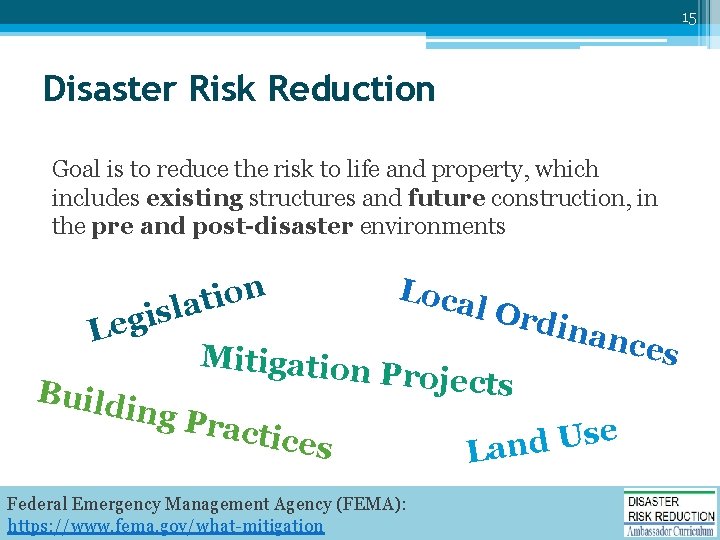
15 Disaster Risk Reduction Goal is to reduce the risk to life and property, which includes existing structures and future construction, in the pre and post-disaster environments n o i t isla Leg Build in Mitigation g Pra Loca l Ord Projects ctices Federal Emergency Management Agency (FEMA): https: //www. fema. gov/what-mitigation inan e s U d Lan ces
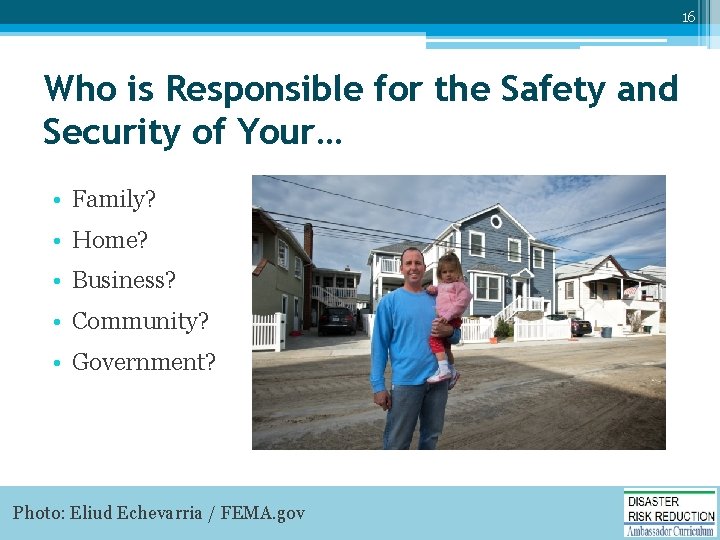
16 Who is Responsible for the Safety and Security of Your… • Family? • Home? • Business? • Community? • Government? Photo: Eliud Echevarria / FEMA. gov
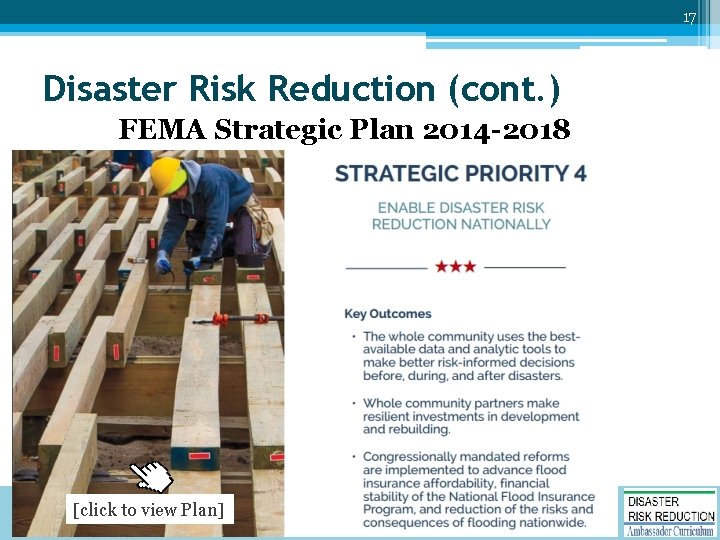
17 Disaster Risk Reduction (cont. ) FEMA Strategic Plan 2014 -2018 [click to view Plan]
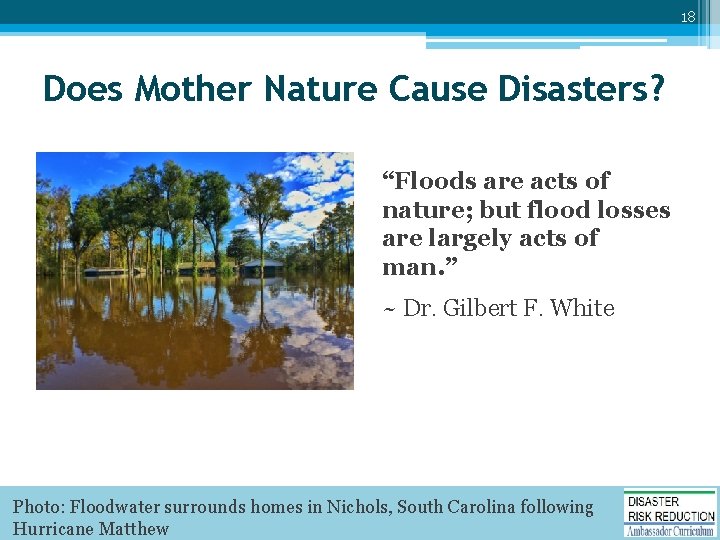
18 Does Mother Nature Cause Disasters? “Floods are acts of nature; but flood losses are largely acts of man. ” ~ Dr. Gilbert F. White Photo: Floodwater surrounds homes in Nichols, South Carolina following Hurricane Matthew
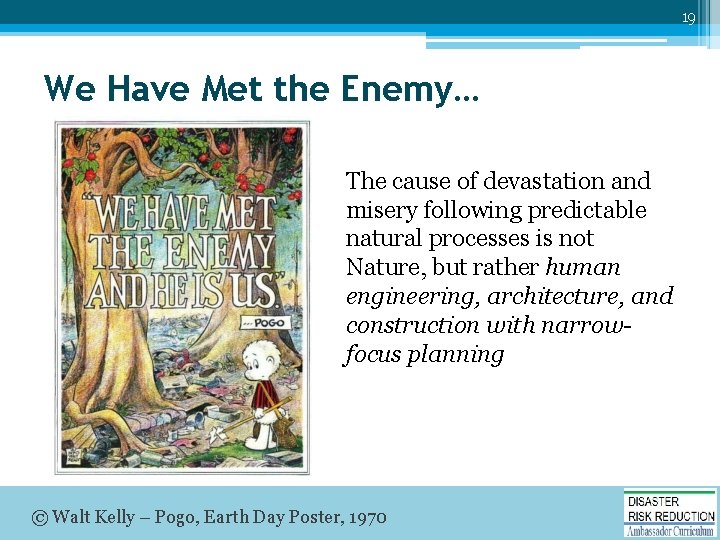
19 We Have Met the Enemy… The cause of devastation and misery following predictable natural processes is not Nature, but rather human engineering, architecture, and construction with narrowfocus planning © Walt Kelly – Pogo, Earth Day Poster, 1970
20 Fundamental Thought What is the best form of disaster relief? Migralex. com
21 Fundamental Thought (cont. ) No disasters at all! drpaulhodgson. com
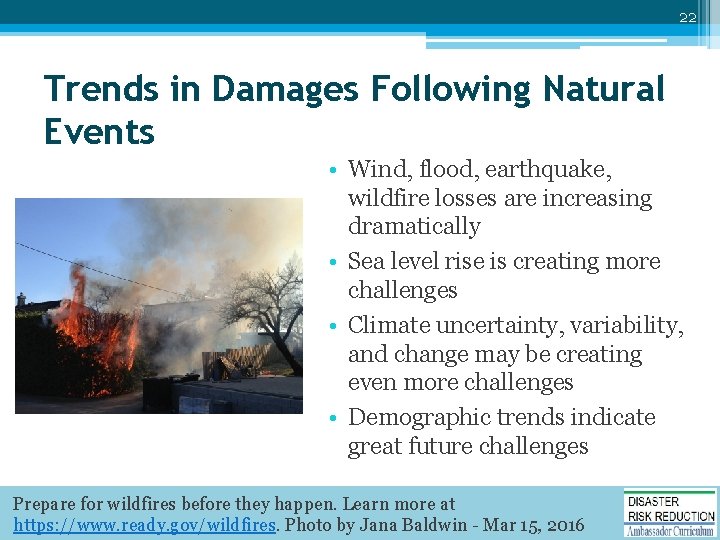
22 Trends in Damages Following Natural Events • Wind, flood, earthquake, wildfire losses are increasing dramatically • Sea level rise is creating more challenges • Climate uncertainty, variability, and change may be creating even more challenges • Demographic trends indicate great future challenges Prepare for wildfires before they happen. Learn more at https: //www. ready. gov/wildfires. Photo by Jana Baldwin - Mar 15, 2016
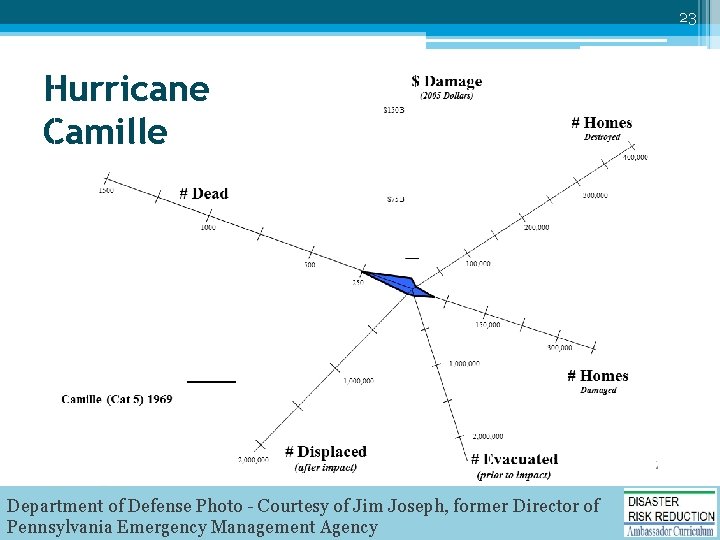
23 Hurricane Camille Department of Defense Photo - Courtesy of Jim Joseph, former Director of Pennsylvania Emergency Management Agency
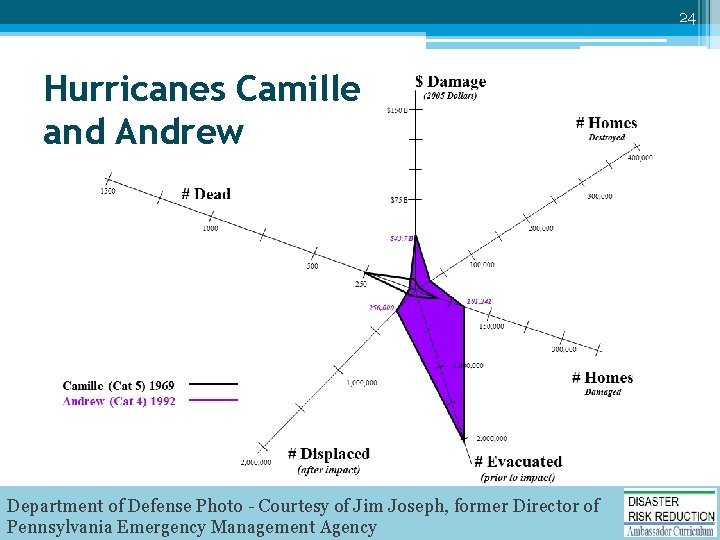
24 Hurricanes Camille and Andrew Department of Defense Photo - Courtesy of Jim Joseph, former Director of Pennsylvania Emergency Management Agency
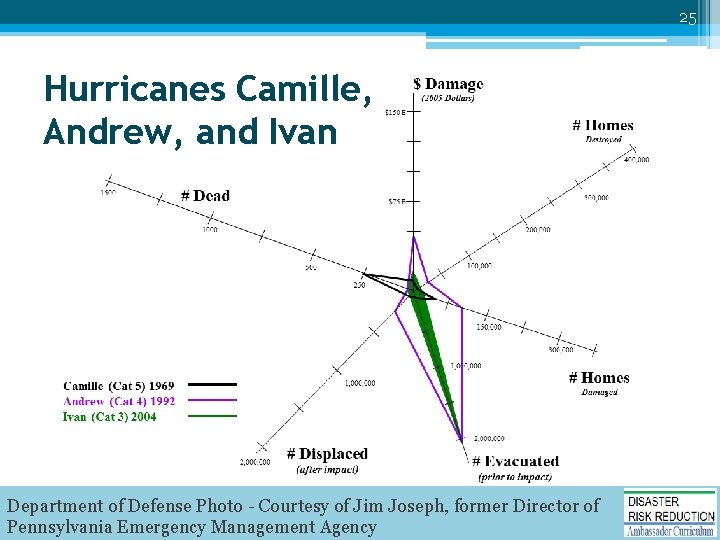
25 Hurricanes Camille, Andrew, and Ivan Department of Defense Photo - Courtesy of Jim Joseph, former Director of Pennsylvania Emergency Management Agency
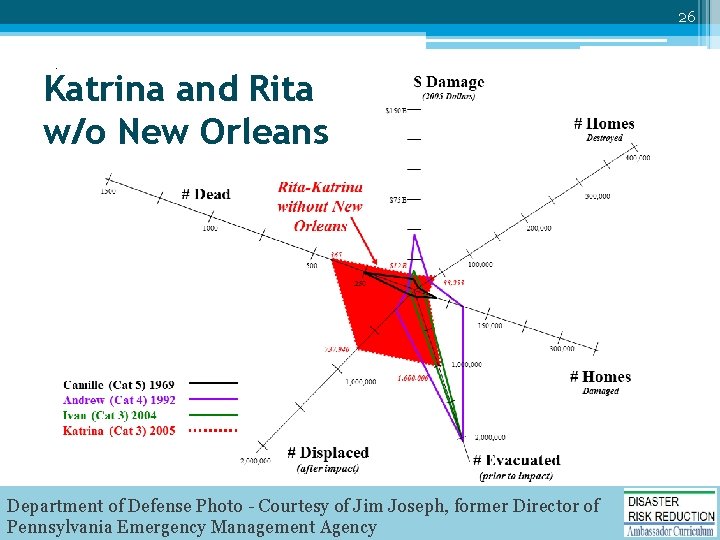
26 Katrina and Rita w/o New Orleans Department of Defense Photo - Courtesy of Jim Joseph, former Director of Pennsylvania Emergency Management Agency
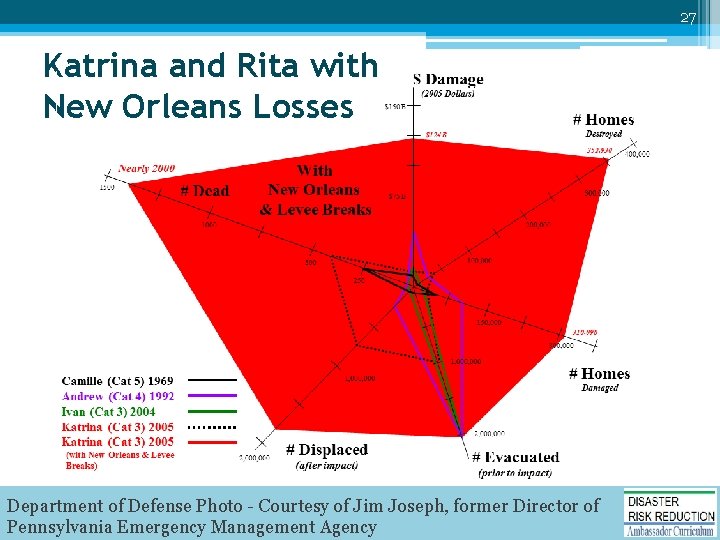
27 Katrina and Rita with New Orleans Losses Department of Defense Photo - Courtesy of Jim Joseph, former Director of Pennsylvania Emergency Management Agency
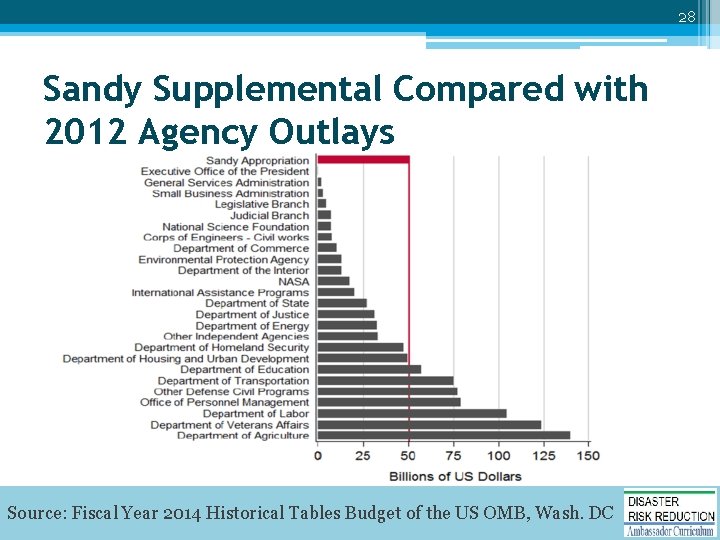
28 Sandy Supplemental Compared with 2012 Agency Outlays Source: Fiscal Year 2014 Historical Tables Budget of the US OMB, Wash. DC
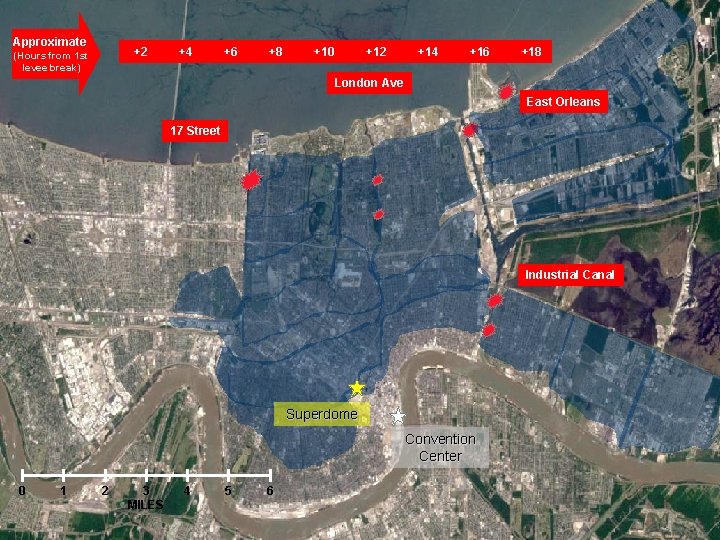
29 Approximate +2 (Hours from 1 st levee break) +4 +6 +8 +10 +12 +14 +16 +18 London Ave East Orleans 17 Street Industrial Canal Superdome Convention Center 0 1 2 3 MILES 4 5 6 29
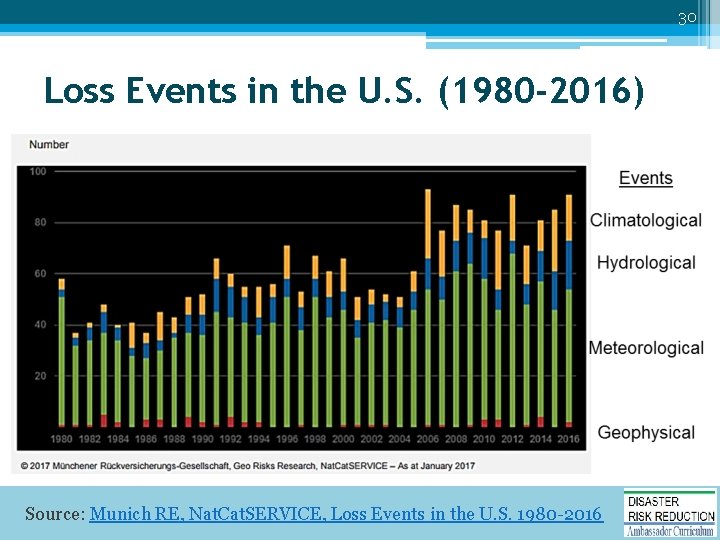
30 Loss Events in the U. S. (1980 -2016) Source: Munich RE, Nat. Cat. SERVICE, Loss Events in the U. S. 1980 -2016
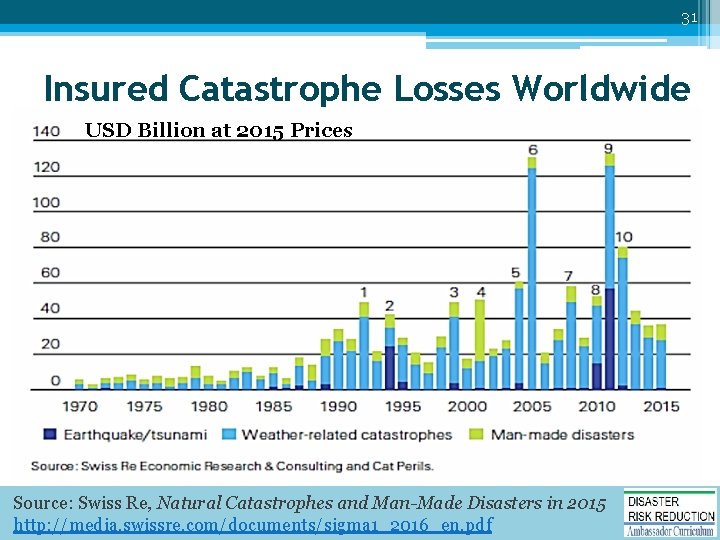
31 Insured Catastrophe Losses Worldwide USD Billion at 2015 Prices Source: Swiss Re, Natural Catastrophes and Man-Made Disasters in 2015 http: //media. swissre. com/documents/sigma 1_2016_en. pdf
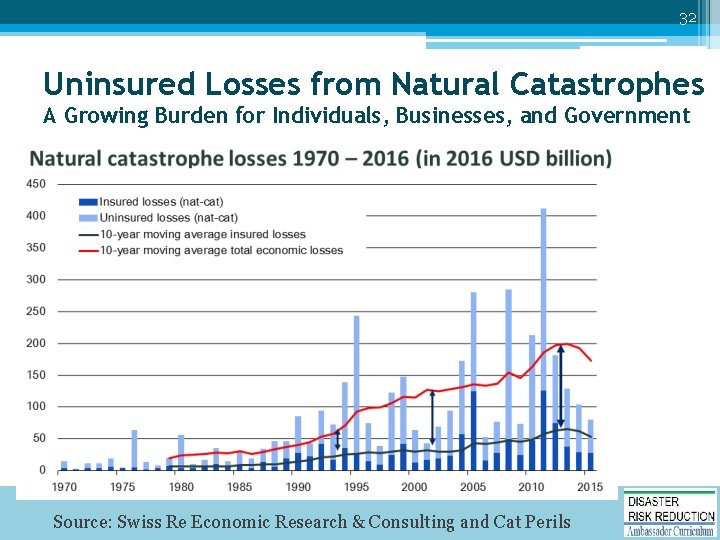
32 Uninsured Losses from Natural Catastrophes A Growing Burden for Individuals, Businesses, and Government Source: Swiss Re Economic Research & Consulting and Cat Perils
33 Cost of Disasters How much do you think the Federal Government spent on disasters since 1983?
34 Cost of Disasters (cont. ) How much do you think the Federal Government spent on disasters since 1983? • Billion-Dollar Weather and Climate Disasters: Overview, NOAA • Focusing on Disaster Costs Before Rather Than After They Happen, Insurance Journal, August 6, 2014
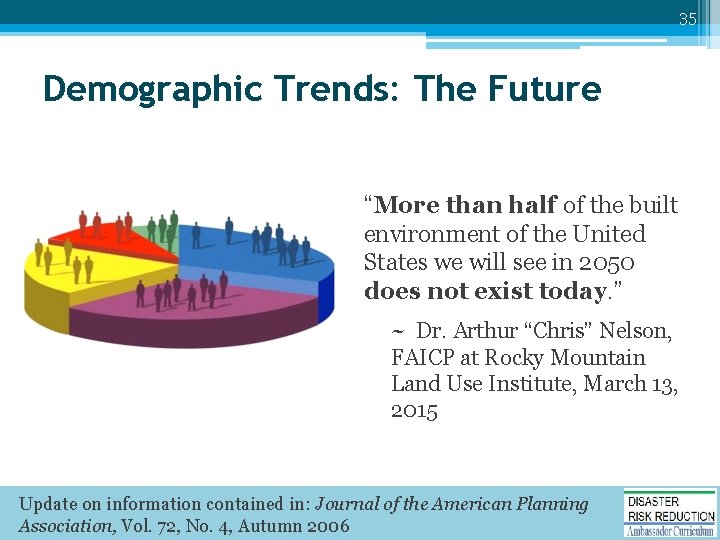
35 Demographic Trends: The Future “More than half of the built environment of the United States we will see in 2050 does not exist today. ” ~ Dr. Arthur “Chris” Nelson, FAICP at Rocky Mountain Land Use Institute, March 13, 2015 Update on information contained in: Journal of the American Planning Association, Vol. 72, No. 4, Autumn 2006
36 Pennsylvania Population Projections
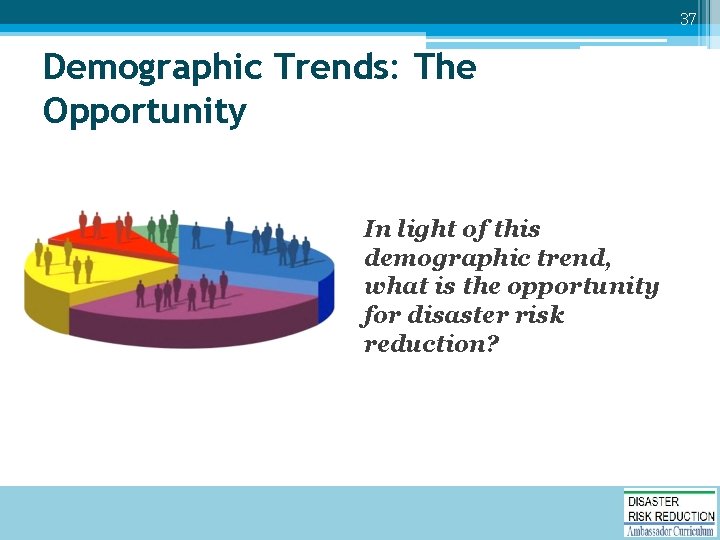
37 Demographic Trends: The Opportunity In light of this demographic trend, what is the opportunity for disaster risk reduction?
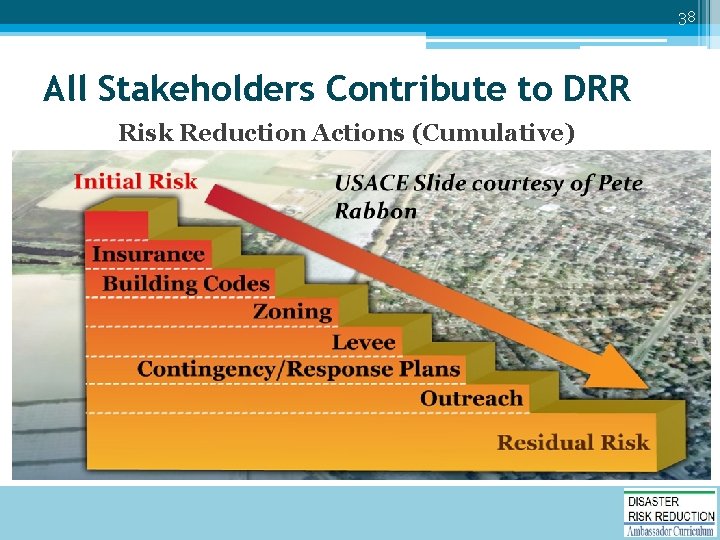
38 All Stakeholders Contribute to DRR Risk Reduction Actions (Cumulative)
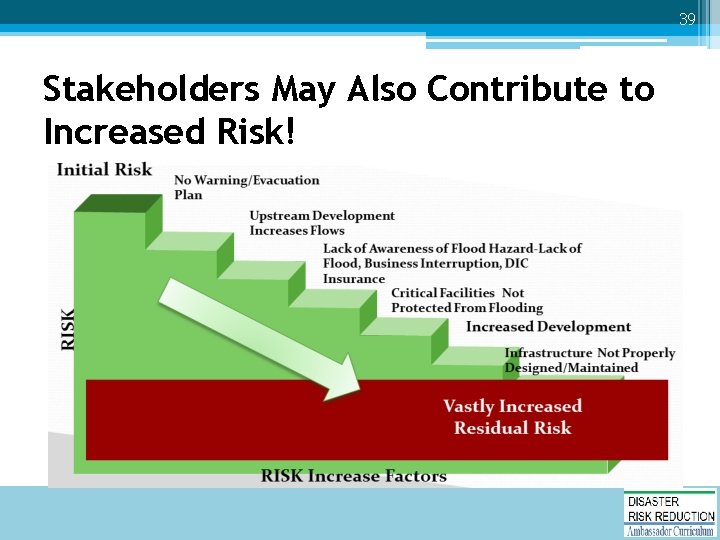
39 Stakeholders May Also Contribute to Increased Risk!
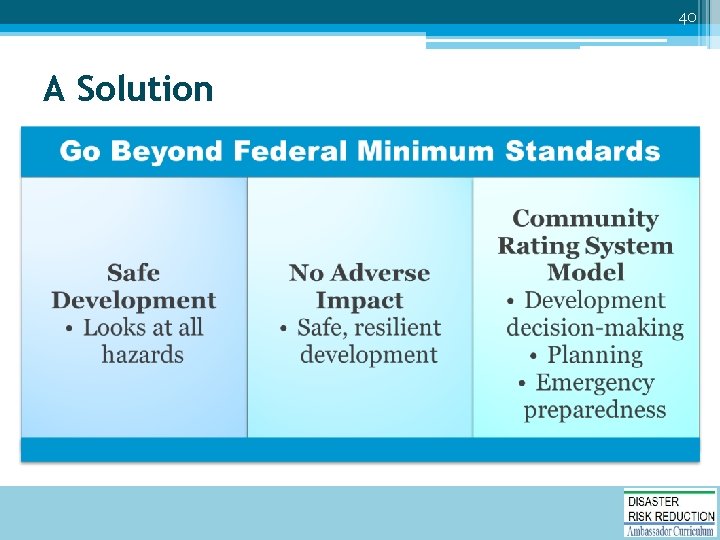
40 A Solution
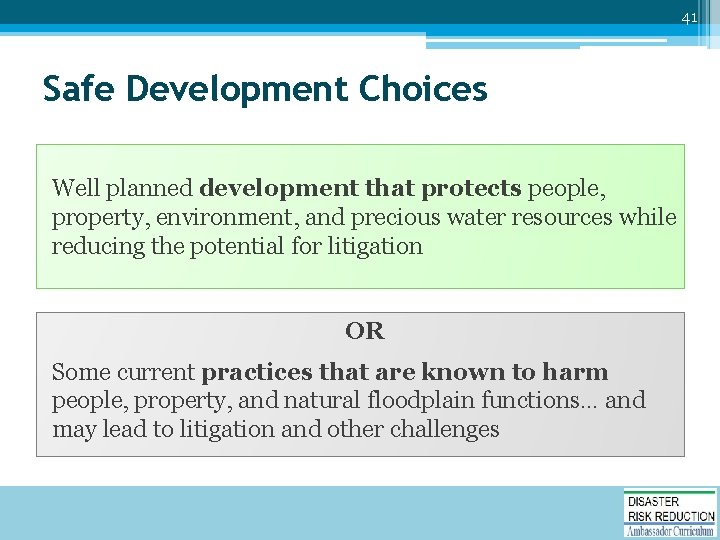
41 Safe Development Choices Well planned development that protects people, property, environment, and precious water resources while reducing the potential for litigation OR Some current practices that are known to harm people, property, and natural floodplain functions… and may lead to litigation and other challenges
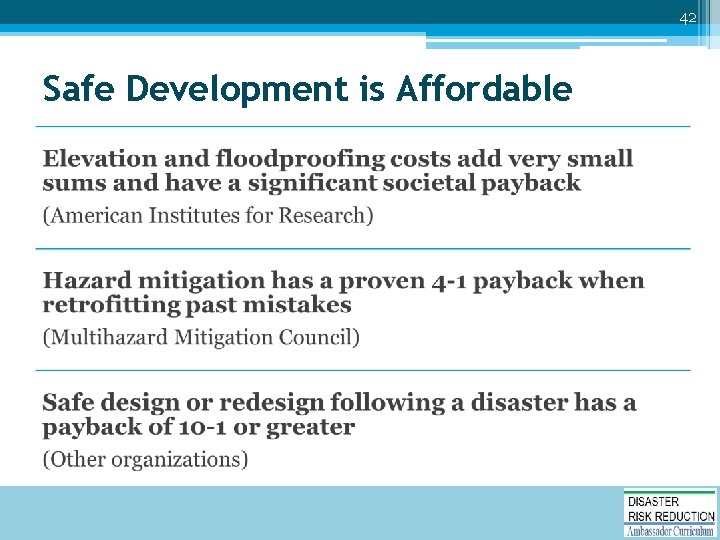
42 Safe Development is Affordable
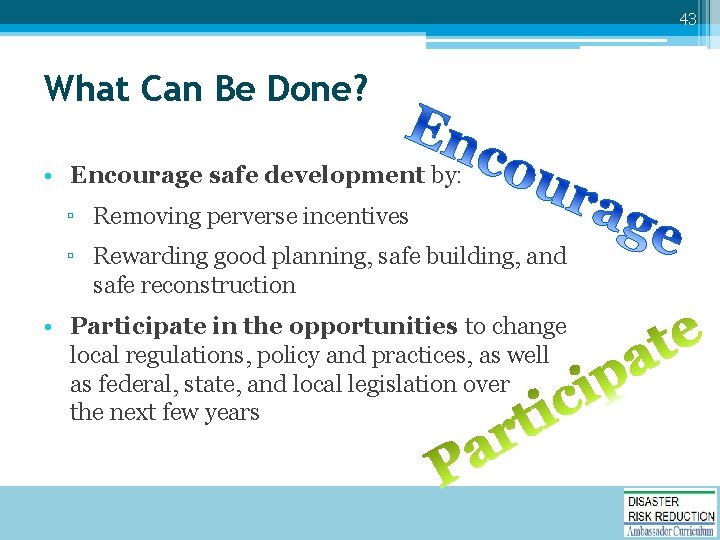
43 What Can Be Done? • Encourage safe development by: ▫ Removing perverse incentives ▫ Rewarding good planning, safe building, and safe reconstruction • Participate in the opportunities to change local regulations, policy and practices, as well as federal, state, and local legislation over the next few years
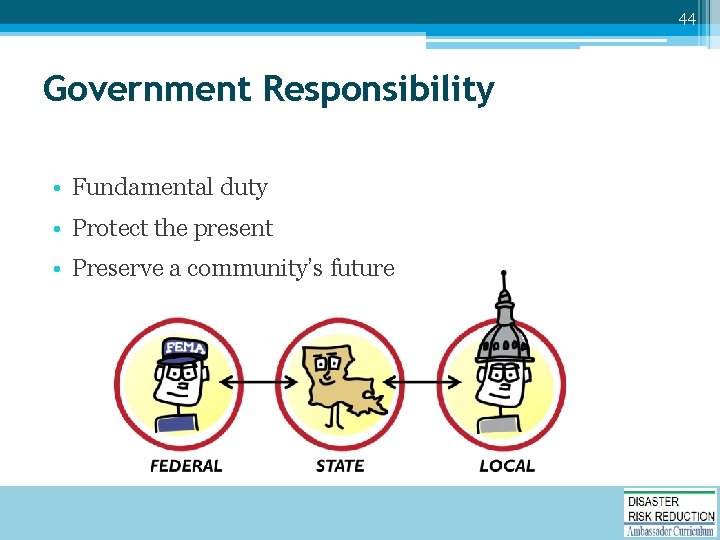
44 Government Responsibility • Fundamental duty • Protect the present • Preserve a community’s future
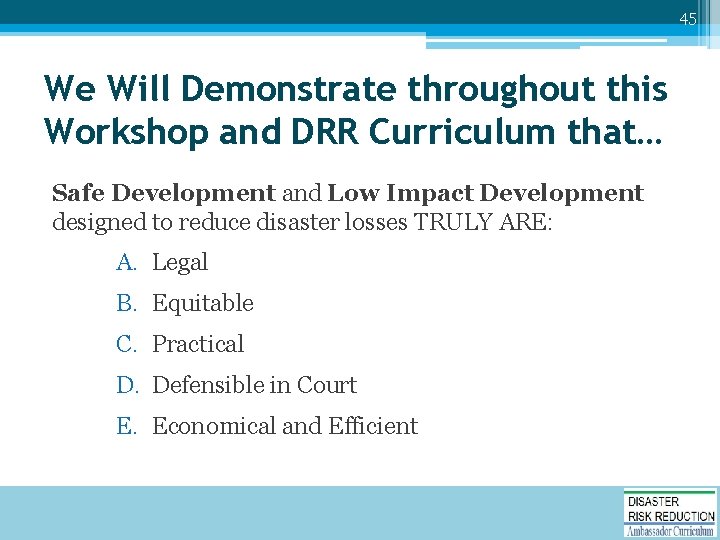
45 We Will Demonstrate throughout this Workshop and DRR Curriculum that… Safe Development and Low Impact Development designed to reduce disaster losses TRULY ARE: A. Legal B. Equitable C. Practical D. Defensible in Court E. Economical and Efficient
46 Another Reason… Why else should professionals and the government do something about this? Module 15: Legal and Policy Opportunities for DRR Module 20: Overcoming Impediments to Flood Resilience: Paths Forward
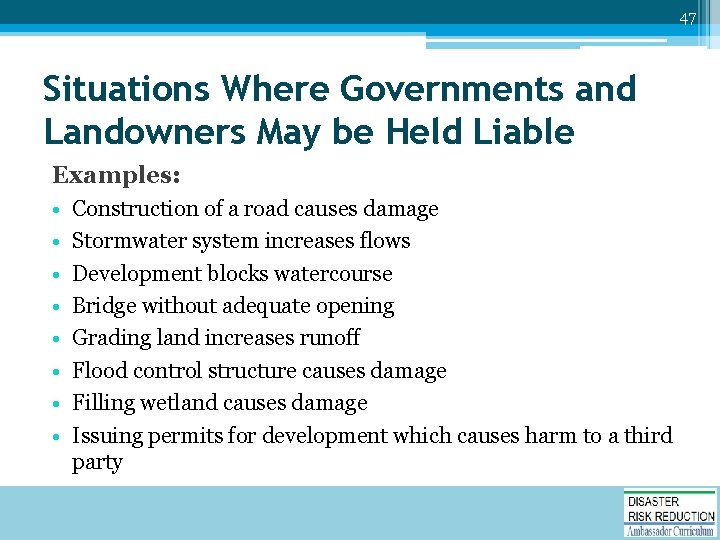
47 Situations Where Governments and Landowners May be Held Liable Examples: • • Construction of a road causes damage Stormwater system increases flows Development blocks watercourse Bridge without adequate opening Grading land increases runoff Flood control structure causes damage Filling wetland causes damage Issuing permits for development which causes harm to a third party
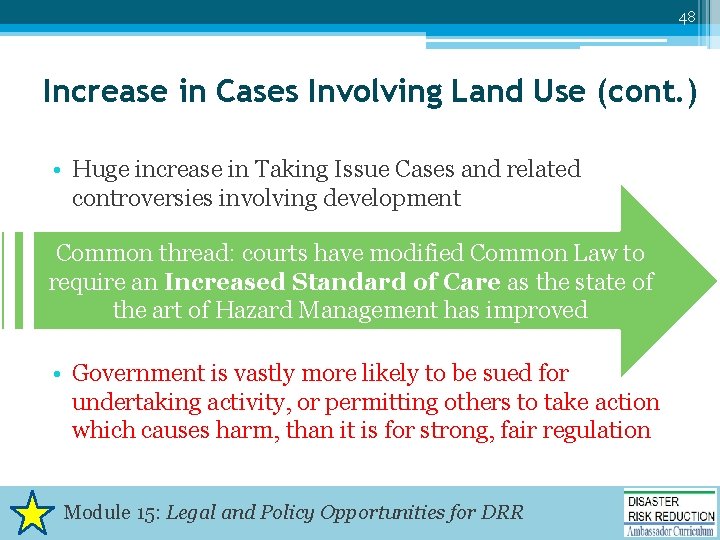
48 Increase in Cases Involving Land Use (cont. ) • Huge increase in Taking Issue Cases and related controversies involving development • Commonthread: courtshavemodified. Common. Lawtoto require Increased Standard Care state require anan Increased Standard ofof Care as as thethe state of of the art Management has improved the of art. Hazard of Hazard Management improved • Government is vastly more likely to be sued for undertaking activity, or permitting others to take action which causes harm, than it is for strong, fair regulation Module 15: Legal and Policy Opportunities for DRR
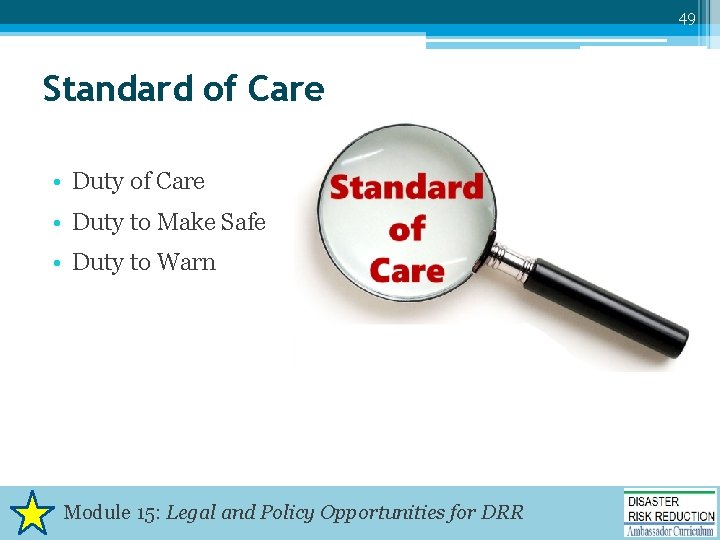
49 Standard of Care • Duty to Make Safe • Duty to Warn Module 15: Legal and Policy Opportunities for DRR
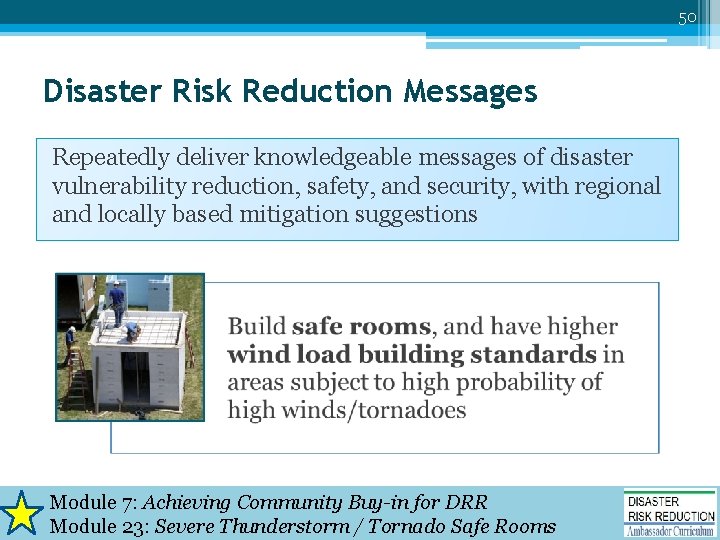
50 Disaster Risk Reduction Messages Repeatedly deliver knowledgeable messages of disaster vulnerability reduction, safety, and security, with regional and locally based mitigation suggestions Module 7: Achieving Community Buy-in for DRR Module 23: Severe Thunderstorm / Tornado Safe Rooms
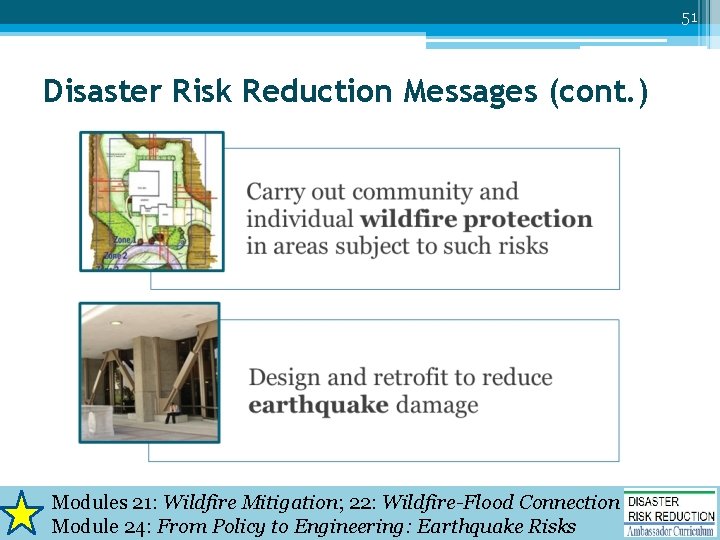
51 Disaster Risk Reduction Messages (cont. ) Modules 21: Wildfire Mitigation; 22: Wildfire-Flood Connection Module 24: From Policy to Engineering: Earthquake Risks
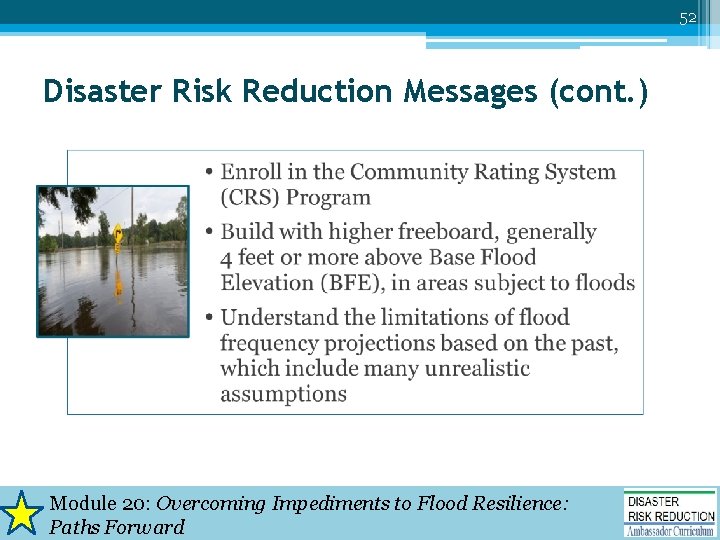
52 Disaster Risk Reduction Messages (cont. ) Module 20: Overcoming Impediments to Flood Resilience: Paths Forward
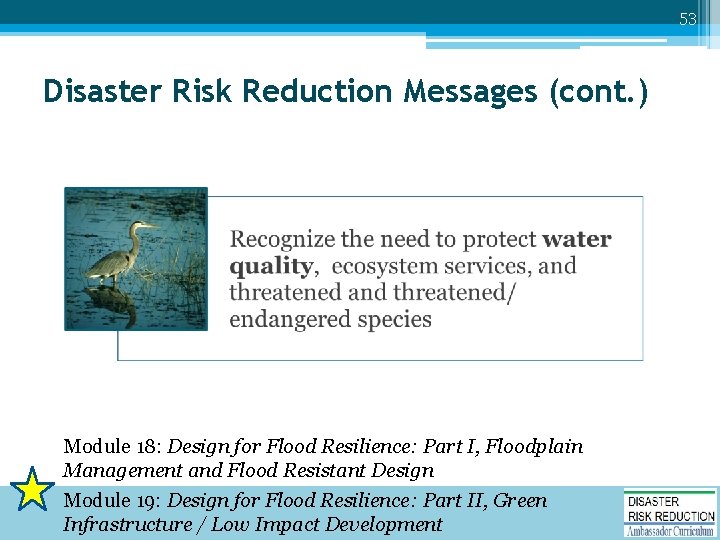
53 Disaster Risk Reduction Messages (cont. ) Module 18: Design for Flood Resilience: Part I, Floodplain Management and Flood Resistant Design Module 19: Design for Flood Resilience: Part II, Green Infrastructure / Low Impact Development
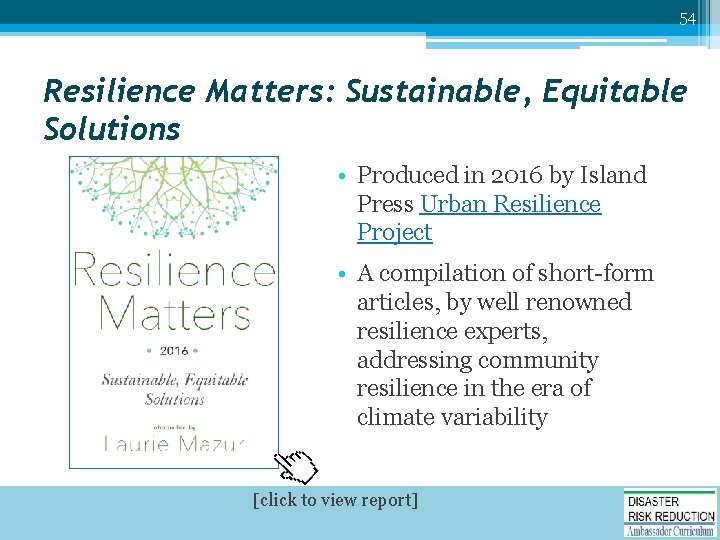
54 Resilience Matters: Sustainable, Equitable Solutions • Produced in 2016 by Island Press Urban Resilience Project • A compilation of short-form articles, by well renowned resilience experts, addressing community resilience in the era of climate variability [click to view report]
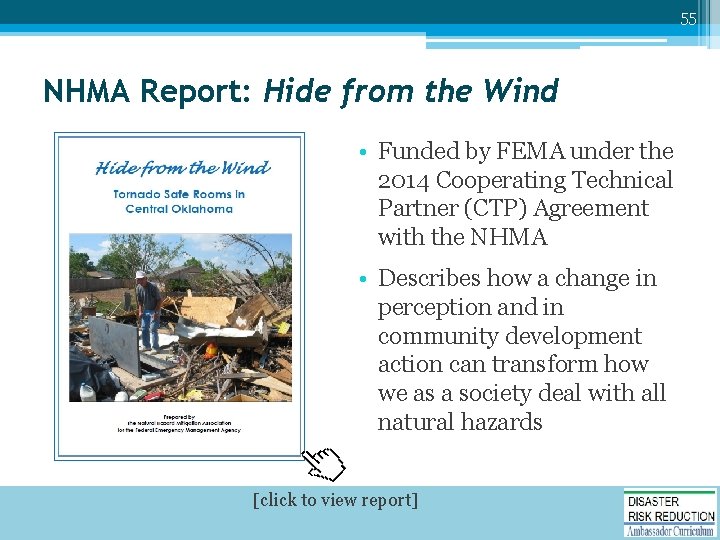
55 NHMA Report: Hide from the Wind • Funded by FEMA under the 2014 Cooperating Technical Partner (CTP) Agreement with the NHMA • Describes how a change in perception and in community development action can transform how we as a society deal with all natural hazards [click to view report]
56 Publications that Promote Resilience and DRR for All [click to view publications]
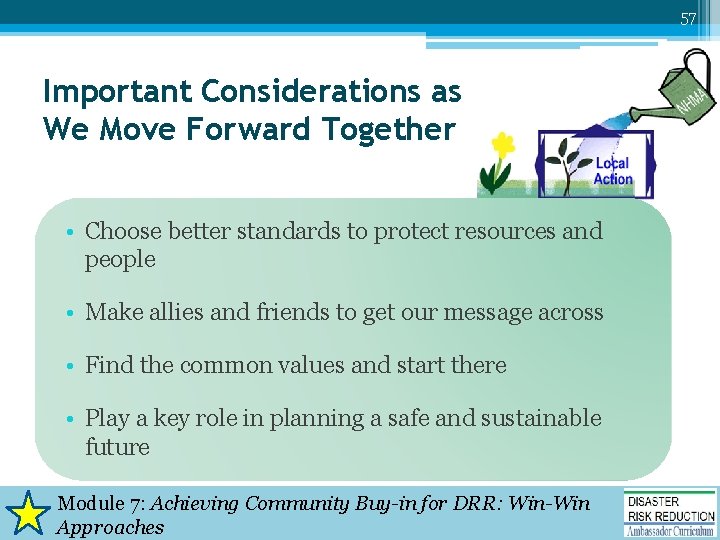
57 Important Considerations as We Move Forward Together • Choose better standards to protect resources and people • Make allies and friends to get our message across • Find the common values and start there • Play a key role in planning a safe and sustainable future Module 7: Achieving Community Buy-in for DRR: Win-Win Approaches
58 Review of Key Learning Objectives 1. Define community resilience and disaster risk reduction 2. Define mitigation and climate adaptation from a community perspective 3. Explain the role of disaster risk reduction as a foundation of community resilience
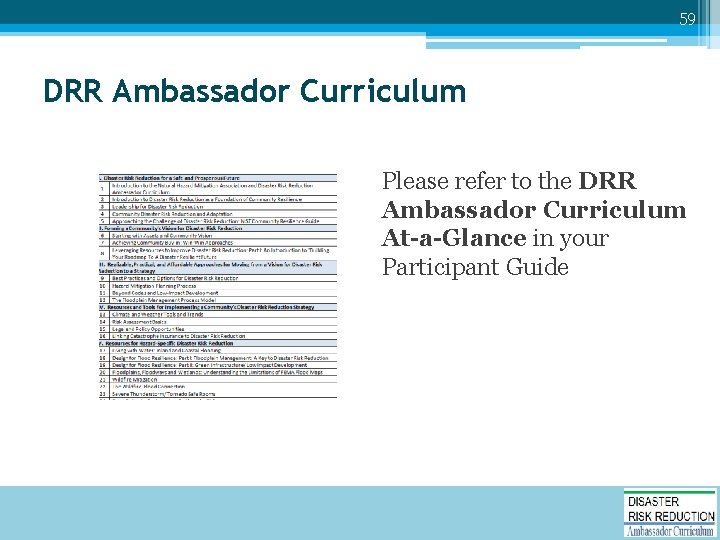
59 DRR Ambassador Curriculum Please refer to the DRR Ambassador Curriculum At-a-Glance in your Participant Guide
60 Thank You! • Questions and/or comments • Contact information Natural Hazard Mitigation Association P. O. Box 170984 Boston, MA 02117 Email: nathazma@gmail. com www. nhma. info