
Introduction to Digital Signal Processors DSPs Outlineobjectives Identify
Introduction to Digital Signal Processors (DSPs)
Outline/objectives • Identify the most important DSP processor architecture features and how they relate to DSP applications • Understand the types of code appropriate for DSP implementation 2
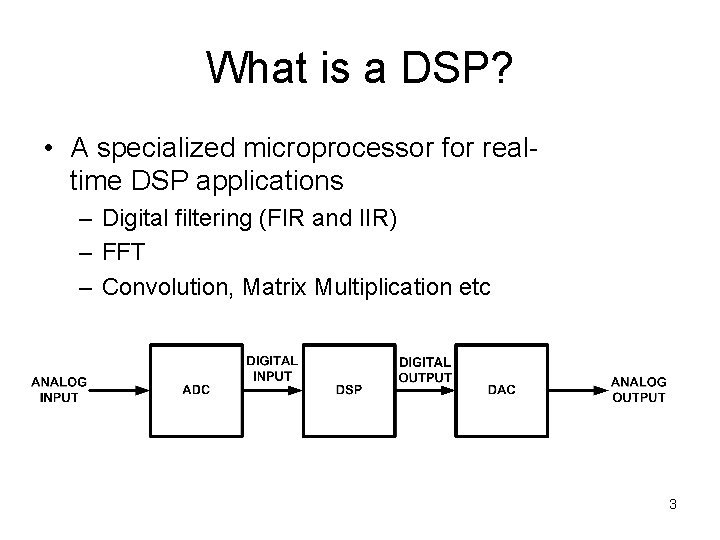
What is a DSP? • A specialized microprocessor for realtime DSP applications – Digital filtering (FIR and IIR) – FFT – Convolution, Matrix Multiplication etc 3
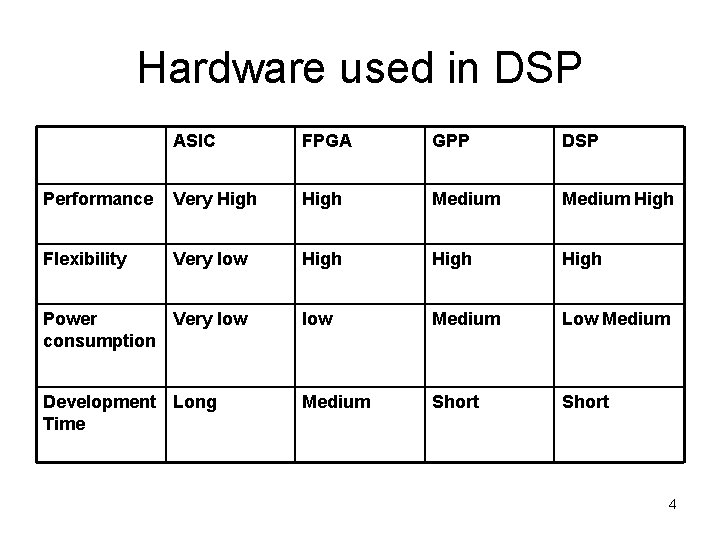
Hardware used in DSP ASIC FPGA GPP DSP Performance Very High Medium High Flexibility Very low High Power Very low consumption low Medium Low Medium Development Long Time Medium Short 4

Common DSP features • Harvard architecture • Dedicated single-cycle Multiply-Accumulate (MAC) instruction (hardware MAC units) • Single-Instruction Multiple Data (SIMD) Very Large Instruction Word (VLIW) architecture • Pipelining • Saturation arithmetic • Zero overhead looping • Hardware circular addressing • Cache • DMA 5
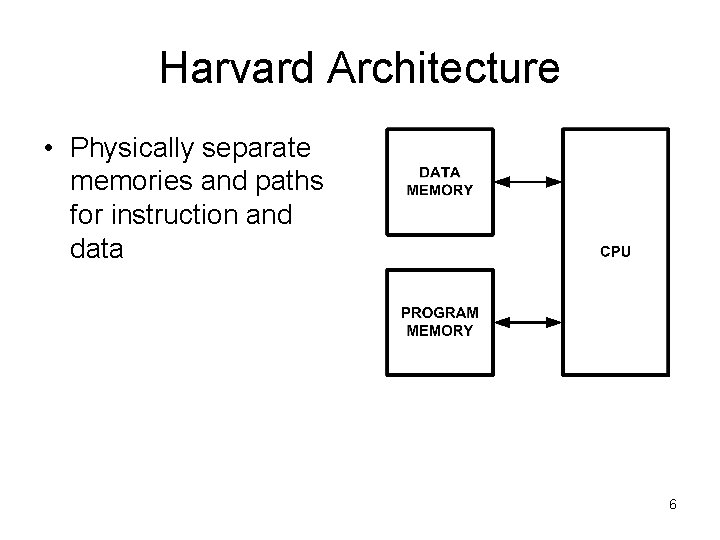
Harvard Architecture • Physically separate memories and paths for instruction and data 6
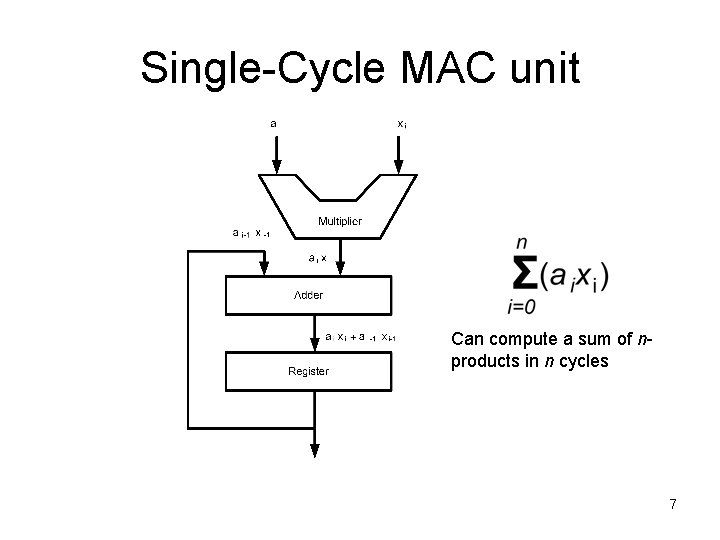
Single-Cycle MAC unit Can compute a sum of nproducts in n cycles 7
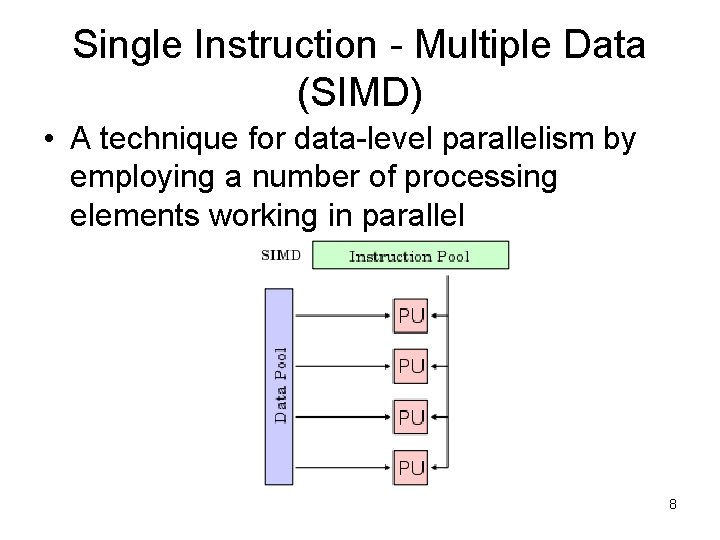
Single Instruction - Multiple Data (SIMD) • A technique for data-level parallelism by employing a number of processing elements working in parallel 8
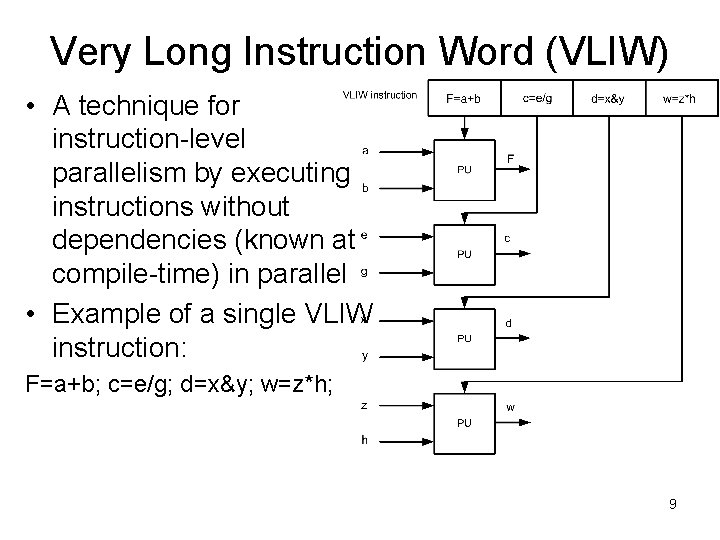
Very Long Instruction Word (VLIW) • A technique for instruction-level parallelism by executing instructions without dependencies (known at compile-time) in parallel • Example of a single VLIW instruction: F=a+b; c=e/g; d=x&y; w=z*h; 9
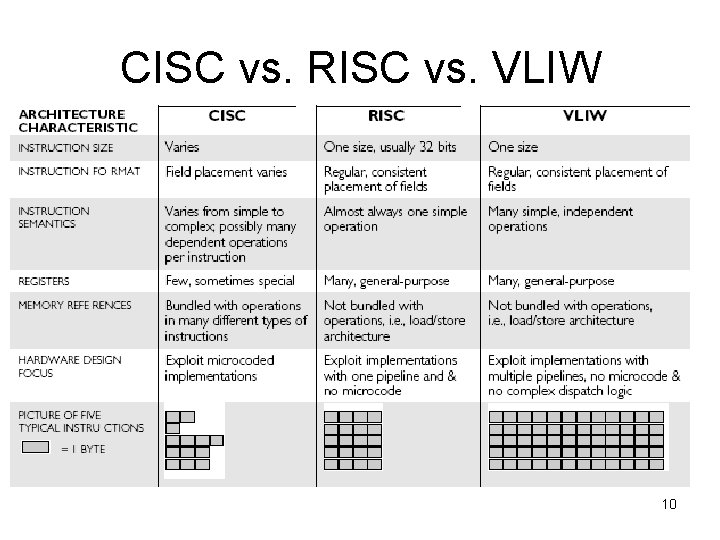
CISC vs. RISC vs. VLIW 10
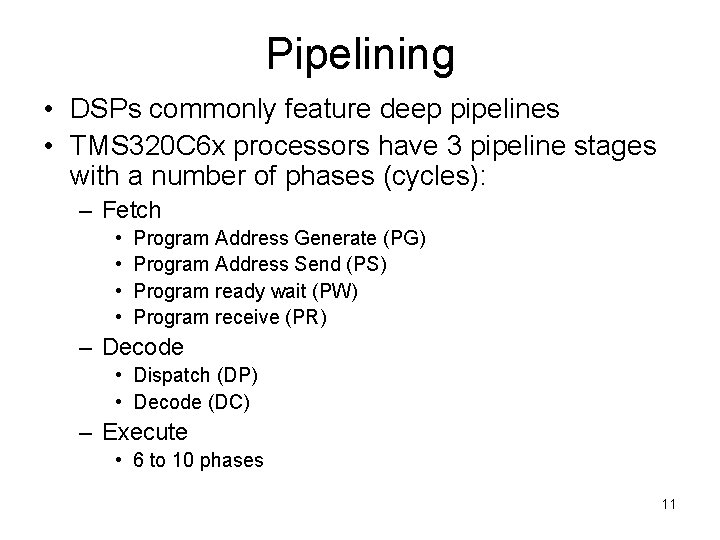
Pipelining • DSPs commonly feature deep pipelines • TMS 320 C 6 x processors have 3 pipeline stages with a number of phases (cycles): – Fetch • • Program Address Generate (PG) Program Address Send (PS) Program ready wait (PW) Program receive (PR) – Decode • Dispatch (DP) • Decode (DC) – Execute • 6 to 10 phases 11
- Slides: 11