
Introduction to Digital Electronics Breadboards The bread board
Introduction to Digital Electronics
Breadboards
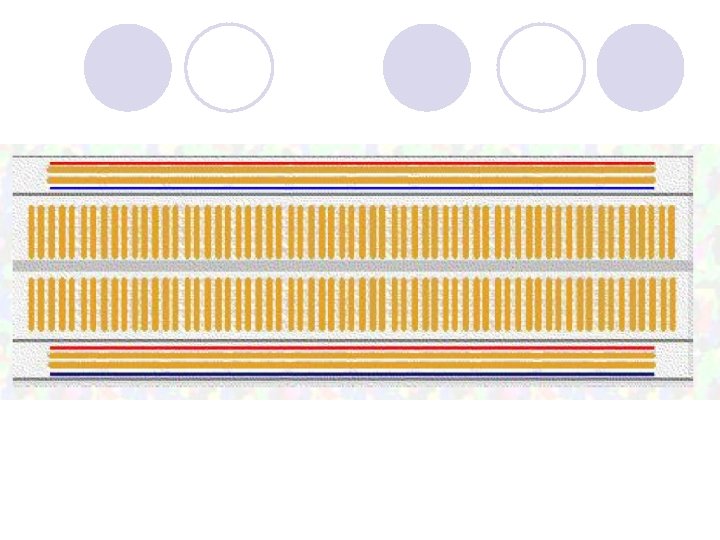
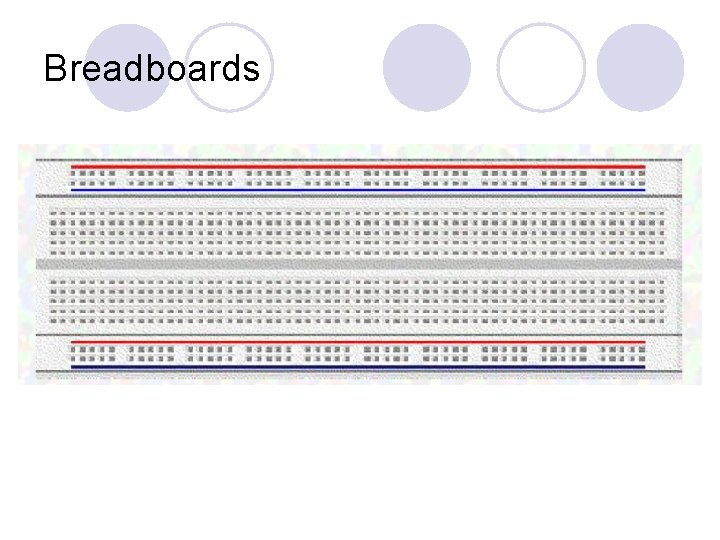
The bread board has many strips of metal (copper usually) which run underneath the board. The metal strips are laid out as shown below. These strips connect the holes on the top of the board. This makes it easy to connect components together to build circuits. To use the bread board, the legs of components are placed in the holes (the sockets). The holes are made so that they will hold the component in place. Each hole is connected to one of the metal strips running underneath the board.
Each wire forms a node. A node is a point in a circuit where two components are connected. Connections between different components are formed by putting their legs in a common node. On the bread board, a node is the row of holes that are connected by the strip of metal underneath.

Sample Project
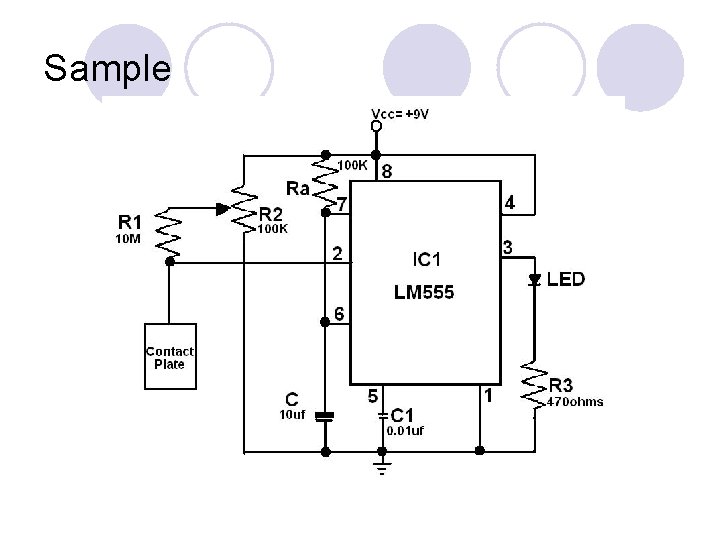
Sample

Configuring Pin-outs
IC Gates l Gates are the fundamental building blocks of digital logic circuitry. These l devices function by “opening” or “closing” to admit or reject the passage of l a logical signal. From only a handful of basic gate types (AND, OR, and NOT), a vast array of gating functions can be created.
Working With Gates l To work with gates, one must be able to count in binary numbers and must also know hexadecimal numbers, octal numbers, and the ordinary decimal numbers. But all throughout the study of gates binary numbers are most commonly used.
Human nasad
- Slides: 11