
Introduction to Digital DXing Dennis Egan W 1
- Slides: 20
Introduction to Digital DXing Dennis Egan W 1 UE Ed Muns W 0 YK 17 July 2014
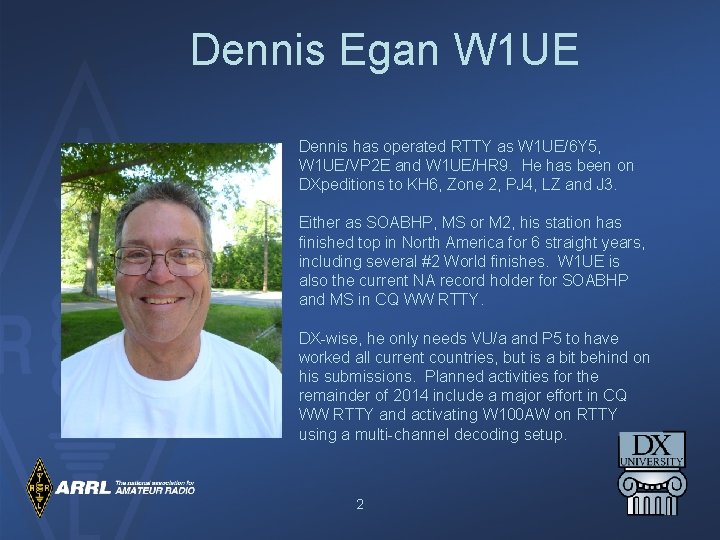
Dennis Egan W 1 UE Dennis has operated RTTY as W 1 UE/6 Y 5, W 1 UE/VP 2 E and W 1 UE/HR 9. He has been on DXpeditions to KH 6, Zone 2, PJ 4, LZ and J 3. Either as SOABHP, MS or M 2, his station has finished top in North America for 6 straight years, including several #2 World finishes. W 1 UE is also the current NA record holder for SOABHP and MS in CQ WW RTTY. DX-wise, he only needs VU/a and P 5 to have worked all current countries, but is a bit behind on his submissions. Planned activities for the remainder of 2014 include a major effort in CQ WW RTTY and activating W 100 AW on RTTY using a multi-channel decoding setup. 2
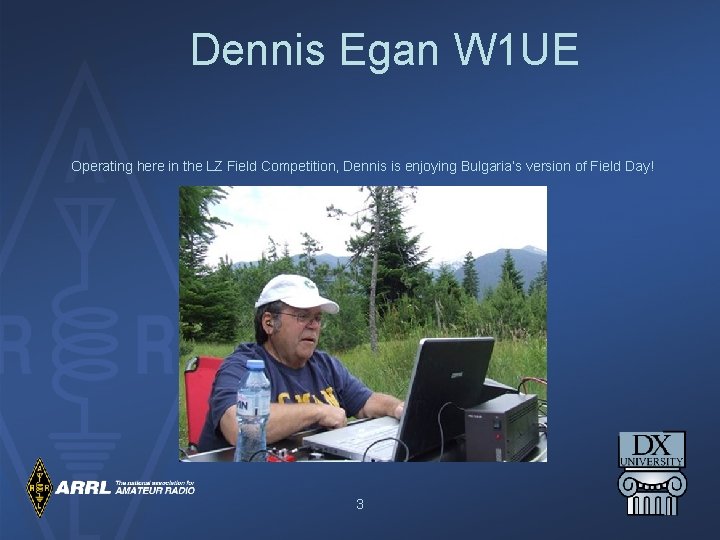
Dennis Egan W 1 UE Operating here in the LZ Field Competition, Dennis is enjoying Bulgaria’s version of Field Day! 3
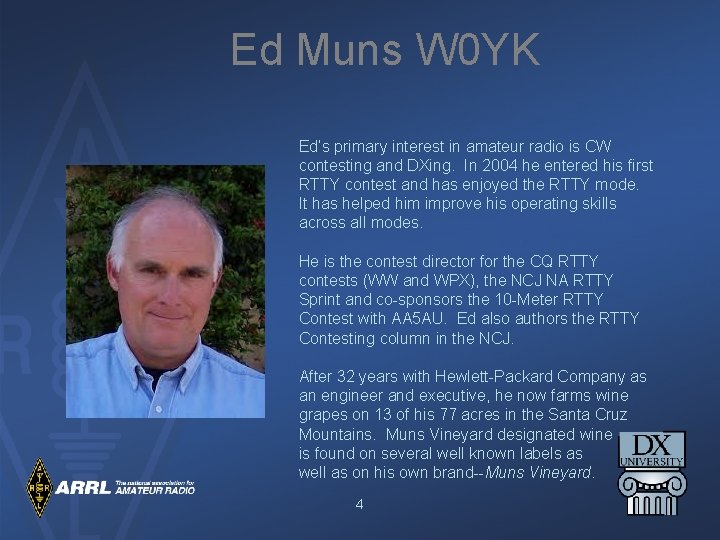
Ed Muns W 0 YK Ed’s primary interest in amateur radio is CW contesting and DXing. In 2004 he entered his first RTTY contest and has enjoyed the RTTY mode. It has helped him improve his operating skills across all modes. He is the contest director for the CQ RTTY contests (WW and WPX), the NCJ NA RTTY Sprint and co-sponsors the 10 -Meter RTTY Contest with AA 5 AU. Ed also authors the RTTY Contesting column in the NCJ. After 32 years with Hewlett-Packard Company as an engineer and executive, he now farms wine grapes on 13 of his 77 acres in the Santa Cruz Mountains. Muns Vineyard designated wine is found on several well known labels as well as on his own brand--Muns Vineyard. 4
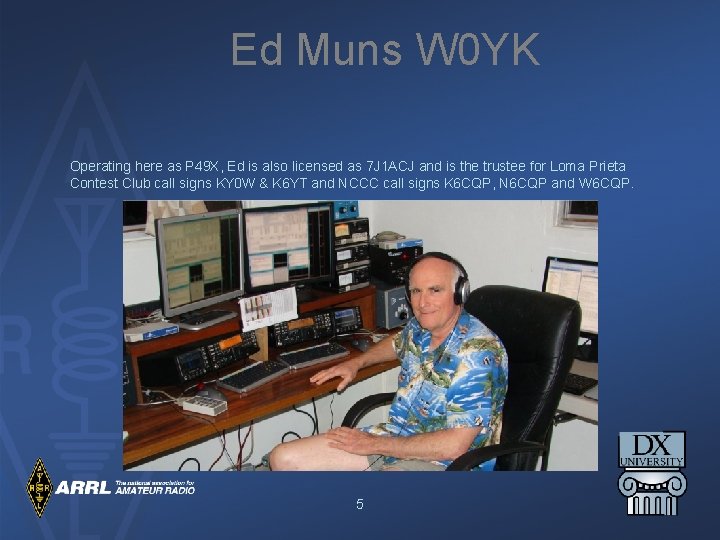
Ed Muns W 0 YK Operating here as P 49 X, Ed is also licensed as 7 J 1 ACJ and is the trustee for Loma Prieta Contest Club call signs KY 0 W & K 6 YT and NCCC call signs K 6 CQP, N 6 CQP and W 6 CQP. 5
Digital Modes used in DXing • • RTTY (45. 45 Baud, 170 Hz shift) PSK 31 JT 65 others 6
Advice from the Experts • • Listen, and then listen some more! Short messages Split proficiency “Slow Down to Win” – Listen, then call when it is quiet • Practice in contests • Police 7
Listen, Listen • Same as CW and SSB • Optimize your decoding • Dual-receive highly recommended – requires 2 RTTY decoders • Figure out the pattern 8
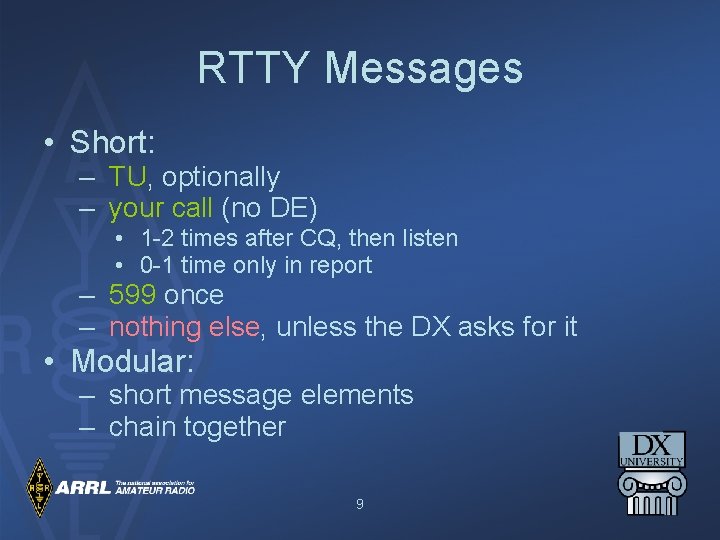
RTTY Messages • Short: – TU, optionally – your call (no DE) • 1 -2 times after CQ, then listen • 0 -1 time only in report – 599 once – nothing else, unless the DX asks for it • Modular: – short message elements – chain together 9
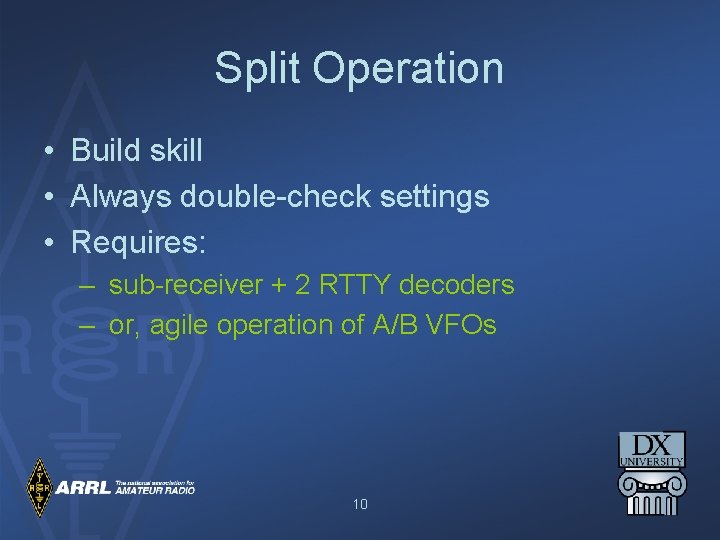
Split Operation • Build skill • Always double-check settings • Requires: – sub-receiver + 2 RTTY decoders – or, agile operation of A/B VFOs 10
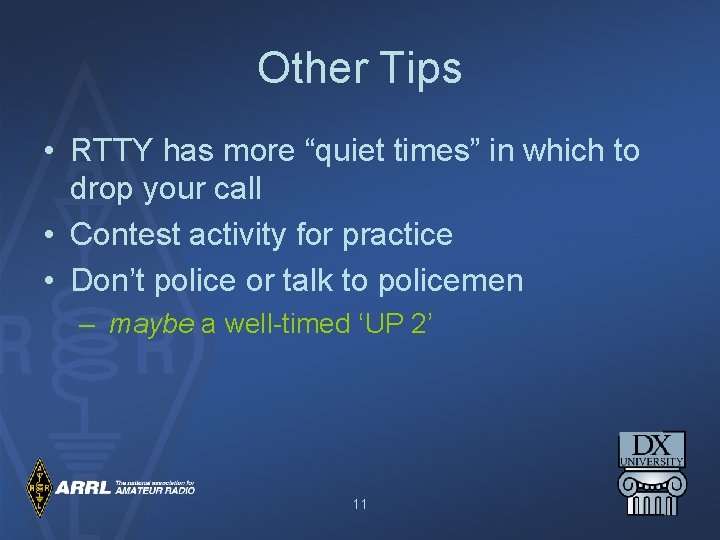
Other Tips • RTTY has more “quiet times” in which to drop your call • Contest activity for practice • Don’t police or talk to policemen – maybe a well-timed ‘UP 2’ 11
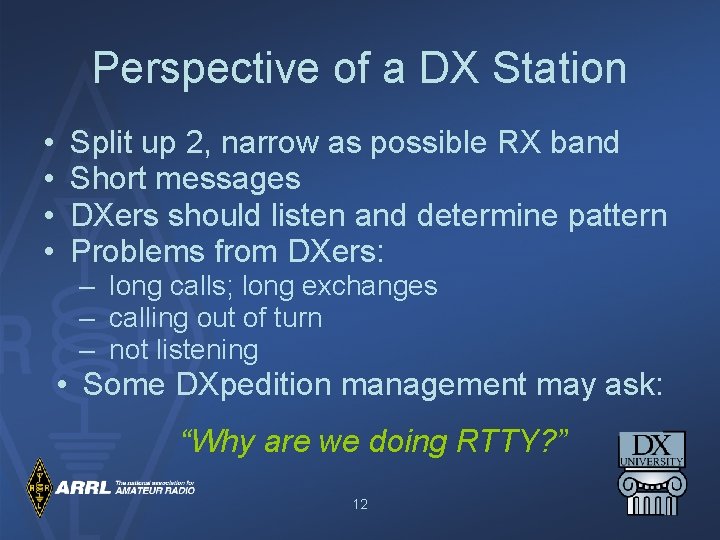
Perspective of a DX Station • • Split up 2, narrow as possible RX band Short messages DXers should listen and determine pattern Problems from DXers: – long calls; long exchanges – calling out of turn – not listening • Some DXpedition management may ask: “Why are we doing RTTY? ” 12
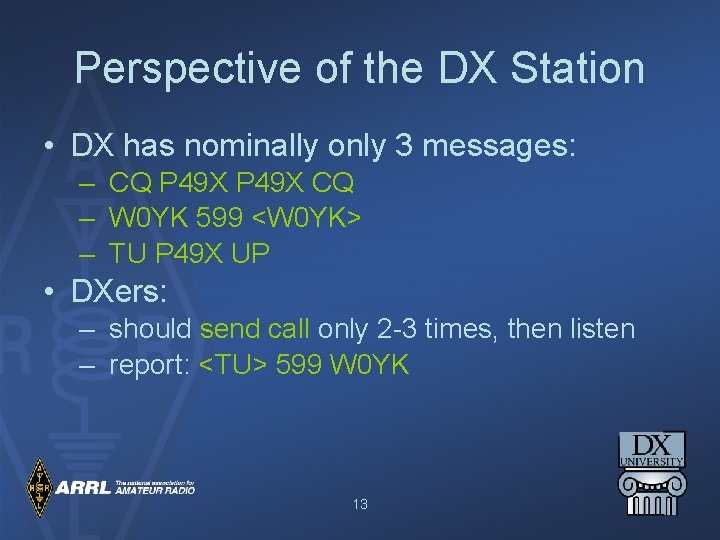
Perspective of the DX Station • DX has nominally only 3 messages: – CQ P 49 X CQ – W 0 YK 599 <W 0 YK> – TU P 49 X UP • DXers: – should send call only 2 -3 times, then listen – report: <TU> 599 W 0 YK 13
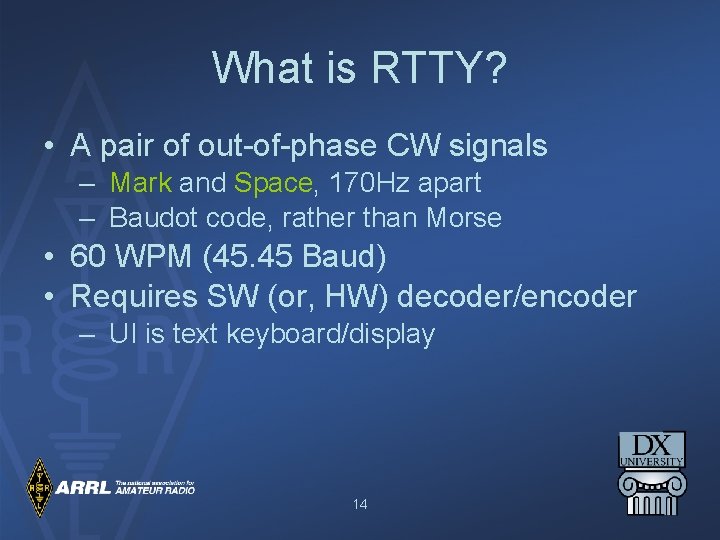
What is RTTY? • A pair of out-of-phase CW signals – Mark and Space, 170 Hz apart – Baudot code, rather than Morse • 60 WPM (45. 45 Baud) • Requires SW (or, HW) decoder/encoder – UI is text keyboard/display 14
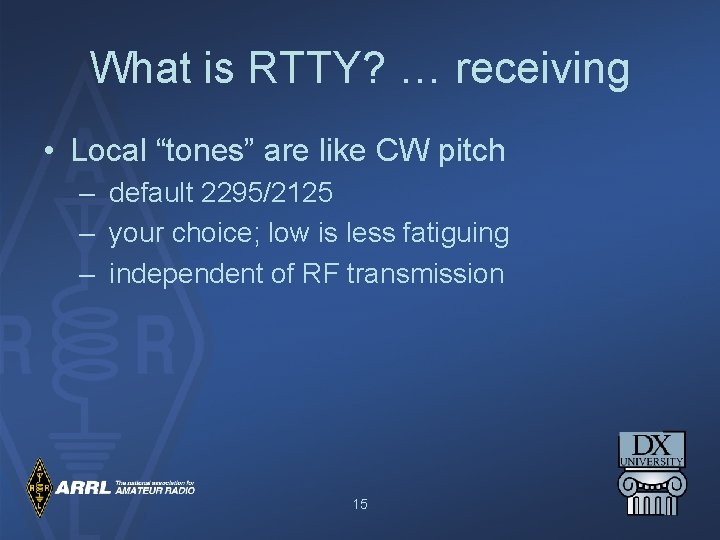
What is RTTY? … receiving • Local “tones” are like CW pitch – default 2295/2125 – your choice; low is less fatiguing – independent of RF transmission 15
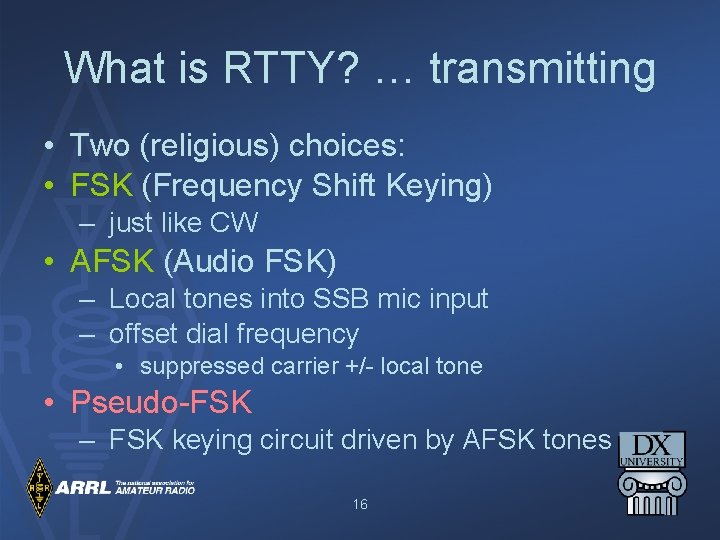
What is RTTY? … transmitting • Two (religious) choices: • FSK (Frequency Shift Keying) – just like CW • AFSK (Audio FSK) – Local tones into SSB mic input – offset dial frequency • suppressed carrier +/- local tone • Pseudo-FSK – FSK keying circuit driven by AFSK tones 16
How? • RTTY decoder for receive – software, e. g. , MMTTY (free) – hardware, e. g, PK 232, Hal DXP 38 • RTTY encoder for transmit – often bundled with decoder and called a • MODEM (modulator-demodulator), or • TNC (Terminal Node Controller) • Standalone or integrated into logging SW • Interface between radio and decoder/encoder (PC) 17
How? … commercial or homebrew interface • Receive (decoder) is typically a standard audio cable • Transmit (encoder) – FSK: CW-like keying interface – AFSK: standard audio cable – Pseudo-FSK: special converter interface 18
Resources • • www. rttycontesting. com rtty@contesting. com Dayton CTU RTTY presentations NCJ RTTY Contesting column 19
Happy RTTY DXing! 20