
Introduction to Digestion Nutrition Organs Structures composed of
- Slides: 25
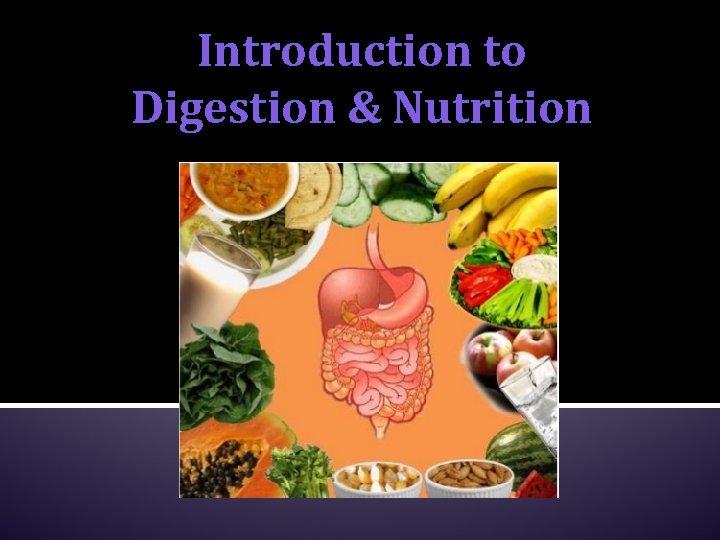
Introduction to Digestion & Nutrition
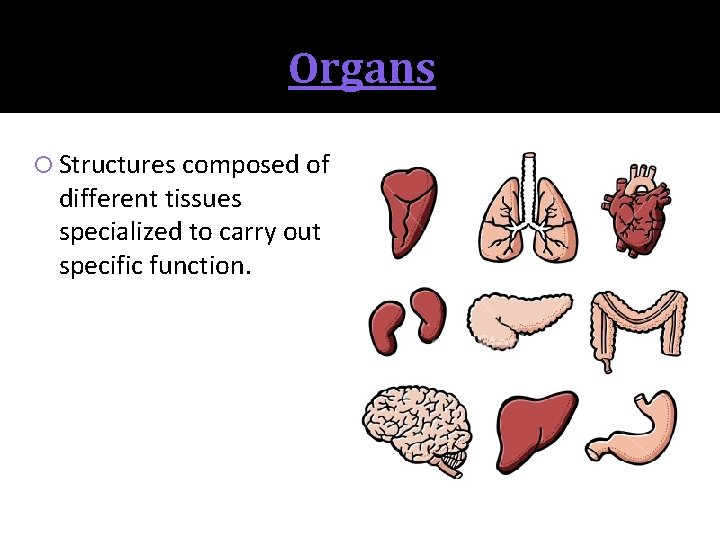
Organs Structures composed of different tissues specialized to carry out specific function.
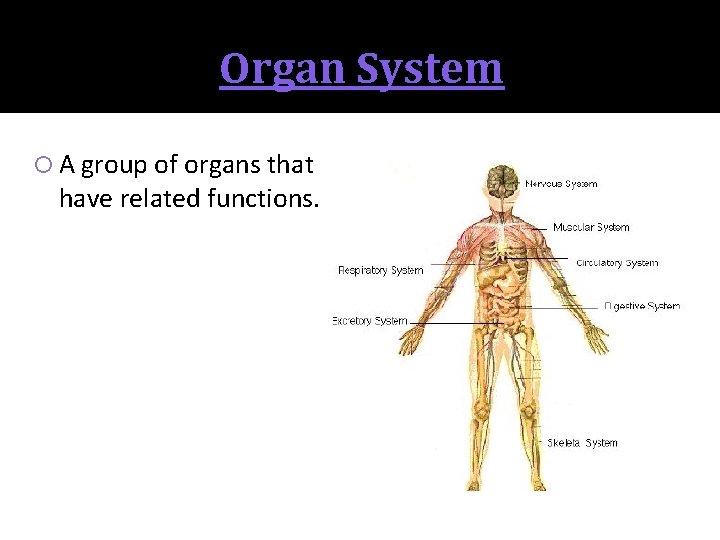
Organ System A group of organs that have related functions.
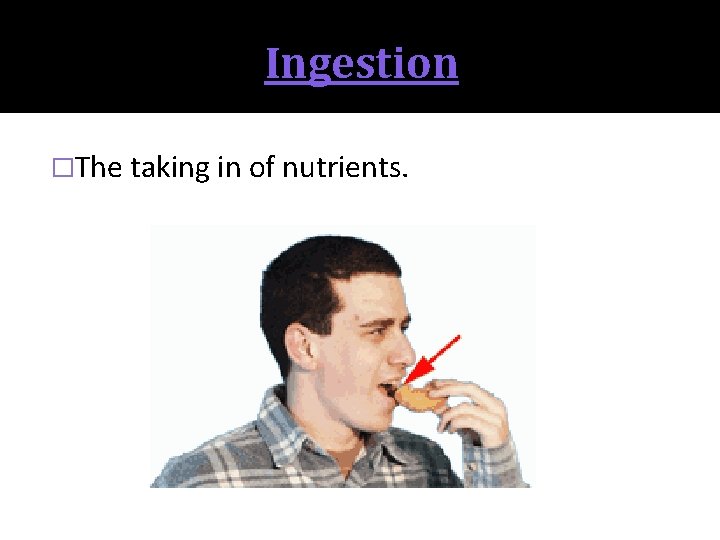
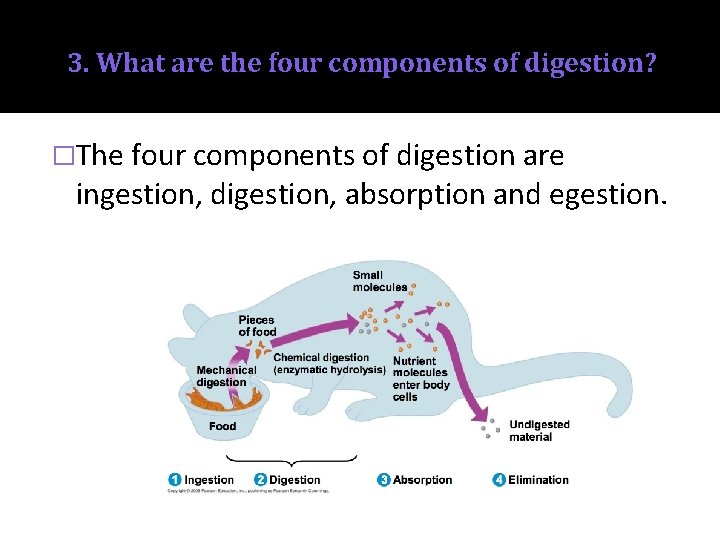
Ingestion �The taking in of nutrients.
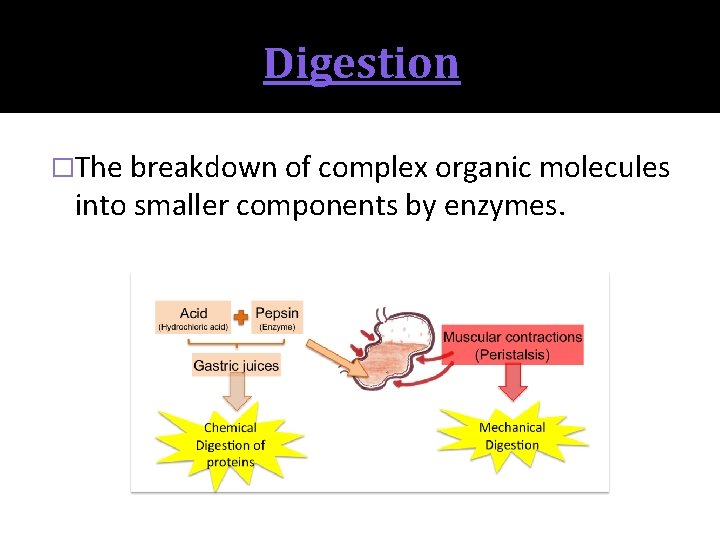
Digestion �The breakdown of complex organic molecules into smaller components by enzymes.
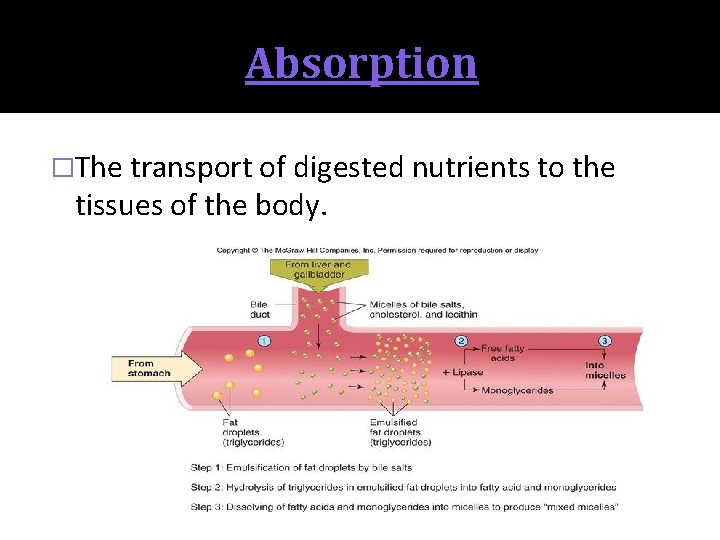
Absorption �The transport of digested nutrients to the tissues of the body.
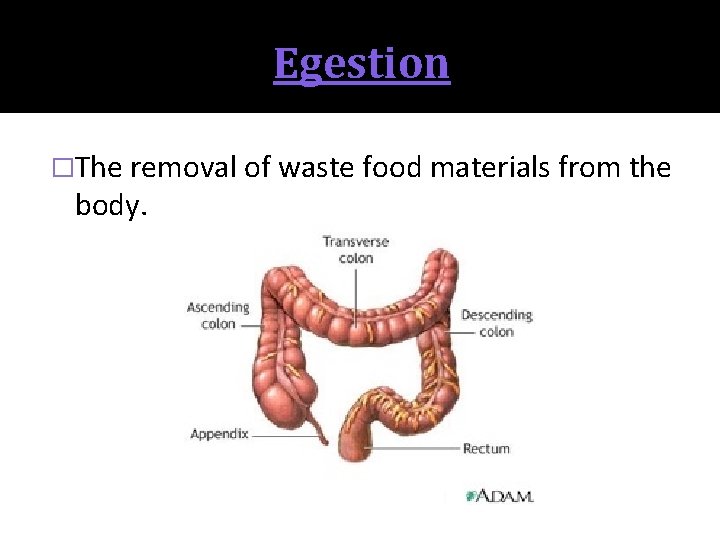
Egestion �The removal of waste food materials from the body.
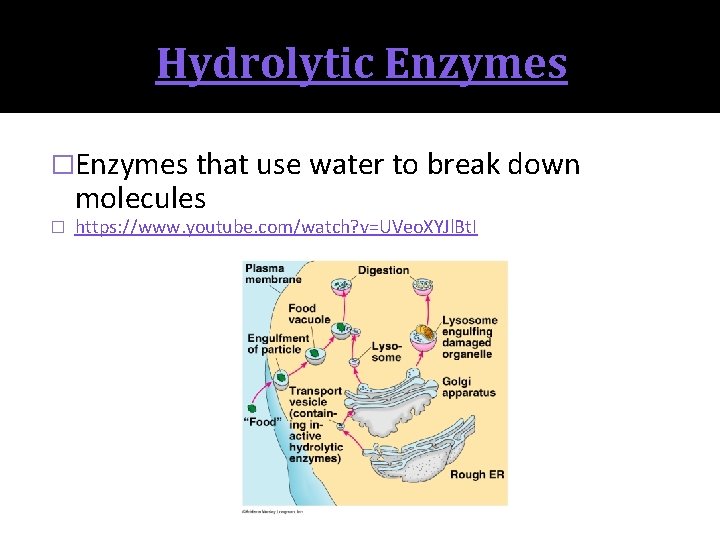
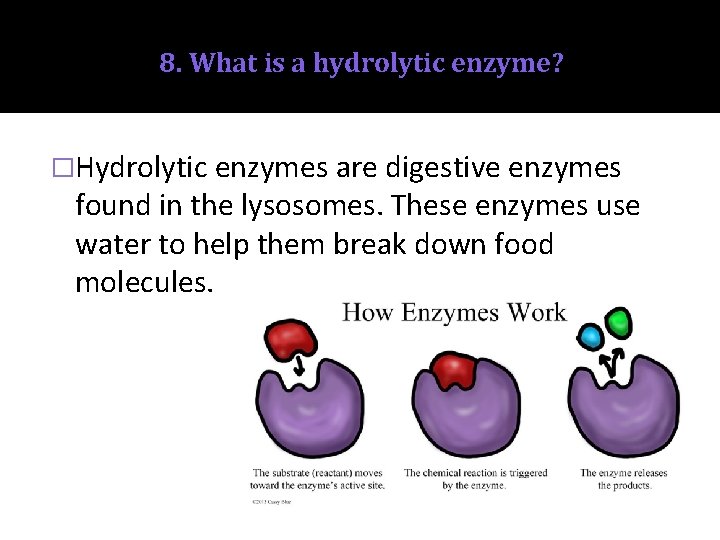
Hydrolytic Enzymes �Enzymes that use water to break down molecules � https: //www. youtube. com/watch? v=UVeo. XYJl. Bt. I
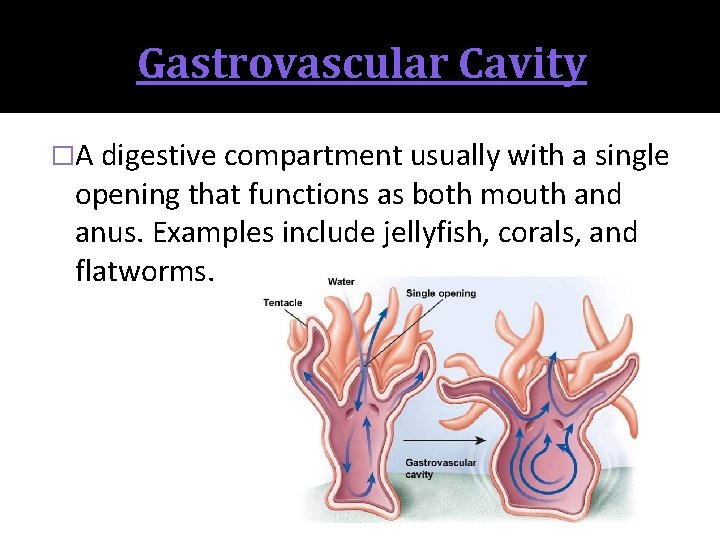
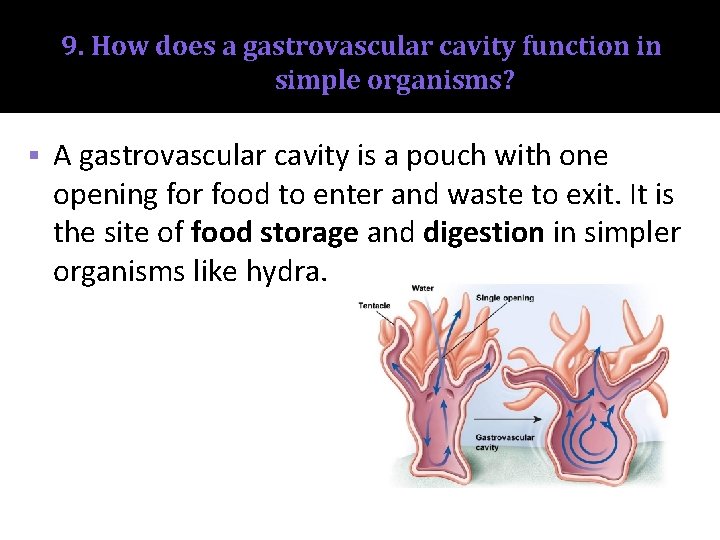
Gastrovascular Cavity �A digestive compartment usually with a single opening that functions as both mouth and anus. Examples include jellyfish, corals, and flatworms.
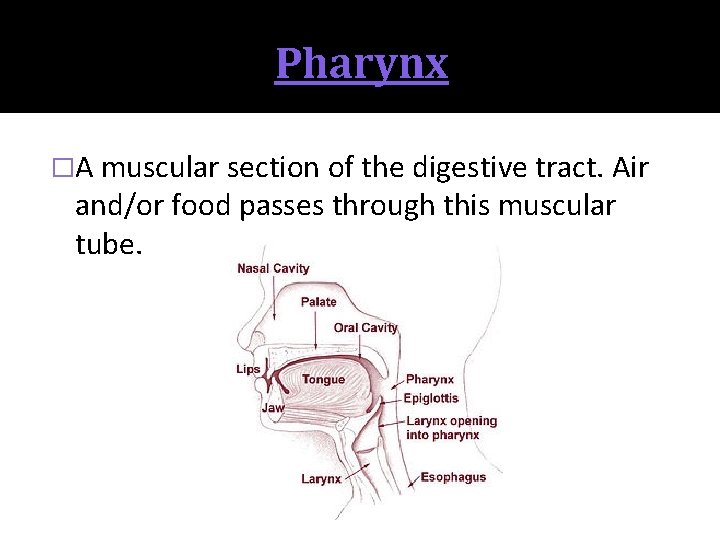
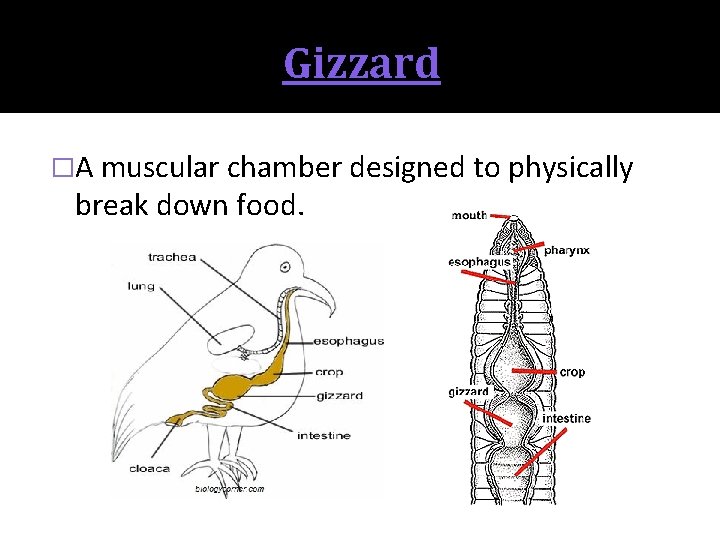
Pharynx �A muscular section of the digestive tract. Air and/or food passes through this muscular tube.
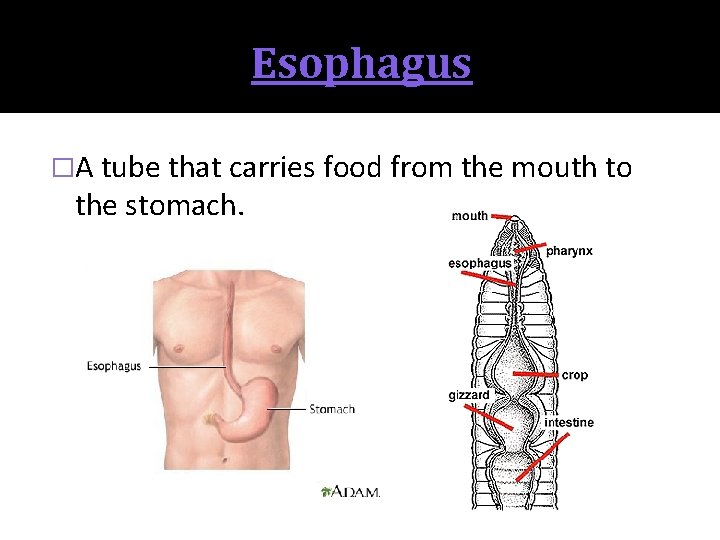
Esophagus �A tube that carries food from the mouth to the stomach.
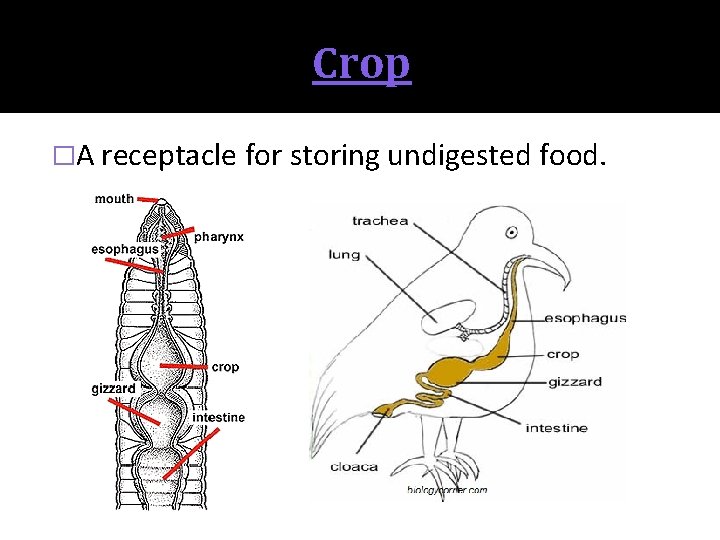
Crop �A receptacle for storing undigested food.
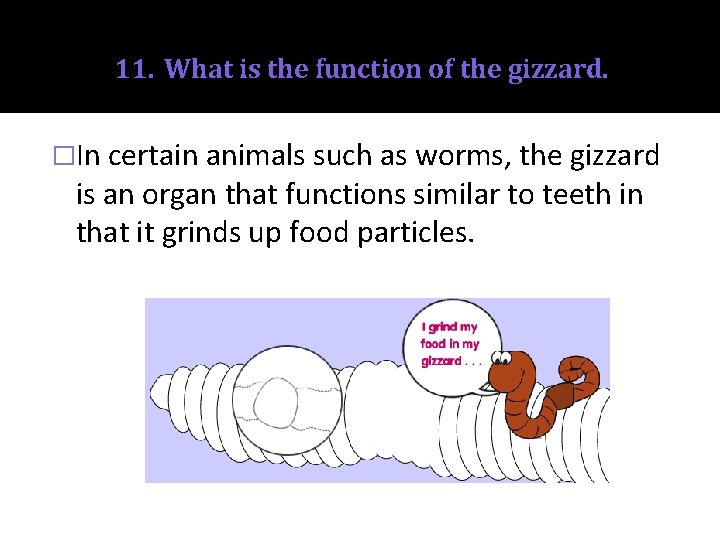
Gizzard �A muscular chamber designed to physically break down food.
1. How are organic compounds (nutrients) used by heterotrophs? �Organic compounds are digested in the GI tract, absorbed into the blood stream, and transported to the cells of the body by the circulatory system.
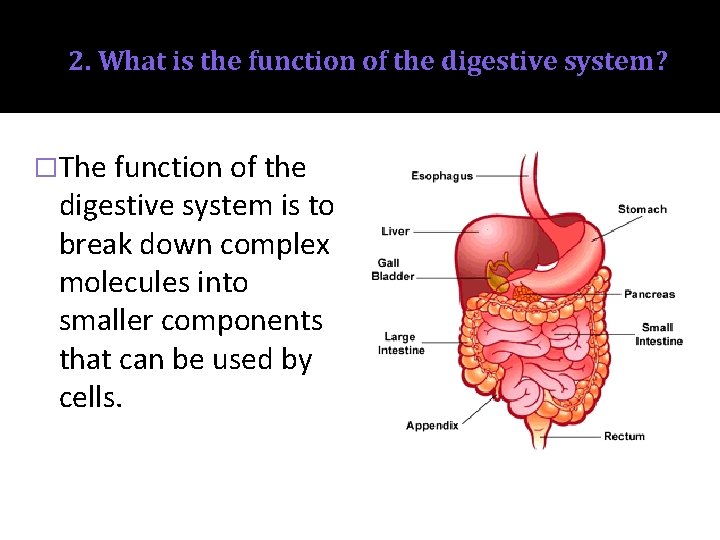
2. What is the function of the digestive system? �The function of the digestive system is to break down complex molecules into smaller components that can be used by cells.
3. What are the four components of digestion? �The four components of digestion are ingestion, digestion, absorption and egestion.
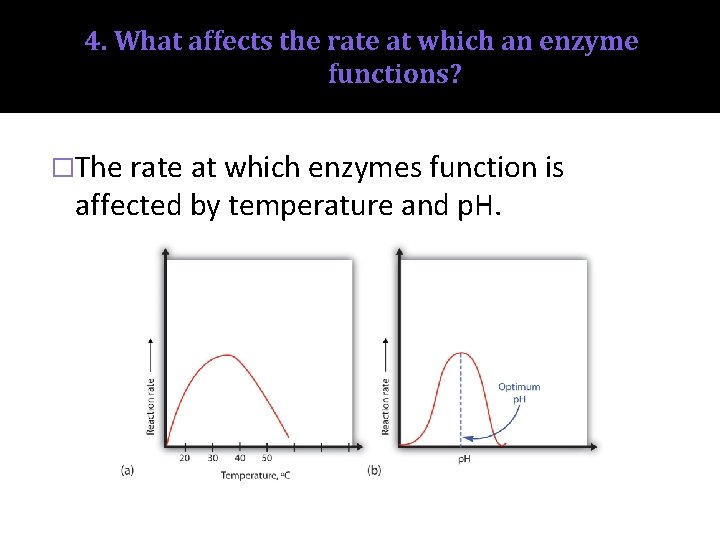
4. What affects the rate at which an enzyme functions? �The rate at which enzymes function is affected by temperature and p. H.
5. What is the peak temperature for human enzymes? �Human enzymes function best at a temperature of 37 degrees Celsius. If the temperature reaches much higher the enzymes will denature (change shape) and cease to function.
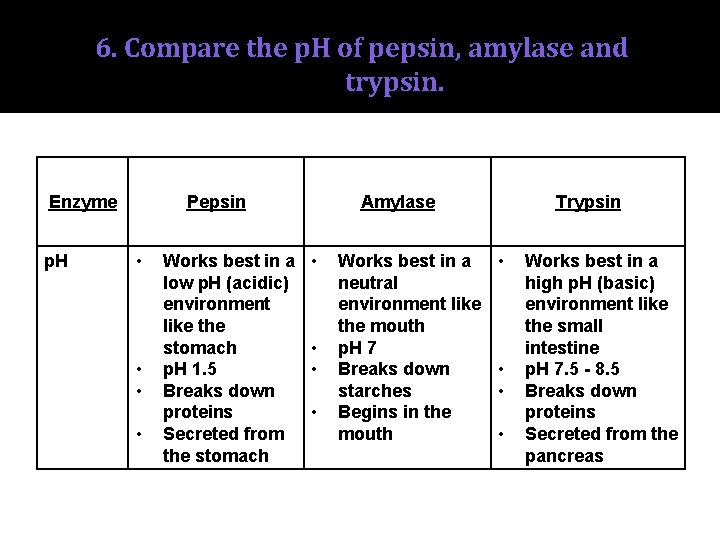
6. Compare the p. H of pepsin, amylase and trypsin. Enzyme p. H Pepsin • • Works best in a low p. H (acidic) environment like the stomach p. H 1. 5 Breaks down proteins Secreted from the stomach Amylase • • Works best in a neutral environment like the mouth p. H 7 Breaks down starches Begins in the mouth Trypsin • • Works best in a high p. H (basic) environment like the small intestine p. H 7. 5 - 8. 5 Breaks down proteins Secreted from the pancreas
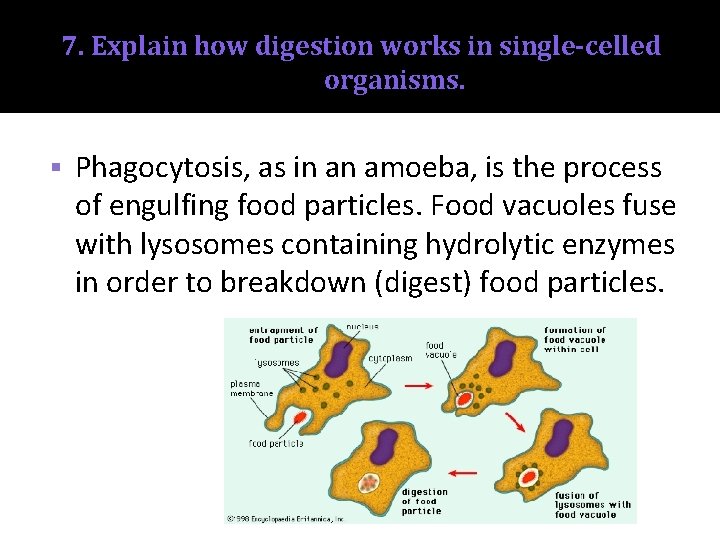
7. Explain how digestion works in single-celled organisms. § Phagocytosis, as in an amoeba, is the process of engulfing food particles. Food vacuoles fuse with lysosomes containing hydrolytic enzymes in order to breakdown (digest) food particles.
8. What is a hydrolytic enzyme? �Hydrolytic enzymes are digestive enzymes found in the lysosomes. These enzymes use water to help them break down food molecules.
9. How does a gastrovascular cavity function in simple organisms? § A gastrovascular cavity is a pouch with one opening for food to enter and waste to exit. It is the site of food storage and digestion in simpler organisms like hydra.
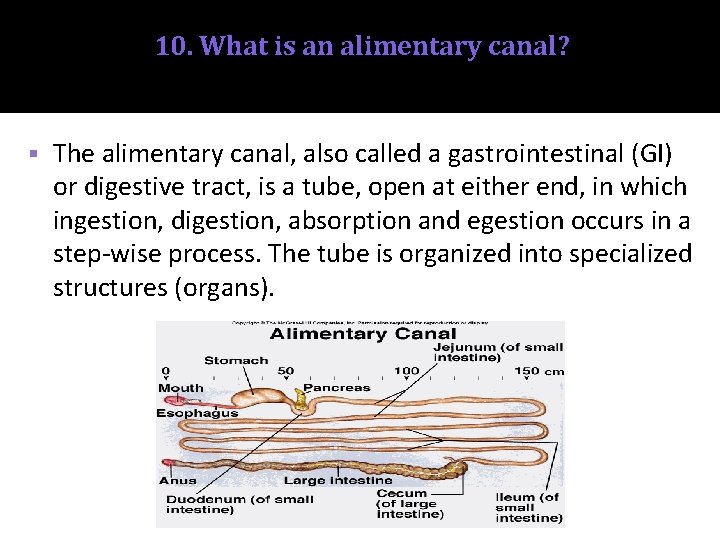
10. What is an alimentary canal? § The alimentary canal, also called a gastrointestinal (GI) or digestive tract, is a tube, open at either end, in which ingestion, digestion, absorption and egestion occurs in a step-wise process. The tube is organized into specialized structures (organs).
11. What is the function of the gizzard. �In certain animals such as worms, the gizzard is an organ that functions similar to teeth in that it grinds up food particles.
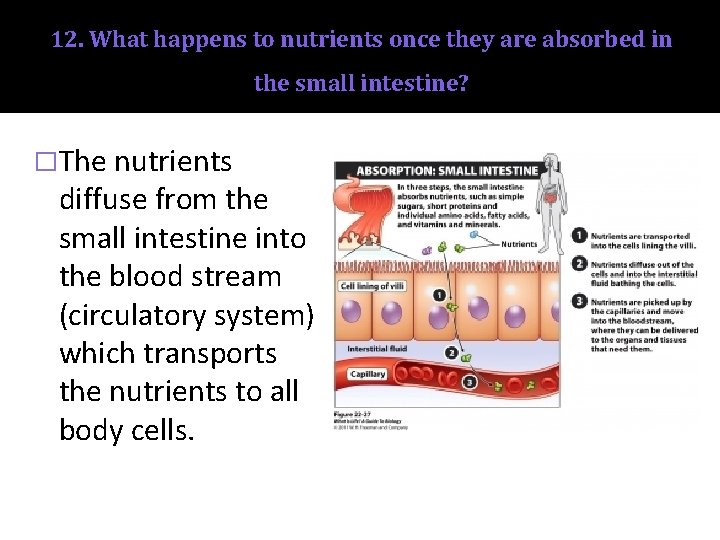
12. What happens to nutrients once they are absorbed in the small intestine? �The nutrients diffuse from the small intestine into the blood stream (circulatory system) which transports the nutrients to all body cells.