
Introduction to Design Science Erik Perjons Department of

![Design science and Practice research Design Science Project [Inspired by Goldkuhl, 2012]](https://slidetodoc.com/presentation_image/f2196603063b18503081a1801fc5f5cb/image-17.jpg "Design science and Practice research Design Science Project [Inspired by Goldkuhl, 2012]")

- Slides: 71
Introduction to Design Science Erik Perjons Department of Computer and Systems Sciences (DSV), Stockholm University
What is Design Science?
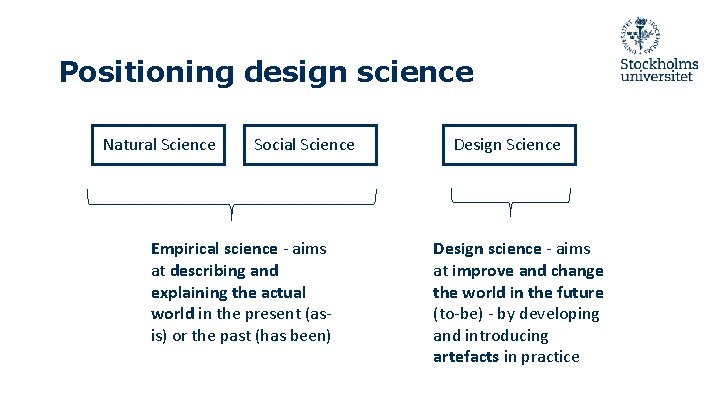
Positioning design science Natural Science Social Science Empirical science - aims at describing and explaining the actual world in the present (asis) or the past (has been) Design Science Design science - aims at improve and change the world in the future (to-be) - by developing and introducing artefacts in practice
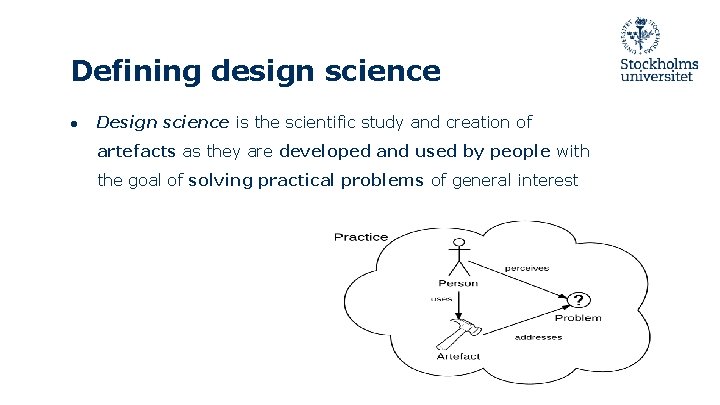
Defining design science ● Design science is the scientific study and creation of artefacts as they are developed and used by people with the goal of solving practical problems of general interest
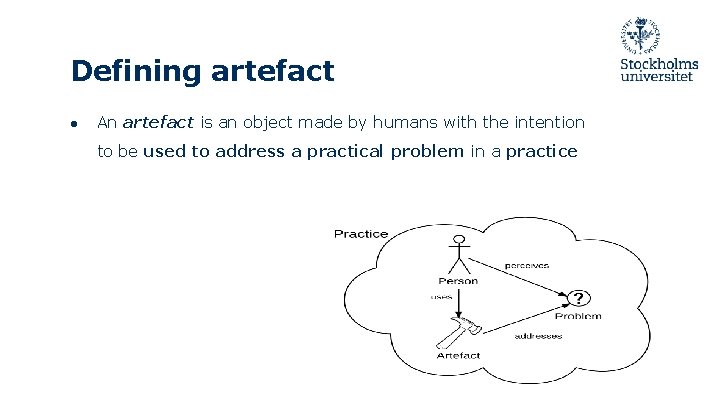
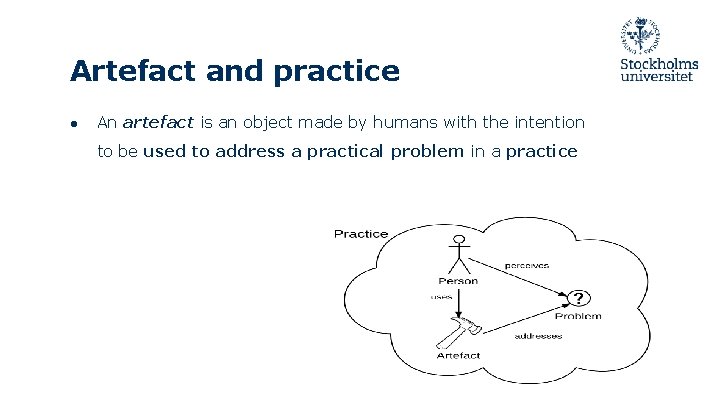
Defining artefact ● An artefact is an object made by humans with the intention to be used to address a practical problem in a practice
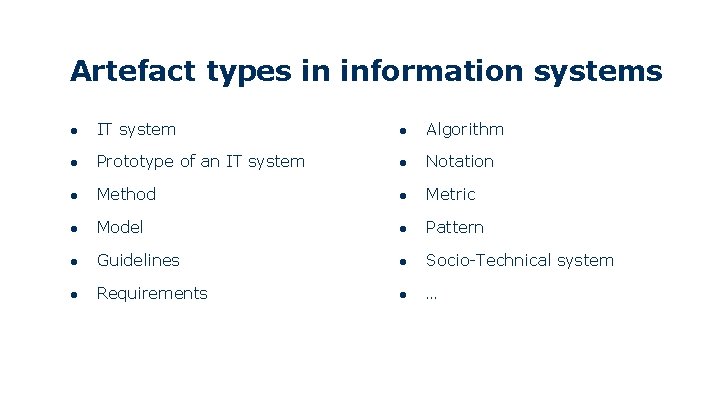
Artefact types in information systems ● IT system ● Algorithm ● Prototype of an IT system ● Notation ● Method ● Metric ● Model ● Pattern ● Guidelines ● Socio-Technical system ● Requirements ● …
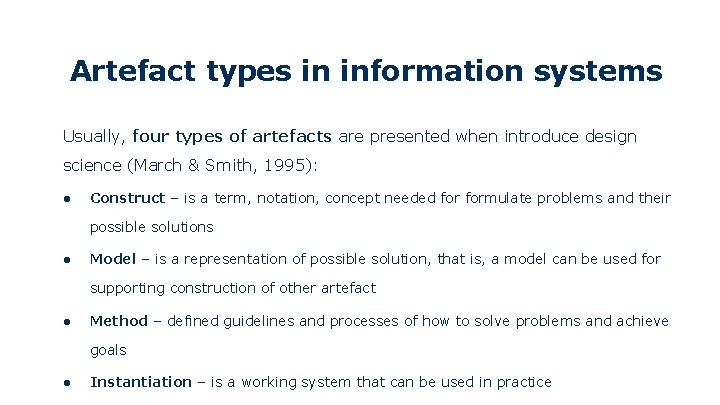
Artefact types in information systems Usually, four types of artefacts are presented when introduce design science (March & Smith, 1995): ● Construct – is a term, notation, concept needed formulate problems and their possible solutions ● Model – is a representation of possible solution, that is, a model can be used for supporting construction of other artefact ● Method – defined guidelines and processes of how to solve problems and achieve goals ● Instantiation – is a working system that can be used in practice
Artefact and practice ● An artefact is an object made by humans with the intention to be used to address a practical problem in a practice
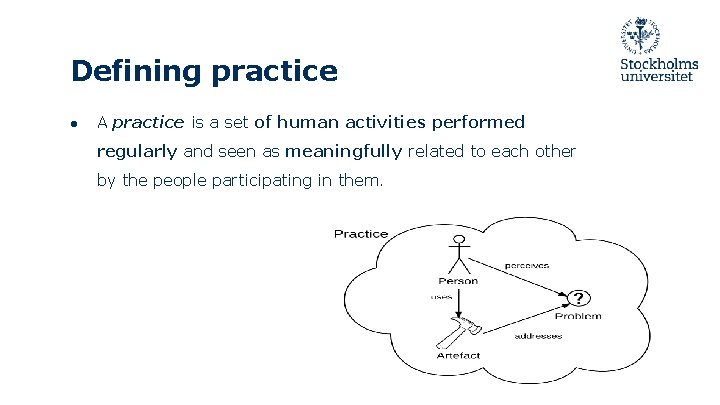
Defining practice ● A practice is a set of human activities performed regularly and seen as meaningfully related to each other by the people participating in them.
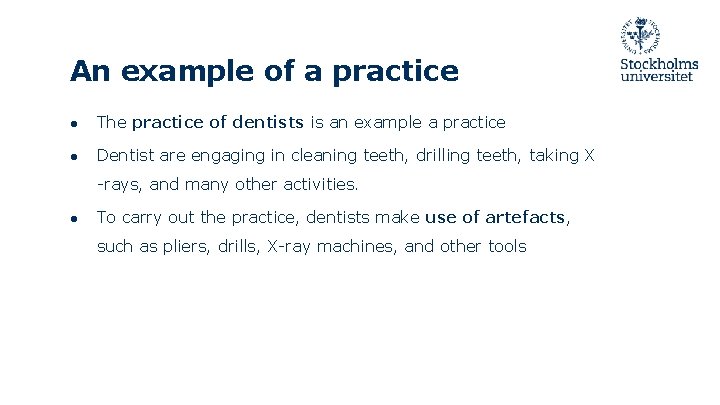
An example of a practice ● The practice of dentists is an example a practice ● Dentist are engaging in cleaning teeth, drilling teeth, taking X -rays, and many other activities. ● To carry out the practice, dentists make use of artefacts, such as pliers, drills, X-ray machines, and other tools
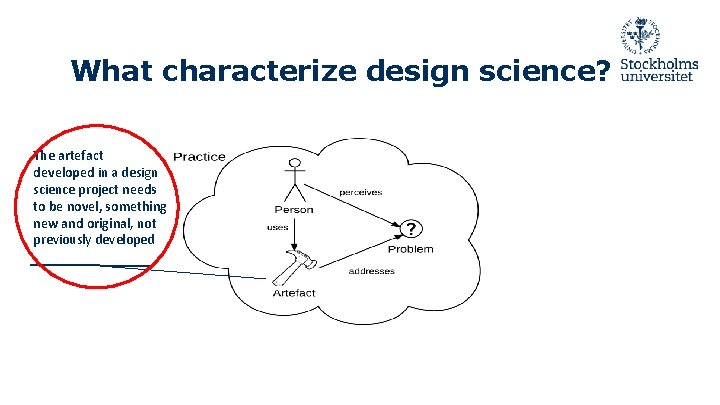
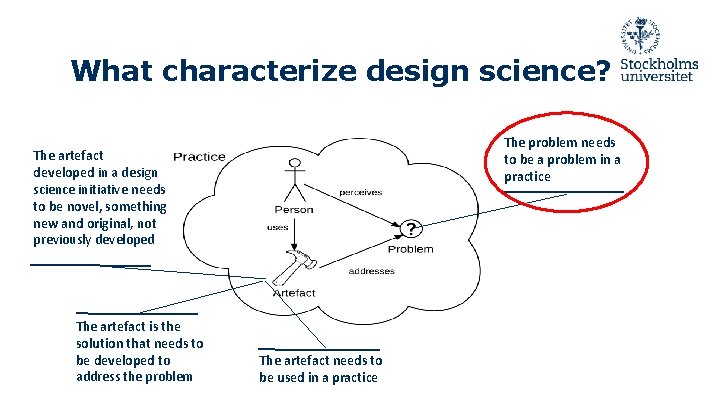
What characterize design science? The artefact developed in a design science project needs to be novel, something new and original, not previously developed
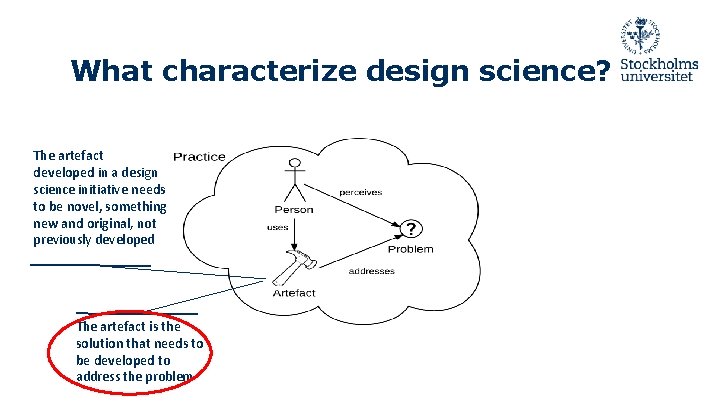
What characterize design science? The artefact developed in a design science initiative needs to be novel, something new and original, not previously developed The artefact is the solution that needs to be developed to address the problem
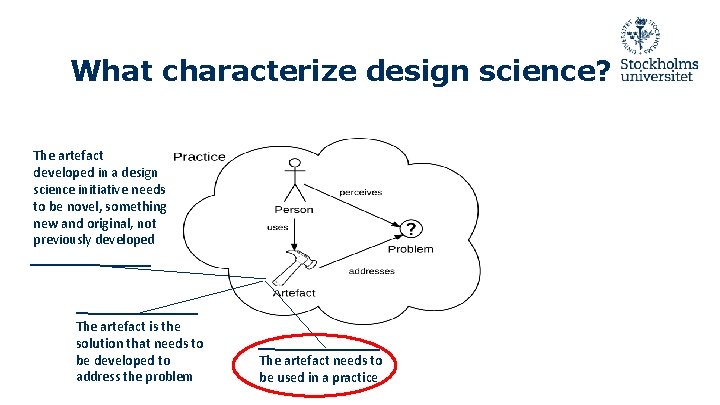
What characterize design science? The artefact developed in a design science initiative needs to be novel, something new and original, not previously developed The artefact is the solution that needs to be developed to address the problem The artefact needs to be used in a practice
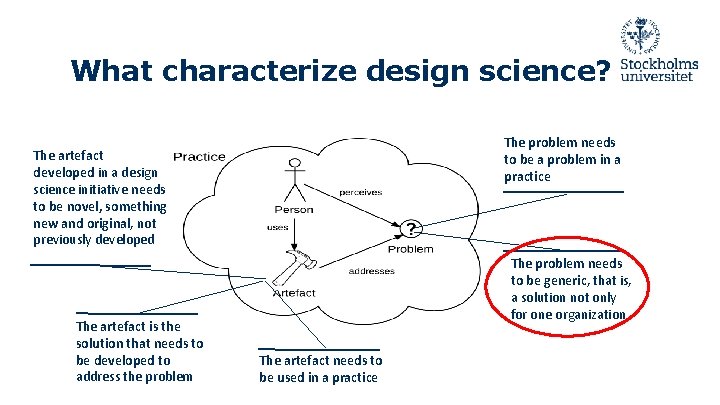
What characterize design science? The problem needs to be a problem in a practice The artefact developed in a design science initiative needs to be novel, something new and original, not previously developed The artefact is the solution that needs to be developed to address the problem The artefact needs to be used in a practice
What characterize design science? The problem needs to be a problem in a practice The artefact developed in a design science initiative needs to be novel, something new and original, not previously developed The artefact is the solution that needs to be developed to address the problem The problem needs to be generic, that is, a solution not only for one organization The artefact needs to be used in a practice
Design science and Practice research ● Design science is often seen as part of what is called practical research ● Practice research is research that addresses problems in practices
Design science and Practice research Design Science Project [Inspired by Goldkuhl, 2012]
A Design Science Framework
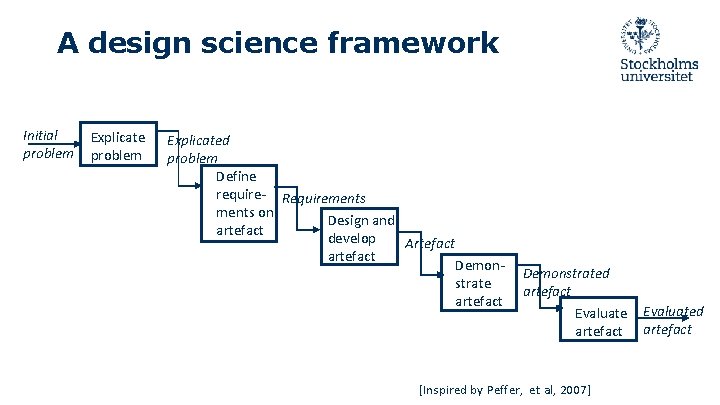
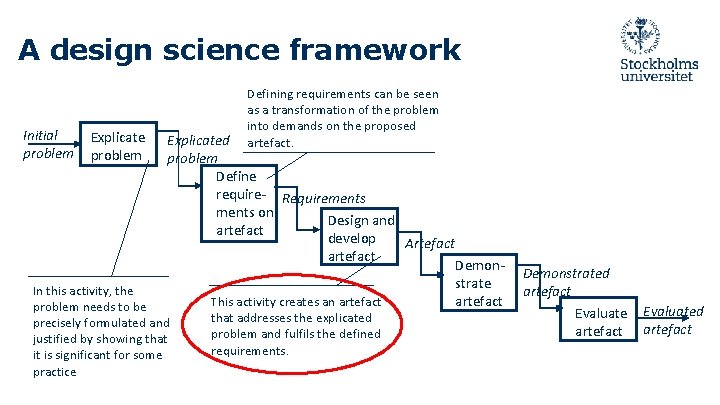
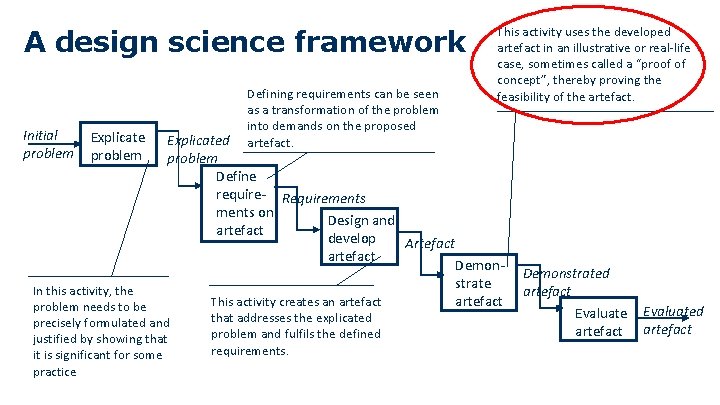
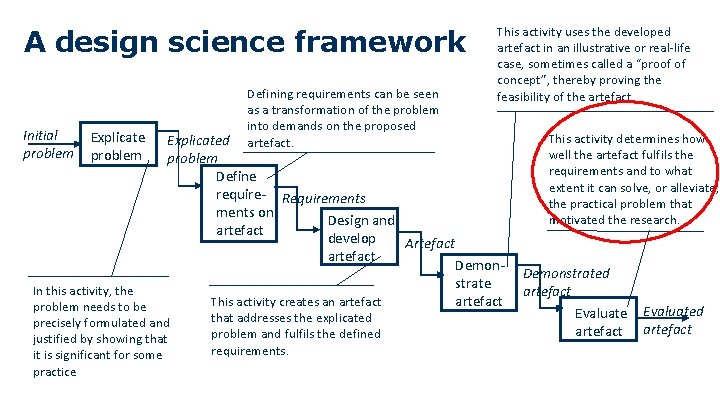
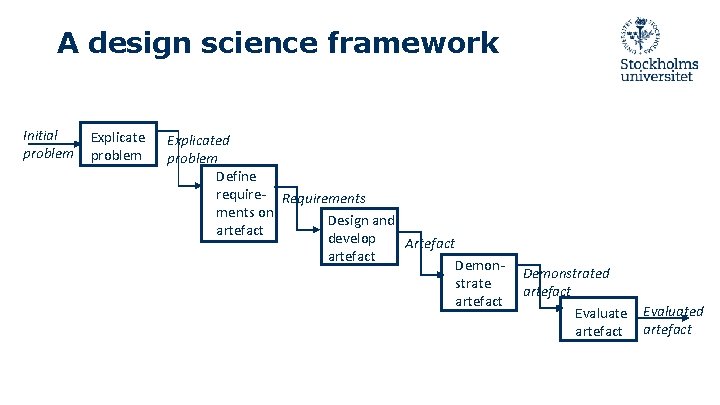
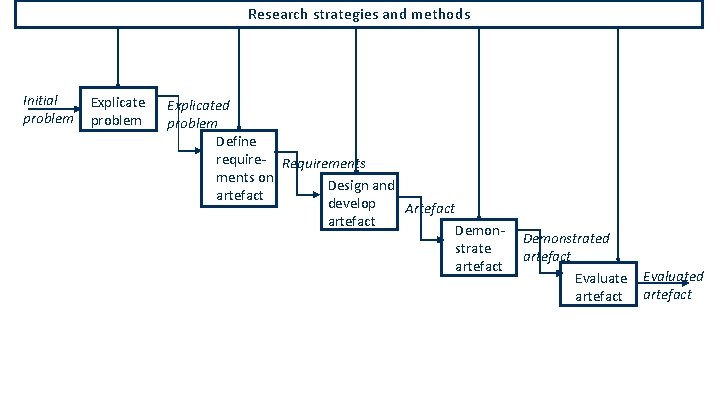
A design science framework Initial problem Explicated problem Define require- Requirements on Design and artefact develop Artefact artefact Demonstrated artefact Evaluated artefact [Inspired by Peffer, et al, 2007]
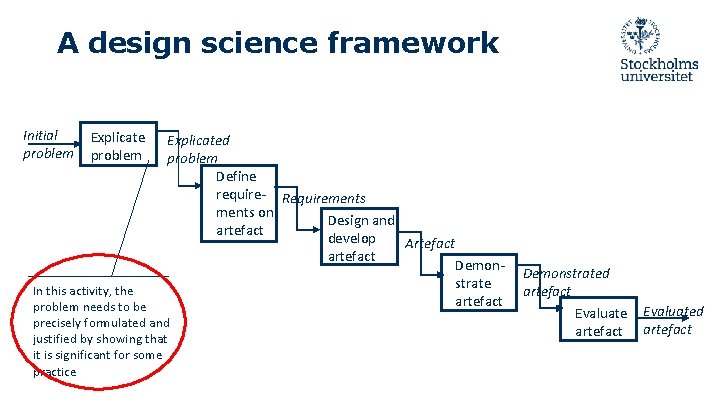
A design science framework Initial problem Explicated problem Define require- Requirements on Design and artefact develop Artefact artefact In this activity, the problem needs to be precisely formulated and justified by showing that it is significant for some practice Demonstrate artefact Demonstrated artefact Evaluated artefact
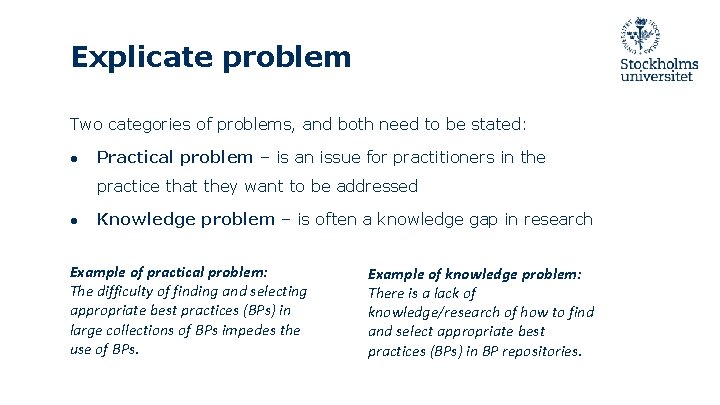
Explicate problem Two categories of problems, and both need to be stated: ● Practical problem – is an issue for practitioners in the practice that they want to be addressed ● Knowledge problem – is often a knowledge gap in research Example of practical problem: The difficulty of finding and selecting appropriate best practices (BPs) in large collections of BPs impedes the use of BPs. Example of knowledge problem: There is a lack of knowledge/research of how to find and select appropriate best practices (BPs) in BP repositories.
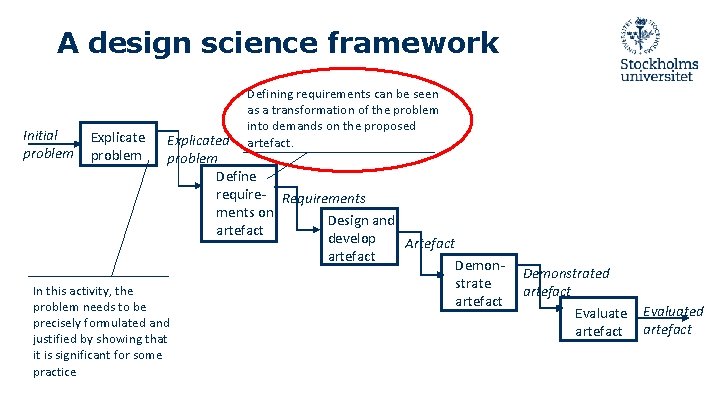
A design science framework Initial problem Explicate problem Defining requirements can be seen as a transformation of the problem into demands on the proposed artefact. Explicated problem Define require- Requirements on Design and artefact develop Artefact artefact In this activity, the problem needs to be precisely formulated and justified by showing that it is significant for some practice Demonstrate artefact Demonstrated artefact Evaluated artefact
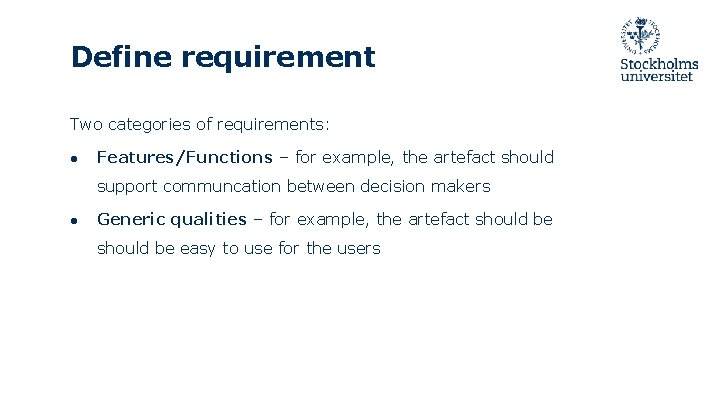
Define requirement Two categories of requirements: ● Features/Functions – for example, the artefact should support communcation between decision makers ● Generic qualities – for example, the artefact should be easy to use for the users
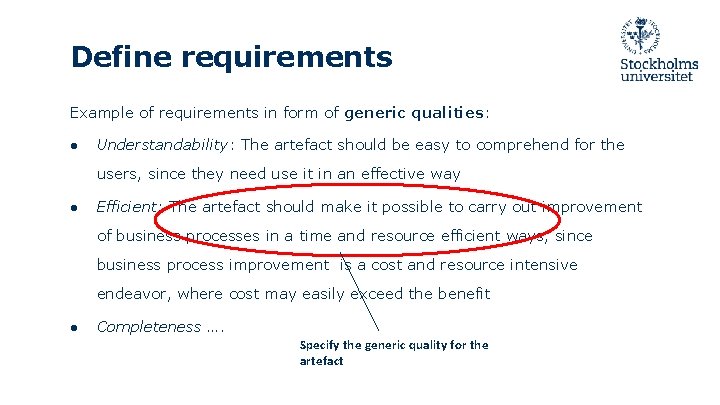
Define requirements Example of requirements in form of generic qualities: ● Understandability: The artefact should be easy to comprehend for the users, since they need use it in an effective way ● Efficient: The artefact should make it possible to carry out improvement of business processes in a time and resource efficient ways, since business process improvement is a cost and resource intensive endeavor, where cost may easily exceed the benefit ● Completeness …. Specify the generic quality for the artefact
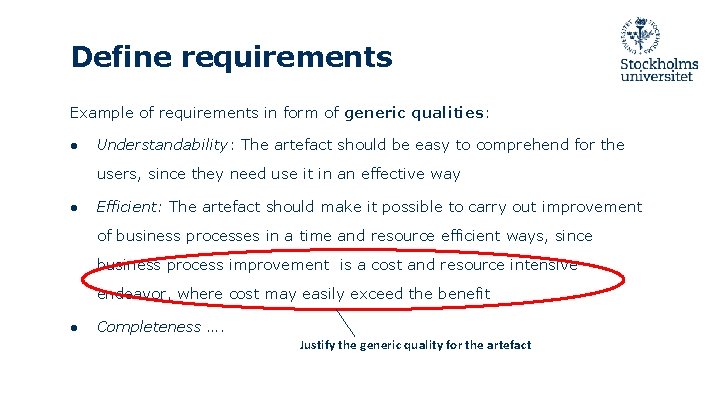
Define requirements Example of requirements in form of generic qualities: ● Understandability: The artefact should be easy to comprehend for the users, since they need use it in an effective way ● Efficient: The artefact should make it possible to carry out improvement of business processes in a time and resource efficient ways, since business process improvement is a cost and resource intensive endeavor, where cost may easily exceed the benefit ● Completeness …. Justify the generic quality for the artefact
A design science framework Initial problem Explicate problem Defining requirements can be seen as a transformation of the problem into demands on the proposed artefact. Explicated problem Define require- Requirements on Design and artefact develop Artefact artefact In this activity, the problem needs to be precisely formulated and justified by showing that it is significant for some practice This activity creates an artefact that addresses the explicated problem and fulfils the defined requirements. Demonstrate artefact Demonstrated artefact Evaluated artefact
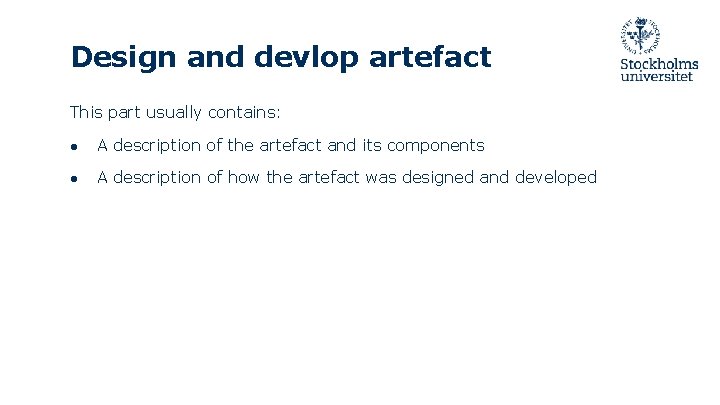
Design and devlop artefact This part usually contains: ● A description of the artefact and its components ● A description of how the artefact was designed and developed
A design science framework Initial problem Explicate problem Defining requirements can be seen as a transformation of the problem into demands on the proposed artefact. Explicated problem Define require- Requirements on Design and artefact develop Artefact artefact In this activity, the problem needs to be precisely formulated and justified by showing that it is significant for some practice This activity creates an artefact that addresses the explicated problem and fulfils the defined requirements. This activity uses the developed artefact in an illustrative or real-life case, sometimes called a “proof of concept”, thereby proving the feasibility of the artefact. Demonstrate artefact Demonstrated artefact Evaluated artefact
A design science framework Initial problem Explicate problem Defining requirements can be seen as a transformation of the problem into demands on the proposed artefact. Explicated problem Define require- Requirements on Design and artefact develop Artefact artefact In this activity, the problem needs to be precisely formulated and justified by showing that it is significant for some practice This activity creates an artefact that addresses the explicated problem and fulfils the defined requirements. This activity uses the developed artefact in an illustrative or real-life case, sometimes called a “proof of concept”, thereby proving the feasibility of the artefact. This activity determines how well the artefact fulfils the requirements and to what extent it can solve, or alleviate, the practical problem that motivated the research. Demonstrate artefact Demonstrated artefact Evaluated artefact
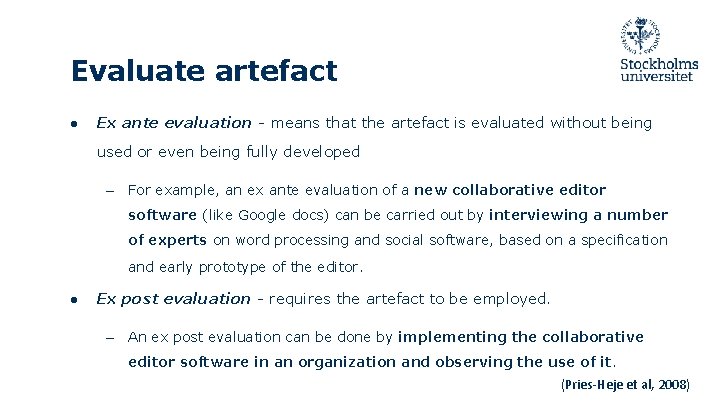
Evaluate artefact ● Ex ante evaluation - means that the artefact is evaluated without being used or even being fully developed – For example, an ex ante evaluation of a new collaborative editor software (like Google docs) can be carried out by interviewing a number of experts on word processing and social software, based on a specification and early prototype of the editor. ● Ex post evaluation - requires the artefact to be employed. – An ex post evaluation can be done by implementing the collaborative editor software in an organization and observing the use of it. (Pries-Heje et al, 2008)
Evaluate artefact ● Evaluate how the artefact fulfills each requirement, for example in form of strengths/benefits, weaknesses/drawbacks, and also suggested improvement ● Evaluate how the artefact addresses the overall practical problems, for example in form of strengths/benefits, weaknesses/drawbacks and suggested improvement
Evaluate artefact: Informed argument ● Informed argument - is an evaluation “method” presented in Hevner et al. (2004). ● Informed argument - is a lightweight evaluation method where the researchers who developed an artefact discuss its benefits and drawbacks, and by this argumentation show that it does (or does not) fulfil the defined requirements.
A design science framework Initial problem Explicated problem Define require- Requirements on Design and artefact develop Artefact artefact Demonstrated artefact Evaluated artefact
The design science framework ● IMPORTANT: The design science framework supports presentations of the research methodology: it presents the result of each activity. ● However, the design science framework is NOT a description of how the research has been carried out.
The design science framework ● The actual design science research can be carried out in different ways, for example: – often a design science research project is carried out using several iterations of design and evaluation (as in agile software development methods). This is not explicitly showed in the framework. The framework just present the result of each activity when the research project has been finished – the developed artefact may solve another problem than the first expected, therefore the original problem statement (and probably also the requirements) need to be changed
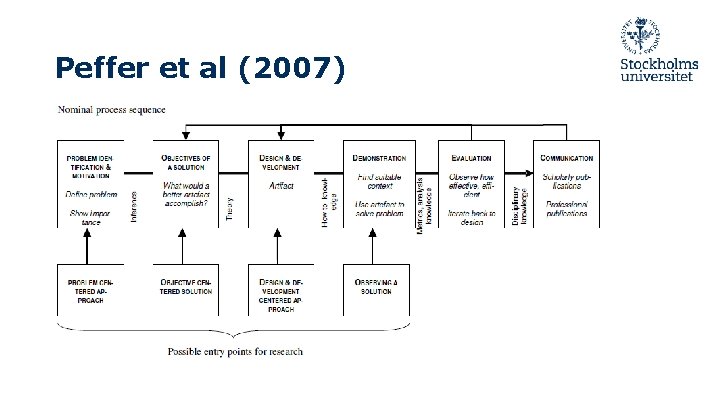
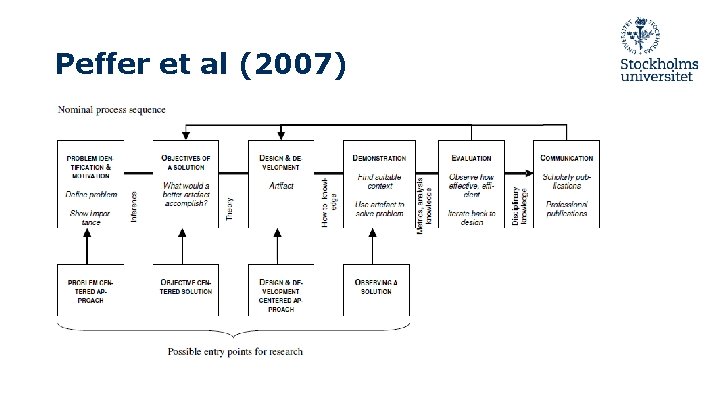
Peffer et al (2007)
Research strategies and methods Initial problem Explicated problem Define require- Requirements on Design and artefact develop Artefact artefact Demonstrated artefact Evaluated artefact
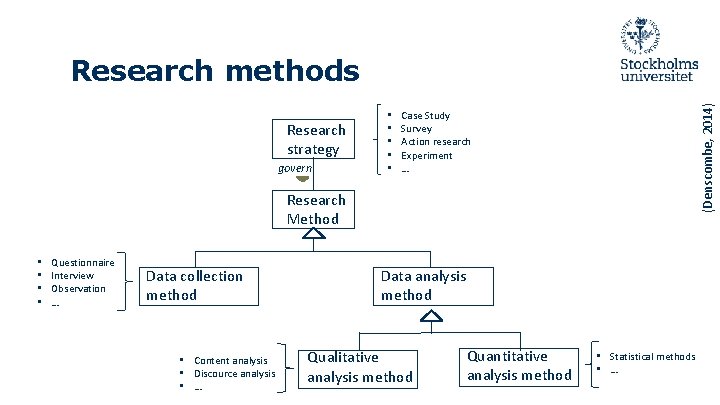
Research strategy govern • • • (Denscombe, 2014) Research methods Case Study Survey Action research Experiment … Research Method • • Questionnaire Interview Observation … Data collection method • Content analysis • Discource analysis • … Data analysis method Qualitative analysis method Quantitative analysis method • Statistical methods • …
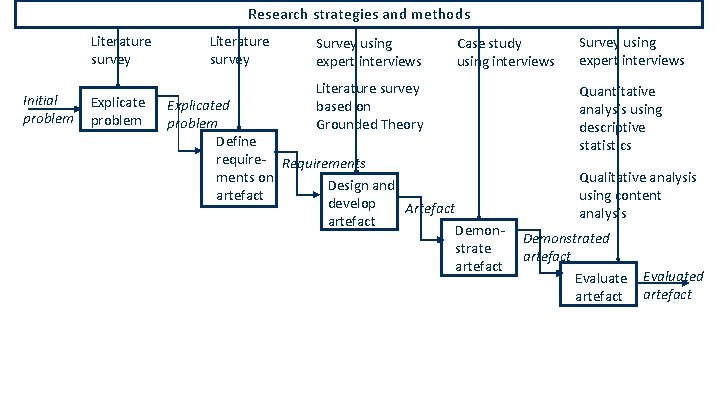
Research strategies and methods Literature survey Initial problem Explicate problem Literature survey Survey using expert interviews Case study using interviews Literature survey based on Grounded Theory Explicated problem Define require- Requirements on Design and artefact develop Artefact artefact Survey using expert interviews Quantitative analysis using descriptive statistics Demonstrate artefact Qualitative analysis using content analysis Demonstrated artefact Evaluated artefact
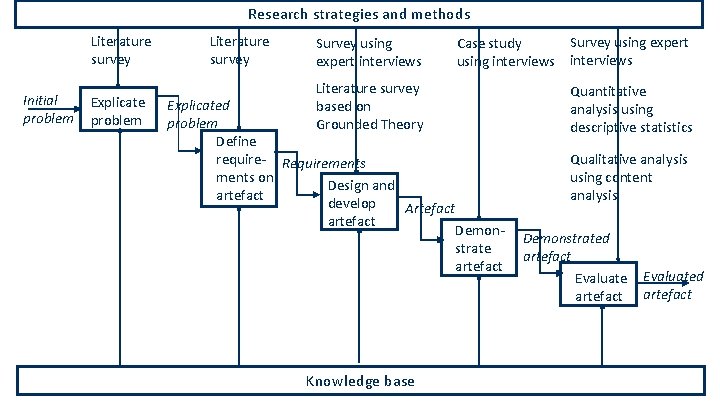
Research strategies and methods Literature survey Initial problem Explicate problem Literature survey Survey using expert interviews Survey using expert Case study using interviews Literature survey based on Grounded Theory Quantitative analysis using descriptive statistics Explicated problem Define require- Requirements on Design and artefact develop Artefact artefact Knowledge base Qualitative analysis using content analysis Demonstrate artefact Demonstrated artefact Evaluated artefact
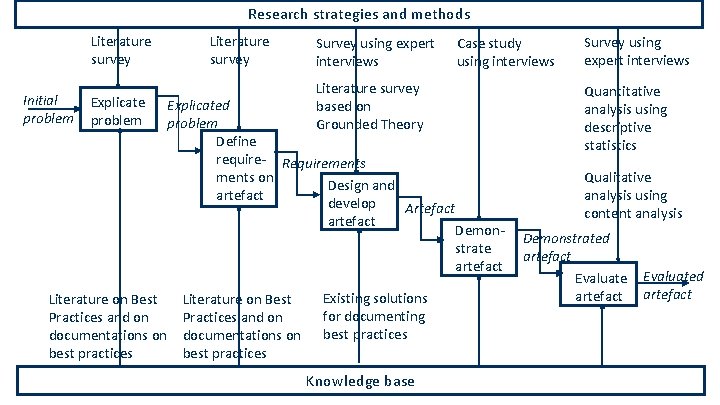
Research strategies and methods Literature survey Initial problem Explicate problem Survey using expert interviews Literature survey based on Grounded Theory Explicated problem Define require- Requirements on Design and artefact develop Artefact artefact Literature on Best Practices and on documentations on best practices Case study using interviews Literature on Best Practices and on documentations on best practices Existing solutions for documenting best practices Knowledge base Survey using expert interviews Quantitative analysis using descriptive statistics Demonstrate artefact Qualitative analysis using content analysis Demonstrated artefact Evaluated artefact
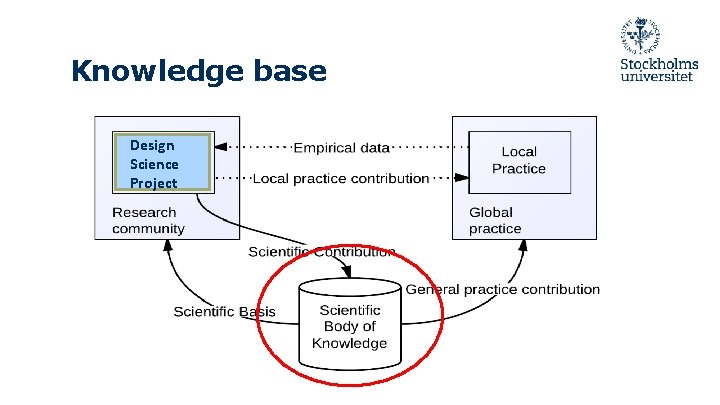
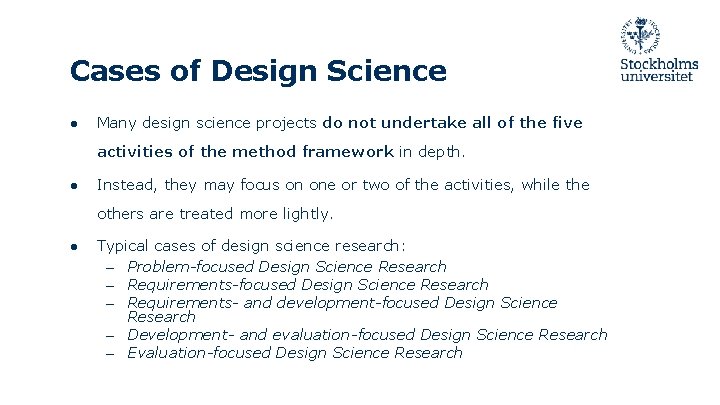
Knowledge base Design Science Project
Cases of Design Science ● Many design science projects do not undertake all of the five activities of the method framework in depth. ● Instead, they may focus on one or two of the activities, while the others are treated more lightly. ● Typical cases of design science research: – Problem-focused Design Science Research – Requirements- and development-focused Design Science Research – Development- and evaluation-focused Design Science Research – Evaluation-focused Design Science Research
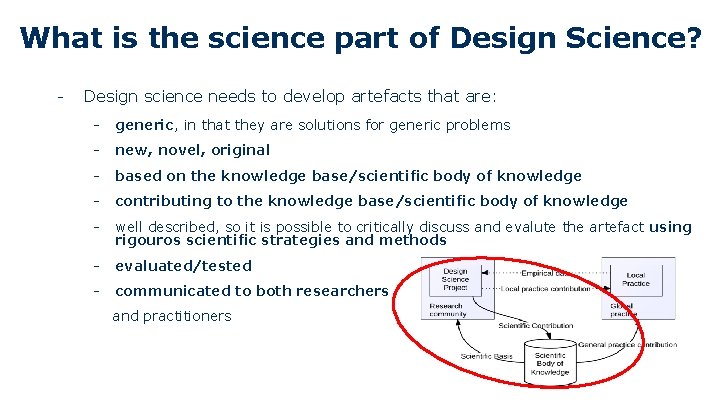
What is the science part of Design Science? - Design science needs to develop artefacts that are: - generic, in that they are solutions for generic problems - new, novel, original - based on the knowledge base/scientific body of knowledge - contributing to the knowledge base/scientific body of knowledge - well described, so it is possible to critically discuss and evalute the artefact using rigouros scientific strategies and methods - evaluated/tested - communicated to both researchers and practitioners
An master thesis example of Design Science Research
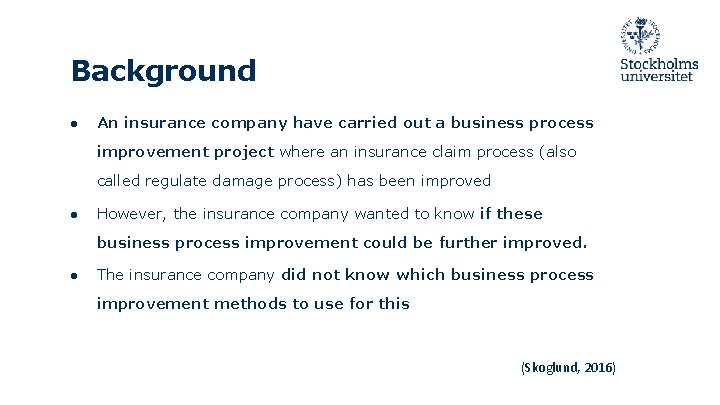
Background ● An insurance company have carried out a business process improvement project where an insurance claim process (also called regulate damage process) has been improved ● However, the insurance company wanted to know if these business process improvement could be further improved. ● The insurance company did not know which business process improvement methods to use for this (Skoglund, 2016)
Research problem ● The research problem that thesis addresses is that it is difficult for an organization to find a business improvement method (BPI) that best suites the organization at hand, either by choosing an existing BPI method or selecting a combination of different existing BPI methods.
Research goal ● The goal of this thesis is to design and evaluate a BPI framework that supports practitioners to find an appropriate BPI method, either by choosing an existing BPI method or select a combination of parts from existing BPI methods
Requirements ● Understandability: The BPI framework should be easy to comprehend for the users, which are mainly business managers, business analysts, business process designers, IT managers, and requirement engineers. The reason for this requirement is that the BPI framework will be used by employees in these roles in an organization. ● Reflection and sense making: The BPI framework should support reflection and sense making of doing BPI, including alternative ways of carrying out BPI. The reason for this requirement is that BPI is a complex endeavor that requires that the employees involved in the BPI project mange different issues that may arise
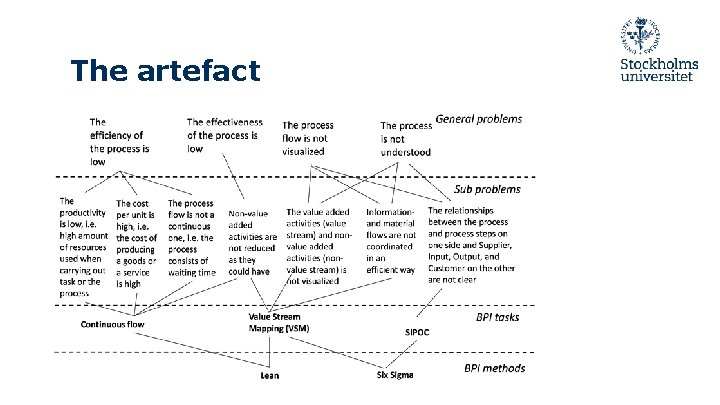
The artefact ● The artefact was a BPI framework consists of various BPI tasks from different BPI methods, more precisely Six Sigma and Lean, and from a method called manage duplicate systems. ● The framework also consists of goal and problem statements related to the BPI tasks, and these goal and problem statements are represented as goal and problem models. ● These goals and problem models aim to support the selection, combination, and application of the BPI tasks given a situation at hand.
The artefact
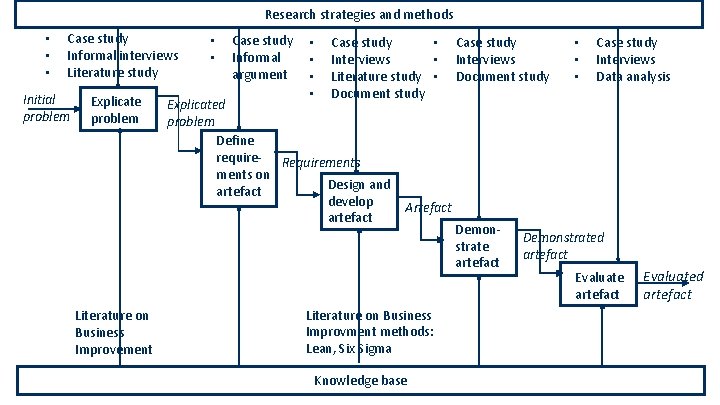
Research strategies and methods • • • Case study Informal interviews Literature study Initial problem Explicate problem Literature on Business Improvement • • Case study Informal argument • • • Case study • Interviews Literature study • Document study Explicated problem Define require- Requirements on Design and artefact develop Artefact artefact Literature on Business Improvment methods: Lean, Six Sigma Knowledge base Case study Interviews Document study Demonstrate artefact • • • Case study Interviews Data analysis Demonstrated artefact Evaluated artefact
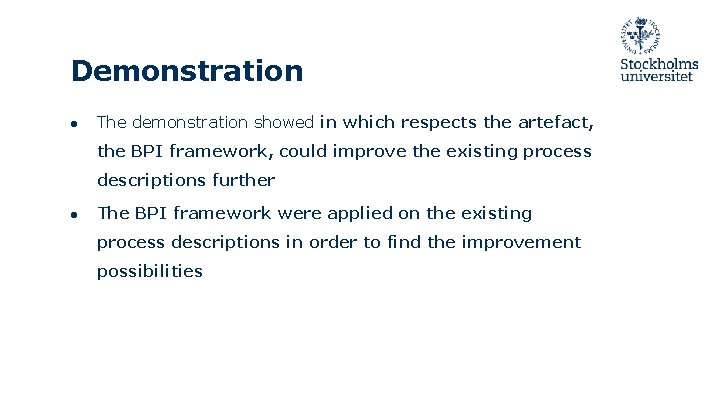
Demonstration ● The demonstration showed in which respects the artefact, the BPI framework, could improve the existing process descriptions further ● The BPI framework were applied on the existing process descriptions in order to find the improvement possibilities
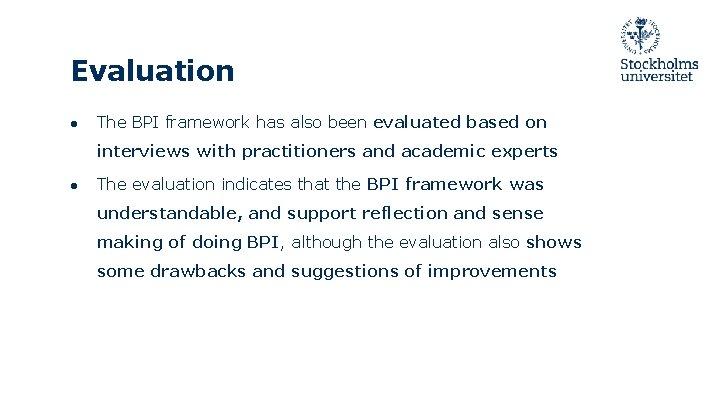
Evaluation ● The BPI framework has also been evaluated based on interviews with practitioners and academic experts ● The evaluation indicates that the BPI framework was understandable, and support reflection and sense making of doing BPI, although the evaluation also shows some drawbacks and suggestions of improvements
Positioning Design Science
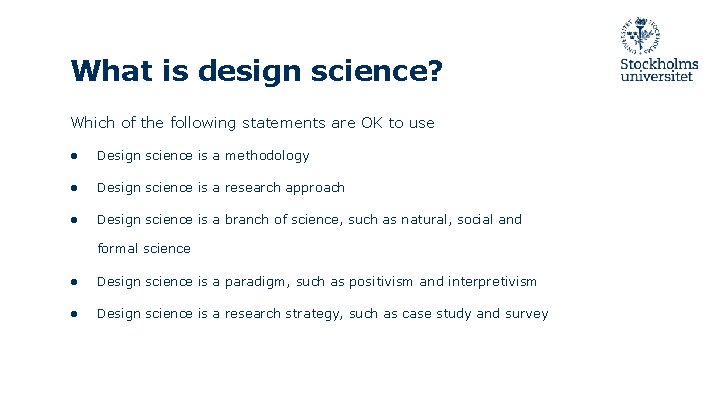
What is design science? Which of the following statements are OK to use ● Design science is a methodology ● Design science is a research approach ● Design science is a branch of science, such as natural, social and formal science ● Design science is a paradigm, such as positivism and interpretivism ● Design science is a research strategy, such as case study and survey
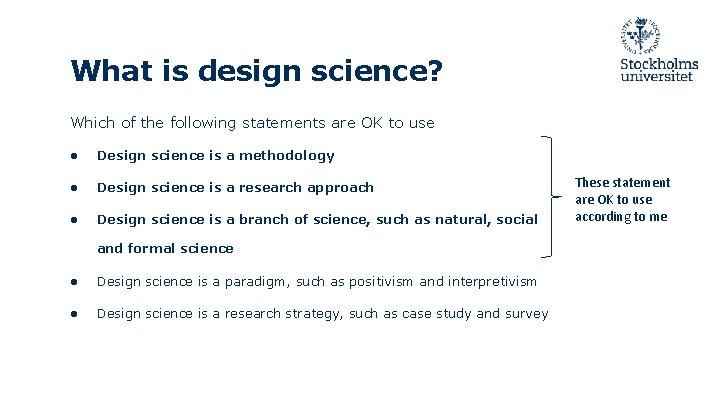
What is design science? Which of the following statements are OK to use ● Design science is a methodology ● Design science is a research approach ● Design science is a branch of science, such as natural, social and formal science ● Design science is a paradigm, such as positivism and interpretivism ● Design science is a research strategy, such as case study and survey These statement are OK to use according to me
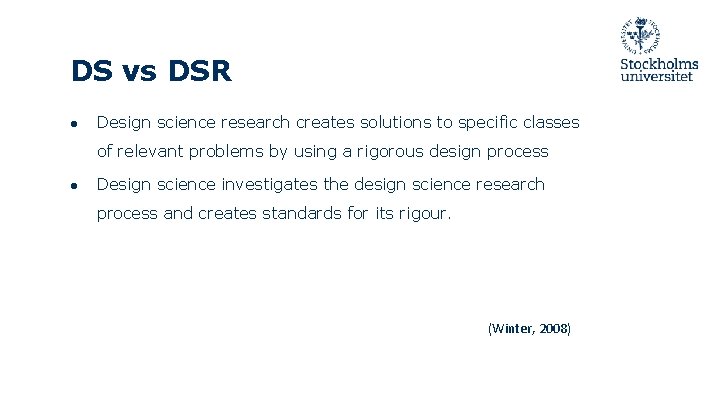
DS vs DSR ● Design science research creates solutions to specific classes of relevant problems by using a rigorous design process ● Design science investigates the design science research process and creates standards for its rigour. (Winter, 2008)
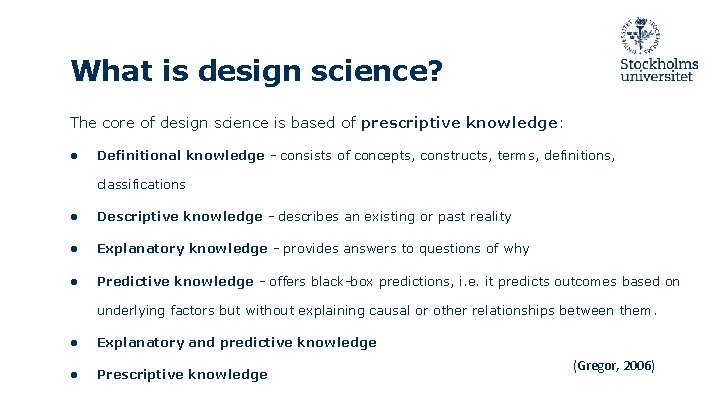
What is design science? The core of design science is based of prescriptive knowledge: ● Definitional knowledge - consists of concepts, constructs, terms, definitions, classifications ● Descriptive knowledge - describes an existing or past reality ● Explanatory knowledge - provides answers to questions of why ● Predictive knowledge - offers black-box predictions, i. e. it predicts outcomes based on underlying factors but without explaining causal or other relationships between them. ● Explanatory and predictive knowledge ● Prescriptive knowledge (Gregor, 2006)
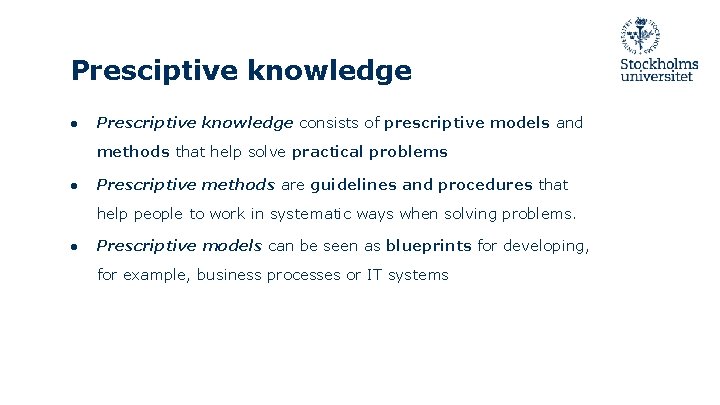
Presciptive knowledge ● Prescriptive knowledge consists of prescriptive models and methods that help solve practical problems ● Prescriptive methods are guidelines and procedures that help people to work in systematic ways when solving problems. ● Prescriptive models can be seen as blueprints for developing, for example, business processes or IT systems
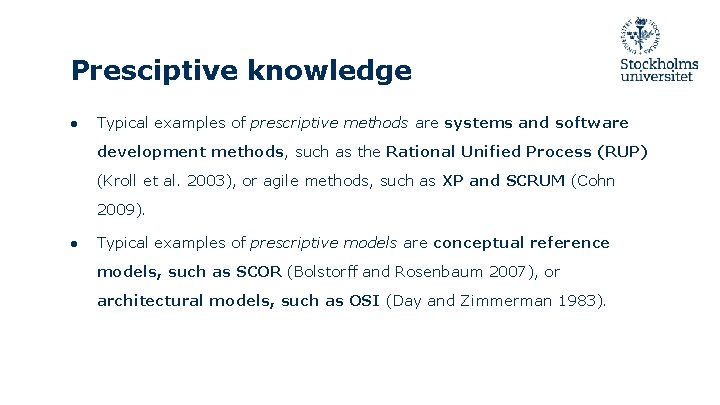
Presciptive knowledge ● Typical examples of prescriptive methods are systems and software development methods, such as the Rational Unified Process (RUP) (Kroll et al. 2003), or agile methods, such as XP and SCRUM (Cohn 2009). ● Typical examples of prescriptive models are conceptual reference models, such as SCOR (Bolstorff and Rosenbaum 2007), or architectural models, such as OSI (Day and Zimmerman 1983).
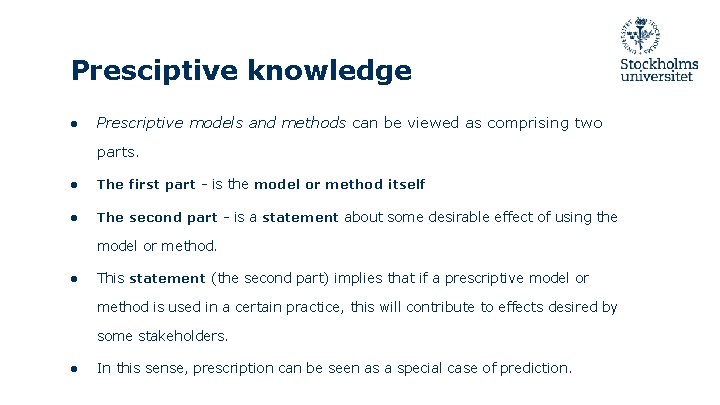
Presciptive knowledge ● Prescriptive models and methods can be viewed as comprising two parts. ● The first part - is the model or method itself ● The second part - is a statement about some desirable effect of using the model or method. ● This statement (the second part) implies that if a prescriptive model or method is used in a certain practice, this will contribute to effects desired by some stakeholders. ● In this sense, prescription can be seen as a special case of prediction.
Presciptive knowledge ● Examples of prescriptive knowledge: – Apply sun lotion before sun bathing! – Develop your software system iteratively!
Seminal Research Papers about Design Science
Some seminal research papers ● Hevner AR, March ST, Park J, Ram S (2004) Design science in information systems research. MIS Quarterly 28: 75– 105 ● Peffers K, Tuunanen T, Rothenberger MA, Chatterjee S (2007) A Design Science Research Methodology for Information Systems Research. Journal of Management Information Systems 24: 45– 77 ● Sein M, Henfridsson O, Purao S, et al. (2011) Action Design Research. Management Information Systems Quarterly 35: 37– 56 ● Gregor S, Jones D (2007) The Anatomy of a Design Science Theory. Journal of the Association for Information Systems 8: 312– 335
Hevner et al (2004) ● Make a distinction between two paradigm that characterize much of the research in the information systems discipline: behavioural science and design science ● Introduce seven guidelines for understanding, executing, and evaluating design science research ● These seven guidelines can be used for summarizing the design science research
Peffer et al (2007)
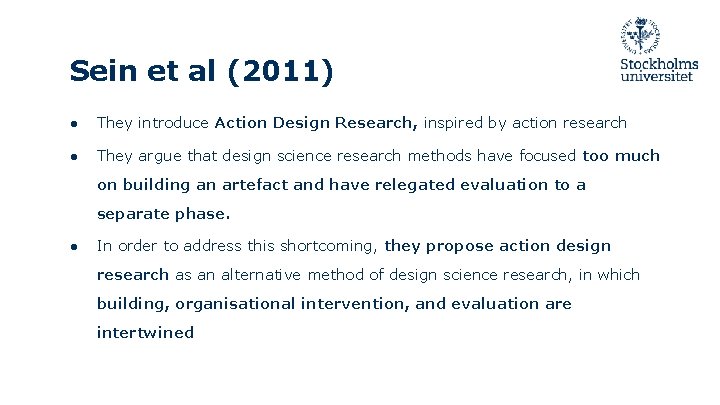
Sein et al (2011) ● They introduce Action Design Research, inspired by action research ● They argue that design science research methods have focused too much on building an artefact and have relegated evaluation to a separate phase. ● In order to address this shortcoming, they propose action design research as an alternative method of design science research, in which building, organisational intervention, and evaluation are intertwined
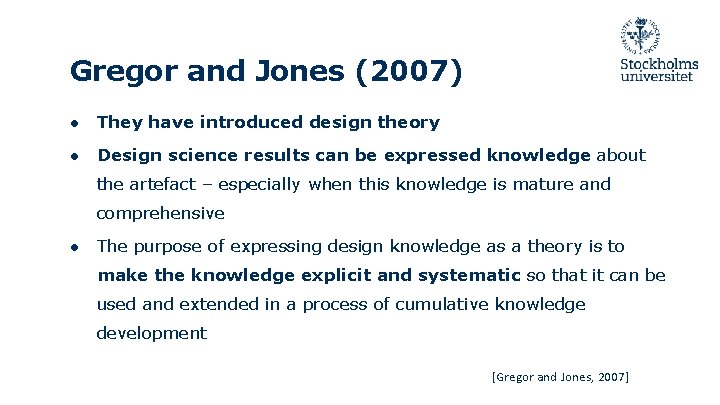
Gregor and Jones (2007) ● They have introduced design theory ● Design science results can be expressed knowledge about the artefact – especially when this knowledge is mature and comprehensive ● The purpose of expressing design knowledge as a theory is to make the knowledge explicit and systematic so that it can be used and extended in a process of cumulative knowledge development [Gregor and Jones, 2007]
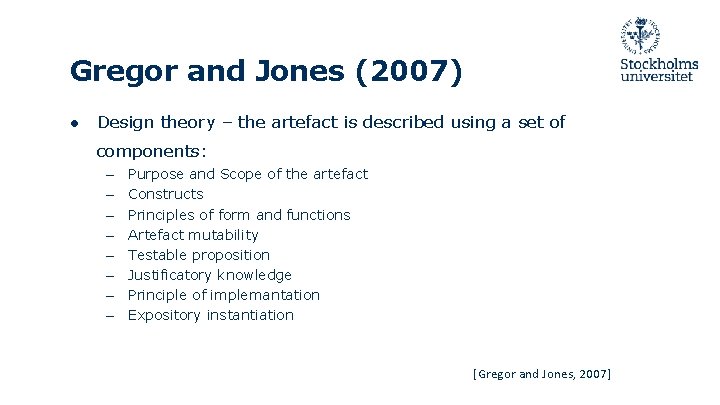
Gregor and Jones (2007) ● Design theory – the artefact is described using a set of components: – – – – Purpose and Scope of the artefact Constructs Principles of form and functions Artefact mutability Testable proposition Justificatory knowledge Principle of implemantation Expository instantiation [Gregor and Jones, 2007]
Book and presentations Johannesson, P. , & Perjons, E. (2014). An introduction to design science. Springer. Presentation of the major chapters: https: //introtodesignscience. wordpress. com/