
INTRODUCTION TO DENTAL MATERIALS IDEAL REQUIREMENTS OF DENTAL






- Slides: 48
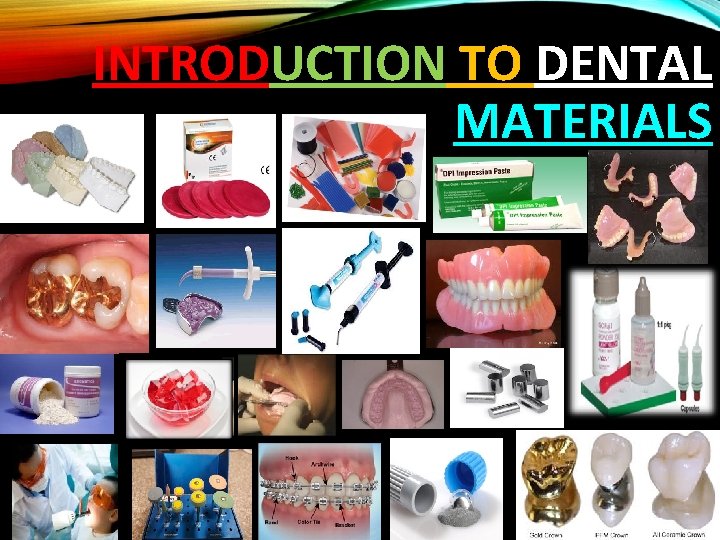
INTRODUCTION TO DENTAL MATERIALS
IDEAL REQUIREMENTS OF DENTAL MATERIALS • Biological Requirements • Chemical Requirements • Rheological Requirements • Mechanical Requirements • Miscellaneous Requirements
BIOLOGICAL REQUIREMENTS • Should be non-toxic, & non-irritant to the oral tissues & other tissues. • Should not produce allergic reaction. • Should not be carcinogenic.
CHEMICAL REQUIREMENTS • Should be chemically inert. • Should not dissolve or disintegrate in saliva & other fluids. • Should not undergo tarnish & corrosion.
RHEOLOGICAL REQUIREMENTS Ø Have sufficient flow during insertion in to the mouth , to get accurate reproduction of details Ø Sufficient fluid to adapt to the oral tissue Ø Viscosity should increase quickly Ø Have longer working and shorter setting time in the mouth.
MECHANICAL REQUIREMENTS • Should have sufficient strength. • Should be rigid. • Should have sufficient hardness and abrasion resistance. • Should not be brittle.
Miscellaneous properties : ØEasy to use with minimum of equipment. ØAdequate shelf life. ØShould have longer working times and shorter setting times ØCompatibility with cast and die materials. ØGood dimensional stability during setting.
CLASSIFICATION OF DENTAL MATERIAL • Preventive dental materials • Restorative dental materials • Auxiliary dental materials
1. PREVENTIVE DENTAL MATERIALS • Materials used primarily for their antibacterial effects. • Pit and Fissure Sealants • Sealing agents that prevent leakage • Liners, bases, cements and restorative materials that are used primarily because they release fluoride. • Chlorhexidine or otherapeutic agents used to prevent or inhibit the progression of tooth decay.
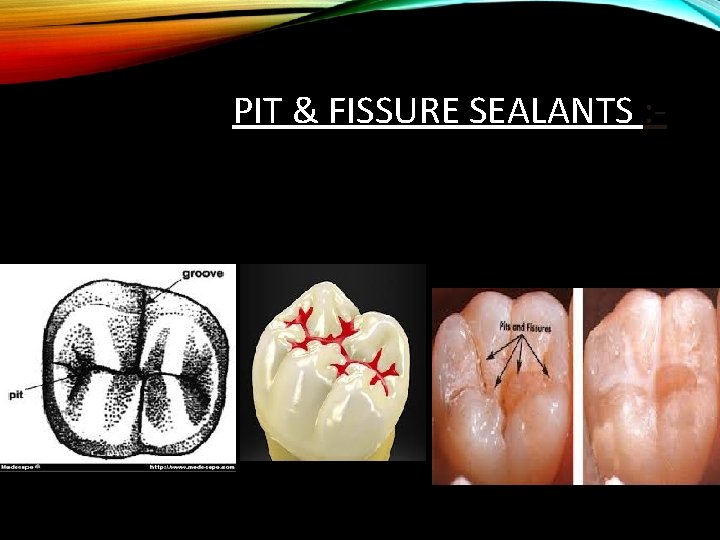
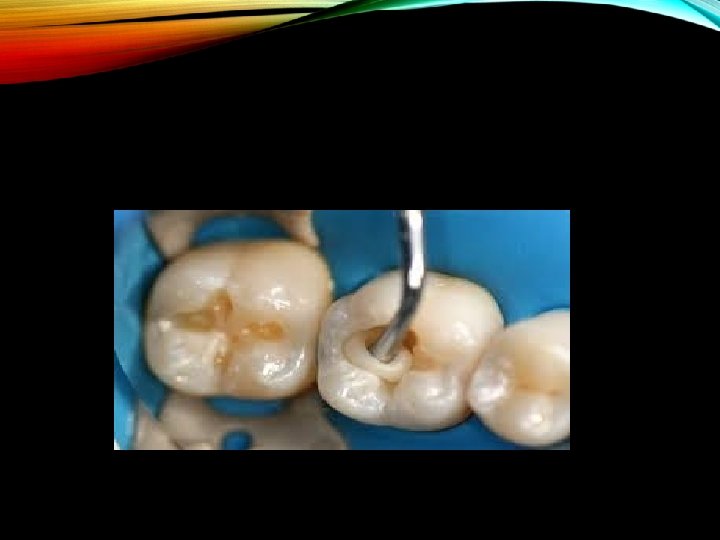
PIT AND FISSURE SEALANTS : - • Small pits & fissure areas on the occlusal surface of the deciduous & permanent teeth • Where food debris gets collected , which initiates the decay • Pits & fissures are sealed with sealants (composites or GIC-type IV ) as conservative measures • Material used –GIC type –iv , flowable composite resin.
PIT & FISSURE SEALANTS : -
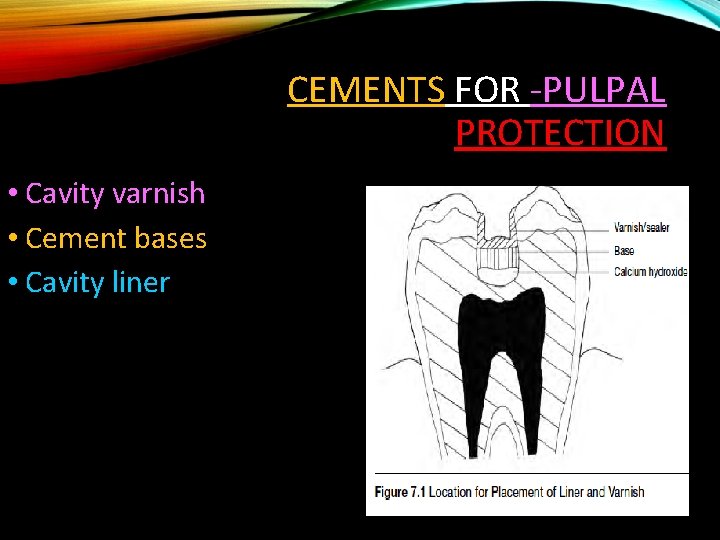
CEMENTS FOR -PULPAL PROTECTION • Cavity varnish • Cement bases • Cavity liner
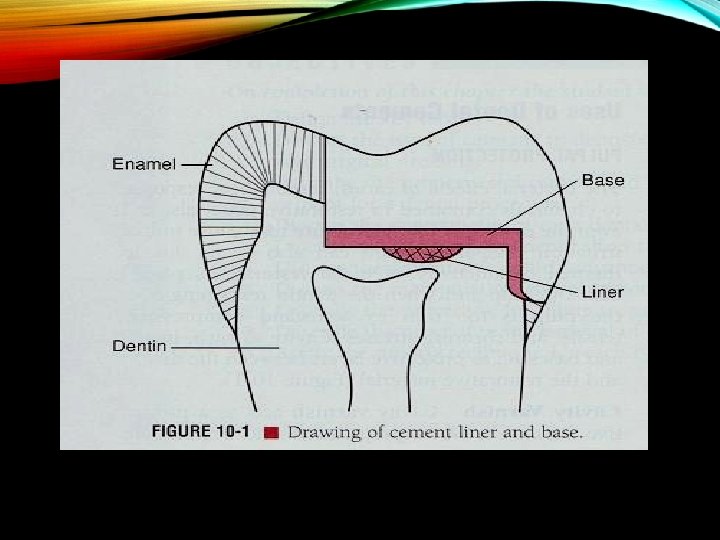
CAVITY LINERS • Are thin suspension of Ca(OH)2 , Zn. OE or GIC III applied as a coating on the exposed dentin to neutralize the penetrating acid ions , from acidic restorations • Used to coat the walls & floors of the prepared cavity to protect the underlying dentin & pulp from chemical irritation
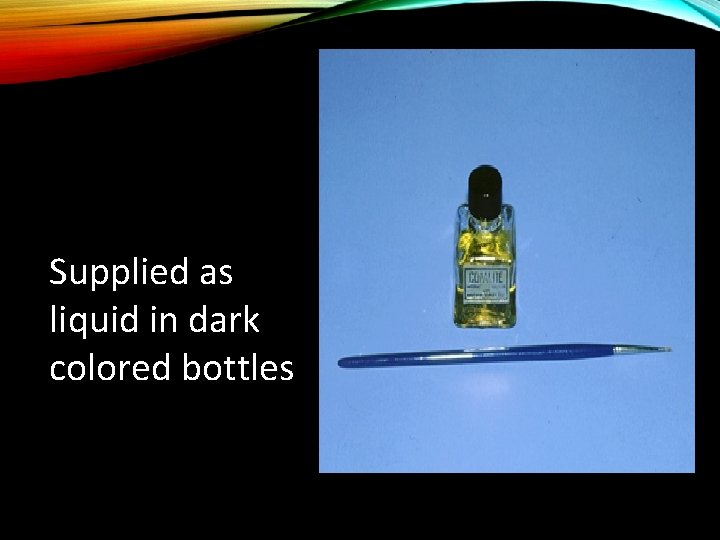
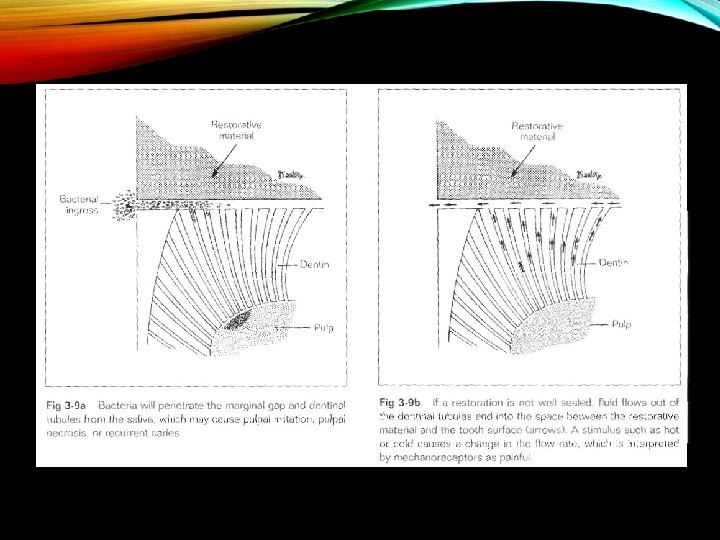
CAVITY VARNISH Varnish is a organic gums or rosin suspended in organic solution like ether or chloroform. When applied on the tooth surface the organic solvent evaporates leaving behind a thin protective film. Provides a barrier against passage of irritants from the restorative material & reduces micro leakage. Supplied as liquid in dark colored bottles
Supplied as liquid in dark colored bottles.
• Preventive material : -
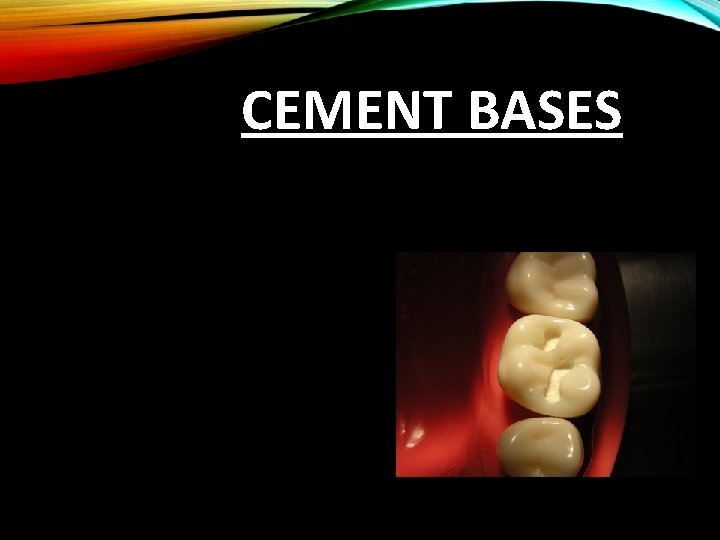
CEMENT BASES
CEMENT BASES § In contrast to liner , cement bases are applied in thick layer (> 0. 75 -2 mm) beneath the restorative material to protect the pulp against chemical , thermal injury, electrical – galvanic shock & mechanical (such as condensation of amalgam or biting force) § – Znoe type- 1, zinc phosphate, zinc poly carboxyl ate, GIC type 3
MATERIAL USED § Low strength bases - Ca(OH)2, Zn. OE(Type-I) § High strength bases – Zn. OE (type – III) , zinc phosphate, zinc polycarboxylate, & GIC (type –II)
2. AUXILIARY DENTAL MATERIALS • Substances used in the process of fabricating dental prostheses and appliances but do not become part of these devices. • Impression materials, casting investments, gypsum cast, and model materials, dental waxes, finishing and polishing abrasives.
AUXILIARY DENTAL MATERIAL : -
3. Restorative Dental Materials : Ø Material is used to replace or restore the missing tooth structure and to restore the form and function of the tooth are termed as restorative material • E. g. : - dental cement, dental amalgam, composite resins , DFG
RESTORATIVE DENTAL MATERIALS • Types : 1. Direct restorative materials 2. Indirect restorative materials
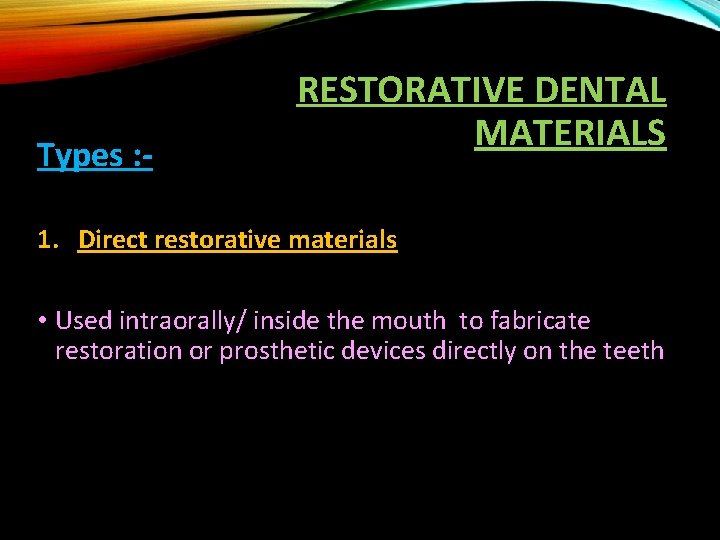
Types : - RESTORATIVE DENTAL MATERIALS 1. Direct restorative materials • Used intraorally/ inside the mouth to fabricate restoration or prosthetic devices directly on the teeth
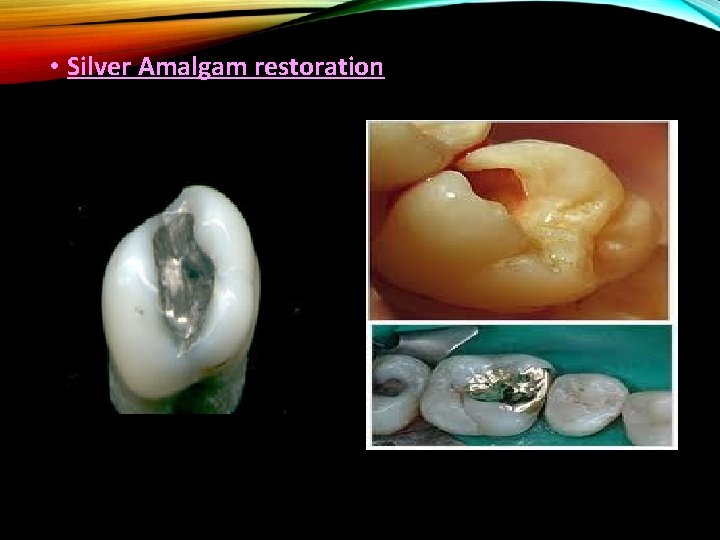
• Silver Amalgam restoration
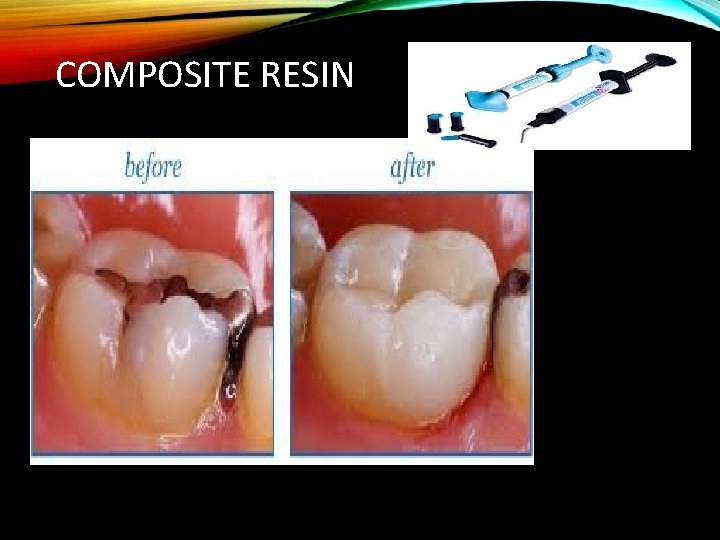
COMPOSITE RESIN
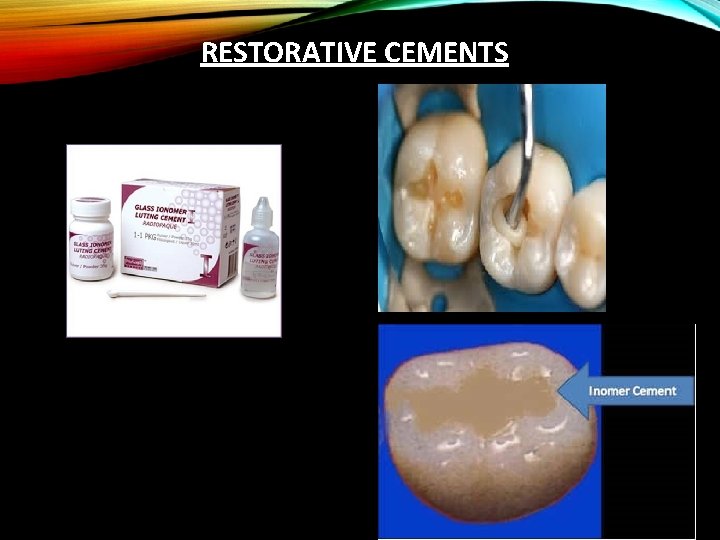
RESTORATIVE CEMENTS
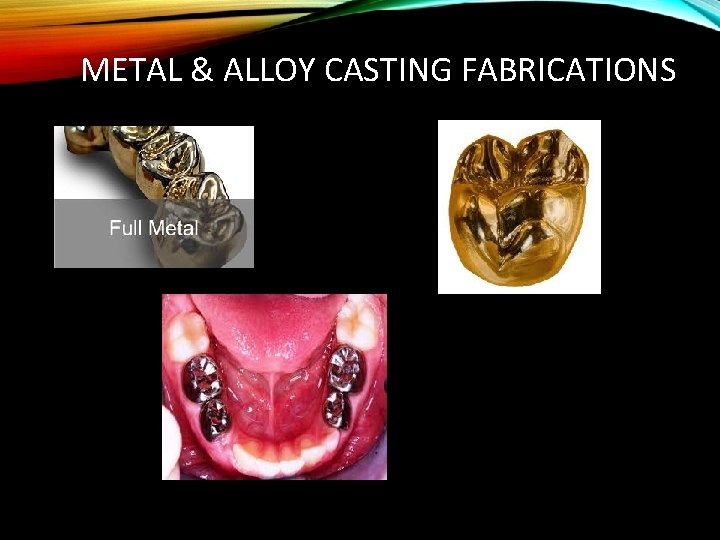
Types : - RESTORATIVE DENTAL MATERIALS 2. Indirect restorative materials • Made extraorally / out side the mouth on models of teeth & then cemented into the place in the mouth
METAL & ALLOY CASTING FABRICATIONS
VARIOUS RESTORATIONS : • • • Anterior restorations Posterior restorations Temporary restorations Intermediate restorations Permanent restoration
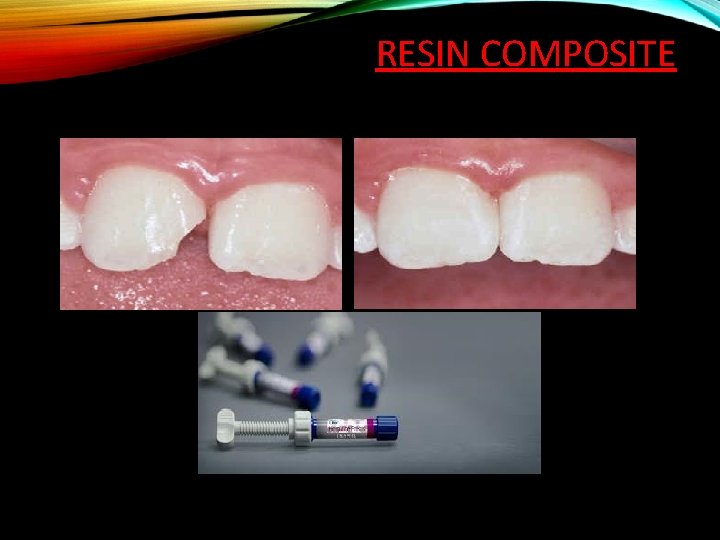
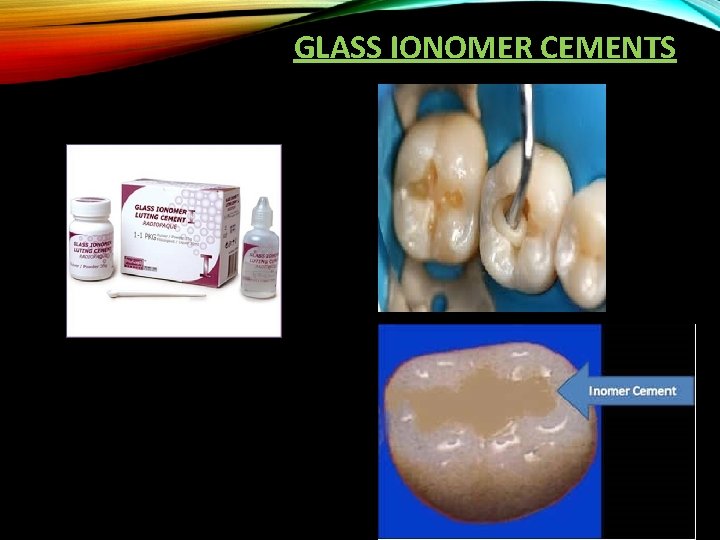
ANTERIOR RESTORATIONS : • Appearance & esthetic with durability is the primary criteria for selection of anterior restorative material • Strength is the secondary factor because as they are not subjected to high biting forces • E. g. : - composite resin , dental ceramic , GIC cement
RESIN COMPOSITE
ALL CERAMIC RESTORATION
GLASS IONOMER CEMENTS
POSTERIOR RESTORATIONS: • Strength is the main factor for selecting the posterior restorative material • E. g. : - DFG , Dental amalgam , hybrid composite, metal ceramic, HN, N, PBM alloy casting, modified GIC
TEMPORARY RESTORATIONS : • Expected to last for only a short period of time few days to few weeks • Used for reducing the post operative sensitivity before the insertion of permanent restoration • Objective is to protect the pulp & reduce the pulpal inflammation • E. g. : - Zn. OE- type III , Calcium hydroxide
REQUIREMENTS OF A TEMPORARY FILLING MATERIAL 1. Obtundent to reduce postoperative sensitivity 2. Low compressive strength less than 35 Mpa to facilitate removal because last for few weeks. 3. Should be easy to insert and remove. 4. Should have adequate marginal seal. 5. Should have antibacterial & cariostatic properties. 6. Should have a beneficial effect (pain relief, healing, etc. ) on the pulp.
INTERMEDIATE RESTORATIONS: • Also known as holding type or Semi permanent restoration • Given for weeks to month, if the fabrication procedure requires longer time (few months) in case of complicated procedure • or • Used particularly in pedodontics , for treating rampant caries
RAMPANT CARIES : -
• These materials should have higher strength than temporary restorations • E. g. : - zinc phosphate cement, resin bonded Zno. E , zinc polycarboxylate, GIC, Zinc silico-phosphate cement
PERMANENT RESTORATION: • Are intended to satisfy the objectives of the restoration for a periods of 20 -30 years or longer • Must have improved properties than temporary & intermediate restorations • Should have the properties similar to that of tooth structure. • Have very strong bonding to tooth structures, & high strength.
• E. g. – Amalgam , hybrid composite, GIC for non stress bearing areas, indirect restorations ( gold inlays, crowns) , DFG , HN, N, PBM alloy casting etc
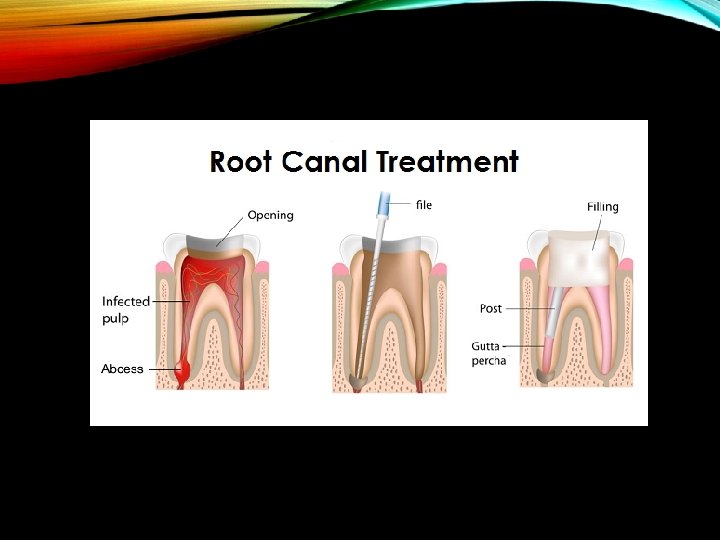
ROOT CANAL – ENDODONTIC MATERIAL • These are permanent restorative material intended to obturate the pulp space of the tooth • Treatment involves removal of the pulp , sterilization of the root canal , cleaning ( preparing ) root canal & filling with Gutta Percha & silver points • Then root canal is sealed with Zn. OE cement
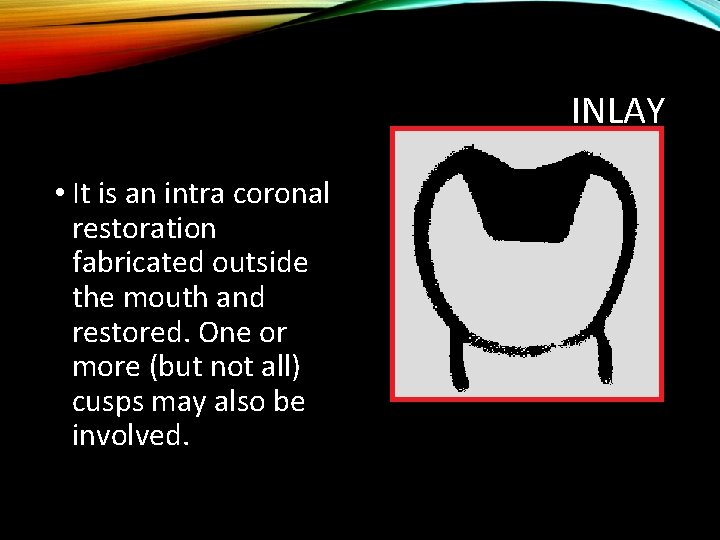
INLAY • It is an intra coronal restoration fabricated outside the mouth and restored. One or more (but not all) cusps may also be involved.