
Introduction to Demand Components of Demand Demand Price
- Slides: 8
Introduction to Demand
Components of Demand • • • Demand Price and Quantity Demanded Law of Demand The Demand Curve Determinants of Demand
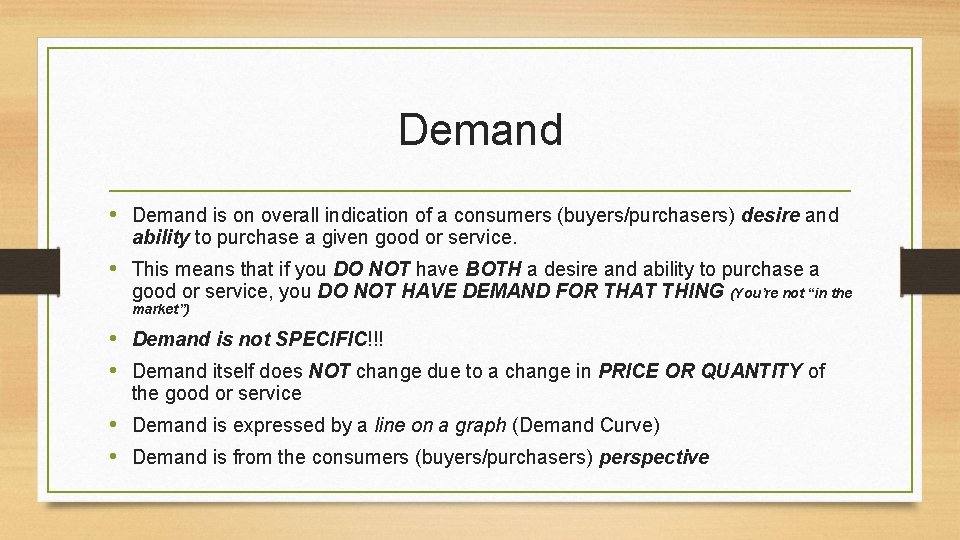
Demand • Demand is on overall indication of a consumers (buyers/purchasers) desire and ability to purchase a given good or service. • This means that if you DO NOT have BOTH a desire and ability to purchase a good or service, you DO NOT HAVE DEMAND FOR THAT THING (You’re not “in the market”) • Demand is not SPECIFIC!!! • Demand itself does NOT change due to a change in PRICE OR QUANTITY of the good or service • Demand is expressed by a line on a graph (Demand Curve) • Demand is from the consumers (buyers/purchasers) perspective
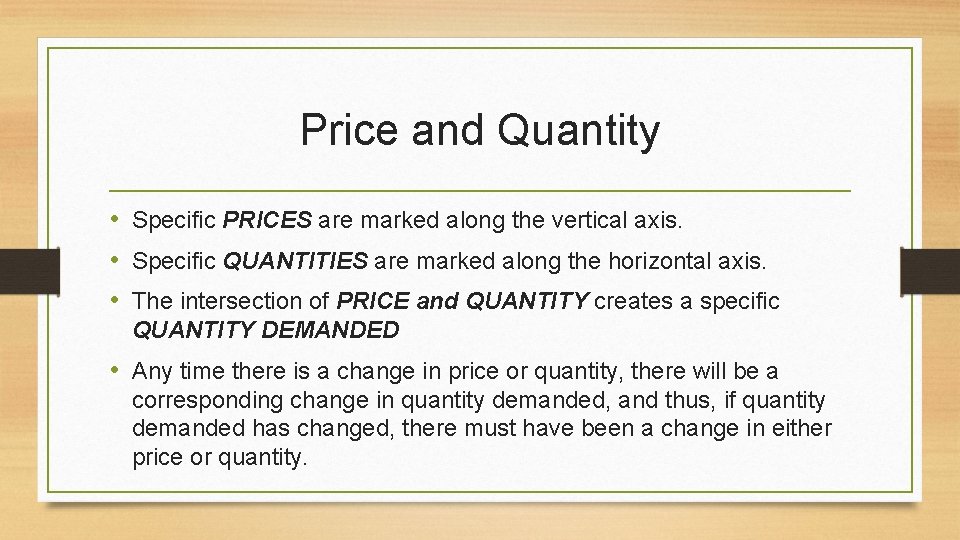
Price and Quantity • Specific PRICES are marked along the vertical axis. • Specific QUANTITIES are marked along the horizontal axis. • The intersection of PRICE and QUANTITY creates a specific QUANTITY DEMANDED • Any time there is a change in price or quantity, there will be a corresponding change in quantity demanded, and thus, if quantity demanded has changed, there must have been a change in either price or quantity.
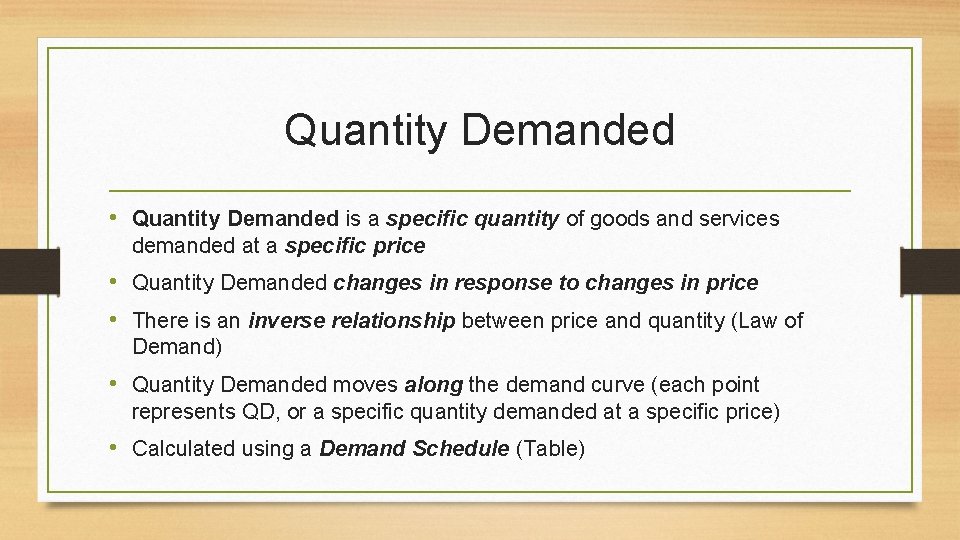
Quantity Demanded • Quantity Demanded is a specific quantity of goods and services demanded at a specific price • Quantity Demanded changes in response to changes in price • There is an inverse relationship between price and quantity (Law of Demand) • Quantity Demanded moves along the demand curve (each point represents QD, or a specific quantity demanded at a specific price) • Calculated using a Demand Schedule (Table)
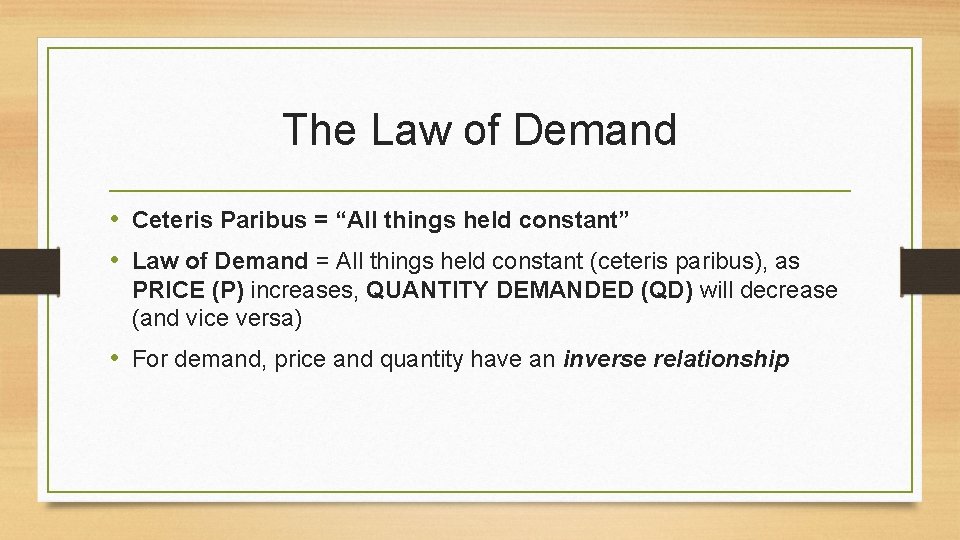
The Law of Demand • Ceteris Paribus = “All things held constant” • Law of Demand = All things held constant (ceteris paribus), as PRICE (P) increases, QUANTITY DEMANDED (QD) will decrease (and vice versa) • For demand, price and quantity have an inverse relationship
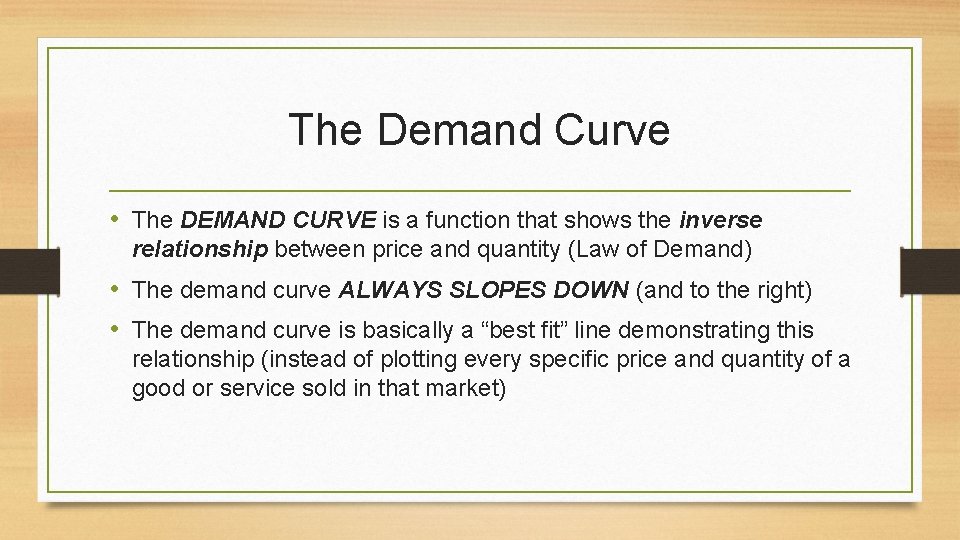
The Demand Curve • The DEMAND CURVE is a function that shows the inverse relationship between price and quantity (Law of Demand) • The demand curve ALWAYS SLOPES DOWN (and to the right) • The demand curve is basically a “best fit” line demonstrating this relationship (instead of plotting every specific price and quantity of a good or service sold in that market)
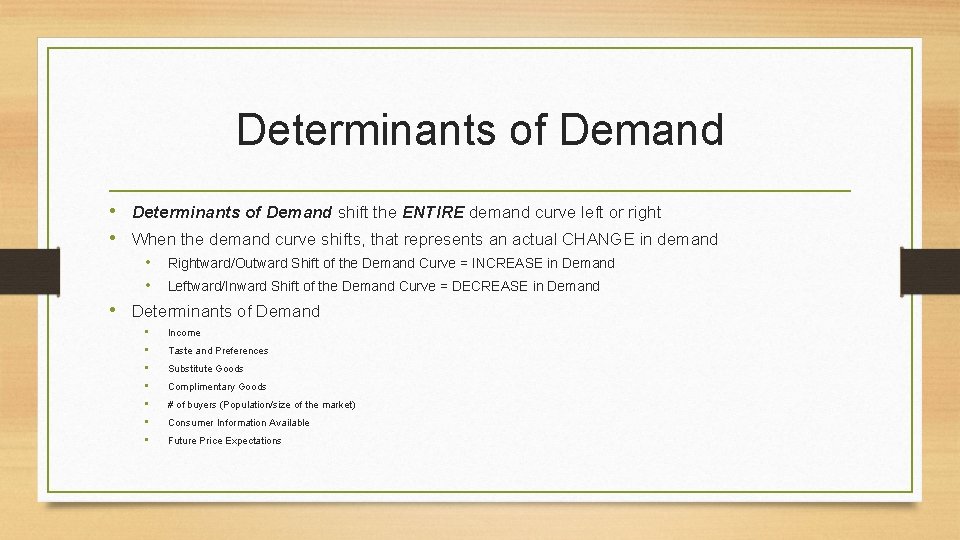
Determinants of Demand • Determinants of Demand shift the ENTIRE demand curve left or right • When the demand curve shifts, that represents an actual CHANGE in demand • • Rightward/Outward Shift of the Demand Curve = INCREASE in Demand Leftward/Inward Shift of the Demand Curve = DECREASE in Demand • Determinants of Demand • • Income Taste and Preferences Substitute Goods Complimentary Goods # of buyers (Population/size of the market) Consumer Information Available Future Price Expectations