
Introduction to Cultural Responsiveness A Training Tool A





- Slides: 48
Introduction to Cultural Responsiveness A Training Tool A Service of the Children’s Bureau, a member of the T/TA Network
Overview
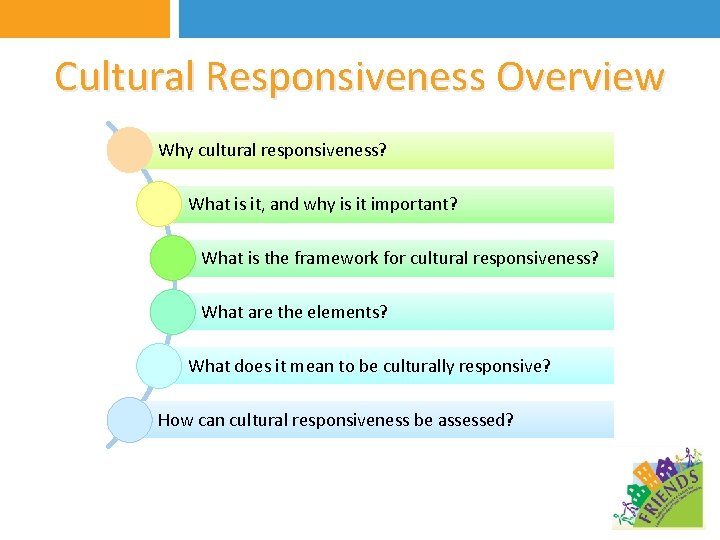
Cultural Responsiveness Overview Why cultural responsiveness? What is it, and why is it important? What is the framework for cultural responsiveness? What are the elements? What does it mean to be culturally responsive? How can cultural responsiveness be assessed?
Why Cultural Responsiveness?
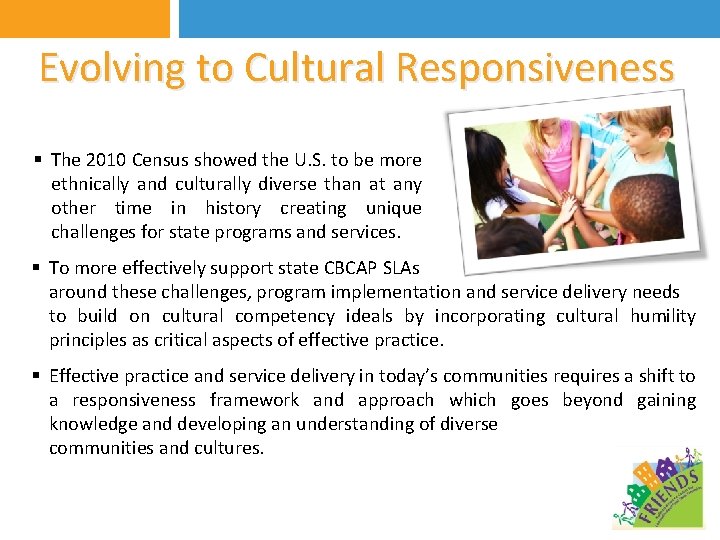
Evolving to Cultural Responsiveness § The 2010 Census showed the U. S. to be more ethnically and culturally diverse than at any other time in history creating unique challenges for state programs and services. § To more effectively support state CBCAP SLAs around these challenges, program implementation and service delivery needs to build on cultural competency ideals by incorporating cultural humility principles as critical aspects of effective practice. § Effective practice and service delivery in today’s communities requires a shift to a responsiveness framework and approach which goes beyond gaining knowledge and developing an understanding of diverse communities and cultures.
Cultural Responsiveness
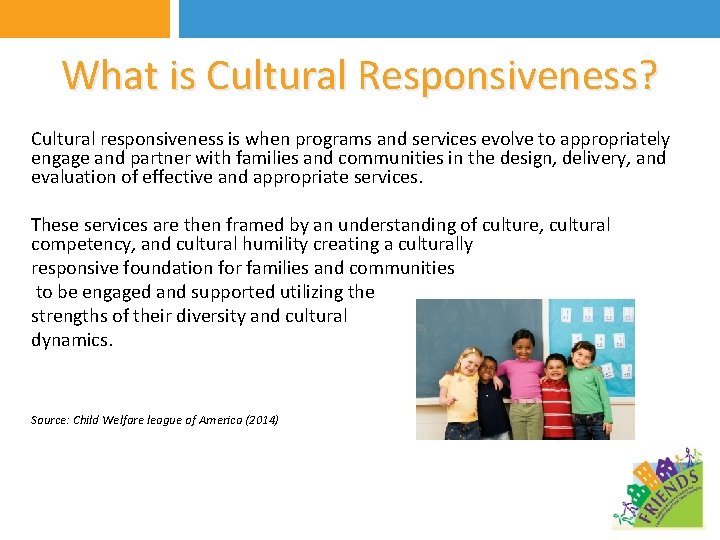
What is Cultural Responsiveness? Cultural responsiveness is when programs and services evolve to appropriately engage and partner with families and communities in the design, delivery, and evaluation of effective and appropriate services. These services are then framed by an understanding of culture, cultural competency, and cultural humility creating a culturally responsive foundation for families and communities to be engaged and supported utilizing the strengths of their diversity and cultural dynamics. Source: Child Welfare league of America (2014)
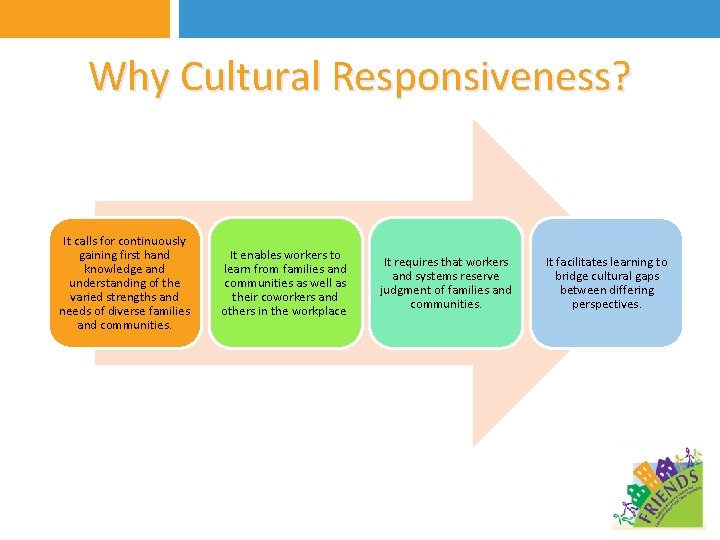
Why Cultural Responsiveness? It calls for continuously gaining first hand knowledge and understanding of the varied strengths and needs of diverse families and communities. It enables workers to learn from families and communities as well as their coworkers and others in the workplace. It requires that workers and systems reserve judgment of families and communities. It facilitates learning to bridge cultural gaps between differing perspectives.
A Framework for Cultural Responsiveness
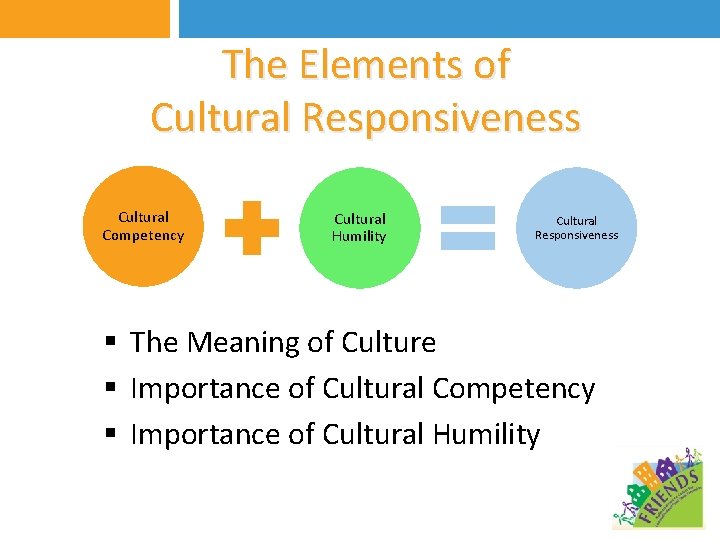
The Elements of Cultural Responsiveness Cultural Competency Cultural Humility Cultural Responsiveness § The Meaning of Culture § Importance of Cultural Competency § Importance of Cultural Humility
Culture Is a constantly changing, learning pattern of customs, beliefs, values, and behaviors, which are socially acquired and transmitted through symbols, rituals, and events and which convey widely shared meanings among its members. Culture includes elements such as gender, age, sexual orientation, geographic location, ethnicity, personality, ability status, marital status and job position. Source: Child Welfare League of America (2013)
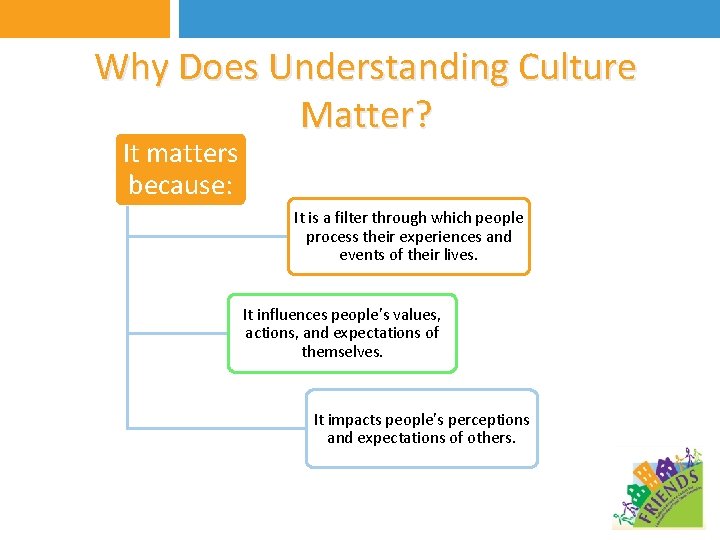
Why Does Understanding Culture Matter? It matters because: It is a filter through which people process their experiences and events of their lives. It influences people’s values, actions, and expectations of themselves. It impacts people’s perceptions and expectations of others.
Importance of Culture § It informs our understanding of when support is needed. § It influences how and from whom we seek support. § It influences how we attempt to provide supports and services.
Cultural Competence Is the ability of individuals and systems to respectfully and effectively interact with people of all cultures, classes, races, ethnic backgrounds, sexual orientations, ability statuses, and faiths or religions, in a manner that recognizes, affirms, and values the worth of individuals, families, tribes and communities, while protecting and preserving the dignity of each. Source: Child Welfare League of America (2013)
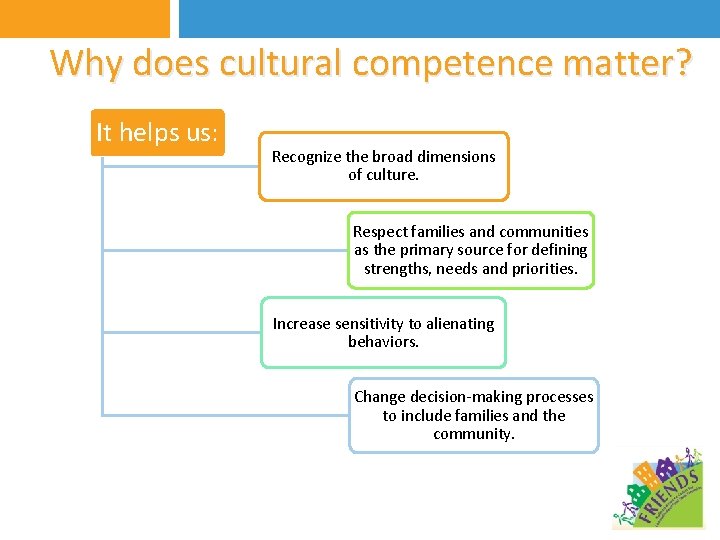
Why does cultural competence matter? It helps us: Recognize the broad dimensions of culture. Respect families and communities as the primary source for defining strengths, needs and priorities. Increase sensitivity to alienating behaviors. Change decision-making processes to include families and the community.
Why does cultural competence matter? Continued It helps us: Commit to structural and policy changes that support cultural diversity. Make policies and practices fluid to accommodate necessary adjustments. Source: Focal Regional Research Institute for Human Services, Portland State University (2003)
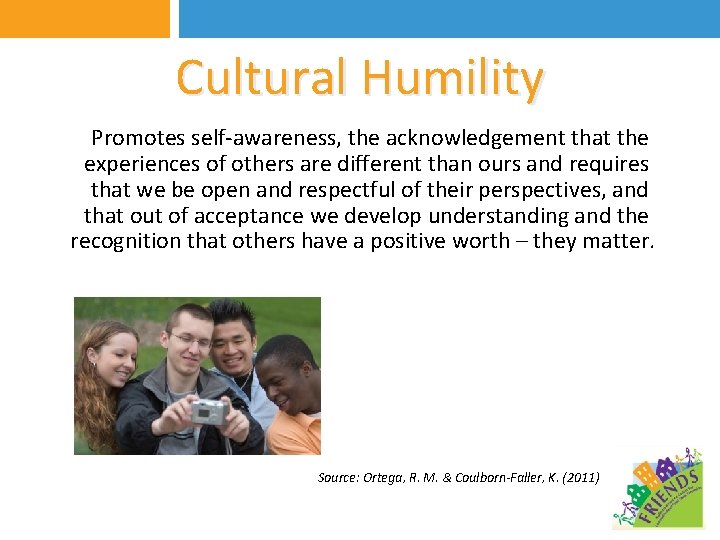
Cultural Humility Promotes self-awareness, the acknowledgement that the experiences of others are different than ours and requires that we be open and respectful of their perspectives, and that out of acceptance we develop understanding and the recognition that others have a positive worth – they matter. Source: Ortega, R. M. & Coulborn-Faller, K. (2011)
EXERCISE
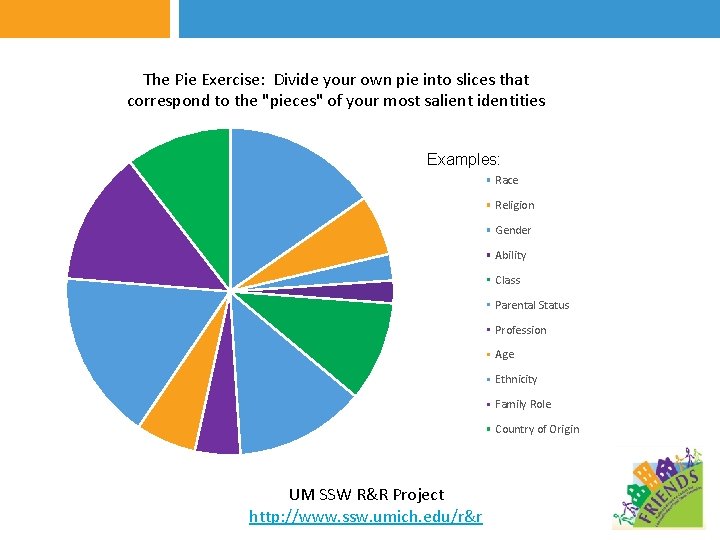
The Pie Exercise: Divide your own pie into slices that correspond to the "pieces" of your most salient identities Examples: Race Religion Gender Ability Class Parental Status Profession Age Ethnicity Family Role Country of Origin UM SSW R&R Project http: //www. ssw. umich. edu/r&r
Exercise Instructions 1) List as many identities as you can think of and rank them in order of importance with “ 1” being your most important identity. 2) Now review your list of identities and consider the following question – How would you react to someone trying to remove one of your “ 1” identities (e. g. a part of you). http: //www. ssw. umich. edu/r&r/
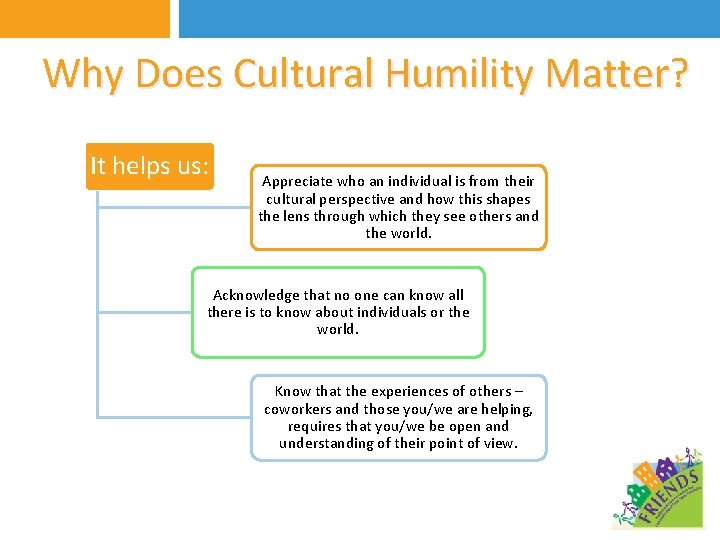
Why Does Cultural Humility Matter? It helps us: Appreciate who an individual is from their cultural perspective and how this shapes the lens through which they see others and the world. Acknowledge that no one can know all there is to know about individuals or the world. Know that the experiences of others – coworkers and those you/we are helping, requires that you/we be open and understanding of their point of view.
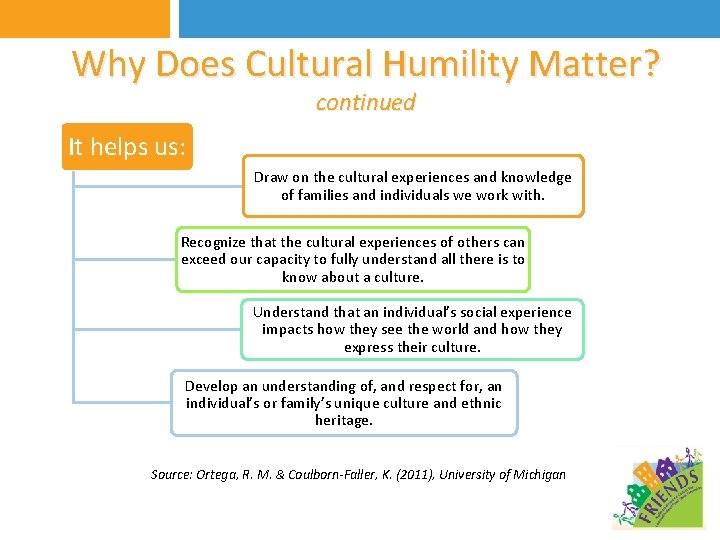
Why Does Cultural Humility Matter? continued It helps us: Draw on the cultural experiences and knowledge of families and individuals we work with. Recognize that the cultural experiences of others can exceed our capacity to fully understand all there is to know about a culture. Understand that an individual’s social experience impacts how they see the world and how they express their culture. Develop an understanding of, and respect for, an individual’s or family’s unique culture and ethnic heritage. Source: Ortega, R. M. & Coulborn-Faller, K. (2011), University of Michigan
Culturally Responsive Values and Principles
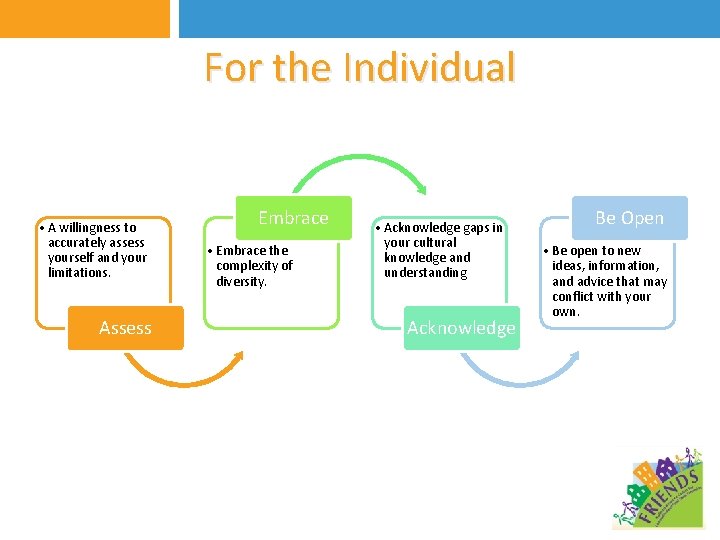
For the Individual • A willingness to accurately assess yourself and your limitations. Assess Embrace • Embrace the complexity of diversity. • Acknowledge gaps in your cultural knowledge and understanding Acknowledge Be Open • Be open to new ideas, information, and advice that may conflict with your own.
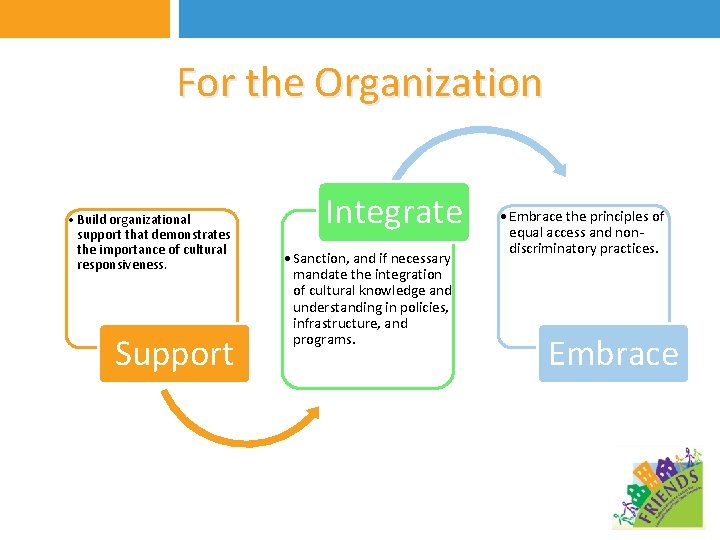
For the Organization • Build organizational support that demonstrates the importance of cultural responsiveness. Support Integrate • Sanction, and if necessary mandate the integration of cultural knowledge and understanding in policies, infrastructure, and programs. • Embrace the principles of equal access and nondiscriminatory practices. Embrace
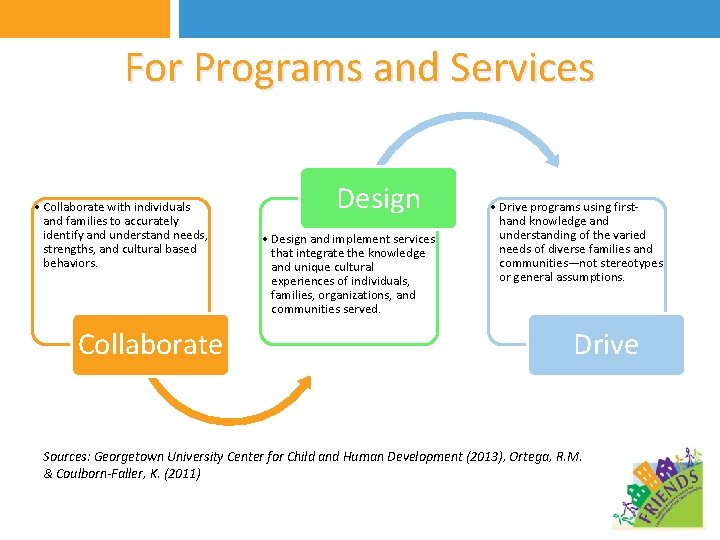
For Programs and Services • Collaborate with individuals and families to accurately identify and understand needs, strengths, and cultural based behaviors. Collaborate Design • Design and implement services that integrate the knowledge and unique cultural experiences of individuals, families, organizations, and communities served. • Drive programs using firsthand knowledge and understanding of the varied needs of diverse families and communities—not stereotypes or general assumptions. Drive Sources: Georgetown University Center for Child and Human Development (2013), Ortega, R. M. & Coulborn-Faller, K. (2011)
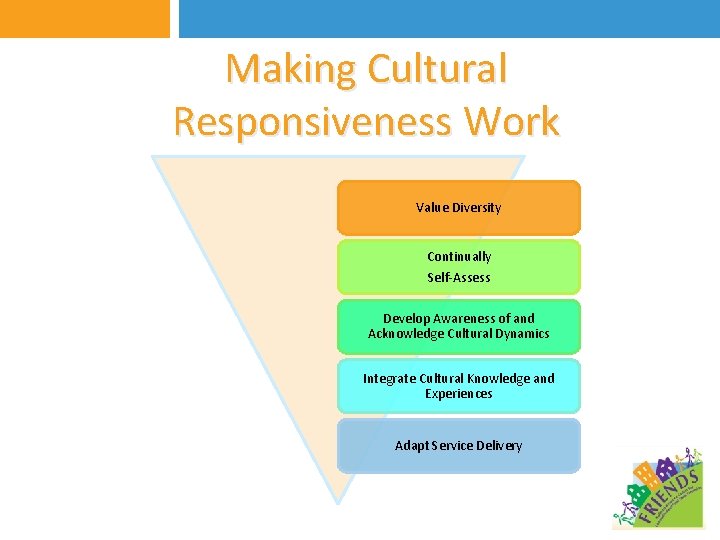
Making Cultural Responsiveness Work Value Diversity Continually Self-Assess Develop Awareness of and Acknowledge Cultural Dynamics Integrate Cultural Knowledge and Experiences Adapt Service Delivery
Value Diversity
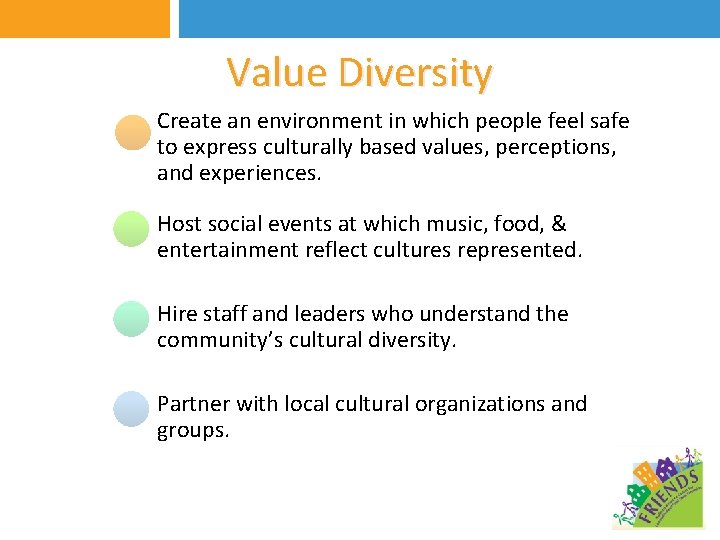
Value Diversity Create an environment in which people feel safe to express culturally based values, perceptions, and experiences. Host social events at which music, food, & entertainment reflect cultures represented. Hire staff and leaders who understand the community’s cultural diversity. Partner with local cultural organizations and groups.
Continually Self-assess
Continually Self-Assess Continually and transparently explore values, beliefs, and attitudes about your culture and others. Non-defensively engage the entire organization, families, and the larger community in regular self-assessments. Periodically review whether recruiting and hiring practices and policies ensure diverse staffing and representative leadership.
Continually Self-Assess continued Frequently review participation and satisfaction rates of families served from various cultures. Regularly review program practices, activities, and services. Regularly review methods of engagement and communication to ensure cultural appropriateness. Assess the program environment and décor.
Continually Self-Assess continued Be open to revising the organization’s mission and objectives. Evaluate whether current staff understand the importance of cultural responsiveness. Consider using resources like the “Peer Review in CBCAP: A Source Document for Assessment and Best Practice”, found at: http: //friendsnrc. org/peer-review
Develop Awareness of and Acknowledge Cross-Cultural Dynamics
Develop Awareness OF and Acknowledge Cross-Cultural Dynamics Understand how historical and political differences between cultural groups impact relationships and opinions. Build capacity to communicate with non-English–speaking families. Develop correspondence and other engagement materials that are linguistically appropriate and specifically for the literacy levels of families being served.
Develop Awareness of and acknowledge Cross-Cultural dynamics continued Be non-judgmental, respectful and responsive to nontraditional families (gay and lesbian parents, kinship families, single fathers, etc. ). Understand how varied religions and faiths influence values and behavior (sacred or holy days, etc. ).
Integrate Cultural Knowledge and Experiences
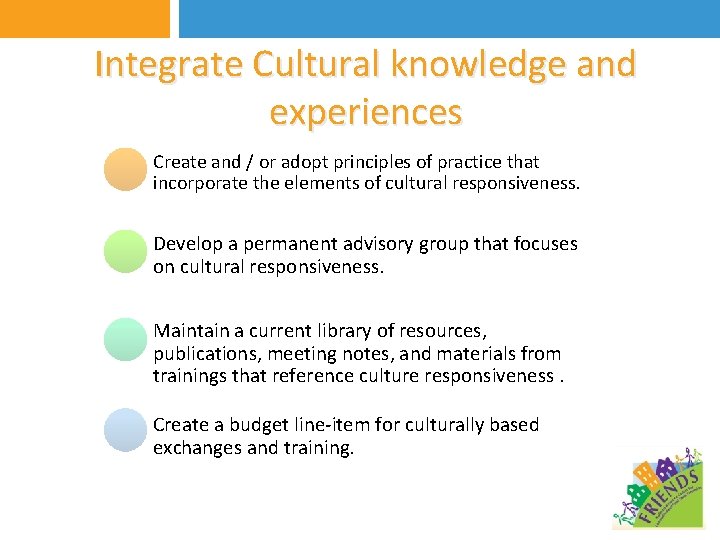
Integrate Cultural knowledge and experiences Create and / or adopt principles of practice that incorporate the elements of cultural responsiveness. Develop a permanent advisory group that focuses on cultural responsiveness. Maintain a current library of resources, publications, meeting notes, and materials from trainings that reference culture responsiveness. Create a budget line-item for culturally based exchanges and training.
Adapt Service Delivery
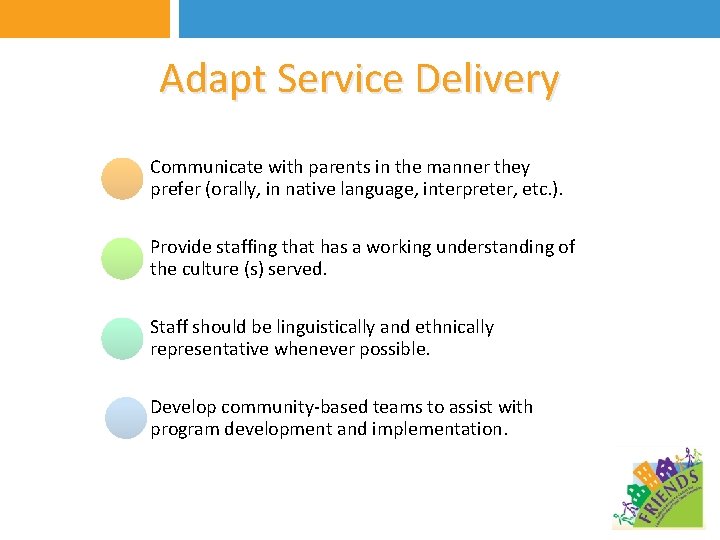
Adapt Service Delivery Communicate with parents in the manner they prefer (orally, in native language, interpreter, etc. ). Provide staffing that has a working understanding of the culture (s) served. Staff should be linguistically and ethnically representative whenever possible. Develop community-based teams to assist with program development and implementation.
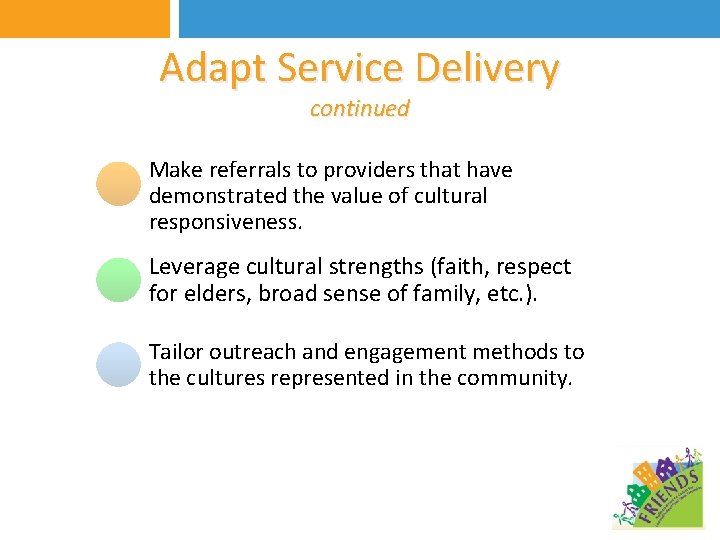
Adapt Service Delivery continued Make referrals to providers that have demonstrated the value of cultural responsiveness. Leverage cultural strengths (faith, respect for elders, broad sense of family, etc. ). Tailor outreach and engagement methods to the cultures represented in the community.
Getting Started: A Basic Foundation
Basic Foundation 1. Identify cultural diversity within the community § Does the organization and the staff have an understanding of the cultural and ethnic composition of their service population (review local/state U. S. Census data)?
Basic Foundation continued 2. Conduct a comprehensive assessment of yourself and your organization: § Is cultural diversity discussed and celebrated? § Do staff and the organization understand respect the cultures represented? § Do programs address the unique needs and concerns of the cultures represented? § Is cultural responsiveness reflected in policies, practices, employee evaluations, and procedures?
Basic Foundation continued 3. Engage in dialogue with cultural and ethnic communities with which you work: § Convene informal gatherings with personnel to explore beliefs, values, and attitudes related to cultural responsiveness. § Build and use a network of community experts who have knowledge of the cultural and ethnic groups served. § Network with parents and family organizations.
Basic Foundation Continued 4. Identify and understand the specific needs and behaviors of individuals and families first hand. 5. Draw on the cultural expertise of the individuals and families you work with and recognize their experiences likely exceed your own. 6. Identify best practices by learning from other organizations and individuals.
Basic Foundation Continued 7. Design and implement services that are based upon families’ and the communities’ culturally based choices and experiences. 8. Culturally adapt/tailor existing evidence based programs and practices to ensure they are responsive to the families and communities served. 9. Integrate policies, practices, and structures with culturally responsive values and principles. 10. Frequently reassess and make needed adjustments. 11. Keep learning and asking questions (see Resources handout).
Additional Resources and Information For resources and information regarding the concepts or ideas presented in this workshop, go to: http: //friendsnrc. org