
Introduction To CPSC 231 And To Computer Science
- Slides: 45
Introduction To CPSC 231 And To Computer Science James Tam
Administrative (James Tam) • Contact Information - Office: ICT 707 - Phone: 210 -9455 - Email: tamj@cpsc. ucalgary. ca • Office hours - Office hours: TR 14: 00 – 14: 50 (Right after class) Email: (any time) Appointment: email, phone or call Drop by for urgent requests (but no guarantee that I will be in!) James Tam
A Bit About CPSC 231 • It is a course geared primarily towards CPSC majors • But it is not assumed that you have prior knowledge of Computer Science • It can be a lot of work Wav file from “The Simpsons” James Tam
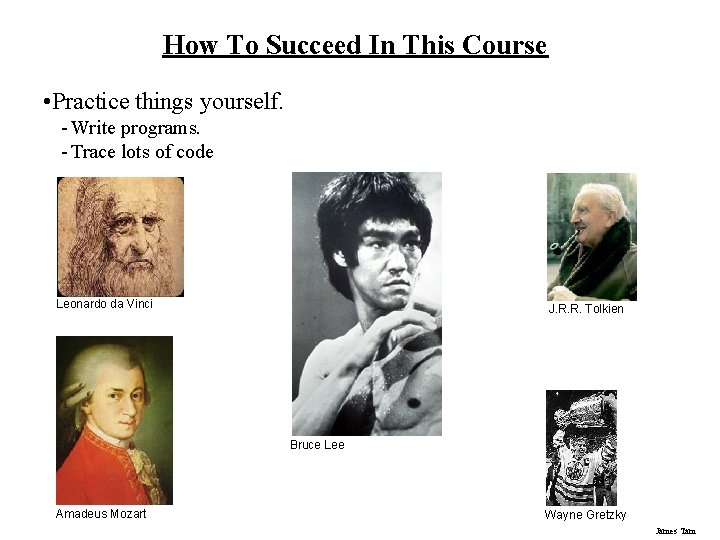
How To Succeed In This Course • Practice things yourself. - Write programs. - Trace lots of code Leonardo da Vinci J. R. R. Tolkien Bruce Lee Amadeus Mozart Wayne Gretzky James Tam
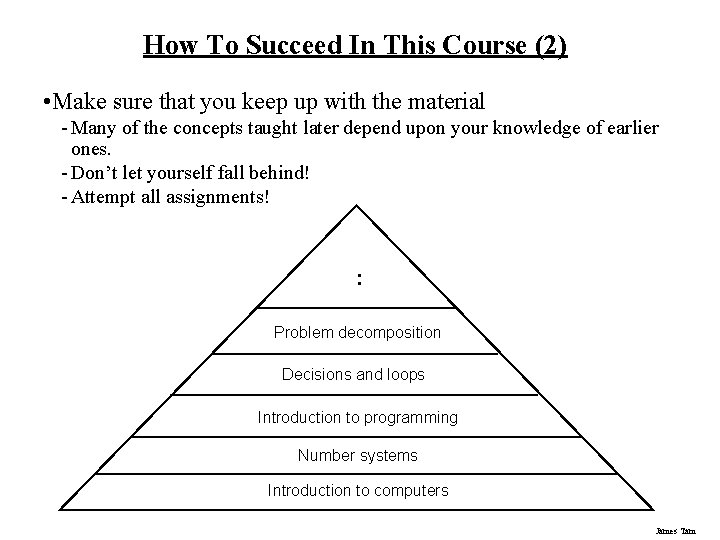
How To Succeed In This Course (2) • Make sure that you keep up with the material - Many of the concepts taught later depend upon your knowledge of earlier ones. - Don’t let yourself fall behind! - Attempt all assignments! : Problem decomposition Decisions and loops Introduction to programming Number systems Introduction to computers James Tam
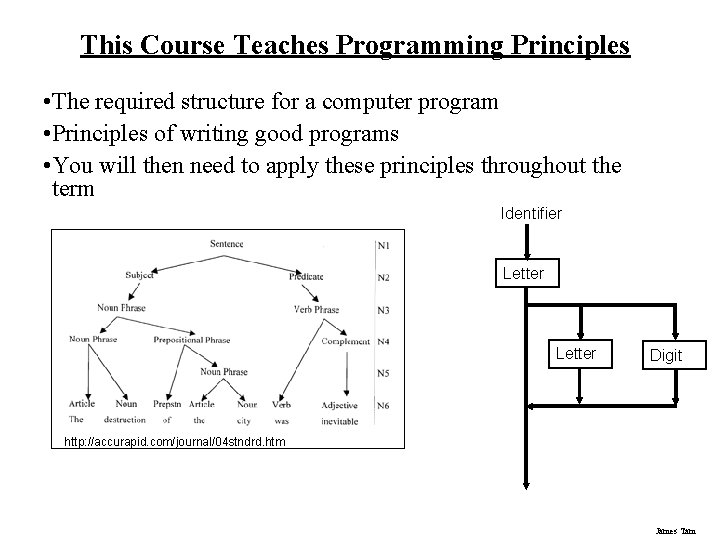
This Course Teaches Programming Principles • The required structure for a computer program • Principles of writing good programs • You will then need to apply these principles throughout the term Identifier Letter Digit http: //accurapid. com/journal/04 stndrd. htm James Tam
Feedback ? ? ? Dilbert © United Features Syndicate James Tam
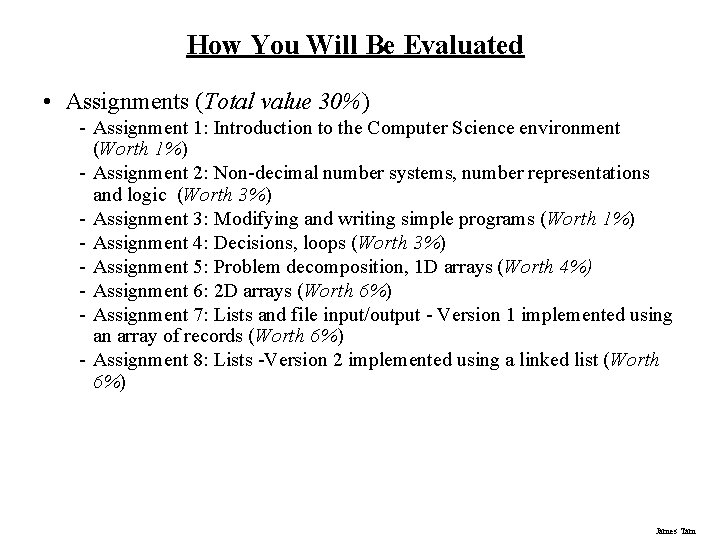
How You Will Be Evaluated • Assignments (Total value 30%) - Assignment 1: Introduction to the Computer Science environment (Worth 1%) - Assignment 2: Non-decimal number systems, number representations and logic (Worth 3%) - Assignment 3: Modifying and writing simple programs (Worth 1%) - Assignment 4: Decisions, loops (Worth 3%) - Assignment 5: Problem decomposition, 1 D arrays (Worth 4%) - Assignment 6: 2 D arrays (Worth 6%) - Assignment 7: Lists and file input/output - Version 1 implemented using an array of records (Worth 6%) - Assignment 8: Lists -Version 2 implemented using a linked list (Worth 6%) James Tam
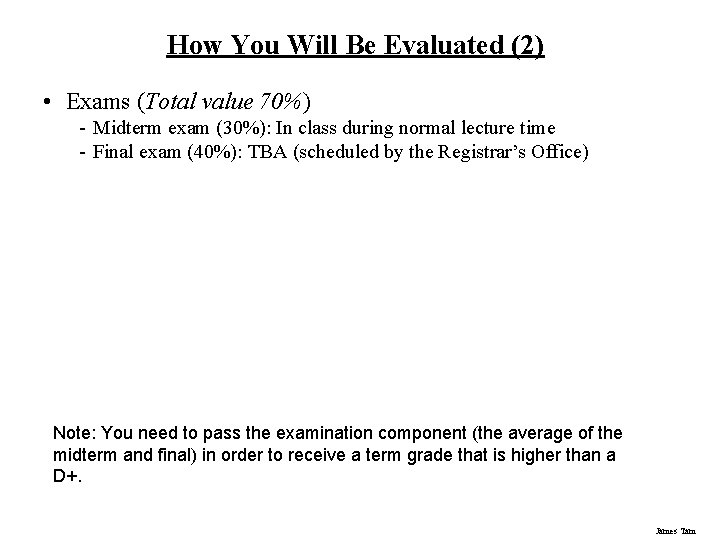
How You Will Be Evaluated (2) • Exams (Total value 70%) - Midterm exam (30%): In class during normal lecture time - Final exam (40%): TBA (scheduled by the Registrar’s Office) Note: You need to pass the examination component (the average of the midterm and final) in order to receive a term grade that is higher than a D+. James Tam
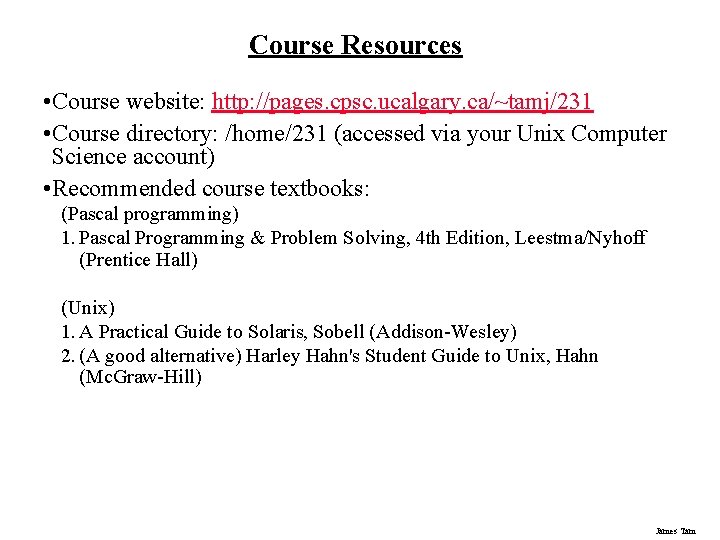
Course Resources • Course website: http: //pages. cpsc. ucalgary. ca/~tamj/231 • Course directory: /home/231 (accessed via your Unix Computer Science account) • Recommended course textbooks: (Pascal programming) 1. Pascal Programming & Problem Solving, 4 th Edition, Leestma/Nyhoff (Prentice Hall) (Unix) 1. A Practical Guide to Solaris, Sobell (Addison-Wesley) 2. (A good alternative) Harley Hahn's Student Guide to Unix, Hahn (Mc. Graw-Hill) James Tam
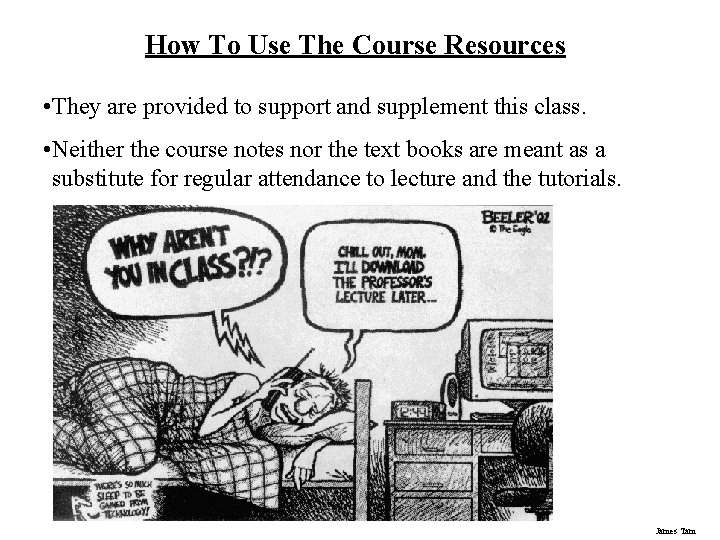
How To Use The Course Resources • They are provided to support and supplement this class. • Neither the course notes nor the text books are meant as a substitute for regular attendance to lecture and the tutorials. James Tam
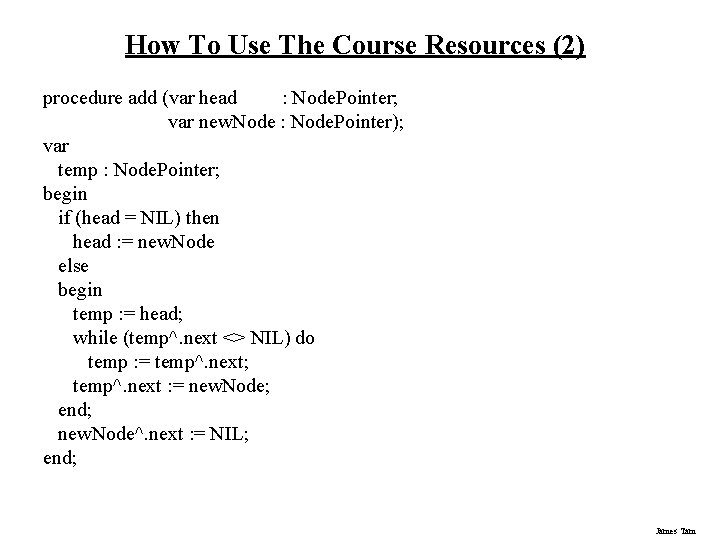
How To Use The Course Resources (2) procedure add (var head : Node. Pointer; var new. Node : Node. Pointer); var temp : Node. Pointer; begin if (head = NIL) then head : = new. Node else begin temp : = head; while (temp^. next <> NIL) do temp : = temp^. next; temp^. next : = new. Node; end; new. Node^. next : = NIL; end; James Tam
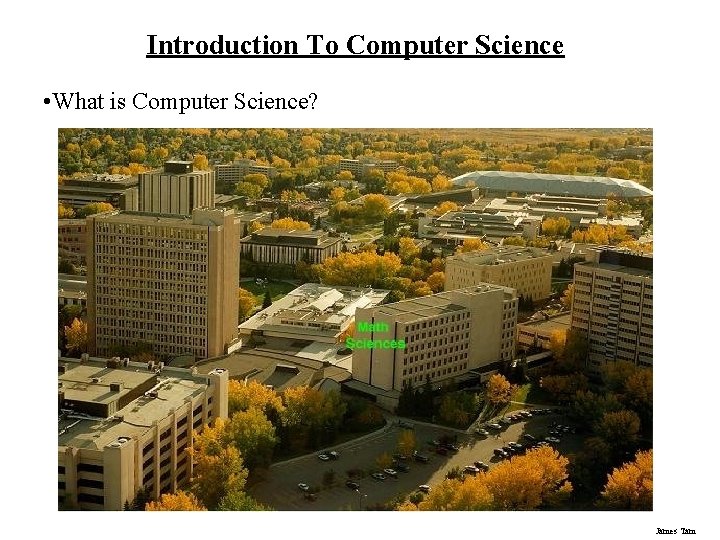
Introduction To Computer Science • What is Computer Science? James Tam
Introduction To Computer Science • What is Computer Science? James Tam
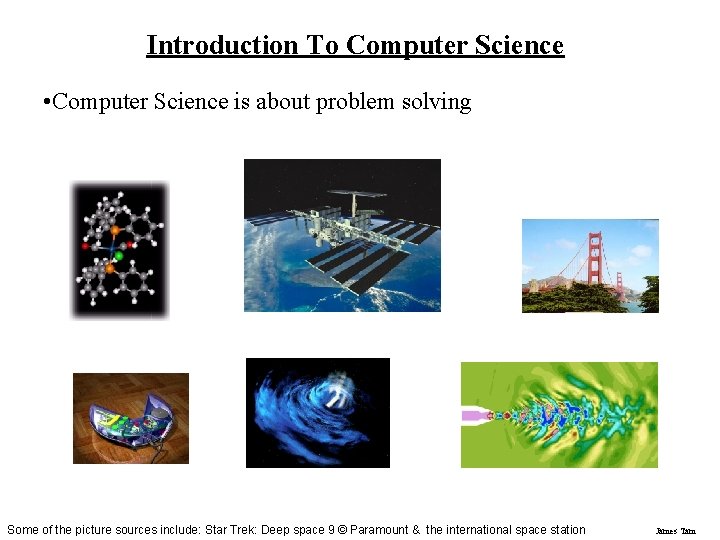
Introduction To Computer Science • Computer Science is about problem solving Some of the picture sources include: Star Trek: Deep space 9 © Paramount & the international space station James Tam
Some Areas Of Study • Human-Computer Interaction • Computer Graphics • Information Visualization • Databases • Computer Theory • Simulations • Artificial Intelligence • Computer Vision • Software Engineering • Games programming This list provides only a brief introduction to the different areas of Computer Science and is far from comprehensive: For a more complete list: http: //www. cpsc. ucalgary. ca/Research/ James Tam
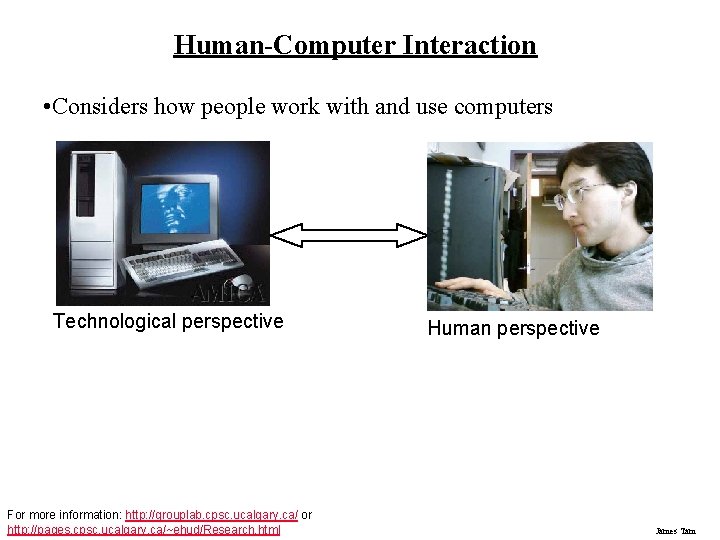
Human-Computer Interaction • Considers how people work with and use computers Technological perspective For more information: http: //grouplab. cpsc. ucalgary. ca/ or http: //pages. cpsc. ucalgary. ca/~ehud/Research. html Human perspective James Tam
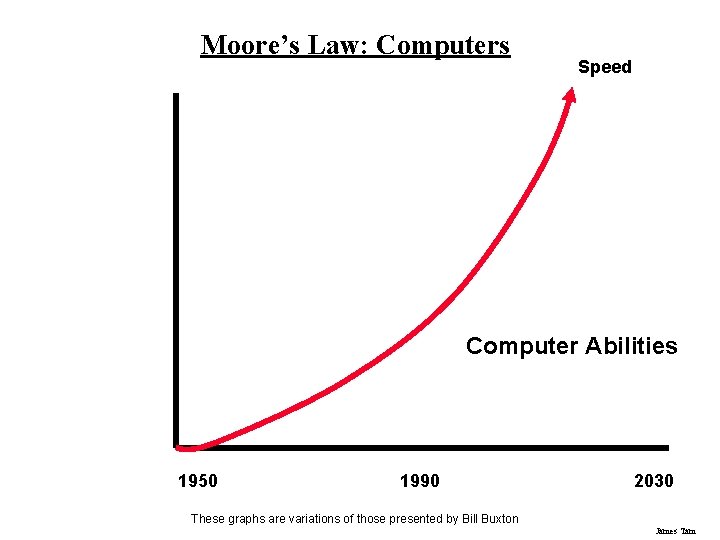
Moore’s Law: Computers Speed Computer Abilities 1950 1990 2030 These graphs are variations of those presented by Bill Buxton James Tam
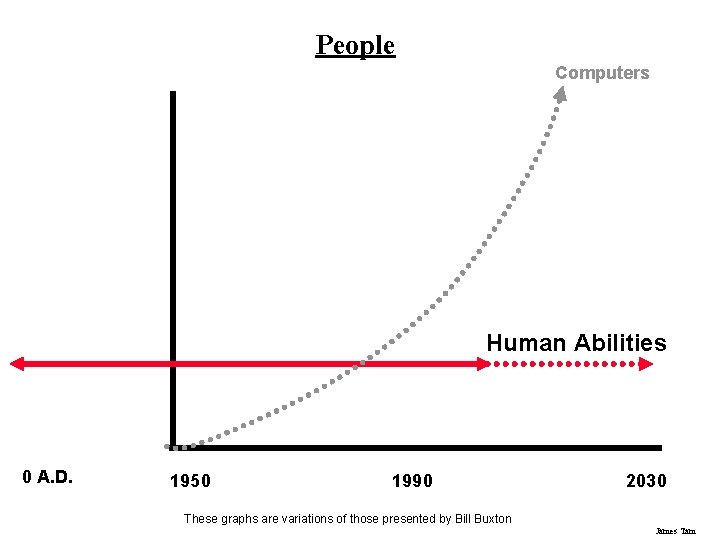
People Computers Human Abilities 0 A. D. 1950 1990 2030 These graphs are variations of those presented by Bill Buxton James Tam
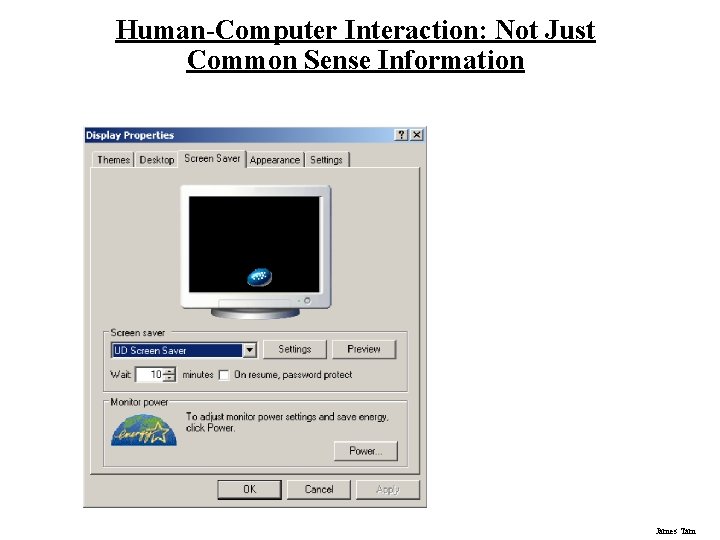
Human-Computer Interaction: Not Just Common Sense Information James Tam
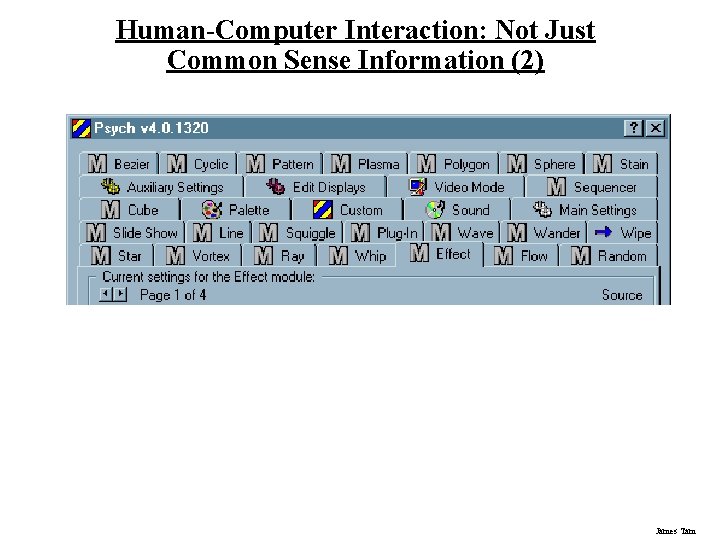
Human-Computer Interaction: Not Just Common Sense Information (2) James Tam
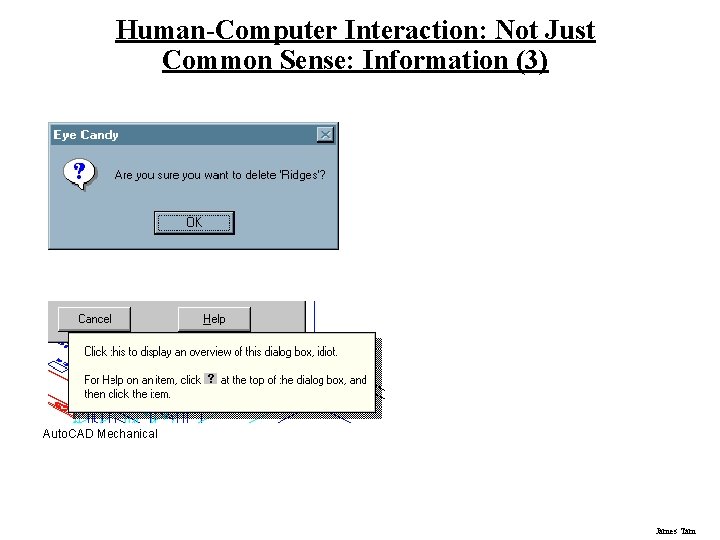
Human-Computer Interaction: Not Just Common Sense: Information (3) Auto. CAD Mechanical James Tam
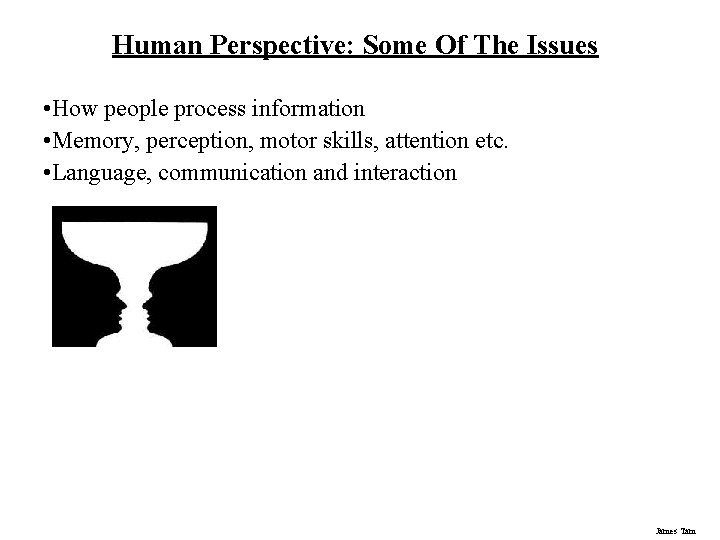
Human Perspective: Some Of The Issues • How people process information • Memory, perception, motor skills, attention etc. • Language, communication and interaction James Tam
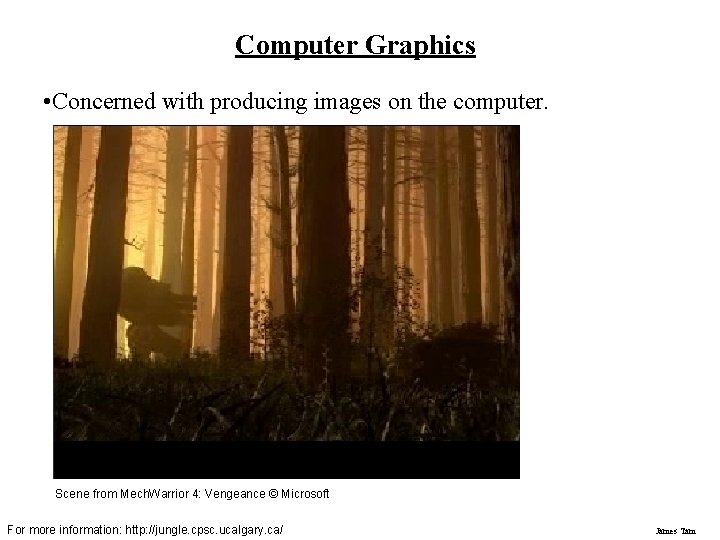
Computer Graphics • Concerned with producing images on the computer. Scene from Mech. Warrior 4: Vengeance © Microsoft For more information: http: //jungle. cpsc. ucalgary. ca/ James Tam
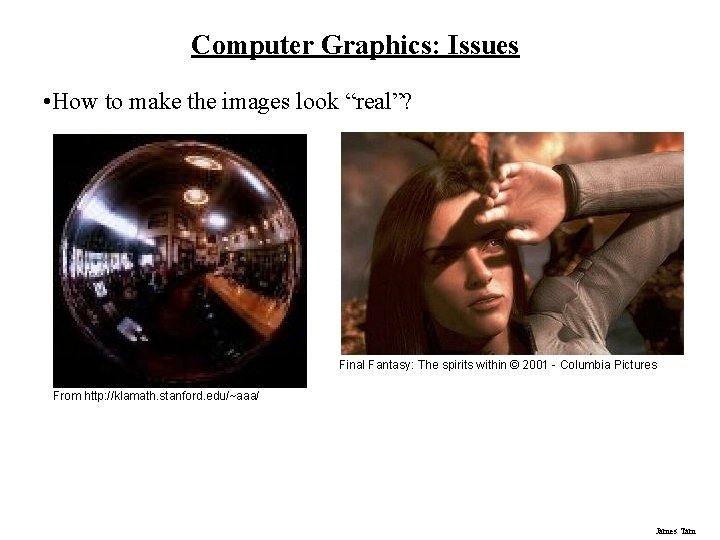
Computer Graphics: Issues • How to make the images look “real”? Final Fantasy: The spirits within © 2001 - Columbia Pictures From http: //klamath. stanford. edu/~aaa/ James Tam
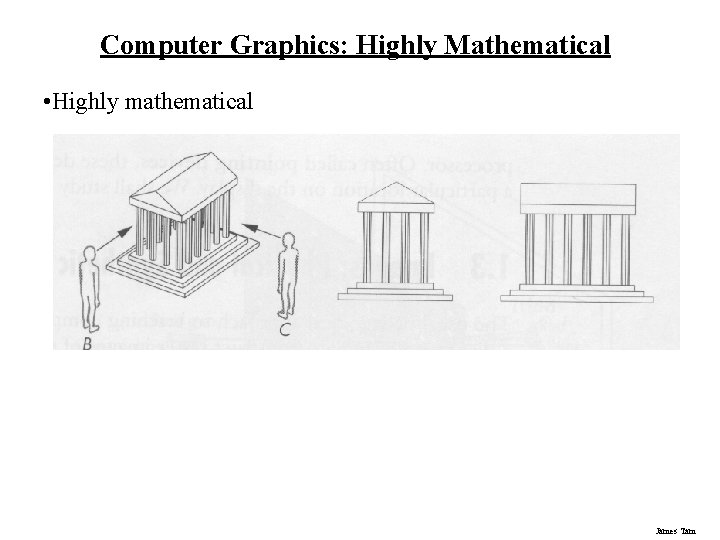
Computer Graphics: Highly Mathematical • Highly mathematical James Tam
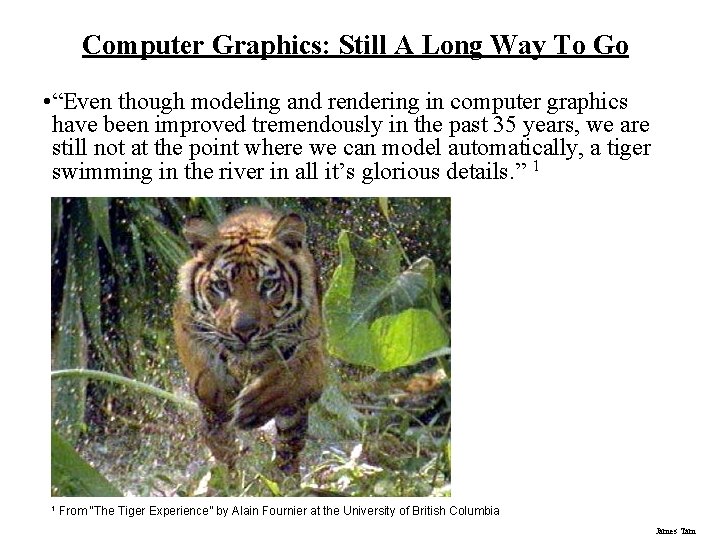
Computer Graphics: Still A Long Way To Go • “Even though modeling and rendering in computer graphics have been improved tremendously in the past 35 years, we are still not at the point where we can model automatically, a tiger swimming in the river in all it’s glorious details. ” 1 1 From “The Tiger Experience” by Alain Fournier at the University of British Columbia James Tam
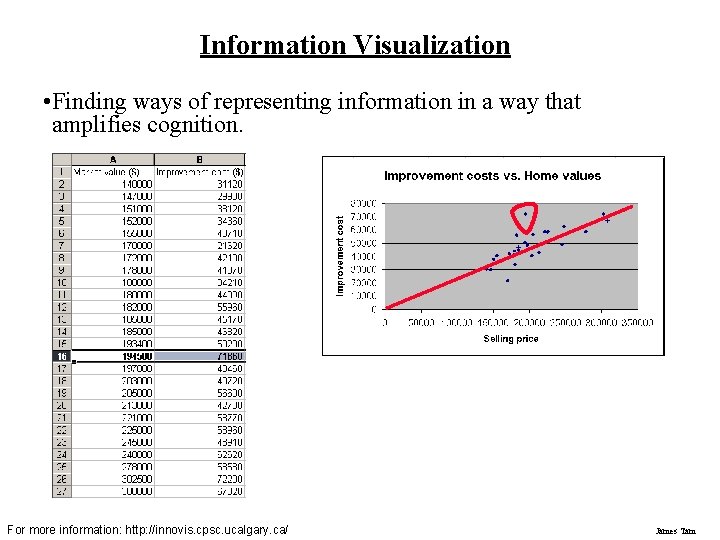
Information Visualization • Finding ways of representing information in a way that amplifies cognition. For more information: http: //innovis. cpsc. ucalgary. ca/ James Tam
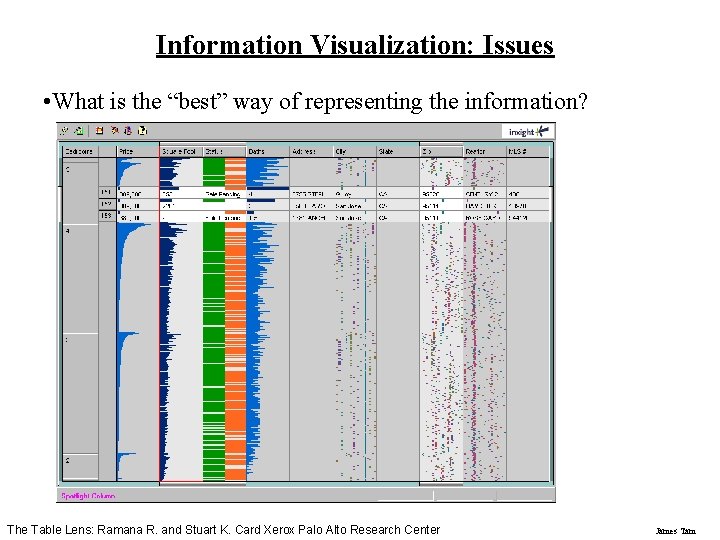
Information Visualization: Issues • What is the “best” way of representing the information? The Table Lens: Ramana R. and Stuart K. Card Xerox Palo Alto Research Center James Tam
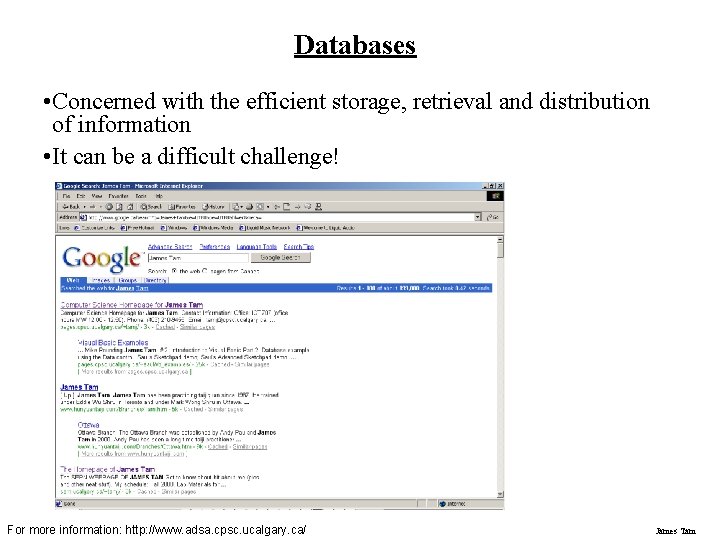
Databases • Concerned with the efficient storage, retrieval and distribution of information • It can be a difficult challenge! For more information: http: //www. adsa. cpsc. ucalgary. ca/ James Tam
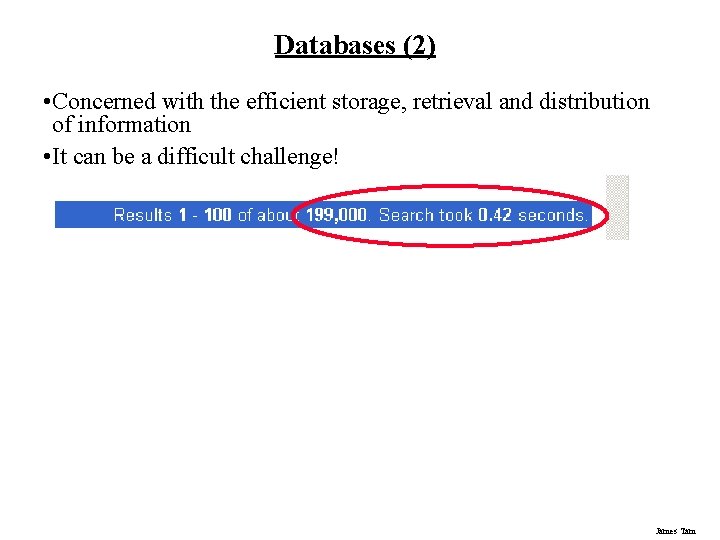
Databases (2) • Concerned with the efficient storage, retrieval and distribution of information • It can be a difficult challenge! James Tam
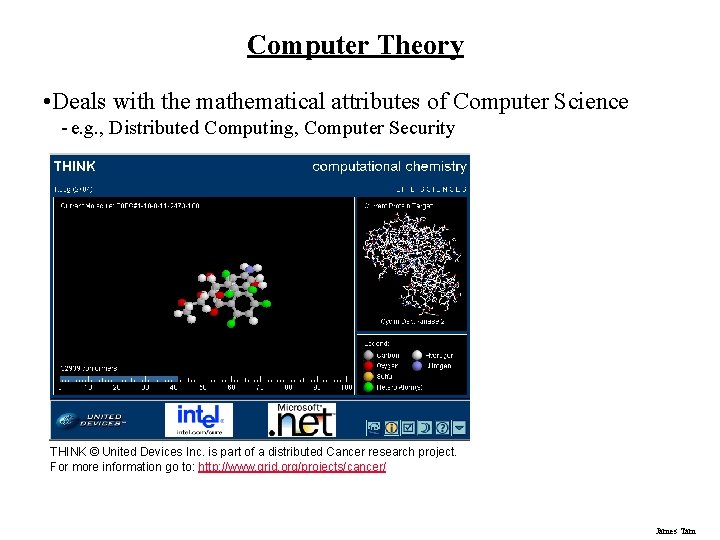
Computer Theory • Deals with the mathematical attributes of Computer Science - e. g. , Distributed Computing, Computer Security THINK © United Devices Inc. is part of a distributed Cancer research project. For more information go to: http: //www. grid. org/projects/cancer/ James Tam
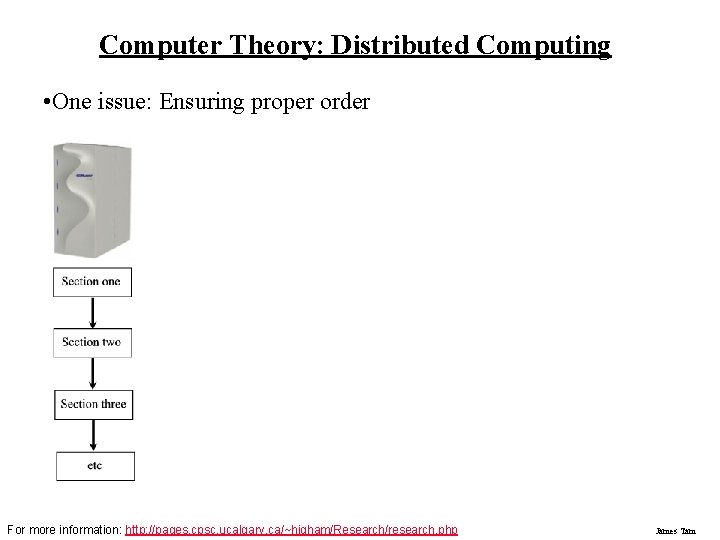
Computer Theory: Distributed Computing • One issue: Ensuring proper order For more information: http: //pages. cpsc. ucalgary. ca/~higham/Research/research. php James Tam
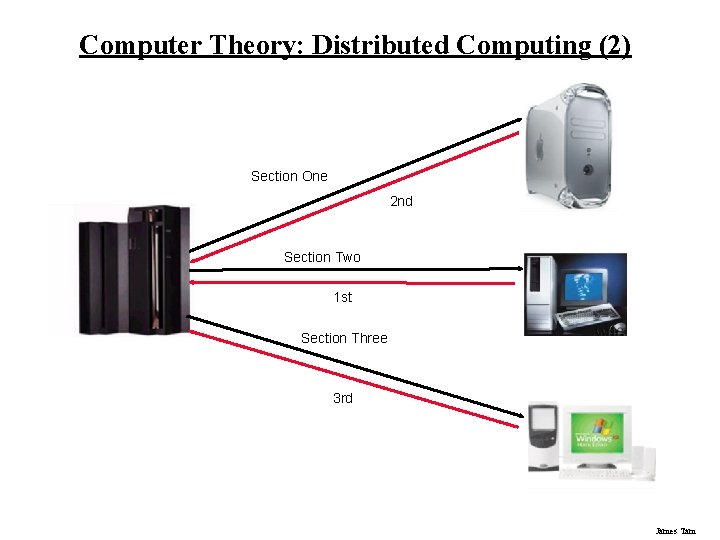
Computer Theory: Distributed Computing (2) Section One 2 nd Section Two 1 st Section Three 3 rd James Tam
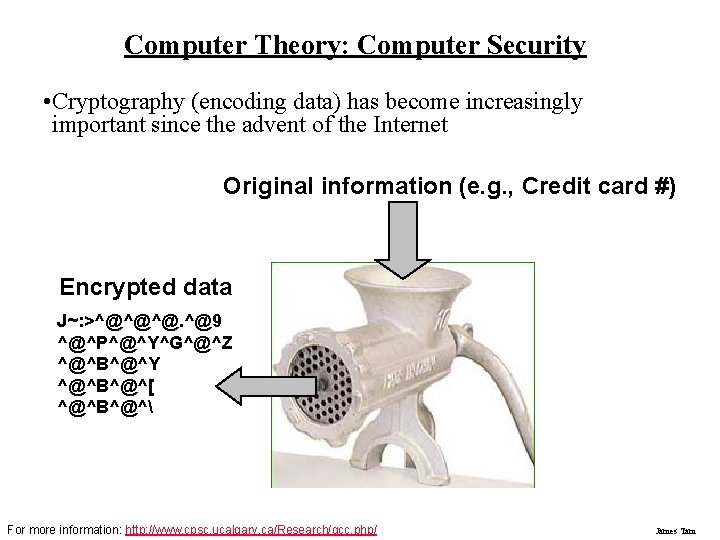
Computer Theory: Computer Security • Cryptography (encoding data) has become increasingly important since the advent of the Internet Original information (e. g. , Credit card #) Encrypted data J~: >^@^@^@. ^@9 ^@^P^@^Y^G^@^Z ^@^B^@^Y ^@^B^@^[ ^@^B^@^ For more information: http: //www. cpsc. ucalgary. ca/Research/qcc. php/ James Tam
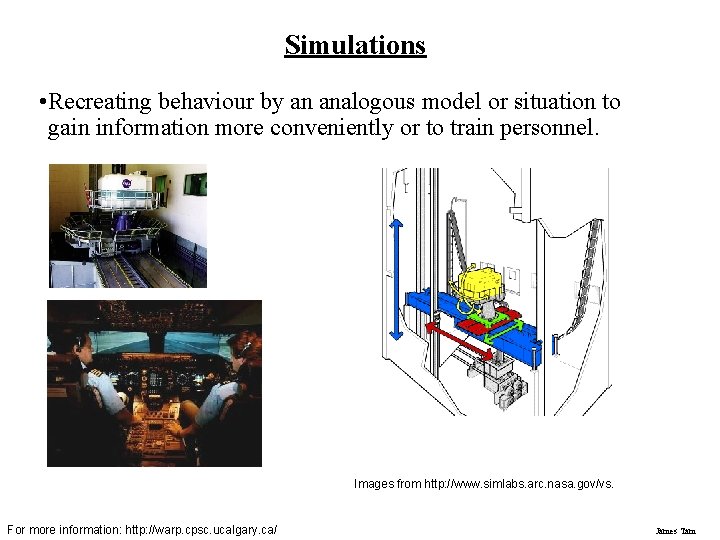
Simulations • Recreating behaviour by an analogous model or situation to gain information more conveniently or to train personnel. Images from http: //www. simlabs. arc. nasa. gov/vs. For more information: http: //warp. cpsc. ucalgary. ca/ James Tam
Simulations (2) • Why simulate? - Complex systems - Dangerous experiments - Controlled conditions - Cost savings James Tam
Simulations: Some Issues • What information should be included in the simulation? • How confident are we in the results of the simulation? • Speed of the simulation. James Tam
Artificial Intelligence • What makes a person smart? • How do we build a smart machine? - How to make a machine think like a person? - How to make a machine behave like a person? For more information: http: //pages. cpsc. ucalgary. ca/~jacob/AI/ or http: //pages. cpsc. ucalgary. ca/~denzinge/ James Tam
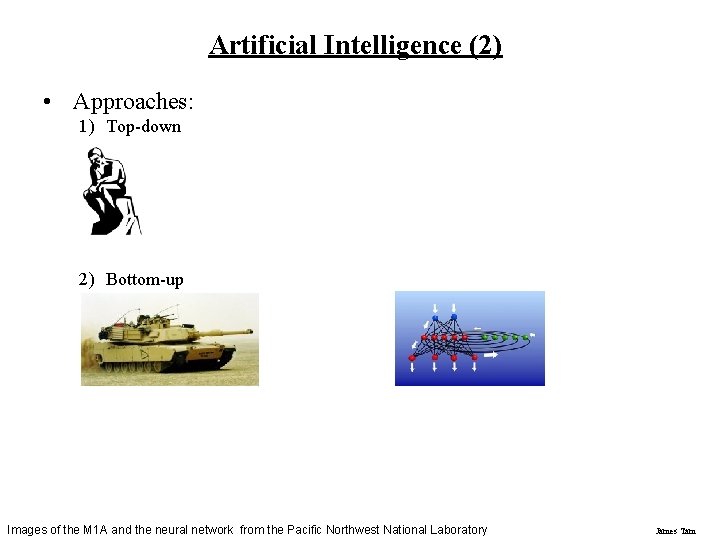
Artificial Intelligence (2) • Approaches: 1) Top-down 2) Bottom-up Images of the M 1 A and the neural network from the Pacific Northwest National Laboratory James Tam
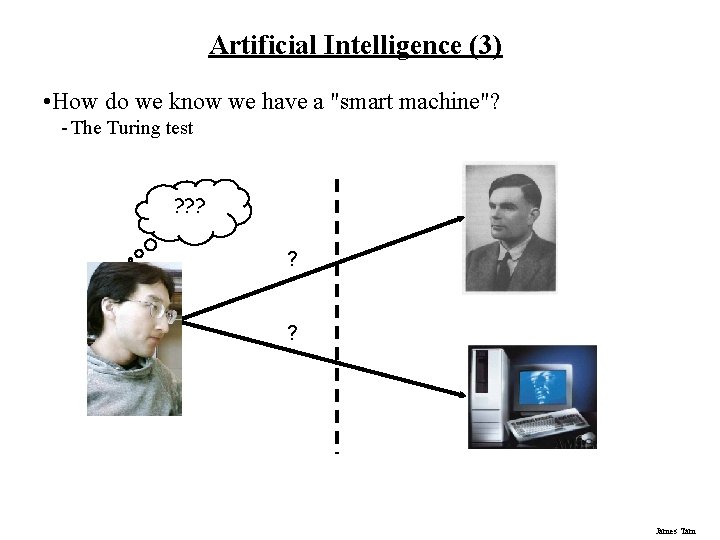
Artificial Intelligence (3) • How do we know we have a "smart machine"? - The Turing test ? ? ? James Tam
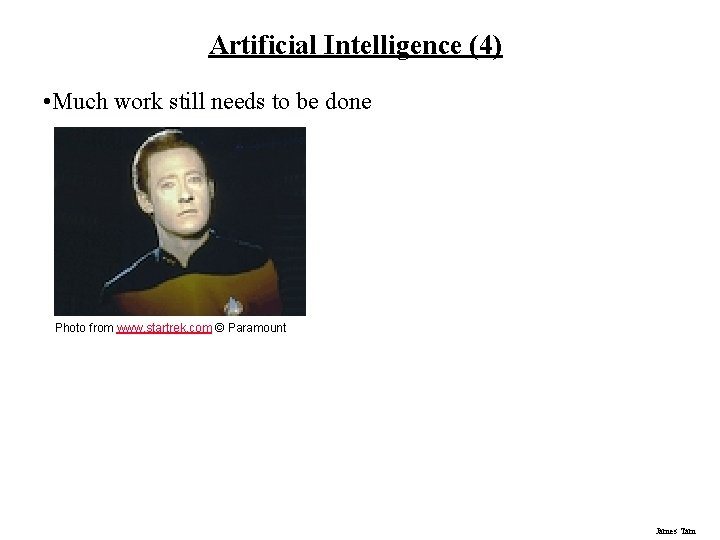
Artificial Intelligence (4) • Much work still needs to be done Photo from www. startrek. com © Paramount James Tam
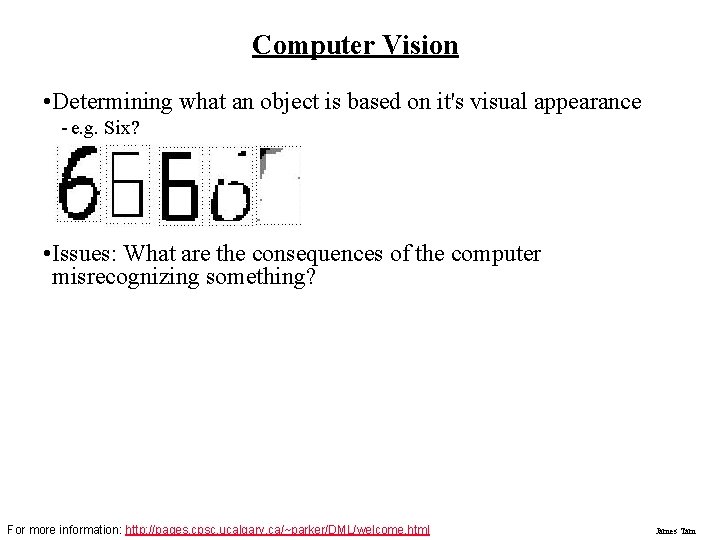
Computer Vision • Determining what an object is based on it's visual appearance - e. g. Six? • Issues: What are the consequences of the computer misrecognizing something? For more information: http: //pages. cpsc. ucalgary. ca/~parker/DML/welcome. html James Tam
Software Engineering • 63% of large software projects go over cost - Insufficient user-developer communication and understanding - Software: §Is not easily used §Is never tested until it is too late - : : Dilbert © United Features Syndicate : • Avoid "hacking-out" software - “How does the program work? I don't know!!!? ? ? ” • Involves developing systematic ways of producing good software on time and within budget For more information: http: //sern. ucalgary. ca/ James Tam
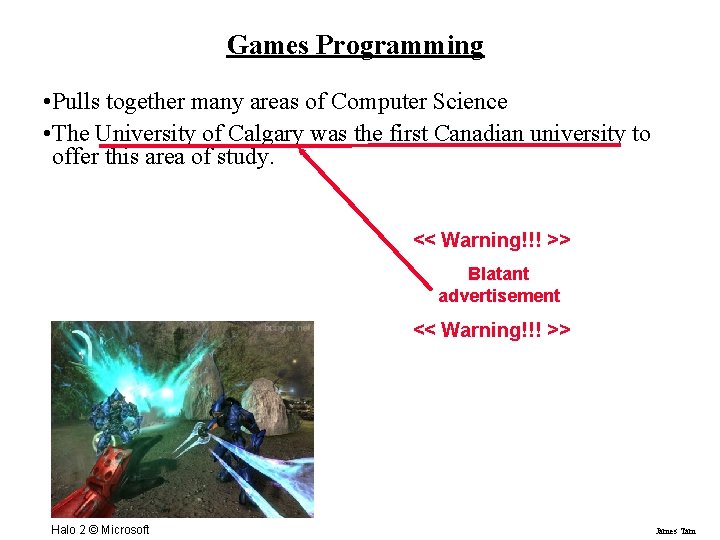
Games Programming • Pulls together many areas of Computer Science • The University of Calgary was the first Canadian university to offer this area of study. << Warning!!! >> Blatant advertisement << Warning!!! >> Halo 2 © Microsoft James Tam