
Introduction to Cosmology Katsushi Arisaka University of California

- Slides: 69
Introduction to Cosmology Katsushi Arisaka University of California, Los Angeles Department of Physics and Astronomy arisaka@physics. ucla. edu 9/11/2021 Katsushi Arisaka, UCLA 1
Early Univese 9/11/2021 Katsushi Arisaka, UCLA 2
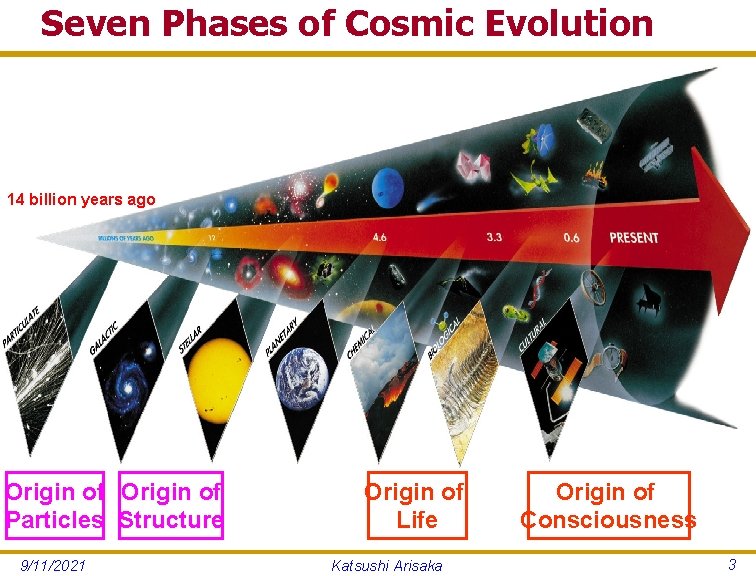
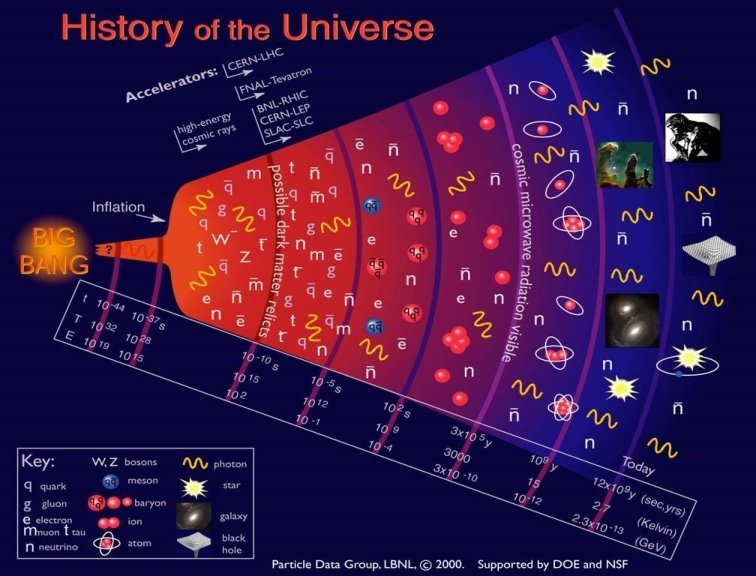
Seven Phases of Cosmic Evolution 14 billion years ago Origin of Particles Structure 9/11/2021 Origin of Life Katsushi Arisaka Origin of Consciousness 3
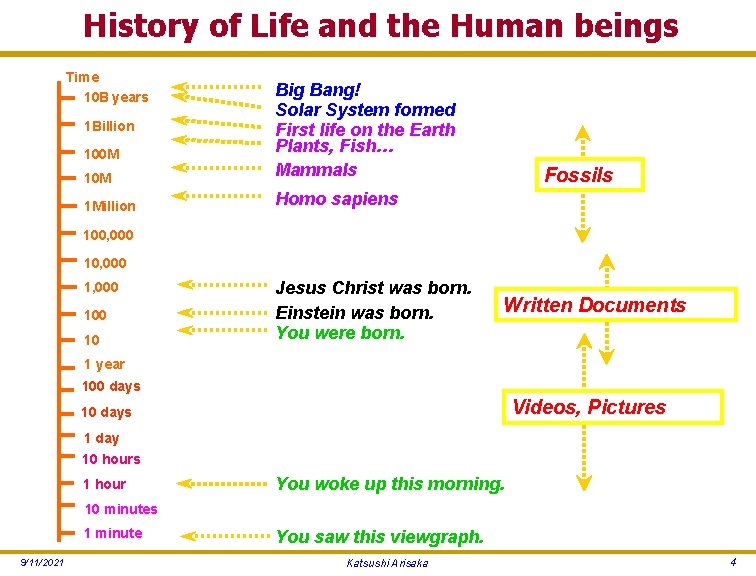
History of Life and the Human beings Time 10 B years 10 M Big Bang! Solar System formed First life on the Earth Plants, Fish… Mammals 1 Million Homo sapiens 1 Billion 100 M Fossils 100, 000 1, 000 10 Jesus Christ was born. Einstein was born. You were born. Written Documents 1 year 100 days Videos, Pictures 10 days 1 day 10 hours 1 hour You woke up this morning. 10 minutes 1 minute 9/11/2021 You saw this viewgraph. Katsushi Arisaka 4
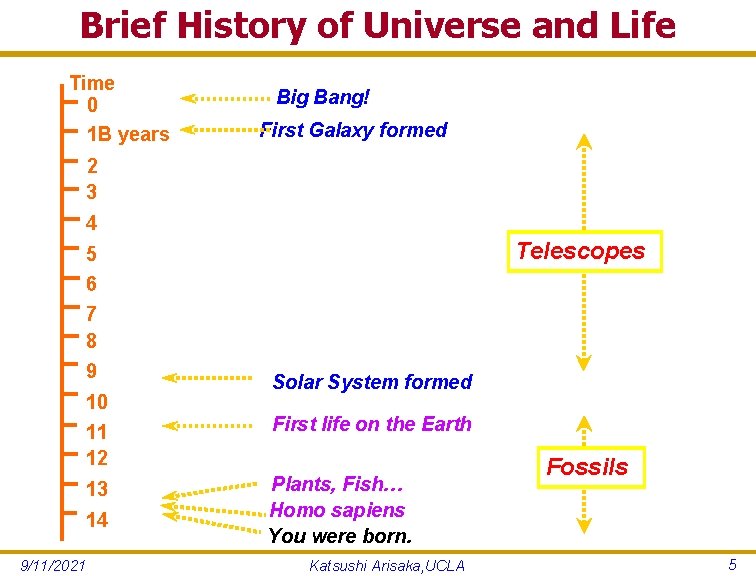
Brief History of Universe and Life Time 0 1 B years Big Bang! First Galaxy formed 2 3 4 Telescopes 5 6 7 8 9 10 Solar System formed 11 12 First life on the Earth 13 Plants, Fish… Homo sapiens You were born. 14 9/11/2021 Katsushi Arisaka, UCLA Fossils 5
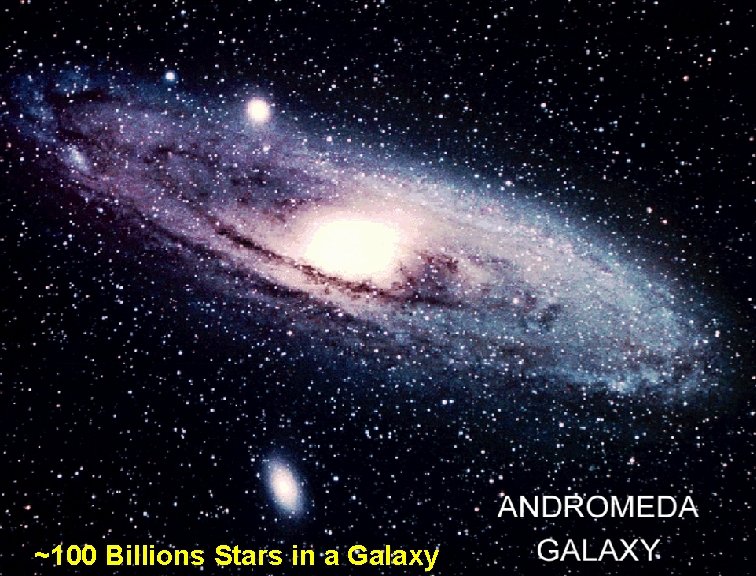
~100 Billions Stars in. Katsushi a Galaxy Arisaka, UCLA 9/11/2021 6
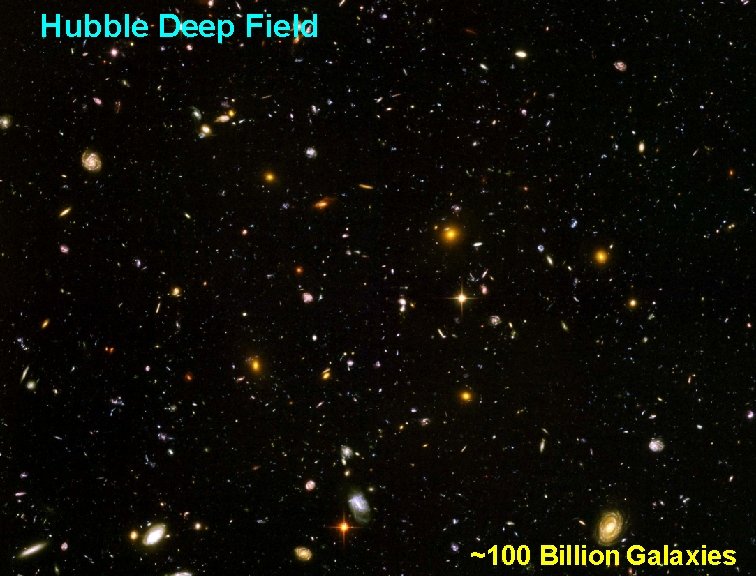
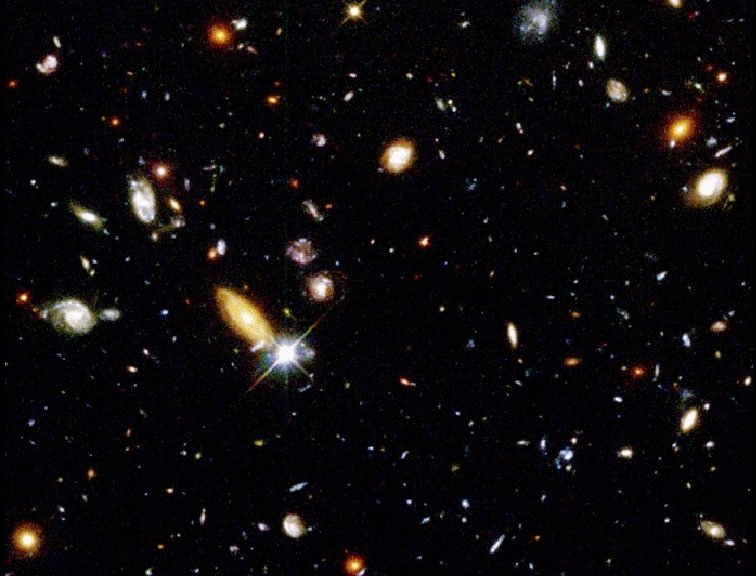
Hubble Deep Field 2/13/2007 Katsushi Arisaka ~100 Billion Galaxies 7
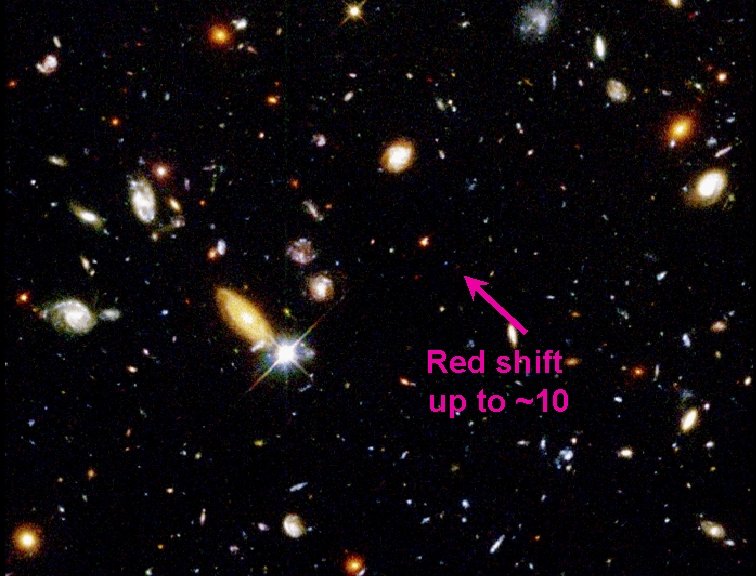
Red shift up to ~10 9/11/2021 Katsushi Arisaka 8
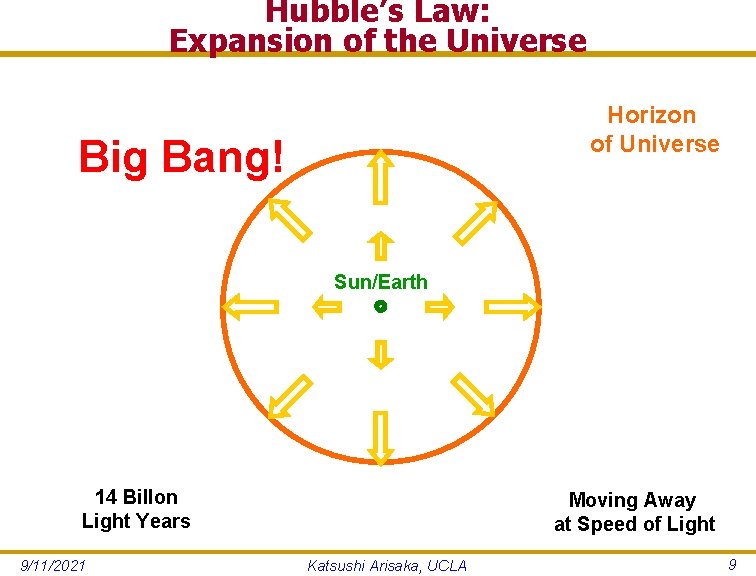
Hubble’s Law: Expansion of the Universe Horizon of Universe Big Bang! Sun/Earth 14 Billon Light Years 9/11/2021 Moving Away at Speed of Light Katsushi Arisaka, UCLA 9
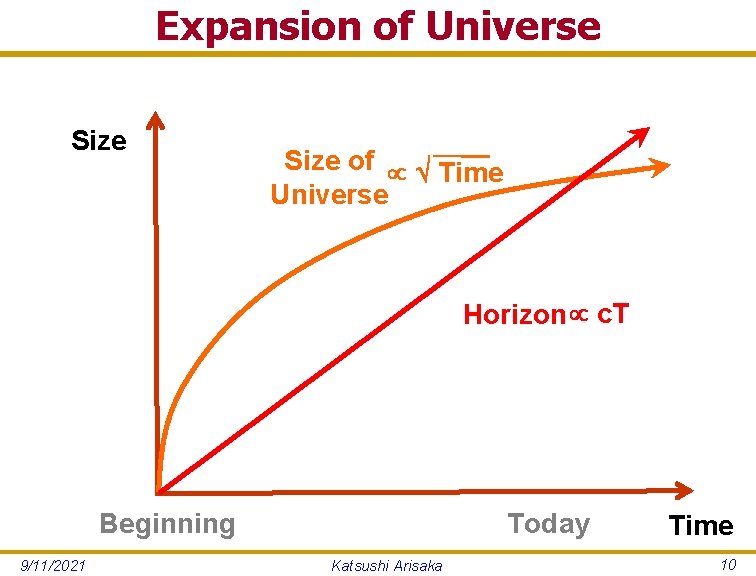
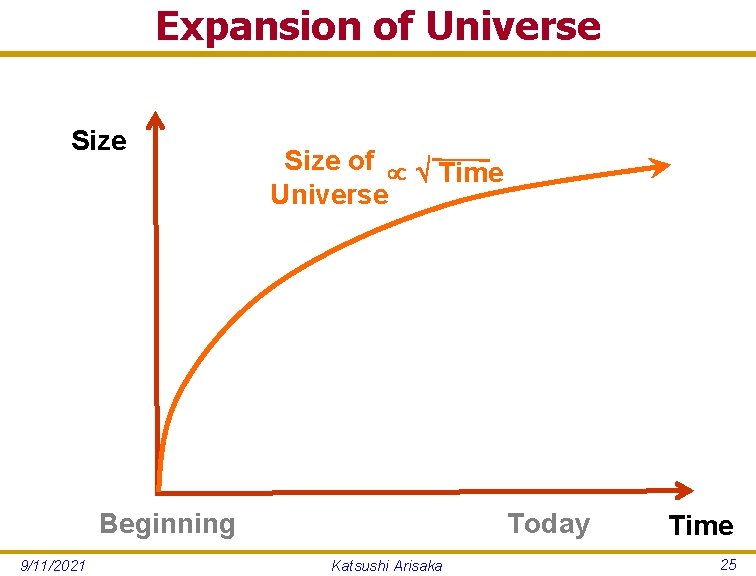
Expansion of Universe Size of Time Universe Horizon c. T Today Beginning 9/11/2021 Katsushi Arisaka Time 10
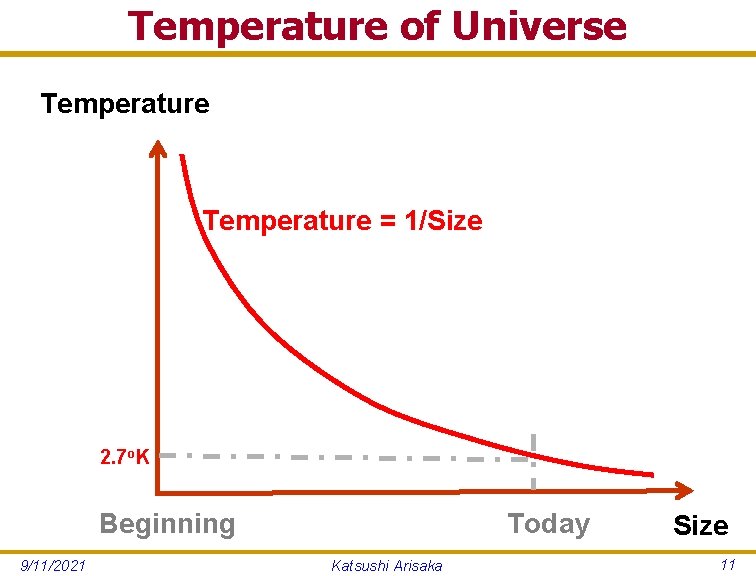
Temperature of Universe Temperature = 1/Size 2. 7 o. K Today Beginning 9/11/2021 Katsushi Arisaka Size 11
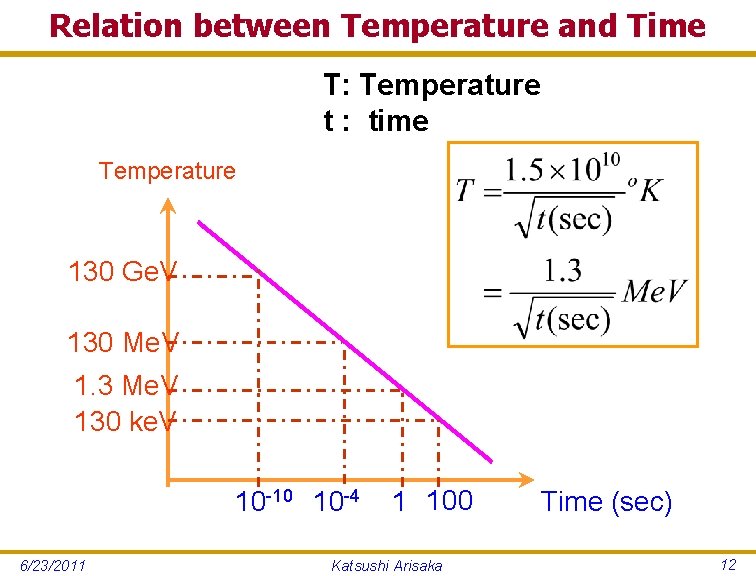
Relation between Temperature and Time T: Temperature t : time Temperature 130 Ge. V 130 Me. V 1. 3 Me. V 130 ke. V 10 -10 10 -4 6/23/2011 1 100 Katsushi Arisaka Time (sec) 12
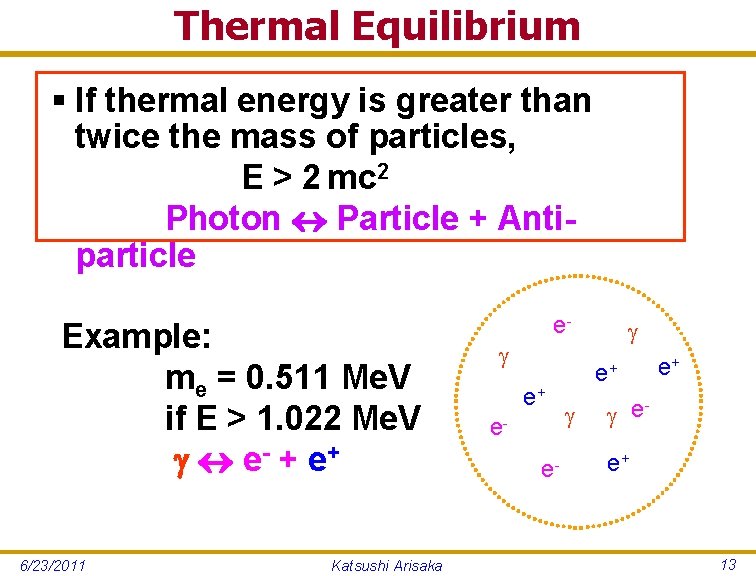
Thermal Equilibrium § If thermal energy is greater than twice the mass of particles, E > 2 mc 2 Photon Particle + Antiparticle Example: me = 0. 511 Me. V if E > 1. 022 Me. V e - + e+ 6/23/2011 Katsushi Arisaka e e+ ee- e+ e+ e e+ 13
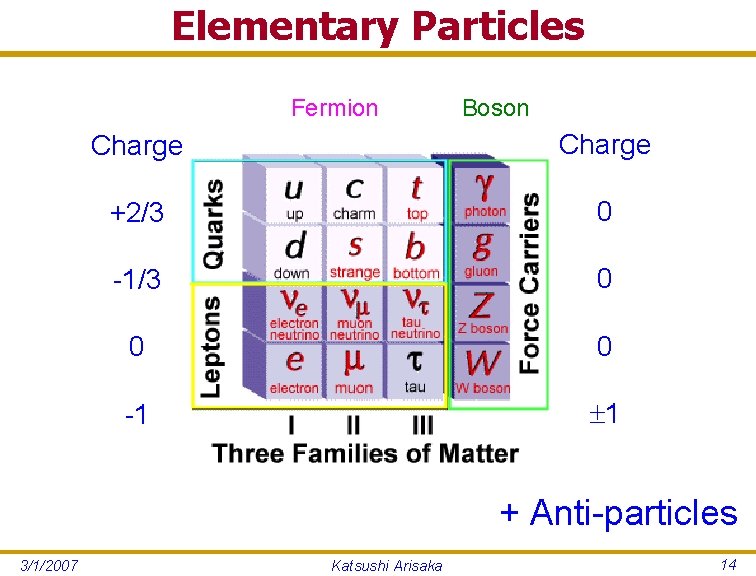
Elementary Particles Fermion Boson Charge +2/3 0 -1/3 0 0 0 -1 1 + Anti-particles 3/1/2007 Katsushi Arisaka 14
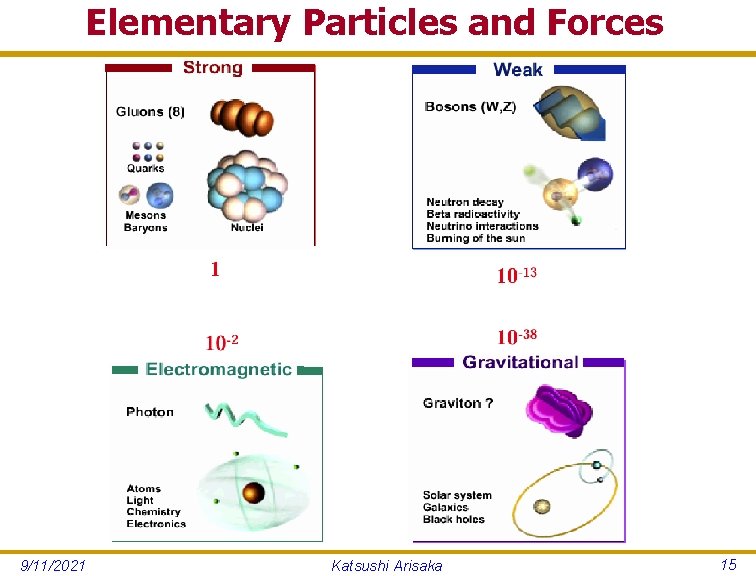
Elementary Particles and Forces 9/11/2021 Katsushi Arisaka 15
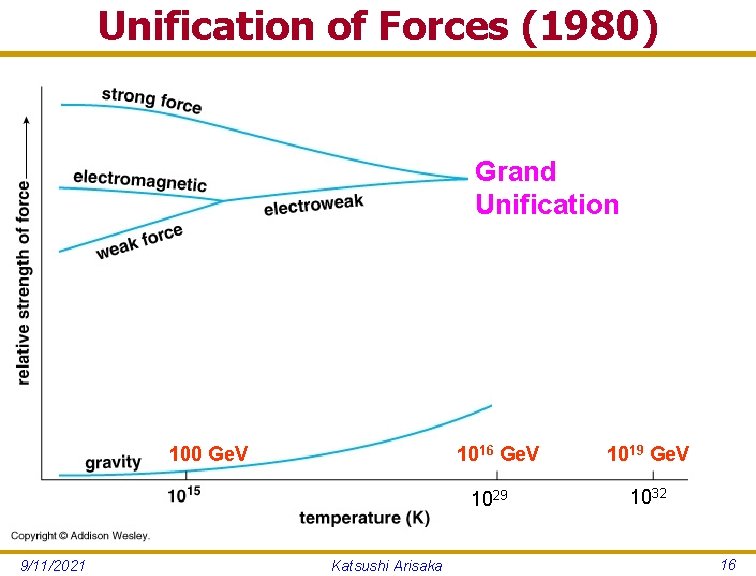
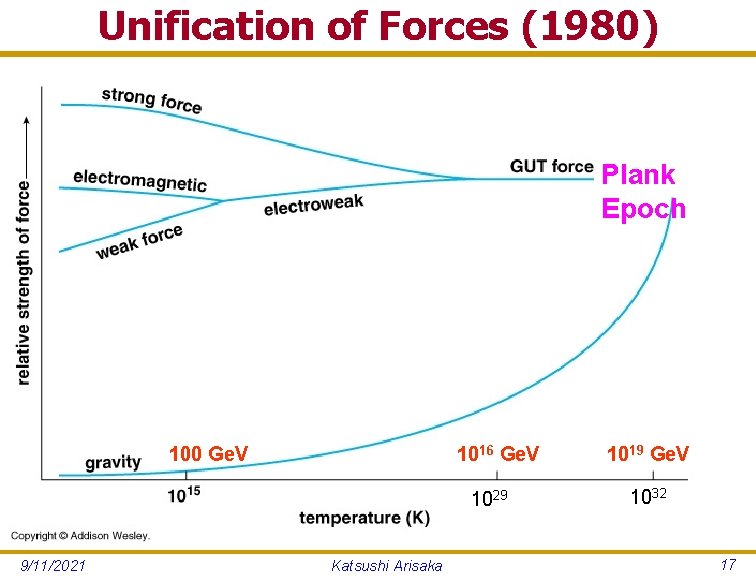
Unification of Forces (1980) Grand Unification 100 Ge. V 1016 Ge. V 292 10 10 9 9/11/2021 Katsushi Arisaka 1019 Ge. V 10 10323 2 16
Unification of Forces (1980) Plank Epoch 100 Ge. V 1016 Ge. V 1029 9/11/2021 Katsushi Arisaka 1019 Ge. V 1032 17
Hubble Deep Field Physicists’ View of Early Universe Fiat lux Let there be light 9/11/2021 Katsushi Arisaka 18
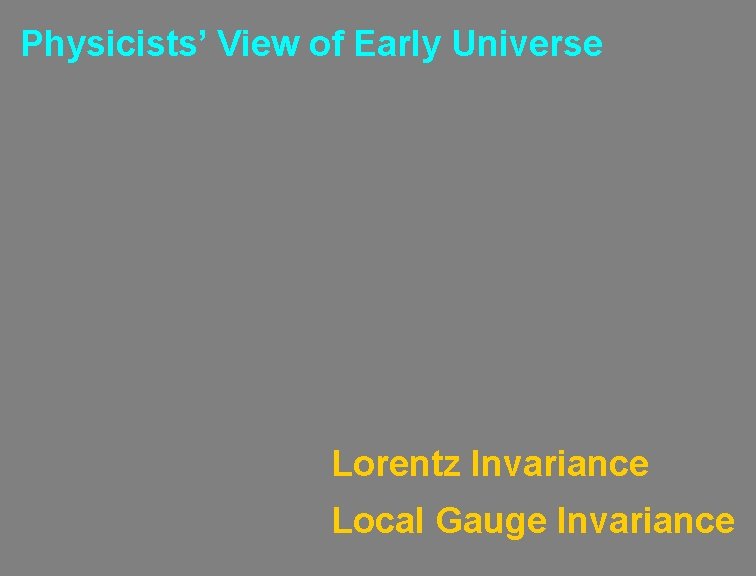
Hubble Deep Field Physicists’ View of Early Universe Lorentz Invariance Local Gauge Invariance 9/11/2021 Katsushi Arisaka 19
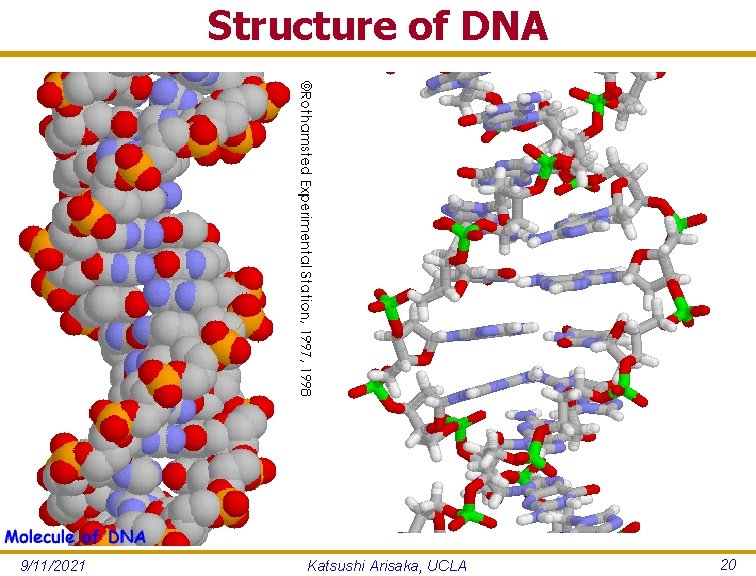
Structure of DNA 9/11/2021 Katsushi Arisaka, UCLA 20
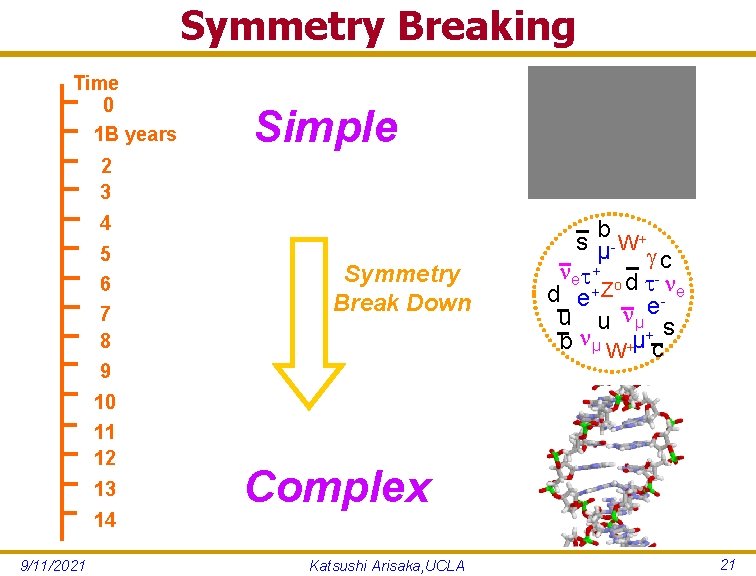
Symmetry Breaking Time 0 1 B years Simple 2 3 4 6 7 8 Symmetry Break Down s 5 b s µ- W + c e + o d - d e+ Z e- e u u µ b µ W+µ+c 9 10 11 12 13 14 9/11/2021 Complex Katsushi Arisaka, UCLA 21
6/23/2011 Katsushi Arisaka 22
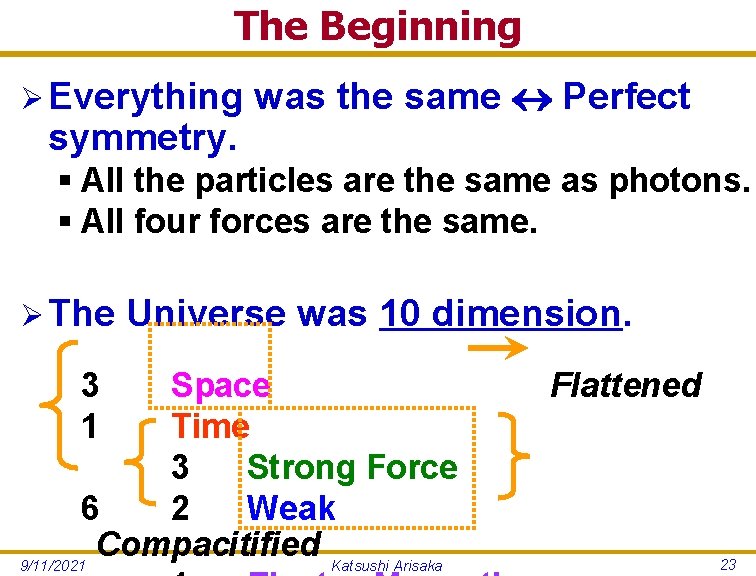
The Beginning Ø Everything symmetry. was the same Perfect § All the particles are the same as photons. § All four forces are the same. Ø The 3 1 Universe was 10 dimension. Space Time 3 Strong Force 6 2 Weak Compacitified Katsushi Arisaka 9/11/2021 Flattened 23
Cosmology 9/11/2021 Katsushi Arisaka 24
Expansion of Universe Size of Time Universe Today Beginning 9/11/2021 Katsushi Arisaka Time 25
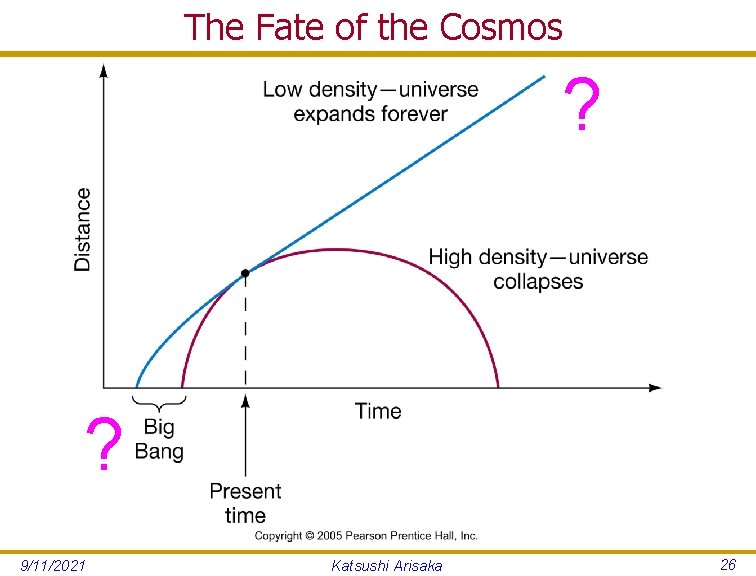
The Fate of the Cosmos ? ? 9/11/2021 Katsushi Arisaka 26
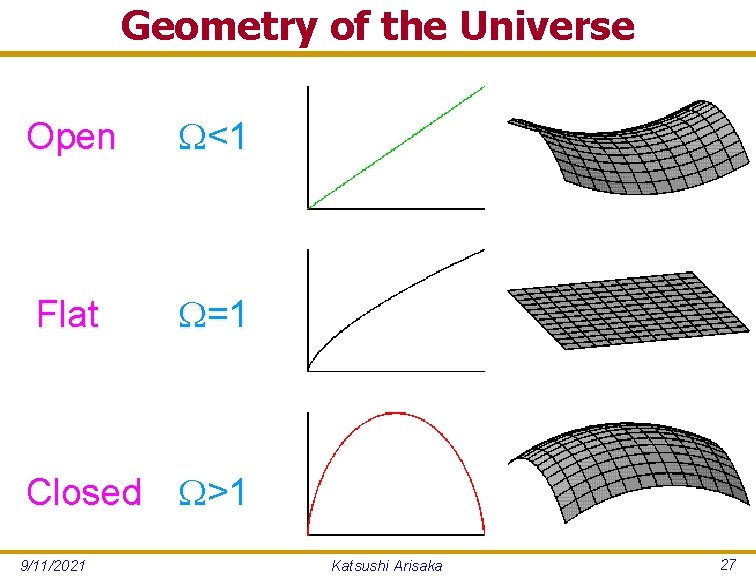
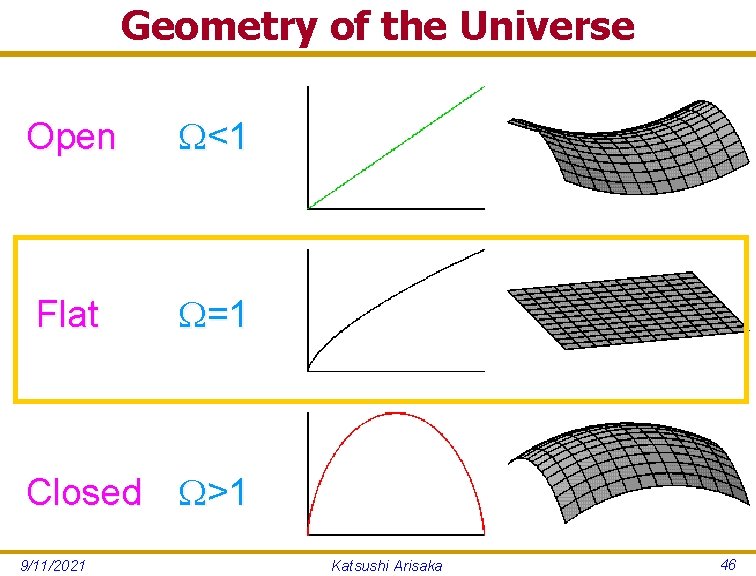
Geometry of the Universe Open <1 Flat =1 Closed >1 9/11/2021 Katsushi Arisaka 27
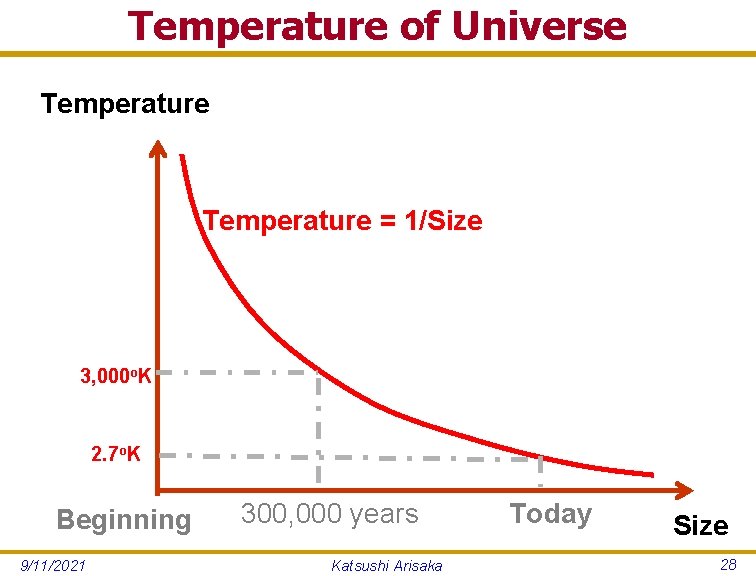
Temperature of Universe Temperature = 1/Size 3, 000 o. K 2. 7 o. K Beginning 9/11/2021 300, 000 years Katsushi Arisaka Today Size 28
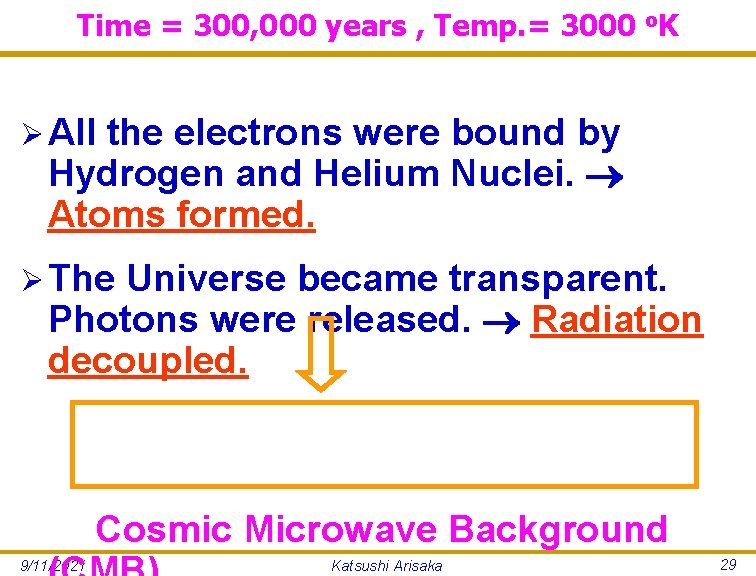
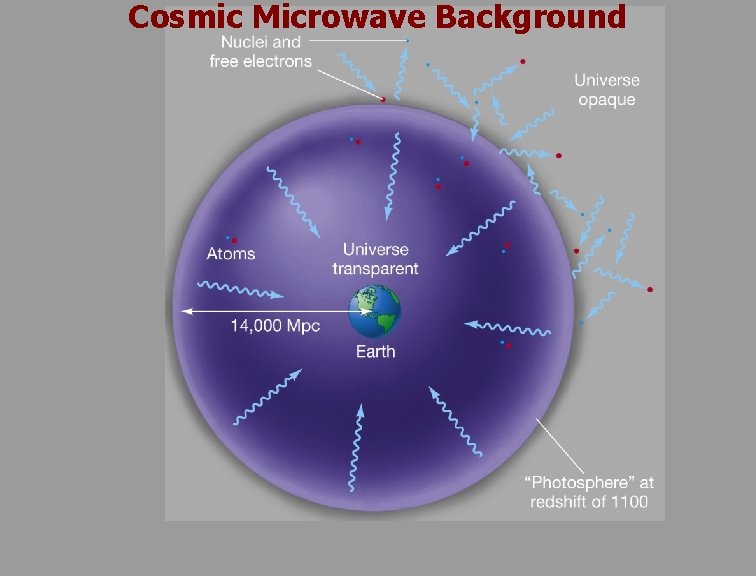
Time = 300, 000 years , Temp. = 3000 o. K Ø All the electrons were bound by Hydrogen and Helium Nuclei. Atoms formed. Ø The Universe became transparent. Photons were released. Radiation decoupled. Cosmic Microwave Background 9/11/2021 Katsushi Arisaka 29
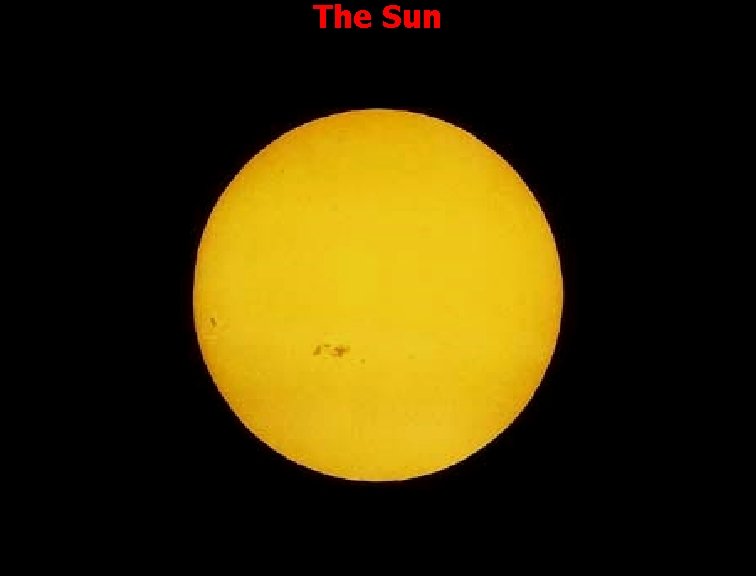
The Sun 9/11/2021 Katsushi Arisaka 30
Cosmic Microwave Background 9/11/2021 Katsushi Arisaka 31
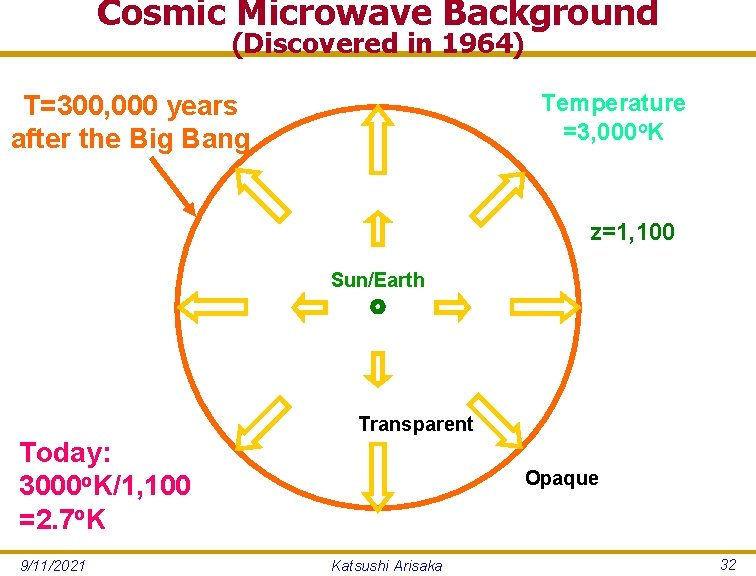
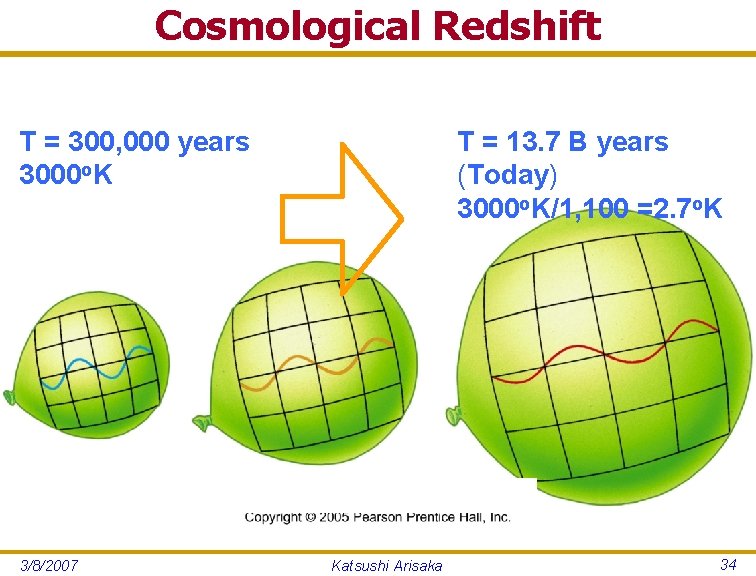
Cosmic Microwave Background (Discovered in 1964) Temperature =3, 000 o. K T=300, 000 years after the Big Bang z=1, 100 Sun/Earth Transparent Today: 3000 o. K/1, 100 =2. 7 o. K 9/11/2021 Opaque Katsushi Arisaka 32
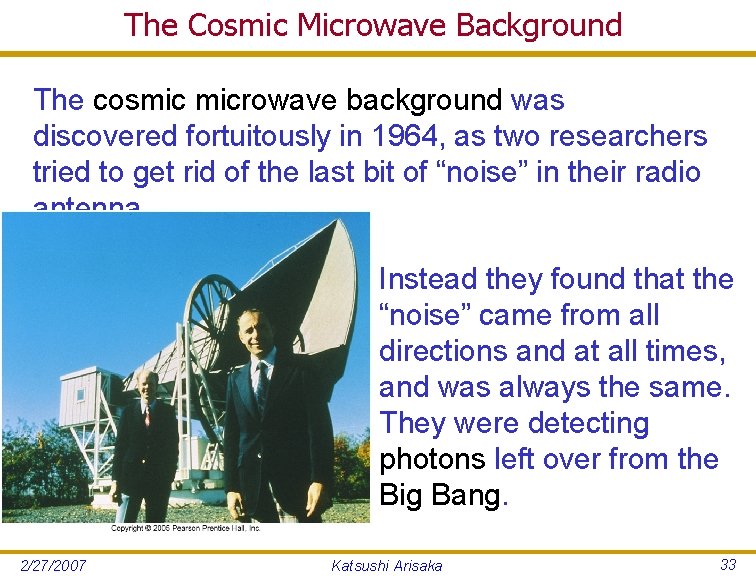
The Cosmic Microwave Background The cosmic microwave background was discovered fortuitously in 1964, as two researchers tried to get rid of the last bit of “noise” in their radio antenna. Instead they found that the “noise” came from all directions and at all times, and was always the same. They were detecting photons left over from the Big Bang. 2/27/2007 Katsushi Arisaka 33
Cosmological Redshift T = 300, 000 years 3000 o. K 3/8/2007 T = 13. 7 B years (Today) 3000 o. K/1, 100 =2. 7 o. K Katsushi Arisaka 34
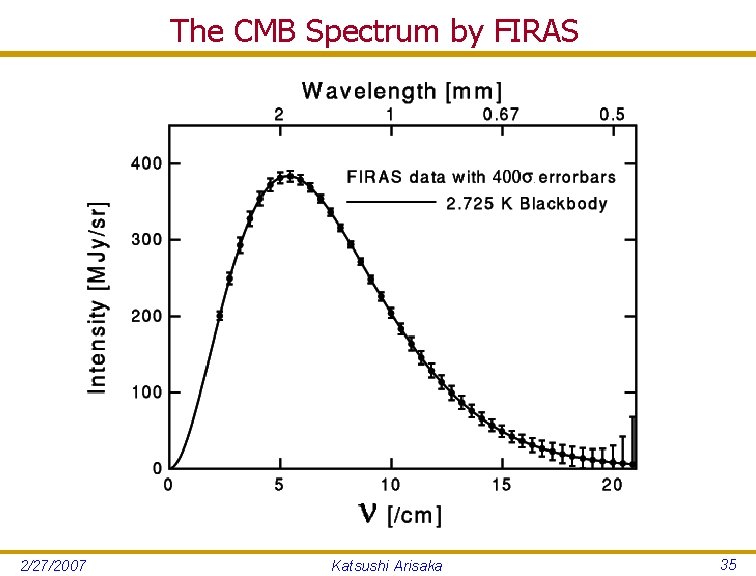
The CMB Spectrum by FIRAS 2/27/2007 Katsushi Arisaka 35
Inflation 6/23/2011 Katsushi Arisaka 36
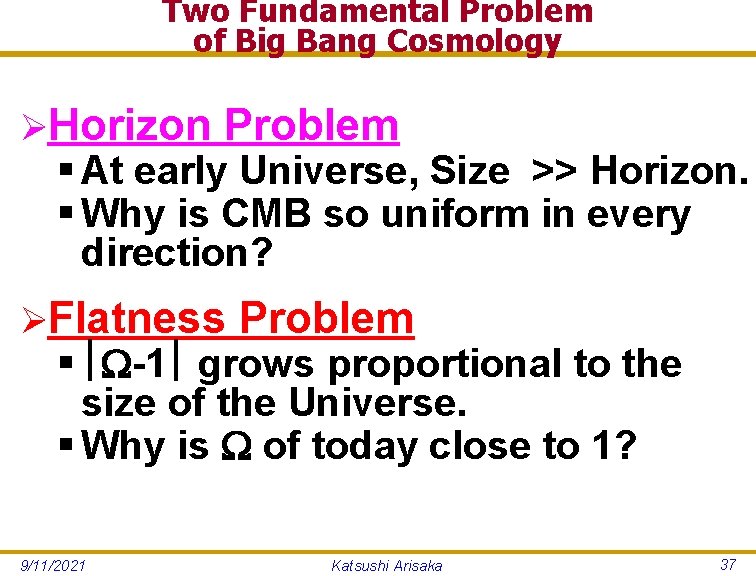
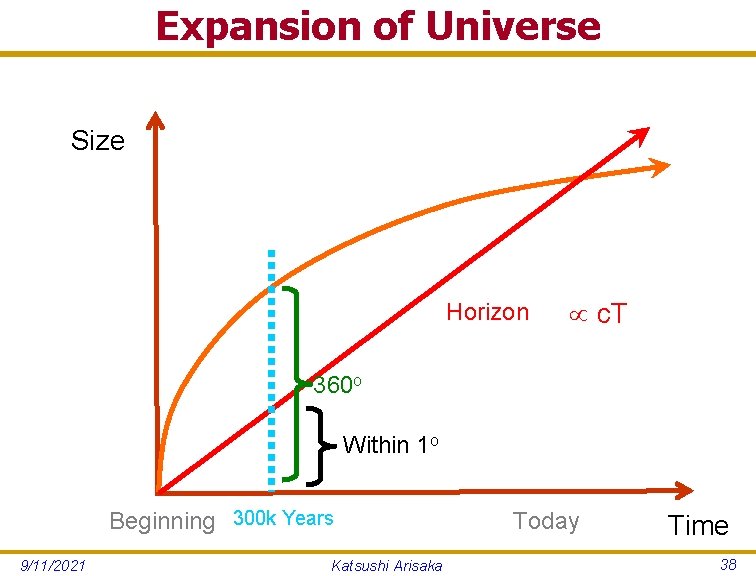
Two Fundamental Problem of Big Bang Cosmology ØHorizon Problem § At early Universe, Size >> Horizon. § Why is CMB so uniform in every direction? ØFlatness Problem § -1 grows proportional to the size of the Universe. § Why is of today close to 1? 9/11/2021 Katsushi Arisaka 37
Expansion of Universe Size Horizon c. T 360 o Within 1 o Beginning 300 k Years 9/11/2021 Katsushi Arisaka Today Time 38
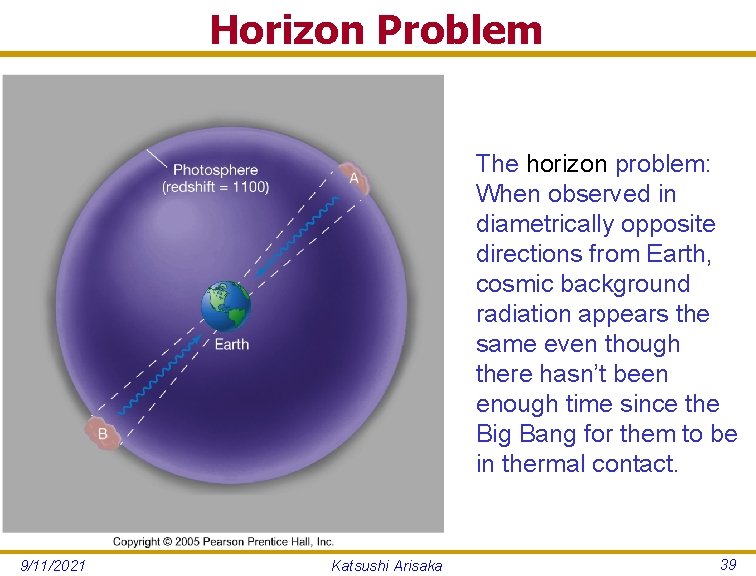
Horizon Problem The horizon problem: When observed in diametrically opposite directions from Earth, cosmic background radiation appears the same even though there hasn’t been enough time since the Big Bang for them to be in thermal contact. 9/11/2021 Katsushi Arisaka 39
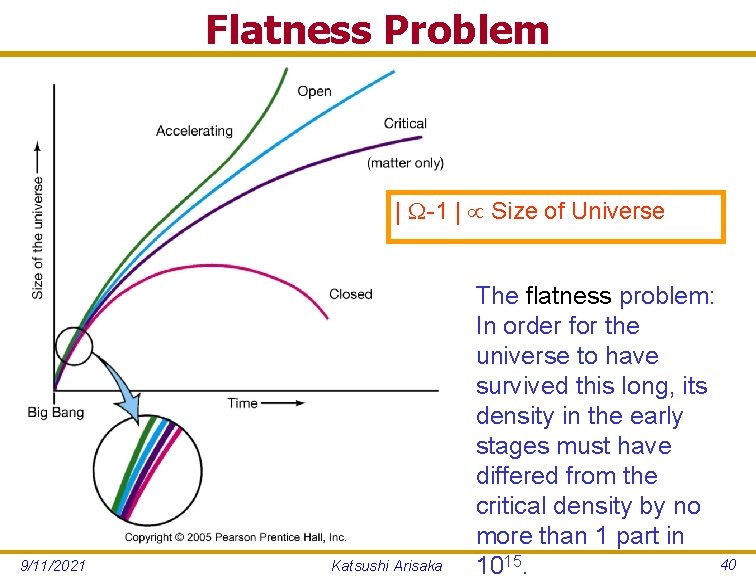
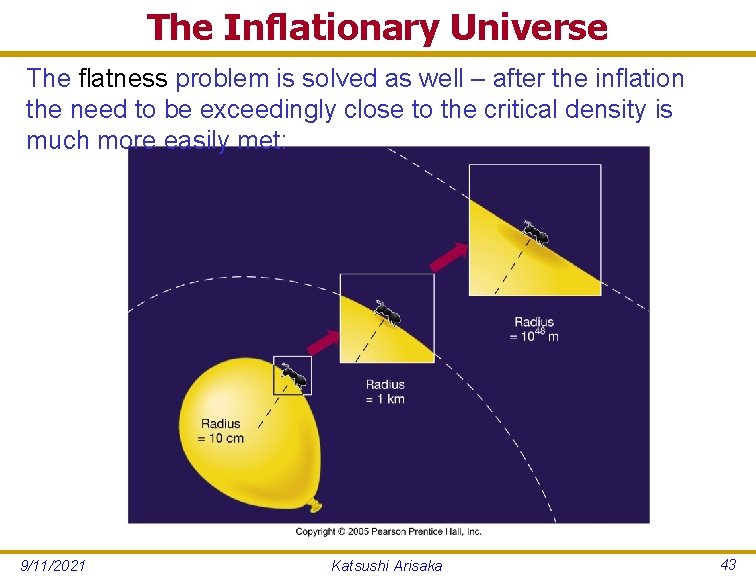
Flatness Problem | -1 | Size of Universe 9/11/2021 Katsushi Arisaka The flatness problem: In order for the universe to have survived this long, its density in the early stages must have differed from the critical density by no more than 1 part in 40 1015.
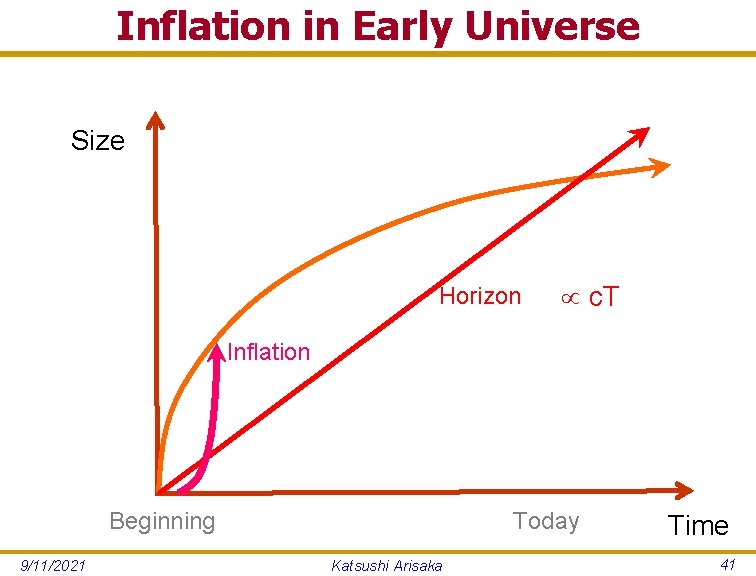
Inflation in Early Universe Size Horizon c. T Inflation Today Beginning 9/11/2021 Katsushi Arisaka Time 41
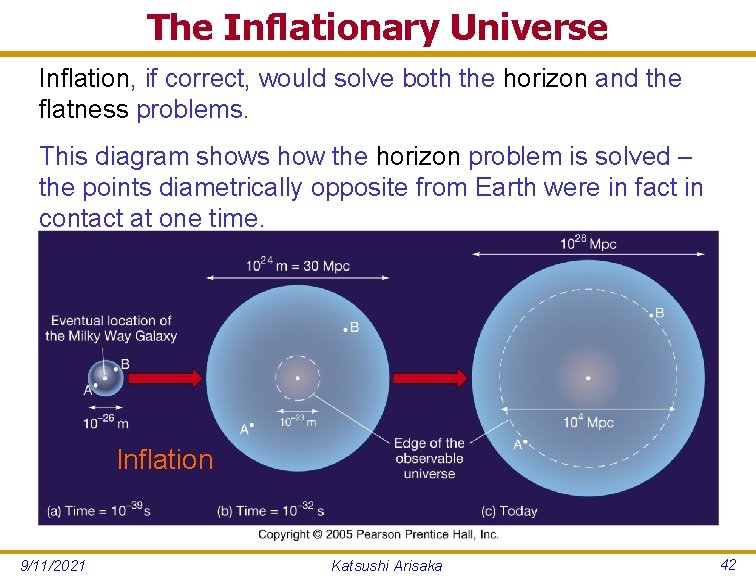
The Inflationary Universe Inflation, if correct, would solve both the horizon and the flatness problems. This diagram shows how the horizon problem is solved – the points diametrically opposite from Earth were in fact in contact at one time. Inflation 9/11/2021 Katsushi Arisaka 42
The Inflationary Universe The flatness problem is solved as well – after the inflation the need to be exceedingly close to the critical density is much more easily met: 9/11/2021 Katsushi Arisaka 43
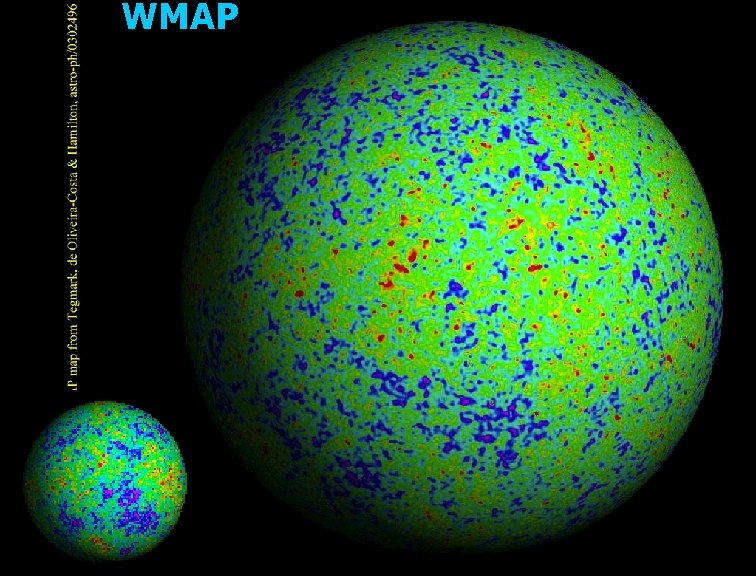
WMAP 9/11/2021 Katsushi Arisaka 44
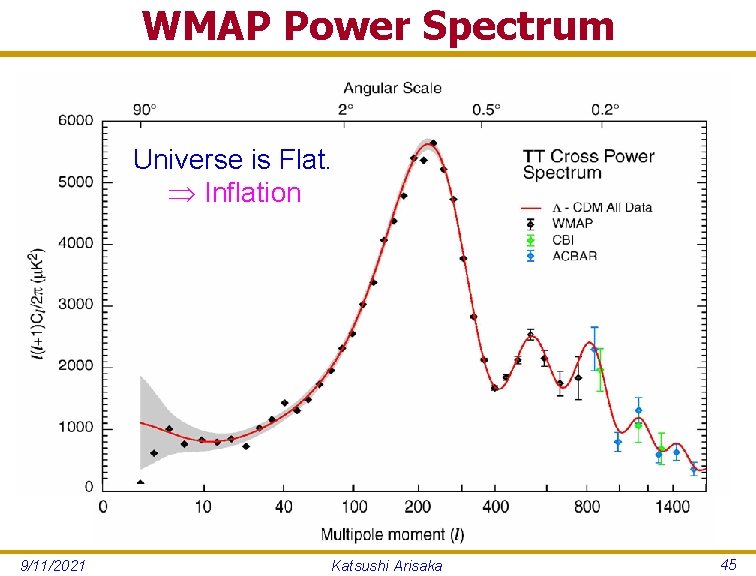
WMAP Power Spectrum Universe is Flat. Inflation 9/11/2021 Katsushi Arisaka 45
Geometry of the Universe Open <1 Flat =1 Closed >1 9/11/2021 Katsushi Arisaka 46
Dark Energy 6/23/2011 Katsushi Arisaka 47
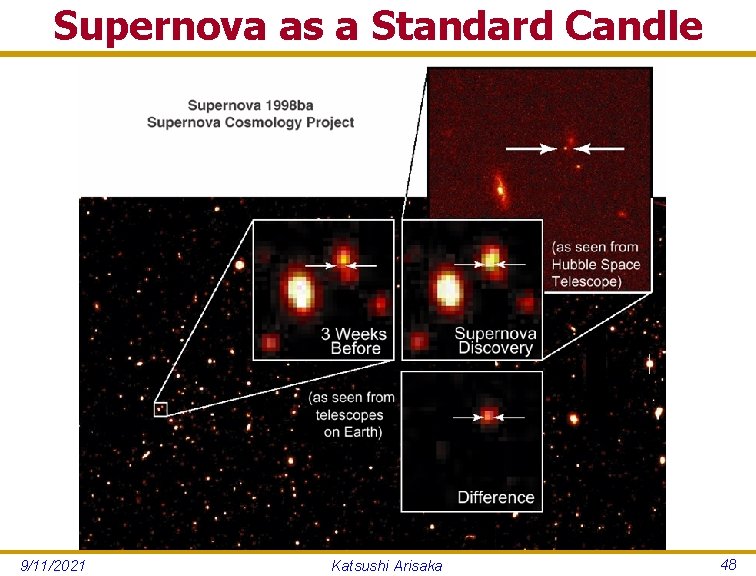
Supernova as a Standard Candle 9/11/2021 Katsushi Arisaka 48
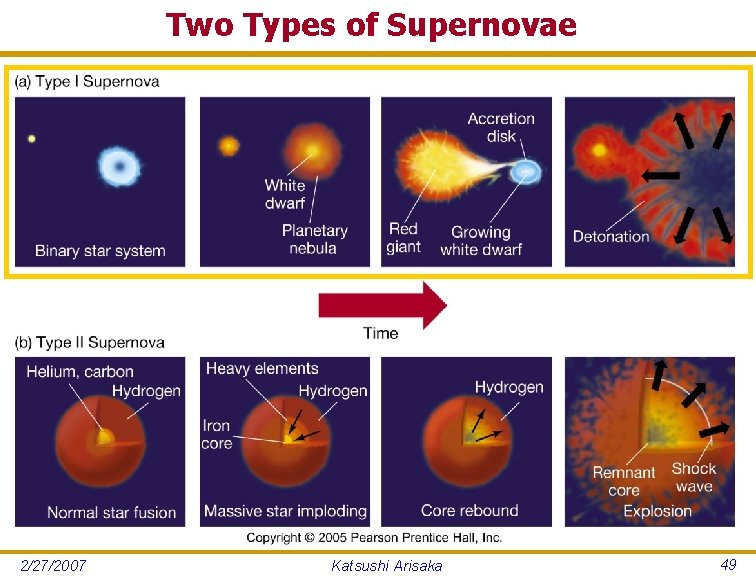
Two Types of Supernovae 2/27/2007 Katsushi Arisaka 49
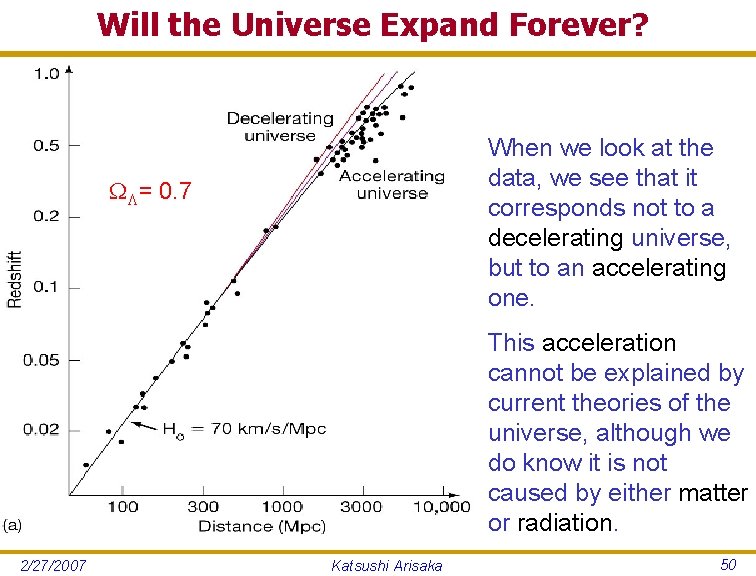
Will the Universe Expand Forever? When we look at the data, we see that it corresponds not to a decelerating universe, but to an accelerating one. = 0. 7 This acceleration cannot be explained by current theories of the universe, although we do know it is not caused by either matter or radiation. 2/27/2007 Katsushi Arisaka 50
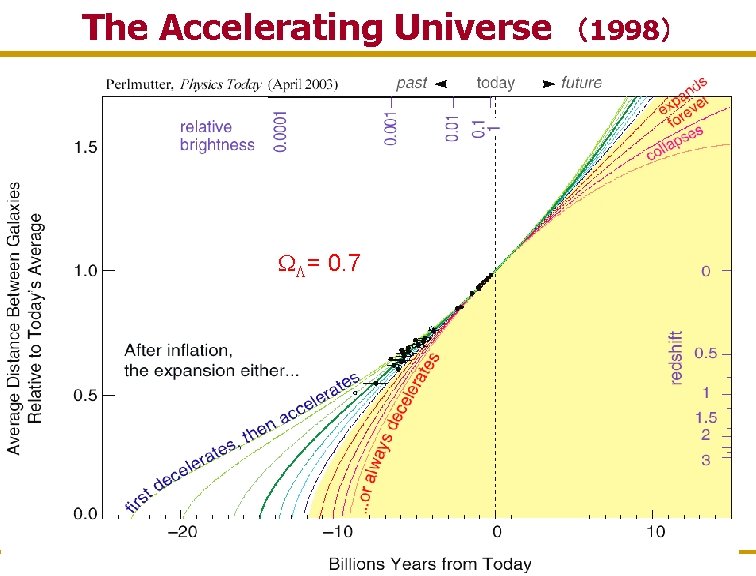
The Accelerating Universe (1998) = 0. 7 9/11/2021 Katsushi Arisaka 51
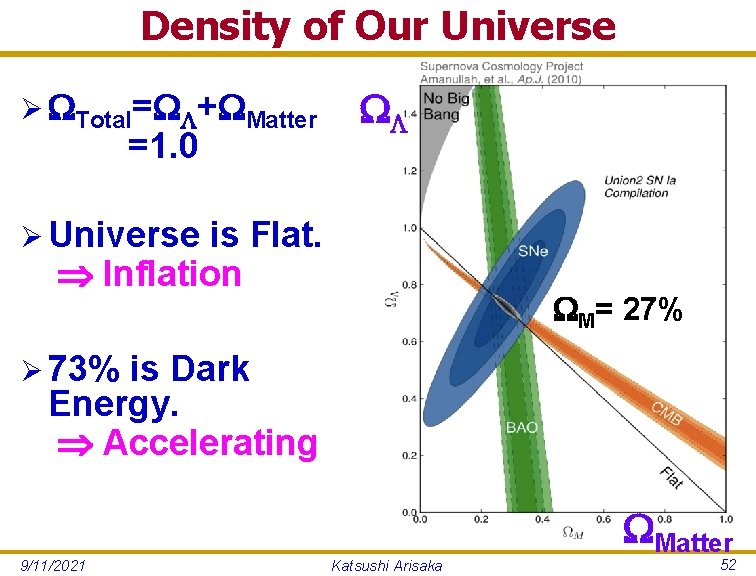
Density of Our Universe Ø Total= + Matter =1. 0 Ø Universe is Flat. Inflation M= 27% Ø 73% is Dark Energy. Accelerating Matter 9/11/2021 Katsushi Arisaka 52
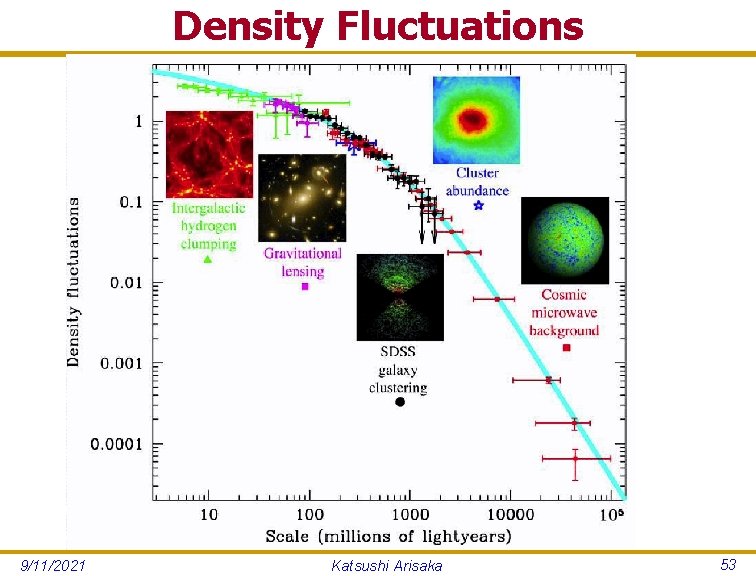
Density Fluctuations 9/11/2021 Katsushi Arisaka 53
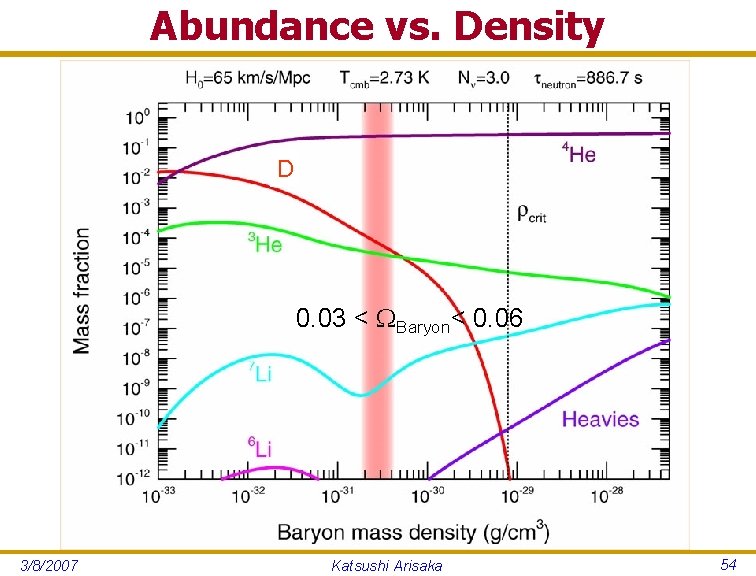
Abundance vs. Density D 0. 03 < Baryon< 0. 06 3/8/2007 Katsushi Arisaka 54
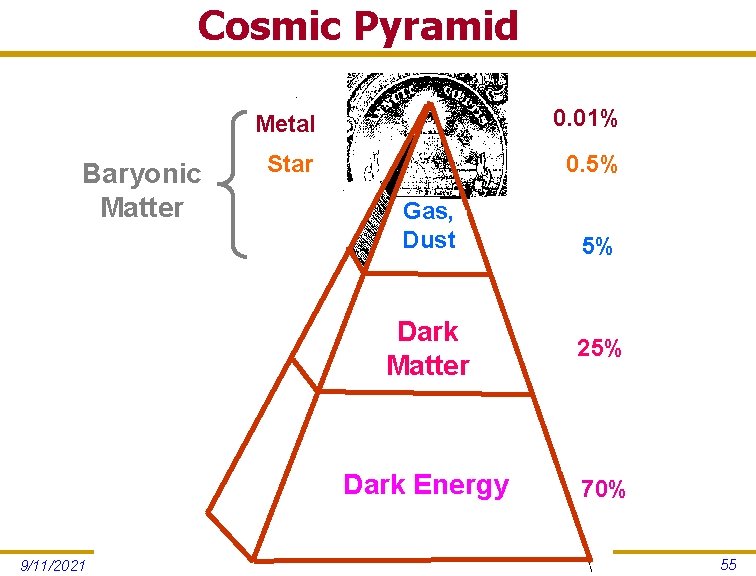
Cosmic Pyramid Baryonic Matter 9/11/2021 Metal 0. 01% Star 0. 5% Gas, Dust 5% Dark Matter 25% Dark Energy 70% Katsushi Arisaka 55
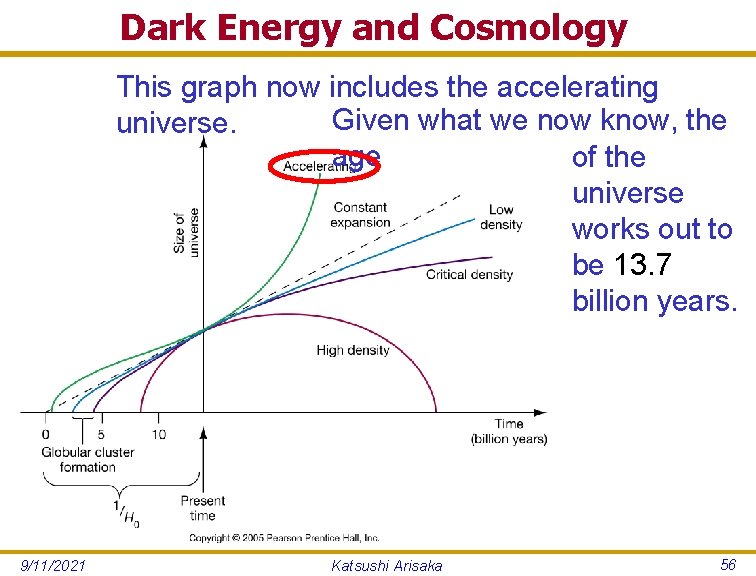
Dark Energy and Cosmology This graph now includes the accelerating Given what we now know, the universe. age of the universe works out to be 13. 7 billion years. 9/11/2021 Katsushi Arisaka 56
Dark Matter 6/23/2011 Katsushi Arisaka 57
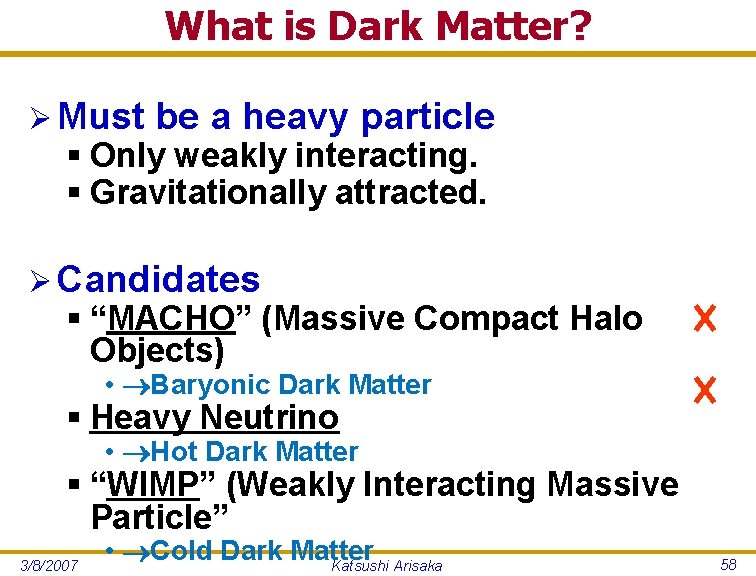
What is Dark Matter? Ø Must be a heavy particle § Only weakly interacting. § Gravitationally attracted. Ø Candidates § “MACHO” (Massive Compact Halo Objects) • Baryonic Dark Matter § Heavy Neutrino • Hot Dark Matter § “WIMP” (Weakly Interacting Massive Particle” 3/8/2007 • Cold Dark Matter Katsushi Arisaka 58
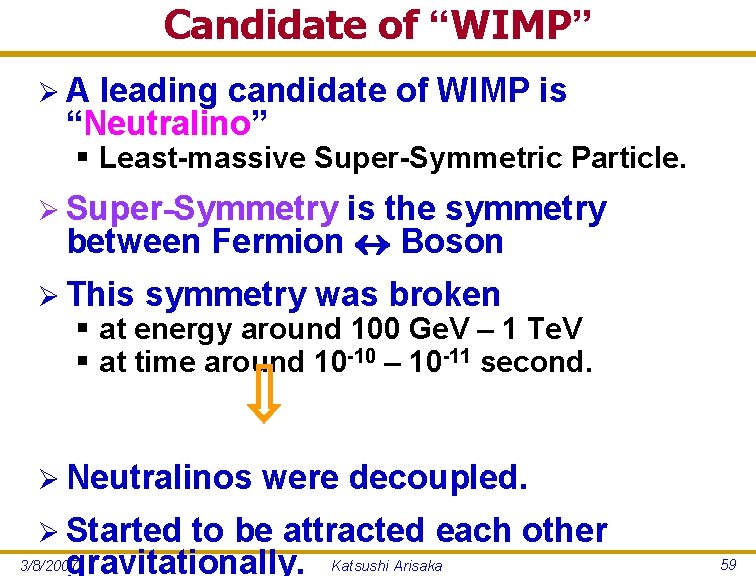
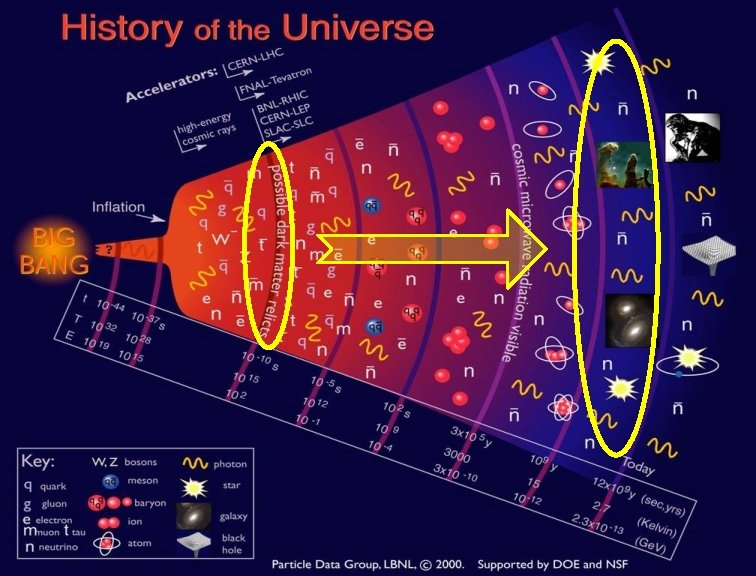
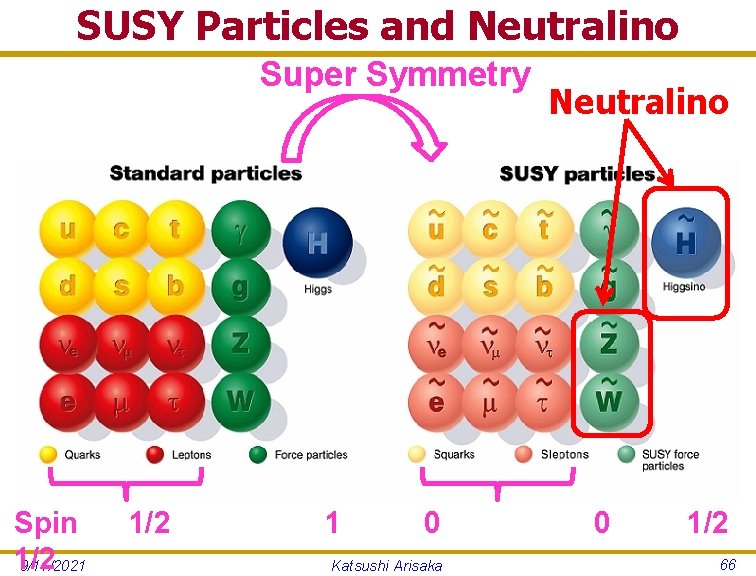
Candidate of “WIMP” ØA leading candidate of WIMP is “Neutralino” § Least-massive Super-Symmetric Particle. Ø Super-Symmetry is the symmetry between Fermion Boson Ø This symmetry was broken § at energy around 100 Ge. V – 1 Te. V § at time around 10 -10 – 10 -11 second. Ø Neutralinos were decoupled. Ø Started to be attracted each other 3/8/2007 gravitationally. Katsushi Arisaka 59
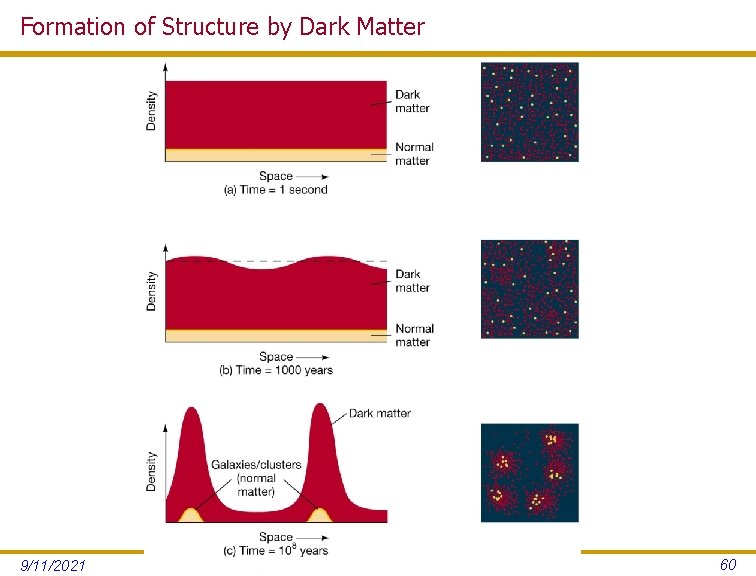
Formation of Structure by Dark Matter 9/11/2021 Katsushi Arisaka 60
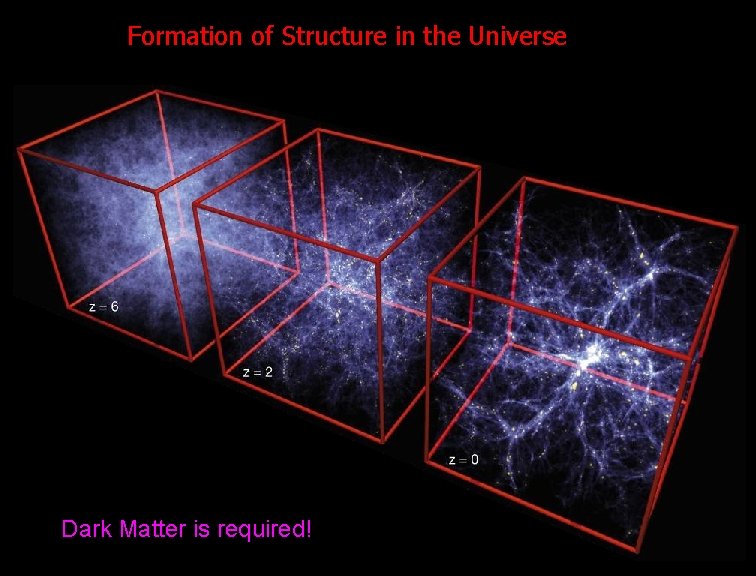
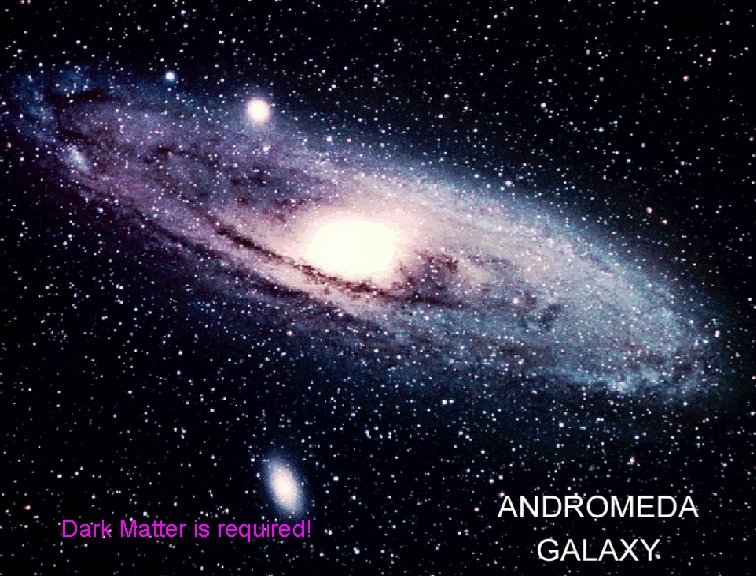
Formation of Structure in the Universe Dark Matter is required! 9/11/2021 Katsushi Arisaka 61
9/11/2021 Katsushi Arisaka 62
Dark Matter is required! 9/11/2021 Katsushi Arisaka 63
9/11/2021 Katsushi Arisaka 64
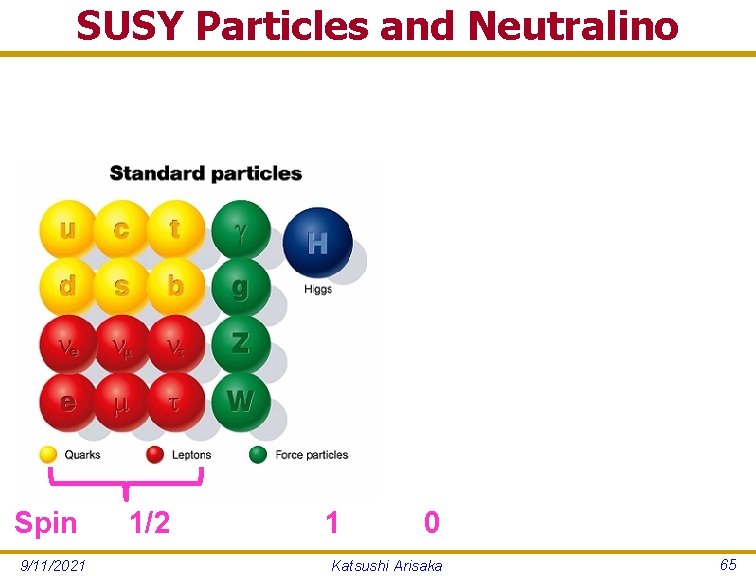
SUSY Particles and Neutralino Spin 9/11/2021 1/2 1 0 Katsushi Arisaka 65
SUSY Particles and Neutralino Super Symmetry Spin 1/2 9/11/2021 1/2 1 0 Katsushi Arisaka Neutralino 0 1/2 66
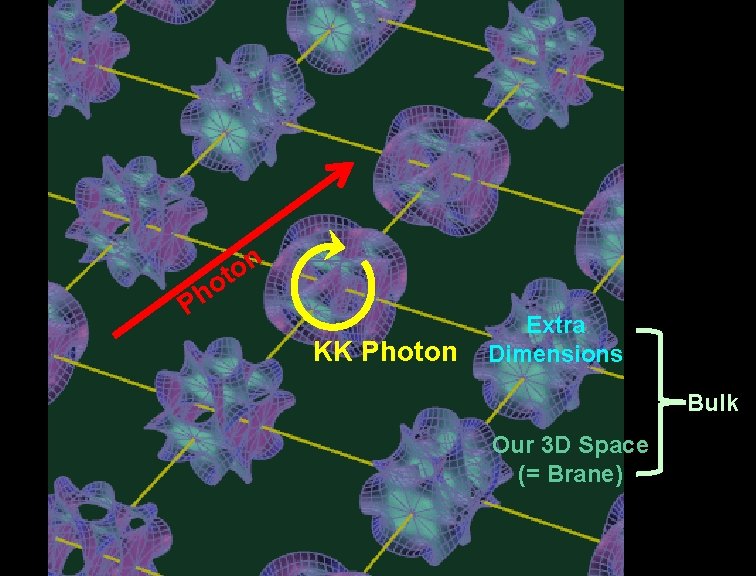
n o t o Ph KK Photon Extra Dimensions Bulk Our 3 D Space (= Brane) Katsushi Arisaka, UCLA
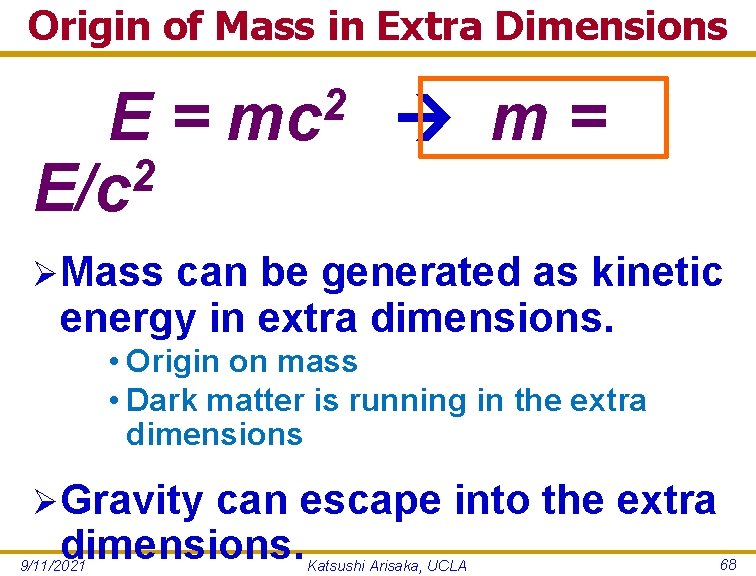
Origin of Mass in Extra Dimensions E= 2 E/c 2 mc m= ØMass can be generated as kinetic energy in extra dimensions. • Origin on mass • Dark matter is running in the extra dimensions ØGravity can escape into the extra dimensions. 9/11/2021 Katsushi Arisaka, UCLA 68
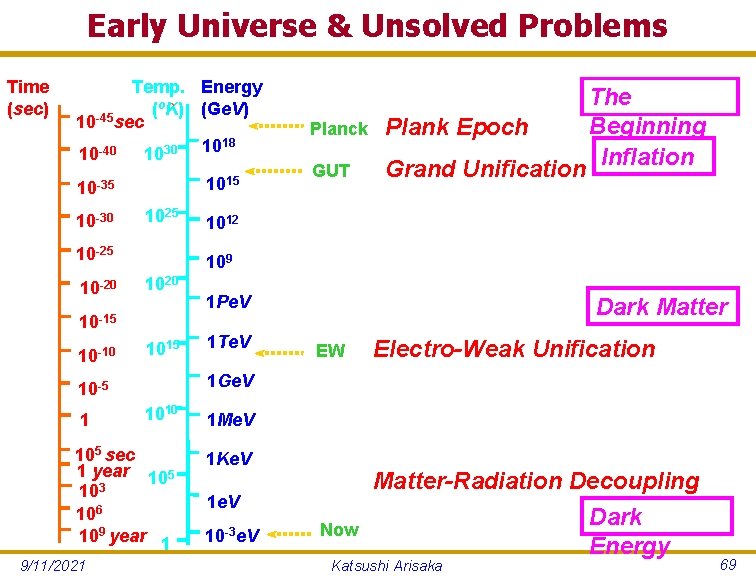
Early Universe & Unsolved Problems Time (sec) Temp. Energy (o. K) (Ge. V) -45 10 sec 18 10 30 -40 10 10 1015 10 -30 1025 10 -20 1015 1012 1 Pe. V 1 Te. V 1010 1 Me. V 105 sec 1 year 105 103 106 109 year 1 1 Ke. V 9/11/2021 Dark Matter EW Electro-Weak Unification 1 Ge. V 10 -5 1 GUT 109 10 -15 10 -10 Planck The Beginning Plank Epoch Grand Unification Inflation Matter-Radiation Decoupling 1 e. V 10 -3 e. V Now Katsushi Arisaka Dark Energy 69