
Introduction to CorruptionAntiCorruption Session 1 Session Objectives By
Introduction to Corruption/Anti-Corruption Session 1
Session Objectives By the end of this session participants will be able to: §Introduce the notion of corruption in different contexts; §Describe the types of corruption as well as different forms in which corruption manifests itself; §Describe the different approaches to identify causes of corruption from a political, economic, institutional and social angle.

What is corruption?

Interpretations of corruption The subject has been approached from different angles: § Moral and ethical discussions on corrupt behaviours. § A strict legal definition anchored on criminalised activities. § A “government deficit” definition: institutions & systems’ vulnerability to corruption. § A broader concept: Corruption is the “misuse of entrusted power for private gain. ”
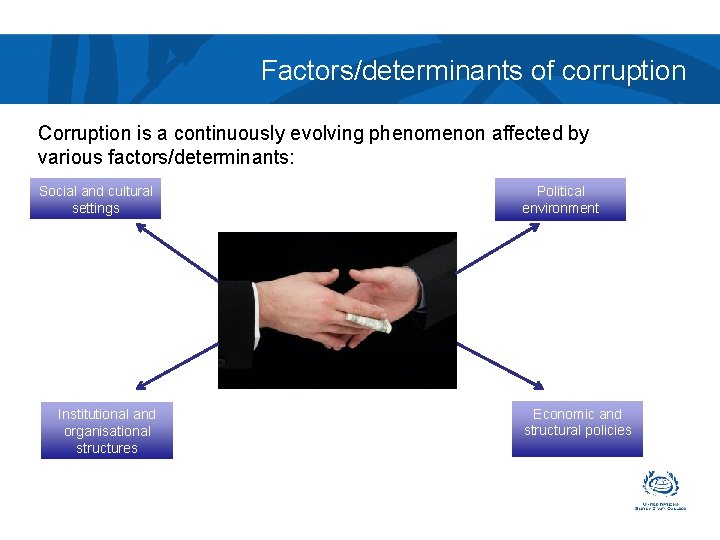
Factors/determinants of corruption Corruption is a continuously evolving phenomenon affected by various factors/determinants: Social and cultural settings Institutional and organisational structures Political environment Economic and structural policies

Common typologies of corruption § Grand corruption / Political corruption • Misuse of political power for private gain – e. g. preservation/strengthening of power, personal enrichment. • Large scale corruption at the highest levels of government, usually at policy formation level. • Common forms of grand/political corruption: vote-buying; election-rigging; non-transparent/illegal political campaign financing; abuse of public property; biased decision-making for personal interest.
Common typologies of corruption § Bureaucratic corruption / Petty corruption • In public administration or at the implementation end of the policies; e. g. bribes and speed money. • Political & Bureaucratic corruption can go hand-in-hand (no clear separation between elected politicians and bureaucratic officials). • Everyday forms of corruption – citizens/businesses/officials gain personally, beyond official duty, in the process of delivering public services of various types. Bureaucratic corruption, administrative corruption and petty corruption = synonyms in anti-corruption literature.
Common typologies of corruption § Systemic/Endemic corruption • Corruption is an integrated aspect of the major institutions and processes of the state. • Corruption can be so endemic that it may be unknown how to contain it.
Causes and symptoms of corruption Important Questions § Why is corruption perceived to be more widespread in some countries than others? § Within a country, does corruption vary from one locality to another? § Within the public sector, are certain government agencies more corruption-prone?
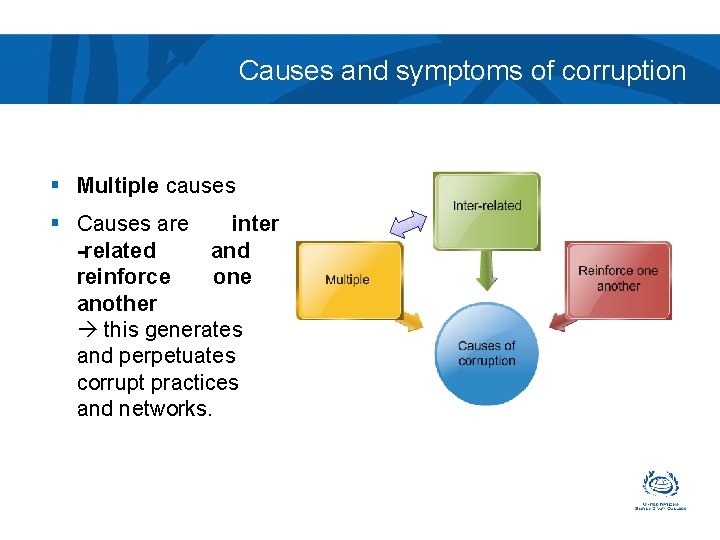
Causes and symptoms of corruption § Multiple causes § Causes are inter -related and reinforce one another this generates and perpetuates corrupt practices and networks.
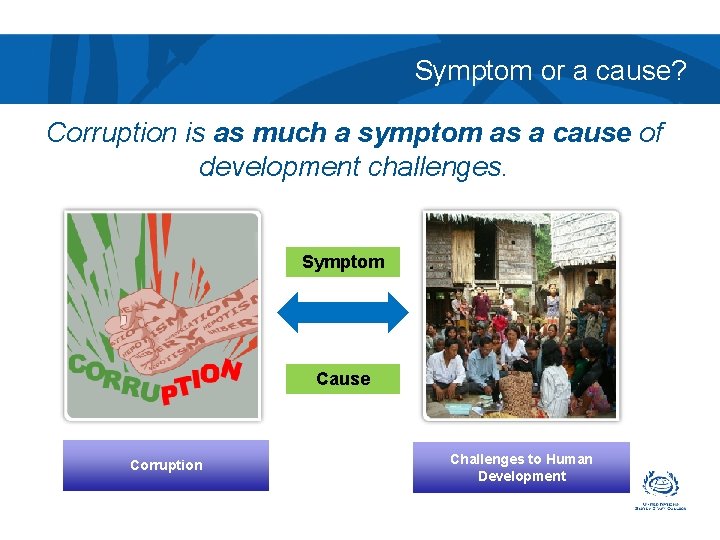
Symptom or a cause? Corruption is as much a symptom as a cause of development challenges. Symptom Cause Corruption Challenges to Human Development
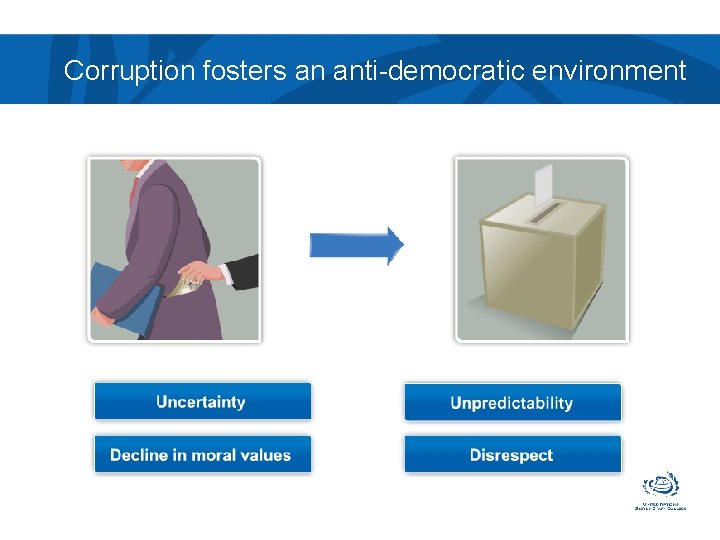
Corruption fosters an anti-democratic environment

Most common forms of corruption (1)
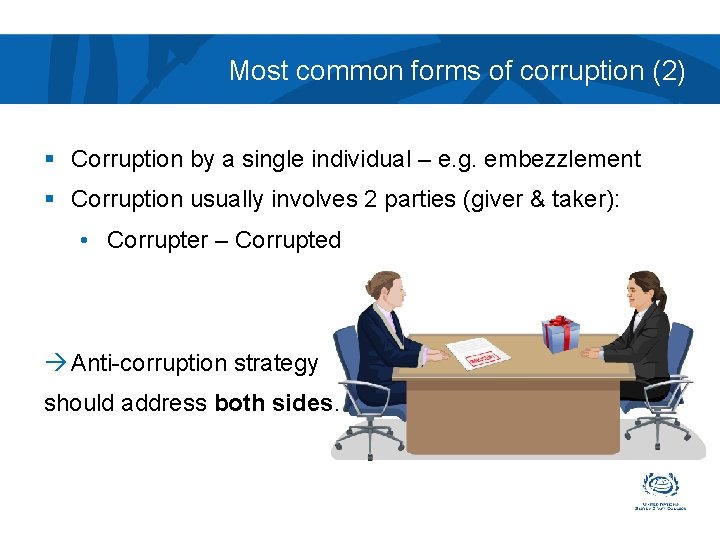
Most common forms of corruption (2) § Corruption by a single individual – e. g. embezzlement § Corruption usually involves 2 parties (giver & taker): • Corrupter – Corrupted Anti-corruption strategy should address both sides.
What is Anti-corruption? § Anti-corruption is a response to curb or minimize corruption activities or risks. § People talk about anti-corruption to refer to activities that range from policy decisions, investigation, prevention, awareness raising. § Anti-corruption goes beyond responding to the normative anticorruption framework to cover systematic, comprehensive and multi -disciplinary measures aimed to tackle corruption, including both preventive and enforcement measures. § Anti-Corruption is therefore multi-faceted, denoting ethical values, law enforcement and crime while at the same time it’s an underlying development issues through leakages of public resources.
Key messages § There is no exhaustive or universal definition of corruption; § Corruption is a phenomenon that has evolved with human history and is continuously influenced by political, economic, social or cultural contexts; § There are different types of corruption (non-exhaustive): political corruption, bureaucratic corruption, grand corruption, petty corruption, systematic corruption, etc. § There are multiple causes and symptoms of corruption. A solid analysis is needed to determine the immediate, underlying and root causes; § There are different manifestations and forms of corruption (non-exhaustive).
- Slides: 16